

Introducing the World’s First ‘Touchable Memory’: A Device Shining a Light on Usher Syndrome
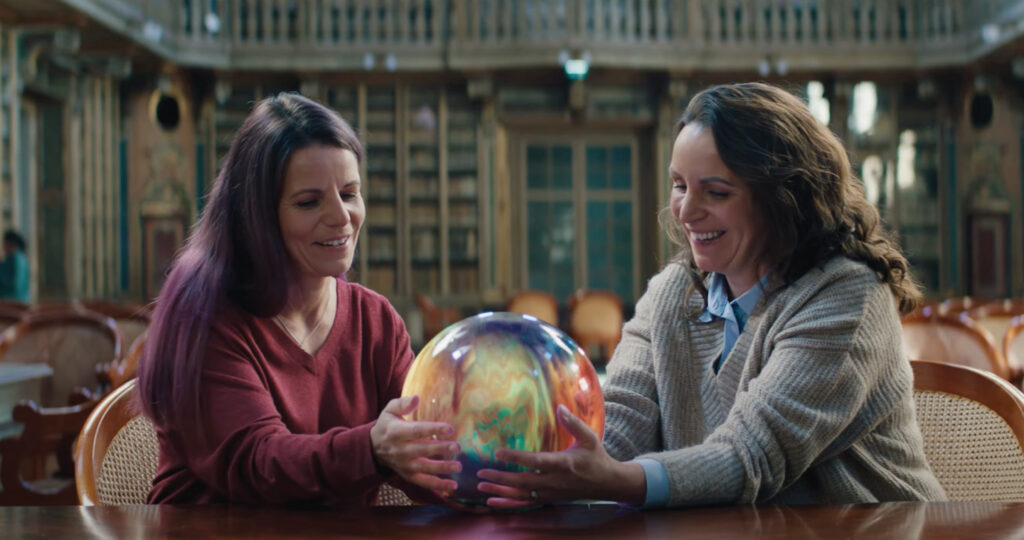
We are honored to announce our involvement in a remarkable awareness campaign with Cure Usher, Havas Lynx, and Push Films: the world’s first ‘touchable memory’ device.
This awareness campaign seeks to shed light on Usher syndrome, a genetic condition that causes varying degrees of hearing and sight loss from an early age. Despite its significant impact, Usher syndrome remains underrecognized, with a misdiagnosis rate of 40%, underscoring the critical need for heightened awareness and understanding.
Our collaboration on this project perfectly encapsulates our commitment to improving lives through innovation.
By developing a device to appear in the campaign film that converts sounds into tactile sensations, we enabled the campaign’s real-life sisters – Laura, who has Usher syndrome, and Hannah – to reconnect with a memory in a uniquely inclusive manner.
We invite you to watch the emotional film and explore the press release below.
The World’s First Touchable Memory. A Device Created To Raise Awareness About This Impairing Genetic Condition
- Usher syndrome is a genetic condition that develop in children and young adults causing the loss of hearing and sight in different degrees.
- Awareness of Usher is low with doctors misdiagnosing 40% of the time leading to uncertainty for families. In the UK around 11,000 people have been diagnosed with Usher, with an estimated 400,000 people worldwide.
Cure Usher Syndrome, a patient-led charity dedicated to raising awareness of Usher Syndrome, has launched its new brand awareness initiative, kicking off with an emotional short film which shows two sisters experiencing the world’s first touchable memory.
Conceived by leading global healthcare communications agency, Havas Lynx, and transformed into a real device by tech-experts, Cambridge Design Partnership, the device transforms stimuli such as sound or music, into tactile sensations. The frequency of these vibrations is adjusted for the hand’s receptors, which research shows can detect almost nothing over 1,000Hz.
The emotional short film features Laura Whitaker, a woman who has lived with Usher syndrome since a young age and her sister Hannah Stroud. It shows the real-life sisters interacting with the ‘Touchable Memory’, which allows them to experience a moment in time the same way despite Laura’s hearing and sight limitations.
In preparation for the film, Laura and Hannah undertook a series of interviews which allowed the Havas Lynx team to collate information to select a memory to hide in the device.
Not only does the device translate sounds into vibrations, but it was also designed with a specific shape, light, and colour for people with limited concentric sight.
Stuart Curtis, Engineer at Cambridge Design Partnership, said: “Results showed that skin receptors on the hands respond best to low-frequency sound and can detect almost nothing over 1,000Hz compared to our hearing which can detect 20,000Hz. With the use of surface transducers, we translated a synthetic baseline from a MIDI track, into a sensorial experience. These frequencies became physical and allowed Laura and Hannah to feel the music rather than hear it.”
Alex Okada, Chief Creative Officer at Havas Lynx, said: “Since this condition is still incurable, we had to be very careful how to raise awareness without spreading fear. The device was a way to grab attention but the emotional connection between the sisters was what made it meaningful.”
Mark Jordon and Laura Norton are Patrons at Cure Usher Syndrome, they have two young children who both have the condition. Talking about the campaign, both said: “We are proud and privileged to be joint patrons of Cure Usher, and to support this charity in raising awareness of Usher syndrome.
“The film is unbelievably powerful, I think it is going to have a huge impact in raising awareness of usher syndrome and what it means to find a cure. The human element of Laura and Hannah’s story is invaluable, and I can’t thank them enough for sharing their memories and the power that their story holds.
“A huge thanks also to Havas Lynx, Cambridge Design Partnership, and Push Films, all bringing the magical elements to make this emotional film.”
Cure Usher Syndrome is working to raise awareness, support families and raise money for vital medical research. It currently has an agreement with University College London (UCL) where donations directly fund research as part of the Institute of Ophthalmology.
You can donate to Cure Usher Syndrome via its website: https://www.cureusher.org/donate
For more information contact: robyn.houghton@havas.com