IMG_8697-1
Share:

Celebrating 21 years of innovation

We celebrated Cambridge Design Partnership’s 21st birthday this month with a cruise down the River Thames followed by a black tie dinner for our staff at the Houses of Parliament in London.

Mike Cane, founding partner, said: “It was thrilling for us to be able to stage a very special dinner for the company in the Members dining room at the Houses of Parliament to celebrate 21 years of excellence in research and development. It was a great privilege to be shown around the House of Commons – the centre of government and democracy in the UK – before retiring to the dining room for our celebration. Standing under statues of prime ministers including Churchill and Thatcher in the members lobby brought home the amazing history of the palace, and added resonance and gravitas to our celebration.”

It was back in 1996 that CDP opened its first office near Cambridge, UK.  Founders Mike Cane, Mike Beadman and Matt Schumann shared a vision that product development would be best executed by taking a more holistic approach compared with more specialist agencies. Mike Beadman said: “When we started CDP we did not quite know what to expect and initially we just focused on survival from month to month. However, we are very pleased that we have been able to grow consistently for 21 years by providing a great service to our customers and reinvesting our profits to develop the world-class team needed to be the best at what we do.”

CDP’s emphasis is on putting the customer at the centre of a 360-degree innovation process that encompasses design, engineering, manufacturing and strategy to deliver complex and challenging products to market with an increased chance of commercial success.

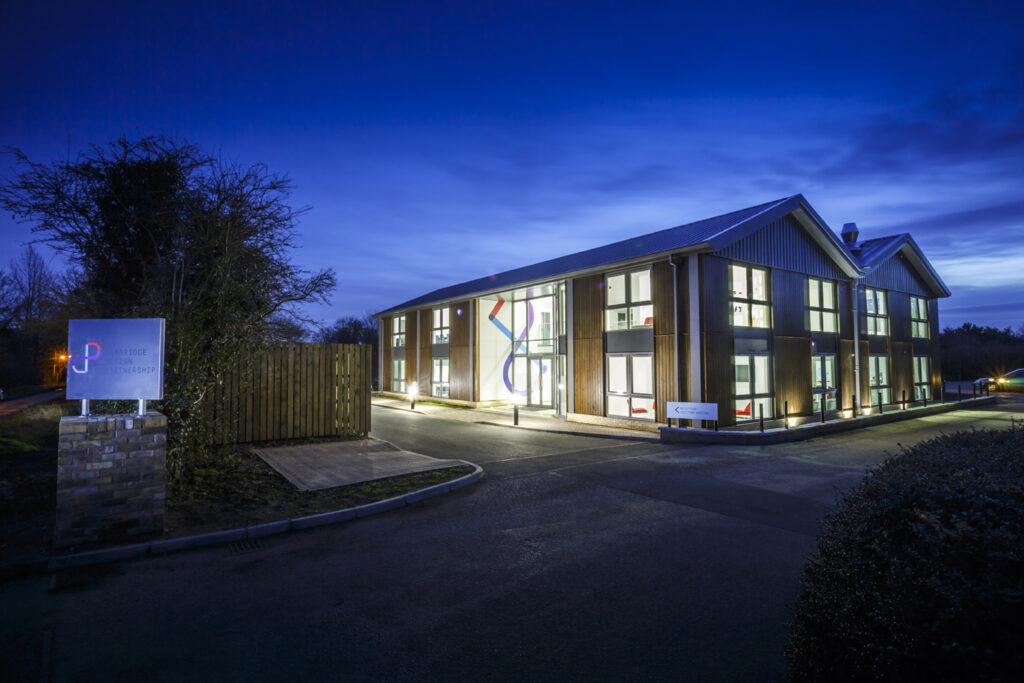
This insight has stood the test of time and recently matured into ‘Potential Realised’ – CDP’s industry-leading and state-of-the-art innovation process. The team and facilities have also grown to deliver this vision, with more than 100 scientists, researchers, engineers and designers operating from a new R&D centre close to the original offices near Cambridge, and from an office in Silicon Valley in the US.

Matt Schumann, the third founding partner, said: “Our success is certainly thanks to our committed and talented team – and our loyal customers who come back to us time and time again. At the heart of the company’s DNA is a passion for innovation and a commitment to excellence in whatever we do. We are certainly looking forward to another 21 years of innovation.”

Charlotte won the Engineering Development Trust’s ‘Award for Innovation’||
Share:

CDP interns wins engineering innovation award

Following the recent and very popular blog “How to succeed as ‘Year in Industry’ students without burning the place down”, we are pleased to announce that our Year in Industry Student, Charlotte, has recently won the Engineering Development Trust’s ‘Award for Innovation’ at a competition in London on 3rd July.

Charlotte explained, “Each finalist presented for five minutes about the projects they have been working on during the year, ranging from cutting-edge heart surgery techniques to sustainable transport in Wales.  I talked about an exciting project where I helped create a novel fluidics kit for sample preparation for medical diagnostics. This work could lead to a new technology to enable point of care devices that will give patients immediate test results at a relatively low cost.”

She continued, “I am proud to have won this award. ‘Year in Industry’ is a spectacular scheme and I knew I would take a great deal away from my year, but I never expected this to include a little glass trophy.”

CDP Partner Jez Clements added, “Our congratulations go out to Charlotte for winning this exciting award. It just highlights the value the scheme has in developing the next generation of engineers. We have certainly enjoyed our students’ contribution over the last year and we wish Charlotte and Immy every success when they go to University in September.”

Share:

Cambridge Design Partnership launch a new digital insight service

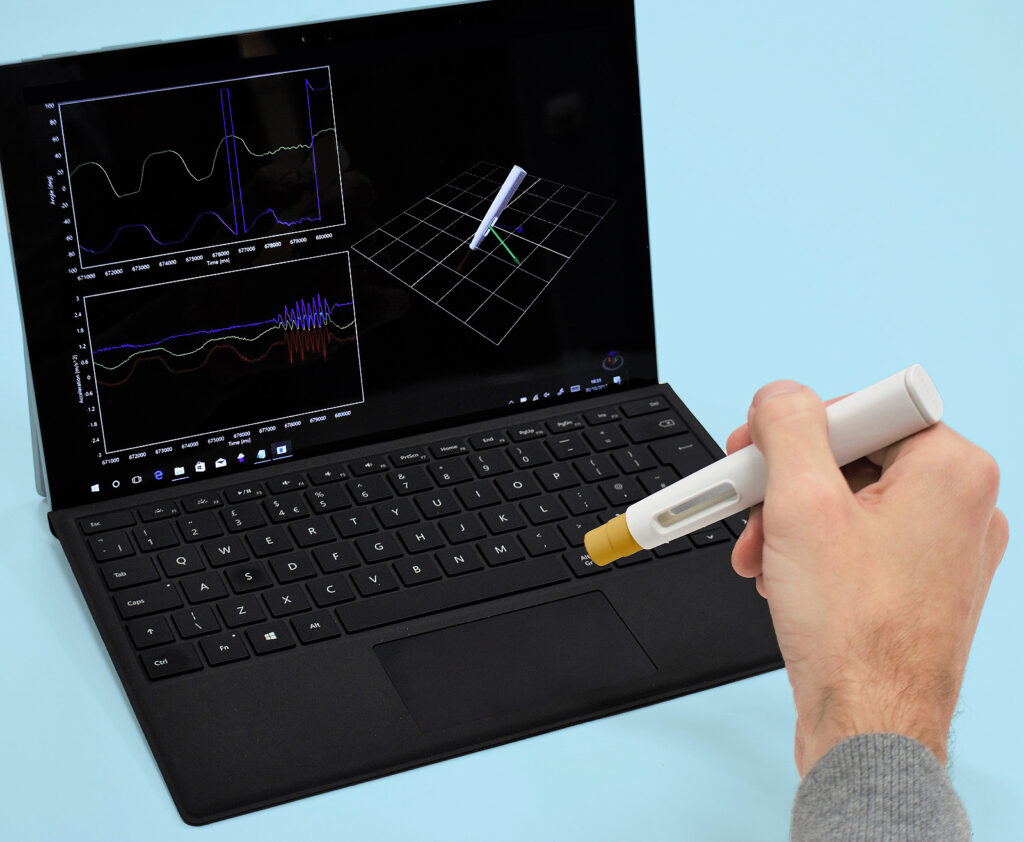
Research, design and technology consultancy Cambridge Design Partnership is pleased to announce the launch of diialog™, a new insight service that helps gain a deeper understanding of consumer behaviour.

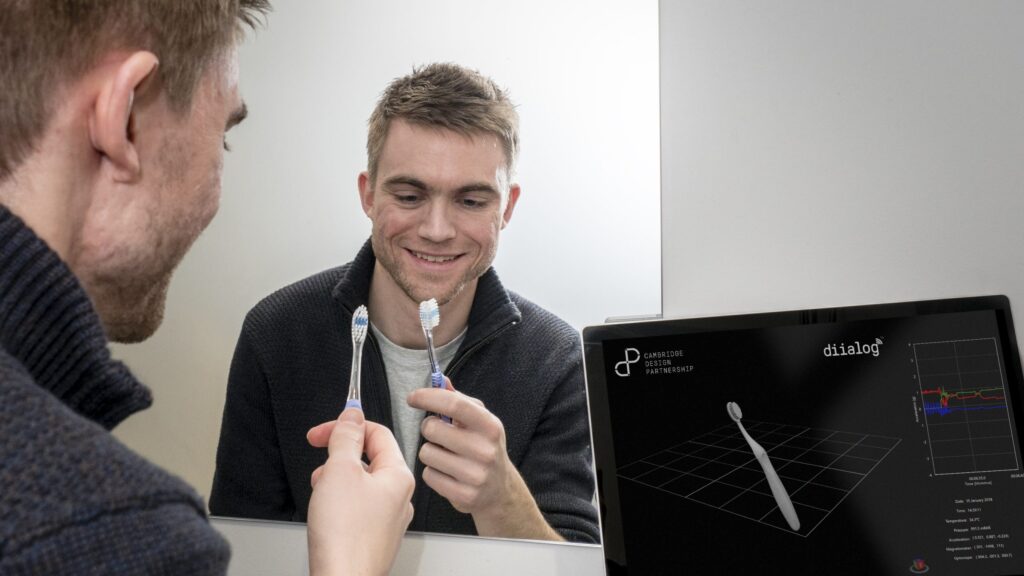
diialog™ uses miniature sensing technology discreetly fitted to products or packaging to capture quantitative data during user tests. Our team of experts monitor activity in real-time or at the end of a trial to generate a conclusive analysis of consumer behaviours and usage patterns.

Being largely unseen, diialog™ encourages natural behaviour and can be particularly useful in sensitive consumer goods, personal or healthcare contexts to record specific actions and routines. Furthermore, the data is totally factual and impartial, removing any ambiguity or misreporting.

The quantitative research inputs that diialog™ generates are invaluable when translated by our experts into actionable insights and fed into the product design process. The outcome is the creation of market-led products that are more closely tailored towards the end user with enhanced or entirely new product experiences.

Many studies suggest the failure rate of new product introductions is high, according to Crawford C Merle, 35% of products fail to deliver significant return1. When a product successfully meets, or exceeds the expectations of users the returns can be high, therefore delivering an optimised experience is of fundamental importance to protect the innovation investment and brand reputation. The thinking behind the diialog™ service is that a modest increase in investment at the front end to develop deeper insights, and validate new concepts and experiences can achieve greater confidence and save vital time and money downstream.

Tom Lawrie-Fussey, Cambridge Design Partnership’s Technology Development Leader explains, “We’re excited about diialog’s™ ability to help our clients’ make more informed innovation investment decisions and better manage risk. It will benefit brand owners and manufacturers who believe in a consumer-centric approach to product design, as they now have access to additional, highly accurate information that complements existing qualitative and quantitative research techniques that can be combined and compared with contextual ethnographic insight to deliver further confidence of potential in-market success.”

diialog™ has already been successfully deployed in the cosmetics and sports industry and there is a great deal of interest in other sectors such as the food and drink, healthcare packaging and medical devices.

CDP will demonstrate the diialog™ system at this year’s FEI 2017 conference in Boston. Please come and join us on May 8th – 10th for a discussion and live demonstration at booth 7.

To find out more about diialog™ contact us at hello@cambridge-design.co.uk.

 1Why Products Fail

ABOUT CAMBRIDGE DESIGN PARTNERSHIP

Cambridge Design Partnership is located in both Cambridge UK and in Palo Alto California, USA. It is a leading technology and product design partner focused on helping its client’s businesses grow. Some of the world’s largest companies trust CDP to develop their most important innovations.

Cambridge Design Partnership specialises in the consumer products, healthcare, energy and industrial equipment markets and its multidisciplinary staff have the expert knowledge to identify opportunities and solve the challenges its clients face.

Visit Our Site 

Contact us at hello@cambridge-design.co.uk

B6 Berrelium CDP pic 3
Share:

CDP mentor young engineers who go on to win the UK fist Lego League

FIRST® LEGO® League (FLL) is a global science and technology challenge for teams of students from 9 to 16 years, which encourages interest in science and technology and can develop key skills that are crucial for their future careers. The students work together to explore a topic and to design, build and program an autonomous LEGO robot to solve a series of missions.

CDP engineers have been mentoring our local team ‘B6 Berrellium’, and we are very pleased to report that last month they won the UK First Lego League in Bristol.

B6 comprises of six members, Albert, Quim, Oscar, Joan, Iona & Lluis, aged from 11 – 15 years. If you spend more than five minutes in a room with them you can’t fail to be impressed by their enthusiasm, creativity and ingenuity.

B6 first knocked on CDP’s door last year, as they’d heard ‘there was lots of cool stuff happening’ in our Cambridge R&D centre, and asked for a tour. We showed them the labs, Hackspace, workshops, and some of the products we have designed that are now on sale. Their enthusiasm soared on discovery that CDP staff have been both FLL contestants and judges in the past, and that we were only too happy to offer some advice and guidance.

From then on, CDP’s Adam Pledger, Oliver Hart, Mike Worth and Stuart Curtis had regular get-togethers with B6 to discuss potential projects for the FLL competition. With this year theme being Animal Allies, B6 settled on working out how they could use technology to protect honey bees from Asian hornets. For our mentors this meant trying to bring a practical perspective to some extremely ambitious technical solutions as the B6 team bounced ideas off each other. We empathised as we do the same thing here every day!

The second part of FLL competition is the Robot Game where they must build and program a robot to autonomously complete a series of missions. Each time we met they updated us on their progress. One requirement was to transfer barrels from one end of the board to the other in a limited time period with all machinery starting off in one corner. Their solution was to build a deployable structure to bridge the gap and send the barrels all in one go, which required lateral thinking, neat design and careful planning.

These solutions allowed B6 to win the UK FLL competition. The next challenge is to take their project and robot to the FLL World Festival in St Louis, USA in April and we wish them luck!

To find out more about B6 Berrellium, visit their website or tweet them @berrellium.

Share:

CDP’s new Hackspace helps us design better products

We have recently opened a new Hackspace within our Cambridge R&D centre to complement our extensive lab and traditional workshop facilities. We asked the team what the rationale is behind this new facility.

Mike Cane, partner at CDP explains, “Our mission at CDP is to create market-leading new products for our clients as quickly and efficiently as possible. To achieve this we take an evidence-based approach to make the right design and engineering decisions along the way.  The new Hackspace gives our engineers and visiting clients an informal space to collaborate, produce rapid prototypes and conduct proof-of-concept testing.”

He added, “When I was an undergraduate at Cambridge University one of our tutors told us that the only way to gain knowledge is through experimentation. It was one of those career defining moments for me. While inspiration and analysis are crucial to solve problems quickly they only get you so far. When you are creating something new you have to engineer it, build a prototype and test it in the lab. Unfortunately there are no short cuts. This is why we have invested heavily in lab and workshops facilities at our Cambridge R&D centre so we can do this quickly to a high standard.”

Reece Gale, site and workspace manager continues, “CDP has a large, well-equipped traditional workshop that includes several CNC machine tools, injection moulding machines and two high-end 3D printers. We encourage all our project teams to get hands on and use these facilities. But recently we are finding that the new generation of engineers joining us from university are more at home with digital prototyping methods than traditional workshop machines. That’s why we have opened the Hackspace. It brings together 3D CAD with the new generation of low cost 3D printers and laser cutters in an environment that is collaborative and creative. It’s a different way of working that is natural to the emerging digital generation. You can make almost anything using Delrin sheet, a laser cutter and a 3D printer!”

Share:

CDP hosts European entrepreneurs to share innovation insight

In recent weeks CDP hosted two delegations of entrepreneurs from Europe, who were keen to learn more about how they could use innovation to create value in their early stage businesses.

The entrepreneurs, from universities in Finland, Latvia and Estonia, visited Cambridge Design Partnership as part of a Venture Camp organised by Professor Alan Barrell.

Cambridge is a key destination for entrepreneurs seeking to learn what makes one of Europe’s largest technology hubs so effective at generating and commercialising new ideas. While Cambridge is best known for its world-leading university, recent statistics show that the Cambridge cluster hosts over 4,300 knowledge intensive companies, employing nearly 60,000 staff and turning over £11bn.

Alan Cucknell, CDP’s Front End of Innovation Leader, hosted the Finnish group. Together they explored why so many innovations fail and identified some common pitfalls. Alan highlighted the importance of building innovation for both entrepreneurs and bluechips on an evidence-based framework. He also introduced them to CDP’s process for identifying market insights, translating these to compelling ideas and then developing optimised products. (CDP calls this Potential Realised). Alan reflects on the visit, “I’ve learnt a lot about innovation from entrepreneurs and start-ups. It was super to spend the afternoon meeting entrepreneurs from such a range of industries and sharing our experience of what it takes to succeed with innovative businesses.”

Mike Cane, Partner and Founder hosted the Latvian and Estonian teams. The energetic entrepreneurs were keen to pitch their business concepts and receive feedback from CDP’s team. They were developing an exciting range of businesses including micro car parks for busy cities, laser therapy devices and an app-based incentive scheme for food brands.

“It’s always great fun meeting entrepreneurs”, explains Mike. “Turning ideas into commercial products is our expertise and we’re passionate about it. So meeting enthusiastic entrepreneurs who are at an early stage in their business journey is very exciting. We had so much experience to share with them and wish them every success in their respective projects.”

Share:

IMPLEMENTING MEDICAL DEVICE CYBERSECURITY James Baker is guest columnist on Med Device Online

Connectivity is ubiquitous – it’s moved beyond an overhyped buzzword and become part of life. Offering ever-advancing levels of access, control, and convenience, widespread connectivity also increases the risk of unauthorised interference in our everyday lives.

In what many experts believe was a world first, manufacturer Johnson & Johnson recently issued a warning to patients on a cyber-vulnerability in one of its medical devices. The company announced that an insulin pump it supplies had a potential connectivity vulnerability. The wireless communication link the device used contained a potential exploit that could have been used by an unauthorised third party to alter the insulin dosage delivered to the patient.

It’s not hard to imagine the devastating impact to both consumers and the company if the reported vulnerability had been exploited. However, risks such as security will not prevent evolution of connected devices – demand for ever-increasing levels of convenience and access are driving the continued evolution and adoption of these products and services.

Cyber-security considerations shouldn’t be viewed as stumbling blocks for the connected device concept. Rather, it’s another of the many product requirements which, if considered and specified correctly at the design stage, can be implemented robustly. Above all, cybersecurity can be validated as part of a wider-reaching regulated device development process. It can’t be considered an isolated element to be bolted on, since it inherently helps to define the system architecture of what is developed.

Read full article.

Share:

Future Directions for Intelligent Packaging

Tom Lawrie-Fussey spoke to Packaging News at the recent Active & Intelligent Packaging World Congress

International names in retailing joined more than 300 attendees at the recent Active and Intelligent Packaging Industry (AIPI) World Congress, enough for 2016 to be marked a ‘breakthrough’ year for technologies putting new powers into the hands of brand owners, altering their perceptions of what packaging is and will become – an industry of tools for communication, quality control and shelf life extension.

Knowing the consumer
Knowledge is power, and smart packaging and smartphone together give brand owners a direct line to understanding what the consumer wants and how they behave. General Mills  brands have participated in a pilotQR digital labelling programme sponsored by the US grocery industry, and Kraft Heinz is exploring ‘frictionless’ tools to give mobile shoppers easier access to in-store promotions and improve customer insight data.

But the connected package and frictionless interaction comes at a high cost and, depending on the underlying job to be done, smart thinking might do the trick.

“Smart packaging can be zero-tech,” says Tom Lawrie-Fussey, Congress keynote speaker and leader of business development at Cambridge Design Partnership (CDP). For example, printing a picture of a flatscreen TV on a bicycle box saved a savvy Dutch company losses through damage in distribution of 70 to 80%. The boxes are similar in size and, as VanMoof predicted, shippers handle a TV with more care.

View the full article in the latest issue of Packaging News.

ablation-catheter-technology-cardiology
Share:

CDP and Kings College London develop innovative steerable catheter to treat cardiac arrhythmia

Innovative design and technology consultancy Cambridge Design Partnership has worked with King’s College London to develop a novel steerable catheter which King’s researchers had designed.  The catheter is designed to improve the treatment of cardiac arrhythmia – a range of conditions which can lead to stroke or heart failure that affects 2 million people a year1 in the UK alone.

The new steerable, micro moulded catheter enables targeted delivery of radio frequency energy to specific points in the heart tissue for corrective treatment. Compared with traditional catheters, the new device has been designed to be quicker and easier to manoeuvre into the correct position, improving the accuracy of positioning and minimising damage to healthy tissue, which should improve success rates of the treatment.

Cambridge Design Partnership won a four-way competitive bid to further develop the device created by King’s College London, involving helix-shaped interlocking tubes that would allow improved steerability and greater compatibility for robotic control over other catheters on the market. The team at Cambridge Design Partnership successfully refined the initial design, enabling the device to meet key regulatory and biocompatibility requirements, whilst ensuring suitability for commercial manufacture. Through CDP’s experience of developing highly technical medical devices, the team was able to miniaturise the design to allow improved space for the delivery of ablation energy and irrigation. The new catheter design is also assembled from micro injection moulded sections, incorporating features that enable the device to be built on an automated assembly line at reduced manufacturing cost.

Matt Brady, head of Medical Therapy, Cambridge Design Partnership, said: “The steerable catheter is an extraordinary product, with innovative features that enable corrective treatment to be delivered to very specific areas of the heart. By enabling greater accuracy and quicker treatment time, we believe it is possible to preserve more healthy heart tissue, and increase the success of the treatment. It’s been hugely exciting to be involved in this joint project with King’s College London and use our expertise to bring such an innovative product one step closer to commercial use.”

Professor Kawal Rhode, Professor of Biomedical Engineering at King’s College; London, commented: “We have been delighted with the results of Cambridge Design Partnership’s work on this project. The team was chosen for the strength of their existing experience in developing catheters across both start-ups and global corporations.  We were very pleased with the engineering approach and practical improvements that they managed to incorporate. They delivered fully moulded parts, and specified other components and the assembly route which fully met our aspirations for the project.”

King’s College London is now undertaking extensive lab testing of the catheter device, with clinical trials expected to be take place in two to three years.

1 Arrhythmia

For further information on this project, please email: hello@cambridge-design.co.uk

For Enquiries to King’s College London:
Please contact Dr. Rob Glen, King’s Commercialisation Institute
Robert.glen@kcl.ac.uk 020 7188 6209
Kings Commercialisation Institute

|||||
Share:

CDP supports local charities with £25,000 donation to mark 25 years

Cambridge Design Partnership (CDP) is donating a total of £25,000 to five charities in Cambridgeshire, UK and Raleigh, NC, USA, where it has fast-growing R&D centers.

CDP is celebrating its 25-year anniversary, having enjoyed record growth over the last 12 months, but recognizes that this period has been uniquely challenging for surrounding communities. Five local charities, four in Cambridgeshire and one in Raleigh, will receive £5,000 to further their mission. CDP is 100% owned by its employees and the charities were nominated by employee owners.

Chris Houghton, Partner, Head of FMCG said: “Our 25th anniversary is a time to reflect on our purpose and culture. Part of that reflection is to acknowledge the way the pandemic has put pressure on the health and wellbeing of those around us and to work to make a positive impact in our local communities. We’ve chosen a range of charities working tirelessly to improve lives locally and we hope our support helps their vital work.”

The five chosen charities are:

Head-To-Toe charityNHS – Cambridge & Peterborough (CPFT) JustGiving, Head to Toe funds community projects focused on physical and mental healthcare.

“I am absolutely delighted to learn about CDP’s incredibly kind donation and am especially pleased to learn that this donation is thanks to nominations from staff. Please do pass my utmost thanks on to the team, we’re so grateful for everyone’s support.”

Hannah Wysocki, Head to Toe Manager, JustGiving, Head to Toe.

Cambridge-Sustainable-Food Cambridge Sustainable Food addresses food poverty, food waste, and creating a sustainable food system.

“This generous donation will be used to further our work to build a more sustainable and resilient food system in Cambridge. We are working hard to create an environmentally and socially just food system, where everyone has access to healthy and sustainable food across the city. CDP’s support will help us to tackle climate change through food-based solutions, such as initiatives that will cut food waste and promote healthy, climate-friendly diets.”

Gemma Birley, Head of Programs, Cambridge Sustainable Food CIC.


Blue-SmileBlue Smile addresses mental wellbeing for school pupils through art-based therapies.

“It was a wonderful surprise to be contacted by CDP and learn that we had been nominated for a donation. This kind of giving means the world to us – and is so important in helping to make a difference to local children, especially as we emerge from the pandemic. Your fantastic donation of £5,000 will contribute directly to the provision of 1:1 arts therapy to Cambridgeshire children who are struggling with their mental health, and will help those children to achieve their potential and enjoy the childhoods they deserve. Please pass on a huge thank you to your team.”

Jess Manley, Charity Director, Blue Smile.


CamcycleCamcycle/Spaces to breathe supports local projects to help sustainable travel and outdoor spaces.

“Throughout the pandemic, Camcycle’s Spaces to Breathe campaign has continuously engaged with local authorities and communities to facilitate emergency active travel measures. As we begin to transition from reaction to recovery, our Zero Carbon Streets campaign will be ramping up with the aim of locking in – and improving on – much of the work that has been done over the past year. CDP’s donation will in part go towards a new technical staff member who will empower residents and authorities to implement high quality, accessible walking and cycling projects for them and generations to come.”

Roxanne De Beaux, Executive Director, Camcycle.


Food-Bank In Raleigh, CDP’s USA team elected to tackle food poverty with a donation to Food Bank of Central & Eastern North Carolina. The charity’s #StopSummerHunger initiative meant donations in June and July, like CDP’s, were matched to provide twice as many meals for the community.

“We’re so grateful to CDP for helping us toward our vision of ‘No One Goes Hungry’. This generous gift will allow the Food Bank to provide the equivalent of 70,580 meals for families struggling to keep food on the table this summer.”

Tessa Johnson, Corporate Partnerships Officer with the Food Bank of Central & Eastern North Carolina.