The Challenge

The golden hour following a traumatic injury is the time when prompt medical treatment is most likely to prevent death.  For a first responder in an intense and chaotic disaster or battlefield scenario, correctly identifying which patient to treat first can be a matter of life and death.

Measuring and monitoring basic vital signs is a crucial part, yet it remains time-consuming using conventional approaches. The British Army identified the need for a better solution to monitor multiple casualties when the medic arrives on the scene.

Nosik-in-White-crop
FRM-Tiff-trial2-crop

The monitor had to be small, lightweight and easy to use.

FRM-17-crop

Together with conventional sensors, we developed new approaches to increase performance.

FRM-9-crop

The wearable is easily fitted and immediately provides a visual display of vital signs.

FRM_case_slider_1
CDP-014

Our Approach

We started not by looking for technology, but by interviewing a range of army medics about their experience of multiple casualty and disaster situations. This discussion quickly ruled out larger civilian patient monitoring systems and focused our product specification on the bare essentials for life; breathing, heart rate and blood oxygenation.

We then developed a low-cost wearable to measure these parameters that could be deployed quickly and would provide easy to understand, actionable feedback. While heart rate and blood oxygenation sensors are well known, we developed a novel breath sensor that was small, robust and easy to apply. In addition to a simple colour coded display, we included wireless communications so that several monitors could link together enabling automated triage and data sharing once the patient was in transit to secondary care.

|||||||||||||

The value we created

We created a unique and practical solution to the challenges of battlefield first responders. Our First Response Monitor has won multiple awards, including the prestigious ‘Best of the Best’ Red Dot award in the Life Science category.

As well as working stand alone, several First Response Monitors can link to a smart phone enabling automated triage, monitoring and data upload.

Connect with CDP

Accelerate your product innovation with CDP’s multidisciplinary expertise. We support product development at critical stages, helping you navigate complex technical, regulatory, and manufacturing challenges. From mechanical, manufacturing and electronic engineering to science-led innovation, human factors and digital systems. Our teams provide the insight and execution needed to move your product forward with confidence, from concept to commercialization.

Capabilities

The Challenge

We spend much of our lives in buildings, so they need to be safe, stimulating, and sustainable places to live. There is a trend toward Smart Buildings that use data from sensors to control the building infrastructure to maximize comfort while minimizing their environmental impact.

We were asked by an innovative West Coast tech start-up to help them launch a new approach to energy management in large buildings. Their cloud-based system would be enabled by an IoT network of smart double outlet sockets, connected through a bespoke communications backbone. The data collected would be used by an AI system to optimize the building’s energy use over time, while adapting quickly to different use scenarios.

Hub-white-lres
Biscuit-graphic

Our Approach

We were asked to design the system hardware and communications backbone, and to organize its manufacture in Asia. Our digital experts created a bespoke system architecture so our mechanical, electronics, and software engineers could develop the smart sockets and communications hub. We built and tested prototypes, confirmed regulatory compliance and selected and managed the subcontract manufacturer in Asia for volume production.

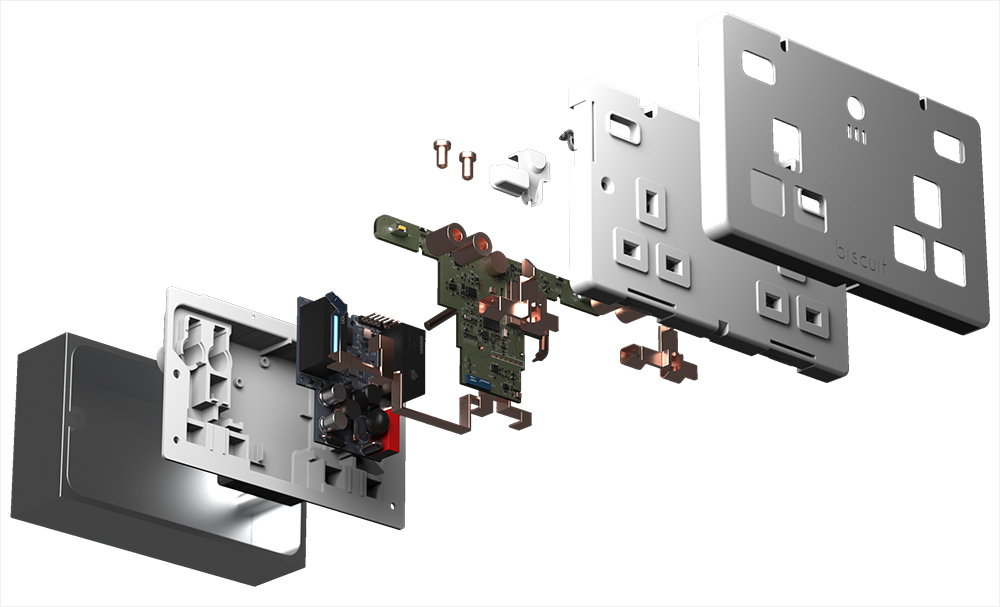
The smart double socket outlet includes electronics to monitor and report seven key parameters that provide rich data on building usage. These include energy consumption, temperature, humidity, air pressure, sound pressure, motion, and light levels.

Socket_exploded-lres
CDP-170118-0028-crop

Test fixtures facilitate the automated testing of PCBs for field trial devices

CDP-160118-0089-crop

Schematics and PCB designs developed under our ‘zero defect’ quality control process

CDP-160118-0069-crop

Multiple sensors create rich data to describe building usage

The value we created

Our client was able to contract the end-to-end development of their system hardware and communications backbone to us so their team could focus on developing user-facing software. We successfully designed the connected monitoring system and implemented a trial in 300 apartments in just 12 months.

We helped our client realize a novel AI-powered Smart Building system featuring sensing, control, and even a micro-grid system that enables local power generation.

Case_study_bisuit_4

Connect with CDP

Accelerate your product innovation with CDP’s multidisciplinary expertise. We support product development at critical stages, helping you navigate complex technical, regulatory, and manufacturing challenges. From mechanical, manufacturing and electronic engineering to science-led innovation, human factors and digital systems. Our teams provide the insight and execution needed to move your product forward with confidence, from concept to commercialization.
Capabilities

Avon_white-1

The Challenge

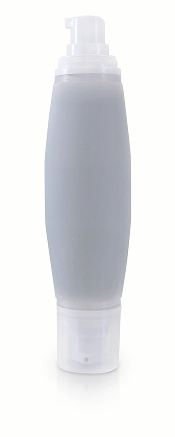
Global beauty brand Avon wanted to maximize the potential of a critical new product launch. ANEW Reversalist Infinite Effects Night Treatment Cream is a ground-breaking skincare product. The product combines two different night creams that need to be rotated every seven days to prevent the user’s skin adapting to the skincare regime.

Key to optimizing the anti-aging benefits was that users needed to remember to rotate the double-ended dispenser each week. Avon sought reassurance that consumers would continue to follow the usage instructions over time – so turned to CDP’s unique user insight service diialog™ for a new perspective. The diialog™ service uses miniature sensing technology discreetly fitted to products or packaging to capture quantitative data during user tests. The result is a conclusive analysis enabling companies to develop a deeper understanding of consumer behavior.

Our approach

The first task was to define ‘normal’ use. We set up an internal trial to ensure our algorithm was robust enough to translate inertial sensing data from the dispenser into accurate user insights.

We then ensured our diialog™ technology could be incorporated into the dispenser without adversely affecting its performance or appearance, while also ensuring there was sufficient battery life to cover Avon’s month-long consumer trial requirements.

Working alongside Avon’s packaging team, our human factors experts were able to ensure our diialog™ technology was a seamless part of the product’s ergonomics.

avon case study - our approach
IMG_0059-crop

An internal trial ensured our algorithm reliably translated the inertial sensing data from the dispenser into accurate user insights

Use behavior tracking sensors

Our diialog™ technology was seamlessly incorporated into the dispenser, eliminating any potential impact on users’ behavior

IMG_0613-Crop-square

Our diialog™ technology was seamlessly incorporated into the dispenser, eliminating any potential impact on users’ behavior

IMG_0536-crop

The value we created

The results of the diialog™ trial revealed that users were able to correctly follow the regimen of rotating the dispenser each week, while there were very few cases of triallists forgetting which end of the device to use.

But we went above and beyond. After successfully assessing and evaluating the original challenge, the trial uncovered further opportunities for packaging innovation to maximize adherence to the unusual usage regimen – insights that were not revealed by the feedback questionnaire completed by trial participants.

Avon_alt_2_case_slider

“The unique insights from the diialog™ trial will help us continue to innovate and offer high-performance, high-quality, great-value products that meet the needs of consumers worldwide.”

Paul Davies, executive director of global skincare R&D, Avon

Connect with CDP

Accelerate your product innovation with CDP’s multidisciplinary expertise. We support product development at critical stages, helping you navigate complex technical, regulatory, and manufacturing challenges. From mechanical, manufacturing and electronic engineering to science-led innovation, human factors and digital systems. Our teams provide the insight and execution needed to move your product forward with confidence, from concept to commercialization.

Capabilities

The Challenge

Water damage is the largest cause of home insurance claims. This Internet of Things (IoT) Leak Sensor can spot if there is an unusual flow of water into your home which could indicate a potentially serious water leak. It sends a notification via your home automation system to your phone, and even helps you find a plumber.

Start-up company FlowGem created an ingenious concept for a novel water detection technology and asked us to design and build a demonstration system for home trials. The device had to be very sensitive to detect a slow leak, yet slim enough to mail out to customers and simple and robust enough for DIY installation.  Of course, it also had to be cost effective, data secure and have a long service life when connected to a Wi-Fi network when powered by just two AA batteries.

Gush-9-Lres-1
IMG_0285-crop

3D printed parts were developed to ensure caseworks met all functional requirements

Gush-34-crop

A clip was developed to maintain a reliable contact to the customer’s water pipe over time

WP_20161012_007-crop

Testing and finite element analysis ensured reliable performance through the product’s life

Case_study_flowgem_2

Our Approach

We quickly deployed a multidisciplinary team led by an experienced project manager together with mechanical, electronics and software engineers. We started by addressing several design challenges that were needed to turn the core technology into a practical and reliable product in the hands of customers. Having solved these, we moved on to design and build the sensors and software infrastructure needed for a 100-user home trial, in just six months.

We designed the sensor to simply clip onto your incoming water pipe. Data is collected and analysed in the sensor using smart algorithms to save power and is transmitted periodically to the cloud to build up a picture of water usage. You are alerted by text message to problems ranging from a burst pipe to a slow drip.

Gush-10-lres-1
Case_study_flowgem_3

The value we created

Our work enabled start-up FlowGem to demonstrate the potential of their technology to the big players in the home automation market. This led to a successful acquisition and integration of the sensor into one of the leading Connected Home ecosystems.

The unrivalled performance and ease of use of the new connected water sensor, together with positive results from their large home trial led FlowGem to successfully implement their business plan.

Connect with CDP

Accelerate your product innovation with CDP’s multidisciplinary expertise. We support product development at critical stages, helping you navigate complex technical, regulatory, and manufacturing challenges. From mechanical, manufacturing and electronic engineering to science-led innovation, human factors and digital systems. Our teams provide the insight and execution needed to move your product forward with confidence, from concept to commercialization.

Capabilities

The Challenge

Gmax Technology asked us to help develop an innovative heart monitor to help vets and trainers accurately monitor their sport horses. Up until now they usually adapted human heart monitors, but they often gave false results and could not spot anomalies that could indicate future heart problems.  They also did not hold up well in the demanding commercial equine training environment.

Vetcheck_2_white
Maydan-Mirage-70-crop

Prototype development ensured a high level of performance and reliability

Maydan-Mirage-16-crop

Testing a heart beat trace visualisation in the lab

Concept-3-rear-crop

Wirelessly connectivity enables measurements to automatically be stored alongside other training data

Case_study_vetcheck_2

Our Approach

The device ergonomics and user interface were created to allow the vet to see the heart beat trace, a visualisation that allows anomalies to be quickly identified.  The monitor is also wirelessly connected to a Smartphone allowing measurements to be automatically recorded in a database, alongside other training data.

CDP-240517-078-lres
Vetcheck_white

The value we created

The Gmax VetCheck system is in use by equine professionals  all over the world.  It is the easiest and most accurate way to make measurements of your horse’s heart and is used both in training and international competitions to ensure that high standards of welfare are maintained.

Connect with CDP

Accelerate your product innovation with CDP’s multidisciplinary expertise. We support product development at critical stages, helping you navigate complex technical, regulatory, and manufacturing challenges. From mechanical, manufacturing and electronic engineering to science-led innovation, human factors and digital systems. Our teams provide the insight and execution needed to move your product forward with confidence, from concept to commercialization.
Capabilities

The Challenge

Billions of dollars are invested each year in clinical studies for new respiratory therapies. If the data collected turns out to be of poor quality or inconclusive then the study can fail. The unfortunate result is that potentially life saving therapies may never make it into the hands of patients.

Inhalers, for example are notoriously tricky to use and their performance is typically dependent on how the patient inhales. Even in monitored studies only a qualitative assessment of technique is possible. In Phase III studies, which are often unsupervised, the only opportunity to explain any unexpected or outlying data has been to rely on Case Report Forms.

quantii-inhaler-connected-data-sensor-platform-product
Case_study_header_quantii_C

Our approach

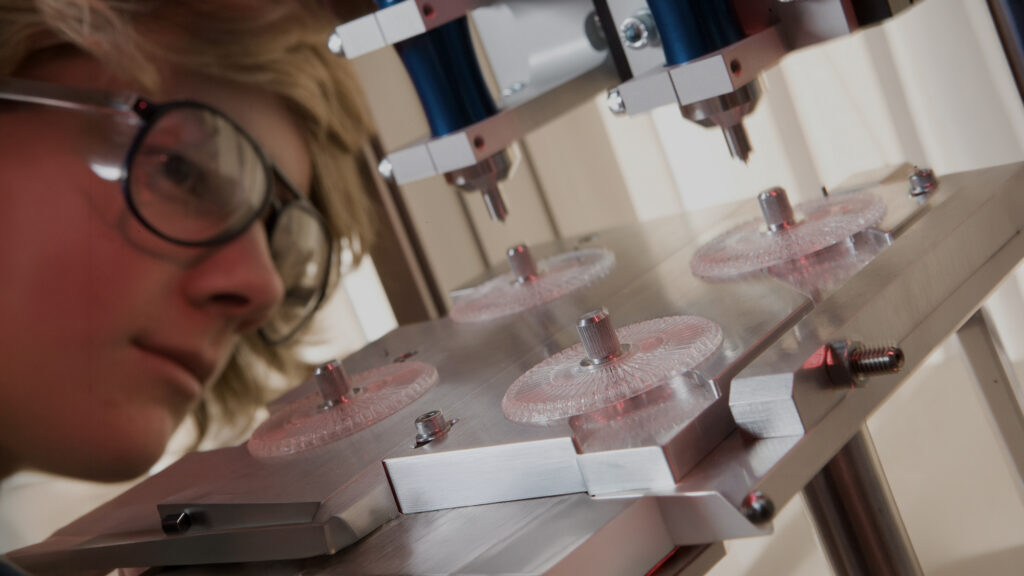
We created the quantii sensor platform to improve data quality in product trials, by improving training and providing rich data on patient interactions.

We incorporated discreet, miniature sensor technology into the test device together with data storage and wireless communications. Firstly, user training is enhanced as quantii provides real-time feedback so users can quickly understand what is needed of them and practice the correct technique. During the trial each operation of the device is monitored and translated into a wealth of quantified user insights, such as air flow and capsule discharge rates throughout each inhalation cycle.

Case_study_header_quantii_B
Quantii provides a wealth of insight, including accurate measurement of the inspiratory flowrate profile, ramp-up rate, total inhaled volume and the spin rate of the capsule

The value we created

Quantii enables high-quality, data-driven clinical studies and, for the first time, use error can be distinguished from drug efficacy. This allows you to direct remediation investment to the right places and accelerate your journey to market.

Connect with CDP

Accelerate your product innovation with CDP’s multidisciplinary expertise. We support product development at critical stages, helping you navigate complex technical, regulatory, and manufacturing challenges. From mechanical, manufacturing and electronic engineering to science-led innovation, human factors and digital systems. Our teams provide the insight and execution needed to move your product forward with confidence, from concept to commercialization.
Capabilities


Instant Detect 2.0 wildlife monitoring and threat detection system


The challenge

The Living Planet Report 2020 revealed a catastrophic 68% decline in global wildlife populations due to environmental destruction and the illegal wildlife trade. The Zoological Society of London (ZSL) asked us to implement the first market-ready generation of its wildlife monitoring and threat detection system, Instant Detect 2.0.

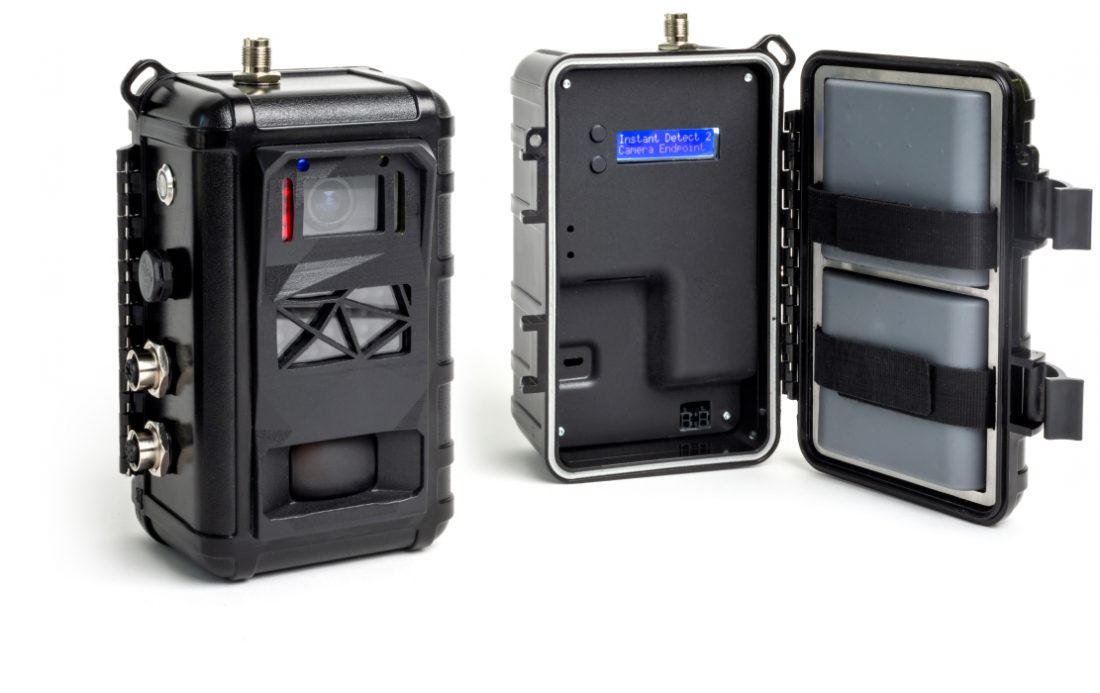
Instant Detect 2.0 is a satellite connected system aimed at monitoring wildlife and detecting poachers in the most remote and unconnected landscapes. The system is battery powered and backpack portable so it can be deployed anywhere.   

Our approach

Instant Detect 2.0 gathers data from many locations at one time using sensors, including a high resolution camera that can be triggered by infra-red motion detection, timed triggers or a metal detector sensor. The entire system is built to military standards of robustness so it can withstand a long service life in the harshest of conditions. 

Digital connectivity

Data is transmitted from the sensors using a low power, long-range radio network (LoRa) to a base station, from there it is uploaded to the Iridium satellite network and then to the cloud. A single base station connects 10 cameras and more than 100 sensors, allowing large areas to be monitored by a single system.


wildlife monitoring and threat detection system
Instant Detect 2.0 Image sensors
Image sensors optimise performance in low light conditions.
Instant Detect 2.0 Circuit schematics and PCB designs
Circuit schematics and PCB designs are developed under our zero defect quality control process.
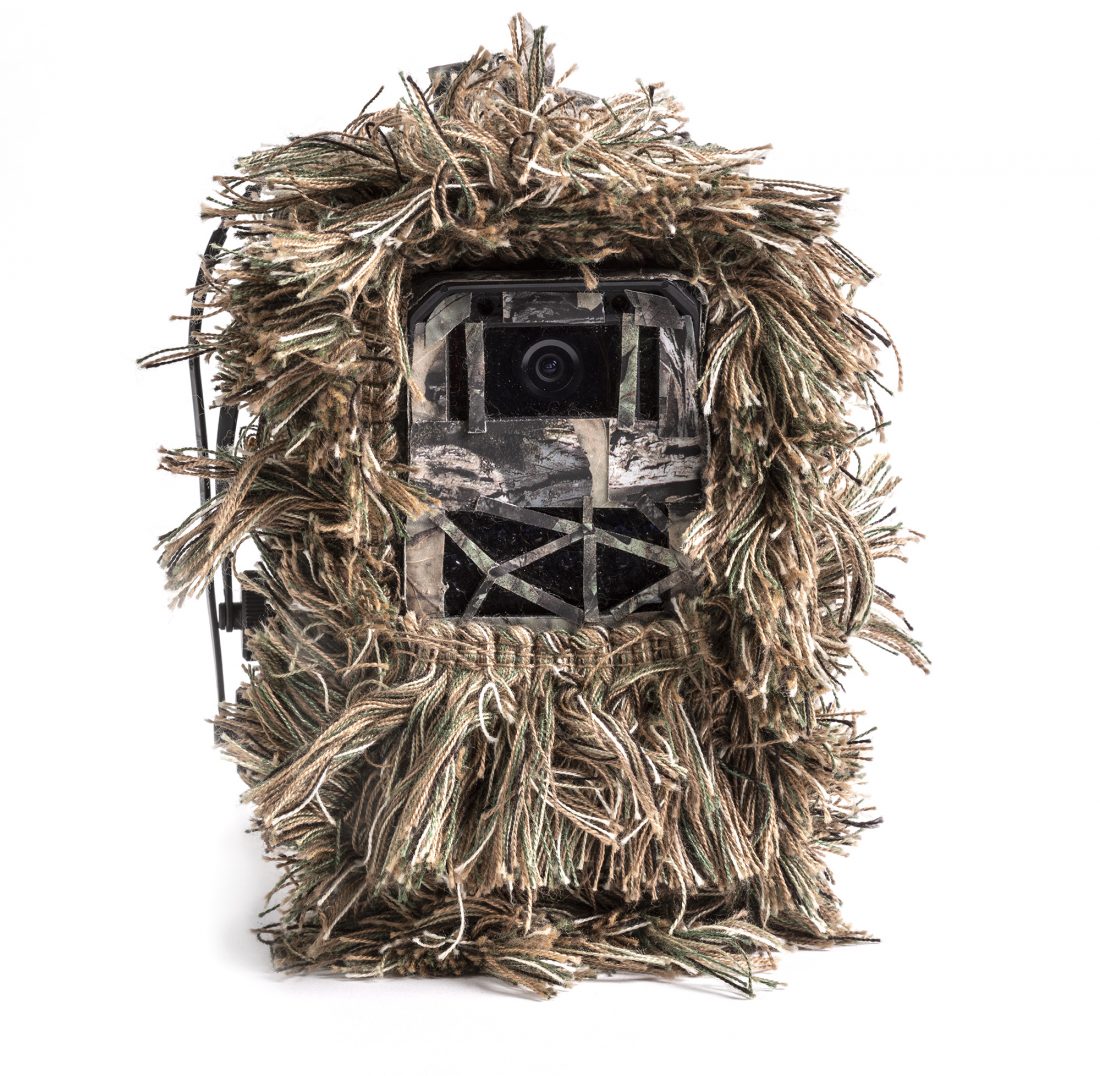
Instant Detect 2.0 caseworks decorated to hide them from poachers
Military specification caseworks are decorated to hide them from poachers.


The value we created

Within 18 months the Instant Detect 2.0 system was developed, prototyped and initially tested in Kenya and a remote uninhabited island in the Pacific Ocean. Currently in beta testing in several real-world conservation field sites, the system is set to have enormous conservation potential with a wide range of potential applications, including protecting endangered species from poachers, monitoring wildlife health, managing human/wildlife conflict and enabling scientific research like monitoring the impacts of ocean plastics and climate change on uninhabited archipelagos. 


Connect with CDP

Accelerate your product innovation with CDP’s multidisciplinary expertise. We support product development at critical stages, helping you navigate complex technical, regulatory, and manufacturing challenges. From mechanical, manufacturing and electronic engineering to science-led innovation, human factors and digital systems. Our teams provide the insight and execution needed to move your product forward with confidence, from concept to commercialization.
Capabilities

The Challenge

Leading international swimwear brand Speedo wanted to launch their next-generation swim tracking app called ‘Speedo On’, in time for it to be pre-installed on Samsung’s new Gear Fit2 Pro activity tracker.

However, swim tracking is extremely challenging because of the wide variety of swim techniques and strokes. Lap counting is also complex for a wrist-based device as it needs to differentiate between normal swimming and the hand movements that occur during a turn.

Speedo_alt_white

Our Approach

Speedo collected a large data set from swimmers using a worldwide team that worked around the clock. Then our data scientists deployed a mixture of analysis techniques, using both classical and machine learning algorithms to identify the relevant swimming characteristics.

We used these insights to develop sophisticated algorithms to translate data from the tracker’s accelerometer and gyroscope into reliable measurements of lap count, lap time, stroke type and stroke count that are displayed on the Gear Fit2 Pro. Users can then seamlessly transfer their data on to the Speedo On web platform, which acts as a comprehensive training partner, offering additional analysis of swims and tracking progress against fitness goals.

Speedo_white

The value we created

The first stage of the development was completed in time for launch and the ‘Speedo On’ swim tracking app was successfully pre-installed on the Gear Fit2 Pro. It included training programs, tips and tailored advice developed by some of the world’s best coaches and athletes, all enabled by our algorithms.

Connect with CDP

Accelerate your product innovation with CDP’s multidisciplinary expertise. We support product development at critical stages, helping you navigate complex technical, regulatory, and manufacturing challenges. From mechanical, manufacturing and electronic engineering to science-led innovation, human factors and digital systems. Our teams provide the insight and execution needed to move your product forward with confidence, from concept to commercialization.

Capabilities

Soft ice cream

The challenge

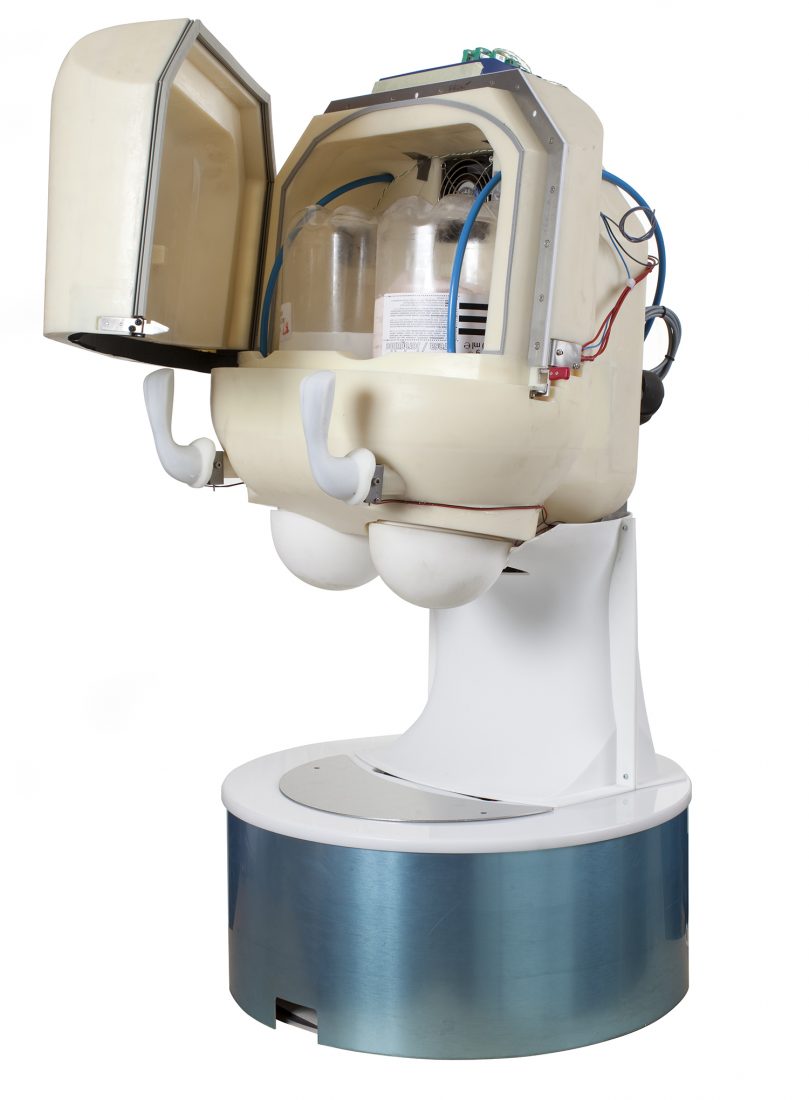
Soft ice cream is a large and growing segment of the global ice cream market, and Unilever wanted to expand their offering. The global leader had a novel cartridge that neatly avoided the hygiene challenges traditionally associated with this category, but they needed a semi automated refrigerated dispenser for smaller retailers, restaurants, and entertainment venues.

A market trial was planned but their prototype had technical challenges. Unilever knew that resolving these with a manufacturing partner this early in the project might overly constrain the design, so they asked us to help.

The product ergonomics had to make the dispenser easy for operators to use.
Test rigs confirmed the thermal performance of the chiller design.
We ensured the fit and finish of the manufactured prototypes matched production standards.

Our Approach

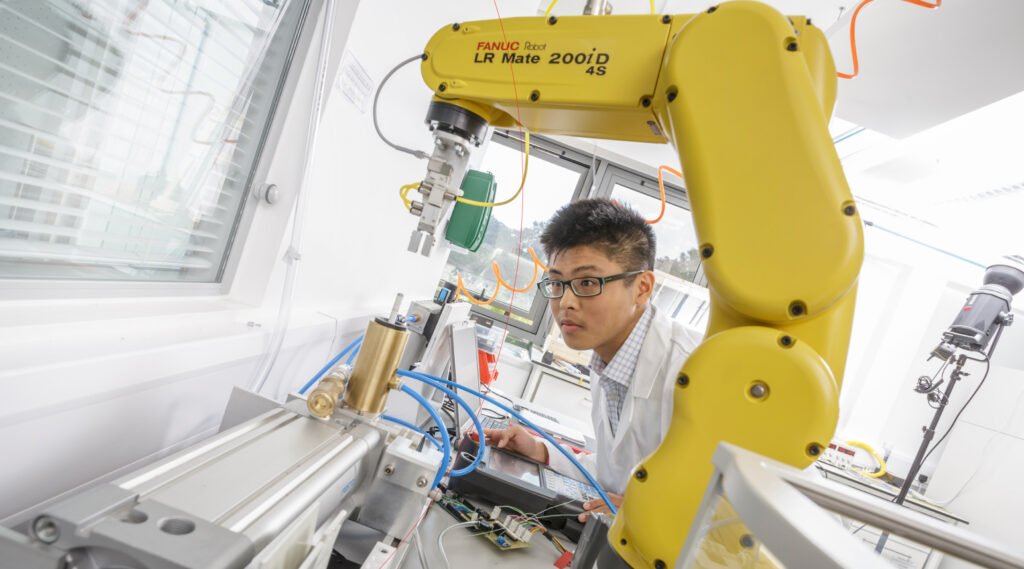
To address the problems, we implemented elements of Potential Realised™, our phased approach to product development. First Root Cause Analysis was used to identify and scope the key challenges in function, usability and cleanability, and we applied our broad-based technical team to quickly develop and test solutions. These were integrated into a ‘technology demonstrator’ only three months into the project. Once fully tested we moved on to design a prototype suitable for low-volume manufacture.

We set about creating tooling and a small manufacturing facility for a batch of 50 dispensers for the field trial. The aim was to manufacture units with a fit, finish, and function indistinguishable from future production machines. Of course, the refrigerated dispensers had to be safety tested, meet appropriate CE standards and be shipped to very tight timescales.

We also added connectivity to each machine together with a cloud-based database and user interface to help Unilever manage the supply chain and to monitor sales and maintenance.

The value we created

The world’s biggest ice cream manufacturer was able to successfully deploy 50 appliances in outlets across Europe for a summer season in order to gather high-quality feedback on their new ice cream offer. This allowed them to make an important investment decision to grow their Heartbrand.

Though the units were prototypes, the 50 connected, refrigerated dispensers we built looked and worked reliably just like the real thing.  


Connect with CDP

Accelerate your product innovation with CDP’s multidisciplinary expertise. We support product development at critical stages, helping you navigate complex technical, regulatory, and manufacturing challenges. From mechanical, manufacturing and electronic engineering to science-led innovation, human factors and digital systems. Our teams provide the insight and execution needed to move your product forward with confidence, from concept to commercialization.

Capabilities

The challenge

Patients suffering from chronic diseases, often with co-morbidities, are increasingly receiving their medication via self injection outside of the clinical setting, increasing the treatment burden. They sometimes need to store their drugs in the fridge, allow them to reach the correct temperature for injection, prepare their auto-injector for use, and finally dispose of the used device safely.

Using our patient-centered design approach we analyzed many patient stories and the root causes of poor adherence and use errors. This led to our team reimagining the future of parenteral drug delivery.

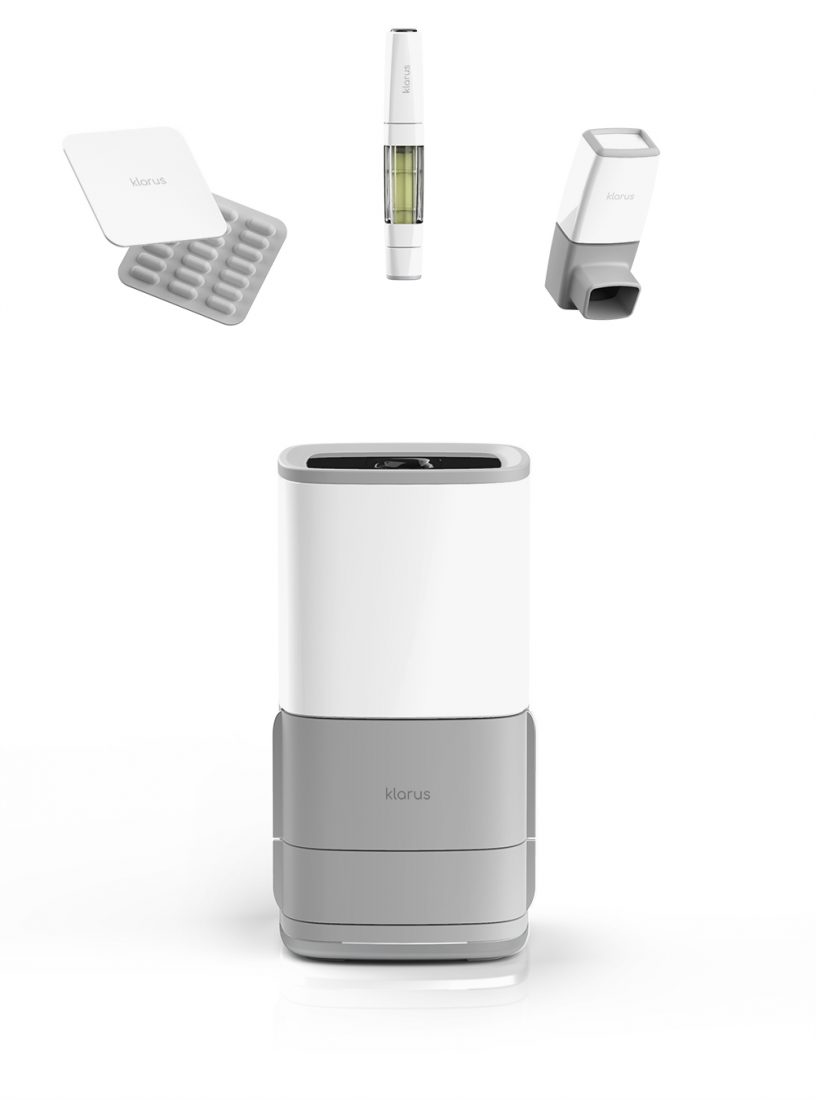
So we created the Klarus system. It provides a complete therapy management solution for indications requiring a regular fixed dose injection. In addition to providing alerts, reminders and diaries for patients and caregivers, Klarus also automates many of the tasks often missed by patients. These include correct storage temperatures, monitoring use-by dates, ordering repeat prescriptions, safely loading and unloading the injection device, and managing sharps waste.

Our approach

We applied our core capabilities in digital systems and mechanical engineering, alongside our human factors expertise, to rethink drug delivery for patients with chronic disease.

Klarus builds in temperature-controlled storage of up to three months of medication to avoid using the kitchen fridge. It has automated loading and unloading of each dose to reduce the risk of needle stick injury and missing out key safety checks.

It also has a digital training and technique assistant to help improve adherence, for example by reducing the risk of under-dose due to early needle removal. To improve long term therapy management, Klarus enables a diary and condition tracking app to help the patient better understand how well their therapy is working.

Klarus alerts the patient when supplies are running low and reorders if required
Klarus is designed to be stylish, seamlessly blending into the patients’ life and home
After injection, Klarus collects the needle and cartridge ready for safe disposal

The value we created

Compared with conventional injector systems, Klarus has adherence designed in. We expect that if offered to patients as a subscription-based replacement to weekly treatments with a single-use auto-injector, it would pay for itself in just one year. In addition to helping improve patient outcomes, Klarus is a more environmentally friendly solution.

Klarus was honored with a prestigious international Red Dot award in 2018.

Connect with CDP

Accelerate your product innovation with CDP’s multidisciplinary expertise. We support product development at critical stages, helping you navigate complex technical, regulatory, and manufacturing challenges. From mechanical, manufacturing and electronic engineering to science-led innovation, human factors and digital systems. Our teams provide the insight and execution needed to move your product forward with confidence, from concept to commercialization.

Capabilities