The risks and opportunities of the circular economy

China – opening the door to success

Many still hold the outdated belief that China’s expertise lies solely in manufacturing, and the ability to copy other people’s innovations. On a recent trip to China, I saw how this couldn’t be more wrong. China is poised for success – it has all the pieces in place, the manpower under its belt and, with the right partners, could outpace growth everywhere else in the world.

I had the chance to attend the Mobile World Congress Shanghai which showcased China’s rapidly growing strength in fields ranging from artificial intelligence to 5G to drones and evidenced the country’s lead on many cutting-edge technologies that are set to have a huge impact in the 21st century. China is now home to some of the world’s largest companies that are not just limited to the domestic market but have become established global brands, with corporations such as Huawei, Xiaomi, Alibaba and DJI all fetching valuations exceeding $10bn. Witnessing the sheer scale and speed of the country’s development during trips to China over the past few years, it’s clear this is just the beginning.

As part of our trip to Shanghai representing CDP, we took part in the inauguration of the Shanghai International Energy Innovation Centre (SIEIC), created by SHEnergy Group – one of the world’s biggest suppliers of electricity and gas. It has partnered with UK-based accelerator BGTA and used the launch to release a report that forms the basis of the centre’s strategy, studying effective open innovation culture and focusing on CDP and the Cambridge ecosystem as a proven centre of success. During the week, CDP consumer insight and innovation leader Cesar Lastra and I ran a training workshop for SHEnergy executives on the importance of open innovation for large corporates and took part judging a start-up competition – on both occasions having the opportunity to talk about how CDP can support Chinese businesses in developing a successful innovation strategy.

Open innovation has seen a large uptake in China but why are corporates there now increasingly focusing on this model? Although the market audience of 1.4bn people is huge, competition is equally vast. Many highly successful Western companies have failed in China, such as eBay, Amazon – and  Uber, which spent $2bn trying to compete with rival private Chinese ride-sharing firms before selling to competitor Didi. A major contributor to getting ahead in this highly competitive environment lies in open innovation – the practice of innovating through the use of external ideas to fast track your progress. Anyone who assumes this means simple ‘copying’ of ideas from the West seriously underestimates the capability of this superpower.

Huawei, for example, is now considered a world leader in the field of smartphones, having outpaced Apple’s global phone sales in 2017. A huge factor responsible for its success has been its open innovation system – a network that connects Huawei engineers with high-profile university academics to help them rapidly solve tough technical challenges. Another exemplary case that can be seen all over China is WeChat, China’s mobile messaging app that puts WhatsApp to shame. Its open strategy of partnering with third-party developers and giving them access to the platform to enhance functionality has made it one of the most-used apps in the world, with more than 1bn active users. What started as a messaging app has become more of an ecosystem that people use to navigate their daily lives – used for social media sharing, payments and a whole suite of other services.

A recent global survey by CB Insights on corporate strategy found that key failure in effective corporate innovation occurs through having a closed attitude towards innovation, trying to build alone as well as having no formal innovation process, which in turn greatly increases the time it takes to develop new products. Many successful Chinese corporations are realising this and are increasingly seeing the value in technology collaboration to remain ahead of the curve. One only needs to look at the pace of the country’s progress to see that they are doing something very right.

It’s clear that open innovation is bringing great success in China and is a successful model that can be followed worldwide. This is what we do every day to help many of the world’s top brands develop market-focused technology and deliver highly innovative products to market.


Exploding some of the myths about product safety

Exploding some of the myths about product safety

Hardly a week goes by without the press or social media picking up on a story, often accompanied by dramatic video, of batteries overheating and even in some cases ‘exploding’ in a consumer product – raising serious concerns about product safety among both consumers and manufacturers. In reality, these incidents are quite rare compared with the number of products sold. But when they occur they are very serious – both at a personal level for the user and at a reputational level for the manufacturer – with a lingering impact from product recalls and loss of brand value.

The vast majority of cases are entirely avoidable through robust product engineering and manufacturing approaches. Many incidents are, in fact, due to failures of the lithium-ion batteries used to power the device. This technology has a long history of issues in products as diverse as the Boeing 787 Dreamliner passenger aircraft, where battery pack fires were widely reported, and laptops and mobile phones – in particular, the Samsung Galaxy Note7 where Samsung had to recall millions of the handsets due to widely publicised handset fires and it led to a ban on taking the handsets on aircraft in the US. The problems that cause lithium cells to overheat and eventually catch fire or explode are well known – but we continue to see these failures occurring in devices on the market, due to either circuit design issues, incorrect mechanical embodiments or poor cell manufacturing processes. Some instances have even been blamed on ‘user error’. But we disagree on this point – in a properly designed product, user errors should not lead to hazards.

For example, in the case of e-cigarettes, especially those where the battery is interchangeable and charged outside the device, ‘user error’ is cited as a major contributor – with cells being charged with whatever charger is to hand, potentially driving them at too high a voltage or current, or cells even being replaced with low-quality, under-rated or damaged cells. Some of the most dangerous battery failures occur when the device fails in the owner’s trouser pocket – for example, when unprotected spare batteries are kept in a pocket along with loose change and keys, which then cause a direct short across the cells. These failures, and subsequent high-profile reporting of injuries, would have been avoided with good design practices and understanding of common usage behaviours. Product design engineers have many tools to call on to make a product safe, including electronic protection within the circuit itself, physical design features preventing connection of incorrect chargers, and correct allowance of space for the battery within the product envelope.

Whilst the manufacturers of high-end brands understand how to safely build and manage lithium-ion cells, many companies still risk failures in the field when they source and rebrand low-cost products from manufacturers that do not apply the necessary design practices and manufacturing controls. These products are usually designed to be as cheap as possible and, as such, often miss out many of the key safety features that the high-end brands include in their products. One example of this is the lack of thermal management. Lithium-ion cells should not be charged at temperatures above 40-50˚C, which can easily occur if the device has just been used to drive a heater (such as in cordless hairstylers or e-cigarettes) or has been left on a car dashboard (for example, portable power packs to charge mobile phones). Safe products contain internal temperature sensors to check the temperature and delay charging until the cells have cooled down. But sometimes cheap products omit this feature – risking the cells overheating, which can lead to a fire or explosion, especially if done repeatedly.

Whilst some categories of products are required to undergo regulatory safety tests, most low-voltage, battery-powered products are exempt from this, so a product with lithium-ion batteries can be launched with little or no safety testing having been carried out. Standards do exist but they may not have been implemented. Even if a product has been tested to the most common safety standards, such as UN/DOT 38.3 or IEC 62133, these standards tend to focus on the cell itself and may not offer sufficient verification that the product-level design will not cause long-term damage to the battery cells, which may lead to them failing many months after being sold. Standards do exist for usage of cells in specific product categories – but again, this relies on the product being engineered appropriately, with safety and the guidance of the standard in mind.

We would recommend that companies sourcing battery-operated products from original equipment manufacturers check proper battery design and manufacturing requirements are met and that the product has suitable back-up safety circuits to shut down the device should the primary charger or discharge circuits fail. At CDP, as well as engineering products to safely use rechargeable cells, we can also quickly analyse and test other product designs and samples to advise brand owners as to their safety and adherence with best design practices – to help avoid the risk of in-field failures and damaging product recalls. Ultimately, this is a service we would not need to offer if all products were designed and engineered with safety in mind – but we have not seen a reduction in the flow of incorrectly engineered and potentially dangerous products going to market.


How a sideways look can help you get ahead

How a sideways look can help you get ahead

For some innovation challenges, solutions already exist – it’s just that your industry doesn’t know about them yet. Dyson is the classic example – its iconic vacuum cleaner cyclonic separation technology was originally being used to separate particulates in sawmills. By identifying and linking a seemingly unrelated market opportunity with the technology for cyclonic separation, a $4.8 billion revenue vacuum giant was born.

Cyclonic separation is now considered the norm in vacuum cleaners. But it is only after the dots have been connected between the consumer’s requirement for separating dust from air and the cyclonic separation technology, that the link seems painfully obvious. Making these links is something which we do systematically through a process called technology mapping.

Inspiration by analogy – or design by analogy – is an outcome from our technology mapping process, finding broadly related industries, products or services that share a common focus yet often use a different perspective to find solutions. The idea of observing and ‘borrowing’ technology from other industries is a powerful tool for creative concept generation and tech scouting exercises.

So, what can be gained from borrowing technology? There’s a chance that someone, somewhere else is doing what you’re trying to do in a better, cheaper, more efficient way. Tapping into this knowledge opens up possibilities for radical innovation with novel solutions. But where might you start the process of searching for analogous solutions and how do you extract value from this technique?

The value of design by analogy will start with how your challenge is defined – you have to identify the right job and need to address. The well-quoted example is if you are a power tool company designing a new drill, the customer actually does not want a bigger motor or better speed control, but a better way of making holes in walls. By focusing on the job and associated needs, and abstracting their definition, you invite solutions that you may never have considered.

A well-defined challenge is essential to successfully scoping analogous fields – more difficult than you may think because it can lead to unintended consequences. You probably already know how your product should work, what it should look like, how it should be manufactured and how much it must cost to be profitable. By knowing what a product should and should not be, you can iterate, optimise and improve. While this works very well, however, it is unlikely to inspire anything game-changing.

To tap into the benefits of design by analogy, stay clear of the detail of today’s solutions. Broaden the definition of the challenge and consider the basic elements of the need you are trying to meet. The definition has to be expressed in such a way that almost anyone can understand it. Now you’ve opened up the contextual relevance to expert problem solvers from distant fields who can understand the context of your challenge. They may know nothing of how your product works, what it looks like, how it’s manufactured or how much it should cost – but fundamentally they could be doing exactly what you’re trying to do every day.

It is by framing the challenge in a way that others can relate their field-specific knowledge to – and by not getting buried in the specifics – that novel ideas are conceived and technologies sourced. The obvious candidate solution others deal with every day in their field could be a breakthrough revelation in your industry.

Let’s say you’re trying to design a coronary stent. You might look for analogy in scaffolding structures or perhaps aeroplanes or a plant lumen – all of which have engineered minimalist support structures to deal with external loads. Once these analogous fields have been identified, the right science and technology knowledge is required to develop them. You’ll need people with a deep understanding of those areas. This is where collaboration or ‘open innovation’ can become powerful.

The beauty of working within such a collaboration is the ability to explore much further afield by pooling together creative thinkers with expertise of different backgrounds versed in a range of analogous fields. Through collective knowledge and experience, you have the power to look at problems in a new light with a healthy variety of perspectives, without ingrained constraints and assumptions.

So next time you’re defining a challenge and tech scouting, it may be worth considering design by analogy. Find fresh insight beyond the usual assumptions and constraints within your industry for ideas that are truly novel and a source of groundbreaking innovation.

image 1

MAKING A SPLASH Time-critical CDP software development helps Speedo make waves in swim tracking

18 June 2018 – Swimmers across the globe have a new level of activity tracking at their fingertips following a collaboration between digital technology and product design firm Cambridge Design Partnership (CDP) and leading international swimwear brand Speedo. CDP has created a swim tracking algorithm for a new generation of tracking app, called Speedo On, which can capture a range of key swim metrics via a water-resistant fitness band so that they can be incorporated into personal fitness goals.

The connected Speedo On app is featured on Samsung’s new Gear Fit2 Pro activity tracker. Sophisticated algorithms translate data from the accelerometer and gyroscope in the ergonomic wrist-worn device into measurements of lap count, lap time, stroke type and stroke count. The interactive swim tracking platform acts as a comprehensive training partner, offering analysis of swims and tracking progress against fitness goals. It also includes additional training programmes, tips and tailored advice, developed by some of the world’s best coaches and athletes.

As part of a worldwide team that worked around the clock to produce the app and its accompanying service for swimmers, the CDP team had a tight timescale of just two months for the development of the software in time for the launch of the Gear Fit2 Pro. So it deployed a mixture of analysis techniques – using both classical and machine learning algorithms to identify the relevant swimming characteristics. “One of the key challenges was understanding which stroke was being used as we had to classify the data taking into account wide variations in swim technique,” said Roberto Basile, a software engineer at CDP. “Lap counting was also complex as we were simply using measurements of hand movements – yet needed to differentiate between normal swimming and the movements during a turn.”

The development was completed in time for launch, with the Speedo On swim tracking app pre-installed on the Gear Fit2 Pro. The data is seamlessly transferred on to the Speedo On web-based platform. The app also has a social dimension – enabling users to follow other swimmers, take part in challenges and share achievements. And swimmers can complete time trials and get their SWOLF score – a swim efficiency measure.

“Speedo is committed to inspiring more people to get into the pool to achieve their fitness goals,” said Tim Sharpe, innovation director at Speedo owner Pentland. “The combination of CDP’s unique software skills and Speedo’s swim expertise has provided fitness-focused swimmers with a completely new level of tracking.

Notes for editors

Cambridge Design Partnership is a technology and product design partner focused on helping clients grow their businesses. Some of the world’s largest companies trust CDP to develop their most important innovations. Located in both Cambridge (UK) and in Palo Alto, California (US), CDP specialises in the consumer products, healthcare, energy and industrial equipment markets. Its multidisciplinary staff have the expert knowledge to identify opportunities and tackle the challenges its clients face. For more information, visit: www.cambridge-design.co.uk

The world’s leading swimwear brand, Speedo is passionate about life in and around the water, creating revolutionary new technologies, designs and innovations and supporting swimming from grass-roots through to elite level. In the 1920s Speedo made history with the Racerback: the world’s first non-wool suit. In 2008 Speedo redefined swimwear again with Fastskin LZR RACER – the fastest and most technologically advanced swimsuit ever created. 2011 saw Speedo unveil another world first with the Fastskin Racing System – a cap, goggle and suit designed to work together as one. Speedo is owned by Speedo Holdings B.V. and distributed in over 170 countries around the world. For more information, visit: www.speedo.com

For further information, contact the marketing team:
+44 (0)1223 264428
marketing@cambridge-design.co.uk

MainImageResized

WORLD-CLASS INSPIRATION Launch of new Pyrex range of cookware designed by CDP and International Cookware

28 February 2018 – Technology and product design firm Cambridge Design Partnership (CDP) has joined forces with International Cookware to help shape a new generation of Pyrex dish designs that can take centre stage on the table. The new Inspiration ovenware range pushes the boundaries of material and manufacturing technology, with aesthetic influence drawn from traditional handcrafted finishes and bold geometric detailing.

It’s the second successful design collaboration between the two companies – following on from the launch of the centenary Pyrex ovenware range Optimum in 2015. Pyrex is renowned as a pioneer in premium glass cookware. But recent research highlighted that the very qualities which made the brand so dependable in the kitchen – functionality, practicality and resilience – were discouraging customers from presenting the cookware on the dining table.

The collaborative research uncovered crucial insight which offered a new perspective on the functional and aesthetic design. The new range also had to deliver consumer value and appeal across a variety of sizes, while adhering to challenging industrial borosilicate glass manufacturing requirements.

“The result is an addition to Pyrex’s market-leading range of products that can take centre stage on any dinner table,” said Ben Strutt, a partner at CDP. “Presentation of food is central to the dining experience and the ideologies of being a good host – and the Inspiration range delivers new levels of beauty and refinement without sacrificing legendary Pyrex performance and durability.

“From front-end consumer research through to industrial design and design for manufacturing, our comprehensive understanding of the whole process enabled us to propose credible design concepts which helped Pyrex push the boundaries of what is possible with the material. We are uniquely placed to tackle this kind of challenge as we can draw on expertise from different disciplines, as well as our experience of working within very specific client marketing and manufacturing requirements.”

The research for the new range highlighted an opportunity for an ‘occasional’ piece of cookware that combined practicality and style, would not look out of place with personal crockery set choices, and would support a range of food types and occasions. Ease of cleaning was critical, as was the depth of the cookware to prevent food overflowing in the oven.

“The design of the handles – often utilitarian in nature – required a fundamentally different approach to meet the aspirational project objectives,” said Ben. “The final design has integrated handles that blend into the sides of the dish, appearing as attractive features when not in use.” The new design is manufactured in tempered borosilicate glass, which can withstand temperature variations of up to 220°C – so the Inspiration range can go straight from the fridge to the oven.

“Working with CDP has helped us balance the complex list of demands and create an attractive new range of cookware that is equally at home on the table or in the oven,” said Xavier Frappier, senior product manager at Pyrex licensee International Cookware. “The new Inspiration range combines traditional values with cutting-edge manufacturing and design to give our customers the very best in elegant but practical cookware for any occasion.”


Notes for editors

Cambridge Design Partnership is a technology and product design partner focused on helping clients grow their businesses. Some of the world’s largest companies trust CDP to develop their most important innovations. Located in both Cambridge (UK) and in Palo Alto, California (US), CDP specialises in the consumer products, healthcare, energy and industrial equipment markets. Its multidisciplinary staff have the expert knowledge to identify opportunities and tackle the challenges its clients face. For more information, visit: www.cambridge-design.co.uk

Pyrex is a trademark of Corning Incorporated, used under licence by International Cookware. The iconic cookware brand has offered families new ideas to help prepare, cook and serve at the table since 1915. Combining tradition and innovation, the brand now includes a wide range of cookware, available in several materials, shapes, designs and colours. International Cookware has its own borosilicate glass manufacturing plant in Châteauroux, France, and employs more than 500 people. For more information, visit: www.pyrex.eu

For further information, contact the marketing team:
+44 (0)1223 264428
marketing@cambridge-design.co.uk

TOP DESIGN HONOUR

TOP DESIGN HONOUR – CDP wins a prestigious Good Design award for innovative product design

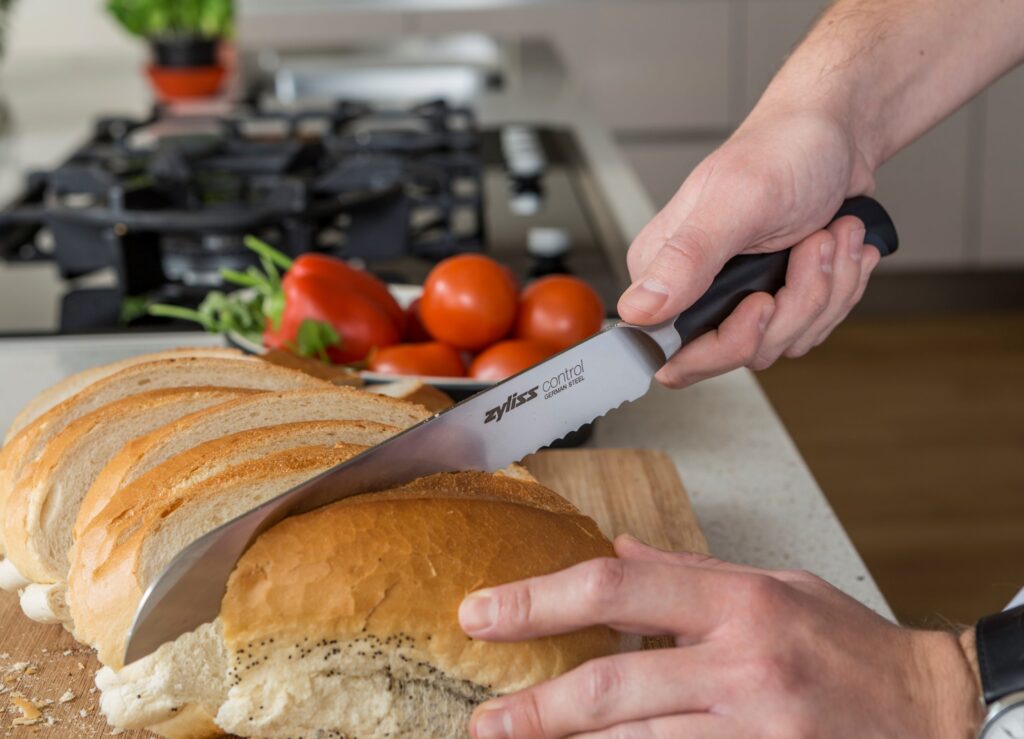
12 February 2018 – Technology and product design firm Cambridge Design Partnership (CDP) has been awarded one of the top honours in the design world. It has won a Good Design award for its work with DKB Household on the Zyliss Control knife range – a breakthrough in knife design that improves the user experience and reduces the spread of bacteria.

The prestigious Good Design awards aim to recognise the most innovative and cutting-edge industrial, product and graphic designs produced around the world. They are run by The Chicago Athenaeum Museum of Architecture and Design, in co-operation with the European Centre for Architecture, Art, Design and Urban Studies. The organisers say the emphasis is on quality design of the highest form, function and aesthetics – a standard beyond ordinary consumer products and graphics.

“Since 1950, Good Design has become an internationally acknowledged benchmark and symbol of outstanding design that serves as a beacon for design-interested audiences in our global economies,” said Christian Narkiewicz-Laine, museum president at The Chicago Athenaeum.

Challenging convention, the Zyliss Control knives were designed to meet the needs of the consumer – not just the professional chef. They were the result of extensive consumer-focused research into how people actually use kitchen knives in their home, as well as their concerns and aspirations. The research was conducted by a multidisciplinary CDP team, using the powerful ‘jobs-to-be-done’ innovation perspective to provide a solid evidence base for inclusion of a range of functional knife and storage attributes.

The knives support many different grip styles comfortably and have a unique indentation on top of the blade to give more confidence and control for detailed preparation work. They are manufactured from high-grade German stainless steel and feature antibacterial agents in the handle which kill 99.9% of all germs. They are also dishwasher safe – and the range includes two sizes of wood storage blocks, both featuring antibacterial removable sheaths that are also dishwasher safe.

“This Good Design award is a fantastic endorsement of the unique skills of our world-class team,” said Andrew Wynne, senior design consultant at CDP. “We know our clients appreciate those skills – as three-quarters of our new clients last year came from recommendations. But it is an honour to also have this prestigious independent recognition of our design expertise. Our approach combines front-end consumer research with the very latest technology. In the case of the Zyliss Control knives, this enabled us to prioritise user needs in the product’s design – completely differentiating the Zyliss brand from others in the marketplace.”

Notes for editors
Cambridge Design Partnership is a technology and product design partner focused on helping clients grow their businesses. Some of the world’s largest companies trust CDP to develop their most important innovations. Located in both Cambridge (UK) and in Palo Alto, California (US), CDP specialises in the consumer products, healthcare, energy and industrial equipment markets. Its multidisciplinary staff have the expert knowledge to identify opportunities and tackle the challenges its clients face. For more information, visit: www.cambridge-design.co.uk

For further information, contact the marketing team:
+44 (0)1223 264428
marketing@cambridge-design.co.uk

What really happened in Vegas – Cambridge Design Partnership

What really happened in Vegas

Las Vegas is crazy – and the CES tech show is even crazier. I needed a long drive through Death Valley and Yosemite afterwards to work out what on earth I’d witnessed.

CES is full of ideas and new, shiny gadgets – but, just like Vegas, not all that glitters is gold. Here are some of the major themes that struck me walking the stands, and some of the little touches that maybe provide real innovation:

1. Measurement – we’re going to measure everything! The first overwhelming slap in the face is that the ‘Internet of Things’ (IoT) is really here. It was hard to find products that didn’t provide some kind of internet interaction or capture data for someone. Is all of it really useful? Does all of it really link to a user or system benefit? I couldn’t help thinking of The Circle – a futuristic book by Dave Eggers about the IoT, where convenience, supervision and feedback rule over common sense and broader human needs. Many of the ‘innovations’ at CES (mentioning no names) seemed to be traditional devices with a comms module to provide some simplistic single data route. Some of the more interesting devices have begun to incorporate multiple functions as a result of the connection – for example, the LG Hom-Bot vacuum cleaner that integrates cleaning with home security and home monitoring. But this is not exactly an obvious combination of functions – and I can’t help wondering whether there aren’t other, more relevant, tasks the vacuum cleaner would be better suited to.

Although I found many of the connected concepts a little over the top, I was very impressed with Qualcomm’s running shoe sole with a promised ‘life of sole’ battery performance – very exciting.

2. Smarter products – having used a sleep monitor last year, I Iearnt how badly I sleep sometimes. Well, at least that’s what the data told me. At CES there were endless sleep gadgets. There were rooms full of connected pillows, mattresses, headbands, headphones and monitors, all to improve sleep. But I can’t help feeling we are responding to the symptoms of a connected world with more connections and data. As an innovator, I’d like to explore a different approach to the very real issues of sleep and look at the root causes – stress, diet, exercise, daylight – to see if smarter tech really can help with these.

A refreshing development away from the typical so-called ‘smart’ technologies was a breakthrough in clothes washing. Xeros Technologies, a developer of polymer technologies, demonstrated three technologies which drastically improve sustainability – water-reducing beads, ‘in-drum’ technology and improved filtering to prevent microplastics entering the water cycle. This technology has been around for many years – the ‘innovation’ at CES was a move from the commercial to the consumer market. It’ll be interesting to see whether this will be the future of laundry in the home.

3. Maturing user interfaces – I love the phrase that products are magical when the technology gets out of the way. The explosion of voice recognition and the battle of Google Assistant vs Amazon Alexa was hard to miss. Below is a fraction of a display showing the proliferation of Google Assistant into hundreds of devices. Almost as many as the hundreds of white boilersuited minions they sent to the show.

But I was excited to see more ways we could interact beyond the touchscreen. Two examples of this were an incredibly robust demo from Osram on eye monitoring and face metric monitoring. I have seen this technology before but never from such a neat sensor which provided incredible robustness for eye direction monitoring and facial recognition. The potential to improve driver safety by monitoring microsleep could clearly save lives on the road, with no obvious user interaction needed. Imagine a yellow warning light on the dashboard that says the driver is falling asleep!

Another neat implementation of improved user interface – and technology getting out of the way – was a toothbrush using optical markers and a ‘magic mirror’ phone app to track these markers to help kids brush longer as they ‘kill the monsters’ on the screen by accessing and brushing different parts of their mouth.

4. System products – my final observation was the increasing number of products that were packed with multiple technologies to solve multiple issues. A simple example of this was a cycle helmet by Coros winning a Best of CES award. Its integrated lighting and bone conduction speakers help riders maintain road awareness whilst enjoying calls or music on their bike. To my mind, this is a useful application of technology – in contrast to the LG Home-Bot, where the combination of features seems somewhat forced.

The ‘innovations’ on display at CES were a really interesting demonstration of how technology – and our use of it – is advancing. However, the products that I believe will make the most impact in the next few years are not the ones with the greatest combination of technology. The winners will be the ones where the glitzy technology seems to disappear behind the crystal clear consumer need – whether that is saving time, saving water or saving lives.

The luxury of designing for one

The luxury of designing for one

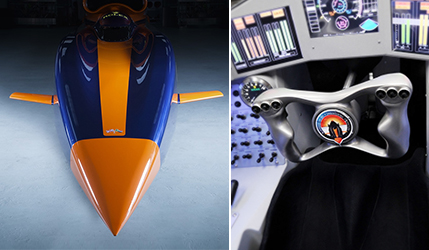
It weighs 7.5 tonnes and is powered by both a jet engine and a rocket, which together will produce over 135,000 bhp – more than six times the power of all the Formula 1 cars on a starting grid put together. It has temperatures inside the rocket that reach 3,000°C – twice as hot as the inside of a volcano. And it’s all designed to power the supersonic Bloodhound car to over 1,000 mph.

But when it’s screaming down the South African desert, the car will be controlled from just one component – our steering wheel – designed for just one brave driver, Andy Green (see video here).

The Bloodhound project has faced many extreme challenges and is an awesome engineering adventure. However, as we became more and more involved in the design of the steering wheel component, I couldn’t help but notice the contrast with the design challenges we normally work on that end up in mass production. So I thoroughly enjoyed the specificity of the Bloodhound brief – which led me to ponder on how manufacturing volumes influence our design approach. I think this can be summed up in three areas:

1. User needs – we normally design products to be used by millions of people in multiple markets. This means that, although they differ hugely in age, physical size, strength and cognitive ability, they must all receive a safe, consistent and excellent experience to meet their specific needs. To understand these diverse customer groups, we employ techniques like ethnographic research, human factors studies and statistical analysis. We then test design features, through prototyping, with representative user groups to validate our vision.

With the Bloodhound steering wheel, on the other hand, when a feature needed to be confirmed or adjusted, we simply had to print a model and ask Andy to hold it. Luckily for us, Andy has an extraordinary clarity when it comes to what he likes and dislikes – and this process quickly led to an optimised design, with adjustments to the button locations, the handle geometry and the clearance for his legs until everything was right! In terms of mechanical strength, we could proof test the actual wheel to make sure it met the technical specification. Although we calculated the strength using finite element analysis, it was verified by a tensiometer machine when we had the first sample wheel manufactured. We were later reassured to hear that the Bloodhound team couldn’t actually break it in what was intended to be a destructive test.

2. Manufacturing volume – when we create new products for our clients, we must consider how to mechanise manufacture to make millions of replicas at high quality and low cost. As engineers, we need to maintain the function of a new device despite the natural variation of materials and manufacturing processes, and the degradation of the product during its life. We use strategies like ‘failure modes and effect analysis’ and ‘tolerance analysis’ to help predict how the design will react to manufacturing variances – and how this might lead to failures or poor outcomes for the user. We identify critical design and manufacturing features – and check that they can be easily reproduced by the materials processes we are using to ensure a high production yield and high product reliability, all within acceptable costs, of course. Because we never see the product before it is shipped to the customer, we have to rely on statistical analysis to prove that every copy of our design will work as intended until it comes to the end of its service life.

The Bloodhound steering wheel, in contrast, was manufactured in a very low quantity (just a handful – the actual wheel and a few back-ups). This allowed a very slow (days/hours rather than seconds) and very high-performance manufacturing process to engineer a large margin of safety to make sure nothing would go wrong. So the wheel is 3D printed in titanium and costs around £15,000 to make – a manufacturing cost per part that would make our regular clients faint!

3. Environment – in product development, the environment of use can be hard to predict. During transportation, a product can be taken from extremes of cold to hot or wet to dry – consider a medical device trucked across a desert in the Middle East that then has to perform a critical diagnostic test. We engineer products for these extremes, which often leads to significant design challenges. The product can also sit in contact with nasty chemicals on a shelf for years before the customer receives it – which could slowly degrade many plastic components.

The difference with the Bloodhound project is that the environment is relatively well known. We know where in the world the steering wheel will be used – and that it will be used under the strict supervision of many project engineers. However, no car has ever travelled at the speeds expected – and when you extend that thinking beyond our component to the whole car’s aerodynamics, power and stability, then only the engineers intimately involved in the project really understand the scale of the challenge.

However, they are overcoming this challenge using the same principle that we use to create reliable mass-produced products. It’s based on careful specification of the challenge, breaking this down into systems and subsystems, and then designing each carefully to that specification. The design is systematically tested – first at component level, then system level and finally at car level. Then the Bloodhound team will run the car gradually faster and faster, all the time monitoring performance through a network of sensors and data loggers installed around the vehicle. If the calculations work out to be correct, this process will continue until the 1,000 mph target is exceeded.

So, in conclusion, do I really think that designing for the ‘one-off’ Bloodhound was a ‘luxury’ project? As a potentially iconic design for such a high-visibility engineering project, then it truly is an honour to be involved. Certainly, with the steering wheel, many of the complications involved in design for high-volume manufacture just went away.

But, at the end of the day, it was not detailed aspects of process or approach that I remember most. What I have really taken from the experience is the value of having a team with such a clear and inspiring vision of success for the project – to travel at 1,000 mph and inspire a generation of new engineers. This vision meant all the people we worked with were totally focused on finding ways to succeed. Perhaps this is because we can all visualise the 1,000 mph run in our mind’s eye – whereas a million different customers using a product, each in a slightly different way, in their daily lives is much more divergent.

So what I will take back from the Bloodhound experience to our ‘designing for the many’ projects is that when you can build a ‘clarity of vision’ across the team as to what success looks like, then this will pay dividends many times over in the outcome of the innovation.

Satmap Active 20 Collaboration

Satmap Active 20 Collaboration with Satmap Systems to create the ultimate rugged, high-performance sports GPS device

The Challenge

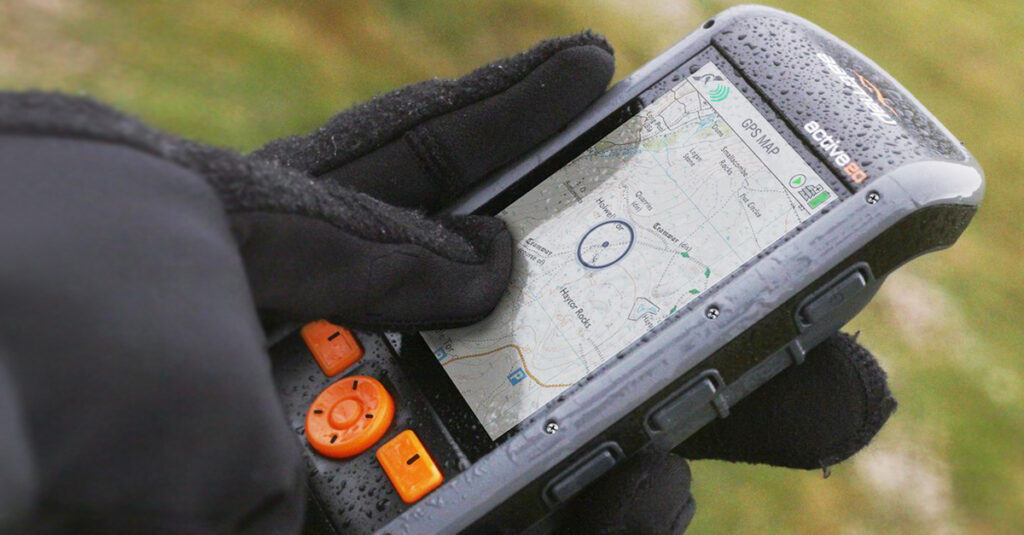
Following the success of its Active 10 and Active 12 GPS devices, Satmap Systems decided to create the next generation of Active devices – with improved screen toughness, button functionality and waterproofing. It also wanted to incorporate new features such as a touchscreen, Wi-Fi connectivity, improved GPS and a unique dual-battery system.

APPLIED EXPERTISE

  • Research & strategy
  • Human factors
  • Industrial design
  • Packaging
  • Technology development
  • Mechanical engineering
  • Electronic engineering
  • Software engineering
  • Wireless & connected
  • Short run manufacturing
  • Manufacturing processes
  • Supply chain management

The Solution

Our first step was to gain human factors insights and gather customer feedback from previous models to feed into the design process. Our industrial design team then worked to maintain and enhance the brand, while our engineers integrated the new functionality and developed the mechanical design to meet the extreme requirements of Satmap customers.

Proof-of-concept tests ensured that the custom Gorilla Glass touchscreen within the ultra-rugged case design exceeded IK7 grading in impact tests and achieved IP68 rating for water submersion.

Benefit to Client

The new Active 20 was a sell-out success within days of its launch.

“We’re really pleased with the Active 20 – we’ve integrated all the exciting new technologies we were hoping to, while maintaining our customers’ favourite features. We are confident the Satmap experience will be better than ever.”

Howard Dyson, managing director and founder, Satmap Systems

Reflections on wearable technology

As wearable technology in all its (as yet unknown) forms becomes ubiquitous, it is interesting to reflect on practical changes this might bring to our lives – and whether it will represent a significant departure from the now decade-old smartphone generation. Having never used any wearable technology before, I was recently given a smartwatch to try out. After a week of constant use, I thought it might be interesting to look back on what I learnt and the impact of the device on my daily life.

The first thing I was surprised to note was that my smartphone ‘screen time’ was significantly reduced. This may seem counterintuitive but isn’t that surprising when you consider the frequency and variability of mobile notifications and the level of distractibility that seems to increase with screen size. As notifications come to your wrist, they can be prioritised almost instantaneously – a welcome change from the laborious pocket-extraction-swipe-to-unlock routine – with maybe only one in ten meriting an instant response. Smartphones are becoming increasingly notorious for their capacity to absorb our entire attention when in use, so any opportunity to reduce the frequency of screen checks is a welcome one – not to mention a chance to improve personal safety.

Secondly, it quickly became clear that regular use of a smartwatch results in a more seamless integration between our physical and virtual environments – making it (to a certain extent) a low-level form of augmented reality. This trend towards a more fluid interaction with technology is something we have seen grow in our client-based projects and is really driving the development of wearables. The way our customers are using technology is constantly changing, making it more important than ever to focus on human factors and ensure we are meeting the correct stakeholder needs.

The physical design of the watch means that it moves with you and responds to you – in stark contrast to the prescribed set of actions associated with other technology such as phones, computers or tablets. The user interface (UI) design of the watch also allows features such as fitness tracking, map guidance and instant messaging to become part of the wearer’s larger everyday experience, rather than detracting from it. Using the watch to provide walking directions, for example, allows you to take in the surrounding environment – improving both your safety and the quality of your journey to a large degree. This satisfies the craving for constant connectivity and simultaneously allows more effective engagement with the physical world – two factors that have arguably eroded one another in recent years.

Ensuring that our UIs allow for multiple possible use cases is a vital part of the product development we undertake for our clients. There are always trade-offs – for example, between navigational ease and product aesthetics – and getting the balance right can be challenging, particularly with the increasing number and variety of interconnected devices. I was pleased to see that the smartwatch has mostly avoided the fatal mistake of ‘too much too small’ in its UI design, and prevents flashy graphics overwhelming the product’s usefulness.

The final point I was glad to see was that the watch prevented my screen becoming clogged up with advertising – and I would suggest that wearables might be an important step in reclaiming the screen space we have lost to this corporate encroachment on our mobile devices. Along with many others over the past decade, I have watched with resignation as popular apps and websites have either been bought out by large corporations or forced to increase revenue through advertising. Even previously protected spaces, such as our social media feeds, have succumbed to the patently enormous potential for commercialisation and now offer us more tailored products and services for our consumption than ever before. Wearable technology, as it is currently developing, simply does not offer enough pixels for advertising companies to exploit effectively – although finding ways to effectively generate revenue on our wrists without inhibiting the user experience is surely an area ripe for innovation.

Overall, I was impressed by the changes wearable technology made to my life in just one week. But although I think this technology is worthy of the hype, I don’t think it has quite achieved the revolutionary status of the smartphone just yet. But then again, perhaps that’s a good thing.