R&D center in Raleigh||

Cambridge Design Partnership opens state-of-the-art R&D center in Raleigh, NC, and kicks off local recruitment drive

World-leading technology and product design company Cambridge Design Partnership (CDP) today open its new, state-of-the-art R&D center in Raleigh, North Carolina. Now in its 25th year, the company has seen impressive growth over the last 12 months, securing major new clients, delivering world-changing innovation and growing headcount by more than 40%. This success, fueled by client work in the fields of drug delivery, molecular diagnostics, consumer devices, surgical robotics and more, has driven CDP to make a considerable investment in new facilities in North Carolina’s Research Triangle.

CDP has refurbished a historic building on West Morgan Street, in the heart of downtown Raleigh. Working with the existing structure and respecting the heritage of the building and neighborhood, the company is committed to growing roots in the Raleigh community and creating new, highly-skilled job opportunities.

With the new facilities operational, attention now turns to a major recruitment drive, with positions open across a range of disciplines, including mechanical, electrical and software engineering, human factors, quality, manufacturing, and industrial design. Early-stage professionals are invited to apply to a new intern program.

CDP has chosen to anchor its new R&D center and US headquarters in North Carolina’s Research Triangle due to the region’s thriving biomedical innovation sector, excellent transport links and deep pool of skilled engineers and technologists. Aki Laakso, Partner and CDP’s Director of Raleigh Operations said, “In the past, we have served a global client base from our headquarters in Cambridge, UK. We have seen a strong increase in demand from our US clients in the past ten years, with more than half our business today coming from America. Our new Raleigh facilities, with cutting-edge labs, a design studio, user observation suite, full machine shop, and pilot manufacture space, allow us to more effectively deliver world-changing innovation in the US.”

(Image, left: Hans Pflaumer, right: Aki Laakso)

Since 2019, CDP’s US operation has been led by Aki Laakso and Hans Pflaumer. Aki Laakso is an experienced mechanical engineer with a storied history that includes three years at NASA Goddard Space Flight Center and innovation across disciplines, from wearables to drug delivery devices. Hans Pflaumer has a proud track record of bringing first-of-a-kind medical devices to market and is a recognized visionary in the field of minimally invasive medical devices, with a focus on surgical robotics.

“Our new facility is a sign of the confidence we have in our US operation. The Research Triangle, with its strong culture of innovation and skilled workforce, is the right place for us,” said Aki Laakso. “We’re recruiting for a variety of exciting roles and look forward to growing right here in Raleigh.” he added.

CDP delivers end-to-end product and technology development for clients in the healthcare, consumer, and industrial equipment sectors. CDP’s work starts at the point a business decides on the need for innovation and finishes with the launch of a breakthrough new product that is customer focused and commercially effective.

Explore openings at CDP


For further information and media inquiries, please contact: media@cambridge-design.com or call +44 1223 264428


|||||

CDP completes pilot manufacture of Point of Care diagnostic readers for rapid COVID-19 testing

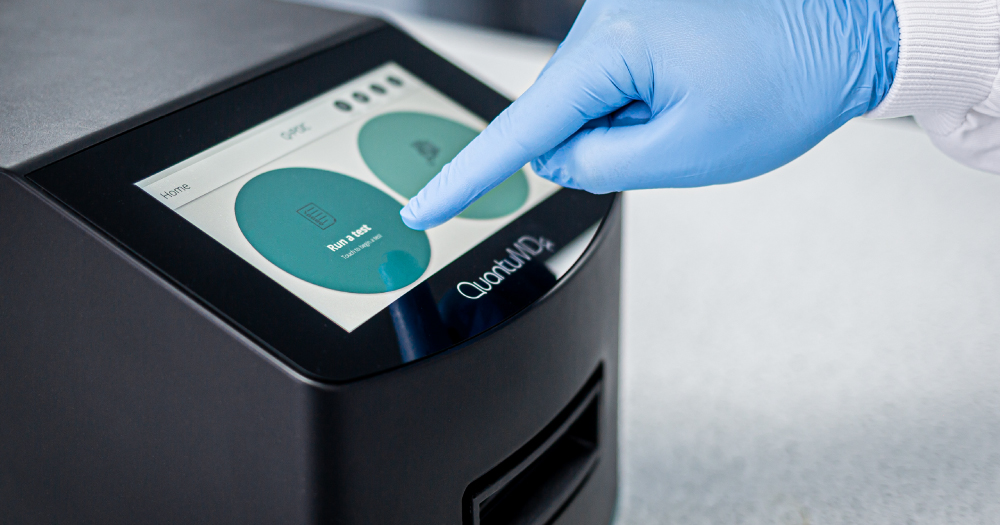
A team at UK product and innovation company Cambridge Design Partnership (CDP) has produced highly deployable devices for COVID-19 testing. CDP has been collaborating with diagnostics tech firm QuantuMDx to refine their Q-POC™ device and produce the first batch of readers to detect COVID-19 within approximately 30 minutes. QuantuMDx is now investing over £11 million to scale up production and introduce this rapid diagnostic solution to benefit patients and frontline health workers across the globe.

QuantuMDx is developing molecular diagnostic devices for a range of diseases and has developed and launched a highly accurate lab-based SARS-CoV-2 assay. Prior to the COVID-19 outbreak, the firm had commissioned CDP to produce prototype devices for CE marking. CDP worked through the first UK lockdown to improve the design of the reader and the first units are deployed at UK hospitals for COVID-19 testing studies.

“After beginning our partnership with QuantuMDx during 2019, we were delighted to be asked to collaborate with this innovative company once again, at a critical time. The team has been highly motivated by this crucial project and proud to contribute to the national effort,” says Dan Haworth, CDP’s Head of Diagnostics.

Colin Toombs, VP Research & Development at QuantuMDx, said: “We’ve worked in partnership with CDP since April last year, to undertake accelerated pilot manufacture of our Q-POC™ device, which is a portable DNA/RNA analyser offering rapid, sample-to-answer, molecular diagnostic testing at the point of care. The QuantuMDx and CDP teams have worked in close partnership to optimise our product development and manufacture devices to deliver testing for COVID-19. They are being released initially for research use, but we are rapidly moving towards CE-IVD of Q-POC™ for SARS-CoV-2 detection. Working together with CDP, we’ve established an ongoing partnership for the future.”

The device works by processing a swab sample, amplifying the target sequence specific to SARS-CoV-2, which causes COVID-19, and then detecting whether the virus is present. This all happens within a sealed cartridge that is controlled by the reader with minimal user involvement.

“Within approximately 30 minutes from sample collection, the device will give an accurate answer to whether the patient has COVID-19” says Dan.

These first new readers have been designed and built at CDP’s HQ in Cambridgeshire, where the company has short-run manufacture capability alongside its R&D facilities.

CDP’s team working to develop the QuantuMDx device includes mechanical and electronics engineers, software engineers, regulatory experts and manufacturing engineers.

“We worked at speed to design, build and test these important devices as quickly as possible. We are all thrilled to play our part in beating COVID-19 and we congratulate QuantuMDx on moving to mass manufacture,” added Dan.


For further information and media enquiries, please contact: media@cambridge-design.com or call 01223 264428

Website-Graphics_cdp-hero_ventilator-splitter-pr

New device could save lives around the world by allowing two patients to share one ventilator

Staff at Cambridge Design Partnership (CDP) have worked on an innovative project to “split” a medical ventilator, so that it can save the life of two patients at the same time. It could be used by healthcare providers around the world to double ventilator support in emergencies involving mass casualties. The innovative device is now set for regulatory approval thanks to the CDP team.

The device was initially created in a tight timeframe in March 2020, said Jon Cooke, who led CDP’s team working on the project. “At the time, there were fears that Royal Papworth Hospital in Cambridge could not cope with the high numbers of seriously ill Covid-19 patients they might face, so we worked round the clock to turn the idea into reality.”

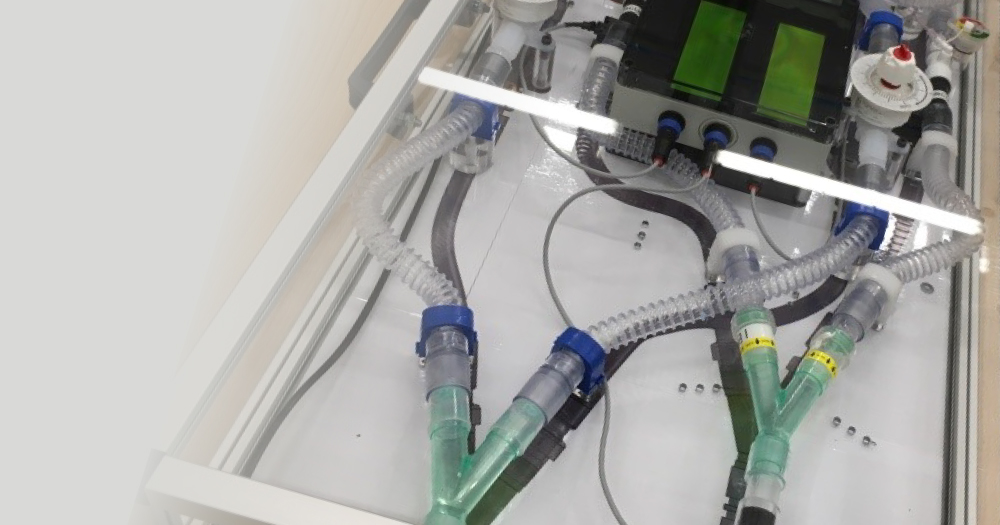
The device allows one ventilator to serve two patients safely, even if they have differing needs for breathing support. It is now being tested and looks set to become a key piece of emergency equipment in pandemics and other crises such as war and mass shootings.

The project was initiated by the Institute for Manufacturing (IfM), University of Cambridge, in response to a call for help from Royal Papworth Hospital anaesthetists. Previous ventilator-splitting designs did not take into account the differing needs of the two patients in terms of lung capacity and breathing needs. “They were so rudimentary they ran the risk of doing serious damage to the patients’ lungs,” said Jon.

All parts in the device are easily sourced and can be swiftly changed and replaced. Initial details of how to build the device are now freely available on the Institute for Manufacturing website, for use by all medical professionals in emergencies. “If other communities across the world have to consider this emergency option in the event of a shortage of ventilators, they can copy and adapt the set-up for their own needs,” said Jon.

“The CDP team was asked to join the project at short notice over Easter 2020. “Although ventilator demand in the UK has now reduced, this system could provide emergency support in other countries which are still facing significant challenges with the pandemic. It’s also of great help for longer-term use in countries with ongoing ventilator shortages,” said Jon Cooke.

Two anaesthetists from the Royal Papworth Hospital, Professor Andrew Klein and Dr Chinmay Patvardhan, initiated the project. Professor Klein said: “We needed to have the ability to measure and control the air flow to each patient individually. We also needed to ensure that if there was a decline or improvement in breathing in one patient this would have no effect on air delivery to, or monitoring of, the other.”

“It was also essential that the set-up was easy to assemble and use. The device is currently being tested at Royal Papworth Hospital and first trials of the device using artificial lungs are very encouraging.”

Dr Patvardhan said: “This device could allow medical professionals to instantly double their ability to ventilate patients safely in a crisis situation. This would be invaluable for any future emergency on the scale we have seen with COVID-19.”

The system is specifically designed to be simple to use and maintain. The unit provides isolated respiratory lines to two patients and can be swiftly added to a ventilator. A meter shows a measurement of tidal volume to each patient. The device can also monitor the total pressure and airflow in the device. Easy-to-access valves enable fine tuning of air flow to match the requirements of each patient.

Jon Cooke said: “It was a hugely positive experience for us here at CDP to support the IfM team and work with Royal Papworth to deliver a functioning and safe design in such a short space of time.

“The combination of the deep regulatory knowledge and robust design techniques of the CDP team along with the great conceptual and experimental work conducted by the IfM made for a truly rapid development process. I’m extremely proud of what we achieved together in this remarkable cooperative project. “Of course, we hope that such emergency use of ventilators will be a rare occurrence in the future. But if such a situation arises, this system can be a lifesaver.”


Watch a report on the new device from BBC Science and Technology Correspondent Richard Westcott:


‘Invaluable’ ventilator device could treat two Covid-19 patients at once

BBC News coverage

Royal Papworth tests new ventilator for use on two patients simultaneously

ITV News coverage


For more information on the ventilator sharing device project, visit the Institute for Manufacturing (IfM) website here.

For further information and media enquiries, please contact: media@cambridge-design.com or call 01223 264428

What this pandemic can teach us about preparing for an uncertain future.

What this pandemic can teach us about preparing for an uncertain future.

We are entering the world’s most turbulent period in more than a generation. The last major global shock was the financial crash in 2008. But while it caused massive economic upheaval it broadly followed a logic that we could comprehend from previous recessions – bailouts, stimulus packages, austerity. But the crisis caused by Covid-19 is different. It reaches into all parts of life with spectacular speed and requires unprecedented measures. It is not a choice between demand-side or supply-side tactics because neither are effective. It’s about managing the economy in deep-freeze and in time a gradual thawing and reactivation. How business and our lives will eventually look is highly uncertain. But the consensus is, they will be transformed.

So as we start to assess the impact, familiar questions are being asked. How could we have predicted this? What do we do right now? What futures do we believe in and plan for? Indeed, the defining feature of all this is that it’s unchartered territory with a lack of epidemiological, financial, and political history data to help predict what happens next. Rightly, the current focus is on business continuity and resilience, but in time thoughts will move to further in the future.

The pandemic is sure to have far-reaching impacts. It has exposed fragilities in just-in-time global supply chains that may result in a shift to on-shoring to provide greater resilience in the system. Enforced remote working is leading to new work practices that may result in productivity gains and longer-term adoption. It could transform how we deliver essential public services from education, using more blended distance learning, to healthcare, building in new technologies, agility and community participation.

But should it take a global pandemic to imagine this? Perhaps we could explore similar scenarios through the creative application of trends we are more familiar with:

  • What if trade networks shifted away from hyper-globalisation and towards localisation?
  • What if digital technology adoption was enforced and big high-rise offices became obsolete?
  • What if demand for public and private transport reduced as a result of faster internet connectivity and less commuting?
  • What if consumer concerns over food safety/hygiene increased demand for plastic wrapping at the expense of environmental drivers?
  • What if social distancing became part of ongoing life and automation became essential?

A good starting point for this is an understanding of enduring consumer or business needs. Typically, these are the things that remain consistent across periods of time while the relative importance and how they are fulfilled changes in response to external factors. Consider, for instance, the need to purchase food. This core need hasn’t changed over the past few months but how it is fulfilled – with a shift from in store to online – and indeed the relative demand and pressure on certain food types – from long-life products to baking goods – has altered. At CDP our approach to any innovative investigation is start with understanding these enduring customer needs and then explore how they might evolve or be solved to imagine alternative futures.

Even with an appreciation of enduring needs, long-term, ‘what-if’ thinking has its challenges. It can seriously stretch comfort zones and often appear too abstract to gain enough traction during or after the process. To address these issues and get the most from scenario planning, try adopting these three principles.

1. Assign clear ownership. The common push back is that future scenarios are too hypothetical and too far ahead to be of any practical value. As a result they all too easily fall off the agenda. To avoid this, appoint someone with specific responsibility to help leadership teams take the long view. Even for leaders who value longer-term thinking they need to be given the space and time to think about it, with someone assigned responsibility to coordinate and implement planning.

2. Be led by the data. Some scenarios appear less plausible than others or may look more uncomfortable for your current business. However, it’s important not to let subjective judgement affect how seriously you take them. Remain objective and focus on scenarios which look most impactful or likely according to the data, not ones which suit you or cause the least disruption. Generating a sliding scale of probability and impact will help to prioritise in order to minimise exposure and/or choose the biggest opportunities.

3. Move from insights to actions. Scenarios provide a clue as to what may happen in the future. They are not usually a sound basis for a business case – although entrepreneurs may use it to make strategic bets. More often, it’s about informing directed steps that you can take to better plan, prepare and exploit opportunities, from assessing current capabilities to generating specific insights to support decision making. It’s important to ground scenario outputs in practical next steps which build on the insights and buy-in you have generated.

At CDP we apply customer/business insights, mega trends and technology insights, informed by our in-house experts to create possible futures, brought to life through creative exercises. We then make this actionable through clear prioritisation and breaking down outputs into ‘three horizons’ steps, starting with focused learning activities or experiments.

The future feels more uncertain than at any point in most of our lives. But our creative energies can be harnessed to see through the fog and plan for what we can anticipate, putting the right structures, knowledge and capabilities in place so when the scene becomes clearer, you are ready to adapt and flourish.

If you’re thinking about what the future holds for your business or sector, we’d love to hear from you. Get in touch at hello@cambridge-design.com, we look forward to discussing your specific requirements.

designing masks for a pandemic world

The big cover up; designing masks for a pandemic world, and living with a new normal

Over recent weeks the news has shown daily challenges faced by mask-clad shoppers waiting in long queues for basic household goods; reports of front-line healthcare workers unable to procure personal protective equipment (PPE); and huge efforts being made by businesses to ramp up or re-task production facilities to meet new demands. Now in the UK, the government is set to reverse its original advice on the use of face masks by the general public outside the home. 

A recent article by the Lancet reflected that where previous research on the use of masks in non-health-care settings had predominantly focused on the protection of the wearers, there is an alternative rationale to also protect the people around users from respiratory droplets, which in the context of a virus pandemic, places weight on different operating criteria and benefits. This is also supported by recent studies in South Korea, and Hong Kong .

My colleague Richard Owen recently wrote a blog on personal ‘bio-security’, the importance of hygiene and the limitations of some types of face masks as PPE for the general public. The benefits of masks derive from a complex interplay of technical, anatomical, and even emotional and social factors contributing to their performance, use and adoption.

While a complete understanding of how Coronavirus is transmitted is still being researched by scientists across the world, basic engineering can help us understand some of the issues and choices facing the general public. The ideal solution would be a mask that forms a two-way barrier to viruses while allowing the user to breathe normally. That way you are protected from others, and others are protected from you.

Unfortunately, there are some technical challenges. Firstly the Coronavirus is very small, in the order of 100nm in size, so they can exist in droplets that hang in the air and filters have to be quite dense, or utilise complementary technologies to form a barrier to them. Whilst it is relatively easy to make filter media that meets this technical specification, avoiding unwanted leakage between the mask and the face, that short circuits the filter, becomes the main design challenge. Because everyone has face contours that are different, and masks must fit tightly to seal, those that seal well are less comfortable to wear for long periods of time. This discomfort is exacerbated by the resistance experienced by inhaling and exhaling through the barrier membrane, leading to fatigue.

Then there is the problem of condensation inside the mask caused when the wearer’s warm humid breath condenses on the cooler mask components. This adds to discomfort caused by pressure against the areas of the face where skin is close to maxillofacial sub-structure, and by skin sensitivity to the material choice in some users.

It also stands to reason that if the mask successfully catches viruses from the environment, then over a day it will effectively concentrate them in one place. So removal and disposal of the mask requires care to avoid it becoming a direct source of infection itself.

Finally, there is a good argument that increased demand for masks from the general public will mean that supplies may be diverted away from those most at risk and in most need, healthcare workers and carers treating sick patients.

As with any medical device, design is a compromise based on the likelihood and risk of different outcomes. To completely minimise risk requires a military style NBC (nuclear-biological-chemical) suit, which is obviously not a practical solution. So the mask performance is determined by the possibility of meeting enough virus to cause disease, the likelihood of the virus getting through, or more likely around, your mask, together with the usability, availability and cost of the mask that determines if you wear it in the first place. This means different designs of mask are the best compromise in different situations, but the wearer must understand the protection they have and not stray outside the environment their set up is designed for.

There is also the question of who the mask is protecting, the wearer or the people they meet? Is the virus inside or outside the mask? Many existing mask designs have small valves to let exhaled air bypass the filter to reduce condensation and breathing effort, so these don’t provide any protection from viruses escaping.

In a population where you don’t know who is infected, then public coughs and sneezes pose a high infection risk. As Richard pointed out in his blog, particles can easily travel several meters from the person who sneezes, well beyond the social distancing 2m radius. Logic suggests that even a leaky, home-made mouth cover would absorb a percentage of the sneeze or cough, and so reduce the dose acquired by others close by. In this situation the risk to the user of concentrating their virus in the mask is irrelevant as they have the virus anyway. However, sharing masks or asking others to handle or wash them poses new opportunities for infection.

So in an environment where governments and scientists are weighing up different lock-down exit strategies, even a simple, imperfect mask appears a positive measure for those who don’t know if they have the virus but want to reduce the potential of onward infection.

In addition, there is also a psychological effect to consider. In a world where many people have been indoors for weeks, emerging for the first time back into public spaces where there may be an unseen ‘enemy’, is likely to increase levels of social anxiety.

We recently spent a fortnight undertaking immersive field research in China to develop a specification for a new technology-enabled personal pollution mask. The aim of this project was to avoid the health risk associated with inhalation of pollution in busy cities, where particles, designated as PM2.5 (atmospheric particulate matter less than 2.5 microns in size) can reach into your lungs and even be absorbed into the bloodstream.

We found in addition to the practical concerns about pollution filtration, inhale/exhale experience, fit, carriage, and maintenance, even in a pre-pandemic world some wearers expressed a strong feeling of responsibility to wear a mask as a social courtesy to protect those around them from anything they may be carrying, especially in enclosed spaces such as packed rush-hour buses.

We were also struck by the tension between the reassurance of efficacy for many adult users provided by an industrial aesthetic, against masks with a more informal or fashion-oriented design language, which were perceived to reduce confidence in their functional credentials. Children reversed this insight, with use compliance being directly influenced by designs with comic or novelty value!

In the UK, like in many European countries, pre-pandemic it was incongruous to don masks in public places. However, the low cost and low burden of incorporating them into city life seems a small price to pay to reduce infection rates. Indeed, it is a habit that may well survive the current pandemic and become a new social norm.


References:
[1] https://www.thelancet.com/journals/lancet/article/PIIS0140-6736(20)30918-1/fulltext
[2] https://www.medrxiv.org/content/10.1101/2020.03.12.20034660v1

Covid Visors

CDP helps create emergency face visors for healthcare workers

In response to the national shortage of Personal Protective Equipment (PPE), Cambridge Design Partnership is working on a project to create 1,000 face visors a day

A team from Cambridge Design Partnership (CDP) is helping to manufacture protective face visors for healthcare workers during the Covid-19 outbreak.

CDP staff based at the firm’s HQ in Toft, Cambridgeshire are working pro bono on a project called NHS Visors.

“Our role is to ensure that the face visors are being made to an acceptable standard of quality and safety,” said Jonathan Wilkins, senior consultant at CDP, who is leading the team working on the project.

“We have drawn on our expertise in designing medical devices to ensure that the emergency production line is creating visors that comply with health and safety regulatory standards.”

The NHS Visors project has been set up by Warwickshire engineering and machinery development company 3P Innovation. “When we heard they were creating the visors, we were excited to help out,” said Jonathan.

The project was launched when it became clear the country was perilously short of PPE for hospitals and care homes. Initially, the project assembled visors using 3D-printed components made by hundreds of businesses and individuals with 3D printers.

When 3P scaled up its manufacturing processes to deliver larger quantities, CDP helped by navigating through the rapidly changing Covid-19 emergency quality regulations: “Compliance with regulations is needed but in a very tight time frame,” explained Jonathan.

“This is a safety critical product and is used by healthcare workers tackling Covid-19 at the frontline. Although there are emergency relaxations on legislation in place at the moment due to the desperate shortage of PPE, it is crucial that face visors sent to frontline workers are fit for purpose.”

CDP’s work for the project included developing a strategy for regulatory compliance and testing, advising on quality processes required for the manufacturing process, and assessing the ergonomics of the finished product to check it is practical and comfortable to use. “It’s our aim to ensure the visors are both effective and comply with legislation,” said Jonathan. “Indeed, the visors have recently been awarded a certificate for compliance with the European Standard for PPE eye protection.”

CDP’s help has been “hugely appreciated”, said Simon Strothers of 3P Innovation who is working on the NHS Visors project as a volunteer. “We are very grateful that our friends at CDP offered to help out, working so swiftly to make our new visors safe and legal. We have been amazed how quickly we have collectively got this project off the ground.

“We are supplying the visors free of charge wherever they are needed, taking the orders direct here at our HQ and delivering them with a team of motorbike volunteers. In some cases, healthcare staff have literally broken down in tears to receive the visors. They are life-saving pieces of kit in this current epidemic. Many care homes and NHS centres simply don’t have enough to ensure staff safety.”

The NHS Visors project initially created 4,500 visors made on 3D printers. “This is quite an achievement when you consider each one takes hours to print out on a 3D printer,” says Simon.

“Then as the severity of the shortage became clear, we appealed for help to set up higher-volume production. Mondelez International, owner of the famous Cadbury chocolate brand, agreed to step in and fund the purchase of injection moulding tools for the key visor components. We can now make injection-moulded headbands for the visors and we have also purchased a clicker press cutter to create the clear visor itself.

“At this stage, CDP’s input into ensuring that production meets the accepted safety standards was invaluable. We can now make visors in seconds rather than hours.”
The volunteers are now producing over 8,000 face visors a week. “We offer them to anyone who needs them,” said Simon. “If hospitals, care homes or other emergency healthcare workers would like some, please do get in touch.”

Staff at CDP are also working on a range of Covid-19 projects including ventilators and diagnostic devices, as well as the NHS Visors project. “We are only too pleased that the NHS Visors project asked us to help build them a better PPE product at short notice,” said Jonathan. “We are highly motivated to use our expertise in whatever way we can to help overcome the pandemic.”

For further information and media enquiries, please contact: media@cambridge-design.com or call 01223 264428