


feature_insights-from-ECSMID25-2
Find the authors
on LinkedIn:

Insights from ESCMID 2025: trends and future in diagnostic testing

SUMMARY

This year’s ESCMID event reinforced that access to effective diagnostic tests must increase, and that long-promised technologies are finally close to delivering clinical value.

What makes your platform different?
One recurring message: speed, accuracy, and cost effectiveness are now expected. Differentiation lies in how well a platform fits real-world clinical settings, from training and workflow to data interpretation and system integration.

Takeaway for developers: Think beyond technical specs. Differentiation increasingly depends on usability, trust at scale, and measurable impact on care delivery and operational efficiency.

ESCMID 2025 marked a shift from technology-led innovation to outcome-led development. The key question is no longer “Can it be done?” but “Does it solve the right problem, in the right way, at the right scale?”

Headline Trends

  • Antimicrobial resistance (AMR) and antibiotics use – increasing access to and uptake of diagnostic testing is key for effective interventions
    AMR remains a major global health challenge. Antibiotic use continues to rise, especially in primary care, where most prescriptions are issued without diagnostic support. Addressing this requires a broader range of diagnostic systems. These must balance performance with affordability and usability, enabling appropriate treatment decisions in both hospital and community settings.
  • The role of syndromic testing is still being debated
    While useful in hospital and acute care, syndromic panels have seen limited uptake in primary care due to cost and complexity. They support antimicrobial stewardship. But they must become more accessible and cost-effective to broaden adoption.
  • Genetic sequencing may bring a step change in clinical utility in diagnostics
    Sequencing is moving closer to clinical use. It has the potential to reshape diagnostics. Developers must build workflows and systems that integrate sequencing seamlessly. They must interpret results clearly and deliver clinical value at scale.
  • ML, AI, and automation are maturing
    AI tools are expanding from imaging to in-vitro diagnostics. They offer clinical augmentation value to tedious manual workflows, image interpretation, and data integration. The focus is shifting from innovation to implementation, embedding tools into workflows with trust, reproducibility, and regulatory alignment.

The annual congress of the European Society of Clinical Microbiology and Infectious Diseases (ESCMID) brings together clinicians, researchers, and industry leaders to explore the evolving landscape of diagnostics. This year’s event highlighted some key themes shaping the future of diagnostic impact and delivery.

AMR and Antibiotic Use: Access to Testing Is Critical

Antimicrobial resistance remains a central challenge. With an estimated 40–50 billion antibiotic doses taken daily and use projected to rise 50% by 2030, intervention is urgent. The vast majority of prescriptions occur in primary care. They are often without diagnostic support.

Improved access to diagnostics is key. Many current platforms focus on performance where demand already exists, but the biggest opportunity lies in reaching settings where no testing is currently available. Systems must support appropriate treatment decisions. They must balance speed, accuracy, and pathogen identification with usability, affordability, and integration into clinical workflows.

Syndromic Testing: Performance vs Cost

Multiplexed syndromic panels are established in hospitals and acute care, but uptake in primary care remains low. Their value in guiding antibiotic use is clear yet cost and complexity are barriers to broader use.
Developers must reduce system cost and complexity to reach more healthcare environments and fit into reimbursement frameworks. Technical capability alone is no longer enough. Integration, ease of use, and clinical decision support are now central to adoption.

Sequencing-based diagnostics are also beginning to compete with syndromic approaches, raising the bar for accessibility and performance in multiplexed testing.

Sequencing: Moving Toward Clinical Routine

Genetic sequencing is rapidly approaching routine use in clinical diagnostics. With falling costs and expanding platform availability, it holds the potential to reshape infectious disease diagnostics, particularly in syndromic or multiplexed contexts.
At ESCMID, multiple case studies demonstrated the use of same-day metagenomic sequencing for pathogen identification in respiratory and bloodstream infections. Amplicon-based approaches were also discussed, particularly for rapid variant detection and resistance gene profiling. Broader sequencing methods, including microbiome analysis, may also play a role in future clinical applications.

However, sequencing workflows are not yet plug-and-play. Upstream processes, such as sample collection, DNA extraction, host depletion, and library preparation, remain technically demanding. Downstream, interpretation, bioinformatics pipelines, and clinically actionable reporting are major hurdles. While sequencing speed and cost are improving, the challenge now lies in integrating these steps into streamlined, automated, and interpretable systems that deliver value at the point of care.

Developers must ask strategic questions. Should initial diagnostic applications focus on relatively simple, targeted sequencing? For example, amplicon sequencing for variant detection, or on broader, hypothesis-free metagenomic approaches? Will sequencing be decentralized or remain concentrated in specialized hubs? How can systems present complex data in ways that support decision-making by non-specialist clinicians? The opportunity is significant. But realizing it will require systems that balance performance, usability, and clinical relevance.

ML, AI, and Automation: From Hype to Implementation

Artificial intelligence has already made an impact in diagnostic imaging, including MRI, CT, and ultrasound. At ESCMID, attention turned to the broader use of AI and machine learning in in-vitro diagnostics, with exciting potential across three main areas:

  • Image analysis: AI is enabling rapid interpretation of high-resolution optical data in fields like digital pathology, haematology, and spectral imaging. These tools can increase diagnostic accuracy while reducing the burden on human reviewers.
  • Multi-marker data interpretation: AI models are increasingly used to integrate complex biomarker datasets, where the combined signal across markers yields diagnostic insight. Some platforms already use deterministic models; the shift toward machine learning promises greater flexibility and performance, particularly as training datasets grow.
  • Workflow optimization and automation: AI is being applied to streamline laboratory operations, reducing hands-on time, standardizing results, and minimizing error rates. This is especially valuable in high-throughput or resource-constrained settings.

Several ESCMID sessions showed AI being used to support antimicrobial resistance prediction, improve taxonomic resolution, and aid diagnostic decision-making. Importantly, the field is moving from exploratory development to real-world deployment. The emphasis is now on clinical validation, regulatory clarity, reproducibility, and integration with existing systems.

For developers, success will depend on more than accuracy. Trust, interpretability, and usability are emerging as key differentiators. Tools that embed smoothly into clinical workflows, minimize training requirements, and deliver repeatable, high-confidence outputs will define the next wave of AI in diagnostics.

Receive further news from Diagnostics at CDP

Connect with CDP

Wondering what these trends mean for your next diagnostic system? A quick conversation could help you shape a clearer path from concept to clinical impact. Get in touch with one of our team:

Dan Haworth, Head of Diagnostics
dan.haworth@cambridge-design.com

James Blakemore, Senior Insight and Strategy Consultant
james.blakemore@cambridge-design.com

Leigh Shelford, Consultant Physicist
leigh.shelford@cambridge-design.com
Developing Next-Gen Diagnostics Systems

INSIGHTS

Download our expert guide to developing next-generation diagnostic systems:

Accelerate your time to market

Increase the chance of commercial success

Receive the guide in your inbox immediately.

It’ll only take a minute.

Unlock the full potential of next-generation diagnostics with our 16-page guide. Gain valuable insights on:

    • Developing your value proposition

    • Understand the interplay between assay, user and product workflows

    • Capturing design input early

    • Establishing a platform system architecture

  • Planning your regulatory strategy
DX-Guide_mockup_COVER-web-1

Whether it’s unlocking the potential of a groundbreaking biomarker, innovating with new assay or detection technologies, or navigating the updates needed for your system to compete with newer devices, the path ahead is undoubtedly complex.

That’s why we’ve distilled the essence of successful diagnostic system development into this 10-minute guide – it’s your compass in the intricate world of diagnostics, highlighting critical considerations essential for turning ambitious ideas into tangible solutions.

DX-Guide_mockup_OPEN-7-8-web-1
Five hurdles to digital health innovation in the UK|||
By Cambridge Design Partnership

Five hurdles to digital health innovation in the UK (and how to overcome them)

CDP recently led an investigation into how to advance innovation in digital health in the UK for the CPI, UKRI/Innovate UK and ABHI. Our aim was to find out how best to enable the UK to be the place of choice for enabling high-risk digital health innovation, improving patient outcomes.

Our work with 50 leading healthcare professionals and entrepreneurs revealed that the UK has an enviable record in early-stage innovation, a highly regarded healthcare system and a potential treasure trove of high-quality data.

web_thumbnail_digital-health-action-plan-1
REPORT

An Action Plan: Driving Growth of the UK Digital Health Industry

However, we also found several hurdles that trip up many innovations before their potential can be truly realized.

In this article, we describe our top five hurdles to success and signpost the resources available to help innovators overcome them.

1. Offering the wrong product at the wrong price

Let’s start with perhaps the most obvious: you need to get your offering right. This was one of the more frequent topics to emerge in our discussions. True, it tended to come from the industry and investors, rather than entrepreneurs themselves. But perhaps this is the point; those closest to the concept are so captivated by the opportunity to solve a problem that they are rarely the best judge of commercial success.

“The biggest problem is developing stuff we don’t need, at the wrong price point.”

Life Sciences Lead, multinational consultancy

“People have struggled with finding the right balance between fixing a problem not just for the sake of it because it’s going to add value, but also there is a market attached to it.”

Medical Director, AI dermatology revenue-earning startup

Getting the right product at the right price is not easy. Regardless of how it is funded, healthcare everywhere is a complex system of separate entities with conflicting priorities. One of the biggest challenges for digital health offerings in particular is that the person paying the bills is rarely the direct beneficiary. This is as true across the NHS in the UK as it is in insurance-led services in the US.

Digital interventions are regularly shown to make significant positive impacts on diagnosis, therapy, adherence and behavior change. To date, the FDA has approved, authorised or cleared 171 AI/ML-enabled medical devices. However, digital means adding overheads (electronics, batteries, software or new digital services) to an already overstretched budget that tends to bring value much further down the pathway.

To get the right product at the right price, you need to be crystal clear about the value you bring and who you bring it to so that you can ensure the price is right.

Helpful Resources

For the UK market, we found the following resources helpful in crossing this important hurdle:

  • The NHS Innovation Service provides an innovation guide that explains how to build a value proposition
  • The NICE Advice Service provides personalized advice on the value propositions for a fee
  • The NHS Clinical Entrepreneur Programme (CEP), launched in 2016, provides training for NHS staff on the skills required to build a healthcare startup, all without them needing to leave the NHS

Indeed, this is such an important area that we at CDP are looking at how recent advances in Generative AI might make this easier to get right from the outset – not just for offering services within the UK, but how UK-based innovation can provide the right offering in the larger markets of the US and EU.

2. Neglecting the needs of key stakeholders

Digital products and services are still a novelty in healthcare. Even the regulation is taken from a device mindset – consider the terms SaMD (Software as a Medical Device) and now even AIaMD (Artificial Intelligence as a Medical Device). The digital-first mindset is to move fast, learn and repeat to get the best user insight and optimum benefit to market as fast as possible. This is not an easy marriage for healthcare, where verification and validation are critical steps to approval.

“If you are manufacturing a digital health product, you have three sets of policies to navigate right now [in the UK].”

CEO, digital health SME (referring to NHS DTAC, NICE and MHRA)

“The regs are written to cover all medical devices. They’re not very specific; it’s very high level and quite hard to interpret what we should actually be doing as an individual company.”

Medical Director, AI dermatology revenue-earning startup

This is not simply about the regulator; it is also about who will receive, who will administer and who will pay for your digital offering. On top of proving safety and efficacy, payers and adopters want to see evidence that your technology works under real-world conditions and produces sufficient benefit relative to current clinical practice to justify its cost. Not only do you need to convince your investor you have the right product at the right price point; you also need to convince them you have access to reimbursement.

This need has led us here at CDP to build a strategy and insight team that explicitly looks across the spectrum of stakeholders including the end-user, practitioner and payer.

Helpful Resources

The following resources are helpful when considering the regulatory and UK purchaser stakeholders:

  • The NHS’ AI and Digital Regulations service offers a developer’s guide that leads you through the various regulatory and NHS requirements for digital technologies
  • The NICE Evidence Standards Framework is designed to help ensure NHS stakeholders are adopting robust technologies that are likely to provide the expected performance, and are good value for money. The framework can be used by developers to understand their customer needs. NICE also offers an assessment of current/planned evidence via their META tool
  • The NICE Early Value Assessment can also help indicate the value your product can bring, and allow you to get support to understand what further evidence needs to be generated.
  • Similarly, NHS’ Digital Technology Assessment Criteria (DTAC) are designed to assess suppliers at the point of procurement, or as part of a due diligence process, ensuring digital technologies meet minimum baseline standards. The criteria can also be used by developers to understand what is expected for entry into the NHS and social care
  • FDA’s list of approved, authorized or cleared AI/ML-enabled medical devices

3. Testing, verifying and validating

The regulatory pathway will force you to verify and validate. It will be rigorous. It will take more time than you or your investors want. So, you will need to test, test and test again as early as possible to build the evidence you need for investment. And, importantly, test both the medical efficacy of your offering and its likely commercial success.

“[It] can take longer than six months, ridiculously, to build a cohort of data.
Getting people to step away from frontline service in the NHS is a fundamental challenge of getting access to that data. Even if you offered to pay, they’d say” ‘I don’t care; it’s not the money I’m short of, it’s people’.”

President, medical imaging multinational

“We really struggle to work with SMEs because we’re not able to move at the pace that they require for their cash flow.”

Director of Innovation, NHS trust

As these sentiments show, however, gathering data takes time and patience. The NHS is indeed a treasure trove of data, but unlocking it is a real hurdle. Existing NHS data typically needs preparation – cleaning and anonymizing – before you can access it. And there simply may not be the staff available to do this, meaning you may need to build additional paths to gather test data.

The fidelity of the test can start low-fi, but will need to increase as you develop. CDP typically starts with insights research and human factors studies using UI sketches/descriptions of the product to explore the true user journey, before moving onto trials with real-life samples and wizard-of-Oz demonstrators. This builds a body of evidence that reinforces your expectation of efficacy with the all-important usability and the commercial viability of your offering, before embarking on the summative human factors, clinical and market trials.

Helpful Resources

The following resources can help you prepare your plans for testing, verification and validation:

  • NIHR study support service provides guidance and advice
  • The HDR UK Gateway portal helps researchers find existing data sets and connects them to relevant stakeholders
  • Trusted Research Environments (TREs) are a new initiative to facilitate access to NHS data for R&D. Only a few TREs currently exist and there is no guarantee they will have the data you’re looking for. However, the teams involved are well placed to advise you on next steps. Even though this requires approval from HRA and notification to MHRA, consider if it might be better to just do your own trial to collect fresh data instead. This is where an experienced external innovation partner can be very helpful

4. Navigating healthcare as a ‘system of systems’

The benefits of digital health typically require systems integration. Yet, healthcare everywhere is a complex system of systems, each element with its own approaches, tools and requirements.

“[Different hospitals are] probably using different systems, different levels of maturity with different versions, with different level plugins. That probably means, even if I create it using the standard, it won’t automatically fit. It needs modification, adaptation and someone to do the translation.”

Digital Health Advisor, ex-NHSX

“You can often have very inflexible contracts with your electronic health records supplier; for example, if you want them to make one change or open up in an API or something like that, it can be prohibitively expensive.”

Director of Innovation, NHS trust

While there are only a few dominant providers of Electronic Health Record (EHR) systems, each installation is likely to be different. Moreover, the EHR providers will guard access jealously. Microsoft, Google, Amazon and others provide integration services to structure and translate data, but that is likely to be only a small part of the problem, and only useful if you are ingesting unstructured data from multiple sources.

At CDP, we encourage our clients to focus on providing easy-to-use, yet secure APIs built around well-structured data that map well to the established data standards such as FHIR. Taking ownership of your own data in this way makes it easier to deploy, integrate and support.

Helpful Resources

The following resources can help you prepare your digital health services for system integration:

5. Building a strong team

Innovation is rarely one guy in a garage. This is especially true in the digital health space. You will need to build a great team led by experienced professionals across the disciplines. Get this right and everything else will fall into place. Work out your strengths and weaknesses and actively seek resources to complement your team.

“The most useful thing to an innovator is access to an actual practicing frontline clinician who understands the problem that they want solved. It’s a real challenge to get to these people. I might spend months trying to find someone who would talk to me.”

President, medical imaging multinational

“The UK does not have enough engineering capacity… does not have enough people with product skills… does not enough people with this sort of legal regulatory skills.”

Digital Health Advisor, ex-NHSX

Helpful Resources

The following resources can help innovators looking to build a world class team:

  • Many Health Innovation Networks (HINs) and NHS trusts have innovation teams who may be able to help matchmake with clinical champions. The NHS Innovation Service is a good place to start, but it’s worth seeing what individual trusts are doing.
  • HINs and NHS trusts often also support innovation and hackathon events which are a great way to find those with a similar innovative mindset – but a complementary skill set.
  • And then there are organizations such as CDP, who bring end-to-end product development services with the hard-won experiences of how to navigate this exciting but often frustrating area of innovation.

In addition, many of your digital needs are engineering and operational ones. Recruiting experienced people from the finance and technology sectors where the UK is strong will bring you good skills and expertise in algorithm development, handling personal data and building scalable secure systems.

It’s tempting for you (and your investors) to under-resource your team and compromise in the early phases. But as the hurdles above clearly show, this rarely leads to success. Build the great team you need from the outset, to make sure you truly have the right product at the right price, that meets the expectations of the key stakeholders, is properly tested and ready to integrate into the healthcare system of systems.

Download the full action plan for digital health innovation in the UK here.

Connect with CDP

At CDP, we continue to follow up our insights working with clients and partners to find practical solutions to complex problems. To find out more about what successful innovation in digital health looks like, please do get in touch.

How data and AI are changing bioprocessing
By Cambridge Design Partnership

How data and AI are changing bioprocessing – and why it’s needed

After numerous insightful talks and engaging conversations with industry leaders at this year’s BioProcess International, the key theme was clear: data, data and more data.

Data has always been important, but now it is being collected to model current processes, understand how they work, and improve them. This is a trend that is only likely to accelerate in the future as AI becomes part of everyday life – both in and outside of work.

Using data-based modeling to optimize well-established industrial processes

There are many traditional processes that are used in the manufacture of antibodies, mRNA vaccines and cellular therapies. Companies are now collecting extensive data from these processes and using modeling to create their ‘digital twin’.

The processes modeled range from relatively simple tasks such as optimization of freezing/thawing product intermediates, freeze-drying and automated buffer preparation, to more complex procedures such as bioreactor scale-up. Although these used to be manual ‘craft’ processes run by a combination of experience and pre-existing data, there is now a trend for them to be tested and optimized using in silico methods.

Using modeling to improve purification methods

Bioprocessing is used to create many therapeutic products, from molecules such as protein, DNA and RNA to much larger entities such as viruses and eukaryotic cells. Their production has many different steps that often require extensive purification before the next step can proceed. Common purification methods include clarification, chromatography, ultrafiltration/diafiltration and sterile filtration.

These methods were typically used in an empirical way based on experience with similar products. Now however, use of modeling has led to a much more detailed understanding of how these separation/purification methods work. It allows the prediction of when column/membrane capacity is reached, and when “breakthrough” of contaminants is likely to occur. It has also led to the development of alternatives to standard resin-based column chromatography such as the incorporation of new reactive chemical groups on membrane filters that can then act like traditional resin-based columns.

Benefits of Process Analytical Technology (PAT)

PAT refers to on-line/at-line measurement of critical product quality and performance attributes so that real-time direct data collection can be used to control and optimize manufacturing processes.

PAT is being augmented by a much wider range of analytical techniques than before and now includes many different types of spectroscopy including variable path length, Fourier-transform infrared, Raman and Dynamic Light Scattering, as well as Nuclear Magnetic Resonance. The use of PAT for direct data collection that links to immediate process control is only likely to accelerate.

Inexorable rise of disposable closed cell processing systems

In addition to the data theme, it was clear to see that the number of automated closed cell handling and processing systems – from cell selection to expansion and harvesting – is rapidly increasing. Companies aim to offer end-to-end solutions to traditionally manual processes, either by offering modular components or a single complete system.

The options for choosing automated disposable bioreactors/cell expansion systems are also increasing, with many players recently entering the market. It is clear why this option is advantageous; traditional stainless-steel bioreactors are complex, expensive, and laborious to clean and maintain.

Just how large these systems can grow is shown by ThermoFisher’s 5000L disposable Dynadrive bioreactor, which is offered as a fast-to-install option compared to stainless-steel alternatives. However, the environmental impact of the disposable route is a long-term concern and is expected to be a point of contentious discussion over the coming years.

Bioprocessing technology is developing (but not fast enough for demand)

The technological developments described above are certainly needed as advances in eukaryotic culturing methods are allowing higher and higher cell densities to be realized, which makes purification more challenging. Furthermore, the pipeline for products that use these technologies is growing at a dizzying rate with over 1,500 cell and gene therapy and 700 mRNA trials listed on the US Clinical Trials site. New higher throughput processing techniques will need to be developed to accommodate this demand.

The industry clearly recognizes this and companies were very open in sharing their results at BioProcess International – both good and bad! They are also keen to work with the process equipment manufacturers to optimize performance. Overall, improvements have been made, but there is a long way to go.

Performance can be improved by a virtuous circle of data generation, data modeling and innovative design and engineering – something we at CDP are already doing to help our clients succeed.

Connect with CDP

For more on how data modeling and automation can increase bioprocessing throughput and optimize manufacturing performance, contact Cambridge Design Partnership.

IVD roadmap for the UK|
By Cambridge Design Partnership

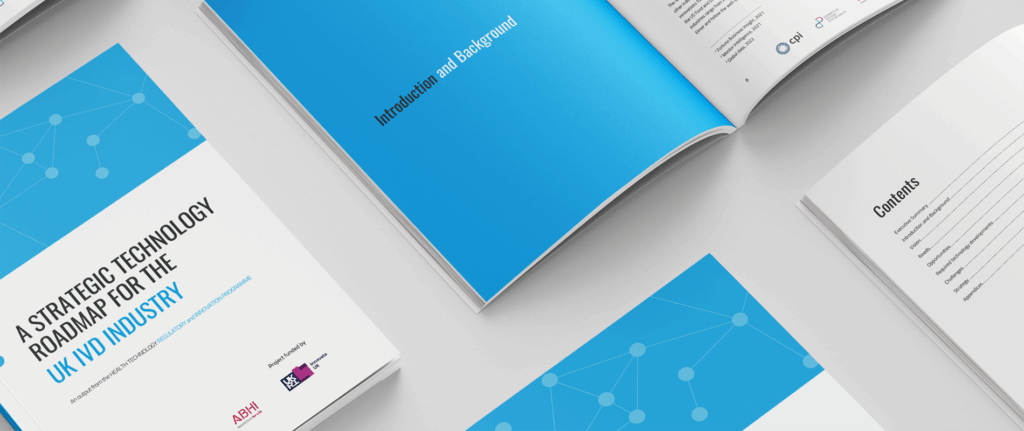
A Strategic Technology Roadmap for the UK In Vitro Diagnostics Industry

WHITE PAPER

A Strategic Technology Roadmap for the UK In Vitro Diagnostics Industry

A major new report for industry leaders, government, and health tech companies

The UK in vitro diagnostics (IVD) industry has the potential to help boost UK economic growth and make the UK a global leader in the industry while improving health in the UK and for people worldwide. A new strategy, applied over the next 10 years, can see the industry transformed.

The Roadmap, researched and written by Cambridge Design Partnership, in partnership with CPI, the Association of British HealthTech Industries (ABHI), and funded by Innovate UK, defines the key technologies and strategies that can place the UK at the forefront of this industry.

Download the Roadmap


Personalised medicine brings a healthcare revolution - CDP||
Find the authors
on LinkedIn:

Drugs that work – personalised medicine brings a healthcare revolution

It took 13 years and £2 billion to sequence the human genome back in 2003. Fast forward 15 years to today and next-generation sequencing (NGS) can do it for less than $1,000 in a matter of days. High-throughput sequencing technologies, computational power and data-mining techniques have opened up a whole new era in medical treatment – and our approach to product development.

Genetic differences in DNA allow scientists to determine how a patient will respond to certain drugs, enabling doctors to target their treatment. For example, the Sanger Institute recently discovered that the aggressive blood cancer acute myeloid leukaemia could be classified as 11 distinct disease groups, based on specific constellations of genetic mutations. This explains why some patients will be cured and others will not if they receive exactly the same treatment.

This ‘personalised’ approach promises to improve patient outcomes as the right treatment can be given from the start – time is not wasted by finding what works by trial and error – and unpleasant side effects can be minimised. Treatment is more efficient – and less money is wasted on ineffective drugs.

Diagram-01

New targeted approaches based on genetic information are gaining particular attention from pharma companies, as they can dramatically reduce drug development costs and timescales. Whereas traditional drug discovery often leads to high failure rates in phase 2 or 3 trials, targeted treatment allows smaller trials and shorter regulatory review times because the drugs are safer and more effective.

Although the market size is smaller, lower side effects mean an increased price can be charged for the drug. An example of this is the Food and Drug Administration’s (FDA’s) approval in 2012 of a new cystic fibrosis (CF) therapy for patients with a rare genetic mutation (G551D mutation). This particular gene is responsible for only 4% of CF cases in the US – around 1,200 people.

The UK government has also recognised the value of the personalised treatment approach. The NHS is undertaking the ‘100,000 Genomes Project’ – 100,000 whole human genomes from 70,000 patients are being sequenced to identify potentially new diagnostics and drive the development of new drugs.

But the race is on. Genomics and biotechnology company 23andMe – which originally provided ancestry information from a saliva sample sent through the post (direct-to-consumer genetic testing) for £125 – has recently been approved by the FDA to provide risk information for 10 genetic diseases, such as Parkinson’s disease and late-onset Alzheimer’s disease. It is estimated that the company has accumulated valuable genetic information about more than two million people.

From this vast library of genomic information becoming available, new products will emerge that target the underlying cause specific to an individual patient. This will likely involve at least two medical products – a diagnostic test and the therapeutic product itself, working together as a so-called companion diagnostic (a diagnostic that is essential for the safe and effective use of a corresponding drug).

Pharma and device companies will need to collaborate more closely to ‘co-develop’ these products to ensure the drug is safe and effective, and the performance of the diagnostic is acceptable. And, since the barriers to drug development are significantly reduced with targeted treatment, smaller innovative companies will get involved. With its access to hugely valuable genomic data, 23andMe is one such company – which is presumably why it has just raised $250 million from private investors.

I predict that NGS and data analytics will be the powerful research tools that provide the understanding. But although NGS is starting to move out of the research lab and into the clinical environment, the data it provides is unnecessarily detailed for routine testing. It will be the lower-cost, more accessible diagnostic devices that will be used to test specific genetic sequences – leading to a proliferation of companion diagnostics.

Connect with CDP

We are just scratching the surface of personalised medicine, which is why Cambridge Design Partnership is working with both drug delivery and diagnostics clients to help them navigate this rapidly developing market. If you’d like to know more, get in touch.

Sectors_Diagnostics_thumb
By Cambridge Design Partnership

Point of care diagnostics: navigating systems architectures

Diagnostic testing is rapidly moving out of the lab and into the hands of untrained users. But developing the system architecture for a high-performance test that is also easy to use is a complex challenge.

A great example of advancements in point-of-care (PoC) testing is the pregnancy test. In the 1970s, Wampole’s 10-step test took two hours by a trained lab technician. Today it is carried out in minutes in the privacy of your own home using an off-the-shelf disposable device.

PoC diagnostic tests should be quick and simple – and ideally not rely on the user’s skill to generate a reliable result. But, unlike pregnancy tests, molecular-based tests currently need more complex steps. For example, sample preparation may be needed to lyse cells, remove inhibitors or increase titre and this can be extremely challenging to implement at the point of care at acceptable cost and device complexity.

Wampole’s test could be categorised as a ‘chemistry set’ where the skill of the operator is critical to generate an accurate result – there might be several critical timing steps, mixing and resuspension steps performed using a manual pipette, metering and sub-sampling precise volumes followed by vortexing and ‘gentle’ heating before looking for a subtle colour change. Lots to go wrong and not at all user friendly.

The Clinical Laboratory Improvement Amendment (CLIA) from the Food and Drug Administration (FDA) regulates laboratory testing for human diagnostics in the US and has categorised the complexity of a diagnostic test as either: waived, moderate complexity or high complexity. The level of complexity is determined by adding up the scores from seven criteria. A CLIA waived test means it is ‘simple to use, and there is little chance the test will provide wrong information or cause harm if it is done incorrectly’.

The simplest test for the user is to ‘add sample and walk away’ and the device carries out the necessary assay functions. This convenience typically generates significant market share over more labour-intensive competitor devices but there are trade-offs with device complexity and development risk. For complicated assays, ‘reader’ and ‘consumable’ system architectures are frequently used. However, consumables tend to be bulky and expensive, and the readers even more so.

Below I outline some high-level considerations when developing system architectures for a PoC diagnostic device, and how to navigate between the ‘chemistry set’ and ‘fully integrated product’.

Assay robustness

It all starts with the foundation of any diagnostic test – the assay. A correctly implemented assay is fundamental to providing high-performance, reliable and repeatable results in the intended use environment.

Identifying sensitive parts of the assay that require careful controls, and functions that are more tolerant to variability, provides the first insights into the required architecture. For example, flow-rate variations may have a significant impact on test performance, which necessitates the use of an automated pump – or the detection method may require special optics. An untrained operator may not be capable of performing these steps with the appropriate control, so reader hardware may be needed.

Ideally the assay is well characterised in the lab before the system architecture is developed – but this is seldom the case. Another issue is that lab processes can be difficult or costly to implement in a ‘highly useable’, low-cost PoC test. So designing a system architecture that is capable of accommodating the necessary functions based on preliminary lab results is a tricky challenge. Capturing risks and uncertainties, and carrying out feasibility testing of the high-risk aspects during early stages of the project, will better inform the system architecture and can avoid unpleasant discoveries later on.

User burden

Although CLIA waive is highly desirable, many PoC devices are categorised as ‘moderately complex’ – it may be a good option for the user to carry out certain functions if they are tolerant to sources of variability (i.e. by understanding assay robustness and assessing operation against CLIA scoring criteria).

User involvement can significantly reduce device complexity but operators are busy people and can easily get distracted in a PoC setting. Failure alerts and fail-safe features help reduce the risk of generating an erroneous result. Mechanical guides and ‘poka yoke’ mistake-proofing features, as well as electronic timeouts and sensing (e.g. QR code read by the reader), can notify the operator that an incorrect or expired component is used. In the event of inactivity, the reader may invalidate the test altogether.

Device complexity

Every project is constrained by time and money and, if the development team has done its job properly, the device will be just complex enough to satisfy user convenience and assay needs. Of course, it’s not as simple as that – other crucial factors such as cost of goods and ‘platform’ requirements also need consideration.

Estimating device cost early on – and continuously updating the estimates – informs the viability of the architecture and ultimate success of the product. If cost estimates are high, it may be necessary to re-examine the assay and explore alternative, lower-cost technical solutions or implement more of a ‘chemistry set’ approach (but understand the impact to the user and viability of the product). Directing functionality (and cost) away from the consumable and onto the reader is generally a good option as non-disposable parts are less cost sensitive.

When designing system architectures intended to be a ‘platform’, it is important to consider the requirements of future assays and, if necessary, build in redundant capability to minimise the effort to accommodate new tests. This is easier said than done under tight timescales. But modular system architectures and components that allow modification – for example, volume expansion or increased flow rate – allow potential flexibility.

Navigating the trade-offs to develop a system architecture that addresses all the considerations is a difficult challenge – and one that is often rushed as businesses are keen to meet their next milestone.

At Cambridge Design Partnership we use a holistic development approach involving close collaboration between our in-house human factors, mechanical, electronic, software and manufacturing engineers, as well as assay scientists. In the early phases of a project we identify the technical and market uncertainties – and thoroughly explore different architectures whilst characterising the assay and understanding user involvement, regulatory issues, manufacturing processes and ultimate device cost. This manages project risk and sets the course for a high-performance system delivered quickly to market. Get in touch for help with your next diagnostic challenge.

Connect with CDP

For more on navigating the trade-offs in point-of-care diagnostic system development, contact Cambridge Design Partnership.