Five ways to take cultured meat mainstream
Share:
Find the authors
on LinkedIn:

Five ways to take cultured meat mainstream

Better for the environment and better for animals, cultured meat is an ascendant industry and could grow even faster with these five improvements.

COP27 climate negotiations look set to conclude with steady – if not stellar – progress on reaching a consensus as to how the world can avoid catastrophic climate change. However, one area almost absent in the outcomes so far is how we can reduce the environmental impact of animal agriculture, which is estimated to make up 20% of global greenhouse gas emissions – that’s more than the entire global transport sector.

That doesn’t mean nothing is happening. In recent years, we’ve seen massive investment in one potential solution to this problem: Cultured meat, grown in a lab from a few animal cells, has the potential to counter some of the biggest issues facing humanity, including global warming, land degradation, and water usage.

On November 16, the sector marked a significant milestone as the US Food and Drug Administration (FDA) raised no questions to UPSIDE Foods pre-market consultation for its cultured chicken products for human consumption. It needs final approval and isn’t on sale yet, but this is a significant hurdle crossed.

How can the cultured meat sector build on this moment and realize the enormous potential to contribute to a sustainable future? We’ve identified five steps producers need to take:

1) Think differently to scale up efficiently

We know we can make cultured meat, but the costs and scale mean it isn’t yet an everyday item. Pharma-style processes and equipment just aren’t designed for food-based products and so won’t get the sector where it needs to be.

We need a mix of new thinking, processes, and products. Rather than focus on pharma, technology should be brought in from other sectors, such as the brewing, textiles, and food ingredients industries, as their process throughput and manufacturing costs are closer to what’s needed for this market.

Ingredients and structural components must be fully defined and standardized before cell bio-fermentation can become a high throughput, low intervention process, like brewing or baking.

2) Don’t obsess about patents

While patents are critical to many industries and bio-based start-ups, they aren’t so important in the cultured meat sector. Most companies have specific cell lines, cell sources, ingredients, and fermentation protocols.

Due to the way cells develop according to their genotype and environment, they’re highly likely to develop in a unique way. Patenting engineered cell lines, cell collection procedures, formulation recipes, differentiation techniques or fermentation protocols is unnecessary, as they would be very difficult to replicate.

It’s much better to keep the know-how in-house, in a similar way to the ‘secret recipes’ of malt whisky manufacturers – they all start with water, yeast and malted barley, but make very different products.

3) Think beyond the butchers

Many cultured meats closely replicate products you’d find on a butcher’s block. While the industry is young, this gently introduces consumers to a new type of product.

However, there’s huge potential to make new products that aren’t replicas of butcher-shop cuts. How about mixing and matching cell textures, fat content, and fiber lengths to create a cross between pate and streaky bacon?

Amazing new products could be created, potentially formulated to be cooked to a certain style, e.g. slow-cooked or medium rare. This could excite consumers and show that this new technique could create a whole new and exciting range of meat products.

4) Get the branding right

Cultured meat companies have a lot of heavy lifting to do to educate the consumer. Meat in its raw state is often considered a generic product; only after cooking does it normally appear as a brand.

Linkage to other existing brands is one option, such as endorsement by well-known chefs or restaurants. Other options include trying to emulate exotic breeds such as Wagyu beef, ostrich, or kudu (antelope). First-movers will have an advantage; later entrants may have to specialize to grab and retain a niche.

5) Embrace the difference between pharma and food products

The pharma industry has advanced the science used by cultured meat producers.

However, the goal of cultured meat producers is to produce a tasty, safe piece of food, rather than a viable drug therapeutic that must engraft in a patient and perform a complex variety of immunological functions.

This means costs and testing procedures should be very different. Much of the cost of pharma production of cell and gene therapies lies in sample collection and testing during manufacture and quality control. There’s a huge list of different attributes that need to be tested, from intracellular mycoplasma to cell viability, potency, and cellular identity.

Conversely, once the manufacturing process for cultured meat has been appropriately established and validated, automated in-process monitoring can remove the need for almost all final batch-based tests.

In addition, more automated diagnostic-style testing regimes can be used instead of the labor-intensive R&D-style analytical methods.

Meat the pioneers

GOOD Meat cultivated meat brand is part of the California-based sustainable food company Eat Just. Its products have already launched in Singapore. In Autumn 2021, it raised $97 million in funding, adding to another $170 million raised in Spring.

California-based UPSIDE Foods has the claim to fame that it cultivated the world’s first beef meatball. In Spring 2022, it raised $400 million in Series C funding to drive product innovation and infrastructure to make cultured meat at scale.

References

Valdmanis R, Cocks T. Meat on the menu, not the agenda, at cop27 climate conference [Internet]. Reuters. Thomson Reuters; 2022 [cited 2022Nov17]. Available from: https://www.reuters.com/business/cop/meat-menu-not-agenda-cop27-climate-conference-2022-11-15/

Pre-market consultation for human food made using animal cell culture [Internet]. U.S. Food and Drug Administration. FDA; 2022 [cited 2022Nov17]. Available from: https://www.fda.gov/food/cfsan-constituent-updates/fda-completes-first-pre-market-consultation-human-food-made-using-animal-cell-culture-technology

Gelski J. Good meat raises $97 million in latest funding round [Internet]. Meat Poultry. Sosland Publishing; 2021 [cited 2022Nov16]. Available from: https://www.meatpoultry.com/articles/25539-good-meat-raises-97-million-in-latest-funding-round

Hood LL. Huge facility to produce 15,000 tons of lab grown meat per year in the US [Internet]. Futurism. Camden Media Inc; 2022 [cited 2022Nov16]. Available from: https://futurism.com/the-byte/biggest-cultivated-grown-meat-lab

Series C funding brings the upside of meat one (giant) step closer [Internet]. UPSIDE Foods. UPSIDE Foods; 2022 [cited 2022Nov16]. Available from: https://upsidefoods.com/upside-series-c-fundraising-round/
||
Share:

CDP unlocks solar EV charging innovation

Collaboration between 3ti Energy Hubs and Cambridge Design Partnership propels pop-up, mini solar car park and EV charging hub to launch ahead of crowdfunding campaign.

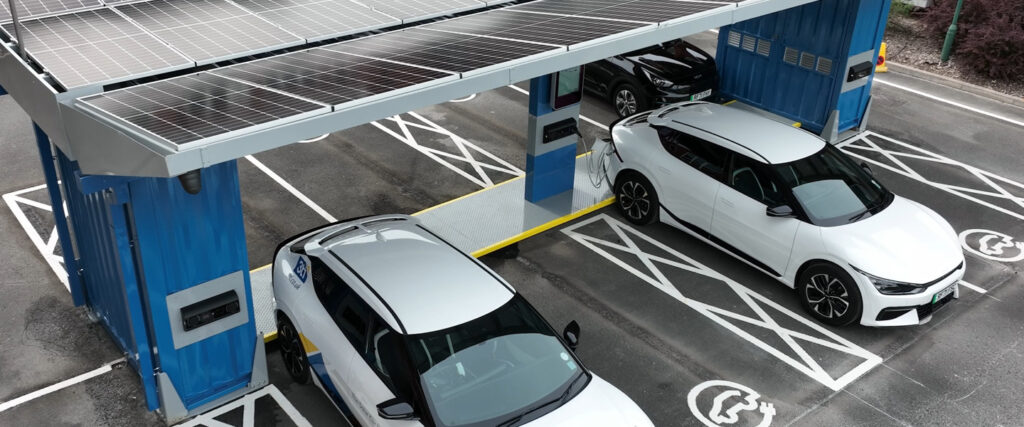
End-to-end innovation partner Cambridge Design Partnership (CDP) has helped the UK’s leading solar car park company, 3ti, create Papilio3, a pop-up mini solar car park and EV charging hub. Papilio3 will advance the rollout of EV charging infrastructure, helping decarbonize the mobility sector and supporting the global transition to net zero.

Papilio3 is the latest example of CDP’s work in high-impact innovation in renewables, EV charging, and energy infrastructure. The CDP team of industrial, mechanical, and product design engineers collaborated closely with client 3ti – from concept development and visualization to product engineering and realization. CDP supported 3ti in building the supply chain for the pop-up mini solar car park, which is built around a recycled shipping container and combines solar electricity generation, battery energy storage, and EV charge points.

CDP’s Head of Industrial, James Baker, says: “We’re proud to work with start-ups and scale-ups, like 3ti, addressing the biggest challenges. Helping companies innovate and develop new businesses in infrastructure is key to decarbonization. Papilio3 addresses renewables infrastructure with a much-needed, easy-to-deploy, and cost-effective approach.”

3ti’s Founder and CEO, Tim Evans, adds: “From our very first meeting, CDP understood and shared our vision for Papilio3. We’ve worked in close partnership over 12 months to get to this exciting point. We’re now focused on commercialization and plan to have units available to roll-out across the UK by Autumn. CDP built a talented, multi-disciplinary team addressing our mechanical brief, and delivered our first prototype designs at speed. Working with an end-to-end innovation partner like CDP has proved to be a wise decision. Since launching Papilio3 on May 26, 2022 the response has been phenomenal, with enquiries from around the world. Our crowdfunding campaign, designed to fund the roll-out of Papilio3, exceeded its target of £500,000 within 24 hours and we’ve taken the decision to overfund to make the most of this opportunity. I’d like to thank the team at CDP for being a key part of the project.”

“From our very first meeting, CDP understood and shared our vision for Papilio3. We’ve worked in close partnership over 12 months to get to this exciting point.”
Tim Evans
3ti’s Founder and CEO

Papilio3 makes charging accessible to EV drivers who can’t charge at home, providing destination charging in places without existing infrastructure, including offices, retail outlets, and leisure facilities. Made in the UK, Papilio3 is assembled from recycled shipping containers and provides 12 EV charge points under a waterproof solar panel canopy. The pop-up mini solar car park is designed for swift and straightforward deployment. Installation takes under 24 hours, with minimal site works, no new grid connection, and with no need for planning permission in most instances. The units are available to rent from 3ti, avoiding up-front costs or long-term commitments.

The first unit was installed at Surrey Research Park, Guildford, hosted by the University of Surrey, in May 2022, ahead of the launch of 3ti’s crowdfunding campaign. 3ti is crowdfunding to support their rapidly growing business, which is focused on generating clean, renewable energy today, for everyone’s tomorrow. By becoming a shareholder in 3ti, investors will be supporting the UK’s switch to electric vehicles and the decarbonization of the mobility sector.

To register your interest in contributing to the 3ti is hosting two Investor Days at Surrey Research Park on Wednesday, July 6, and Friday, July 15. Book your free ticket using Eventbrite.

Visit their site for more information. Capital at risk.

For further information and media enquiries, email media@cambridge-design.com or call +44 (0)1223 264428.

Bridging a cultural gap in product innovation
Share:
Find the authors
on LinkedIn:

Bridging a cultural gap in product innovation

Industrial design (ID) and engineering skills are different, yet both are crucial to successful new product development (NPD). But as anyone involved will have experienced, tensions can arise due to the approaches and goals of different members of the team.

Having attended both art school to study ID and university to study mechanical engineering, I work between the two disciplines, from front end ‘user centred’ concept generation through to detailed design for manufacture. As such, I have experienced these tensions, engineers often pressing for performance and the industrial designers for the user experience they believe is so essential. The worst-case scenario is when everyone misses their goals. So how do we achieve the best outcome?

This is where speaking both design languages can provide benefits. Having empathy and taking the time to understand the underlying design aims from both sides allows for better integration of the end product.

It is important that the NPD team recognises this gap and actively works towards creating a culture where collaboration is the norm. Fortunately, there are some simple measures that can encourage a culture of information sharing and a free flow of ideas. We do this here at CDP and one example is our ‘Friday Innovation Forum’, a weekly event involving different themes and speakers sharing learnings across all disciplines. Another format is a jumbo size computer monitor in our central coffee area which displays new ideas to inform and educate, stimulating coffee time discussions around hot topics and helping to align thinking across disciplines.

With my design hat on, I have a natural appreciation of ID so I spend time trying to understand the artistic intent of what the industrial designer has created and what they are trying to achieve, you can then start working with them to create solutions that embody everyone’s requirements. For example, to start this process, I like to ask:

“What is the ‘hero shot’ you have in your mind for the product, if it was on a billboard or on the side of a building – what is it that you are trying to convey?”  By asking that question I’m probing into what the industrial designer’s thought process is and creating a space where we can consider alternative solutions that could benefit all parties.

This is much easier if all the project disciplines are involved right from the start of the project. As an engineer I try to communicate the development journey, performance requirements and operating constraints across the whole team as they become known or change. By highlighting the difficulties as and when they occur it allows the ID team, or any other skill group for that matter to react and develop concepts in parallel that consider the new realities. This is best achieved through informal chats as the program progresses, it doesn’t always have to be in an official review meeting.

I favour elegant design solutions and try to stay away from what I call “glamour caps”, mouldings that have no other purpose than to hide an undesired feature. If the team all think in this way then you can create integrated designs with purpose as well as aesthetics.

It’s never a good idea to crowbar a new design into an already developed architecture. And similarly, it’s never easy to develop the usability and aesthetics of the product when too much is set in stone. By bridging the gap between these two disciplines and steering the development journey away from the ‘it’s your problem’ attitude you can create fantastic products that look good and have high performance.

Share:

Balancing design and engineering – New Design Magazine interview Ben Strutt

Cambridge Design Partnership was established in 1996 by three engineers (all of whom are still involved in the running of the business to this day). One of the founding partners, Mike Cane completed his Engineering degree at the University of Cambridge before studying Industrial Design at the Royal College of Art; it was his vision to create a company that balanced technological expertise and user-centred design in helping clients to innovate and make better products.

Ben Strutt, the company’s head of design, joined Cambridge Design Partnership in 2010 and the five years since have seen design become an increasingly important aspect of the business. “My vision was to drive the combined industrial design, consumer research and technical R&D offer,” he says. “These disciplines have now become fully integrated within the business.”

The consultancy works predominantly across four sectors: consumer (which includes subcategories such as consumer electronics and packaging); healthcare (medical devices, drug delivery systems, and surgical devices); energy (domestic heating technologies, control systems, and in-home monitoring systems); and industrial (process line equipment, safety systems and so forth).

2014 proved an exciting year for Cambridge Design Partnership in terms of growth. The company took on 18 new staff and in March opened a bespoke multi-million pound R&D centre. The new centre includes laboratories, consumer research facilities, a rapid prototyping suite, and workshop and modelling provision. Strutt adds: “The centre is integral to our ability to work and iterate quickly and support client confidentiality by keeping as much activity inhouse as possible.”

The year started with the exciting news that the consultancy had been successful in obtaining a grant from the Bill and Melinda Gates Foundation to help tackle the global HIV epidemic by developing a next-generation condom. “We felt it was a very user-centred problem: it wouldn’t just be about developing a new material or a new chemistry, it would be about focussing on the challenges that are experienced by users,” explains Strutt. “Many of the problems – social, emotional, cultural, accessibility, and so on – are unique to sub-Saharan Africa and other low resource settings.”

Through 2014 Cambridge Design Partnership worked on the first stage of the project, making links with health workers in Lesotho (where around a quarter of the population is HIV positive) and developing concepts to early prototype level.
In 2015 a Phase Two application will be made to the Foundation to support further development of certain concepts. Also in healthcare, the consultancy worked with Raumedic AG, a German medical device company, on a needle safety device that fits to their existing syringes in order to prevent needlestick injuries.

In response to new directives (in the US and Europe) introduced to reduce the number of such injuries, companies are attempting to create completely new products. However, one of the problems of starting from scratch is the product will need to go through a long and expensive validation process. “Raumedic AG recognised the opportunity for a needle safety device that could be retro-fitted to existing primary packs (the part that holds the drug),” says Strutt. “We created a spring-mounted telescopic sleeve which, once the syringe has been plunged and the drug delivered, springs out to surround and cover up the needle automatically. Modifying the existing vial avoided the long process of revalidation and helped the client get to market as quickly as possible.”

Also in 2014 Cambridge Design Partnership worked with Bloodhound SSC, the British land speed record team. The consultancy helped to design the steering wheel for the car, which it is hoped will be capable of speeds in excess of 1,000 miles per hour.

The project prioritized usability and ergonomics with the wheel designed specifically for the hands of driver Andy Green and carefully formed to take lines of sight into consideration. The wheel has been printed using an additive titanium technology making it incredibly strong as there is no need to remove a mould tool.

2014 was a particularly strong year in the industrial sector. To look at one example, Cambridge Design Partnership developed an industrial printer for Domino. “This is not your typical home printer,” comments Strutt. “These printers sit in factories labelling anything from sweets and eggs to mass-produced packaging.

Some of those environments are quite challenging, the products need to be very rugged and washed down regularly.” The main challenge for the designers was around ingress protection to ensure the printer met IP66 rating. There was an apparent fundamental conflict between keeping the electronics cool and a rugged enclosure. The design team did extensive work with thermal modelling and CFD to develop a solution in addition to industrial design work to enhance the user experience.

Having carried out qualitative consumer research in the US, Latin America, China and Europe last year, the company plans to extend and expand its front end process in 2015 to ensure primary insights are translated most effectively into concepts and products that people want and need. Furthermore, the team will continue to grow both at the consultancy’s Cambridge site and at its US office in Palo Alto, California.

See the article.

www.newdesignmagazine.co.uk

New Design Magazine 2015 Year book. Issue 114. February 2015