Developing Next-Gen Diagnostics Systems

INSIGHTS

Download our expert guide to developing next-generation diagnostic systems:

Accelerate your time to market

Increase the chance of commercial success

Receive the guide in your inbox immediately.

It’ll only take a minute.

Unlock the full potential of next-generation diagnostics with our 16-page guide. Gain valuable insights on:

    • Developing your value proposition

    • Understand the interplay between assay, user and product workflows

    • Capturing design input early

    • Establishing a platform system architecture

  • Planning your regulatory strategy
DX-Guide_mockup_COVER-web-1

Whether it’s unlocking the potential of a groundbreaking biomarker, innovating with new assay or detection technologies, or navigating the updates needed for your system to compete with newer devices, the path ahead is undoubtedly complex.

That’s why we’ve distilled the essence of successful diagnostic system development into this 10-minute guide – it’s your compass in the intricate world of diagnostics, highlighting critical considerations essential for turning ambitious ideas into tangible solutions.

DX-Guide_mockup_OPEN-7-8-web-1
||||||||||||||||
Find the authors
on LinkedIn:

Reducing the carbon footprint and plastic waste of LFTs: Evidence-based opportunities

Billions of lateral flow tests have been used worldwide during the COVID-19 pandemic – over two billion have been provided in the UK alone. Debate has raged on social media about why the tests need to use so much single-use plastic and how they could be made more ‘sustainable’. The test strip caseworks is a particular source of dismay – why so much plastic to house such a tiny test strip?

With the UK government ending the free distribution of lateral flow tests for the general public – citing a transition from emergency response to longer-term management of the pandemic – now is the ideal time to look more closely at the sustainability of these lateral flow tests, and to seek the data to demystify some of the emotional assumptions being made.

Familiarity with lateral flow testing has certainly increased, as has confidence in their clinical performance. It’s expected that lateral flow devices will be more present in our daily lives post-pandemic – not just for COVID-19 and pregnancy testing but to diagnose diseases such as seasonal influenza and sexually transmitted infections – all from the comfort of the home.

We’ve carried out a high-level assessment to quantify the approximate environmental impact of lateral flow tests and identify evidence-based suggestions for improving their environmental sustainability.

Why do COVID-19 lateral flow tests contain lots of single-use plastic in the first place?

The emergence of COVID-19 was a global emergency, and vast quantities of lateral flow tests were needed urgently. Once developers could produce the right immunoassay chemistry to detect the virus (SARS-CoV-2), it required implementation in a low-cost, low-risk device, that has a mature supply chain – with proven, readily available materials that wouldn’t compromise analytical or clinical performance.

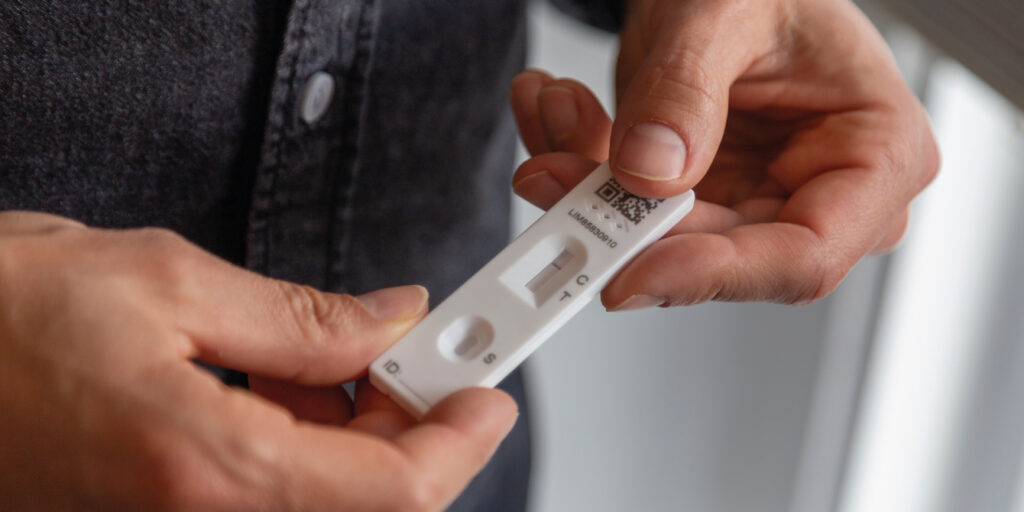
This meant using existing plastic casework designs to retain and protect the nitrocellulose test strip. Plastic is robust, low cost, lightweight, easy to transport, and easily printed for QR codes and LOT numbers. Critically, it’s a consistent material proven for the highest volume manufacturing and won’t interfere with the immunoassay chemistry.

From a performance, cost, and manufacturing perspective, redesigning the product with new materials would have been high risk. Material changes may also have needed significant R&D costs, new capital equipment as well as additional cost and effort needed to demonstrate equivalence and achieve regulatory approval – risking the ability to provide sufficient numbers of high-quality tests, at speed during the pandemic.

Our results: The sustainability of lateral flow tests

But how serious an environmental impact do these tests have? To find out, we broke down a test into its constituent components and weighed them to calculate the approximate environmental impact, using standard emissions factors to calculate the carbon footprint of a single test.

web_body_lateral-flow-test-kit-1

We focused on carbon footprint (the carbon dioxide and other greenhouse gases emitted during manufacture, transport, and disposal of the tests) and plastic waste (waste that would persist indefinitely if released into the environment) – the two issues that have attracted the most attention around lateral flow tests. A more comprehensive study should consider a broader range of environmental impacts, for example, the use of scarce resources and emission of other pollutants to avoid unintended consequences of any product changes.

Our results reveal:

  • The components needed to conduct the test account for around half of the carbon footprint and around two-thirds of the plastic waste. Packaging makes up most of the rest – as is often the case, a surprisingly high proportion of the total environmental impact
  • The test strip caseworks, which attracts the most comment online, is responsible for around 30% of the carbon footprint and 40% of the plastic waste. While it’s the most significant single contributor to the environmental impacts we evaluated, the large number of other small parts is also significant. Focusing on the caseworks therefore might not be the best strategy for improving the sustainability of the tests overall.
web_body_lateral-flow-test-analysis-1a-2
web_body_lateral-flow-test-analysis-1b-3

Lateral flow tests a minor piece of UK healthcare’s environmental impact

To put these numbers into context, we can compare the environmental impact of the two billion COVID-19 lateral flow tests distributed in the UK with the UK healthcare system’s overall environmental impact. We estimate the UK’s lateral flow tests have a carbon footprint equivalent to around 0.5% of the total NHS carbon footprint. This isn’t a trivial amount, but it’s also not the largest single contributor to the impact of the UK health system.

It’s also worth considering the positive environmental impact of a user-administered test on the health system. Conducting a test at home can eliminate the need for an individual to visit a test site, GP’s surgery, or hospital (assuming the clinical performance of the lateral flow test is adequate). Based on estimates from the Sustainable Healthcare Coalition, one lateral flow test has around 5% of the carbon footprint of a single GP appointment and produces a similarly low percentage of non-degradable (plastic) waste.

And that’s before we consider travel. We estimate one lateral flow test has the same carbon footprint as driving 350 metres in an average UK car. So, if you’re driving yourself to a test site or GP surgery some distance away, at-home lateral flow tests compare even more favorably.

If a lateral flow test prevents an individual from transmitting COVID-19 to a vulnerable person, there’s a public health benefit – as well as an environmental benefit – to keeping people out of the hospital. We can all see the discarded waste from home tests, but the less visible impact from energy- and material-intensive medical interventions is often significantly higher.

These approximate figures demonstrate why building an evidence base is vital during product development targeting sustainability objectives – because the results can be unexpected and non-intuitive.

Quick ways to optimize today’s lateral flow tests

Just because waste from lateral flow tests might not be the most urgent sustainability issue for UK healthcare, that doesn’t mean we can’t and shouldn’t do something about it.

We used the ‘avoid/shift/improve’ model to find potential quick wins for lateral flow tests. These reduce the carbon footprint of each test by nearly a third and the plastic waste by almost a quarter – without impacting the fundamentals of how the test works.

They include:

  • Eliminate waste bags. There’s a case for quickly isolating contaminated waste (even given COVID-19 also spreads from infected individuals through the air), but the bags account for around 5% of the carbon footprint of the test. It’s not clear how widely used they are in a domestic setting – there may be a risk-based justification for not including them in the test kit.
  • Package all the test strips in a single foil pouch. Using a single re-sealable pouch to protect the tests from ambient humidity (rather than individually packing each test in a pouch with desiccant) is common in packs of lateral flow tests designed for use by healthcare professionals. However, once opened, the stability lifetime of the remaining tests is affected.
  • Reduce the size of paper instructions. These are important for the effectiveness of the tests and are a regulatory requirement, but account for 5% of the carbon footprint of a test – could they be reduced in size?
  • Eliminate the cardboard sleeve. This packaging isn’t essential to the safe and effective functioning of the test, and it seems likely that the functions it does provide could be achieved with less material.
  • Prefill the extraction tubes with buffer solution. This is already done in some test kits, although manufacturers need to be conscious of moisture loss and the effect on shelf life. However, the separate plastic vial used in the test kit we studied accounts for around 5% of the carbon footprint and plastic waste.
  • Increase the size of the pack from seven to ten tests. This would mean less package waste per individual test. Including ten tests in one pack instead of seven reduces the carbon footprint by around 5% (depending on how many other optimizations are done at the same time). Perhaps a pack of seven tests was originally designed to cover a week of daily testing – but is that how tests are being used in practice?
web_body_lateral-flow-test-analysis-2

Redesign of the test strip caseworks

Looking to the longer-term gets us into product redesign – creating a new generation of the product with sustainability in mind. Doing this can take significant investment since, for medical devices, it’s likely to require new regulatory approval, which is a lengthy and costly process.

A popular idea circulating for lateral flow tests is to minimize the plastic test strip caseworks (without compromising the essential functions of providing a stable platform, and protecting the nitrocellulose test strip). It might be possible to halve the caseworks mass and reduce the overall carbon footprint and plastic waste by 15-20%. This would require significant investment in R&D, production tooling, and regulatory approval hoops to jump through – but could be worthwhile if future demand for tests stays high.

Longer-term options

If we consider that the world may require billions more lateral flow tests over the coming decade, a more comprehensive redesign becomes commercially viable. This could involve stripping the design back to the fundamental requirements for a lateral flow test – flowing a sample through the test strip in a way that is controlled and free from contamination. Current designs take advantage of established components to collect, buffer, and dose the sample – but, at this production volume, it may be worthwhile designing a system from the ground up that is optimized for cost, usability, performance, and sustainability.

Sustainability as a brand differentiator

It’s clear there’s scope to optimize lateral flow tests to reduce their environmental impact – and a systematic analysis reveals options beyond those that might jump out to someone when they use the tests. But it’s essential to put the impact of lateral flow tests in the context of the wider healthcare system, to focus resources where they can have the most environmental impact – and to recognize that, sometimes, the plastic waste people can see helps to avoid more serious, but less visible consequences.

On the other hand, while visible plastic waste from lateral flow tests may not be the most pressing environmental issue facing the healthcare industry, it highlights the growing influence consumer opinion is likely to have as diagnosis and treatment shift from hospitals to homes. And as lateral flow tests become (in the UK, at least) a product people buy with their own money, choosing from a range of options, there may be a competitive advantage for businesses that take note and optimize their products for sustainability.

References
  • Prime Minister sets out plan for living with COVID [Internet]. GOV.UK. 2022 [cited 1 April 2022]. Available from: https://www.gov.uk/government/news/prime-minister-sets-out-plan-for-living-with-covid
  • The Sustainable Healthcare Coalition. Care Pathways Calculator. [Internet]. Sustainable Healthcare Coalition. 2022 [cited 1 April 2022]. Available from: https://shcoalition.org/

Connect with CDP

For more information on reducing the environmental impact of lateral flow tests without compromising performance, contact Cambridge Design Partnership.

Sectors_Diagnostics_thumb
By Cambridge Design Partnership

Point of care diagnostics: navigating systems architectures

Diagnostic testing is rapidly moving out of the lab and into the hands of untrained users. But developing the system architecture for a high-performance test that is also easy to use is a complex challenge.

A great example of advancements in point-of-care (PoC) testing is the pregnancy test. In the 1970s, Wampole’s 10-step test took two hours by a trained lab technician. Today it is carried out in minutes in the privacy of your own home using an off-the-shelf disposable device.

PoC diagnostic tests should be quick and simple – and ideally not rely on the user’s skill to generate a reliable result. But, unlike pregnancy tests, molecular-based tests currently need more complex steps. For example, sample preparation may be needed to lyse cells, remove inhibitors or increase titre and this can be extremely challenging to implement at the point of care at acceptable cost and device complexity.

Wampole’s test could be categorised as a ‘chemistry set’ where the skill of the operator is critical to generate an accurate result – there might be several critical timing steps, mixing and resuspension steps performed using a manual pipette, metering and sub-sampling precise volumes followed by vortexing and ‘gentle’ heating before looking for a subtle colour change. Lots to go wrong and not at all user friendly.

The Clinical Laboratory Improvement Amendment (CLIA) from the Food and Drug Administration (FDA) regulates laboratory testing for human diagnostics in the US and has categorised the complexity of a diagnostic test as either: waived, moderate complexity or high complexity. The level of complexity is determined by adding up the scores from seven criteria. A CLIA waived test means it is ‘simple to use, and there is little chance the test will provide wrong information or cause harm if it is done incorrectly’.

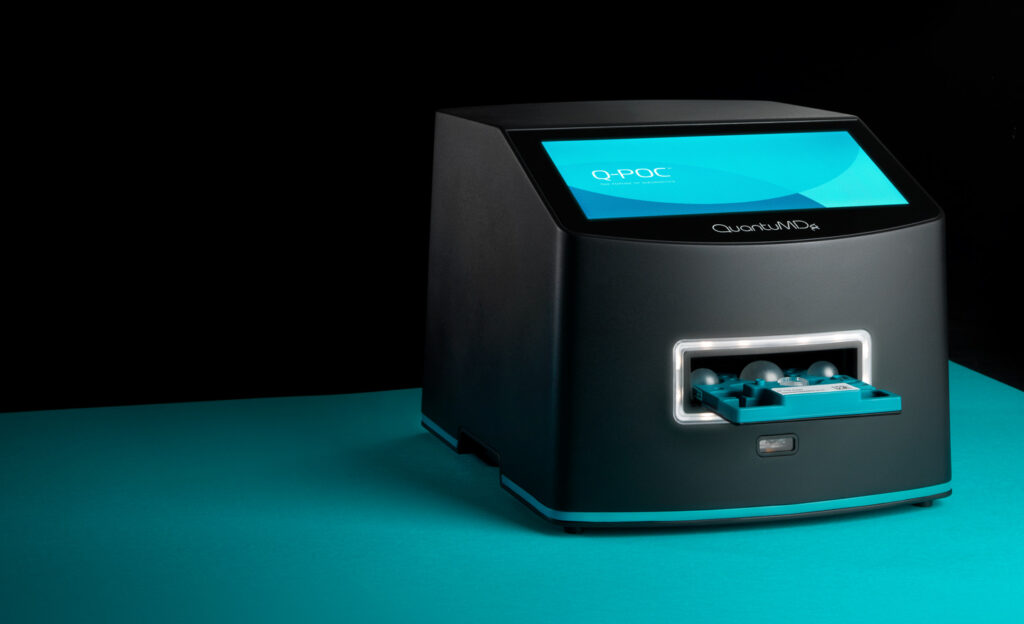
The simplest test for the user is to ‘add sample and walk away’ and the device carries out the necessary assay functions. This convenience typically generates significant market share over more labour-intensive competitor devices but there are trade-offs with device complexity and development risk. For complicated assays, ‘reader’ and ‘consumable’ system architectures are frequently used. However, consumables tend to be bulky and expensive, and the readers even more so.

Below I outline some high-level considerations when developing system architectures for a PoC diagnostic device, and how to navigate between the ‘chemistry set’ and ‘fully integrated product’.

Assay robustness

It all starts with the foundation of any diagnostic test – the assay. A correctly implemented assay is fundamental to providing high-performance, reliable and repeatable results in the intended use environment.

Identifying sensitive parts of the assay that require careful controls, and functions that are more tolerant to variability, provides the first insights into the required architecture. For example, flow-rate variations may have a significant impact on test performance, which necessitates the use of an automated pump – or the detection method may require special optics. An untrained operator may not be capable of performing these steps with the appropriate control, so reader hardware may be needed.

Ideally the assay is well characterised in the lab before the system architecture is developed – but this is seldom the case. Another issue is that lab processes can be difficult or costly to implement in a ‘highly useable’, low-cost PoC test. So designing a system architecture that is capable of accommodating the necessary functions based on preliminary lab results is a tricky challenge. Capturing risks and uncertainties, and carrying out feasibility testing of the high-risk aspects during early stages of the project, will better inform the system architecture and can avoid unpleasant discoveries later on.

User burden

Although CLIA waive is highly desirable, many PoC devices are categorised as ‘moderately complex’ – it may be a good option for the user to carry out certain functions if they are tolerant to sources of variability (i.e. by understanding assay robustness and assessing operation against CLIA scoring criteria).

User involvement can significantly reduce device complexity but operators are busy people and can easily get distracted in a PoC setting. Failure alerts and fail-safe features help reduce the risk of generating an erroneous result. Mechanical guides and ‘poka yoke’ mistake-proofing features, as well as electronic timeouts and sensing (e.g. QR code read by the reader), can notify the operator that an incorrect or expired component is used. In the event of inactivity, the reader may invalidate the test altogether.

Device complexity

Every project is constrained by time and money and, if the development team has done its job properly, the device will be just complex enough to satisfy user convenience and assay needs. Of course, it’s not as simple as that – other crucial factors such as cost of goods and ‘platform’ requirements also need consideration.

Estimating device cost early on – and continuously updating the estimates – informs the viability of the architecture and ultimate success of the product. If cost estimates are high, it may be necessary to re-examine the assay and explore alternative, lower-cost technical solutions or implement more of a ‘chemistry set’ approach (but understand the impact to the user and viability of the product). Directing functionality (and cost) away from the consumable and onto the reader is generally a good option as non-disposable parts are less cost sensitive.

When designing system architectures intended to be a ‘platform’, it is important to consider the requirements of future assays and, if necessary, build in redundant capability to minimise the effort to accommodate new tests. This is easier said than done under tight timescales. But modular system architectures and components that allow modification – for example, volume expansion or increased flow rate – allow potential flexibility.

Navigating the trade-offs to develop a system architecture that addresses all the considerations is a difficult challenge – and one that is often rushed as businesses are keen to meet their next milestone.

At Cambridge Design Partnership we use a holistic development approach involving close collaboration between our in-house human factors, mechanical, electronic, software and manufacturing engineers, as well as assay scientists. In the early phases of a project we identify the technical and market uncertainties – and thoroughly explore different architectures whilst characterising the assay and understanding user involvement, regulatory issues, manufacturing processes and ultimate device cost. This manages project risk and sets the course for a high-performance system delivered quickly to market. Get in touch for help with your next diagnostic challenge.

Connect with CDP

For more on navigating the trade-offs in point-of-care diagnostic system development, contact Cambridge Design Partnership.