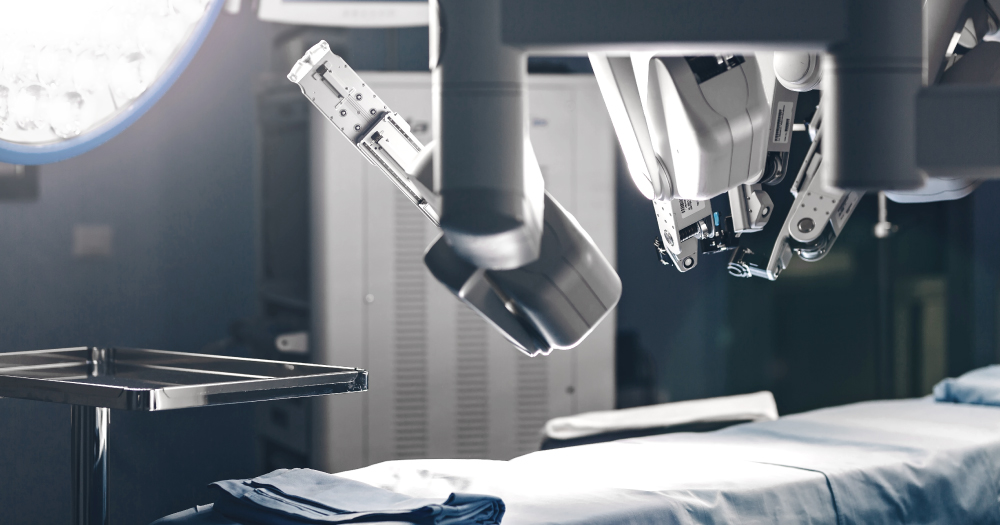
Surgical robotics

Where’s the value in surgical robotics?

The first robot-assisted surgical procedure was performed in 1985. In the 35 years since, the field of surgical robotics has exploded, with both surgeons and patients demanding access to the technology. This boom has brought with it plenty of vocal advocates, and just as many critics, debating the risks and rewards of robotic technology over traditional open and laparoscopic techniques.

The main criticism of robot-assisted surgery comes down to the fact that, despite the lofty initial and recurring costs associated with robotic equipment, patient outcomes of robotic-assisted procedures seem to be no better than conventional laparoscopic procedures. Some may see this as evidence that investing in surgical robotics is nonsensical, but it is worth considering the future potential of the technologies. For while the tools and techniques used in conventional laparoscopy may see slow incremental improvements over coming decades, each new generation of surgical robots will likely continue to bring radical step-change improvements in procedural precision, patient safety and surgeon control and comfort.

Current benefits of robot-assisted surgery

The current generation of surgical robots offer a few significant advantages over traditional laparoscopy.

  • Ergonomics & surgeon comfort: the ergonomics of laparoscopy are not ideal and can take a toll on a surgeon’s body. During robot-assisted procedures, the surgeon sits at a workstation and controls his surgical tools using ergonomic master controllers. If the surgeon needs to take a break at any point in time, they can let go of the controllers, and the robotic instruments will maintain their current positions.
  • Precision: a robotic system translates the inputs from the surgeon’s controllers to output motion of the surgical instruments. This allows for motion scaling (for example, 3mm of movement by the surgeon results in only 1mm of movement of the surgical tool), providing unprecedented surgical precision.
  • Stability: while providing some haptic feedback to the surgeon is desirable, a robotic system can handle all the stresses and loads associated with a procedure without translating them all back to the surgeon’s hands. Along with surgeon comfort, this allows for improved stability.
  • Better visibility: the steerable robotic endoscopes provide a high-definition 3D visibility of the surgical site, allowing the surgeon to better see what they are doing, compared to 2D endoscopes used in laparoscopy.

More hands: while we humans are tragically limited to typically having only two hands, robots are not subject to such limitations. The da Vinci Xi, for example, has four robotic arms. The surgeon toggles back and forth between controlling different combinations of these arms using foot petals.
Fast learning curve: learning how to safely and effectively perform robot-assisted procedures tends to be faster than training to perform laparoscopic procedures.

Current limitations of robot-assisted surgery

Advocates of surgical robotic technologies tend to focus on the various benefits without mentioning some noteworthy risks and challenges:

  • Setup time: nurses and surgical assistants often complain about the long time it takes to prepare a robotic system for a procedure, including wipe-downs, draping and loading of surgical tools.
  • Lack of haptic feedback: current robotic systems provide very limited feedback of applied forces to the surgeon. Instead the surgeon is required to use the visual feedback from the 3D endoscope to judge what amount of force he is applying to patient tissue. Some studies suggest that surgeons apply significantly higher forces and stresses to tissue using robotic systems than using laparoscopic tools, potentially resulting in more damage to the tissue.
  • High cost: a daVinci Xi system costs about $2M USD. Each da Vinci surgery may cost $3,000 USD more to the patient / insurance company than a traditional laparoscopic operation.

The future

Many of the criticisms above are valid and must be taken seriously. Effectiveness and safety of robotic technologies must continue to be proven, and limitations should be assessed and accounted for. However, these should be seen as criticisms of current robotic systems on the market today, not as criticisms of robotic surgery in general. If anything, these criticisms hint at where surgical robotics is headed next. While Intuitive Surgical continue to innovate, the field of players is also getting wider, with companies like Johnson & Johnson, Medtronic and Stryker investing billions into research and development. Future generations of robotic systems will bring a range of short-term and long-term improvements and will redefine what is possible in surgery.

Increased haptic feedback is expected to be a key feature in some future systems. This will allow the surgeon to truly feel the motions and gestures they are executing with the robotic instruments.

The cost of robotic systems and tools is expected to decrease as the volume of robotic systems and tools sold continues to grow and with increased competition, as new companies bring their robotic systems to market in the coming years.

There may be potential benefits in surgeons being able to carry out procedures remotely. Already today, the surgeon workstation does not necessarily have to be in the same room as the patient. Taking this to the next level, future systems may allow an expert cardiovascular surgeon to perform specialist surgeries all around the world from the comfort of his own office.

The Big Question

All of these features still depend on a human being (the surgeon) having control of every movement of the robot. The big question is: at what point will we be comfortable giving up some of this control to a robot? Crossing this line will increase the productivity of the scarcest of resources, highly trained surgeons, and start to significantly improve the cost-benefit equation for these systems.

Leveraging image recognition and artificial intelligence, it is fathomable that, in the quite near future, we could have a robotic system capable of making decisions and performing certain tasks independently. Especially with repetitive tasks like suturing, a robot could be trained to become increasingly efficient and effective.

However, as we’ve seen with self-driving cars, we humans have very little tolerance for injury and death caused by robotic systems. Despite worryingly high death tolls caused by inebriated and distracted drivers, it is not enough for new technology to reduce injury and death. Even a single death caused by a self-driving car convinces some that the technology is not ready. This may be the same psychological and regulatory hurdle that surgical robotics must overcome to realise its potential.

Connect with CDP

For more on how to accelerate innovation in surgical robotics, from device design to clinical value, contact Cambridge Design Partnership.

Radar that monitors heart rhythms

Radar that monitors heart rhythms

Heart rhythm monitoring devices represent a major industry sector in which competition looks to be heating up – through both established players and would-be disruptors from the consumer space. However current device types face difficulties in addressing the Atrial Fibrillation challenge: effective and economic population-level screening to reduce incidence of ischemic stroke.

Heart monitoring radar is an emerging technology that could plug the heart rhythm measurement continuity and adherence gap associated with wearable and portable devices, improving the diagnosis rates of heart irregularities. Radar has key benefits over contact-based heart rhythm monitoring, including non-contact measurement, patient privacy, and the potential to monitor multiple people simultaneously.

To meet the Atrial Fibrillation challenge using radar sensors, more work will be required – not only to develop effective techniques for extracting the patient heartbeat from the radar signal, but also to demonstrate the value of these devices in heart rhythm monitoring and wider healthcare applications, and to develop strategies for providing suitable instructions for use.

The atrial fibrillation challenge

Heart Arrhythmias, such as Atrial Fibrillation (AF), are conditions that cause an irregular heartbeat meaning that the pumping function of the heart is less effective than it should be. This can lead to symptoms such as dizziness, shortness of breath and tiredness, or perhaps more destructively may remain asymptomatic yet lead to ischemic stroke or sudden cardiac death [1].

Currently diagnosis typically requires the use of a cardiac rhythm monitor (CRM) to record a patient’s heart activity. Many such systems allow the patient to help pre-classify the ECG data by signalling symptomatic onset – either via the device itself, or through an app or companion device. Whilst there are established treatment pathways for symptomatic AF, a key challenge is that diagnosis typically only occurs after manifestation of symptoms.

Indeed, a 2016 study [2] showed that “ischemic stroke was the first clinical manifestation of atrial fibrillation in 37% of younger (<75 years) patients with no history of cardiovascular diseases.” Given the huge costs of ischemic stroke, both to the patients who suffer its debilitating effects and to the healthcare system which must treat them, some have called for 100% AF screening of patients above a trigger age (e.g. 60) [3]. Once asymptomatic AF is identified, it can either be treated, or the risk of stroke can be slashed by use of readily available anticoagulation medication. Proposals of population-level screening always excite debate, and cost effectiveness and patient adherence are usually key planks of the discussion.

Heart monitor implementations & limitations

There exist many implementations of heart rhythm monitors. They can typically be grouped into two categories: implantable and wearable devices.

Implantable devices are favourable, with proximity to the patient heart and battery life of years, they can provide highly accurate, long-term recordings. They require a low-risk surgery, generally carried out by GP’s, as part of the implantation procedure. The market for these devices is growing, with a predicted size of >$680M by 2023, and Medtronic is the established market leader – with Abbott having released a competitive product in the last 2-3 years. Nevertheless, these devices are not cheap, and even a “low-risk” transcutaneous procedure may prove difficult to justify for 100% screening application.

Other medical device players have focused on chest-wearable self-adhesive 2- or 3-wire monitors (such as Preventice), or even portable devices with an episodic or sampling approach (AliveCor).

With tens of millions of consumer wearable devices equipped with technology capable of single point ECG measurements sold each year, heart monitoring is becoming ever-more available to consumers. Indeed, the Apple heart study looked at the accuracy of arrhythmia diagnosis using the Apple Watch in 400,000 participants, with promising results [4].

However, these devices need to be charged, sometimes daily, which leads to a measurement continuity gap – compounded by lapses in user adherence which may cause gaps of days or weeks. Even single-function wearable devices cannot compete with implantable devices in terms of measurement continuity and longevity. For example, Holter devices are typically used for days to a week, whereas an implantable device can gather measurements of heart activity continuously for years.

This leaves the challenge of 100% AF screening effectively without a solution which is viable from a technical, economic and usability standpoint.

Radar: Increasingly affordable non-contact option

Radar could provide the answer. Recent publications in Nature Scientific Reports [5] [6], and many publications prior, have demonstrated low-cost, integrated radar systems which can detect heart activity. If deployed in a patient’s home, this technology can provide the opportunity to gather non-contact measurements of heart activity when patients are charging their wearables to plug the continuity gap – or even to replace wearables entirely.

Several types of radar have been used for heart activity recording in the literature. All types exploit the Doppler effect. The radar device emits an electromagnetic signal towards the patient and then records the signal that reflects off the patient. If the parts of the patient’s body are moving, the radar signal that reflects off the patient will be shifted in frequency in proportion to the velocity of the motion. The action of a patient’s heart muscle causes vibrations on the patient’s body, which are correlated with heartbeat. Hence, the collected radar reflections carry information about the movement of the beating heart, and the movement of the chest during breathing. This information can be extracted with established radar signal processing techniques; however, this process does have usability and technical challenges.

The key benefits of these sensors include:

  • Non-invasive: The radar sensor can record heart activity without touching the patient. No surgery required. No wearables required.
  • Privacy: People are becoming more aware of digital privacy. A radar sensor does not capture images of a person, and hence patients can be assured that they can use these devices in the home without privacy concerns.
  • Seeing through obstructions: Depending on the operating frequency, radar can see through textiles and light building materials. This makes them particularly effective in the home, where furniture can be moved at any time.
  • Family monitoring: With smart signal processing, radar can potentially monitor more than one person simultaneously.

Though we are early in this technology landscape, several manufacturers of potentially suitable sensors have emerged already including Novelda, who have developed the XeThru vital sign monitoring radar that is already on the market and has been demonstrated measuring heart rate [7], and Emerald, a spin out from MIT Media Lab [8]. Additionally, established electronics component manufacturer Analog Devices have demonstrated a radar for non-contact monitoring of heart and respiration rate [9].

For this emerging technology to be adopted, we believe providers will need to meet three key challenges: usability, extracting the heartbeat from the radar signal, and demonstrating the value of the technology in a healthcare context.

Usability

Radar is a complex technology, and to be useful in heart rhythm monitoring requires sensible deployment and use.

The quality of the heart rate measurement taken by the radar device is likely to be dependent on the geometry of the situation. The motion of the heart will have maximum effect on the chest, and, likewise, respiration will have maximum effect on the chest causing a dominant motion away and towards the patient. These motions can be considered as velocity vectors, with the dominant motions towards and away from the chest cavity.

Therefore, for best results, the radar needs to be facing the patient’s chest. If the radar is pointed at a patient from the side, this dominant motion will be perpendicular to the radar measurement plane and either very difficult to detect or not detectable at all. Hence, there is a heavy burden on providers to develop a compelling use case and provide comprehensive and simple instructions for use, if not a holistic service that includes device installation based on user behaviour.

Extracting the heartbeat

Extracting heartbeat and respiration data from a radar signal is an interesting and challenging problem.

Complex signal processing and classification techniques will need to be employed to extract heart activity. In particular, challenges in processing are discriminating between humans and other moving objects or animals, isolating the heartbeat from other movements, dealing with reflections from objects within the field of view, and coping with difficult geometries.
Manufacturers may have answers to these issues. The efficacy of their solutions will need to be verified to give confidence in the heart activity measurements. It is likely to be heavily dependent on how sensibly the sensor has been deployed, hence these devices carry usability and technical challenges.

Demonstrating value

Providers will need to demonstrate the value of installing a radar device for heart activity, or other healthcare applications, with reference to other options on the market. Pertinent questions will need to be answered. Will plugging the measurement continuity gap provide a significant health benefit to the population that justifies the radar heart monitor technology development? Will a durable non-contact solution better lend itself to rotation through the population, potentially enabling a more economic roll-out?

For now, the application of radar to heart monitoring is largely a technology driven move. A front-end activity to generate and test potential implementation models, demonstrate the value to the patient or healthcare professional, and to prove the economic case for the payer, will need to be conducted in order to gain real traction. This will require interactions with healthcare providers, carrying out user studies, and conducting trials to discover and prove the value of the technology.


References

[1] NHS UK, [Online]. Available: https://www.nhs.uk/conditions/arrhythmia/
[2] J. Jaakkola, P. Mustonen, T. Kiviniemi, J. E. K. Hartikainen, A. Palomaki, P. Hartikainen, I. Nuotio, A. Ylitalo and K. E. J. Airaksinen, “Stroke as the First Manifestation of Atrial Fibrillation,” PLoS One, 2016.
[3] M. Lown and P. Moran, “Should we screen for atrial fibrillation?,” 2019.
[4] Apple, 16 March 2019. [Online]. Available: https://www.apple.com/newsroom/2019/03/stanford-medicine-announces-results-of-unprecedented-apple-heart-study/.
[5] C. Will, K. Shi, S. Schellenberger, T. Steigleder, F. Michler, J. Fuchs, R. Weigel, C. Ostgathe and A. Koelpin, “Radar-Based Heart Sound Detection,” Nature Scientific Reports, 2018.
[6] Y. Lee, J.-Y. Park, Y.-W. Choi, H.-K. Park, S.-H. Cho and Y.-H. Lim, “A Novel Non-contact Heart Rate Monitor Using Impulse-Radio Ultra-Wideband (IR-UWB) Radar Technology,” Nature Scientific Reports, 2018.
[7] Novelda AS, [Online]. Available: https://www.xethru.com/.
[8] Emerald, [Online]. Available: https://www.emeraldinno.com/.
[9] Analog Devices, 30 June 2017. [Online]. Available: https://www.youtube.com/watch?v=0kEdCUdWDdw.