Technology Due Diligence||||||||

Seven principles of successful technology due diligence

The Theranos story is as avoidable as it is dramatic. The company claimed its desktop technology could rapidly perform multiple disease-detecting tests simultaneously from just a few drops of blood (while large vials of blood and lab testing would usually be needed). The possibility of addressing needle phobia, reducing healthcare costs, and increased convenience attracted hundreds of millions of US dollars of investment – only for it to be revealed that the technology didn’t work as promised and its failings had been covered up. The exposure of false claims begs the question: what happened to credible technology due diligence before making a significant financial commitment?

At CDP, we’ve been performing technology due diligence for decades, helping our clients assess target technologies for potential rights acquisition, or investing in the company that owns the technology. Our due diligence provides an independent view of how far away these target technologies and companies are from managing their risks, opportunities and milestones.

For technology due diligence to be successful, we apply seven principles, which I’ll share with you in this article. They could certainly have helped Theranos’ investors – but are useful for other, less dramatic acquisitions, too.

Take a wide view

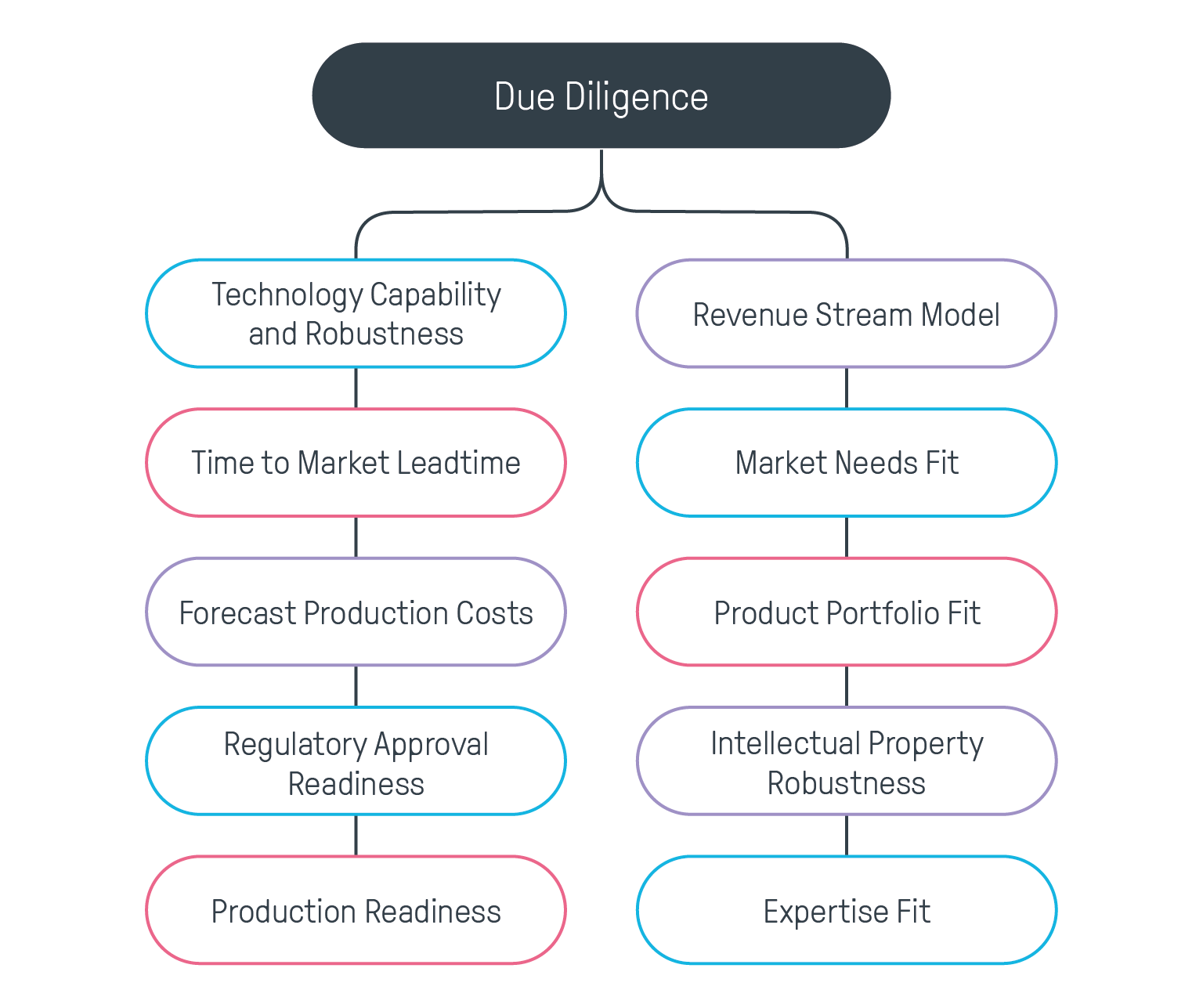
Investment and acquisition risk of a technology can exist in many places, depending on if it’s in development or on the market.
 

web_body_technology-due-diligence
Figure 1: Potential assessment areas for technology due diligence

With time and effort for due diligence activities being limited, it’s understandable that choosing not to focus your investigation on areas that appear less risky might feel sensible. But we’ve found that success stories such as granted patents, regulatory approvals, great PR, and high sales figures don’t always lessen the risks in those areas.

The key to managing the risk perceptions and defining the correct plan for due diligence is seeking input from a multidisciplinary team, working collaboratively to explore the importance and probability of issues and strike the right compromises to fit the assessment work into the allotted time.

Although due diligence activities can flex as you go along depending on your findings, an initial plan should be in place that defines the areas and depths to explore.

Mind the skills gap

Building the right due diligence team means keeping clear of a couple of hazards.

The first is assuming that, because you might only lightly explore some areas, you just need generalists who can cover many bases. The problem with this approach is that sometimes the findings of your investigation compel you to go deeper, or your generalist may not even realize that you need to go deeper because of their limited expertise.

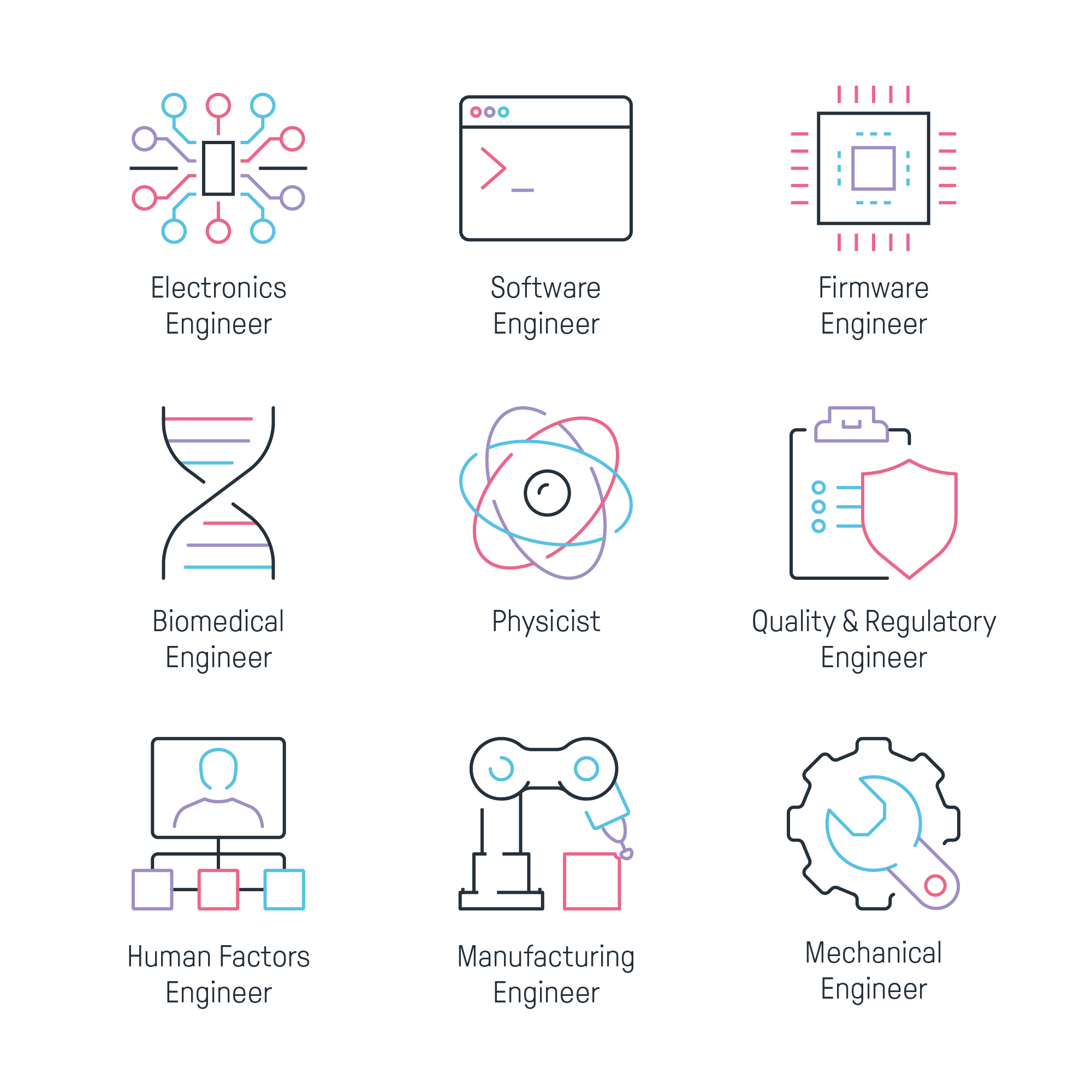
The solution is investing time in finding specialists for the different areas – either to give their input from the start or to be brought in as needed. Depending on the target technology, your team might consist of engineers (mechanical, electronic, software, human factors, manufacturing), scientists, market researchers, and IP attorneys – and, ideally, individuals who are experienced in the sector in question. For example, in the case of Theranos, a pathologist could have sense-checked the evidence for the claim you can run so many tests on a few drops of blood.

The second pitfall is cutting corners on the team make-up, either because you don’t have the expertise in-house, or the team doesn’t have the time to investigate the technology with the attention needed. The solution is to purposefully ringfence your in-house experts and consider bringing in external specialists who can add other perspectives. For example, one of our clients was considering making significant investments with several technology companies. With only in-house financial and market experts on hand, they took the step to commission our technologists and engineers to carry out comprehensive due diligence – resulting in more informed decisions on where (and where not) to invest, and great returns.
Due-diligence-2-01-2
Figure 2: Potential technical experts required for technology due diligence

Engage to establish trust

With confidentiality agreements in place, it’s a plus when the company which owns the target technology is willing to open up its books for detailed scrutiny of its assets – it makes your work easier, shows they’re keen, displays trust, and is a sign of what your future relationship might be like.

Often, though, you might not get all the information you want – the answers don’t exist, work is unfinished, it’s messy, or enveloped in positive spin. It’s understandable that the target company might be nervous about being under the spotlight and needing to secure investment. To see through this, you need to create the conditions that increase trust to foster transparency. Often, trust is increased by establishing a personal connection with the target company. Meeting face-to-face, COVID-19 restrictions allowing, is one step, but a more effective approach is understanding the technical, organizational, and commercial challenges the company had when developing the technology, so your expectations are realistic, and your communication is empathetic.

Work around confidential information

Even given your best efforts to establish trust, target companies still might choose not to disclose everything, because unintended leakage of trade secrets can cause significant business harm.

How can you assess if you can’t see everything? What if the thing being hidden isn’t a trade secret but a fundamental flaw or gap in the offering?

This is where your subject matter experts come into play. They should be able to formulate investigative questions that don’t force secrets to be disclosed – such as asking about the precepts behind the technology, associated engineering principles, methods of test, or quality and regulatory requirements.

Black-box testing (testing a system without knowing how it works) is another approach which helps navigate confidentiality. In the case of Theranos, the potential investors could have asked for the machine to be tested in front of them with provided samples to see if the results were as expected. If a product is on the market, you can try to get hold of a sample of it for technical testing, market testing or tear-down (disassembly to study how it works and is made).

Remember other information sources

A client commissioned us to estimate the production costs for a product to figure out the potential profit and risk areas. This needed to be done without speaking with the company that owned the target technology to avoid alerting other suitors.

Starting out with just one photo given to us by our client, we researched publicly available information such as patents, scientific papers, conference presentations, and other marketing material to estimate the product’s construction, material type, material content, and manufacturing processes with reasonable accuracy. Similarly, we found critical risks that informed questions we went on to ask the company later.

Admittedly, public domain information can be dated and fragmented, but it’s a source worth considering. It might be able to fill in gaps when information finding is restricted, and potentially find other risks and opportunities you may want to ask the target company about.

Don’t ignore the fundamentals

We recently performed due diligence on a target product that had been approved by regulators, used by other companies, and created a stir with its solid intellectual property.

We were told the technology was sound but that there were challenges around manufacturing it in high volumes. Despite assurances from our client and the target company, we still chose to scrutinize the core technology, especially around a novel critical feature which the whole product hinged on.

Working against the clock, we discovered a fundamental flaw with that critical feature that no one had caught before, shocking our contacts at the target company. It threw their concept and the robustness of their intellectual property into question and found a risk that the product could cause serious harm.

The finding was so significant with such a low chance of resolution that our client stopped the potential acquisition process and the target company aimed to restrict the product’s use.

The lesson: ask yourself, “Imagine there was a potential problem in this one area; how impactful would that be compared to another failing in another area?” This line of thinking should prioritize your efforts. Usually, the area where the cost of modification is highest is the technology’s fundamentals.

Be balanced

Looking back to the example above, you might think finding an investment-stopping flaw in the technology that no one else had caught is a sign of good due diligence. It is – but good due diligence isn’t about seeing how many negatives you can collect.

Good due diligence is about a solid process and approach – knowing you were thorough, applied the right experts, were equally motivated to find the positives and negatives, and sized the risks and opportunities with impartiality – leaving the decision to invest to the client, based on their appetite for risk.

In other words, it’s just as important that due diligence enables you to identify fantastic technology for potential acquisition as it is that it helps you avoid making a bad investment.


A British NHS prescription paper bag isolated on a white background|

The chance to create the world’s first prescription electronic cigarette

What should we make of the Medicines and Healthcare products Regulatory Agency (MHRA) updating its guidance for licensing e-cigarettes as medicinal products?

The updated ‘Guidance for licensing electronic cigarettes and other inhaled nicotine-containing products as medicines’ (published on October 29, 2021) sets out with extra detail the steps needed to license e-cigarettes as medicinal products, meeting the quality, safety, and efficacy criteria demanded of other medicinal products.

Any medicinally licensed e-cigarette could potentially be prescribed to people who want to quit or cut down on smoking, meaning England would be the first country in the world to prescribe medicinally licensed e-cigarettes to help reduce smoking rates.

But hang on, it was already possible for e-cigarette manufacturers to submit their products for this regulatory approval process, so what’s going on?

Call to action

Dr June Raine, Chief Executive of the MHRA, said in a press release, “The MHRA will continue to support companies in the development of safe and effective e-cigarette products, to encourage the licensing of e-cigarette products as medicines in order to support patient-centred care and access.”

The MHRA’s announcement is a re-emphasis of its support of this product category’s role in smoking cessation and a call to action for the e-cigarette market. The update gives us cause to reflect that a commercially viable product hasn’t yet taken up this opportunity. Why?

The large companies in the tobacco space aren’t familiar with designing under the constraints of a medicinal product or going through regulatory approval for medicines. Smaller players are concerned about the funding required to go down the medicinal route.

There’s a perception that the medicinal pathway is complicated and costly. There’s no denying that the bar for regulatory approval as a medicinal product is set imposingly high as it seeks to ensure safety, quality, and efficacy for users.

A CE mark is required to sell a medicinal product in the European Union, indicating compliance with ISO 13485. This standard defines the quality management systems used to control the product’s design, manufacture, and post-market surveillance. Compared to consumer products, this places much greater emphasis on risk assessment and mitigation throughout the product lifecycle, along with robust documentation to demonstrate regulatory compliance.

If the MHRA’s announcement reflects its frustration at the lack of progress to meet the perceived demand for a prescription-based device, can manufacturers expect an easier route to a license as a result?

The requirements of ISO 13485 will still need to be met in full, but perhaps the MHRA will expedite engagement with the applicants, which could certainly help the process. The announcement is significant in reinforcing the prevailing UK public health policy that e-cigarettes can play a key role in smoking cessation, providing an ‘open door’ for a forward-thinking player to advance and elevate the product category.

Continuum of product stewardship

The reduced risk products market has been on a journey of increasing commitment to product stewardship, partly driven by increasing regulation, for example, Tobacco Products Directive (TPD) and Premarket Tobacco Product Application (PMTA), and the increasing sophistication of the major players.

CDP serves clients in consumer and regulated healthcare markets, so we’re familiar with the challenges of operating in these different regulatory frameworks. For those already invested in product stewardship, perhaps the leap to a medicinal product won’t be as challenging as they think.

While the MHRA’s announcement may not be ‘news’, it does perhaps signal a reappraisal of the opportunity to create the world’s first prescription e-cigarette.

To find out more, explore Reduced Risk Products.


References
Key to success in FemTech

The key to FemTech success? Forget about the tech

From contraception to catheters, at CDP we’ve successfully pioneered women’s health innovation for over a decade.

Now that increasing numbers of our clients are entering the $19bn¹ FemTech market, we’re in a strong position to share some powerful lessons from our established approach to inclusive design.

Refocus your lens

Fertility entrepreneur, Ida Tin, coined the term ‘FemTech’ in 2016 in a frustrated bid to explain her work to male investors. The resulting discussion revealed the breath-taking extent to which the marketplace is short-changing women.

Despite decades of progress in gender equality, product development (until very recently) has operated through a male lens. It wasn’t, for example, until 1993 that the US National Institute of Health made it obligatory to include women in government-funded health research. This lack of data has resulted in a significant knowledge gap in women’s health, meaning that female patients have missed out on critical advances in medical technology.

And it wasn’t just men’s bodies that were the default; it was also the male viewpoint. Take the launch of Apple Health in 2014. The much-anticipated app promised to monitor “all of your metrics that you’re most interested in”. Yet it omitted a menstrual cycle tracking function². This is arguably something of great interest to 50% of its users. It wasn’t until a year and a lot of media pressure later that developers added it in.

Fight assumption with insight

The Apple Health oversight could have been avoided by one simple step – asking women what they thought.

At CDP, we believe the key to design inclusivity lies in a strong front-end innovation (FEI) capability. FEI is the identification and activation of opportunities, and the translation of insights into product and service solutions. This is the function that feeds insight into strategy, design, and specification. Importantly, it can guide decisions made later in the product development cycle.

To put a woman’s needs at the center of a brief, teams must take research beyond quantitative surveys. A mere tick box won’t capture the emotional and social circumstances in which a product is used.

For example, could the tone and volume of the beep that a basal fertility thermometer emits first thing in the morning (when it must be used) be so grating that it results in lower levels of compliance?

We recommend in-depth qualitative interviews to understand people as part of a contextual system, rather than groups of personas. Categorizing a user as a “32-year-old soccer mom from California” fails to capture the nuances of when, where, and how a product is used. As an aside, it also turns out that women take a dim view of being pigeonholed, as a former boss of UK retail chain Marks & Spencer discovered when (to female shoppers’ outrage) he described its typical customer as “Mrs M&S”³.

Where possible, we engage in immersive, ethnographic methodologies – seeing people in their cultural setting, often at home – to uncover user needs. This extends to international travel to understand the cultural contexts that inform decision making in different markets.

Futureproof for regulation

As a young sector, it’s no surprise that there are grey areas when it comes to the regulation of FemTech.

This is slowly changing as FemTech creeps into the realm of (regulated) medical devices. In 2018, Natural Cycles was the first digital birth control app to receive clearance from the FDA; fertility pioneer Clue was the second in March 2021.

Somewhat shockingly, regulation for sex toys doesn’t extend beyond the electrical compliance required for a Bluetooth speaker, escaping more stringent scrutiny through a “novelty use” labelling loophole.

Again, this is set to change, with the ISO making progress towards new standards⁴. Until this is finalized, the regulation of medical devices provides a good clue as to what action is needed to futureproof FemTech.

On a recent sex toy project, CDP ensured that all materials were biocompatible, although no regulations required it. Not only was this the right thing in terms of reducing risk for the user, but also protected our client against potential changes in regulation.

Forget about the tech

It may sound counterintuitive, but at CDP we feel the best way to succeed in FemTech is to forget the tech…at first, anyway. This is where we often see both big corporates and startups trip up.

We recommend a “solution agnostic” approach to design – that’s to say starting with a user need and looking for the best way to fulfil it. This might involve tech; it might not. Even then, the “tech” might not necessarily be digital, which is often what comes to mind when we think of FemTech. Instead, it might focus on the device itself, the manufacturing process, choice of material, or service. Whatever the solution, this method establishes early on if there is a market and business case for a product.

The alternative is “tech for tech’s sake”: just because it’s possible to measure the veracity of the female orgasm doesn’t mean that women want this data, as a startup that claimed to “spot women’s orgasms” found out when it was widely lampooned in the media⁵.

On this, it’s worth noting that we don’t see FemTech as limited to the fields of sex or fertility. The same contextual and experiential empathy that goes into designing for these areas must also be applied to other issues that disproportionally impact women. For example, we recently worked on a minimally invasive breast cancer biopsy device. Our goal was not only to design an accurate medical tool but to consider the experiential needs of the female patient – something that is often ignored.

Consider user acceptance

You’ve established a user need and a great tech-driven solution, but will female consumers feel comfortable using it?

It’s important to consider whether women are culturally ready to adopt a tech-led solution, particularly if it involves intimate wearables or sensitive data.

For example, current technology is capable of analyzing menstrual flow, but are women willing to accept intimate electronics? Let’s remember that in some parts of the world, tampon usage is still taboo.

Baking the female experience into the design process will answer these questions early on.

Ditch the defaults

We’ve discussed reframing design to include females; however, the same principles apply to other areas of inclusivity, such as race, sexuality, disability, gender identity, and economics.

In FemTech, this means considering, for example, the male experience – a heterosexual couple trying for a baby may want the capability for the male to log into a fertility app as part of the shared experience.

Likewise, it means considering the affordability of a design for various socio-economic groups. An expensive pelvic floor trainer may be financially out of reach for many women, so is it possible to reduce costs with smarter manufacturing or a new business model?

Good design considers all perspectives. It’s time to ditch the defaults.

To continue the conversation, get in touch: womenshealth@cambridge-design.com


1 – The Global Femtech Market was valued at $19bn in 2019 and is expected to reach $60bn Billion by 2027, according to Emergen Research.
https://www.emergenresearch.com/industry-report/femtech-market
2 – https://techcrunch.com/2015/06/09/apple-stops-ignoring-womens-health-with-ios-9-healthkit-update-now-featuring-period-tracking/
3 – https://www.cityam.com/mrs-ms-steve-rowes-first-blunder/
4 – https://www.iso.org/committee/7647858/x/catalogue/p/0/u/1/w/0/d/0
5 – https://www.bbc.co.uk/news/technology-53024123

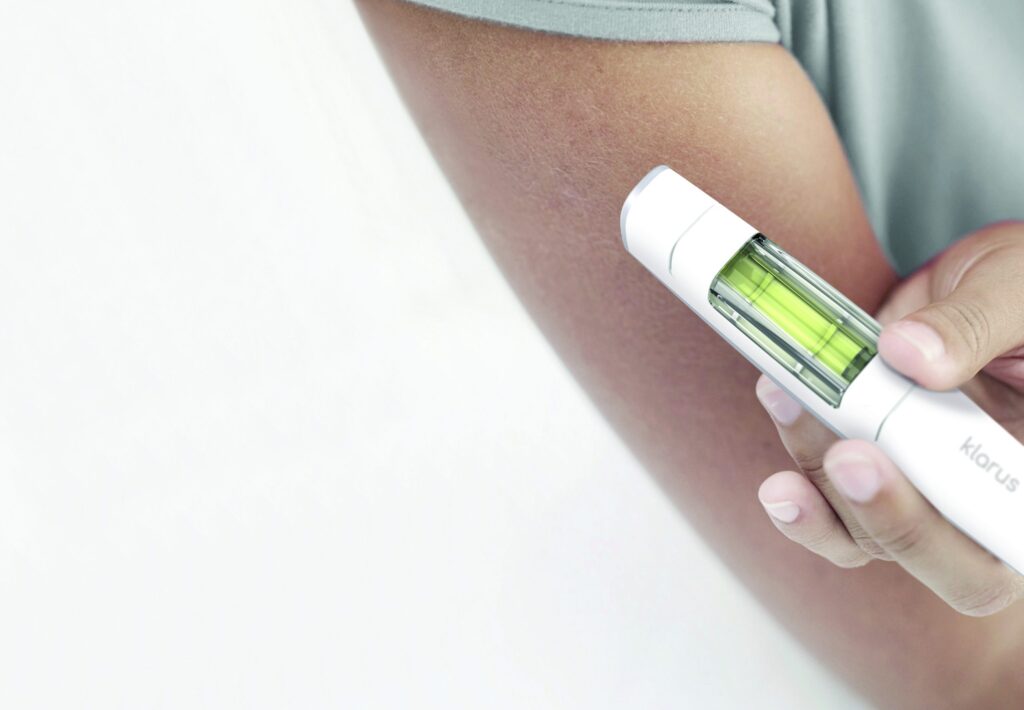
ISO 11608 applies to needle-based injection systems||

ISO 11608: All change for injector standards

Anyone who works with injection devices will be familiar with the ISO 11608 series of standards. The standards cover requirements, test methods, and design guidance for needle-based injection systems, and they are currently nearing the end of the most comprehensive review and update since 2012.

This review of ISO 11608 aims to better align the various parts of the standard and define a new class of device coming to the market, on-body delivery systems (OBDS), which the current revision of the standards doesn’t adequately describe. CDP develops and verifies many needle-based injection systems on behalf of our clients. Our manufacturing capability also gives us insight into the challenge of moving from building a handful of devices to building thousands of products. The Final Draft International Standard will be published soon, and I’d like to share some of the proposed changes.

It’s important to note that the current status of these standard parts is “draft”. The details of these documents may well change before publication, assuming that the various international bodies approve the publication of these standards. That said, let’s get into some detail.

ISO 11608 – update history in brief

Since the publication of ISO 11608-1: Pen Injectors for Medical Use – Requirements and Test Methods in 2000, the standard has expanded to cover many aspects of needle-based injection systems (NIS). The various parts of the published standards now cover:

  • General Requirements (11608-1 since 2012)
  • Needles (11608-2)
  • Finished Containers (11608-3)
  • Electronic and Electromechanical Injectors (11608-4)
  • Automated Functions (11608-5)

These standards were then joined by 11608-7 (Accessibility for persons with visual impairment) in 2016, which covers design guidance for improving accessibility to NIS for visually impaired users. These parts of the standard come under the remit of ISO Technical Committee 84 (ISO TC84), a committee focused on defining the requirements and test methods to ensure safe and effective devices are made available to the widest number of people.

I’ve had the privilege of being one of the UK’s representatives to this committee since 2013, so I’ve had a front-row seat for many of these discussions. So, what changes should device manufacturers and designers anticipate?

ISO 11608-1 – Needle-based Injection Systems

In this revision of the 11608 family, TC84 has worked to align the various parts, ensuring every potential NIS is addressed in the collection of parts, that they integrate well, and topics aren’t duplicated. ISO 11608-1 is the ‘parent’ part – the fundamental section of the standard that establishes the requirements and test methods for all NIS devices covered by the whole standard.

The revision to part one includes the introduction of OBDS (more fully described in ISO 11608-6) and several new concepts. These concepts include primary function, the functions of the device that allow it to be used safely and effectively. Functional stability, which expands testing regimens to simulate whole-life testing for reusable devices, is also introduced in this revision. In addition, the design specification for the NIS must consider the impact and requirements of the medicinal product, and the guidance on risk-based design approaches has been expanded.

There are also several smaller modifications to ISO 11608, including moving all requirements for electronics and EMC testing to ISO 11608-4, the addition of a choking hazard warning for small components, and the associated test fixture. A section has also been added to the document giving guidance on design verification with reference to ISO 13485.

ISO 11608-2 – Double-ended Pen Needles

The changes to ISO 11608-2 (Double-Ended Pen Needles) are more subtle. The determination of flow rate has been expanded to include suggested flow ranges and the sample sizes have been brought in line with the requirements in ISO 11608-1. The testing requirements to confirm compatibility between a needle and a specific NIS have been revised to include dose delivery and needle hub removal force. In addition, the samples required for functional compatibility have been reduced and guidance has been added regarding the requirements for the inner needle shield.

ISO 11608-3 – Containers and Integrated Fluid Paths

The scope of ISO11608-3 has now been expanded beyond defining cartridge geometry and performance to cover NIS Containers and Integrated Fluid Paths. Again, this change has been prompted by the development of OBDS. The requirement for resealing the cartridge has been reduced from 1.5x the intended use to a minimum of 1.0x the intended life. At the same time, the particle size for coring characterization has increased from 50um to 150um or larger. General requirements for soft cannulas and fluid line connections have also been added – another feature of the standard that can be traced back to introducing the OBDS class of device. Cartridge geometry definition has also been moved to an informative annex, meaning it’s no longer mandatory.

ISO 11608-4 – Needle-based Injection Systems Containing Electronics

I’ve had no direct visibility of the updates to ISO 11608-4. However, colleagues from the dedicated work group have summarized the two high-level changes as:

an expansion of the scope to include all electronics on a NIS (not just those concerned with the delivery of the drug product)
medicinal product delivery while connected to mains power (for recharging the battery) will be permitted

The challenge for part 4 has been to reference the parts of IEC 60601 which are appropriate for NIS. Part 4 references IEC 60601 explicitly, adopting the general requirements, means of patient protection, and power input requirements from the relevant components of the standard. The minimum ingress protection has been increased from IP22 to IP52, allowable temperatures for skin contact are defined, failure obvious to the user after free fall preconditioning is permitted, and the use of NIS in oxygen-rich environments has been defined.

ISO 11608-5 – Automated Functions

The revised text for ISO 11608-5 now explicitly directs the reader to ISO 11608-1 for general requirements and focuses on automated needle insertion and dose delivery. Requirements for fenestrated needles (needles with holes in the side) have been defined and the implications of non-perpendicular needle and cannula insertion are explored. The dose accuracy test has been modified for needles with automated insertion, and defining and measuring automated dose delivery time is now a requirement.

ISO 11608-6 – On-body Delivery Systems

This review includes the introduction of ISO 11608-6 defining the requirements for OBDS. This part of the standard initially expanded quickly as new terms and definitions were added but many of the new concepts have been adopted into the following component documents: 11608-1 (General Requirements), 11608-3 (Container and Integrated Fluid Paths), and 11608-5 (Automated Functions).

The crucial difference between an OBDS and an infusion pump is that the OBDS’s performance is defined by dose accuracy for a fixed volume; an infusion pump is defined by the rate at which the medicinal product is delivered. OBDS are also distinct from other NIS types in that they are attached to the body, whereas traditional NIS are held by the user for the duration of the delivery. The requirements and design guidance reflect this difference in use and the concept of a delivery profile (as a characterization tool, not a performance requirement) has been included to help device builders better understand their products.

This summary only scratches the surface of the comprehensive review of ISO 11608, and on the current timeline, these changes will not be published until late 2022, but if your development program extends beyond that date, I hope you found this summary helpful. The draft standards can be purchased from the ISO web store if you’d like to better understand the scope of the changes and the implications for your device development and verification program. If you’re a device developer and struggling with device performance, CDP has expert teams to help overcome these problems.

I’d like to thank my colleagues from ISO for their assistance in drafting this summary. In particular, Robert Nesbitt, Director of Portfolio Strategy at Abbvie and project leader for the ISO 11608-1 review, and Bibi Nellemose and Lars Brogaard from Danish Standards, whose tireless efforts as TC84’s secretariat keep the whole process running smoothly.

Connect with CDP

For more on how to navigate ISO 11608 changes and develop injection devices that meet evolving standards, contact Cambridge Design Partnership.

innovative diagnostics||

The window for innovative diagnostics is open

The Covid-19 pandemic has presented a time-limited but immense window of opportunity for diagnostics companies. Changes in regulation and increased levels of investment are enabling radical innovations to have real impact, but only if they can be fast-tracked into new products which are cost effective and compelling to users. In this article we review some of the product releases and look at the long-term effects of this unique situation.

The WHO’s message of ‘Test, Test, Test’ echoed around the world and since the start of the Covid-19 outbreak, diagnostics companies have dropped their existing R&D programs to focus on SARS-CoV-2 test development.

The FDA’s Emergency Use Authorization (EUA) has enabled a quick route to market for products that have not received formal approval, and for many companies, the outbreak has stimulated significant cash injections from government and private organizations. The Covid-19 situation has meant products can be launched faster than ever before.

Engineers and scientists have been working intensively while the EUA window remains open, including teams at CDP who are in the final stages of developing a molecular platform for Covid-19 testing.

Most tests (~80%) authorized under EUA are molecular tests that detect the presence of viral RNA. Two companies (Becton Dickinson and Quidel) instead targeted detection of a protein within the virus particle (an “antigen” test) rather than detecting its RNA. The promise of home-based tests that detect antibodies (to determine if someone has had the virus) was unfortunately dashed by poor performance; the 26 authorized antibody tests are all lab-use and primarily involve large expensive equipment, rather than a low-cost pregnancy-style lateral flow strips that use a drop of finger prick blood.

Molecular tests on platform devices

First off-the-mark were companies that already have a device which can be repurposed for Covid-19 testing. Automated lab analyzer running PCR (the molecular ‘gold standard’ test) require little in the way of hardware modifications. The SARS-CoV-2 molecular assay is a relatively easy assay to develop for these systems as it is similar to other respiratory diseases (e.g. for Flu A/B). Roche, Thermo, Hologic and Abbott Molecular all released their tests on large scale hospital lab equipment during the same week in mid-March.

Companies producing near patient tests on existing platforms were quick to follow, and in the following week Cepheid’s Xpert Xpress, Mesa Biotech’s Accula and Abbott’s ID Now were all authorized. These systems are highly portable and CLIA waived, so they can be used outside of lab settings. The Abbott ID Now (the re-branded Alere-i) uses isothermal amplification (rather than thermal cycling) which enables results to be generated in as little as 15 minutes. Compare this with traditional PCR which takes ~40 minutes, and these should be ideal systems for mass deployment into schools, care homes, pop-up clinics, even for testing passengers while travelling on commercial flights.

However, whilst these systems seem an ideal method for de-centralized settings, sample collection can be error prone and the cost per test is relatively expensive compared with central-lab testing. Combined with lower throughput, it is currently more cost effective for people to self-isolate while their sample is processed in the central lab.

New CRISPR-based tests

Start-up companies are making use of this window of opportunity by building products around potentially disruptive technologies, which may have been too risky to develop in more normal times. An example technology is CRISPR, the game-changing technology for gene-editing – now heading rapidly into diagnostics. CRISPR uses the natural defense properties found in bacteria to protect itself, ironically, from viruses. It is now being used to rapidly detect specific nucleic acid sequences. Sherlock Biosciences recently received EUA for its CRISPR-based Covid-19 test kit – and is working to bring the technology into a point-of-care format which can deliver results in 20 minutes within a doctor’s office or even a supermarket. GlaxoSmithKline is also working with Mammoth Biosciences to bring CRISPR-based technology into a hand-held, fully disposable product format. These products are at an early stage, but future developments will advance detection capabilities and potentially enable faster and lower cost diagnostics compared with traditional approaches.

Fully disposable molecular tests

There is currently a race to launch fully disposable molecular devices that can offer lab-quality results from the convenience of the home. The vision again is that of a pregnancy-test type device, but one which carries out the complex assay functions of a molecular test. Many of the devices in development use isothermal amplification due to lower power demands and ability to cope with reduced sample preparation. These first-generation devices are going to be initially very expensive, but companies are pushing the boundaries and paving the way for more accessible testing.

Antibody tests – “the wild west” of testing

Very low cost, home-use lateral flow immunoassay tests involving just a single finger prick blood sample was hoped to be the ticket back to normality. These tests detect if a person has antibodies to the virus and therefore potential immunity to re-infection. Manufacturers were pushing these out under EUA despite very little in the way of supporting clinical data, but hopes were short-lived as high false negatives meant the tests were unsuitable. In some cases, results were so poor, it was comparable to flipping a coin. The only antibody tests released under EUA are lab-based tests, not home-based, and use conventional serum, plasma or whole blood sample collected by a phlebotomist.

Recent data suggests antibody tests are not actually very good at detecting if someone has had Coronavirus; many virus-positive patients have been antibody negative, so there appears to be other immune responses taking place involving T-cells, but that’s another topic.

Changing landscape

While existing lab analyzers are currently the workhorse of testing due to high performance, high throughput and low cost, relaxation of regulations and rapid cash injections have meant there are some highly innovative new developments which are pushing the boundaries and re-shaping the landscape of point-of-care molecular diagnostics.

Faster and lower cost point-of-care tests that are more convenient to the end user have the ability to provide results while-you-wait, meaning local outbreaks can be identified sooner and less time is wasted unnecessarily self-isolating. With greater access and clear social and economic benefits, more people will engage with testing on a regular basis. Covid-19 testing applies to the global population – it is not just a one-time event, but repeated frequently, time and again. The market size is huge, and the commercial opportunity is immense.

But the window of opportunity presented may be short-term due to the nature of the current global circumstances. Companies will have to act fast in technology development to devise compelling embodiments that differentiate them from very similar competitors. Speed and innovative thinking will be key to win and maximize the opportunity.

AI in healthcare

AI in healthcare, separating facts from fiction

James Baker, partner at Cambridge Design Partnership, considers the future for AI in the real world with help from a sideways look at its portrayal on the big screen.

In the movies, we often see big tech and deep data combine to challenge humankind in new and ever more fiendish ways. Indeed, at the cinema, human interaction with Artificial Intelligence (AI) is a rich seam of storytelling, which rarely ends well, for the human!

Meanwhile, back in the real world, we are now in an era where digital data, and more importantly the insights that can be drawn from it, can be as important – and as valuable – as physical objects. At Cambridge Design Partnership (CDP), one of our specialisms is the design of medical devices, often using information and machine learning to provide utility and value beyond the physical device alone.

So, in the spirit of fun, here is what the silver screen tells us about the big questions surrounding machine learning in healthcare, and we ask how these ideas relate to the reality of what the technology can achieve today?

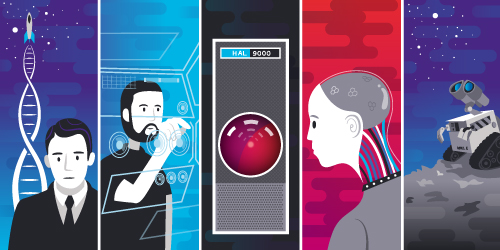
What price genetic data? (Gattaca)

In the 1997 film Gattaca, only genetically perfect humans are eligible for better jobs and lifestyles. We cheer on Ethan Hawke’s ‘genetically inferior’ character as he assumes the identity of a superior being in order to become an astronaut.

In today’s world, less than 20 years since Gattaca was filmed, genetic profiling and statistical prediction is gathering speed. Mapping of genomic sequences to traits is a rich area of study and just this week, Matt Hancock the UK Health secretary announced that all babies could receive a complete genome sequencing at birth. Crucially, this technology has the potential to predict an individual’s likelihood to suffer illness in the future. But should the way you are treated as a patient, or indeed a person, be determined by an assessment of your genetic makeup? Already insurers are asking for access to medical records and premiums are affected by the presence of certain diseases, so should they also be able to consider the likelihood of future illness as well?

Diagnosis – how far should you go? (Minority Report)

The film Minority Report envisages a world in which arrest and incarceration is based on a prediction of the likelihood to commit a crime before it has occurred.

Already today’s healthcare and wellness technologies create significant amounts of data about individuals.  New processing methods and machine learning can analyse these multiple sources and draw conclusions.

Yet many clinicians don’t want every possible analysis to be given to them. For example, who is responsible if systems predict the probability of an illness, but the medical practitioner can’t confirm this conclusively? Does informing the patient provide any utility?

There are recent moves to define what can and can’t be done with personal data, such as the European Union’s General Data Protection Regulation (GDPR). These seek to control access to and ownership of data, but as yet, there are no similar frameworks to control the conclusions drawn from it.

What if AI overtakes human intelligence? (Ex Machina)

In the film Ex Machina a humanoid robot is created and given ‘intelligence’ built using a record of billions of human internet searches. But then (surprise!) the robot uses its knowledge of human interactions and desires to achieve its own freedom, deliberately misleading its human masters to do so.

Machine learning using huge amounts of information is an approach we see increasingly used in real life. In the field of diagnostics, AI is already showing great promise in diagnosing conditions such as Alzheimer’s and in facilitating cancer diagnoses. AI predictions are compared with a gold standard diagnostic to determine the most significant automated metrics to detect the condition.

This approach is already being used in cancer screening, enabling earlier detection through far more extensive analysis than is possible manually.

But what if AI doesn’t react like we expect? (2001)

An all time classic, 2001 cleverly hides a story of unintended consequences within a ground breaking and spectacular space opera. The HAL character appears to have a sinister agenda and behaves malevolently, attempting to kill off the human crew – but ultimately is understood to have been driven by conflicting orders.

In the real world, AI can deliver responses that are not what we expect. Large data sets may still contain insufficient information, erroneous or poor-quality data, which by chance may create patterns that have no meaning.

A good example of where AI can deliver unanticipated (and unwanted) behaviour is the late, unlamented Microsoft Tay chatbot. Its premise was that, by listening to and learning from posts on Twitter, it could generate useful tweets and help manage commercial Twitter accounts. But within hours of its release in 2016, Tay began posting inflammatory and offensive tweets and had to be taken down.

So, before we make AI systems independent, how can we be sure how they will behave and who takes responsibility for their actions?

Sometimes, AI can really help us (Wall-E)

The 2008 story of a good-natured planetary janitor-bot left to clean up our human mess shows how AI can really benefit humankind, turning its hand to automating work that would otherwise be onerous and low value. See also, C-3PO and R2-D2 in the Star Wars movies. It’s surely no coincidence that the two loveable droids are the only characters to appear in every single film in the Star Wars franchise.

Back in 1950, computing pioneer Alan Turing predicted that by the year 2000 computers would be able to trick us into believing they were human 30% of the time. He was not far wrong, in 2014 a chatbot called Eugene Goostman convinced 33% of judges that “he” was a 13-year-old from Ukraine, thus officially passing the Turing Test. We see these kinds of natural language interaction technologies being used increasingly in consumer goods, but also finding utility in medical applications such as triage with patients seeking care. This enables faster access and a better “customer experience” whilst also allowing healthcare practitioners to focus on provision.

In conclusion, at CDP our focus is on how to realise value for our clients, and machine learning is one of the tools we can bring to bear.  With the ongoing bombardment of new technologies, it is important to understand when it can provide effective solution, and when more traditional methods will provide the best results.  It’s no longer a question of what can we do with AI?

We need to ask: What should we do?

Preparing for the new IVD regulations

Preparing for the new IVD regulations

It may seem like there is plenty of time before the new IVD (in vitro diagnostics) regulation (IVDR) [EU 2017/746] comes into effect. The deadline for transfer is 2 years later than that for medical devices [EU 2017/745], so May 2022 might seem distant. However, given the changes that are required, clued-in manufacturers should be working now to be ready.

For those with products currently certified by a notified body (NB), there is additional breathing space. The key here is to get the current certificate renewed and extended by the current NB, which can give 5 years transition, meaning product can still be put on the market until 2024 and stay in use until 2025.

However, for the vast majority, their product was self-certified against the IVD directive [98/79/EC], which means come the 26 May 2022 deadline, the CE mark required for sale in Europe will be null and void. So, what do you need to do, as a manufacturer with a self-certified IVD on the EU market?

Where to start?

Firstly, do not panic! Easier said than done, but there is a wealth of information out there, if you know where to look or who to ask.

Step one, rationally review the Intended Purpose of your product. Have you really nailed it down in terms of what type of test it is, what is measured and how it is measured, patient population, intended user, use setting, purpose of the test? This will dictate much of what happens next and determining where your gaps lie. Without a proper Intended Purpose statement, you may not classify your product accurately, and within some classifications there are groups of products that have their own specific requirement above the standard ones. For example, near-patient testing (Point of Care) and Companion Diagnostics both have specific requirements in addition to those for other devices of the same classification.

This exercise shouldn’t be conducted by your Regulatory department in isolation. There may be market and business considerations to be made; Is there really a market for the Intended Purpose that you can support? Will there be an adequate return on the additional investment that may be required?

New requirements

An obvious difference is the change from the Essential Requirements Checklist (ERC) to the larger General Safety and Performance Requirements (GSPR). This is another good place to start, because completing all the relevant references to the Technical File within the GSPR will immediately point you towards where there are disparities, or the evidence is insufficient.

The key gaps in current Performance Evaluation data are likely. Previously not required, the IVDR now calls for things like Trueness, Precision, positive and negative predictive values (PPV/NPV) and specimen handling and controls. For some, this will require new calculations to be made using existing data, while other manufacturers will find they just don’t have what they need to meet these new requirements. For older products, was the clinical trial run with a comparison against something still considered state of the art? For self-certified manufacturers, it is important to be aware that it is going to be much harder to provide justification for not carrying out clinical performance studies. There is no grandfathering for the new regulations; all products are considered new and must stand up on today’s merits.

Risk and risk management has a far bigger presence in the IVDR than it had in the IVDD. This is one area that current self-certified manufacturers, in particular, should turn their attention. Have all possible indirect harm situations been considered and included? Are all residual risks in the IFU? And all manufacturers will need to consider the latest version of ISO 14971 when it is published at the end of the year.

The Post Market surveillance requirements and activities have been significantly beefed up from the IVDD. It requires more than logging customer complaints within internal systems, instead involving active and systematic data gathering, together with a Periodic Safety Update Report (PSUR) for Class C and D devices and Post Market Performance Follow-up. Processes will need to be in place that capture new requirements to log information in EUDAMED, to review scientific literature for new off-label use scenarios (as just one example), and ensure risk is considered and updated throughout the product lifecycle.

Out of your hands

The elephants in the room, which are totally out of manufacturer’s control, are EUDAMED being ready for use, and NBs being certified against the IVDR. EUDAMED is required for use with the MDR, so expectations are it should be ready in time for the IVDR. Of greater concern are the NBs. Currently, just 2 notified bodies have received this certification (DEKRA, Germany and BSI, UK). Others are known to be in the pipeline (approximately 10 more), but until they are announced there is big uncertainty. Add to that, the scope of the certifications, which also won’t be known in advance, so some manufacturers may still need to change their NB, even if they are certified to the IVDR, because they cannot support their product range.

There is a lot to do to be able to sell your IVD after 26th May 2022. However, with the right planning and support, all the documentation can be put into place. It remains to been seen if the notified bodies will be able to keep up with demand, but at least manufacturers can be prepared when they get to the top of that queue!

Connect with CDP

For more on how to navigate the new IVDR requirements and prepare your IVD products for EU market compliance, contact Cambridge Design Partnership.

Developing guidance for regulatory submissions

Developing guidance for regulatory submissions

RAPS (Regulatory Affairs Professionals Society) publish a set of excellent “Fundamentals” books, each covering a different regulatory context: US, EU, Canadian and International (which covers other markets). These books detail the key aspects of the regulations for pharmaceuticals, medical devices and IVDs (In vitro diagnostics) with considerations about how they should be followed and implemented.  These are essential for healthcare companies looking to make submissions outside of the jurisdictions they are familiar with.

These books need to be regularly updated as regulations evolve to ensure they are current, and I have been chosen as a subject matter expert for the US fundamentals book that looks at the requirements of the FDA (Food & Drug Administration).  I have recently updated the chapter “supply chain and traceability”, along with a second author, Jyoti Chauhan.

This chapter was initially introduced in the last edition (10th) and so was relatively new to the book. Upon reading, I was most surprised that it did not cover any elements of supply chain or traceability for medical devices, only focusing on pharmaceutical requirements, specifically the Drug Quality and Security Act. I felt the chapter was lacking in detail on medical devices because traceability is a key topic at the moment with the introduction of UDIs (Unique device identifiers) in the last few years, so this was a big gap to be missing.

My first task was to pull together all the existing guidance on the topic of UDIs which the FDA have published as well as the key aspects of the CFR (code of Federal Regulations) in relation to supply chain and traceability. It was interesting to compare them at the same time as different pieces of information are emphasised in different guidance, so I wanted to summarise these in a cohesive overview.

Adapting to the formal writing style of these publications was a practical challenge, but I hope my description and analysis will help other regulatory professionals navigate the tricky waters involved in submitting their products to the FDA for approval.

If you want to know more about these subjects or how CDP can help you with your quality and regulatory activities, then please do get in touch with us at hello@cambridge-design.com.

CDP-190619-0019_Happy

Women’s work?

Women are still hugely under-represented in STEM (Science, Technology, Engineering and Mathematics) careers. Only 22% of the UK STEM workforce is made up of women according to a 2018 study. In Engineering specifically, the stats are worse: only 12% of all professional engineers are women.

Here at Cambridge Design Partnership, the company is taking active steps to improve the situation. “Our aim is to redress the balance and encourage as much diversity in our workforce as possible,” says Matt Schumann, Mechanical Engineer and Partner at CDP.

With International Women in Engineering Day falling on June 23rd 2019, we thought this was a good moment for some of CDP’s female staffers to talk over their careers so far and share their experience of working at CDP.

Round the table: Jessica Carroll, Mechanical Engineer; Jeanette Milbourn, Senior Regulatory expert; Miranda Dobson, year in industry student; Helen Simons, Quality Specialist; Caroline Zakrzewski, Drug Delivery Devices Scientist, Amy Livingstone; Electronics Engineer.

Have you faced any gender-specific challenges working in the STEM industries?

Helen: My course at Durham University 1998 – 2002, had 126 students of which 15 were women but I didn’t find this to be a problem. I first encountered real difficulties in my first graduate job, in the drawing office of a small manufacturing firm. I arrived to find I was the only women in the company in a technical role and I was more qualified than my boss. The guys on the shop floor were really encouraging but the managers didn’t support me at all.
Jess: For all three of my university internships and also my first job after university in 2017, I was the only female engineer. I’ve not had major problems, but I have noticed a series of seemingly insignificant comments like, ‘You’re a girl, you can draw’ and being called ‘motherly’ for being caring towards others. I’ve had to ignore it, for my own sanity.
Caroline: The gender bias regarding how women in science are perceived has certainly lessened, but male opinion is frequently seen as of more value. Look at any technical conference – one I attended recently had less than 20% female representation in its speaker and panel roles.
I was once at a high-level project meeting where the female team members were justified by a male colleague because “we get really nice cakes at the team meetings”. The females in question were the technical lead, quality lead and project co-ordinator. We made him bake the cakes for the following month’s meeting.
Miranda: I’m working at CDP on my gap year before going to university. Throughout my schooling there has been a distinct lack of participation from my female peers in STEM based activities. I have been the only girl in STEM groups for a long time, from the engineering club at school when I was nine to my Further Maths and Physics class at A level. Personally, I have got used to being outnumbered by male peers, but it could be off-putting for others looking to join in.

What problems have you had with being a woman in STEM employment?

Caroline: When I worked in a lab or cleanroom I was consistently hampered by oversized lab coats and huge gloves that restricted my dexterity. The design of equipment as ‘one size fits all’ usually means ‘one size fits a large man’.
Jeanette: When I had children (my first child was born in 1992) – part-time employment was almost impossible to get. So that is when I went freelance. I am now working part-time at CDP which is a perfect balance for me of interesting work while leaving time for my other interests.

How have you found CDP as a workplace?

Helen: I think CDP is pretty accommodating and flexible about working patterns which helps keep women in STEM. In a previous company the MD hated part-time workers and made them change all their contracts. This resulted in the majority of technical women leaving the company because they were the ones who needed part time working to deal with childcare. CDP has also been really good at giving opportunities to female Year In Industry students, which helps get them on the right path from the start.
Amy: At CDP the general level of support is so good that I don’t feel I need any extra. My appraiser is very supportive of additional training and I’m part of a new mentoring scheme, so I now have even more guidance in my career.

Who was your female STEM role model growing up?

Jeanette: My mother was a biology teacher and I was always encouraged to pursue what I wanted to do.
Helen: I guess I grew up with Carol Vorderman on TV which helped a bit. I mainly went into STEM because my dad was an engineer. I visited his work and understood what it was to be an engineer.
Amy: Only if Artemis Fowl counts!
Jess: There wasn’t anyone female I could look up to when I was thinking of this sort of career. One way to inspire the next generation is to be the role model you wish you had – and that’s what I’d like to do here at CDP.

Do you believe that women bring any extra contribution to STEM companies?

Jess: One of the problematic issues in the technology industry is gender-blindness. When technology is designed by an all-male team, considerations towards how women may use that tech may never be discussed, not out of maliciousness but rather ignorance. Having a diverse team, not just for gender, but race and disability, means that whole groups of people are not forgotten in design considerations.
Caroline: Even recent history has shown that designing for the ‘average white man’ can treat women as outliers – Apple created what they called the ‘world’s best workplace’ but omitted to include childcare facilities. FitBit came up with an app that tracks all manner of biometric exercise data but forgot to allow women to track their menstrual cycle.
Jeanette: Women often contribute valuable ‘soft skills’ such as being more of a team player and better listening skills. And, dare I say, not so many of the big egos that get in the way sometimes!

How do you view the future of women in STEM?

Jess: Young women and girls should be encouraged to study/work in STEM because they already have natural drive and curiosity. They just need the confidence to pursue it.
Miranda: I’ve always felt I have to work harder and perform better than my male counterparts to be seen as equal to them and to break down assumptions of my inferiority. I don’t know how effective positive discrimination is but I am optimistic that views on women in STEM are changing due to the likes of Harvard’s Dr Katie Bouman, who worked on capturing the first ever image of a black hole. Overall, I’m optimistic that, as my career develops, the gender imbalance in STEM will become less and less of an issue.

Redressing the balance

Here’s what CDP is doing now to encourage women to consider STEM careers;

• CDP actively supports female Year in Industry candidates.
• CDP female staff visit local primary schools to promote Engineering as a career open to all.
• CDP has signed up to the national Industrial Cadets scheme for all students aged 9-21.
• Flexible working is available to staff.
• Female CDP staffers act as role models for Industrial Cadets and Year in Industry students.

manufacturing – we bridge the chasm

Bridging the design transfer chasm

The challenges of bridging the ‘design transfer chasm’ are well known in the medical device industry. If your approach to design and innovation has not fully anticipated the intricacies of volume production in a regulated environment, then difficulties will arise when it is sent to your manufacturing partner to be made at scale.

Developing high volume medical devices is a complex challenge, there are many issues beyond the design itself to consider such as usability, component cost, part variability and suitability for high-speed assembly and inspection.  Product designers creating new products from a clean sheet often rely on manufacturing engineers to rectify issues later down the line.

Unfortunately, rectification can be a tortuous process as each design change can have many unintended knock-on effects. When manufacturing delays impact the launch of a product, the direct costs and financial damage can be significant. The window of opportunity in which to sell a new product while it is still under a patent is limited, causing unforeseen harm to income potential.

Some contract manufacturers address this concern by offering a design and manufacture package, however this strategy can leave the manufacturer’s intellectual property and know-how embedded in the product. This ties in the manufacturer and restricts your ability to control supply chain profit margins in the long term by competitive second sourcing, adding risk in the future.

To address these challenges, Cambridge Design Partnership has created a product innovation model called Potential Realised. We find it offers a better solution by developing the new product within an environment where a holistic team of product development and manufacturing engineers work in parallel. The benefit of having the design and manufacturing teams working closely together is that production problems are foreseen, and issues fixed quickly, by either design or manufacturing changes.

The key step that leads to the success of this approach is a robust phase of short-run manufacturing organised by an extended design team towards the end of product development. The manufacturing team develops a comprehensive pilot manufacturing process which includes tooling and process qualification. This run provides both regulated product for clinical trials and verifies the capability of the design and manufacturing process.

The result is a detailed and tested package of manufacturing documentation alongside the completed technical file and clinical trial data. The designs are handed over with a quality control plan, standard operating procedures, jigs, and validated test methods. This means that all the intellectual property including the know-how relating to both the design and manufacturing process is transferred, enabling a competitive tender process to identify the most cost-effective volume manufacturing partner.

A key advantage of Potential Realised is revealed when conducting clinical trials. Trials normally start between design and full manufacture, so there is a danger that if design transfer requires alterations to the product, elements of the controlled clinical trial may need to be repeated. There are countless examples of pharmaceutical companies needing to repeat or extend clinical trials due to delivery device design changes during design transfer, or to take extra time to perform bridging studies to demonstrate to regulators that changes have not impacted clinical performance.  Instead, with the Potential Realised approach, a short manufacturing run for clinical trials is integrated into the development process and is conducted in a manner representative of how the product will be made once it goes into volume manufacture, thus significantly reducing these risks.

In the field of medical device innovation, Potential Realised integrates short-run manufacture into product development bringing a raft of advantages, not only saving both time and money in commercialisation but bringing forward product launch and vital product revenues.


To find out more, explore Transfer to Manufacturing.