
shortlisted_r3
Share:

CDP shortlisted for employee ownership award

Cambridge Design Partnership (CDP) has been shortlisted for a national award thanks to its business success since transitioning into employee ownership.

In 2018, CDP made a major shift to become fully employee owned and in October this year the firm learned that it has reached the finals of the UK Employee Ownership Awards 2019, organised by the Employee Ownership Association (EOA).

This is a national organisation that works in close partnership with its members to champion, promote and provide insight into employee ownership. This year the EOA is celebrating 40 years supporting employee ownership in the UK.

Mike Cane, CDP’s founding partner, says he is delighted by the news: “CDP decided to become employee owned to give all staff the opportunity to share in the organisation’s success and to build a solid foundation for future growth. The fact that we all work for each other supports our multi-disciplinary team approach to innovation. Our aim is to foster the skills of our scientists, engineers, digital experts and designers in a positive and creative environment,” he says.

CDP is a finalist in the Rising Star category of the Employee Ownership Awards and the winner will be announced at the EOA Annual Conference in Birmingham in November.

Mike says: “The well-being and happiness of our staff is at the centre of our business approach. As a technology consultancy, we recognise that our people are the real value in our organisation and are the reason our clients come back to us time and time again.” At CDP, employees are all involved in the business though a transparent management approach and an elected employee committee.

This is not the first business award in which CDP has found success. The firm won Employer of the Year in the 2019 Cambridge Business Excellence Awards. “We have always wanted CDP to be an inspiring and supportive place to work. This just shows we are getting it right for our team here,” says Mike.

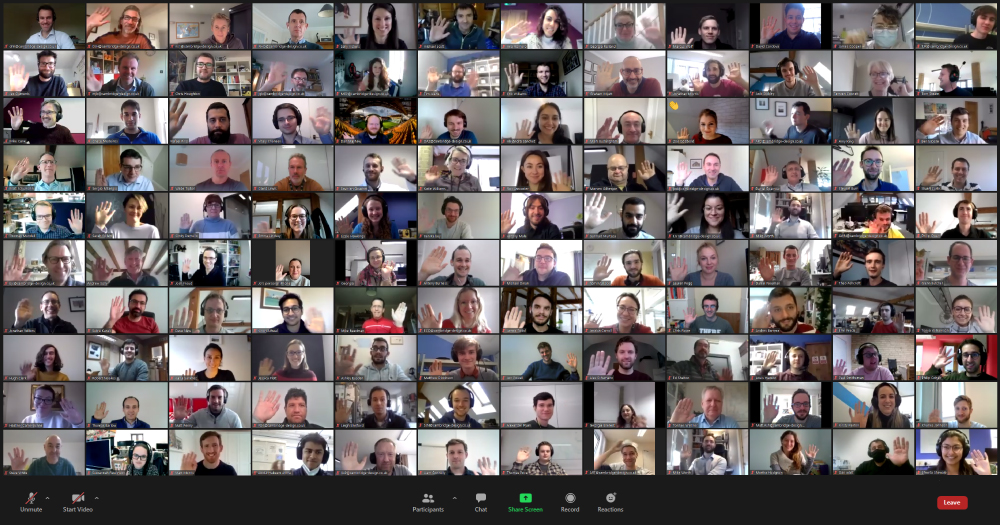
CDP employs 140 people with a wide range of talents from anthropologists and human factors researchers, through designers to scientists and engineers, with expertise across mechanical and electronics engineering.  The company has its main R&D facilities near Cambridge UK, and a second engineering facility in Raleigh, North Carolina.

The company has just expanded its Cambridge base with an innovative and eco-friendly new building, created using recycled shipping containers.

Above all, CDP aims to encourage and reward staff in a wide range of ways, says Mike. These include team-building social events such as curry nights, regular staff activities like daily lunchtime walks, plus spot prizes and awards for staff who go the extra mile. “There is a real culture of helping and supporting each other here, which contributes to making CDP a fun and creative place to work and is one reason we can do such a good job for our clients” says Mike Cane.

Preparing for the new IVD regulations
Share:
Find the authors
on LinkedIn:

Preparing for the new IVD regulations

It may seem like there is plenty of time before the new IVD (in vitro diagnostics) regulation (IVDR) [EU 2017/746] comes into effect. The deadline for transfer is 2 years later than that for medical devices [EU 2017/745], so May 2022 might seem distant. However, given the changes that are required, clued-in manufacturers should be working now to be ready.

For those with products currently certified by a notified body (NB), there is additional breathing space. The key here is to get the current certificate renewed and extended by the current NB, which can give 5 years transition, meaning product can still be put on the market until 2024 and stay in use until 2025.

However, for the vast majority, their product was self-certified against the IVD directive [98/79/EC], which means come the 26 May 2022 deadline, the CE mark required for sale in Europe will be null and void. So, what do you need to do, as a manufacturer with a self-certified IVD on the EU market?

Where to start?

Firstly, do not panic! Easier said than done, but there is a wealth of information out there, if you know where to look or who to ask.

Step one, rationally review the Intended Purpose of your product. Have you really nailed it down in terms of what type of test it is, what is measured and how it is measured, patient population, intended user, use setting, purpose of the test? This will dictate much of what happens next and determining where your gaps lie. Without a proper Intended Purpose statement, you may not classify your product accurately, and within some classifications there are groups of products that have their own specific requirement above the standard ones. For example, near-patient testing (Point of Care) and Companion Diagnostics both have specific requirements in addition to those for other devices of the same classification.

This exercise shouldn’t be conducted by your Regulatory department in isolation. There may be market and business considerations to be made; Is there really a market for the Intended Purpose that you can support? Will there be an adequate return on the additional investment that may be required?

New requirements

An obvious difference is the change from the Essential Requirements Checklist (ERC) to the larger General Safety and Performance Requirements (GSPR). This is another good place to start, because completing all the relevant references to the Technical File within the GSPR will immediately point you towards where there are disparities, or the evidence is insufficient.

The key gaps in current Performance Evaluation data are likely. Previously not required, the IVDR now calls for things like Trueness, Precision, positive and negative predictive values (PPV/NPV) and specimen handling and controls. For some, this will require new calculations to be made using existing data, while other manufacturers will find they just don’t have what they need to meet these new requirements. For older products, was the clinical trial run with a comparison against something still considered state of the art? For self-certified manufacturers, it is important to be aware that it is going to be much harder to provide justification for not carrying out clinical performance studies. There is no grandfathering for the new regulations; all products are considered new and must stand up on today’s merits.

Risk and risk management has a far bigger presence in the IVDR than it had in the IVDD. This is one area that current self-certified manufacturers, in particular, should turn their attention. Have all possible indirect harm situations been considered and included? Are all residual risks in the IFU? And all manufacturers will need to consider the latest version of ISO 14971 when it is published at the end of the year.

The Post Market surveillance requirements and activities have been significantly beefed up from the IVDD. It requires more than logging customer complaints within internal systems, instead involving active and systematic data gathering, together with a Periodic Safety Update Report (PSUR) for Class C and D devices and Post Market Performance Follow-up. Processes will need to be in place that capture new requirements to log information in EUDAMED, to review scientific literature for new off-label use scenarios (as just one example), and ensure risk is considered and updated throughout the product lifecycle.

Out of your hands

The elephants in the room, which are totally out of manufacturer’s control, are EUDAMED being ready for use, and NBs being certified against the IVDR. EUDAMED is required for use with the MDR, so expectations are it should be ready in time for the IVDR. Of greater concern are the NBs. Currently, just 2 notified bodies have received this certification (DEKRA, Germany and BSI, UK). Others are known to be in the pipeline (approximately 10 more), but until they are announced there is big uncertainty. Add to that, the scope of the certifications, which also won’t be known in advance, so some manufacturers may still need to change their NB, even if they are certified to the IVDR, because they cannot support their product range.

There is a lot to do to be able to sell your IVD after 26th May 2022. However, with the right planning and support, all the documentation can be put into place. It remains to been seen if the notified bodies will be able to keep up with demand, but at least manufacturers can be prepared when they get to the top of that queue!

Connect with CDP

For more on how to navigate the new IVDR requirements and prepare your IVD products for EU market compliance, contact Cambridge Design Partnership.

Lovelace Instrument
Share:
Find the authors
on LinkedIn:

CDP engineer creates a remarkable musical instrument

Jonathan Morris, Mechanical engineer, explains how he came to design and build a most unusual musical instrument at CDP

Q. CDP doesn’t usually make musical instruments, does it?
Jonathan: No! This is definitely one of our more unexpected projects here at Cambridge Design Partnership. But when composer Robert Laidlow approached us with a project celebrating computing and Artificial Intelligence, it was clear that engineering and design could help him create an entirely new musical instrument.

Q. Sounds intriguing, tell us more…
Jonathan: We have built ‘The Lovelace Engine’, a mechanical musical instrument inspired by the work of Ada Lovelace, who studied the earliest computers back in the 1830s and 40s. Lovelace was a pioneering computer scientist, and one of the first to realise the potential of computing to perform ever more complex tasks.

Q. The machine looks stunning – how does it work?
Jonathan: Essentially it is a mechanical engine that can make a variety of percussion rhythms, controlled by a single shaft turned by a crank handle. It was constructed here at CDP using our rapid prototyping capabilities, with many parts being 3D printed.

Q. What sort of music will be played on The Lovelace Engine?
Jonathan: It’s a major new work and part of a concert that is a tribute to Ada Lovelace at the Barbican in London this autumn, led by Professor Emily Howard, director of PRiSM at the Royal Northern College of Music. The engine will be played during an exciting new piece commissioned for the performance called Alter. The music will performed by musicians from the Britten Sinfonia with text written entirely by Artificial Intelligence.

Q. So is this instrument a replica of the first computers that Lovelace worked on?
Jonathan: It’s very much inspired by them and draws inspiration from the mechanical technology available to Lovelace in the 1800s – there’s no electricity or circuit boards involved. But this is a musical instrument, not a computer, so it is a tribute to Lovelace rather than a copy of the computers she worked with.

Q. Was it difficult to make?
Jonathan:  It has been a unique challenge as we wanted the engine to be configurable, as Lovelace envisaged, so that it can change rhythm mid-performance. It’s been really interesting as a mechanical engineer to work on such an artistic, creative project.

Q. Not your everyday work at CDP then?
Jonathan: I’m in my first graduate job here at CDP and the variety of what we get up to here is fantastic. I am mostly working on medical devices and consumer products as well as designing experiments and test rigs. No two days are the same but, yes, a musical instrument is probably a one-off for us right now! I can’t wait to see it being played on stage.

The Lovelace Engine will be played at the Barbican on November 2 as part of “Ada Lovelace: Imagining the Analytical Engine”.

For more details, visit the site

Website-Graphics_mobile-hero_reddot
Share:

CDP ranked in the top three international design firms

Cambridge Design Partnership is recognised as one of the top three agencies in Europe and the Americas for design innovation, according to the Red Dot awards programme.

Red Dot has become established internationally as one of the most sought-after seals of quality for good design. They organise annual competitions looking to applaud the best in product design, globally.

This year Cambridge Design Partnership (CDP) came third in the ranking for design firms that continuously and progressively, produce cutting edge and forward-thinking product concepts.

“We are absolutely delighted with the news,” says Mike Cane, founding partner of CDP. “To have this sort of accolade on a global stage is really gratifying. It’s a testament to the hard work and creativity of our whole team.”

In presenting the award, Ken Koo, President of the Red Dot Award in Asia congratulated CDP and stated that the ranking recognised CDP’s continued investment in design and was a “vigorous reflection of real and sustainable design innovation capability”.

CDP was founded 23 years ago and has grown rapidly offering customer focussed technology and design innovation. Capabilities start with front end research, strategy and design, and include mechanical, electronics and software engineering as well as manufacturing and quality management. They work for market leading companies in healthcare, consumer technology and energy in Europe and US.

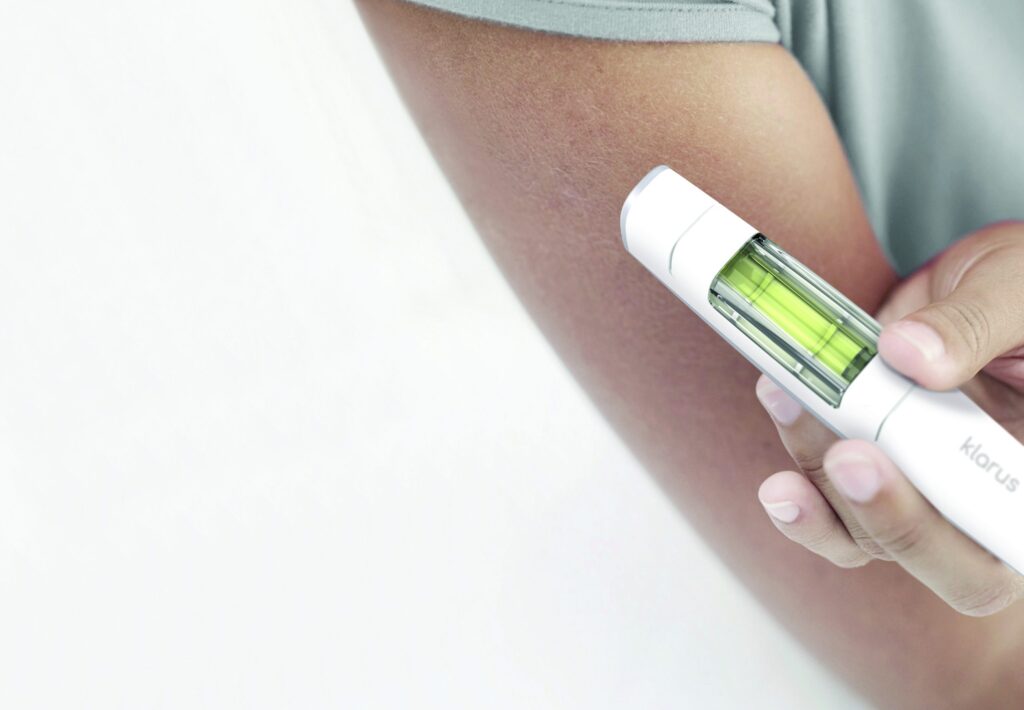
CDP innovations which have won coveted Red Dot Awards in recent years include the First Response Monitor, a wearable connected device which measures and broadcasts patients’ vital signs for instant analysis by medics in emergencies. Another is Klarus, a drug delivery system aimed at patients with conditions such as rheumatoid arthritis, which necessitates regular self-injection with medication.

Learn more about Red Dot Design Ranking

||
Share:

Can sleep tech become ubiquitous?

A good night’s sleep is increasingly considered to be just as important for our health and well-being as eating healthy food and exercising regularly. Unfortunately, today’s 24/7 high-stimulus, digital world is renowned for disrupting our natural sleep patterns. The average 21st century human is now sleeping significantly less than in the past. In 2017, McKinsey reported that more than one in three Americans does not get enough sleep – roughly the same number who are obese.

What is more, our sleep quality – as well as quantity – has decreased as well.

This emerging need has created an ecosystem of manufacturers, retailers and health service providers as well as pharmaceutical companies that has formed around sleep health. The McKinsey study reported the US sleep-health industry is currently worth between $30 billion to $40 billion and has historically grown by more than 8 percent per year, with few signs of slowing down.

In addition to the traditional categories of clinics, pharmaceuticals and bedroom furniture and bedding, a new wave of sleep gadgets has emerged.  Crowd funding sites are full of novel sleep devices from masks to robots. Many are connected, continuing the trend of measuring and connecting our lives.  Some even aim to stimulate the brain to create therapeutic effects.

Certainly sleep is becoming better understood, but scientific knowledge is still at a relatively early stage and this equates to a general lack of understanding through the population, government and mainstream industry.

“It’s an exciting time for the emerging sleep-ware industry”, says Clare Beddoes of Cambridge Design Partnership: “Here at CDP, we believe that sleep-tech is an exciting area that is evolving rapidly, following closely on the heels of the developments in the fitness and wellness sphere, which has seen an explosion of innovation in recent years”.

“We’re already working with companies assisting them in defining opportunities to innovate and we expect many interesting and successful advances in the area of sleep technology in the near future.”

With this in mind, here are five basic questions we think you need to ask if you are planning to bring a new sleep-tech product to market. If you have the answers to these then, with any luck, you won’t be losing sleep over your product development!

1. Can you show that your customers actually need your proposed product?

It’s great to have an idea for a product that you think might be the answer to an insomniac’s prayers. But are you sure it’s what the market really wants, needs and will pay for? Our approach is to start with the user and to identify the unmet needs where solutions will be really valued. This makes sure you’re heading in the right direction before you spend a lot of time and money pursuing a new idea.

2. What is the existing competitive landscape for similar products?

We’re fascinated by the plethora of sleep devices on the market and although it is increasingly crowded, we believe that the market is in an early phase and there are most definitely spaces for products that address the needs of broad market groups. So take the time to find out what the competition is and where the spaces are for innovation for the majority of mainstream consumers.

3. Where do market unmet needs align with technical solutions that can improve sleep?

The aim must be to create the must-have sleep-tech product. Just recently, here at CDP we worked on a technology to monitor REM sleep. We discovered that not only did users want to know how much REM sleep they had every night, they wanted to know whether it was enough and, then, crucially, they wanted to know what to do if it wasn’t. Successful products need to close this loop and not leave customers stranded.

4. What is the best revenue model for your concept?

This is crucial in the digital world. Will your product work if sold for a one-off payment or would it be a better proposition as the start of a relationship with your customer? Will customers pay for every night they sleep better, or will they not notice the difference?  In the AI enabled world consumers are beginning to expect customised solutions, continuous updates and evidence- based feedback.

5. Who are the most impactful sleep professionals for you to work with?

To develop and launch your product successfully, you’re going to need clinical and scientific back-up. So, do you need to work with doctors, psychologists, clinical researchers or YouTube sleep experts? Should you be turning to the peer consumer community, personal trainers or artificial intelligence? It’s all about finding the best development support route and final endorsement.

That way, your innovation journey will stand the best chance of seeing those sweet dreams of success become a reality.

Developing guidance for regulatory submissions
Share:
Find the authors
on LinkedIn:

Developing guidance for regulatory submissions

RAPS (Regulatory Affairs Professionals Society) publish a set of excellent “Fundamentals” books, each covering a different regulatory context: US, EU, Canadian and International (which covers other markets). These books detail the key aspects of the regulations for pharmaceuticals, medical devices and IVDs (In vitro diagnostics) with considerations about how they should be followed and implemented.  These are essential for healthcare companies looking to make submissions outside of the jurisdictions they are familiar with.

These books need to be regularly updated as regulations evolve to ensure they are current, and I have been chosen as a subject matter expert for the US fundamentals book that looks at the requirements of the FDA (Food & Drug Administration).  I have recently updated the chapter “supply chain and traceability”, along with a second author, Jyoti Chauhan.

This chapter was initially introduced in the last edition (10th) and so was relatively new to the book. Upon reading, I was most surprised that it did not cover any elements of supply chain or traceability for medical devices, only focusing on pharmaceutical requirements, specifically the Drug Quality and Security Act. I felt the chapter was lacking in detail on medical devices because traceability is a key topic at the moment with the introduction of UDIs (Unique device identifiers) in the last few years, so this was a big gap to be missing.

My first task was to pull together all the existing guidance on the topic of UDIs which the FDA have published as well as the key aspects of the CFR (code of Federal Regulations) in relation to supply chain and traceability. It was interesting to compare them at the same time as different pieces of information are emphasised in different guidance, so I wanted to summarise these in a cohesive overview.

Adapting to the formal writing style of these publications was a practical challenge, but I hope my description and analysis will help other regulatory professionals navigate the tricky waters involved in submitting their products to the FDA for approval.

If you want to know more about these subjects or how CDP can help you with your quality and regulatory activities, then please do get in touch with us at hello@cambridge-design.com.

In packaged products
Share:
Find the authors
on LinkedIn:

In packaged products, context is king

Chris Houghton leads Brand Innovation & Packaging at Cambridge Design Partnership, he has worked on an array of successful insight, design and strategic innovation projects with top consumer goods names including Arla, Carlsberg, Coca-Cola, Diageo, Nestle, PepsiCo, Procter & Gamble and Unilever.

Following his ‘Context is King’ keynote speeches at PACE in Amsterdam and AIPIA in New Jersey, he summarises five key questions brands need to answer when building an innovation pipeline.

Bill Gates famously wrote, Content is King back in 1996. His forecast…“Content is where I expect much of the real money will be made on the Internet”…

How right he was as we’ve seen the digital revolution establish over the past decade. On demand streaming services have overtaken traditional audio and video formats with gaming next on the horizon. Coupled with new business models, the likes of Uber and Airbnb have tapped into consumer demands making brands sit up and think what should we do to take advantage of this fertile digital landscape?

Context #1. Who?

Who are you designing for? Do you understand their cultural sensitivities, their customs and established rituals? Do you know their values? Their gender or generation? Their mental and physical abilities? Are they tech-savvy – do they need to be? The better you understand specific population cohorts the better your chance of successfully meeting their expectations.

Each culture and country has its own technology trajectory and utilisation levels. The worldwide average for time spent on the internet is now 6hrs 42mins which is just above USA’s average but some way short of chart toppers the Philippines clocking in at over 10hrs per day (source Digital 2019, wearesocial.com users aged 16-64).

Some categories like beauty and cosmetics are ahead of the curve with high digital engagement. L’Oreal was one of the first brands to realise this with their Makeup Genius app which allows users to compare before/after make-up and hair effects on-screen. This pre-purchase, augmented reality tool enables fast navigation of product choices to help consumers decide what to buy – within two years L’Oreal said it had 20 million users worldwide.

For decades, beauty brands have been heavily reliant on celebrity endorsements or experts in lab coats to target and assure consumers but today that paradigm is changing. Millennials increasingly seek individuals that they can relate to, building seemingly intimate relationships with those they follow on Instagram and YouTube channels, who ultimately steer their lifestyle decisions. This mix of opinions, edited evidence, facts and ‘fake news’ can confuse many consumers, so building trust is more important than ever.

Context #2. What?

What category does your brand belong? Beverages, confectionery, personal care? The answer to this is obvious, of course and you’ll invest great effort closely tracking the activities of your competitors. But that is just the start. Innovations don’t always come from your direct competitors. Instead, brands are often blindsided from an unassuming left field competitor, arriving at speed with disruptive and transformational innovations. For instance toothpaste brands didn’t expect their category to be impacted by confectionary companies making chewing gum with teeth whitening claims.

We look at the ‘what’ in a solution agnostic way using the ‘jobs-to-be-done’ methodology. In a nutshell this approach states that when consumers become aware of a job they need to get done, they look around for a product or service that they can hire to do so.

Procter & Gamble’s Tide is a good example of a brand that have extended their portfolio to cater for changing contexts. The core range is unsurprisingly traditional powder, liquid and convenient pod packaging, but more recently Eco-Box was introduced to address e-commerce shipment and improved sustainability stats. The brand has even stretched beyond products solutions with the test market launch of Tide Cleaners. A direct to consumer, digitally enabled, subscription service that targets ‘generation rent’ to simply drop/collect dirty/clean laundry. This cleverly allows the brand to reach new consumers whilst experimenting with new business models, partnerships and logistical infrastructures in a low risk way.

Context #3. Where?

Where is your product used? At home, at work or on the go? Each location may present a different hierarchy of jobs. In fragrance, for example perfumes have clearly defined packaging conventions. Consumers expect a thick-walled glass bottle, an elegant closure with a precise dispensing atomiser. This objet d’art is entirely appropriate to adorn a home dressing table. However, if on the go,  this format no longer seems so practical for a handbag.

In 2017 British parfumier Jo Malone launched Fragrance Paintbrush under the brand Jo Loves. A compact perfume gel applicator that is crucially handbag friendly. This delivers an entirely different application ritual, delicately brushing quick drying fragrance onto the skin rather than the traditional perfume spritz.

In a digital, augmented world understanding the ‘where’ is crucial to enable or enhance the experience, especially when leveraging the surrounding environment. Whilst outside the packaged goods world, I find EuroStar Odyssey an insightful and charming experience to entertain children during a long train journey. Instead of uninspiring views inside a concrete tunnel beneath the English Channel, the carriage is virtually transformed into an underwater viewing gallery with dolphins and whales swimming besides you to help families kick start their vacation.

Context #4. When?

When is your product used? This can have a crucial bearing on consumer engagement levels especially regarding available time and tolerance levels. For example, a parent making up baby formula has very different functional, emotional and social ‘jobs’ depending on the time of day. Sterilizing equipment, measuring and mixing powder at 3pm is very different to 12 hours later for the 3am feed in the dark whilst you’re still half asleep, was that 4 scoops or 5?

When is a crucial dimension for digital interaction too. Many successful smart packaging examples have come from high engagement categories like alcoholic beverages and beauty where consumers make extra time for interaction and brand owners see sufficient ‘value’ to deploy cost sensitive technologies and/or content.

Context #5. Why?

Why should we choose your brand? What motivates us? What jobs are we trying to achieve? ‘Why’ ties together all of the other contextual considerations and forms the heart of any value proposition and reason to believe.

Take PepsiCo’s Gatorade brand for instance with their emotive message of #WinFromWithin. They understand people are motivated to ‘win’ especially in a sporting context. This reinforces how the brand was created in 1965 by scientists to provide athletes competitive advantage through superior hydration. Fast forward 50 years and the brand found themselves losing share with an influx of competitors big and small. To reverse this trend they identified contextual consumer jobs to cater for their needs more comprehensively. This prompted the launch of G Series, primarily a ‘When’ based product range to help athletes before (Prime), during (Perform) and after (Recover) sporting efforts. This triggered their portfolio to grow beyond solely sports drinks into food to create an ecosystem of sports fuels, from chews, bars, powders, drinks etc. More recently we’ve seen the launch of the Gx Bottle, a smart hydration system that helps individuals to customise their own products, with connected sweat tracking and variable carbs and electrolyte pods, the Nike ID of the hydration world.

So ask yourself, is your brand prepared for this revolution? Do you cater for those consumers that don’t accept one-size-fits all? Whilst Content may be King in the purely virtual, service-based world, Context is King for physical, packaged offerings where content can augment and enhance the physical experience rather than be able to entirely replace it.

Share:
Find the authors
on LinkedIn:

CDP engineer live on BBC news

Mechanical engineers Akshaya Ahuja & Jessica Carroll explain how they help people with disabilities in the local community by combining their knowledge of product innovation with CDP’s extensive resources to offer unique design solutions.

Akshaya recently won the prestigious Wolff Award at Remap’s National Award Ceremony for creating an electronic armband with a pressure sensor, shown in the report, to help remind Sarah to correct her posture and sit upright.

User centred innovation is at the heart of Cambridge Design Partnership’s expertise. Staff also use this capability for voluntary projects, such as those with Remap, with flexible working hours and state of the art facilities to help them.

Jess, who has currently been assigned a new project says working with Remap is “a great opportunity as an engineer to see what your skills can do to help people – and how it can help someone’s life dramatically”.

For more details on Remap, visit the site.

Mars Petcare – smart-pill illustration
Share:

CDP create a remarkable ‘smart pill’ for Mars Petcare

A team from Cambridge Design Partnership has created a ground-breaking ‘smart pill’ to gather crucial nutritional information to help develop innovative new pet foods.

CDP scientists and engineers worked with the world-renowned Waltham Centre for Pet Nutrition on an electronic pill to collect food samples inside the canine gut during digestion.

“It was certainly an unusual request and a major challenge,” says Will Bradley, who led the project for CDP. “Mars Petcare wanted to find out more about how dog food is digested, with the aim of improving their pet food. So they asked us here at CDP for help.”

“They needed samples of partially-digested food that they could gather in complete safety for the dog.”

Part of Mars, Incorporated, Mars Petcare has a portfolio that spans pet nutrition and health through brands including ROYAL CANIN®, WHISKAS® and PEDIGREE®. For Mars, CDP created a smart pill about the size of a grape that a dog could easily swallow.

“We gave it a sensor so that it knows when it has left the acidity of the stomach and entered the first part of the intestine,” explains Will. When it is correctly located the pill opens and takes a food sample, using a miniature piston-type mechanism. “This needs to be absolutely foolproof. The pill then closes, to contain and protect the sample as the pill moves through the remainder of a dog’s digestion.”

CDP was approached by Mars Petcare to bring to life an idea for intestinal sample collection in dogs. CDP created the pills at its laboratory in Cambridge, which were trialled at the WALTHAM Centre for Pet Nutrition in Melton Mowbray, the global pet research centre for Mars. There were many studies and iterations needed to refine the design.

The samples that are collected will be used to analyse the way various nutrients are absorbed during digestion. “The scientific understanding of this whole process had basically stalled for decades,” explains Mike Cane at CDP, who has worked on the project for the past 18 months, “because no one could retrieve these samples without invasive surgery to the dog.”

Working with animals is not straightforward, Mike admits: “At all times, there were such high welfare standards. An independent observer was on hand whenever we worked with the dogs. If any dog was looking uncomfortable they would intervene to stop that day’s trial. They really do pride themselves on the way the animals are treated there.”

Once the pill passes through the dog and is excreted, it is retrieved and the data from it is collected. “The data from the trials has been analysed by the lead scientist from WALTHAM, David Wrigglesworth, who will soon be publishing his findings in peer-reviewed scientific journals,” explains Mike.

In addition to surviving the rigours of a dog’s digestion, the pill can also be tracked on its journey. “Once it was clear that the pill worked well, Mars Petcare asked us if we could also find a way of knowing accurately exactly where it was as it passes through the dog,” says Mike. “So we also devised a special interactive coat worn by the dog which picks up a radio signal from the pill.”

The smart pill is so unique that it has been patented by the team.

“Here at CDP, we’re very proud of our achievement,” says Will. “I feel sure that it will enable Mars to create innovative new pet foods for many years to come.”

For further information and media enquiries, please contact: media@cambridge-design.com or call 01223 264428

CDP Engineer wins national charity design award
Share:
Find the authors
on LinkedIn:

CDP Engineer wins national charity design award

Mechanical engineer Akshaya Ahuja, wins the prestigious Wolff Award at Remap’s National Award Ceremony after creating a special gadget to help a woman with cerebral palsy.

Akshaya Ahuja recently travelled to a national award ceremony in London to receive an award for his charity work. Akshaya, created a solution to help Sarah Stones, who has cerebral palsy, improve her posture while using a computer.

Akshaya, 27, has been working at Cambridge Design Partnership (CDP) as a mechanical engineer for 18 months. He explains how his invention works: ‘Sarah finds that due to lack of core muscle strength she leans too heavily on her left arm when she is working on her computer. This causes her shoulder problems and pain, so she needed something to remind her to correct her posture and sit upright.’

Akshaya came up with the light, rechargeable electronic armband that Sarah wears on her left forearm. ‘If she leans too heavily on it for too long, an alarm sounds which reminds her to adjust her posture,’ he explains. “The settings can be changed as her core strength improves, so it should bring benefits to her overall health in the longer term.”

Sarah, who lives in Cambridgeshire, says she is delighted with the result. ‘When I’m working if I lean too much over to the left, which I very often do, it reminds me to sit up straight again.

‘I’ve been wanting this gadget to be made for years and never knew that there was someone out there that could do it. So thank you so much and keep doing the amazing work.’

Akshaya helped Sarah through the charity Remap, which makes equipment to help disabled people live more independent lives. Remap volunteers, who mostly have engineering training, work on projects throughout the country. Akshaya’s design won the prestigious Wolff Award at Remap’s national award ceremony recently. Both he and Sarah travelled to London to receive the prize.

The design process was carried out by Akshaya in his spare time, using the facilities at CDP. ‘Sarah and I went back and forth with prototypes, refining the armband until it was just right,” he explains. ‘I’m lucky to have an employer that supports Remap and is happy for me to use the design software and lab facilities here at work. I was also able to get helpful advice from my colleagues on the project.’

Now that Sarah’s gadget is fully functioning, Akshaya is working on a second project for Remap, working out a way for a disabled blogger attach a video camera to a mobility scooter. ‘I’ve found working on these projects very rewarding and I’m sure I will carry on volunteering with Remap in the future,’ Akshaya says.

Mike Beadman of CDP says the company encourages staff to take part in voluntary projects such as this one: ‘We are delighted that Akshaya has won this award, which shows real flair and imagination. Our colleagues here are able to use our facilities to work on projects such as this and we offer flexible working hours so that they can carry out these charity projects while they are at work. We’re very proud of the contribution they make.’

Another CDP staffer who is volunteering for Remap is Jess Carroll, who has been working at CDP as a mechanical engineer since January 2019. Jess is working on a modification for a mobility scooter. ‘The client has problems working the throttle with her hands so I’m working on creating some sort of throttle rocker. At the moment I’m at the stage of contacting lots of scooter companies for advice and suggestions. I’m really lucky that CDP takes such a flexible approach to work schedules, so I can call up these companies in working hours. I will also be using the CDP 3D printer, tools and design software, so I feel very supported by the company in taking on this project.’

More details on Remap.