||||||||

CDP triumphs in challenge to help the British Antarctic Survey reach net zero

Cambridge Design Partnership’s concept to help the British Antarctic Survey reach net zero led to triumph in a Cambridge Institute for Sustainability Leadership challenge.

The virtual one-day hackathon, held on December 3 2021 and run by the University of Cambridge Institute for Sustainability Leadership (CISL) in collaboration with the British Antarctic Survey (BAS) and Cambridge Zero, brought together global innovators across business and academia. Nine teams were challenged to devise ways to help BAS achieve net zero by addressing one of three categories: energy reduction and generation, backup systems and energy storage.

Cambridge Design Partnership’s (CDP) winning submission offered a novel combination of three solutions for energy storage at BAS’s Rothera Research Station, in one of the most isolated and formidable environments on Earth: Adelaide Island to the west of the Antarctic Peninsula.

Given BAS’s emphasis on resilience and reliability, the CDP team prioritized applying established, proven technologies in novel ways. This led to three potential solutions – all aiming to reduce investment cost and reliance on more expensive and technologically challenging forms of energy storage:

  • Distributed heat storage using latent heat to lock room temperature with phase-change material (PCM) panels
  • Modulating building temperature set point to store heat in the fabric of the building in periods of over-supply, to reduce demand when it risks exceeding supply
  • Behavioral nudges based on energy generation and demand data that encourage activities to be scheduled for periods of over-supply, reducing storage needs

Eithne George, Program Director at CISL, said, “It was great to see companies with local roots like CDP competing in the hackathon. When it came to CDP’s presentation, we particularly liked the people-centered approach to thermal comfort, recognizing that in extremely remote locations, demand needs to meet supply to some degree. The team had a clear rationale for the use of innovative materials as well as behavioral nudges to make the most of oversupply from renewables at certain times of the day. The judges were unanimous when it came to the judging: In their view, CDP’s proposal was the strongest.”

Nopi Exizidou, Senior Carbon Manager (Net Zero transition lead) at British Antarctic Survey, said “What stood out from CDP’s entry was the solution the team presented was actually very simple but at the same time innovative – something we hadn’t thought about. It was great to see fresh ideas coming together based on the fact that CDP put a multi-disciplinary team together, addressing one of the greatest challenges we have in Antarctica.”

The industry-leading sustainability team at CDP has a proud track record of helping businesses make the transition to sustainable operations. Sustainability specialists work closely with market insights, science, and engineering experts to move ideas from the earliest ‘Phase Zero’ and opportunity definition, through the lab, and to market. The team delivers at the speed clients demand to adapt to the rapidly changing regulatory landscape and lead the sustainability revolution.


Join us to address some of the greatest environmental challenges of our era

We’re currently recruiting for a Sustainable Design Consultant, Life Cycle Assessment Engineer and a Head of Sustainability.


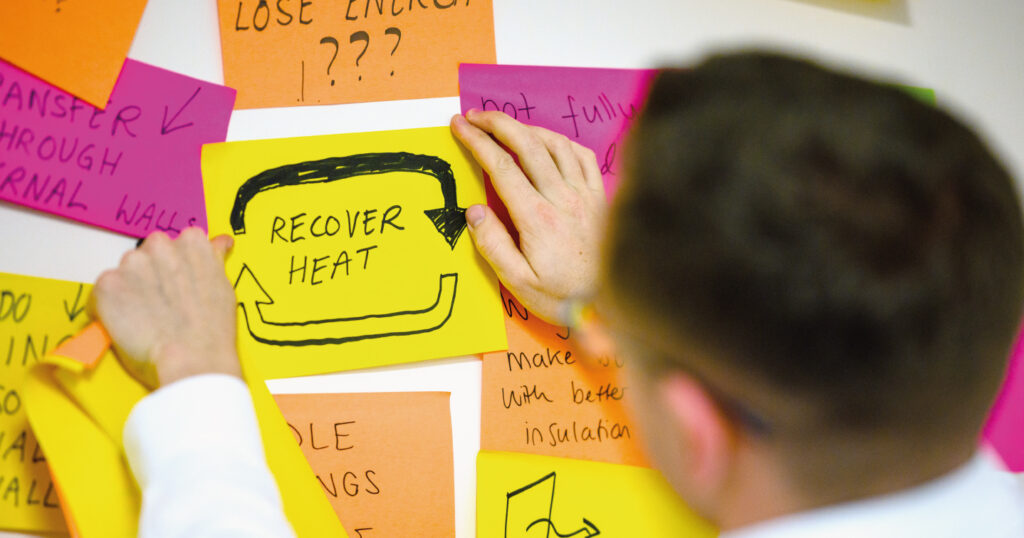
CDP’s Sustainability Lead Matt Morris said, “First, we analyzed the problem to discover focus areas that would benefit BAS. Then our multi-disciplinary team generated as many solutions as possible, followed by a structured evaluation to decide which solutions to pursue. Finally, we conducted targeted research and analysis to provide evidence the solutions could solve BAS’s problems. It was tough to fit into a one-day event, but the team’s energy and enthusiasm carried us through.”

“We see a role for innovation in finding creative solutions to help close the gap between global sustainability goals and our current trajectory – the implementation gap,” said Matt Morris. “BAS’s challenge was a perfect example of this, and we wanted to use our approach to problem-solving to help uncover solutions that might not be obvious using conventional methods.”

Competing in the energy reduction and backup challenges, two other teams of innovators were announced as winners. London-based start-up Greenpixie came up with a series of digital solutions to facilitate and encourage further efficiency. Solutions ranged from utilizing waste heat generated by servers to intelligent load balancing, to better optimization of data transfer. The final winning team, coordinated by Turkish university ODTU teknokent, proposed an innovative approach to maximize the potential for wind energy through wind turbines that are resistant to extreme weather conditions, feeding in to an electrolyzer.

Toggle captions

For further information and media enquiries, please contact: media@cambridge-design.com or call 01223 264428

Matt Schumann

The company that defined innovation – celebrating 25 years of CDP

“We constructed a medical prototype from a borrowed high-resolution tank gunsight, of all things. It looked like some form of Frankenstein’s monster, but it worked,” says Matt Schumann of one of CDP’s early projects.

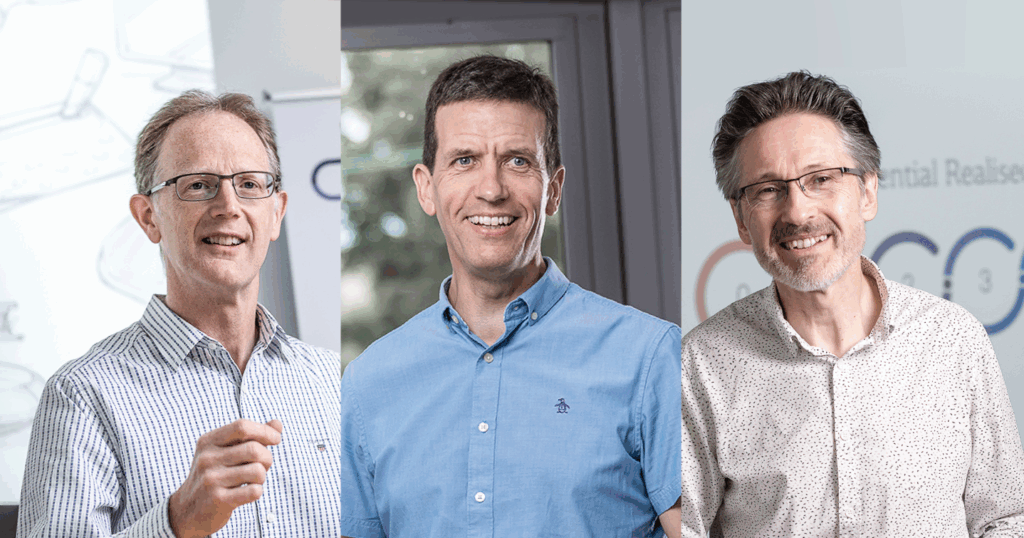
Alongside his fellow co-founders, Mike Beadman and Mike Cane, he’s celebrating our 25th anniversary with a look back at CDP’s challenges and triumphs.

The experimental creation Schumann describes developed into a first-of-its-kind skin cancer diagnostic device. The non-invasive technology has transformed thousands of lives thanks to its unique technology combined with people-centered design.

This is exactly what Cane and Beadman set out to do when they created CDP in 1996, with Schumann joining two years later.

From child’s play to a new design approach

The trio met at a Cambridge technology company, where the two Mikes worked on the world’s first children’s digital camera for Fisher-Price (it took and printed Polaroid-style pictures at a thrifty ¢1 a copy). Influenced by Cane’s engineering and industrial design background, they developed a reputation for taking a different approach from their competitors.

“We weren’t focused on developing a technology and making use of it, but on finding a market need and creating a solution,” Beadman says.

Their employer had other ideas and rejected their suggestion to set up a user-first product design team. A trip to the pub later (and to the initial shock of their young families), they had both resigned. CDP was born.

“It has always seemed obvious to us to start innovation by finding out what customers actually need to solve the challenges that they face,” explained Cane, “and only then start to develop the technology to make this possible.”

The early years

Working from Cane’s living room, they scribbled down three goals for their new company.

The first was to target both consumer products and medical devices. Both industries have specific technical needs and CDP could help remove this barrier to entry for their clients; the second was to spend half of their time consulting, and the remainder licensing their own inventions; the third was a recruitment policy that remains firmly in place today:

“From day one, we took the view that anyone we took on should be more talented than we were. It means you’re always pushing yourself and creates a much more exciting place to work,” says Beadman.

Schumann passed this test in 1998, bringing with him experience in power tools and medical devices (both of which, he points out, require elegant mechanical designs).

A successful spin-off

By then, CDP had moved to a converted stables, which also housed its first spin-off company, Astron Clinica, to develop their cancer diagnostic tool. The project gave the team a valuable insight into the challenges its consulting clients face, as well as some important lessons in business finance.

“Medical device development can take up to ten years to get a return and a small single product company like Astron struggled to build a market fast enough,” says Schumann, “but we also learned that we were pretty good at rapid medical device development and the value of getting into clinical trials as fast as possible.”

The clinical success of the device enabled CDP to sell Astron Clinica in 2001. Buyers were also keen to invest in CDP itself but it was a firm ‘no’ from the co-founders.

“Venture capitalists made long arguments as to why they should invest in the core company, but we believed it would limit our ability to implement long-term plans if we had to answer to people with different goals. It became a turning point in our approach, and we’ve never sought outside investment,” says Beadman.

A turning point

The Astron Clinica development helped CDP gain a reputation in the Cambridge cluster just when a new US medical device company, Pelikan Technologies, was looking for help to design a next-generation blood glucose monitor.

Competing against large established consultancies, the small team worked frantically to complete a series of novel design concepts. As a final touch, they delivered them in person to the Pelikan team’s hotel in Cambridge. Their creativity, collaboration and dedication impressed, and it was on to Phase Two.

The challenge was to design a handheld blood lancing device that would offer users low pain and store 50 lancets. The team worked 20 hours a day in shifts to meet the Christmas deadline for the first working prototype. As Beadman assembled the device for presentation in the client’s California office, Cane and Schumann were still working on design improvements and new components in the UK, to be flown in at the last minute.

“We’ve probably never worked so hard in our lives. There was no alternative if we were going to take this opportunity to move CDP to the next level,” says Beadman.

Pelikan became a major client until it was acquired in 2009, in the process granting CDP the security to expand its workforce and grow a diversified client base, working on projects from DIY tools to industrial printers and new treatments for breast cancer.

From stables to international business

By 2002, CDP had outgrown the stables and moved to a small business center in Toft, Cambridge, eventually occupying all the other units on the same site.

It also set its sights on international markets, setting up a North American sales office in California in 2011 to serve the growing number of startups in the Palo Alto area. By 2019, the US accounted for 25% of CDP’s sales, prompting a move to a new state-of-the-art innovation center in North Carolina. The R&D facility is growing fast and now employs 17 engineers, giving CDP a firm foothold in the state’s famous Research Triangle.

Potential Realized

As it expanded, CDP developed new tools and processes to offer its clients an end-to-end service, from identifying the innovation opportunity to manufacturing. In 2016, this was formalized into a trademarked process called ‘Potential Realized.’  This model helps its clients plan their product development process to make it as commercially successful as possible.

“Over decades of product development experience and thousands of innovation projects, we found the same issues coming up again and again. These programs are major investments for our clients, so it is vital that together we plan them to maximize their return on investment. Potential Realized is a logical framework that we adapt for each project to do this,” says Cane.

Collaboration

The key to making Potential Realized work is cross-functional collaboration, an ethic the co-founders model with their easy-going relationship as joint managing directors (they shrug their shoulders when asked who’s the task-master of the three).

“It’s very well balanced actually,” says Schumann, “CDP doesn’t feel like work. It’s another fun thing that you do when you’re not at home.” Their leisure time, however, sounds pretty fun, too: the trio’s shared passion for aviation led them to build an airplane and buy a second for staff to learn to fly.

A company-wide ethos of collaboration also proved effective in more serious circumstances. In 2020, a large multidisciplinary team came together amid strict UK lockdown and distancing conditions to help deliver an RT-PCR device that can detect COVID-19 within 30 minutes.

Designing the future

As the company continued to expand exponentially, the keen investor interest that CDP attracted from its early days never went away.

“When people want to buy a company, they ask you to name the assets. There’s only really one asset in our business and that’s a highly skilled, flexible and well-organized team of people with a common vision,” says Beadman.

Concluding that a sale to private equity or a big manufacturer would risk the ethos of the company, they decided to sell it to people they could trust. In 2018, CDP became employee owned.

“If we’d ended up in the hands of a much bigger company, it was likely the whole culture that has made us successful would have gone out of the window. Through a diligent process of organic growth and sticking to our principles, we now have a company that provides a stable future for over 250 people. How good is that!” says Beadman.

New owners, new home: next year (2022), CDP will move into an 83,000 sq ft purpose-built headquarters in Bourn, Cambridge. The new facility will have labs, workshops, a healthcare manufacturing facility, user observation suites and a 200-seat conference facility.

While they hope there will still be a few Frankenstein-esque prototypes produced in this new facility, CDP’s design approach is generally more sophisticated nowadays. The founding vision, however, remains: a team of world-class experts collaborating to create the best possible results. It’s this, agree the co-founders, that will set CDP up for another 25 years of innovation success.

Connect with CDP

For further information and media enquiries, please contact: marketing@cambridge-design.com or call 01223 264428

Cambridge Design Partnership take on new state-of-the-art headquarters

CDP takes on new premises as it doubles in size

Exciting times for local innovation company as it announces major expansion and move to new state-of-the-art headquarters in Cambridgeshire

Cambridge Design Partnership (CDP) is expanding to new premises, capping years of growth with a doubling of turnover over the last 12 months. The company, which creates breakthrough products and technologies for leading companies and brands, is moving from its base in Toft, Cambridgeshire to a state-of-the-art, purpose-built facility in nearby Bourn. The move will be completed in 2022.

“This is a great marker of our success and especially pleasing as 2021 is CDP’s 25th anniversary year,” said CDP’s founding partner Mike Beadman. “In just the last 12 months, we’ve served more clients than ever before and grown our headcount by over 50%. Our new headquarters will be more than twice the size of our current base, with a range of product and technology development facilities to compare with any in the world,” he added.

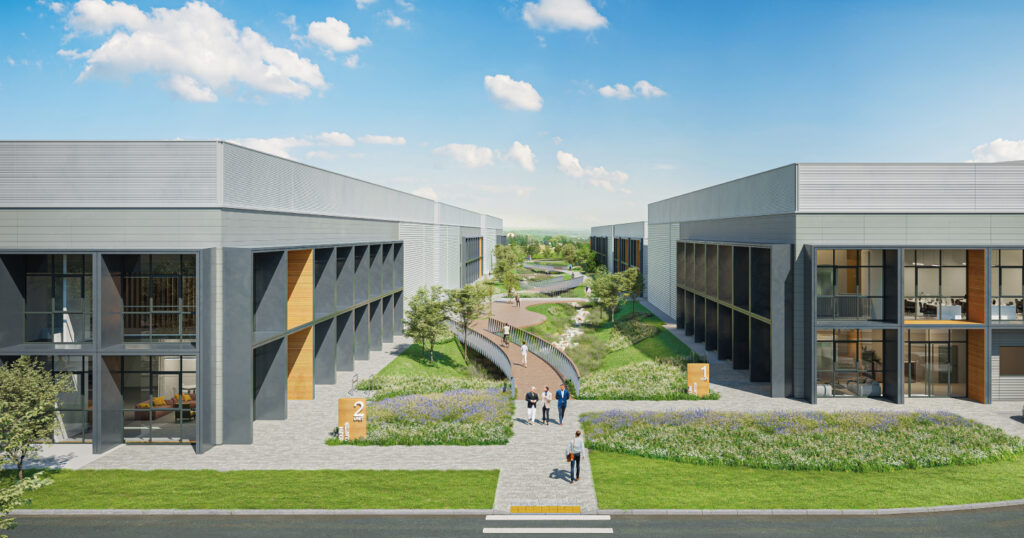
The new CDP headquarters will have 7,500 square metres of space, including labs, workshops, a manufacturing facility and 200-seat auditorium. It will be sited at Bourn Quarter, part of a 25-acre site previously occupied by Thyssen Krupp. Planning permission to start the net-zero-carbon-ready industrial development was secured from South Cambridgeshire District Council by Savills Investment Management. Developed by Aitchison Developments, construction of the new facility began in May 2021. CDP will be the anchor tenant within this prestigious redevelopment which is set to bring the region’s dynamic research and technology cluster to the brownfield site. The move confirms the company’s commitment to the Cambridge area, where it’s able to access the best talent at every level.

Founded in 1996, CDP is an end-to-end innovation partner, delivering market-defining technologies and extraordinary commercial returns for clients in the consumer, healthcare and industrial markets. In 2018, CDP joined a small number of pioneering companies that are 100% owned by their employees. This ensures that CDP’s growing workforce of employee owners is fully committed to client success and to the long-term vision of improving lives through innovation. Alongside strong growth in the UK, CDP recently announced the opening of its new US headquarters, a state-of-the-art R&D centre in Raleigh, North Carolina, and an ambitious recruitment programme in North America.

Among the new facilities will be a world-class consumer research facility for consumer and healthcare insights research and innovation workshops. This will be equipped with observation suites and one-way mirrors for physical focus groups and consumer trials and networked to enable global client participation. CDP is also ramping up its short-run manufacture capability with a large manufacturing facility on site at the new headquarters.

Working in close collaboration with clients has been a core value from the earliest days of CDP. The new building will be unique in being designed to maximize creative collaboration while maintaining the highest standards of client confidentiality. This will be a fundamentally interactive workspace, allowing scientific labs and workshops to be connected to desk areas. There will be a spacious central atrium with a fully-catered kitchen serving breakfast and lunch, as well as a breakout space where staff and clients can meet informally and for meetings. A 200-seat auditorium will be used for company events, conferences, and creative workshops.

“We’re committed to integrating CDP into the wider Cambridge cluster and welcoming clients and peers into our new headquarters. The space will ensure we give our clients excellent service in the very best, cutting-edge facilities and will also offer our employee owners an environment in which they can thrive. Among the many reasons for CDP’s impressive expansion is the fact that the team is closely involved in the company’s future. The collaborative and creative possibilities of our new headquarters make this an excellent time to be an employee owner at CDP,” said Mike Beadman. April 2021 saw CDP kickstart its bid to secure the region’s brightest talent, launching the biggest recruitment drive in the company’s history.

Connect with CDP

For further information and media enquiries, please contact: marketing@cambridge-design.com or call 01223 264428

|||||

CDP supports local charities with £25,000 donation to mark 25 years

Cambridge Design Partnership (CDP) is donating a total of £25,000 to five charities in Cambridgeshire, UK and Raleigh, NC, USA, where it has fast-growing R&D centers.

CDP is celebrating its 25-year anniversary, having enjoyed record growth over the last 12 months, but recognizes that this period has been uniquely challenging for surrounding communities. Five local charities, four in Cambridgeshire and one in Raleigh, will receive £5,000 to further their mission. CDP is 100% owned by its employees and the charities were nominated by employee owners.

Chris Houghton, Partner, Head of FMCG said: “Our 25th anniversary is a time to reflect on our purpose and culture. Part of that reflection is to acknowledge the way the pandemic has put pressure on the health and wellbeing of those around us and to work to make a positive impact in our local communities. We’ve chosen a range of charities working tirelessly to improve lives locally and we hope our support helps their vital work.”

The five chosen charities are:


Head-To-Toe charityNHS – Cambridge & Peterborough (CPFT) JustGiving, Head to Toe funds community projects focused on physical and mental healthcare.

“I am absolutely delighted to learn about CDP’s incredibly kind donation and am especially pleased to learn that this donation is thanks to nominations from staff. Please do pass my utmost thanks on to the team, we’re so grateful for everyone’s support.”

Hannah Wysocki, Head to Toe Manager, JustGiving, Head to Toe.


Cambridge Sustainable Foodaddresses food poverty, food waste, and creating a sustainable food system.

“This generous donation will be used to further our work to build a more sustainable and resilient food system in Cambridge. We are working hard to create an environmentally and socially just food system, where everyone has access to healthy and sustainable food across the city. CDP’s support will help us to tackle climate change through food-based solutions, such as initiatives that will cut food waste and promote healthy, climate-friendly diets.”

Gemma Birley, Head of Programs, Cambridge Sustainable Food CIC.


Blue-Smile

Blue Smile addresses mental wellbeing for school pupils through art-based therapies.

“It was a wonderful surprise to be contacted by CDP and learn that we had been nominated for a donation. This kind of giving means the world to us – and is so important in helping to make a difference to local children, especially as we emerge from the pandemic. Your fantastic donation of £5,000 will contribute directly to the provision of 1:1 arts therapy to Cambridgeshire children who are struggling with their mental health, and will help those children to achieve their potential and enjoy the childhoods they deserve. Please pass on a huge thank you to your team.”

Jess Manley, Charity Director, Blue Smile.


Camcycle

Camcycle/Spaces to breathe supports local projects to help sustainable travel and outdoor spaces.

“Throughout the pandemic, Camcycle’s Spaces to Breathe campaign has continuously engaged with local authorities and communities to facilitate emergency active travel measures. As we begin to transition from reaction to recovery, our Zero Carbon Streets campaign will be ramping up with the aim of locking in – and improving on – much of the work that has been done over the past year. CDP’s donation will in part go towards a new technical staff member who will empower residents and authorities to implement high quality, accessible walking and cycling projects for them and generations to come.”

Roxanne De Beaux, Executive Director, Camcycle.


Food-Bank In Raleigh, CDP’s USA team elected to tackle food poverty with a donation to Food Bank of Central & Eastern North Carolina. The charity’s #StopSummerHunger initiative meant donations in June and July, like CDP’s, were matched to provide twice as many meals for the community.

“We’re so grateful to CDP for helping us toward our vision of ‘No One Goes Hungry’. This generous gift will allow the Food Bank to provide the equivalent of 70,580 meals for families struggling to keep food on the table this summer.”

Tessa Johnson, Corporate Partnerships Officer with the Food Bank of Central & Eastern North Carolina.

shutterstock_2151964007 1440×810 – for CPI news

Cambridge Design Partnership announces global partnership with CPI

Partnership aims to ensure that transformative diagnostic and healthcare technologies reach patients fast.

Cambridge Design Partnership and CPI today announce a global partnership with ambitious goals: To maximize the potential of next-generation diagnostic and healthcare technologies, to shape the leading edge of innovation into commercial readiness and ultimately, to ensure UK leadership in medical technologies that transform the healthcare experience.

UK-based CPI is an independent deep-tech innovation center and founding member of the High Value Manufacturing Catapult. CPI helps drive organizations through their innovation journey, uniting academia, businesses, and investors to accelerate bright ideas and research into the marketplace. It does this by connecting organizations to a bespoke team of experts, specialized innovation development facilities, funding support, and innovation tools.

Now in its 25th year and enjoying record growth, Cambridge Design Partnership delivers end-to-end product and technology development for clients in the healthcare, consumer, and industrial equipment sectors. CDP’s work starts at the point a business decides on the need for innovation within a market area and finishes with the launch of a breakthrough new product or service that is customer focused and commercially effective.

The partnership enriches the capability of both businesses. Cambridge Design Partnership gains access to CPI’s specialist expertise and capabilities in development and business scale-up. As a result, it can accelerate its most innovative client projects to market-seeding volumes. Projects at CPI benefit from its GMP and ISO13485 certified Quality Management System, ensuring compliance with relevant legislation and standards. CPI specializes in emergent disciplines such as flexible and hybrid electronics, photonics, biotechnology, advanced materials, and formulation providing game-changing innovation to markets with world-changing potential, such as diagnostics and therapeutic medicines.

CPI secures access to Cambridge Design Partnership’s world-leading expertise, built over hundreds of innovative client projects, and a deep, cutting-edge understanding of global market and technology movements in medical technology. This includes novel technologies such as molecular diagnostics, synthetic biology, and advanced therapies. Cambridge Design Partnership will provide expert guidance in strategy, planning, product development, manufacture and due diligence as CPI links the UK’s science and research base with supply and value chains. Together, they will drive future growth, and aim to establish the UK as a world leading player in diagnostic and healthcare technologies.

The success of the partnership will be measured in terms of commercial and patient impact. The two companies plan to shape early-stage innovation into investment ready business cases and market-ready products. This will streamline the development of effective products and technologies, providing value to patients within key clinical areas such as infectious disease and oncology. A particular goal is to maximize the impact of the UK’s scientific and technology research base, improving the path to commercialization and the clinic.

Commenting on the partnership, Cambridge Design Partnership’s Senior Innovation Consultant Pari Datta said, “The UK has a strong science and technology base, with a history of scientific firsts behind many great products now on the global stage. But we don’t always spot the opportunities or navigate the path to commercialization, particularly in the regulated medical space. With CPI, we’re working to grow the ecosystem which will discover, nurture, and scale these promising businesses, leading to great new products delivering real value to patients, professionals, and the UK economy.”

Arun Harish, Director of Strategy at CPI added, “Increasingly, we’re witnessing collaborative approaches to innovation development. Collaboration is at the heart of CPI’s strategy as we continue to serve multiple established and emerging industries. We’re pleased to be partnering with CDP to develop and accelerate diagnostics and healthtech products, where the potential for innovation is immense.”

For further information and media inquiries, please contact: media@cambridge-design.com or call 01223 264428

R&D center in Raleigh||

Cambridge Design Partnership opens state-of-the-art R&D center in Raleigh, NC, and kicks off local recruitment drive

World-leading technology and product design company Cambridge Design Partnership (CDP) today open its new, state-of-the-art R&D center in Raleigh, North Carolina. Now in its 25th year, the company has seen impressive growth over the last 12 months, securing major new clients, delivering world-changing innovation and growing headcount by more than 40%. This success, fueled by client work in the fields of drug delivery, molecular diagnostics, consumer devices, surgical robotics and more, has driven CDP to make a considerable investment in new facilities in North Carolina’s Research Triangle.

CDP has refurbished a historic building on West Morgan Street, in the heart of downtown Raleigh. Working with the existing structure and respecting the heritage of the building and neighborhood, the company is committed to growing roots in the Raleigh community and creating new, highly-skilled job opportunities.

With the new facilities operational, attention now turns to a major recruitment drive, with positions open across a range of disciplines, including mechanical, electrical and software engineering, human factors, quality, manufacturing, and industrial design. Early-stage professionals are invited to apply to a new intern program.

CDP has chosen to anchor its new R&D center and US headquarters in North Carolina’s Research Triangle due to the region’s thriving biomedical innovation sector, excellent transport links and deep pool of skilled engineers and technologists. Aki Laakso, Partner and CDP’s Director of Raleigh Operations said, “In the past, we have served a global client base from our headquarters in Cambridge, UK. We have seen a strong increase in demand from our US clients in the past ten years, with more than half our business today coming from America. Our new Raleigh facilities, with cutting-edge labs, a design studio, user observation suite, full machine shop, and pilot manufacture space, allow us to more effectively deliver world-changing innovation in the US.”

(Image, left: Hans Pflaumer, right: Aki Laakso)

Since 2019, CDP’s US operation has been led by Aki Laakso and Hans Pflaumer. Aki Laakso is an experienced mechanical engineer with a storied history that includes three years at NASA Goddard Space Flight Center and innovation across disciplines, from wearables to drug delivery devices. Hans Pflaumer has a proud track record of bringing first-of-a-kind medical devices to market and is a recognized visionary in the field of minimally invasive medical devices, with a focus on surgical robotics.

“Our new facility is a sign of the confidence we have in our US operation. The Research Triangle, with its strong culture of innovation and skilled workforce, is the right place for us,” said Aki Laakso. “We’re recruiting for a variety of exciting roles and look forward to growing right here in Raleigh.” he added.

CDP delivers end-to-end product and technology development for clients in the healthcare, consumer, and industrial equipment sectors. CDP’s work starts at the point a business decides on the need for innovation and finishes with the launch of a breakthrough new product that is customer focused and commercially effective.

Explore openings at CDP


For further information and media inquiries, please contact: media@cambridge-design.com or call +44 1223 264428


|||||

CDP completes pilot manufacture of Point of Care diagnostic readers for rapid COVID-19 testing

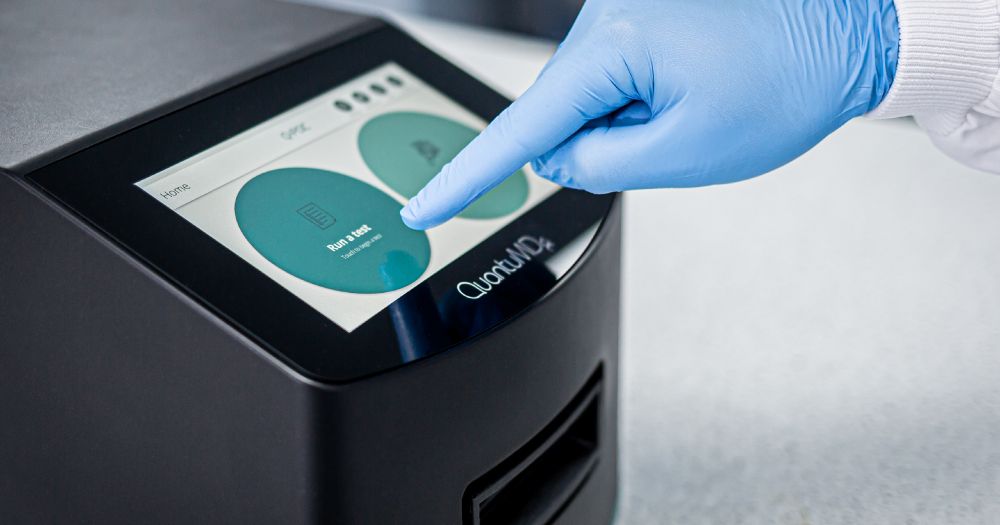
A team at UK product and innovation company Cambridge Design Partnership (CDP) has produced highly deployable devices for COVID-19 testing. CDP has been collaborating with diagnostics tech firm QuantuMDx to refine their Q-POC™ device and produce the first batch of readers to detect COVID-19 within approximately 30 minutes. QuantuMDx is now investing over £11 million to scale up production and introduce this rapid diagnostic solution to benefit patients and frontline health workers across the globe.

QuantuMDx is developing molecular diagnostic devices for a range of diseases and has developed and launched a highly accurate lab-based SARS-CoV-2 assay. Prior to the COVID-19 outbreak, the firm had commissioned CDP to produce prototype devices for CE marking. CDP worked through the first UK lockdown to improve the design of the reader and the first units are deployed at UK hospitals for COVID-19 testing studies.

“After beginning our partnership with QuantuMDx during 2019, we were delighted to be asked to collaborate with this innovative company once again, at a critical time. The team has been highly motivated by this crucial project and proud to contribute to the national effort,” says Dan Haworth, CDP’s Head of Diagnostics.

Colin Toombs, VP Research & Development at QuantuMDx, said: “We’ve worked in partnership with CDP since April last year, to undertake accelerated pilot manufacture of our Q-POC™ device, which is a portable DNA/RNA analyser offering rapid, sample-to-answer, molecular diagnostic testing at the point of care. The QuantuMDx and CDP teams have worked in close partnership to optimise our product development and manufacture devices to deliver testing for COVID-19. They are being released initially for research use, but we are rapidly moving towards CE-IVD of Q-POC™ for SARS-CoV-2 detection. Working together with CDP, we’ve established an ongoing partnership for the future.”

The device works by processing a swab sample, amplifying the target sequence specific to SARS-CoV-2, which causes COVID-19, and then detecting whether the virus is present. This all happens within a sealed cartridge that is controlled by the reader with minimal user involvement.

“Within approximately 30 minutes from sample collection, the device will give an accurate answer to whether the patient has COVID-19” says Dan.

These first new readers have been designed and built at CDP’s HQ in Cambridgeshire, where the company has short-run manufacture capability alongside its R&D facilities.

CDP’s team working to develop the QuantuMDx device includes mechanical and electronics engineers, software engineers, regulatory experts and manufacturing engineers.

“We worked at speed to design, build and test these important devices as quickly as possible. We are all thrilled to play our part in beating COVID-19 and we congratulate QuantuMDx on moving to mass manufacture,” added Dan.


For further information and media enquiries, please contact: media@cambridge-design.com or call 01223 264428

web_hero_bourn-academy-school-rising-star-ebook-donation

Helping local children to read during the pandemic

Cambridge Design Partnership (CDP) has donated a subscription enabling the children at Bourn Primary Academy, a school in Cambridgeshire, UK, to access a range of online books and reading resources. Around 120 children from Key Stage 2 now have access to the Rising Stars online resource, joining Key Stage 1 children and ensuring the whole school enjoys access to this renowned service.

Many schools have experienced a shortage of books during 2020, particularly books that can be sent home, due to the need to quarantine those books for 72 hours once they’re returned. Online reading resources can meet this demand, but need a paid subscription.

Mrs Laura Latham, Headteacher at Bourn Primary Academy, said: “I’d like to say a huge thank you to Cambridge Design Partnership for stepping in to help. We had bought a subscription for our youngest children to access online books, but we weren’t able to pay for access for the older children. I was surprised and delighted when Dr Neil Campbell, a parent of one of our children, offered the support of Cambridge Design Partnership in purchasing the subscription for the older children. We are very grateful for their support at this difficult time during the pandemic. I’d also like to recognise that the school has received other material donations from parents, governors, families and friends of the school.”

Rising Stars is an award-winning range of books, teaching resources and software that supports primary teachers and learners in the UK and across the world. Rising Stars works with expert authors and advisors to produce resources that support all areas of the primary curriculum, from mathematics to English, computing to PE.

At CDP, we are always happy to support our community, particularly during this difficult year. Dr Neil Campbell, who led this initiative, said, “I feel lucky to work at CDP, a company that believes in helping our local community and in investing in the future generation. Ensuring our children have access to reading books at home is vital to their personal development and educational growth. I’m pleased I was able to help with organising CDP’s kind donation to our local school.”

website_cdp-hero_zsl-london-zoo-wildlife-conservation-technology

CDP working with ZSL to protect wildlife

Cambridge Design Partnership (CDP) has been working with ZSL (Zoological Society of London), the charity that also operates London Zoo, on an innovative conservation technology project to prevent wildlife poaching. Frontline conservationists and wildlife law enforcement teams working in the most extreme and remote landscapes could benefit from connected technology that detects emerging threats to wildlife and sends instantaneous alerts. Since the pandemic, animal and forest conservation has become more problematic, making this technology more relevant than ever.

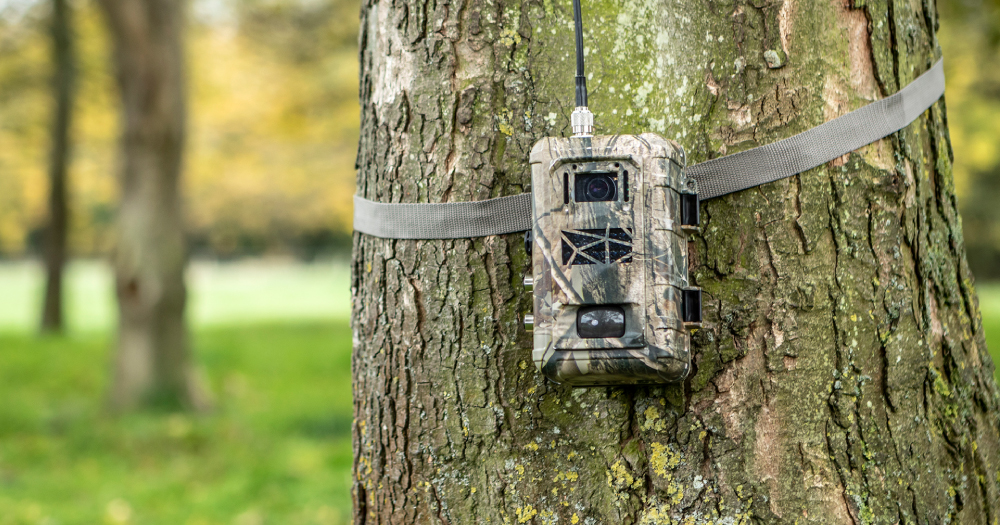
In 2018, CDP was commissioned by the monitoring and technology unit at ZSL to develop the Instant Detect 2.0 system. Instant Detect 2.0 is a wildlife, environment and threat monitoring system designed specifically to meet conservationists’ and wildlife rangers’ demanding needs. The system consists of an innovative camera and sensor network with integrated satellite communications, designed to gather and transmit images and sensor data from the most remote, harsh landscapes in near real time. It aims to reduce poaching of animals such as elephants and rhino by detecting illegal human activity within protected areas and sending threat alerts to wildlife rangers within five minutes.

ZSL required an easily portable, battery operated system that could withstand being frozen, immersed in water, covered in dust and even buried underground. To date, conservationists have trialled the system in ecologically critical areas like the hot and dry landscape of Tsavo, Kenya and the wet, stormy conditions of the Pacific Ocean. Future deployments could include Antarctica, Sumatra and California.

Sam Seccombe of ZSL and Tom Brittain of CDP tell us how the cameras can help save rhinos, elephants and much more.

Tell us what the issue of poaching means to wildlife right now:

Sam: It’s a global crisis. According to Save The Rhino, in the last decade, more than 9,000 African rhinos have been lost to poaching, while the United Nations calculates that 100 African elephants are being slaughtered every day for the illegal ivory trade. When I was trialling the Instant Detect 2.0 system in Kenya’s Tsavo West National Park last year, a landscape with one of the highest populations of rhino in Kenya, after two months of living in the park I had still not seen a rhino. When I mentioned this to an elderly local he told me that when he was a child, the valley was so filled with rhino it was difficult to drive through it, they were like herds of cows.

In the last decade, more than 9,000 African rhinos have been lost to poaching

Tom: We have developed a system that can not only monitor wildlife activity but also be configured to specifically detect human activity and alert rangers to the fact that poachers are active. The Instant Detect camera needs to be able to send images and information all over the world, withstand heat, sandstorms, flooding, freeze-thaw cycles and be easy to set up by non-technical rangers or conservationists. The system uses specialist sensors to identify humans, capture photographs and transmit the images back to the rangers’ HQ in near real time and also to anyone else in the world with the correct accreditation. In the case of anti-poaching, these pictures will not only allow the rangers to locate and intercept the poachers but also these can be used as evidence in prosecutions. In order to send information globally from even the remotest of installation sites, the in-field devices, including cameras, communicate with one another over a radio network before transmitting information over a global satellite constellation to a secure server on the Cloud. To develop such a multifaceted and complex system to this stage has required a highly collaborative effort between ZSL and CDP’s in-house experts in usability, design, mechanics, electronics and software.

The project is nearing fruition now and it would be great to think Instant Detect 2.0 will be available to conservationists as early as 2021. With rapidly declining populations of animals directly caused by poaching, such as rhinos, elephants and pangolins, time is of the essence.

We’re absolutely delighted with how the project has turned out and look forward to Instant Detect 2.0 becoming an affordable part of every conservationist’s toolkit in the field.

For further information and media enquiries, please contact: media@cambridge-design.com or call 01223 264428

||

New clinical software set to assist anaesthetists during high-risk surgery

Cambridge Design Partnership plays a key role in a pioneering product aimed at helping to better manage intra-operative hypotension and the associated complications that occur during surgery

Cambridge Design Partnership (CDP) has worked with British medical device company Directed Systems to develop a new clinical decision support software solution for clinicians in the operating room.

The software allows anaesthetists to view and analyse hypotensive relevant vital signs data from the patient throughout an operation and will highlight anomalies. Currently, anaesthesia patient monitoring solutions are focused on the current situation and, while they display trends and alarm thresholds, do not offer the sophisticated analysis related to hypotensive episodes and overall durations of hypotension during surgery, so HDA is a useful adjunct to these systems.

The new software has achieved FDA 510(k) clearance for sale in the USA.

“We are delighted to see this important product come to fruition, It was very rewarding for our team to have played such a key role in developing this exciting technology.” said Head of Medical Therapy at Cambridge Design Partnership.

Low blood pressure (hypotension) during surgery occurs frequently and there is substantial evidence that patients undergoing major or emergency surgery do not tolerate this for even short periods. While anaesthetists are skilled at controlling blood pressure surgeries can be lengthy and constant vigilance difficult. Research shows that reducing hypotension can reduce, occurrence of post-operative complications resulting in long term health problems, minimise hospital stays, improve patient outcomes and reduce healthcare costs1.

Directed Systems approached CDP to help them turn their decision support concept into reality. “We first helped identify the optimum product development strategy”, explains Karl Hewson, Senior Human Factors Engineer at CDP. “Extensive discussions with healthcare stakeholders identified that the first product should provide an at-a-glance view to the anaesthetist of the overall state of their patient’s hypotensive situation, to help them make more informed decisions and to better manage hypotension while on the operating table”

Using this research data, CDP then developed the software user interface (UI). “We started with the various therapy protocols that were used, and we created an information hierarchy and workflow that would support and enhance the decision-making process,” said Karl.

“We are all very pleased with the project outcome and look forward to seeing Hypotension Decision Assist (HDA)TM in commercial use, we are also looking forward to helping to develop the technology further in the future,”


For further information and media enquiries, please contact: hello@cambridge-design.com or call 01223 264428

1 – Keuffel, E. L., Rizzo, J., Stevens, M., Gunnarsson, C., & Maheshwari, K. (2019). Hospital costs associated with intraoperative hypotension among non-cardiac surgical patients in the US: a simulation model. Journal of Medical Economics, 22(7), 645–651.