We apply our deep expertise in science, engineering, design, and strategy across a range of industry markets, working with organisations in complex, regulated, and fast-moving markets, whilst tailoring our product development approach to sector-specific challenges, regulations, and user needs. Supporting innovation from discovery through to commercial launch.
CDP delivers product development services powered by deep expertise in science, engineering, design, and strategy. We help clients solve complex challenges, accelerate innovation, and bring products to market through integrated capabilities spanning early discovery to commercial launch.
From medical devices to monitoring endangered species – 25 years of innovations improving lives
December 21st 2021
For 25 years, we’ve had one goal: to improve lives through innovation. To mark our first quarter-century, we asked some of our partners to talk about their personal standout projects. Their answers reveal how CDP innovation has built a better future for thousands – from facilitating treatment for breast cancer patients, to monitoring wildlife and detecting poachers in the most remote landscapes.
Bringing breast cancer treatment into the physician’s office
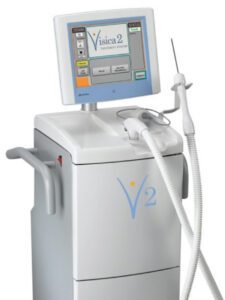
Sanarus Technologies’ Visica 2 uses extremely cold temperatures to scarlessly destroy tumors. We completely redesigned this cryoablation system, enhancing performance and facilitating treatment in the physician’s office. Our advances reduced consumable cost by ten times and equipped our client with a strong IP position. Visica 2 was created to treat benign tumors – but it has since demonstrated impressive efficacy in clinical trials for malignant tumors, too.
“Our work on the Visica 2 breast cancer cryoablation system still excites me years later. We doubled performance and drove down costs, and clinical trials continue to prove the astounding efficacy of this no-scar, 30-minute procedure. Then there’s the human part: Sanarus Technologies’ chairman and CEO, BJ Hardman, shared her own Visica 2 treatment story, bringing to life the impact we’ve had on thousands of patients.” As stated by our Head of Medical Therapy.
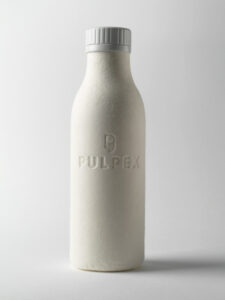
Pulpex, a collaboration between Pilot Lite Group and Diageo PLC, is a patented, first-of-its-kind pulp packaging innovation. Renewable, recyclable, and biodegradable, Pulpex enables brands to completely rethink their packaging proposition. CDP set up an automated, short-run manufacturing line, helping to move this innovation from early concept to reality.
Chris Houghton, Head of FMCG: “Breakthrough innovation is what I’m most passionate about – pioneering new ground to improve lives. Tackling single-use plastic is a major challenge facing our generation, and our work with Pulpex promises to provide an alternative that’s better for the environment, encouraging consumers and society to live more sustainably.”
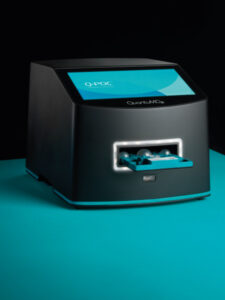
Point-of-care PCR COVID-19 testing instrument
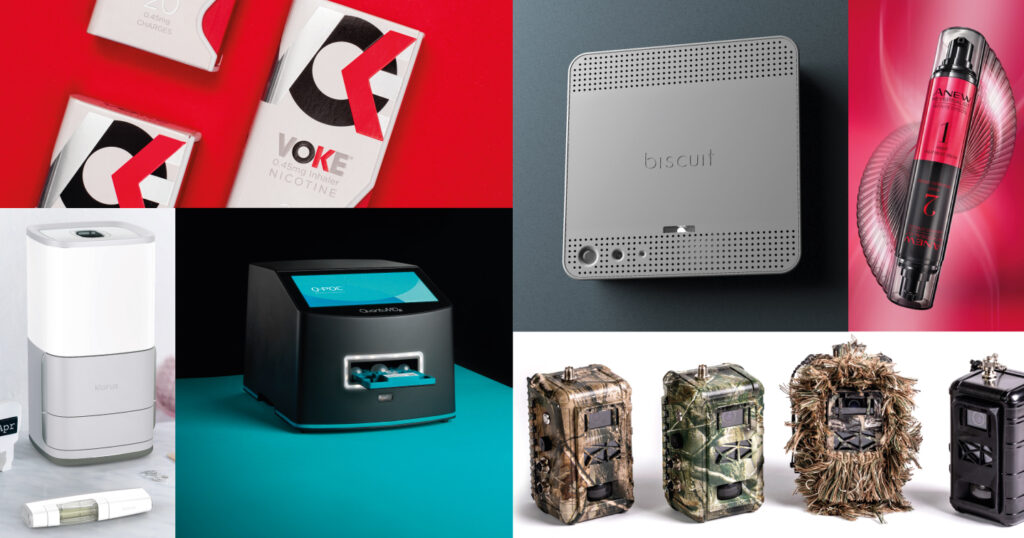
In the early days of the COVID-19 pandemic, our team of mechanical, electronics and software engineers, as well as manufacturing and regulatory experts helped QuantuMDx develop their Q-POC point-of-care diagnostic instrument, which detects COVID-19 within around 30 minutes using PCR. Using our short-run manufacturing capability, we produced the first batch of instruments which were deployed to hospitals for COVID-19 testing studies.
Dan Haworth, Head of Diagnostics: “We worked at speed to develop QuantuMDx’s point-of-care molecular diagnostic device from an early prototype to a complete product for CE-IVD marking. We turned our meeting rooms into bustling labs, prototyped and tested over 100 design changes, and manufactured the first batch of 45 Q-POCs for QuantuMDx in little over 16 weeks. This was an extraordinary team effort and an emotional project from start to finish – one that our team is immensely proud of.”
Satellite-enabled monitoring protecting endangered species
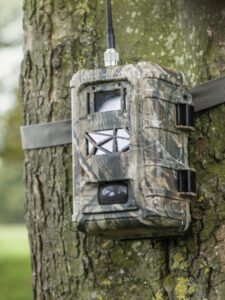
The Zoological Society of London’s Instant Detect 2.0 satellite-connected system monitors wildlife and detects poachers in the most remote and unconnected landscapes. The military-standard system is battery-powered and backpack-portable, so it can be deployed anywhere.
Head of Healthcare Insight & Strategy: “We created something with enormous conservation potential. Not only does it guard endangered species, but it can also monitor wildlife health, climate change, and the impact of ocean plastics.”
Complete therapy management with adherencebuilt-in
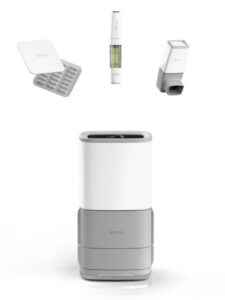
The Klarus drug delivery system improves the outcome of medical self-injection by eliminating the burden of everything a patient needs to think about, such as storing the medication at the correct temperature, dealing with sharps waste, and ordering repeat prescriptions.
Clare Beddoes, Head of Drug Delivery: “This shows how patient-centered design can change lives by considering every aspect of self-injection. Not only does it have the potential to improve medical outcomes, but it’s a more environmentally friendly solution, decreasing the waste normally linked with disposable autoinjectors.”
Taking a complex drug delivery device to market
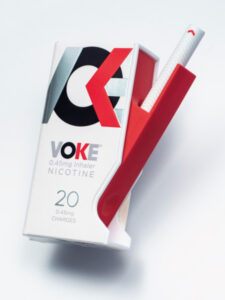
Kind Consumer’s Voke is a smoking cessation product designed to imitate the experience of smoking regular combustible cigarettes while administering a pharmaceutical formulation. It’s a licensed medicine and a safer alternative to smoking.
Wade Tipton, Head of Manufacturing and Quality: “CDP quickly stepped into this project when the launch was at risk, overcoming complex engineering problems to gain regulation and take the device to volume production.”
Ben Illidge, Head of Tobacco Harm Reduction: “Our engineering expertise helped bring to market a product that went on to become the first nicotine inhaler to obtain a product license from the UK Medicines and Healthcare products Regulatory Agency (MHRA).”
Novel approach to energy management
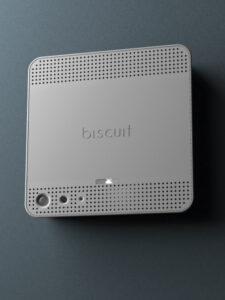
Biscuit’s AI-powered smart building system monitors and controls building infrastructure to maximize comfort and minimize environmental impact. Its sensors report on essential parameters: energy consumption, temperature, humidity, air quality, pressure, VOCs, sound pressure, motion, and light levels.
We spend much of our lives in buildings, and they add up to nearly 40% of global CO2 emissions. Helping companies develop and deploy new products and technologies that help with the global need to decarbonize is always a ‘must-take-on’ challenge for us, and one where we can really help our clients succeed.
Smart packaging illuminating consumer behavior
Miniature sensing technology inside the dispenser of Avon’s ANEW Reversalist Infinite Effects Night Treatment Cream tested if users would rotate it every seven days to stop their skin from adjusting to the regime. The smart packaging trial revealed valuable insight about the intended product use experience when applied in a real-world context, and additional unexpected opportunities for innovation.
Steering wheel to push the limits
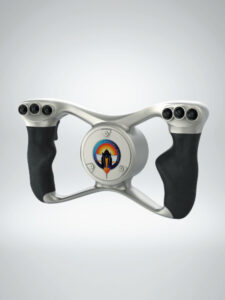
Bloodhound’s goal was to break 1,000mph in a land speed attempt, inspiring a whole new generation of engineers along the way. Our role was to produce a titanium 3D-printed steering wheel to precisely fit the driver’s hands with custom controls for throttle, rocket boost, communications, and brakes.
Jez Clements, Business Development Leader: “In this project, everything got driven to its limits. It was a completely one-off experience: we got involved with schools, gave talks on 3D printing, and got to see the development of the car up close.”
Our clients trust us to identify, design, and build innovations that drive their success. Want to learn more? Explore our work.
The company that defined innovation – celebrating 25 years of CDP
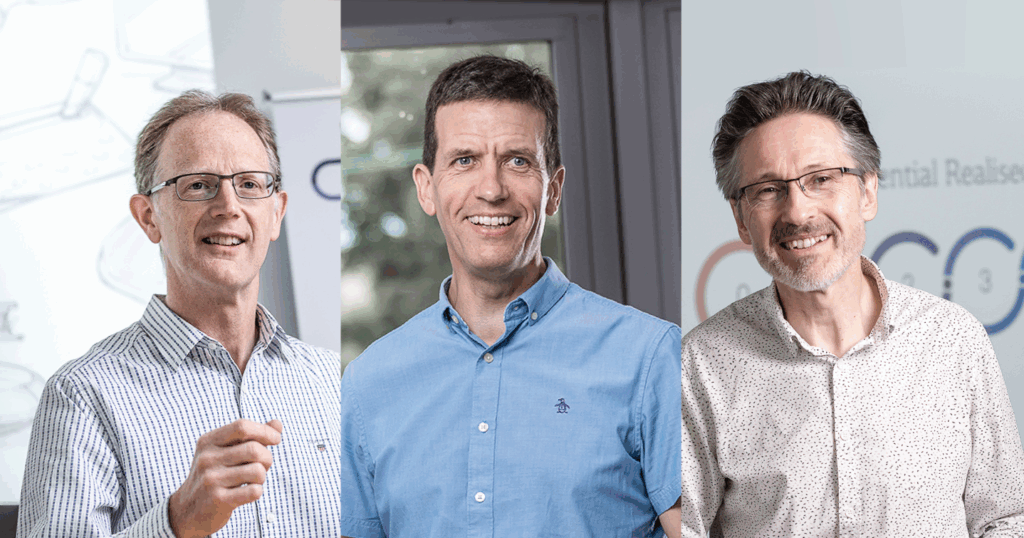
“We constructed a medical prototype from a borrowed high-resolution tank gunsight, of all things. It looked like some form of Frankenstein’s monster, but it worked,” says Matt Schumann of one of CDP’s early projects.
Alongside his fellow co-founders, Mike Beadman and Mike Cane, he’s celebrating our 25th anniversary with a look back at CDP’s challenges and triumphs.
The experimental creation Schumann describes developed into a first-of-its-kind skin cancer diagnostic device. The non-invasive technology has transformed thousands of lives thanks to its unique technology combined with people-centered design.
This is exactly what Cane and Beadman set out to do when they created CDP in 1996, with Schumann joining two years later.
From child’s play to a new design approach
The trio met at a Cambridge technology company, where the two Mikes worked on the world’s first children’s digital camera for Fisher-Price (it took and printed Polaroid-style pictures at a thrifty ¢1 a copy). Influenced by Cane’s engineering and industrial design background, they developed a reputation for taking a different approach from their competitors.
“We weren’t focused on developing a technology and making use of it, but on finding a market need and creating a solution,” Beadman says.
Their employer had other ideas and rejected their suggestion to set up a user-first product design team. A trip to the pub later (and to the initial shock of their young families), they had both resigned. CDP was born.
“It has always seemed obvious to us to start innovation by finding out what customers actually need to solve the challenges that they face,” explained Cane, “and only then start to develop the technology to make this possible.”
The early years
Working from Cane’s living room, they scribbled down three goals for their new company.
The first was to target both consumer products and medical devices. Both industries have specific technical needs and CDP could help remove this barrier to entry for their clients; the second was to spend half of their time consulting, and the remainder licensing their own inventions; the third was a recruitment policy that remains firmly in place today:
“From day one, we took the view that anyone we took on should be more talented than we were. It means you’re always pushing yourself and creates a much more exciting place to work,” says Beadman.
Schumann passed this test in 1998, bringing with him experience in power tools and medical devices (both of which, he points out, require elegant mechanical designs).
A successful spin-off
By then, CDP had moved to a converted stables, which also housed its first spin-off company, Astron Clinica, to develop their cancer diagnostic tool. The project gave the team a valuable insight into the challenges its consulting clients face, as well as some important lessons in business finance.
“Medical device development can take up to ten years to get a return and a small single product company like Astron struggled to build a market fast enough,” says Schumann, “but we also learned that we were pretty good at rapid medical device development and the value of getting into clinical trials as fast as possible.”
The clinical success of the device enabled CDP to sell Astron Clinica in 2001. Buyers were also keen to invest in CDP itself but it was a firm ‘no’ from the co-founders.
“Venture capitalists made long arguments as to why they should invest in the core company, but we believed it would limit our ability to implement long-term plans if we had to answer to people with different goals. It became a turning point in our approach, and we’ve never sought outside investment,” says Beadman.
A turning point
The Astron Clinica development helped CDP gain a reputation in the Cambridge cluster just when a new US medical device company, Pelikan Technologies, was looking for help to design a next-generation blood glucose monitor.
Competing against large established consultancies, the small team worked frantically to complete a series of novel design concepts. As a final touch, they delivered them in person to the Pelikan team’s hotel in Cambridge. Their creativity, collaboration and dedication impressed, and it was on to Phase Two.
The challenge was to design a handheld blood lancing device that would offer users low pain and store 50 lancets. The team worked 20 hours a day in shifts to meet the Christmas deadline for the first working prototype. As Beadman assembled the device for presentation in the client’s California office, Cane and Schumann were still working on design improvements and new components in the UK, to be flown in at the last minute.
“We’ve probably never worked so hard in our lives. There was no alternative if we were going to take this opportunity to move CDP to the next level,” says Beadman.
Pelikan became a major client until it was acquired in 2009, in the process granting CDP the security to expand its workforce and grow a diversified client base, working on projects from DIY tools to industrial printers and new treatments for breast cancer.
From stables to international business
By 2002, CDP had outgrown the stables and moved to a small business center in Toft, Cambridge, eventually occupying all the other units on the same site.
It also set its sights on international markets, setting up a North American sales office in California in 2011 to serve the growing number of startups in the Palo Alto area. By 2019, the US accounted for 25% of CDP’s sales, prompting a move to a new state-of-the-art innovation center in North Carolina. The R&D facility is growing fast and now employs 17 engineers, giving CDP a firm foothold in the state’s famous Research Triangle.
Potential Realized
As it expanded, CDP developed new tools and processes to offer its clients an end-to-end service, from identifying the innovation opportunity to manufacturing. In 2016, this was formalized into a trademarked process called ‘Potential Realized.’ This model helps its clients plan their product development process to make it as commercially successful as possible.
“Over decades of product development experience and thousands of innovation projects, we found the same issues coming up again and again. These programs are major investments for our clients, so it is vital that together we plan them to maximize their return on investment. Potential Realized is a logical framework that we adapt for each project to do this,” says Cane.
Collaboration
The key to making Potential Realized work is cross-functional collaboration, an ethic the co-founders model with their easy-going relationship as joint managing directors (they shrug their shoulders when asked who’s the task-master of the three).
“It’s very well balanced actually,” says Schumann, “CDP doesn’t feel like work. It’s another fun thing that you do when you’re not at home.” Their leisure time, however, sounds pretty fun, too: the trio’s shared passion for aviation led them to build an airplane and buy a second for staff to learn to fly.
A company-wide ethos of collaboration also proved effective in more serious circumstances. In 2020, a large multidisciplinary team came together amid strict UK lockdown and distancing conditions to help deliver an RT-PCR device that can detect COVID-19 within 30 minutes.
Designing the future
As the company continued to expand exponentially, the keen investor interest that CDP attracted from its early days never went away.
“When people want to buy a company, they ask you to name the assets. There’s only really one asset in our business and that’s a highly skilled, flexible and well-organized team of people with a common vision,” says Beadman.
Concluding that a sale to private equity or a big manufacturer would risk the ethos of the company, they decided to sell it to people they could trust. In 2018, CDP became employee owned.
“If we’d ended up in the hands of a much bigger company, it was likely the whole culture that has made us successful would have gone out of the window. Through a diligent process of organic growth and sticking to our principles, we now have a company that provides a stable future for over 250 people. How good is that!” says Beadman.
New owners, new home: next year (2022), CDP will move into an 83,000 sq ft purpose-built headquarters in Bourn, Cambridge. The new facility will have labs, workshops, a healthcare manufacturing facility, user observation suites and a 200-seat conference facility.
While they hope there will still be a few Frankenstein-esque prototypes produced in this new facility, CDP’s design approach is generally more sophisticated nowadays. The founding vision, however, remains: a team of world-class experts collaborating to create the best possible results. It’s this, agree the co-founders, that will set CDP up for another 25 years of innovation success.




 Point-of-care PCR COVID-19 testing instrument