||Martha Hodgson||

Women in innovation: Design & Research

Women play a crucial role in innovation and business success at CDP. We’re proud of the critical contribution made by our women colleagues, who lead in diverse areas of innovation including design, research, science, technology, engineering and human factors.

In this first interview of Women in Innovation series, we talked to four of our leaders working in the design and research field. Thanks to Nicki, Martha, Millie and Clodagh for sharing their stories.

web_women-in-innovation-design-research_nicki-sutton

Nicki Sutton | Senior Innovation Consultant

My primary role is generating insights for innovation and design through immersive and exploratory research. That insight or opportunity specification forms the basis for early-stage concept generation and it’s always important for the researchers to be in the room when that happens. It means they represent the users, customers or wider stakeholders and ensure that their needs are being translated correctly into design and design attributes.

Does being a female researcher give you different perspectives from a male researcher in the same position?

Honestly, and speaking just personally, I don’t think so. I believe any good researcher should be able to cross divides such as gender, age, culture, etc., to empathize with the challenges that individual groups can face. Of course, some subject matters are quite gender based, where one gender may have a very different experience from the other, or not have the experience all! For example, at CDP, we’ve worked on condoms, sex toys, body hair removal and femcare, however we’ve always had mixed gender teams on those projects. Perhaps the women were a little further up the experience curve on some of the insight, but I don’t think the guys were held back!

Have any female mentors supported you through your career?

Not really. My university courses and the companies I’ve worked for during most of my career have been mainly male dominated environments. Since joining CDP I’ve been among the most senior women employee-owners and so there has not really been much scope for female mentorship. However, I do get inspired by the work of other women in the company – in the ‘front end innovation’ team and the wider organization. I see some of the younger women – researchers, strategists, designers, engineers – and I’m in awe of their sheer talent and confidence! I definitely think that our education system, at both school/college and university level, better prepares you for life in the commercial world compared to when I was passing through it!

Do you have any design heroes that you look up to?

As someone who sits at the insight end of design, I couldn’t possibly answer this question without mentioning Clay Christensen; the founding father of disruptive innovation and Jobs to be Done (JTBD). Indirectly, he has been as influential on my career as anyone. JTBD has been at the center of my work for the last 13 years. It’s now a mainstream innovation perspective, but it was still in its relative infancy when I was introduced to it. Focusing on the jobs that people want to get done in their lives as the input to design and innovation seems very obvious now, but when jobs thinking arrived, we lived in a very product-centric research world. Companies believed that users and consumers were too difficult to understand – saying one thing and doing another – so they just didn’t bother with research or research was ‘market research’ into products already launched. Today we live in a different world of design and innovation. One in which jobs, not products, are the driving force of progress.

web_women-in-innovation-design-research_martha-hodgson

Martha Hodgson | Market & Design Insights Research Consultant

My passion is design research: gaining an in-depth understanding of the stakeholder, whether that’s the end user, the commercial sponsor or the key decision maker who sits within a supply chain. Uncovering and understanding unmet needs are at the heart of creating meaningful and effective innovation.

Does being a female designer give you different perspectives from a male designer in the same position?

Being a female can help in understanding some specific contexts -for example, femcare– but I believe what makes a good design researcher is your ability to semi-detach yourself personally and empathize with the context and end-user audience that you are designing for.

Do you think being female has any relevance to how you approach your work?

I think I approach design differently to any other women or men because of the unique journey I have taken to get to where I am today. My approach at work is shaped by my empathy and my understanding of others. I also believe that starting my career as a designer has shaped the innovator I am today and enables me to help improve lives through innovation. It provided me with a way of looking at the world, asking the right questions, interpreting what I see and hear, and making new connections that have led to uncovering new opportunities. It is the combination of characteristics, values, skills and capabilities that is each of our differentiators.

Have any female mentors supported you through your career?

Yes, I’ve had incredible women mentors, and at the same time, I’ve also had excellent men mentors. I consider myself very lucky to have different role models throughout my life and career, and there have always been strong female leaders in the places where I have worked.

Do you have any design heroes that you look up to?

No ‘heroes’ as such! I admire many examples of achievement in many forms where someone has been driven by passion, gumption, determination and a lot of hard work! I follow a group called The Female Lead on LinkedIn, which I find very inspirational – it showcases and celebrates female success, and the many forms it can take.

web_women-in-innovation-design-research_millie-ashton

Millie Ashton | Industrial Designer

Ever since I was a small child I’ve had a passion for design – I’ve spent many hours designing Lego houses, ceramic animals and 3D printed plant pots to name a few examples. Being able to turn a nebulous idea into a tangible 3D object never fails to excite me, and the fact that I’ve been able to pursue a career in it makes me feel extremely lucky. I’m grateful that my role provides me with the opportunity to help people and bring joy to them through my designs. There’s great satisfaction in creating solutions that have the potential to improve people’s everyday lives.

Does being a female designer give you different perspectives from a male designer in the same position?

I’d like to think that there aren’t many disparities between men and women in our perspectives or design approach. However, it’s difficult to deny that being a woman means you naturally have a perspective that just over half the world’s population doesn’t have – this is invaluable and allows me to use that empathy to tackle problem solving. We take pride in creating design that is centered around user insight, which is key to producing a successful solution for all gender identities. As a woman, I can come up with ideas and new ways of thinking that my male counterparts may not have, and challenge society’s norm of designing for the average adult male.

Do you think being female has any relevance to how you approach your work?

Yes, at CDP I always try to bring a fresh mindset and perspective to problems. As one of the youngest designers in the design team, I enjoy challenging and questioning design norms, as well as keeping a finger on the latest product trends. As the only female member of the Industrial Design team, I try to bring female insight into the products we design and ensure we’ve considered how other genders might use the product differently. I also feel it’s essential to design for future generations, considering how a product’s life cycle will impact the planet in years to come.

Have any female mentors supported you through your career?

Throughout my education and career, many of my peers and lecturers have been male. I didn’t have a female mentor at university, but I wish there had been more female role models to look up to. It has been refreshing at CDP to witness more women joining the company and being promoted into senior positions and hopefully female mentorship in design is something that will continue to be improved upon in time, as more women take up roles in the design industry.

What would you want to say to the design industry or anyone thinking of working in design?

My biggest tip would be this: don’t be afraid of failure or rejection. What you may think is a stupid or crazy idea might turn out to be ingenious. If you love designing things, don’t let self-doubt get in your way – passion often leads to success, and saying yes to new opportunities is vital when starting out. Never stop learning or assume you know everything, and ensure you get as much design related work experience or internships as you can, to figure out your niche.

web_women-in-innovation-design-research_clodagh-hogan

Clodagh Hogan | Human Factors and Usability Engineer

My background is in pharmaceutical chemistry, but I moved into the medical device design world so that I could bring my hands-on design skills and scientific background to people-centered design. I’ve always loved being able to turn an idea into a physical object and working in design allows you to be creative every day.

Does being a female designer give you different perspectives from a male designer in the same position?

No. How I approach a design challenge is based on my mindset, creativity, experience and style of problem solving. I work with multiple designers and we all have different perspectives and different skillsets, but this is down to the fact we are different people, not that we are different genders. If men were asked to list the benefits of being a man in design, it wouldn’t be something that I’d want to read and I’d take it as a negative dig towards women. I believe in equality, which means we must recognize that different people have different skills and that gender doesn’t really play a role in it at all.

Based on your experience, what are the top challenges you have faced as a woman working in innovation?

The biggest challenge I face as a woman in innovation is this assumption that I face challenges because I am a woman. I am lucky to be at an early stage in my career while things are actively changing, and it will only get better as time goes on, but change cannot happen overnight. In the near future, I hope that questions like this are no longer asked because we will be living in a world where people no longer assume that women face challenges just because they are women.

Do you have any design heroes that you look up to?

I don’t have any one specific design hero, but there are many graphic designers, illustrators, typographers, UX designers and product designers that I spend a lot of my spare time following and getting both motivation and inspiration from.

What would you say to the design industry and future woman and men that would like to work in design?

I would say that if you are interested in design, then pursue it and don’t let whether you are male or female get in your way. If you are a woman starting out, you will see that there is an imbalance. More women are taking up careers and education in design and STEM now, but it will take time for there to be balance. Know that you are starting your career during an exciting shift and that you are part of this important movement.

We hope to use these ideas and perspectives to inspire other women and girls to pursue a career in design and innovation. Our women designers add enormous value to our projects and team, and we believe it’s essential to celebrate this diversity. In our next blog we’ll share more stories of Women in Innovation, here at CDP.
web_hero_six-secrets-to-expansion-success

Six strategies that accelerated innovation in 2020

In so many ways, 2020 has not been the easiest of years in which to do business. But nonetheless, design technology company Cambridge Design Partnership is taking on more staff, opening new offices and gaining blue chip clients. Here, founding partner Mike Cane reveals six strategies the firm is employing to accelerate their innovation programs in this most challenging of times.

1. Finding ways to work faster

Although the COVID-19 pandemic has thrown up many unforeseen challenges, it has also provided a pressing need to hone our innovation approach this year, writes Cambridge Design Partnership founding partner Mike Cane. Our specialist knowledge of medical tech and diagnostics has seen us taking on large-scale, fast track projects to help tackle the pandemic, both in diagnostics and treatment for the disease. We are also delighted to have undertaken a significant amount of pro-bono work during the crisis, working on everything from PPE to ventilators, to help support the NHS and defeat the virus. All of these projects had urgent timescales not normally associated with complex healthcare programs, which has meant we have had to organise ourselves differently.

This huge demand to accelerate development timescales, without compromising performance and safety, has led us to refine our procedures and approaches to allow us to deliver these projects on time.

2. Market knowledge

We plan to celebrate CDP’s 25th anniversary in 2021 by hiring our 250th employee owner. This consistent organic growth has been the result of our focus on three key industry markets where innovation is particularly important to our clients’ success. This has driven us to develop in-depth knowledge and expertise in our customers’ industries, which creates a more fertile environment in which to develop the very best possible products for them.

3. A holistic approach

Here at CDP we purposely take a holistic approach to our work, with the aim of providing an end-to-end service from a clean sheet to product launch and post-market support. While our clients often come to us when they are already at some point along the new product development journey, this perspective allows us to be aware of how the task at hand contributes to the overall success of their venture. This allows us to plan projects more effectively and to add value beyond our immediate role.

Some clients do come to us for the very first strategic discussions and market research. We can then take their ideas through design and testing right up to launch and manufacture. This seamless approach enables them to avoid the pitfalls that result from changing teams at key stages in the development process.

4. Building expertise

Over the years, we have built up a wide range of technical expertise and as a result we increasingly have teams with in-depth technical specialists, such as medical robotics engineers. As the scale of our business grows, we can offer our colleagues exciting opportunities to work at the cutting edge of technology with some of the world’s largest companies. At the core of what we do is science and engineering, so we are always keen to hear from mechanical engineers, electronic engineers and software engineers, particularly those with experience of working in the regulated medical sector. We also have opportunities for people with manufacturing expertise, as we now offer our clients short-run manufacture in our own labs, as well as the know-how to take new products right up to the point of market launch and transfer to high-volume manufacture.

5. Combining local with remote

Today, our largest geographic market is the US, with assignments carried out by both our team in Raleigh, North Carolina and also at our HQ in Cambridge. Making sure we have team members close by our clients helps make sure we work closely in partnership. Also, given the shortage of engineering talent in the UK, especially in software engineering, it’s useful to be able to recruit from two pools of talent. All this means that our American operation is more important to us than ever and, as a result, we’ve recently invested in a new and larger R&D facility in Raleigh.

6. Facilities, people and performance

As well as our new office in the US, we are also investing in a state-of-the-art new facility in the UK that will be ready next year. This will significantly expand and upgrade our laboratories and workshops, as well as providing specialist facilities such as state of the art market research infrastructure, multi-technology 3D printing, optics, power electronics and manufacturing process development labs.

Among the many reasons for CDP’s consistent innovation performance is, I believe, our strong Employee Ownership culture and our innovation focused management team. We are now coming up to three years into full employee ownership, meaning that every staff member, or Employee Owners as we call them, has a real voice and stake in CDP’s approach and success. Our senior management team is 12 partners, each working in a different sector of the business, all focused on optimising our innovation projects. Even as we have grown, we have maintained our belief in a flat hierarchy, with Employee Owners fully empowered to create great new products

In conclusion…

Here at CDP, by far the most important thing we do is to put the success of our clients’ innovation projects at the centre of our business development planning. This means as well as developing new products, we are also developing our organisation, facilities and processes to provide the best possible support to our customers throughout the whole innovation process, helping them to launch the most competitive new products. As 2020 draws to a close, we’re optimistically looking to the future.

Dreaming big during COVID-19

Dreaming big during COVID-19

Product designer Laura Sierra is working with Cambridge Design Partnership as part of the marketing team. Here, she reflects on what she learnt during an international design competition, the Dream Big Challenge.

Laura says: I’m an industrial product designer from Colombia, now specialising in marketing and communications for the design world. I’ve studied for a Masters degree in Science and Marketing at Anglia Ruskin University. This led to me working on a project here at CDP, communicating all the amazing and innovative work the company does to the wider world.

In 2015, I had a wonderful opportunity to join a team competing in the Dream Big Challenge. It’s an international design competition for youth teams and to my surprise and delight, our team won. The whole experience was life-changing. Usually, the challenge takes place in a vast hall in Barcelona, where teams have just three hours to come up with disruptive and exciting solutions to design challenges.

This year, I was scheduled to get involved again. But, of course, Covid-19 meant that the plan for hundreds of young international designers getting together was never going to happen. The contest is sponsored by the likes of Santander and Nike. Cancellation would have been a major disappointment to all concerned.

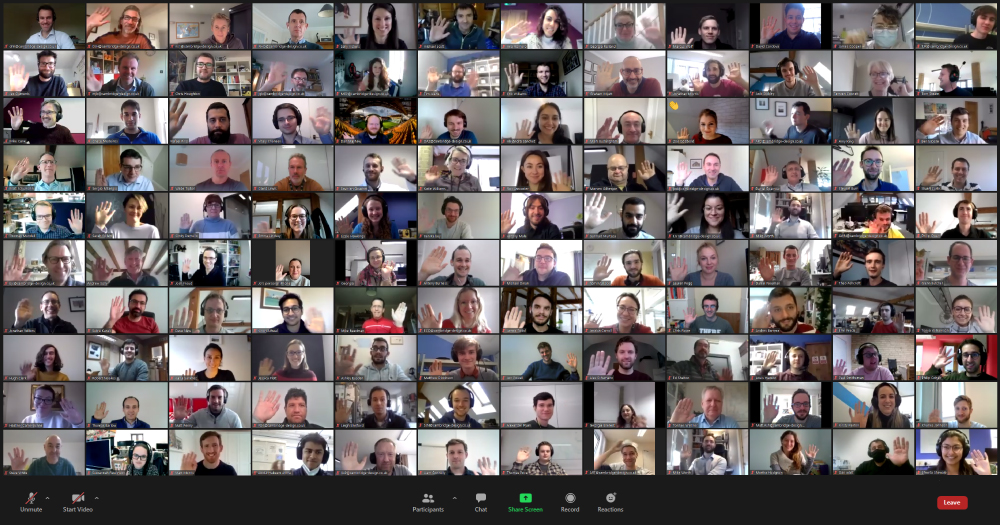
But instead of giving up on the competition altogether, the organisers moved it online. So we competed anyway, using communications technology such as Zoom, working against the clock. This year’s online event attracted 900 competitors from all over the world. More than 350 projects were submitted, making this last-minute switch online a huge success.

My team chose to focus on the field of Education, as several of us had a keen interest in this area. In our home country of Colombia, a substantial percentage of children are not able to go to school and are also unable to reach the internet. So they miss out on education entirely. Could we think of a way to reach them?

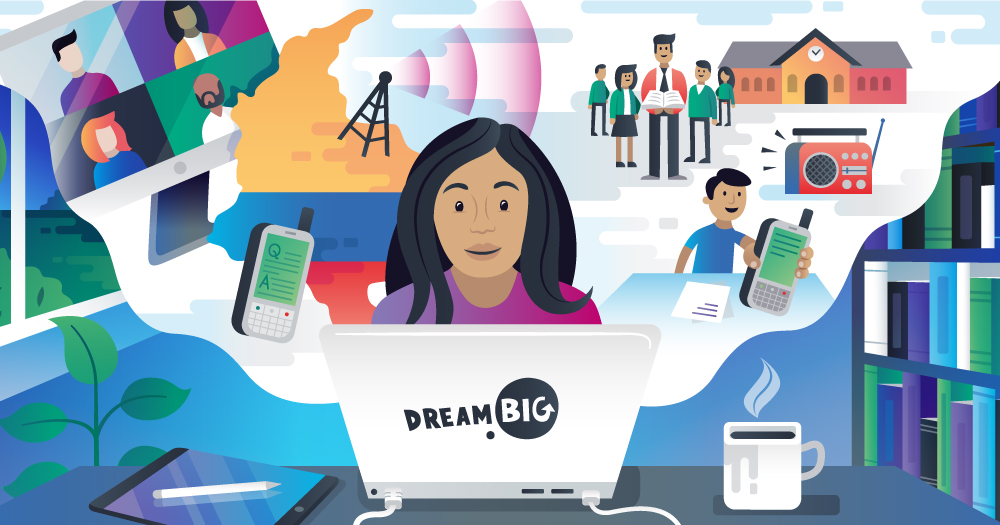
To our delight, our project, called Ekko, scooped the third prize in the Education category. Our project was based on the idea of reaching children in remote areas via SMS messaging and radio. We aimed the project at pupils from 12-18 upwards, who could follow a class on the radio and interact with teachers via SMS. Many families have access to phones and radios in Colombia but do not have computers or access to the internet. And, of course, this model has potential in so many countries around the world. In Colombia, 47.7% of the population (23 million people) do not have internet access in their homes.

I learned a lot from the hectic three-hour webinar in which our team designed this education programme. Much of what I learned is proving very useful in my other online collaborative work during the Covid-19 crisis. Here is what I discovered about teamwork when you’re all working remotely under lots of pressure:

1. Have the right tools

I soon realised that it is important to have the tools which allow you to migrate between online and offline with ease.  Make sure you have digital tools, creative materials and can do (and share) fast sketching so that you can share ideas as seamlessly as possible. In the competition, colleagues were connected from other places, even in different time zones.  Working remotely using tools like Zoom, Google Meetings and WhatsApp was possible but also very intense. There is no doubt that online events change human interaction and experience. It is essential to have the proper tools to hand, allowing creatives and entrepreneurs to develop their projects remotely in a flexible and stress-free way.

2. Find your common purpose

A common aim really helps an online project. If you have a clear reason why you’re undertaking the work, things will be much easier. In our competition there was a choice of five different sectors: Health, Sport, Education, Work and Sustainability. I worked with university professors Andres Rubiano and John Higuera. All of us are passionate about social innovation and wanted to change education, making it fun, free and interactive. This really helped our motivation when things didn’t go smoothly.

3. Creativity is key

Using your imagination in challenging times is more important than ever. An open mindset allows us to manage challenges. I truly think that each day is an opportunity to learn and design a better world. The key is to let our imagination fly, allowing it to create and to not panic about failing. This competition taught me that, even during a lockdown, working remotely, it was possible to connect online, study other projects, explore new ideas and connect with new people.

In conclusion: I’m delighted to say that our project, Ekko, is now in the throes of becoming a reality in Colombia. It looks as though those tumultuous three hours of intense activity could end up changing the lives of thousands of children for years ahead. That really is a good result, isn’t it?

Circularity in context|

Circularity in context

Picture the scene: a room full of executives are watching a presentation on company strategy (actually, let’s move with the times… they’re all at home, watching on Zoom). A simple, elegant image of a circle dominates the screen. Will they support the adoption of circularity principles across the business? In unison, they nod. Not only is this the right thing to do, but it’s what the rest of the market is doing. Circularity is an essential component of a forward-looking business strategy.

But in each of their minds is a nagging question… How?

Why is circularity important?

“Circularity” is a word that has become ubiquitous in the sustainability strategies of many of the world’s biggest brands, from Apple (variations of the term ‘circular’ appear 27 times in their latest sustainability progress report) to AstraZeneca. Spearheaded by advocacy groups like the Ellen MacArthur Foundation, the concept has intuitive appeal: maintaining the value invested in materials and products for as long as possible seems like good sense, given the effort, skill and resources required to produce them. It should also be good news for a planet that is running out of capacity to supply us with raw materials and soak up our waste.
Behind the elegant concept of circularity, however, is an incredibly diverse range of steps with varying degrees of applicability – and environmental benefit – in a given situation. But the need to simplify this into marketing messages and calls to action has led to Circularity becoming a buzz word, applied so broadly that it risks becoming meaningless. Companies, keen to move into this green and pleasant new vision for the economy, are looking for simple, off-the-shelf ‘cricular’ measures that they can adopt quickly – sometimes at the expense of a proper assessment of whether the approach is appropriate and truly beneficial for them, their customers or indeed, the environment.

In this blog, we look at why Circularity in Context is of fundamental importance and the approach CDP takes, working in partnership to provide our clients with the best possible sustainable outcomes, instead of pushing a square peg into a circular hole…

Context is King
Take this as an example. An enthusiastic company want to generate a new beverage offering that is due to launch in an up and coming developing market – let’s call it ‘Circular Soda’… for now. They want something that has the kudos of being ‘Circular’, which seems an attractive USP for a marketing message. Time is spent identifying the right grade of rPET (recycled PET plastic); starting with a circular material in the first place seems like a great idea. But… when the brand launches with sustainable claims emblazoned on the label, it’s not long before journalists realize that this ‘recyclable’ rPET is not being recycled in practice, as there is no recovery or recycling infrastructure in this market! Context is king… had the company thought it through a ‘circular’ solution, based around recycling, is actually not the best fit for this market, even if it is perfect for other regions. Sadly, in some instances, this kind of example is not that far from the truth.

A great real-world example is our old ‘frenemy’ the plastic bag. Few are aware that this innovation in 1959 had sustainable circularity front and center in the mind of its Swedish designer, Sten Gustaf Thulin. Sten calculated that a plastic bag that could be reused time and time again was a far more durable and far less energy intensive product than the common 1950s cotton or paper bags. He always carried his beloved innovation in his pocket, just in case he found himself doing a spot of shopping… (70 years later we find ourselves reaching into our own pockets for Sten’s reusable bag, in a consumer culture that aspires to be more circular… if only we could remember not to leave them in the car!) Unfortunately, the context that became king in the 1950s and decades following was convenience. Bags were so cheap to produce and so desirable for consumers as a disposable convenience, that Sten’s planet-positive pack has become a slur on sustainable living. This is where the introduction of filters in the process of innovation is key. What are the factors that might pervert intended circularity, and how can the design counter this?

Back in the boardroom, chief execs are still looking at the circle on the screen and scratching their heads with a killer question in mind.

How do we put circularity in context?

At CDP, our Circularity in Context model enables client teams to look at a brief through a broader lens, with the ability to consider what’s happening now as well as what will influence innovation in future, via 4 key filters that will help drive our understanding of which circular opportunities are most applicable. These filters extend far beyond the business or product itself, looking at the wider ecosystem and emerging trends that are shaping it.

  • The societal filter looks at the ways in which governance and politics influence the markets our clients are operating in, and how society as a whole might embrace or reject certain opportunities due to attitudinal or legislative parameters for change. This can drive future regulation, infrastructure development, or R&D investment.
  • The economic filter helps us understand ‘viability for change’ from a commercial perspective; what commercial pressures occur in the context that their brand and product is operating in? What criteria are used to appraise investments? What is the existing asset base?
  • The user filter puts us in the shoes of the end users, either ‘consumers’ (B2C) or customers (B2B); how should a proposition meet their needs and does a move toward a more circular solution provide gains or create pains for them? How might their habits and behaviors have a positive or negative impact on the viability of a more circular solution?
  • The technological filter is an exceptionally important one that’s often overlooked. CDP rely on a broad group of experts with deep knowledge in science and technology to determine how a ‘circular idea’ can become a technically viable reality, as well as identifying emerging technologies that could enable new business models in the future.

As much as people want to be unfettered when pursuing creative thinking on how to adopt circular approaches, these filters constitute whether a circular concept could become a viable reality for our clients. So, developing a brief with our clients for a successful outcome with these filters underpinning innovation – aiming to be circular, but doing it in context – is the key to success.

Game-changing?

As a team of researchers, designers, engineers and innovators, we want to develop great sustainable products! Much of the focus of current efforts to embed circularity into products has focused on utilizing circular materials; the leaders in the field are extending their ambition to more resilient, returnable or repairable models. A great example of the adoption of ‘game changing’ circular thinking, at different levels, now exists within the Toy industry. The first level in improved circularity is moving from dispose to recycle; at the end of 2019 Mattel announced its goal to achieve 100% recycled or recyclable plastics in its products and packaging by 2030. New entrants to the toy market (such as Toy-Cycle and Whirli) have gone a step further and established a ‘recommerce’ platform, where outgrown toys are shipped directly to the company to be sorted, repaired, resold and returned into the system. This commercial model for a lending library – recycling parts, not materials – is perfectly in keeping with a new generation of consumers who don’t want to condemn their child’s personal plastic Toys “R” Us store to landfill, or even the recycling bin. The societal context is shifting!

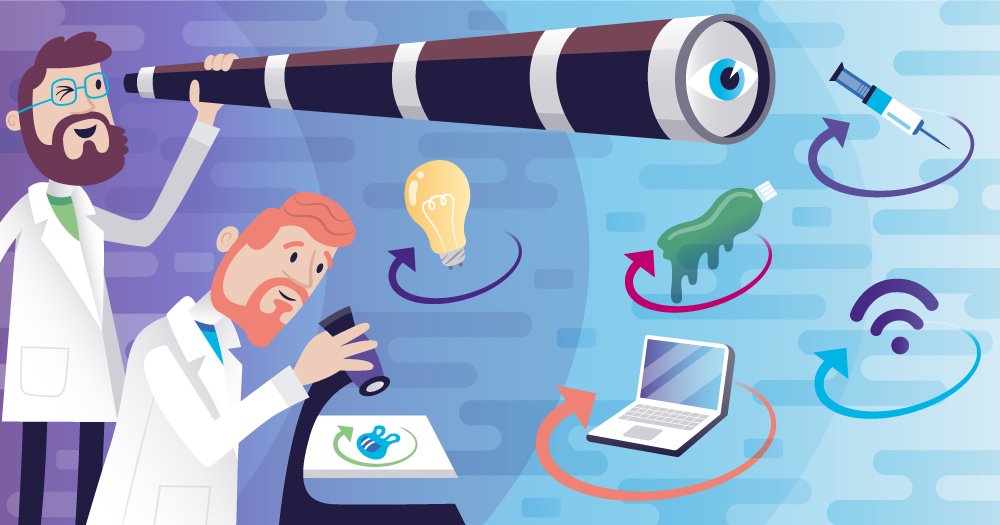
However, being circular in our choice of materials and components is often only one opportunity; bigger ones might exist if we are willing to look beyond the product as it is today. We opt for a telescope before a microscope – we’re interested in the detail, but we’re just as interested in the bigger picture, where the big innovations often lie. Applying systems thinking and looking beyond circular material usage could uncover a totally new way of delivering the benefits people currently derive from the existing product.

Some entrepreneurial businesses have had a eureka moment when their context is well placed to offer them the chance to do something radical and reimagine a product, system or service altogether. With the games industry booming, (in no small part due to the current pandemic), this year it’s set to reach a phenomenal $159.3 billion in sales¹. With many asking where the potential for growth is, innovation has pivoted away from games linked to hardware formats. Inspired by smartphone innovation and leveraging an expertise in cloud computing, Google Stadia and Amazon Luna have emerged as serious challengers to established players such as Xbox and Playstation. Hardware tomorrow will be so yesterday. Brands in this new gamer age look like the style of their landing pages and the quality of their games and content, not the console or the cartridges or discs that once ran on them. By 2021 video gaming sales are due to hit the $200 billion mark; one can only imagine how the absence of hardware will increase the profit margins within this behemoth entertainment industry.

By considering the wider context around a business, and how this might change in the future, it’s possible to identify opportunities that – like in the game-changing example – offer enhanced value to customers precisely because they are more circular and less reliant on consumption of materials. As the famous quote goes, “People don’t want to buy a quarter-inch drill. They want a quarter-inch hole”!

A partnership approach

We are known for working in close partnership with our clients (it’s in the name!), but also for offering an evidence-based, independent perspective when assessing circular options and the surrounding context using both a telescope and a microscope. We believe this approach can de-risk circular innovation strategies by identifying opportunities that fit the situation, and even reimagine the product or service entirely. Circularity is definitely not one-size-fits-all – but with careful consideration of context, we think there is a circular opportunity that’s right for everyone.

Connect with CDP

For more on how to apply circular design thinking in the right context for your business, products, and markets, contact Cambridge Design Partnership.

innovative diagnostics||

The window for innovative diagnostics is open

The Covid-19 pandemic has presented a time-limited but immense window of opportunity for diagnostics companies. Changes in regulation and increased levels of investment are enabling radical innovations to have real impact, but only if they can be fast-tracked into new products which are cost effective and compelling to users. In this article we review some of the product releases and look at the long-term effects of this unique situation.

The WHO’s message of ‘Test, Test, Test’ echoed around the world and since the start of the Covid-19 outbreak, diagnostics companies have dropped their existing R&D programs to focus on SARS-CoV-2 test development.

The FDA’s Emergency Use Authorization (EUA) has enabled a quick route to market for products that have not received formal approval, and for many companies, the outbreak has stimulated significant cash injections from government and private organizations. The Covid-19 situation has meant products can be launched faster than ever before.

Engineers and scientists have been working intensively while the EUA window remains open, including teams at CDP who are in the final stages of developing a molecular platform for Covid-19 testing.

Most tests (~80%) authorized under EUA are molecular tests that detect the presence of viral RNA. Two companies (Becton Dickinson and Quidel) instead targeted detection of a protein within the virus particle (an “antigen” test) rather than detecting its RNA. The promise of home-based tests that detect antibodies (to determine if someone has had the virus) was unfortunately dashed by poor performance; the 26 authorized antibody tests are all lab-use and primarily involve large expensive equipment, rather than a low-cost pregnancy-style lateral flow strips that use a drop of finger prick blood.

Molecular tests on platform devices

First off-the-mark were companies that already have a device which can be repurposed for Covid-19 testing. Automated lab analyzer running PCR (the molecular ‘gold standard’ test) require little in the way of hardware modifications. The SARS-CoV-2 molecular assay is a relatively easy assay to develop for these systems as it is similar to other respiratory diseases (e.g. for Flu A/B). Roche, Thermo, Hologic and Abbott Molecular all released their tests on large scale hospital lab equipment during the same week in mid-March.

Companies producing near patient tests on existing platforms were quick to follow, and in the following week Cepheid’s Xpert Xpress, Mesa Biotech’s Accula and Abbott’s ID Now were all authorized. These systems are highly portable and CLIA waived, so they can be used outside of lab settings. The Abbott ID Now (the re-branded Alere-i) uses isothermal amplification (rather than thermal cycling) which enables results to be generated in as little as 15 minutes. Compare this with traditional PCR which takes ~40 minutes, and these should be ideal systems for mass deployment into schools, care homes, pop-up clinics, even for testing passengers while travelling on commercial flights.

However, whilst these systems seem an ideal method for de-centralized settings, sample collection can be error prone and the cost per test is relatively expensive compared with central-lab testing. Combined with lower throughput, it is currently more cost effective for people to self-isolate while their sample is processed in the central lab.

New CRISPR-based tests

Start-up companies are making use of this window of opportunity by building products around potentially disruptive technologies, which may have been too risky to develop in more normal times. An example technology is CRISPR, the game-changing technology for gene-editing – now heading rapidly into diagnostics. CRISPR uses the natural defense properties found in bacteria to protect itself, ironically, from viruses. It is now being used to rapidly detect specific nucleic acid sequences. Sherlock Biosciences recently received EUA for its CRISPR-based Covid-19 test kit – and is working to bring the technology into a point-of-care format which can deliver results in 20 minutes within a doctor’s office or even a supermarket. GlaxoSmithKline is also working with Mammoth Biosciences to bring CRISPR-based technology into a hand-held, fully disposable product format. These products are at an early stage, but future developments will advance detection capabilities and potentially enable faster and lower cost diagnostics compared with traditional approaches.

Fully disposable molecular tests

There is currently a race to launch fully disposable molecular devices that can offer lab-quality results from the convenience of the home. The vision again is that of a pregnancy-test type device, but one which carries out the complex assay functions of a molecular test. Many of the devices in development use isothermal amplification due to lower power demands and ability to cope with reduced sample preparation. These first-generation devices are going to be initially very expensive, but companies are pushing the boundaries and paving the way for more accessible testing.

Antibody tests – “the wild west” of testing

Very low cost, home-use lateral flow immunoassay tests involving just a single finger prick blood sample was hoped to be the ticket back to normality. These tests detect if a person has antibodies to the virus and therefore potential immunity to re-infection. Manufacturers were pushing these out under EUA despite very little in the way of supporting clinical data, but hopes were short-lived as high false negatives meant the tests were unsuitable. In some cases, results were so poor, it was comparable to flipping a coin. The only antibody tests released under EUA are lab-based tests, not home-based, and use conventional serum, plasma or whole blood sample collected by a phlebotomist.

Recent data suggests antibody tests are not actually very good at detecting if someone has had Coronavirus; many virus-positive patients have been antibody negative, so there appears to be other immune responses taking place involving T-cells, but that’s another topic.

Changing landscape

While existing lab analyzers are currently the workhorse of testing due to high performance, high throughput and low cost, relaxation of regulations and rapid cash injections have meant there are some highly innovative new developments which are pushing the boundaries and re-shaping the landscape of point-of-care molecular diagnostics.

Faster and lower cost point-of-care tests that are more convenient to the end user have the ability to provide results while-you-wait, meaning local outbreaks can be identified sooner and less time is wasted unnecessarily self-isolating. With greater access and clear social and economic benefits, more people will engage with testing on a regular basis. Covid-19 testing applies to the global population – it is not just a one-time event, but repeated frequently, time and again. The market size is huge, and the commercial opportunity is immense.

But the window of opportunity presented may be short-term due to the nature of the current global circumstances. Companies will have to act fast in technology development to devise compelling embodiments that differentiate them from very similar competitors. Speed and innovative thinking will be key to win and maximize the opportunity.

Packaging - perceptions & preferences during the pandemic

Packaging – perceptions & preferences during the pandemic

When we ‘locked down’, as a nation we had very little idea what to expect or indeed for how long. Major behavioural changes have come about as a result of the pandemic and our lock-down experiences, but what has been incredible to watch, as someone who has spent many years looking at consumer behaviour, is just how big an impact the Covid pandemic has had on our global preoccupation with ‘consuming’, and our physical relationship with packaging.

Packaging perceptions

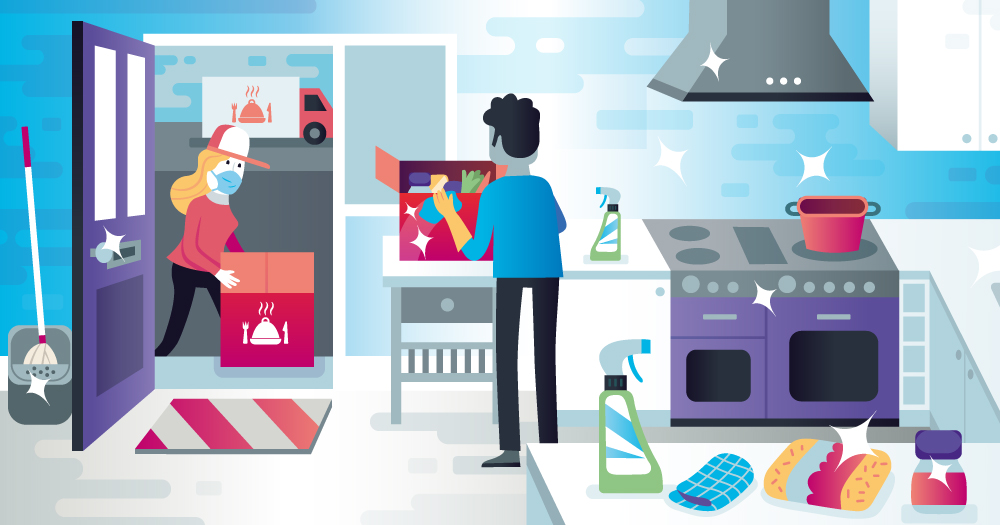
People’s perceptions of packaging have changed during the course of the pandemic. It’s fundamental role as a ‘first line of defence’ to protect our products came under scrutiny. With many questioning whether packaging itself could actually be a ‘superspreader’. During the first month of lock-down, as well as the government guidelines on how to socially distance and take precautionary measures, we adopted many more of our own. For example, every crate of food that was delivered to my front door was sanitised! It became a family event, getting bags of new products out on the worktop and wiping them down with disinfectant! Plastic bags that had once been banished became a ‘disposable saviour’ in the handling of food quickly and efficiently without prolonging time at the front door. Although I found this behaviour irrational after a few weeks, especially after the FDA and other respected bodies announced there was no data to support the notion that COVID could be transmitted via interaction with packaging, astonishingly a snap poll of 1,000 people interviewed in April 2020 by communication agency G&S, stated that 44% of respondents were continuing to clean products with disinfectant. Although this cleaning frenzy has now subsided and my family are back to the normal habit of letting me pack all the shopping away, single-handedly… the COVID pandemic has left a significant mark on our relationship with products and packaging.

Packaging semiotics

One of the areas where some marketeers have responded quickly, are the semiotics of packaging. This can be as simple as the language used on a pack to reassure consumers, in some cases, it can be a total visual overhaul. Clients in a large global soap manufacturing firm were considering the launch of a new visual identity for some of their brands in the midst of the pandemic. They told me recently that there was an immediate U-turn in keeping with the consumers need for reassurance about hygiene, responding to the pandemic. In this case “kills 99.9% of germs”, was a more reassuring message for consumers than ‘lifestyle’ graphics or colour schemes suited to the interior design of the bathroom. How long the u-turn will last is yet to be seen, but it’s clear that consumer reassurance is a high priority and will probably continue to be for some time to come.

A great case in point, when it comes to our relationship with packaging and how we handle our food, is fruit and veg. As part of the backlash against plastic, supermarkets were being encouraged to remove single use plastic wrappers around these items. But ‘naked’ vegetables, shrouded in protective shrink wrapping, have proven favourable over loose items during the pandemic. Clients in the beverage world have recently been exploring ways to generate new forms of secondary carry handles that enable consumers to pick up part of the pack that has not been handled by store staff, or indeed anyone else within the supply chain. Although this might seem unnecessary, consumers spend less than 5 seconds on average choosing products in frequented commodity isles. So leveraging consumer auto-pilot decision making that’s been influenced by a heightened awareness of risk avoidance and safety, will naturally present opportunities for brands to stand out, in commoditised categories where points of difference and unique product positionings are increasingly hard to find.

Packaging convenience

Of course, convenience has always been king in many of the decisions we make about the products we buy and the packaging we are attracted to. But this need increased during the lock-down period as pre-packaged meal kits enabled us to conveniently avoid the shops altogether and dramatically rose in popularity. I was ‘a Gousto virgin’ until April of this year. But I now eagerly await the delivery of restaurant quality cuisine delivered straight to my door in a chilled red box every week! Each part of the meal individually packed for convenience, pre portioned for exactly what’s needed as I don my apron and fool myself into thinking I’m Jamie Oliver. (For anyone that’s unfamiliar with the recipe box phenomenon, think painting by numbers with food). Although, you simply can’t avoid feeling guilty when putting a red Gusto box full of cardboard out for the weekly bin collection (as well as finding a way to reuse the fleece, included to keep the pre-packed food cool!). Gousto reported challenges in keeping up with demand on their packaging lines and Mindful Chef, offering a similar service reported a 425% spike in new recipe box customers during the lock-down period. A McKinsey report on the 2nd June stated that consumers have continued spending more time cooking at home and that most expect that the impact of Covid on their routines will last for well beyond two months. So as we re-evaluate how we want to shop post lock-down, it will be interesting to see if pre packed food delivered straight to your door dwindles or continues to go from strength to strength. What is evident in this increasingly buoyant e-commerce era, is that excessive packaging is at odds with manufacture, retailer and consumer commitments to move toward less packaging.

Conclusion

Consumers foundational packaging needs are safety, trust and the associated reassurance it provides. The Covid pandemic has exposed many associated consumer foibles and anxieties around the perception of packaging and its importance in our modern day world. It has also catalysed new future business models for how we might prefer to shop in convenient and reassuringly distanced ways in future. But we have yet to reconcile this with the increasingly important need to move away from excessive single use packaging, in light of the environmental crisis that still looms, albeit behind the immediate challenges of this Pandemic. Innovation will be essential in balancing all these needs in a new era of packaging that can reassure, add value and minimise the environmental impact. If you’ve enjoyed this article, watch out for my next instalment of the blog, where I wrestle with the challenge of packaging sustainability and some brave new ventures in response to the increasingly urgent need for radical ideas and innovation.


If you wish to explore packaging sustainability challenges and avenues for innovation, benefiting from CDP’s expertise across categories and markets, contact:


|Jessica-Platt-(JAP)

Innovating for context; The role of Anthropology in innovation

Although we don’t often hear the term ‘anthropology’ referenced in the innovation process, anyone charged with this objective knows implicitly that the key focus areas of language, culture, society and place, are critical when it comes to the harmonisation of a brand or the successful launch of a new global product.

The growing adoption of user-led approaches to front end innovation (FEI) means that global new product development teams are highly motivated to understand the cultural background of their target user’s social, functional and emotional needs. Anthropological thinking has a lot to offer new product innovation by providing a range of tools that help shift perspectives, making the strange appear familiar, or re-defining an experience to make the familiar even more intuitive, more relevant, more personalised…or perhaps more provocative. Our collective goal as innovators is to create products and services that will resonate within different cultures, deliver meaningful value, and improve lives. Anthropology offers an analytical lens for insights that reach beyond what people say, to access the culturally influenced assumptions that underpin their decisions and behaviour. This allows us to create products and experiences that resonate with our users lived experience.

Anthropology and ethnography

Anthropology is the in-depth understanding of people and place and is implicit to much of our FEI work at Cambridge Design Partnership because the history of Anthropology is closely intertwined with ethnography. At CDP, we use lean derivatives of ethnography to support our client’s fast-paced innovation initiatives and to keep them user-focused. With the growing pressure for innovation teams to be ‘agile’ and ‘lean’, we continually develop even faster contextual insight methods that engage real people in exploratory research, and co-creative activity. As the world changes, we rise to new challenges by adapting many of our ethnographic research methods to utilise digital techniques and ensure that we can continue to successfully access the deepest insights from people based around the world, no matter the global context. This is more important than ever in a ‘new normal’, where social distancing policy is now restricting routine daily physical interactions.

Ethnography in innovation

Whether it is conducted in person or online, ethnography is all about empathy; it is an opportunity for us to put ourselves in the shoes of our consumers, to understand what resonates with them and validate what is meaningful. This is essential to develop a unique and believable product specification and strategy. Ethnography is particularly powerful when used in combination with other analytical overlays. Anthropological thinking pushes ethnographic research beyond immediate context to access other subconscious influences behind key decisions.

Incorporating anthropology in ethnographic research creates an opportunity to interpret how deep-seated cultural nuances might also be impacting on what consumers aren’t saying explicitly in a research scenario! This is a crucial level of understanding when creating a globally relevant product that can be seamlessly incorporated into daily activities. When we run research remotely, applying an anthropological lens to our discussion guides and being creative about the way we ask people to share their lived experiences with us becomes even more important, because we are often limited in how much behaviour we can see. Our questions must therefore be clear and targeted to reach a depth of understanding from a distance!

Learning to ‘read’ culture

Understanding the culture of our target users is crucial for success because culture changes the way that people understand their experiences. For example, the user experience provided by McDonald’s in all restaurants around the world are virtually identical (economists famously use the Big Mac as a global measure of price index), but culture alters the experience that diners have. Whereas in the UK fast food has a mixed reputation for trading off quality for convenience, in some regions of South Asia, McDonald’s signifies high status and is frequented by the wealthy middle classes. The sacred status of a cow in India, brings yet another pivotal McDonalds perspective. McDonald’s may look the same, but the experience it provides is transformed by the cultural context.

Logos, brand-marks, and tag lines are assumed to carry a universal meaning, but context can change the way that they are understood. Semiotics and the cultural psychology of colour can also be effectively combined with ethnography to investigate the signs and visual cues that influence people’s understanding of the world they inhabit, which may be missed by a research team not attuned to these themes.

Often it is only through immersing yourself in another culture that these different systems of understanding become clear. For example, although it is common practice to eat with one’s hands in Sri Lanka, it is considered extremely rude to lick your fingers at the end of a meal. I only learned this crucial etiquette when I flagrantly broke the ‘rules’ at a dinner with some Sri Lankan colleagues.

My embarrassing mistake caused the people I was eating with to explain a rule that was usually unstated. As I walked down Galle Road that evening, I passed an advert for KFC:

KFC
It’s finger lickin’ good.

I have seen the same sign thousands of times but that evening the tag line took on a completely new significance. In a country where eating with one’s hands is the norm, but it is taboo to lick your fingers, does KFC actually offer a different brand identity? Is the tag line transformed from being nostalgic to become a bit maverick… a bit saucy?

In this case, the contextual overtones of the tag line don’t appear to have negatively impacted KFC, but there are many examples where subtle (or not so subtle) cultural readings or mistranslations have presented brands with uncomfortable challenges to un-pick, which could have been proactively predicted had a cultural research lens been applied earlier in the process.

Anthropology offers a raft of effective desk and field research tools to access the things that go unsaid within cultures which, once articulated, reveal important insights that can radically redirect and refine a product specification or a global brand strategy.

For breakthrough innovation to take place, it is essential that a new product, service or brand proposition resonates with the audience. This means not just looking beyond what people say, but adding an anthropology lens to understand the non-verbal, semiotic and sensorial cues, to reach the foundation of the very assumptions that influence their daily decisions, and which remain largely unspoken.

Testing times

Testing times: adapting user insights research for a new era

As COVID-19 related distancing threatens established methods of engaging with consumers and patients, Ben Kelsey and Andres Barrera reflect on how to support innovation projects with ‘hygienic’ user research tools and techniques!

The ability to travel and observe how people live in their cultural context is a privilege, and an asset to a researcher’s toolkit. It enables us to elicit the insights that can develop new commercial strategies, and it allows our design and technical teams to create the new products and experiences that deliver critical benefits. So, a global pandemic would, at least on the face of it, seem a high barrier to the ‘day job’.

However, to preserve the global economy, businesses must and will adapt, therefore products and services must also evolve and reinvent themselves for this new environment. The emotional rollercoaster that many families are currently experiencing will certainly influence their behaviour, and understanding this may offer a valuable insights into potential long-term changes in habits and attitudes that will provide innovation opportunities in the future.

Our broad tool-kit and research expertise has developed over the last ten years to include both physical and remote insights capture and validation methods. The challenge is knowing the right tools to use and having the experience to deploy them to maximise results. No one tool is perfect for every task because the research objectives and budgets can vary significantly, but the starting point is that there is much to be gained, and little to be lost, by a learning engagement with your future potential customers.

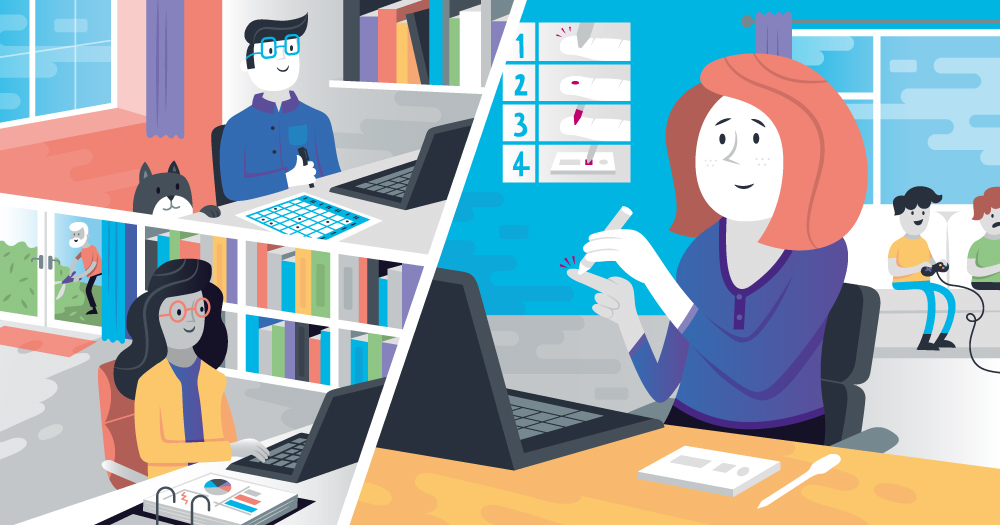
As long as travelling to users’ houses is prohibited by the need for social distancing, traditional ethnography is impractical. However, online ethnography can go some way to replace it. Users can self-facilitate their interview, creating a series of short recordings on their smartphones across a series of scenarios which have been pre-defined by the moderator. This enables researchers to gain a valuable visual, narrated snapshot of respondents’ lifestyle, behaviour, shopping environments and product usage.

Today, it is estimated 3.5 billion people around the world have a Smart Phone1. So these digital methodologies can access populations and user groups with greater ease and speed than face-to-face methods including ‘hard to reach’ populations in a way that was not previously possible. Furthermore, remote research allows the moderator and the observers to gather the insights captured within the participant’s natural environment; allowing the participant to be more relaxed and more instinctive behaviour to be observed, with sessions scheduled around the participants’ daily routine. At a practical level this can enable recruitment of wide diversity, both by geography and consumer segments, typically at a lower cost that physical field observations.

Our research and insights team is made up of a variety of subject matter expert backgrounds, including psychology and anthropology, science, and design. The objective of our work, whether for consumer or healthcare markets is always to creater a better, and more intuitive experience. Human Factors and Usability trials are another research activity that has been impacted by COVID-19, and this service has also benefitted from a creative approach and constantly expanding tool-kit to ensure client’s critical path healthcare development programmes remain on course as we switch to remote methods.

How we run online remote usability testing

There are three key questions we ask partipants which measure product desirability and usability:

“Does it fit in with the way I do things?”

One way we explore this is by gaining feedback on product workflow using storyboards or demonstration videos and animations which can be shared online. These tools are great for communicating assumptions and quickly learning whether they resonate with users and reflect how they do things. Study material can be shared prior to the session or presented to the participant during it.

“Can I understand how to use it?”

Gaining feedback on visual design and the hierarchy of information helps to validate mental models embodied in the design. This can be done using images, walkthroughs and interaction simulations to explore specific user interface features, i.e., interpretation, legibility, navigation, etc.

Each step of the user experience can be explored with the participant to determine their understanding of the device state and asked what they would do next.

“Am I able to physically use it?”

We can obtain richer feedback on physical interactions by posting test packs to the study participants. These might include, for example, handling models or low-fidelity prototypes, and briefing materials, which can be used in a range of ways – both moderated and unmoderated, depending on objectives.

3D printing is a great tool for this. We can print and finish a ‘looks-like’ model, and a 3D-printed headset allows them to video the encounter with their phone. We have also, as a matter of course, been including a personal hygiene pack and instructional information on measures to minimise virus contamination risks.

Participants are encouraged to ‘think out loud’ and walk through the overall experience with the device. This footage is then used by the research team to ask follow-up questions via video calls, to better understand use challenges or frustrations.

Heuristic analysis

Some tools avoid the need for usability testing with real users at all. One is heuristic analysis; an evaluation method which draws upon the collective knowledge and experience of a team of expert interaction designers and usability engineers to evaluate a device or concept against a set of pre-agreed criteria. This can also be expanded to consider capability loss or through exercises such as “walk-in-my-shoes” or using capability loss simulations. It provides a powerful empathetic solution when the target users are hard-to-reach, rare patient groups or are part of a niche consumer population.

Data logging

An approach we have pioneered at CDP is the use of data loggers hidden in prototype products, a service we call diialog. This allows a subject to receive a prototype device or packaging sample and naturally engage with it in their day to day routine in trials lasting up to a month, when it is eventually returned. At this point we download the stored data and analyse it to understand how the subject actually used the product.

This digital technology has been deployed successfully on research devices ranging from drug delivery systems to vacuum cleaners, both in concert with, and without a written diary.

As experienced researchers, we all know that there is no perfect single test method – but when faced with very diverse innovation challenges, the starting point is always collaborating closely with our clients to fully understand their objectives, and a broad and evolving toolkit to call upon! As an end-to-end innovation partner, we understand the importance of asking the right questions in order to uncover the right evidence to craft the right solution that is both desirable and safe for the user.

With a return to widespread physical in-home research some way off, you may be wondering how you are going to maintain your NPD critical path; whether you are in the early ‘explore’ phase of an innovation programme, or needing a decisive validation test result, if this feels like your current situation we would warmly encourage you to get in touch for a chat about your current research challenges, and some of the latest options that may be open to you.


References:

1. https://www.statista.com/statistics/330695/number-of-smartphone-users-worldwide/

Surgical robotics

Where’s the value in surgical robotics?

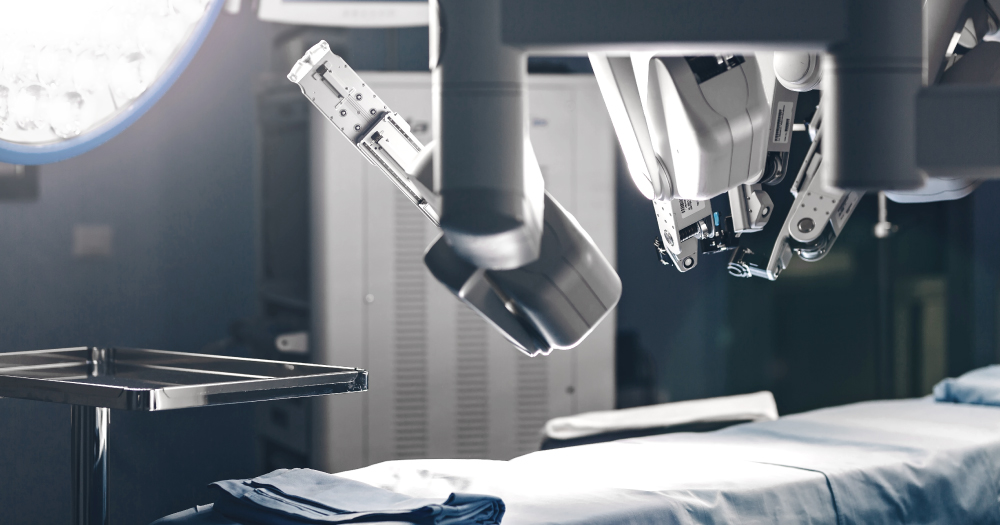
The first robot-assisted surgical procedure was performed in 1985. In the 35 years since, the field of surgical robotics has exploded, with both surgeons and patients demanding access to the technology. This boom has brought with it plenty of vocal advocates, and just as many critics, debating the risks and rewards of robotic technology over traditional open and laparoscopic techniques.

The main criticism of robot-assisted surgery comes down to the fact that, despite the lofty initial and recurring costs associated with robotic equipment, patient outcomes of robotic-assisted procedures seem to be no better than conventional laparoscopic procedures. Some may see this as evidence that investing in surgical robotics is nonsensical, but it is worth considering the future potential of the technologies. For while the tools and techniques used in conventional laparoscopy may see slow incremental improvements over coming decades, each new generation of surgical robots will likely continue to bring radical step-change improvements in procedural precision, patient safety and surgeon control and comfort.

Current benefits of robot-assisted surgery

The current generation of surgical robots offer a few significant advantages over traditional laparoscopy.

  • Ergonomics & surgeon comfort: the ergonomics of laparoscopy are not ideal and can take a toll on a surgeon’s body. During robot-assisted procedures, the surgeon sits at a workstation and controls his surgical tools using ergonomic master controllers. If the surgeon needs to take a break at any point in time, they can let go of the controllers, and the robotic instruments will maintain their current positions.
  • Precision: a robotic system translates the inputs from the surgeon’s controllers to output motion of the surgical instruments. This allows for motion scaling (for example, 3mm of movement by the surgeon results in only 1mm of movement of the surgical tool), providing unprecedented surgical precision.
  • Stability: while providing some haptic feedback to the surgeon is desirable, a robotic system can handle all the stresses and loads associated with a procedure without translating them all back to the surgeon’s hands. Along with surgeon comfort, this allows for improved stability.
  • Better visibility: the steerable robotic endoscopes provide a high-definition 3D visibility of the surgical site, allowing the surgeon to better see what they are doing, compared to 2D endoscopes used in laparoscopy.

More hands: while we humans are tragically limited to typically having only two hands, robots are not subject to such limitations. The da Vinci Xi, for example, has four robotic arms. The surgeon toggles back and forth between controlling different combinations of these arms using foot petals.
Fast learning curve: learning how to safely and effectively perform robot-assisted procedures tends to be faster than training to perform laparoscopic procedures.

Current limitations of robot-assisted surgery

Advocates of surgical robotic technologies tend to focus on the various benefits without mentioning some noteworthy risks and challenges:

  • Setup time: nurses and surgical assistants often complain about the long time it takes to prepare a robotic system for a procedure, including wipe-downs, draping and loading of surgical tools.
  • Lack of haptic feedback: current robotic systems provide very limited feedback of applied forces to the surgeon. Instead the surgeon is required to use the visual feedback from the 3D endoscope to judge what amount of force he is applying to patient tissue. Some studies suggest that surgeons apply significantly higher forces and stresses to tissue using robotic systems than using laparoscopic tools, potentially resulting in more damage to the tissue.
  • High cost: a daVinci Xi system costs about $2M USD. Each da Vinci surgery may cost $3,000 USD more to the patient / insurance company than a traditional laparoscopic operation.

The future

Many of the criticisms above are valid and must be taken seriously. Effectiveness and safety of robotic technologies must continue to be proven, and limitations should be assessed and accounted for. However, these should be seen as criticisms of current robotic systems on the market today, not as criticisms of robotic surgery in general. If anything, these criticisms hint at where surgical robotics is headed next. While Intuitive Surgical continue to innovate, the field of players is also getting wider, with companies like Johnson & Johnson, Medtronic and Stryker investing billions into research and development. Future generations of robotic systems will bring a range of short-term and long-term improvements and will redefine what is possible in surgery.

Increased haptic feedback is expected to be a key feature in some future systems. This will allow the surgeon to truly feel the motions and gestures they are executing with the robotic instruments.

The cost of robotic systems and tools is expected to decrease as the volume of robotic systems and tools sold continues to grow and with increased competition, as new companies bring their robotic systems to market in the coming years.

There may be potential benefits in surgeons being able to carry out procedures remotely. Already today, the surgeon workstation does not necessarily have to be in the same room as the patient. Taking this to the next level, future systems may allow an expert cardiovascular surgeon to perform specialist surgeries all around the world from the comfort of his own office.

The Big Question

All of these features still depend on a human being (the surgeon) having control of every movement of the robot. The big question is: at what point will we be comfortable giving up some of this control to a robot? Crossing this line will increase the productivity of the scarcest of resources, highly trained surgeons, and start to significantly improve the cost-benefit equation for these systems.

Leveraging image recognition and artificial intelligence, it is fathomable that, in the quite near future, we could have a robotic system capable of making decisions and performing certain tasks independently. Especially with repetitive tasks like suturing, a robot could be trained to become increasingly efficient and effective.

However, as we’ve seen with self-driving cars, we humans have very little tolerance for injury and death caused by robotic systems. Despite worryingly high death tolls caused by inebriated and distracted drivers, it is not enough for new technology to reduce injury and death. Even a single death caused by a self-driving car convinces some that the technology is not ready. This may be the same psychological and regulatory hurdle that surgical robotics must overcome to realise its potential.

Connect with CDP

For more on how to accelerate innovation in surgical robotics, from device design to clinical value, contact Cambridge Design Partnership.

CES Las Vegas

Who hit the jackpot at CES 2020?

Chris Houghton, CDP’s Brand Innovation Leader reviews the world’s largest consumer product expo, CES 2020 in Las Vegas. Sharing his insights and observations from start-ups to high rollers, all hoping for the jackpot from their latest innovations.

Innovation success or failure is often determined by how a brand or company manages risk. Too cautious and you’re likely to miss the next big thing. Too gung-ho and you will carry the costs for fast-followers to profit from. They’re all here at CES from the multinationals to the one-man-bands and everything in between. However, their need for consumer relevance and competitive advantage is a healthy leveller. I’ve walked the floors speaking to innovation friends old and new whilst navigating this technology metropolis.

There’s palpable excitement around the hot acronyms, 5G, 8K, AI, AR, VR, EVs and GPU technologies that will impact our lives as we enter this new decade. Whilst it’s easy to join the tech-fest party, I try to pick out the consumer benefits, innovations and design attributes that standout from the crowd.

High Rollers…

Big spenders LG and Samsung continue their battle for HD resolution supremacy as 8K Ultra HD becomes certified. Screen size, shape, transparency, bezel free and flexibility (foldable/rollable) are the main design differentiators for screens of all kinds to deliver adaptable entertainment spaces, smart home integration and immersive ‘Real TV’ experiences.

Aces High…

Within Smart Homes refreshments were provided by Keurig Dr Pepper, having partnered with AB InBev to showcase Drinkworks, the in-home cocktail maker using a pod system similar to their K-Cups. In contrast, we also saw start-up PicoBrew with their craft home brewer. In both instances they’re satisfying consumer desires to be the perfect host and enable the inner mixologist or master brewer in all of us. However, they both suffer from being sizeable devices.

In personal care I saw the future facing, simple yet elegant electronic deodorant from Pragrant, designed to sterilize and purify odours via bio-plasma technology without the wetting and stickiness of traditional solutions.

Oralcare had an even greater representation with Colgate’s Plaqless Pro, Philips SoniCare and P&G’s Oral-B iO all vying for the whitest and widest smiles each with different degrees of digital integration and app-based advice.

In grooming, P&G’s notable new launch was from GilletteLabs, a heated razor which endeavours to replicate a hot towel shave with their familiar replaceable shaving head system and business model. P&G’s ventures team also displayed a range of emerging brands that grow and complement the core business.

Intimate wellbeing had an array of offerings on show with our friends at MysteryVibe showing an extended portfolio this year. Entry level Poco and the ‘for him and her’ Tenuto being added to the range supporting the award-winning Crescendo. Myhixel, Ergo-Fit and Lora DiCarlo all had innovative intimacy offerings too.

Sleep Tech was prominent again this year with the SleepScore app being referenced during one of the Digital Health Summit keynotes. I experienced the Climate360 smart bed which can partition and programme thermal preferences to help give you a good night’s sleep.

Eye in the Sky…

Privacy and data protection solutions are well represented within the Smart Cities and Resilience Marketplaces with blockchain, cryptocurrency and cybersecurity featuring heavily. With consumers being increasingly desensitised to terms and conditions or cookies to allow Wi-Fi access or website browsing, companies are preparing themselves for this care-free attitude towards data exchange to potentially change. A notable example to address this was BOB (Blok on Blok), the blockchain phone that decentralises data to allow users to control how their data is used. As its overly industrial aesthetic would imply this doesn’t appear market ready for convenience and image sensitive consumers just yet, but the technology which helps digital payment security will surely find its way into the mainstream sooner rather than later.

All or Nothing…

Against the backdrop of the sobering climate change crisis it was reassuring to see sustainable solutions, but overall this was underrepresented and still feels worryingly low in the minds and agendas of many companies here.

Watergen were ingeniously harvesting drinking water from the air within their Genny, GEN-M and GEN-L units each of which have a shipping container like aesthetic. On a similar water saving theme W’air demonstrated a clever new tool for laundry to help get more wear from your one-time worn clothes with a system that removes odour and bacteria using a fine air/water jet that means less water, detergent and energy is used.

Vehicle Technologies best represented environmental concerns with electric and self-driving vehicles, however, few changed the typical car footprint to help with congestion issues.

Mercedes Benz added a touch of Hollywood glamour with the VISION AVTR which is an Avatar inspired concept car created in collaboration with James Cameron’s Lightstorm Entertainment company. This brooding centerpiece to their stand was largely obscured by a black 360 degree translucent curtain which added to the theatrics. With biomimicry features and a sustainability led agenda this sensorial wonder aims to connect driver and vehicle more closely whilst setting a vision towards the zero-impact car.

Even Sony unveiled a new concept car which unexpectedly overshadowed their main press announcement. Many had anticipated a new game-changing Playstation, but to celebrate its 25th anniversary they shared the new PS5 branding and a range of incremental performance improvements, tantalisingly without showing the console itself.

Royal Flush…

Many brands encourage customers to adopt their services and products across several lifestyle touchpoints, aiming for meaningful experiences that seamlessly sync and fit in different environments. Within Amazon’s exhibition room, they’ve divided their space into people-centric quadrants; Busy Parent, Home Chef, Entertainment Enthusiast and Work-from-home employee. Alexa is the common interface for easy voice activations.

Astonishingly there are over 9,500 different products that are Alexa enabled from brands as diverse as Oral-B to Lamborghini, the latter of which they’ve shamelessly showcased with an eye-catching, orange Huracán Evo (with Alexa controlled entertainment system). Sustainability and privacy credentials are notably absent from their quote styled Vox pops dotted around the spaces, which some may interpret as a potential threat to our connected lives.

Many of these examples fit well with how we tackle innovation opportunities at CDP. Our evidence-based approach is both people-centric and technology enabled to take the ‘gamble’ out of your innovation investments to deliver sustainable and meaningful experiences for all.