AI in healthcare

AI in healthcare, separating facts from fiction

James Baker, partner at Cambridge Design Partnership, considers the future for AI in the real world with help from a sideways look at its portrayal on the big screen.

In the movies, we often see big tech and deep data combine to challenge humankind in new and ever more fiendish ways. Indeed, at the cinema, human interaction with Artificial Intelligence (AI) is a rich seam of storytelling, which rarely ends well, for the human!

Meanwhile, back in the real world, we are now in an era where digital data, and more importantly the insights that can be drawn from it, can be as important – and as valuable – as physical objects. At Cambridge Design Partnership (CDP), one of our specialisms is the design of medical devices, often using information and machine learning to provide utility and value beyond the physical device alone.

So, in the spirit of fun, here is what the silver screen tells us about the big questions surrounding machine learning in healthcare, and we ask how these ideas relate to the reality of what the technology can achieve today?

What price genetic data? (Gattaca)

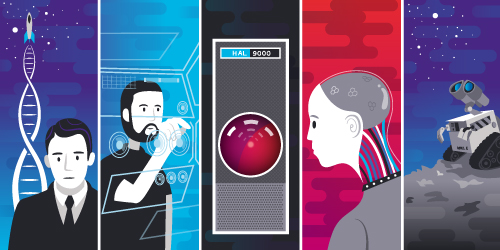
In the 1997 film Gattaca, only genetically perfect humans are eligible for better jobs and lifestyles. We cheer on Ethan Hawke’s ‘genetically inferior’ character as he assumes the identity of a superior being in order to become an astronaut.

In today’s world, less than 20 years since Gattaca was filmed, genetic profiling and statistical prediction is gathering speed. Mapping of genomic sequences to traits is a rich area of study and just this week, Matt Hancock the UK Health secretary announced that all babies could receive a complete genome sequencing at birth. Crucially, this technology has the potential to predict an individual’s likelihood to suffer illness in the future. But should the way you are treated as a patient, or indeed a person, be determined by an assessment of your genetic makeup? Already insurers are asking for access to medical records and premiums are affected by the presence of certain diseases, so should they also be able to consider the likelihood of future illness as well?

Diagnosis – how far should you go? (Minority Report)

The film Minority Report envisages a world in which arrest and incarceration is based on a prediction of the likelihood to commit a crime before it has occurred.

Already today’s healthcare and wellness technologies create significant amounts of data about individuals.  New processing methods and machine learning can analyse these multiple sources and draw conclusions.

Yet many clinicians don’t want every possible analysis to be given to them. For example, who is responsible if systems predict the probability of an illness, but the medical practitioner can’t confirm this conclusively? Does informing the patient provide any utility?

There are recent moves to define what can and can’t be done with personal data, such as the European Union’s General Data Protection Regulation (GDPR). These seek to control access to and ownership of data, but as yet, there are no similar frameworks to control the conclusions drawn from it.

What if AI overtakes human intelligence? (Ex Machina)

In the film Ex Machina a humanoid robot is created and given ‘intelligence’ built using a record of billions of human internet searches. But then (surprise!) the robot uses its knowledge of human interactions and desires to achieve its own freedom, deliberately misleading its human masters to do so.

Machine learning using huge amounts of information is an approach we see increasingly used in real life. In the field of diagnostics, AI is already showing great promise in diagnosing conditions such as Alzheimer’s and in facilitating cancer diagnoses. AI predictions are compared with a gold standard diagnostic to determine the most significant automated metrics to detect the condition.

This approach is already being used in cancer screening, enabling earlier detection through far more extensive analysis than is possible manually.

But what if AI doesn’t react like we expect? (2001)

An all time classic, 2001 cleverly hides a story of unintended consequences within a ground breaking and spectacular space opera. The HAL character appears to have a sinister agenda and behaves malevolently, attempting to kill off the human crew – but ultimately is understood to have been driven by conflicting orders.

In the real world, AI can deliver responses that are not what we expect. Large data sets may still contain insufficient information, erroneous or poor-quality data, which by chance may create patterns that have no meaning.

A good example of where AI can deliver unanticipated (and unwanted) behaviour is the late, unlamented Microsoft Tay chatbot. Its premise was that, by listening to and learning from posts on Twitter, it could generate useful tweets and help manage commercial Twitter accounts. But within hours of its release in 2016, Tay began posting inflammatory and offensive tweets and had to be taken down.

So, before we make AI systems independent, how can we be sure how they will behave and who takes responsibility for their actions?

Sometimes, AI can really help us (Wall-E)

The 2008 story of a good-natured planetary janitor-bot left to clean up our human mess shows how AI can really benefit humankind, turning its hand to automating work that would otherwise be onerous and low value. See also, C-3PO and R2-D2 in the Star Wars movies. It’s surely no coincidence that the two loveable droids are the only characters to appear in every single film in the Star Wars franchise.

Back in 1950, computing pioneer Alan Turing predicted that by the year 2000 computers would be able to trick us into believing they were human 30% of the time. He was not far wrong, in 2014 a chatbot called Eugene Goostman convinced 33% of judges that “he” was a 13-year-old from Ukraine, thus officially passing the Turing Test. We see these kinds of natural language interaction technologies being used increasingly in consumer goods, but also finding utility in medical applications such as triage with patients seeking care. This enables faster access and a better “customer experience” whilst also allowing healthcare practitioners to focus on provision.

In conclusion, at CDP our focus is on how to realise value for our clients, and machine learning is one of the tools we can bring to bear.  With the ongoing bombardment of new technologies, it is important to understand when it can provide effective solution, and when more traditional methods will provide the best results.  It’s no longer a question of what can we do with AI?

We need to ask: What should we do?

2020: Decade of the drones|

2020: Decade of the drones

Unmanned aerial vehicles (UAVs) or drones are increasingly part of our everyday lives. Here, Adam Turner, Consultant Mechanical Engineer and drone expert at Cambridge Design Partnership, considers the future potential of this remarkable technology.

Here at CDP, we love innovation and disruptive technologies. It’s what we do. So, needless to say, I find myself hugely intrigued by the uses offered by drone technology. Where will drones go from here?

The drive to design an unmanned aircraft initially came from the military, for airborne missions that were too risky for humans. In recent times, however, drones have found peaceful uses in everything from wedding photography to rounding up sheep. As designers, here at CDP we’re pretty sure this is just the beginning.

Automated so they are easy to control, powered by (potentially) clean electricity with battery and motor technology progressing quickly, and with the opportunity to include artificial intelligence to allow fully autonomous operation, the scope for drones is enormous. Here are some applications we are excited about.

Drone taxis. There are plenty of big names like Boeing, and start-ups like Volocopter, working in this sector. For example, global taxi firm Uber is also creating a small, vertically launched drone like aircraft to offer transport within and between cities. For how long will there be a pilot on board? With the benefit of an app, you could order a drone to take you to work or out for dinner. Drone taxis potentially avoid city congestion and the noise and disruption of conventional helicopters. It’s simply a case of up, up and away…

Drone agriculture. Already, farmers use drones to check crops and livestock. In the future, I’m sure crops spraying drones, such as John Deer’s recent development will enter use.  Food productivity will surely rise, drones programmed to take a series of photos using different light spectrums will enable a farmer to track crop growth and spot any issues, leading to better yields and less agri-chemical usage.

Drone environmentalism. Already, an initiative by British firm Biocarbon Engineering to fight deforestation in mangrove forests using drones is proving much more efficient than human labour. The drone surveys and tests the soil, then drops pods containing tree seeds and vital nutrients. Beyond this, the environmental potential of drone technology is enormous. From preventing poaching of rare animals, tracking populations to tracking glacial ice, a drone can play a crucial role.

Drone cranes. The construction industry has already trialled drones to lift bricks and roof tiles into place on a building site.  Going further, drones that can lift hundreds of kgs are in development. If drones become ever larger, which we at CDP anticipate, could they then one day replace cranes as the go-to method of lifting building materials?

Drone inspection. Inspecting high rise buildings, industrial plant and infrastructure like electricity pylons and bridges, is already a cost-effective drone application. Be it using cameras or more specialist sensors.  We expect this to develop further as drone automation, and AI to detect faults, makes this even more attractive.

Drone shipping. Containers revolutionised the shipping industry in the 1960’s. Will drones be the next big thing in the transportation world? While they will always be significantly less energy efficient compared to ships and trucks, giant drones could deliver high value imports quickly from ports to distribution hubs, especially in areas where other transport infrastructure does not exist. Then at a micro level, drones might bring our packages to the door and solve that tricky ‘last mile’ delivery conundrum for companies like Amazon and UPS, who are developing systems at present. As well as the multi-rotor quadcopter, we are already seeing hybrid fixed-wing drones with longer flight-times and higher energy efficiency. Some are solar-powered, to partially re-charge as they fly, or powered from renewable fuels like hydrogen.

Drone fireworks. Human beings love a light show in times of celebration, whether it’s Guy Fawkes night in the UK or an awe-inspiring Olympic opening ceremony. For an eco-friendly, reusable alternative to fireworks, hundreds (or even thousands) of light-emitting drones can perform truly astonishing displays. US tech firm Intel has already put on some truly stunning drone displays at the Superbowl and at the Winter Olympics.

Drone rescue. On a more serious note, drones can literally save lives. In search-and-rescue situations, we already see crews using drones to spot survivors. Taking this even further, a drone could drop life jackets and rafts to people at sea, or food and medicine to inaccessible disaster sites. Rescue crews in Alabama used heat-seeking drones to search for survivors after a tornado in March 2019. Ambulance drones could deliver, say, defibrillators or EpiPen’s in cases where every second counts towards a patient’s survival.  Researchers are also looking at creating swarms of micro, autonomous drones whose group behaviour is designed to automatically search inaccessible spaces like burning buildings.

Drone crime. Anyone who has seen footage of drones delivering drugs into prisons knows that this technology has its dark side. Already, there have been reports of drones surveying neighbourhoods before a burglary. In terms of terrorism, disruption and smuggling goods or even people, drone tech presents the justice system with a serious headache. Just consider the disruption to Gatwick Airport in the UK by drones in December 2018 – the runway was closed for 30 hours, 1,000 flights were cancelled and 140,000 passengers stranded.

More recently, environmental protest group Extinction Rebellion tried to use drones to close Heathrow Airport but were foiled by signal-jamming technology. Terrorist or rogue state attacks using drones as weapons is another threat. I foresee that anti-drone technology will be an important field in the coming years and that the regulation of drones will become ever more important. In the UK, the Civil Aviation Authority have brought in compulsory drone registration for drones over 250g in weight. Will drones, like cars today, have number plates, insurance and MOT tests in the future?

Drone police.  As an antidote to drone crime, law enforcement use drone surveillance in place of expensive helicopters, where their ability to search large areas quickly can be vital to ensure public safety and to catch criminals.

Drone shopping. Need a loaf of bread? New shoes? A Venti Double-Iced Toffee Almond Nut Latte with extra cream? We may one day soon team up our internet shopping habit with sending our own personal drone to fetch our purchases from the retailer. Your supermarket shopping could be dropped off on your doorstep or in a code-secured locker outside your house. Forget a drive-in Macdonald’s, could there be a drone-in Macdonald’s?

Drone communications. Bringing comms networks to regions which lack the infrastructure for internet and cellular services could well be a next step for drone technology. The Zephyr programme from Airbus is already exploring this possibility, with a solar-powered high-altitude pseudo satellite (HAPS). Zephyr, a fixed-wing drone, can stay in flight in the stratosphere without refuelling for months at a time. Among its many possible applications is the capacity to bring connectivity to the remote communities worldwide. Let’s not forget that 4 billion people on the planet are still without the internet.

Drone sports. Already drone-racing leagues are springing up. Competitors wear headsets, so they feel as though they are sitting on the nose of a drone. It’s exhilarating stuff when the drone is flying at 80mph through tight, LED lit, 3D courses. The footage can be streamed too, in HD, making this a spectator sport. In another development, drone fans have been meeting up for air battles, adding paintball guns, lasers and even a flame thrower to their drones. Even in the most traditional sports drones are proving to be disruptive. In fishing for example, a drone is used to position the bait in locations previously impossible to access from dry land. What’s next? The sky really is the limit.

Drone exploration. A popular activity is to use HD camera equipped drones to expand your experience when exploring the great outdoors.  They provide a new perspective on famous landmarks, some amazing selfies and allow the user to go to places and explore where it is otherwise impossible.

Drone photography. It has become difficult to find a TV program with an outdoor theme that does not include a drone shot to set the scene or provide fantastic images of landscapes or wildlife.  Fast paced action and sci-fi scenes are filmed by drones to allow the viewer to get close to the action.  Drone photography categories in photographic competitions are testament to the opportunities this technology provides for seeing the world in new and creative ways.

Conclusion. It’s easy to fear that drones could shape a dystopian future.  This blog has steered away from drone applications that include weapons. The shocking, dramatized viral video created in 2017 by the Future of Life Institute made this point strongly, and generated a debate about the risks of combining drone technology with AI.  But here at CDP, we are optimistic and see drones as a powerful potential force for good. It is up to humanity to ensure that this is used wisely, and that is a question we all need to consider in the coming years. How things will turn out, of course, only time will tell.

Tip odds in your favour - Innovation odds|||

Tipping the innovation odds in your favour

Earlier this month I attended The Market Research Event (TMRE) conference in Las Vegas; the gambling capital of the world. Whilst I don’t think the juxtaposition between the conference and its choice of location was intentional, it certainly presented an amusing analogy between the dollars that consumers put into the slot machines hoping for big wins, and the billions that organisations spend on innovation hoping for market success. Depending on your point of view, you might think the punters in the casinos are faced with better odds!

However, organisations can tip the odds in their favour by investing in robust front-end innovation (FEI) through research, insights capture and translation, to uncover and define market opportunity prior to high-cost product development. Enabling organisations to achieve this is essentially the crux of the TMRE event.

Any conference related to innovation would not be complete without some mention of disruption, and this year’s event didn’t disappoint with AI and agile as key themes.

Disruption and AI

In this case the term disruption referred to disruption of the research and insights market itself. Prominent amongst the messages was the growing use of AI for research and knowledge management. As a front-end innovation researcher two examples grabbed my attention, AI-driven insight extraction and AI-driven research moderation.

AI data analysis of transcribed audio or video (such as that from depth interviews, focus groups and contextual enquiries) and native text (from sources such as online communities or social media scraping) can help to identify, extract and stitch key insight themes. This has the potential to significantly reduce the content analysis and coding ‘leg-work’ of qualitative researchers.

A step further is AI-based research moderation in which respondents are “interviewed” through software that engages in a one-on-one discussion – in written chat format – with research participants, gathering responses and following-up to expand the discussion. The benefit is the ability to reach-out to larger sample sizes than traditional qualitative research can accommodate, from both time and cost perspectives. An example presented by Clorox was recent work for their NeoCell collagen brand. In collaboration with Quester they deployed AI to uncover the many jobs-to-be-done of women looking to care for their skin.

On the face of it, these would certainly seem to be disruptive and make any qualitative researcher sweat a little about their vocation, however, in reality such technology is best deployed in harmony with the human mind rather than as a replacement. I was heartened that Kirti Singh, Chief Analytics and Insights Officer P&G, said during his keynote that “Every A&I (analytics and insight) professional at P&G has the ability to connect with people directly.” Human interaction is not only encouraged but viewed as an imperative in understanding customers behaviour and needs. For every AI application that will tell us the ‘what’, we will likely – at least for some time yet – require the human mind to join the dots and explain the ‘why’ that drives successful innovation. Empathy and storytelling still remain the domain of the human.

Agile

‘Agile’, and particularly ‘lean start-up’ innovation processes encourage large organisations to behave more entrepreneurially and have been prominent for some time. However, their application at the research and insights phase is now gaining momentum. Amongst many examples at TMRE, Cargill Protein deployed the jobs-to-be-done innovation perspective to ground rapid co-creation of new restaurant dish ideas with chefs, followed by prototyping and testing, in six weeks.

At CDP we undertake similar ‘innovation sprints’ facilitated by our Insight for Innovation and Design teams. Depending on the nature of the market and appropriate MVP (minimal viable product, either paper, physical or digital), these can be implemented within one or two weeks. When undertaken in-field, such rapid turn-rounds provide validated insights without the need to re-visit markets for concept testing; often a costly process. Where required, higher fidelity prototypes can be produced in our state-of-the art 3D print-studio, workshop and electronics lab.

More generally, key to CDP’s approach to insights capture is to first understand our clients’ business and innovation needs (we like to practice what we preach!). Being purposefully methodology-agnostic, we are then able to design a programme of research that will meet objectives within appropriate timescales and budgets; be that a large-scale global qualitative and quantitative study, a lean qualitative exploration, or a rapid sprint approach, using artificial or human intelligence! We believe that ultimately it doesn’t matter exactly what consumer, customer or stakeholder engagement journey you take, just be sure to take one. That way next time you look to innovate in your market, or maybe move into a new one, you can find out where on the innovation roulette wheel you are wise to place your chips.

Parenteral Drug Association||||||

The patient is center stage at this year’s PDA Europe

The 2019 Parenteral Drug Association (PDA) Europe event was held recently in the beautiful Swedish city of Gothenburg, hosting over 950 attendees, including over 130 exhibiting companies – of which CDP was one. It’s always a great opportunity to catch up with industry colleagues, meet new ones and to hear key insights from expert speakers and poster exhibitors. Bastiaan De Leeuw, Head of Drug Delivery Business Development and Clare Beddoes, Senior Healthcare Innovation Consultant, highlight some of the key learnings from this year’s event as captured in the lecture halls, the exhibition and, of course, the famous PDA party dancefloor!

There was, as always provided so well, a wide variety of disciplines represented, including pharma, device technologists, healthcare charities, payers, regulators and patients – which is fitting, as this year the primary theme was putting the patient first.

The patient was at the center of, not only the plenary talks (including the much anticipated annual slot dedicated to hearing a patient speak), but also the human factors track, as well as many of the poster exhibits and an excellent home styled ‘Patient Pavilion’, hosted by AstraZeneca and Matchstick – providing delegates the opportunity to meet and listen to two patients and a caregiver, dealing with chronic conditions requiring regular self-injection.

There were many illuminating sessions, such as Designing for the behaviour you would like to see; focusing on the patient and the mindset of living with chronic disease and reducing the burden of treatment. Another; Patient centered design and digital health, showed us that, the burden of disease management has gradually shifted to the patient, via modifying or developing drug products intended for self-injection, as well as patient-led symptoms tracking, and (often) the need to manage co-morbidities. Those sessions concluded that drug delivery solutions, whether digital or not, should seek to personalise the experience for patients and reduce the treatment burden as much as possible. As such, Pharma is increasingly viewing drug delivery as a way to gain competitive advantage.

In addition to the 2 full days of conference content, PDA are famous for hosting a themed party at every event and this year was no exception! The 70s style disco fever party had many attendees in impressive outfits, and – as fellow children of the ‘70’s – it got us thinking about drug delivery within this context.

Technology then and now

We heard about the ‘journey’ a type 1 diabetes patient has been on whilst managing his chronic condition. He spoke of the early days of checking blood glucose monitoring sticks with colour charts on the bottle, paper diaries and calculators to work out dosing, all the way through to his experience of the ‘digitalisation’ of self-treatment of today; showing us his Freestyle Libre CGM, mobile App and the small lightweight (and discreet) insulin pump he now wears. This made us think; many of the products we see on the market today such as pre-filled syringes, autoinjectors and on-body delivery systems (pumps or bolus devices) were not even on the radar when the music we danced to at PDA was first released. What devices of the future have we not yet even thought of? What do (and will) patients really need and why?

The disco generation – the digital conundrum

Digitalisation and connectivity – with the patient experience in mind – were also huge themes. This raised the question of whether all patients need or want blinking lights and colourful screens, or if these really provide the cues, feedback and motivation needed to enable or facilitate the correct use of their device to get the full benefit from the therapy? Ask yourself why are you connecting the device? How will you provide that connectivity, does the device itself need to be connected? What data will you collect, for whom, and what action do you want based on that data? The last thing patients need is for digital technology to add to the burden of managing their chronic condition.

Answers are dependent on variables such as the disease, the drug, the patient cohort and the needs within those; but what is clear it’s not just about collecting data for data’s sake – don’t add to the patient burden. Disco was the last popular music movement driven by the baby boom generation – are those the most prevalent patients of today? Do you truly understand your patient cohorts, their differing needs and then design with those in mind? Do you understand how your devices are actually being used by patients in the home setting?

On our conference booth we presented a ‘Digital Roadmap Toolkit’, that includes our proprietary diialog™ service (a bespoke approach to find out what patients are really doing with their devices) that can help companies – at any point on their digital journey – unlock the value of digital, with reduced risk.

Budgets then and now

The phrase ‘user needs’ was mentioned by almost every speaker, but what do we mean by needs and who is the user? The patient clearly; but there are often very different needs amongst caregivers, healthcare providers (particularly in developing countries), payers and regulators. For example, the payer will commonly ask 3 key questions; what are the unmet needs (aka why is the ‘new’ treatment better than what’s available today)? What’s wrong with the current standard of care? What’s the trade-off to be made (e.g. cost, safety, utility)? Today’s patients and providers are facing ever tightening healthcare budgets and increasing moves to outcome-based reimbursement, so value must be demonstrated.
Whilst we were told it is the drug and not the device that is currently top of the charts for most payers; as more and more pharma companies focus on the device as a differentiator, studies that demonstrate that the device helps the drug to be more effective will become key. Payers require real world data and the measurement of outcomes; in fact, they can often help companies set the most appropriate end points for a trial. Therefore, some were asking – are we moving towards shared risk between pharma and payers?

That’s the way I like it

Fittingly for a conference focused on improving patient health through improved drug delivery; we danced to “Stayin’ Alive”, “Don’t stop ‘til you get enough” and “That’s the way I like it”! So how best to understand user needs from all perspectives? CDP has a tried and tested methodology (Insight for Healthcare Innovation) which starts by determining the key user groups and designs a bespoke and ‘solution agnostic’ research programme to understand their unmet needs. This is appropriate not only when designing ‘new’ devices, but also when ensuring current devices are ‘fit for purpose’ for each intended user group e.g. age distribution, indication, co-morbidities, stage of the drug lifecycle.

Here at CDP, the user and their needs are at the core of our technology and product development capability. Whether for lifecycle management, platform refinement, or next generation devices, we can help companies understand who their users are, what they need and, therefore, help drive successful innovation in new devices and treatment experiences.

secret to designing great digital services|

What’s the secret to designing great digital services?

Earlier this month, the Service Design Global Conference in Toronto really illustrated how design – as a way to integrate the needs of people, technology possibilities and business requirements to create products and services – is becoming part of mainstream business mentality. However, as the pace of new technology quickens and companies feel like they just need to keep up, considerations of what people actually need and how it makes them feel can get left behind. This leaves many organisations suffering with unrealised value or rejected digital services. 

At CDP we have an expanded approach to innovation we call Potential Realised. In particular it embraces the diversity of human experience and emotion within a design lead process; building services for people, by people. In this blog, I explain how.

The theme at this year’s conference was ‘Building Bridges’, which provided a platform for a truly inspiring array of case studies where design, and it’s inclusion of people-centricity, co-creation and systems-thinking, has enabled inclusivity and shared outcomes across diverse groups. A quote that resonated for me throughout the two days was that of the late John Heskett who said: “Design is the human capacity to shape and make our environments in ways that satisfy our needs and give meaning to our lives.” This reminds us that design is essentially a human task which aims to do more than satisfy purely functional ambitions. And by doing so has the potential to realise unique experiences and value.

Phrases such as user-led, human-factors and customer-focused design are now firmly fixed in the lexicon of innovation and business. While this is generally a positive shift from business-centric thinking, it can place a simplistic lens on the individual; functional jobs-to-be-done; customer-needs; the user. If we are to really design for humans, the complexity of emotions, to provide meaning we need to raise our thinking to social and emotional levels. Of course, empathetic thinking and behavioural science lends much to this endeavour but what I am suggesting, and is included in Potential Realised, is a more concentrated and forensic application of these concepts.

Speakers at the conference had some great examples of how this can play out when thinking about how certain technologies are adopted in services:

  • AI: The buzz word and cloak for a plethora of different technologies, comes with connotations of a robotic apocalypse. Perhaps because it is seen as faceless, logic-driven or perhaps even too human-like. But if we design in emotional ‘best-practice’ we can create a much healthier relationship with AI technology. For instance, what qualities do we value in a work colleague? Communication, adaptability, transparency? So let’s explicitly build these qualities into AI solutions so we can understand decisions, question logic and retain control; ultimately maintaining the social norms which we expect.
  • Wearables: Initial offerings in the fitness sphere have expanded into an array of health, wellness and lifestyle devices and apps. The proposition of a personal trainer on your wrist is pretty sound logic and for many is helping them live healthier lives. However, as a recent study shows for others it may have adverse effects with reduced activity levels and possibly raised anxiety caused by the ever-present reminder of their unachieved goals or data-overload. The lure of technical possibility can sometimes mean we fail to anticipate and design for such responses. iPhone ‘screen time’ is a good example of this done well. Perhaps others could go further to embrace these anxieties such as actively enabling people to go on a ‘digital detox’.
  • Chatbots: The rise of the chatbot has been helping point of need customer service and operational productivity across markets. However, the focus on efficiency benefits often means they can be more ‘bot’ than ‘chat’. However, Capital One’s Eno service is a great example of where a chatbot has been purposefully designed to learn about and respond to the patchwork of human emotion – using language and offering support in a way that engenders personality, fun and trust.

In all these cases, we can see different paths to implementing new technologies. Broadly speaking, one which builds on a technology that appears to offer value but which after time reveals some barriers to adoption and can lead to unintended consequences. On the other, the path favoured in our organisation similarly embraces technology opportunities but consciously puts human emotion at the core of design, which not only caters for human needs but discovers new areas of differentiating value.

Taking this path requires a deep understanding of people’s behaviour, the context in which they engage with a service and how they perceive value in it. Here are some ways you can start building this into a service design:

  1. Be diverse. Design is a great tool because it embraces multiple views and is built to pivot solutions based on learning. But it is only as strong as those involved in the process and the information they have to work with. By opening the net and including as many diverse viewpoints as possible, and where feasible seeking quantitative evidence, more of the diversity of need and emotion can be captured accurately.
  2. Get real. The sooner you can get concepts into the complexity of the real world the better. This often requires early tech input and creative prototyping methods such as Wizard of Oz, ( https://www.cambridge-design.com/news-and-articles/blog/prototyping-of-digital-concepts ) which are low cost but still provide the insights you need. It’s also crucial to have a clear set of success measures, for example, as well as utility measures what emotions do you want to generate – feelings of trust, excitement, reassurance?
  3. Be a storyteller. Stories are what make us human. They have the power to convey specific viewpoints in the context of societies and structures. From them we can learn about the complexity of our interactions. Through them, we can paint multiple visions of the future, converge on what we’d like to see and what is needed to realise it. Either through speech, text, art or even Lego, we can use stories in the design process to work through different versions of stakeholder viewpoints and needs.
  4. Beware the icebergs. Observation and experiences are important elements of design discovery, but these visible elements are underpinned by structures and social norms that may not be so visible. For instance, asking a team to work in a more agile way may prove fruitless if they are dependent on other parts of an organisation who aren’t. Things like structure, language and rules may need to be broken or reformed in order to deliver a desired experience.
  5. Be local. Even if you have done good work in understanding your broad customer base, there is a risk in applying a solution uniformly, particularly if you operate globally. Trying to wrap-up generalised services and messages for local audiences will be seen through and the authenticity of your offer will be undermined. For instance, Unilever have addressed this risk head on by establishing nimble regional teams who gather and apply local audience data to deliver targeted messaging at pace, thus combining the scale of a global company with the agility and relevance of a local provider.

At CDP, our multidisciplinary teams follow these principles through our Potential Realised approach, translating deep insights into digital and physical concepts that we test as early as possible using creative prototyping. This reduced cost and risk management approach allows us to evaluate and refine services that integrate the complexity of human experience and maximise the value for organisations, individuals and society. By providing an end-to-end service of research through to build and launch we ensure initial ambitions don’t get lost or compromised along the way; resulting in live services which delight you, your customers and your bottom line.

If you’d like to find out more about how we can help you, please get in touch.

Website-Graphics_mobile-hero_reddot

CDP ranked in the top three international design firms

Cambridge Design Partnership is recognised as one of the top three agencies in Europe and the Americas for design innovation, according to the Red Dot awards programme.

Red Dot has become established internationally as one of the most sought-after seals of quality for good design. They organise annual competitions looking to applaud the best in product design, globally.

This year Cambridge Design Partnership (CDP) came third in the ranking for design firms that continuously and progressively, produce cutting edge and forward-thinking product concepts.

“We are absolutely delighted with the news,” says Mike Cane, founding partner of CDP. “To have this sort of accolade on a global stage is really gratifying. It’s a testament to the hard work and creativity of our whole team.”

In presenting the award, Ken Koo, President of the Red Dot Award in Asia congratulated CDP and stated that the ranking recognised CDP’s continued investment in design and was a “vigorous reflection of real and sustainable design innovation capability”.

CDP was founded 23 years ago and has grown rapidly offering customer focussed technology and design innovation. Capabilities start with front end research, strategy and design, and include mechanical, electronics and software engineering as well as manufacturing and quality management. They work for market leading companies in healthcare, consumer technology and energy in Europe and US.

CDP innovations which have won coveted Red Dot Awards in recent years include the First Response Monitor, a wearable connected device which measures and broadcasts patients’ vital signs for instant analysis by medics in emergencies. Another is Klarus, a drug delivery system aimed at patients with conditions such as rheumatoid arthritis, which necessitates regular self-injection with medication.

Learn more about Red Dot Design Ranking

||

Can sleep tech become ubiquitous?

A good night’s sleep is increasingly considered to be just as important for our health and well-being as eating healthy food and exercising regularly. Unfortunately, today’s 24/7 high-stimulus, digital world is renowned for disrupting our natural sleep patterns. The average 21st century human is now sleeping significantly less than in the past. In 2017, McKinsey reported that more than one in three Americans does not get enough sleep – roughly the same number who are obese.

What is more, our sleep quality – as well as quantity – has decreased as well.

This emerging need has created an ecosystem of manufacturers, retailers and health service providers as well as pharmaceutical companies that has formed around sleep health. The McKinsey study reported the US sleep-health industry is currently worth between $30 billion to $40 billion and has historically grown by more than 8 percent per year, with few signs of slowing down.

In addition to the traditional categories of clinics, pharmaceuticals and bedroom furniture and bedding, a new wave of sleep gadgets has emerged.  Crowd funding sites are full of novel sleep devices from masks to robots. Many are connected, continuing the trend of measuring and connecting our lives.  Some even aim to stimulate the brain to create therapeutic effects.

Certainly sleep is becoming better understood, but scientific knowledge is still at a relatively early stage and this equates to a general lack of understanding through the population, government and mainstream industry.

“It’s an exciting time for the emerging sleep-ware industry”, says Clare Beddoes of Cambridge Design Partnership: “Here at CDP, we believe that sleep-tech is an exciting area that is evolving rapidly, following closely on the heels of the developments in the fitness and wellness sphere, which has seen an explosion of innovation in recent years”.

“We’re already working with companies assisting them in defining opportunities to innovate and we expect many interesting and successful advances in the area of sleep technology in the near future.”

With this in mind, here are five basic questions we think you need to ask if you are planning to bring a new sleep-tech product to market. If you have the answers to these then, with any luck, you won’t be losing sleep over your product development!

1. Can you show that your customers actually need your proposed product?

It’s great to have an idea for a product that you think might be the answer to an insomniac’s prayers. But are you sure it’s what the market really wants, needs and will pay for? Our approach is to start with the user and to identify the unmet needs where solutions will be really valued. This makes sure you’re heading in the right direction before you spend a lot of time and money pursuing a new idea.

2. What is the existing competitive landscape for similar products?

We’re fascinated by the plethora of sleep devices on the market and although it is increasingly crowded, we believe that the market is in an early phase and there are most definitely spaces for products that address the needs of broad market groups. So take the time to find out what the competition is and where the spaces are for innovation for the majority of mainstream consumers.

3. Where do market unmet needs align with technical solutions that can improve sleep?

The aim must be to create the must-have sleep-tech product. Just recently, here at CDP we worked on a technology to monitor REM sleep. We discovered that not only did users want to know how much REM sleep they had every night, they wanted to know whether it was enough and, then, crucially, they wanted to know what to do if it wasn’t. Successful products need to close this loop and not leave customers stranded.

4. What is the best revenue model for your concept?

This is crucial in the digital world. Will your product work if sold for a one-off payment or would it be a better proposition as the start of a relationship with your customer? Will customers pay for every night they sleep better, or will they not notice the difference?  In the AI enabled world consumers are beginning to expect customised solutions, continuous updates and evidence- based feedback.

5. Who are the most impactful sleep professionals for you to work with?

To develop and launch your product successfully, you’re going to need clinical and scientific back-up. So, do you need to work with doctors, psychologists, clinical researchers or YouTube sleep experts? Should you be turning to the peer consumer community, personal trainers or artificial intelligence? It’s all about finding the best development support route and final endorsement.

That way, your innovation journey will stand the best chance of seeing those sweet dreams of success become a reality.

Virtual innovation|

Virtual innovation?

Earlier this year Cambridge Design Partnership went global with the launch of a new East Coast engineering center in Raleigh, North Carolina, allowing us to better address the needs of our growing North American customer base. The obvious challenge however, is the 3,868 miles between our creative teams.

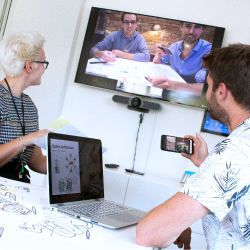
CDP’s essentially holistic design process requires close collaboration. Take brainstorming for example, a fundamental step in the design process, where team members with different skills and experiences come together to discuss problems and generate new solutions. During these sessions new ideas are sparked, shared and built upon. Without the major carbon impact of engineers and designers leaping on a plane, the challenge was to replicate the brainstorm experience virtually by exploiting different tools and technologies. We needed the teams to feel as though multiple locations had been merged together with everyone feeling relaxed and engaged so that they could fully contribute. It’s crucial that the team can see and hear one another as well as look at what’s being created whether it be sketches, models, prototypes, videos or other simulations.

Yes, there are well known high-end, off the shelf solutions for this from the big video conference providers, but we wanted to create a flexible and scalable solution by leveraging the desktop and mobile video conference tools that are becoming ubiquitous in international commerce.

Firstly, we needed to get the right technology in place and secondly, we needed to get the team feeling comfortable and confident using the technology. Here’s how we did it:

Minimum requirements

First of all we kitted out specific meeting rooms in each location with the audio and video equipment needed to reach a minimum level of fidelity. Essentially each room needs to have enough cameras and screens for all team members to see and be seen. This makes the team feel connected rather than just having one camera focused on the whiteboard. We link these cameras and screens to the Zoom platform that we use across CDP.

A key tool we use is the smartphone. This provides the flexibility for individual members to communicate very quickly. For instance, if there is a sketch or prototype they want to show, they can grab their smartphone, activate the camera and immediately share it.

Having good audio is essential. We’ve all had bad experiences with dropped calls and delays, which won’t do any favours for successful group dynamics. There are some great plug and play teleconference devices on the market and, together with high speed, low latency internet you’re well on your way to stutter-free conversations.

To integrate the rooms further, you need high-definition video so participants can clearly see each other’s facial expressions and body language, which is surprisingly important.

Tips from lessons learned

Firstly, we always set up the meeting rooms in advance because there is often a technology ‘moment’ that needs resolution, and you don’t want to lose that creative vibe fiddling with IT issues. So our engineers can walk into the room, open the meeting and we’re up and running.

Secondly, we make it as easy as possible for participants to dial-in and we ensure we have back up options. You can easily email a link to join a meeting and with one click and the participant is in.

Thirdly, don’t forget the conventional brainstorm best practices apply as normal, with a facilitator who takes charge of the session with a clear plan and issuing briefing documents well ahead of time.

Benefits

With a number of virtual brainstorming sessions now under our belt, we’ve found that the technology can actually enhance the brainstorming experience. For instance, instead of those in the same room huddling around an A4 drawing, by using smartphone cameras that drawing can immediately be shared with everyone on a screen regardless of their location.

Working across time zones can actually work to your advantage as team members can effectively work on a creative brainstorm for an extended day. The team in the first office can prepare for the session and then after the event, the team in the second office can collate the output and develop and visualise the best ideas after their colleagues have gone home.

Also with a virtual brainstorm it’s easier and quicker to organise and assemble the right people, whether that be one large group or smaller separate groups. It also scales beyond CDP, as clients and key partners are able to join virtual brainstorms effortlessly. A key benefit is that it enables privacy at the touch of a button. In other words, if during the session the client team would like a quick breakout to discuss strategy or sensitive information, they can simply mute their video, have a chat between themselves and then unmute to join the session again.

Another key benefit is that sessions can be easily recorded. This can be useful in helping to decipher exactly what concepts were shared during the session. It’s also potentially useful for IP and communication with lawyers when drafting patents.

Let the miles disappear

Having done a number of virtual brainstorming sessions between our Raleigh and Cambridge sites, and having ironed out the kinks by getting everyone comfortable and confident with the technologies, we’ve found that although we may be 3,868 miles apart those miles disappear as the two rooms merge in the heat of creativity.

Now, with an effective process and with the various technologies in place, we look forward to many more exciting brainstorms amongst our team and our customers, wherever they are in the world.

prototype inhaler trial|||||

We’re off to see the wizard

Writing an expert view for ONdrugDelivery MagazineTom Lawrie-Fussey, Healthcare Digital Strategist, and Lucy Sheldon, Human Centered Design Consultant, both of Cambridge Design Partnership, introduce “Wizard of Oz” testing, named after the classic novel and film, whereby experimenters can field test concepts at a very early stage by giving the illusion of a finished product, saving potential costly and time-consuming changes further along the development process.

It is a simple fact that product development cycles are always being squeezed. In all industries, the cost of an extended time to market means that pressure is applied at every step of the development process. In response, rapid-prototyping techniques have matured quickly and are able to significantly reduce these timescales. Mechanical components, such as the body of an inhaler or the lid of an injection pen, can now be quickly built, improved and refined.

In theory, digital opportunities do not suffer the same scale of risk and cost as is associated with physical manufacturing. However, in the world of drug delivery, many digital concepts are multi-user, multi-touch-point and must comply with strict regulatory and data protection constraints. This is a far cry from designing, coding and deploying a consumer app. With this complexity comes additional uncertainty and longer development times.

In the world of drug delivery, many digital concepts are multi-user, multi-touch-point and must comply with strict regulatory and data protection constraints.

This is a far cry from designing, coding and deploying a consumer app.

One approach to address this challenge is to use concept testing. Typically, stakeholders are surveyed to provide opinions on the utility and future value of a proposed innovation. As the innovation does not yet exist, their opinions are based on a description of what it would be like once it is made. However, this fails to investigate the user experience or, crucially, how it might influence behaviour. This is vital information in healthcare, compounded because digital services are complex and typically comprise of multiple touch-points and stakeholders.

To use an example from Cambridge Design Partnership’s own work, CDP has been working on a digital education programme aimed at increasing the level of correct inhaler usage in children. CDP wanted to find out whether videos, interactive games or even songs were the most successful way of encouraging best-practice compliance in young inhaler users. The implications go far beyond the patient’s own device. A comprehensive digital service to improve inhaler use must address a range of different drugs and devices, therefore comprising multiple front-end applications. System building blocks include a:

• Secure patient-data hosting solution
• Portal for the payer
• Dashboard for the healthcare professional
• Dashboard for the pharmaceutical company
• Back-end data analytics engine.

In this example, it is hugely advantageous that, in the same way a physical design is frozen before investment in detailed design and manufacturing begins, the digital design is also optimised and pre-validated prior to transitioning into development. If the proposition cannot be tested in a realistic way early on, then late stage changes are inevitable, adding additional, unnecessary cost and time. What is needed is an approach where each stakeholder can assess the part of the system that they will interact with, long before the design is locked down.

WIZARD OF OZ TESTING IN PRINCIPLE

One approach we use on early ideas is to create the illusion in the user’s mind that very early prototypes are in fact final products. This is the theory behind Wizard of Oz testing.

Have you ever been on a website, seen a fantastic new product and tried to purchase it, only to be added to a waiting list? Well, this is a form of Wizard of Oz testing in action.

The Wizard of Oz technique enables unimplemented technology to be evaluated by using a human to simulate the response of a system design. The technique is named after L Frank Baum’s novel and the classic film, in which the Wizard is ultimately exposed as a normal man sitting behind a curtain, pulling levers and successfully convincing everyone that he is a powerful magician. The experimenter, like the Wizard, creates a believable illusion of a new device or service. This is then deployed to discover how users interact with an idea and, in so doing, provokes genuine responses

The Wizard of Oz technique enables unimplemented technology to be evaluated by using a human to simulate the response of a system design. The technique is named after L Frank Baum’s novel and the classic film, in which the Wizard is ultimately exposed as a normal man sitting behind a curtain, pulling levers and successfully convincing everyone that he is a powerful magician. The experimenter, like the Wizard, creates a believable illusion of a new device or service. This is then deployed to discover how users interact with an idea and, in so doing, provokes genuine responses.

For example, a user may believe they are speaking to a computer using voice recognition, when, in truth, their words are being typed in manually by an experimenter. The goal here is to observe how a user interacts with a voice recognition system, rather than to measure the effectiveness of the technology that drives it.

This method relies on the generation of what are known as ‘‘use-like’’ prototypes, which do not necessarily need to look like or work like the real thing. The ‘‘use-like’’ prototypes must simply create enough of an illusion to elicit reactions from the people using them that are completely genuine. It is the fidelity of the experience and interaction that is important, not the fidelity of the prototype. For the experiment to work, you simply need to create enough of an illusion to elicit these responses, which then identify the successes and flaws that feed back into the design process.

WIZARD OF OZ TESTING IN PRACTICE

Have you ever been on a website, seen a fantastic new product and tried to purchase it, only to be added to a waiting list? Well, this is a form of Wizard of Oz testing in action. You are faced with the illusion that you can buy an, as yet, non-existent product. In showing an intention to buy, you are added to a list of potential customers, helping the innovators investigate the potential commercial success of their product.

Wizard-of-Oz-photo-29-Nov

For drug delivery device development, there are many advantages to the Wizard of Oz approach, especially when evaluating early digital concepts. Consider again the system aimed at improving inhaler usage in children. The success of any solution is dependent on how all the stakeholders involved benefit, and when combined, how their behaviour impacts patient outcomes. Utilising “use-like” prototypes and Wizard of Oz testing can shine a light on the aspects of the system that need to be further improved and developed. Figure 1 shows a ‘‘use-like’’ prototype which was created by CDP for a Wizard of Oz research programme to help develop and refine new systems to train patients in correct inhaler technique.

Figure 1: This is a ‘‘use-like’’ prototype developed by Cambridge Design Partnership to trial inhaler use. It is the fidelity of the experience, not the fidelity of the prototype, which is important. The “use-like” prototype consists of a device which collects inhalation profile data and a training app. The app and device were used in combination for inhaler training. The device could be used in isolation to assess the effectiveness of the app and a range of other inhalation training options including current approaches to training as a baseline.

In one example of a Wizard of Oz test protocol, children or adults who are not current inhaler users are trained in how to inhale (without reference to the purpose of the training). This research design assumes that the data collected on the learnability of the inhalation technique is relevant to a first-time inhaler user. Typically, the cohort is split into two groups; one is trained in line with normal practice (to provide a baseline) and the other group trained using the “use-like” prototype and app in Figure 1. However if data on the adherence over time to the new learned behaviour is required, the study becomes more complex and requires patients to be followed and re-tested at realistic intervals in line with known training decay.

Wizard of Oz testing generates quantitative data on the relative potential of the product concept against a baseline, with a general outline of the research design. In addition, observation and interviewing uncovers what users love about the idea, as well as highlighting aspects that they may not value, features they struggle with and areas where improvements need to be made.

Given that this process does not involve administering any drugs or therapies, the approach can be undertaken ethically as market research. Appropriate ethics reviews must still be undertaken nonetheless, but these studies can be implemented relatively quickly and economically.

In parallel with patients themselves, research can be undertaken with stakeholder general practitioners (GPs). They could be presented with various “use-like” representations of information dashboards, in which realistic data visualisation options and anticipated patient scenarios are generated. Faced with believable prototypes GPs can more easily evaluate their desire for new data and researchers can tease out what is most important to them.

Further up the chain again, this research method can address the needs of the pharmaceutical company selling the drug. In the same way as with GPs, but this time a simulated live dashboard showing the market usage and effectiveness of the training programme could be used to inspire innovations that optimise marketing and sales programmes.

Wizard of Oz testing of new digital concepts is a powerful tool to optimise and learn about the commercial potential of digital concepts at a very early stage. The method enables development teams to observe customers interacting with a digital product or service, allowing direct feedback on its potential value in the real world while it is still in the conceptual phase.

It is surely far better to start technical development only when digital concepts have proved themselves in Wizard of Oz-style evaluations. It’s a smart way of ensuring that your new digital device and service will fully deliver its potential.

“Wizard of Oz testing of new digital concepts is a powerful tool to optimise and learn about the commercial potential of digital concepts at a very early stage.”

ABOUT THE COMPANY

Cambridge Design Partnership is a technology and product design partner focused on helping clients grow their businesses. Some of the world’s largest companies trust CDP to develop their most important innovations. Located in both Cambridge (UK) and in Palo Alto (CA, US), CDP specialises in the consumer products, healthcare, energy and industrial equipment markets. Its multidisciplinary staff have the expert knowledge to identify opportunities and tackle the challenges its clients face.

ABOUT THE AUTHORS

Tom Lawrie-Fussey is a Head of Digital Health at Cambridge Design Partnership, and has more than 15 years’ product development experience and is a Chartered Engineer with a master’s degree. He has been trusted by a myriad of well-known brands during his career, spanning automotive, industrial, FMCG, consumer healthcare and drug delivery. For the past 5 years Tom has specialised in helping clients to navigate their digital roadmap, providing a horizontal cross-sector capability and expertise.

Advising on connectivity and digital services, Mr Lawrie-Fussey has led the development of a number of digital toolkits to help clients to de-risk their digital innovation. One of these, the instrumented user-insights service “diialog™” has grown to serve multiple markets, with various ongoing client projects helping to steer and inform product development investment.

Lucy Sheldon is a Human-Centered Design Consultant at Cambridge Design Partnership, and has 15 years’ experience developing human-centered medical products, including the application of human factors to drug delivery devices, diagnostic tests, and surgical and therapeutic devices. Ms Sheldon’s expertise includes unmet needs exploration through observation, research and structured interviewing; usability engineering including usability testing and the development of usability documentation in line with medical device human factors regulations and IEC14971; and interaction design across physical and screen-based interfaces. Recent projects include usability testing of home-use drug delivery devices, iterative exploration and design for an award-winning low-cost vital signs monitor, and interaction design for a touchscreen surgical interface.

Mars Petcare – smart-pill illustration

CDP create a remarkable ‘smart pill’ for Mars Petcare

A team from Cambridge Design Partnership has created a ground-breaking ‘smart pill’ to gather crucial nutritional information to help develop innovative new pet foods.

CDP scientists and engineers worked with the world-renowned Waltham Centre for Pet Nutrition on an electronic pill to collect food samples inside the canine gut during digestion.

“It was certainly an unusual request and a major challenge,” says Will Bradley, who led the project for CDP. “Mars Petcare wanted to find out more about how dog food is digested, with the aim of improving their pet food. So they asked us here at CDP for help.”

“They needed samples of partially-digested food that they could gather in complete safety for the dog.”

Part of Mars, Incorporated, Mars Petcare has a portfolio that spans pet nutrition and health through brands including ROYAL CANIN®, WHISKAS® and PEDIGREE®. For Mars, CDP created a smart pill about the size of a grape that a dog could easily swallow.

“We gave it a sensor so that it knows when it has left the acidity of the stomach and entered the first part of the intestine,” explains Will. When it is correctly located the pill opens and takes a food sample, using a miniature piston-type mechanism. “This needs to be absolutely foolproof. The pill then closes, to contain and protect the sample as the pill moves through the remainder of a dog’s digestion.”

CDP was approached by Mars Petcare to bring to life an idea for intestinal sample collection in dogs. CDP created the pills at its laboratory in Cambridge, which were trialled at the WALTHAM Centre for Pet Nutrition in Melton Mowbray, the global pet research centre for Mars. There were many studies and iterations needed to refine the design.

The samples that are collected will be used to analyse the way various nutrients are absorbed during digestion. “The scientific understanding of this whole process had basically stalled for decades,” explains Mike Cane at CDP, who has worked on the project for the past 18 months, “because no one could retrieve these samples without invasive surgery to the dog.”

Working with animals is not straightforward, Mike admits: “At all times, there were such high welfare standards. An independent observer was on hand whenever we worked with the dogs. If any dog was looking uncomfortable they would intervene to stop that day’s trial. They really do pride themselves on the way the animals are treated there.”

Once the pill passes through the dog and is excreted, it is retrieved and the data from it is collected. “The data from the trials has been analysed by the lead scientist from WALTHAM, David Wrigglesworth, who will soon be publishing his findings in peer-reviewed scientific journals,” explains Mike.

In addition to surviving the rigours of a dog’s digestion, the pill can also be tracked on its journey. “Once it was clear that the pill worked well, Mars Petcare asked us if we could also find a way of knowing accurately exactly where it was as it passes through the dog,” says Mike. “So we also devised a special interactive coat worn by the dog which picks up a radio signal from the pill.”

The smart pill is so unique that it has been patented by the team.

“Here at CDP, we’re very proud of our achievement,” says Will. “I feel sure that it will enable Mars to create innovative new pet foods for many years to come.”

For further information and media enquiries, please contact: media@cambridge-design.com or call 01223 264428