Dr Pari Datta|||Dr Pari Datta

6 steps to build winning biosimilar defence strategies through user and technology mapping

WEBINAR
With Pari Datta
14 MAY 2019

The market for biosimilars is growing rapidly at over 30% per annum, as increasingly more biological drugs are going off-patent and the rate of regulatory approvals increases. The major high-value mono-clonal antibodies are considered as the big opportunities by companies in the bio-similar space, including for example the TNF-alpha inhibitors. Although bio-similar development and regulatory hurdles have been more challenging than expected, developing a robust biosimilar defence strategy is still a vital and difficult process. Solutions within a strategy can range from relatively simple, such as powerful new counter-biosimilar messaging to more complex, value-added propositions which include novel delivery devices, diagnostics and even digital elements. Questions range from how to discover new underlying opportunities from which to build a defence strategy and how to deliver technology-enabled propositions which can make them really possible.

In this webinar, Dr Pari Datta (Senior Innovation & Research Consultant) demonstrates how simple user experience mapping methods can reveal truly-original opportunities throughout the journeys of the patient, HCP and even the product during the process of treatment. From these opportunities, technology mapping will be used to show how the latest technologies, from digital to formulation, can be identified or even conceived to create innovative value-added propositions. The key elements which need further development within each proposition will be considered – from satisfying multiple stakeholders, business model development to building the evidence required to generate confidence in its future commercial success.

The new medical device regulation & the applicability of article 117 to medicinal products

This article was first published on Drug Development and Delivery.

“Those who expect moments of change to be comfortable and free of conflict have not learned their history.” For many involved in the medical and pharmaceutical industries within the last few years, this quote – attributed to American historian Joan Wallach Scott – has never been more true. From the impending switch to the Clinical Trials Regulation to the implementation of the Falsified Medicines Directive, and the evolution of the Medical Devices Regulation (MDR) or the current uncertainty around ‘Brexit’ in Europe, change is everywhere. With so many new developments in progress, it is almost impossible to keep track of all the required updates to procedures – with a very real risk of missing something critical.

Article 117 of the new MDR1, has the potential to be one such pitfall. Buried deep within the final chapter of the document, just before the annexes, is the somewhat innocuously titled ‘Amendment to Directive 2001/83/EC’. For many medical device manufacturers, this article is likely to be mostly disregarded, as Directive 2001/83/EC2 – also known as the Medicinal Product Directive (MPD) – has historically not been an essential part of placing a device on the market. For companies whose focus is primarily on the MPD – like many pharmaceutical and biotech companies – this update may pass completely unnoticed.

This article is primarily focused with the impact of Article 117 in Europe on the combination of a drug and a device, where the primary mode of action is performed by the drug and the two products are combined in a single, integral product which is exclusively for use in the given combination and not reusable. Some examples of products that would be categorised in this combination include a single-use, disposable auto-injector or a disposable pre-filled metered dose inhaler.

Differences between US and Europe

The US and EU have very different systems for determining assessment routes for drug (or biologic) and device combinations.

The US refers to these products as combination products and selects a lead division with primary jurisdiction based on the primary mode of action. The other division is also consulted for the relevant aspect of the product.

In Europe the process is slightly different since the term ‘combination product’ is not officially recognised – albeit more frequently used, even in the absence of an official “status”. Whilst products are still assessed based on the primary mode of action, this determines one of two primary assessment formats; either medicinal product or medical device.

The Existing System

The MPD requires evidence of CE marking when it is applicable but does not detail requirements for non-CE marked devices.

Under Article 1 sub-part 3 of the Medical Device Directive (MDD)3, devices in which ‘the device and medicinal product form a single integral product which is intended exclusively for use in the given combination and which is not reusable’ were governed by the MPD with the additional applicability of the essential requirements of Annex I to the MDD with regard to safety and performance-related device features.

Devices which do not meet this clear definition were governed by the MDD, unless they were in vitro diagnostic devices or active implantable devices governed by Directive 98/79/EC4 and Directive 90/385/EEC5 respectively.

What’s changed?

Article 117 of the MDR legally amends Annex I, Section 3.2 point 12 of the MPD as follows:

‘(12) Where, in accordance with the second subparagraph of Article 1 (8) or the second subparagraph of Article 1 (9) of Regulation (EU) 2017/745 of the European Parliament and of the Council (*), a product is governed by this Directive, the marketing authorisation dossier shall include, where available, the results of the assessment of the conformity of the device part with the relevant general safety and performance requirements set out in Annex I to that Regulation contained in the manufacturer’s EU declaration of conformity or the relevant certificate issued by a Notified Body allowing the manufacturer to affix a CE marking to the medical device.

If the dossier does not include the results of the conformity assessment referred to in the first subparagraph and where for the conformity assessment of the device, if used separately, the involvement of a Notified Body is required in accordance with Regulation (EU) 2017/745, the authority shall require the applicant to provide an opinion on the conformity of the device part with the relevant general safety and performance requirements set out in Annex I to that Regulation issued by a Notified Body designated in accordance with that Regulation for the type of device in question.’

For many medicinal products this amendment will not introduce an onerous change as a device that is non-integral to the medicinal product will still need a CE mark with the appropriate conformity contained within the declaration of conformity.

The key element of this change applies to integrated, non-reusable products where the drug element has the primary mode of action. In essence, the device element of a medicinal product – when integral, non-reusable and intended exclusively for use in the given combination – needs to conform to the Annex I (MDR) general safety and performance requirements without the requirement to be regulated as a CE-medical device. As part of demonstrating this, a Notified Body opinion must be incorporated into the marketing authorisation application for the medicinal product.

What does it mean?

With an increasing shift away from small molecule drugs towards biologics and an increased desire for patient self-administration to reduce the burden on healthcare systems, the option to combine a drug formulation with an integrated delivery device seems increasingly likely. There are some key implications of the Article 117 requirement that will require careful thought and implementation, not least that, as of the date of writing, no decision has been made as to how a Notified Body would issue an opinion on the device element of a medicinal product.

The overall implication of the MDR is that the device element of the medicinal product would not be treated as a fully CE-marked device but the Annex I requirements would still need to be met – as indeed was the case with the MDD. It should be noted however, that Annex I of the MDR has been expanded significantly and as such, it is likely that application for a medicinal product device element would not be dissimilar to that for application of the CE-mark; with the declaration of conformity being the significant omission. This also allows for continuing to handle the product development under the MPD and pharmaceutical practices.

It is assumed that a Notified Body would not issue a CE-mark certificate and it is probable that a Notified Body would issue some form of report to the manufacturer, detailing an opinion of the conformity of the device. This report could be included either as part of the marketing authorisation application or as a separate communication to the competent authority.

The question then arises as to the format of any submission to a Notified Body and the information that would be assessed as part of that submission. For a CE mark applied to a medical device, this information would typically be presented as part of the summary technical documentation (STED) rather than in the appropriate section of the Marketing Authorisation Application (MAA) as for the device element of a medicinal product. It is possible that section 3.2.R of the MAA, containing the device elements could be submitted to the Notified Body however, it is likely that there will need to be some revision of this section to ensure it captures all of the required information. Alternatively, a new section could be created in the application to assess the Annex I requirements separately.

Clarification is also needed as to how a Notified Body would form an opinion on the device element of a medicinal product. Currently, medical devices are assessed on a risk-based principle, with the device classification determining assessment routes and additional requirements. Device elements of medicinal products are likely to automatically increase the risk classification due to the presence of the drug product. It should also be considered that even a device element that would be classed as a class I medical device – and thus subject to self-certification – would still need a Notified Body review and opinion.

Within the submission itself, it is worth considering that the system should not be simply split down the middle between the device element and drug. Whilst it is true that certain elements lend themselves to one route or the other – for example formulation versus material selection – many cannot be assessed in isolation. Certain attributes have relevance to both the drug and device elements. For example, the siliconization level in a pre-filled syringe may be impacted by the drug formulation but is also key when considering the mechanical forces required to operate an auto-injector, especially over a claimed shelf life. Therefore, it is important that assessment of any individual element also accounts for the interface and interaction of that element with other parts of the system. This is a critical element where the MAA and Notified Body evaluation may differ in their overall assessment of risk.

After Approval?

Post-market surveillance (PMS) is one of the most significant updates captured in the MDR. There is an increased requirement for manufacturers to take a more proactive approach to PMS and actively assess performance of medical devices once they are launched on the market, rather than purely relying on user feedback. Medicinal products are subject to their own PMS requirements but, it is likely that the device elements of medicinal products would have an increased requirement for PMS in line with the MDR.

Post-approval changes to a medicinal product with an integrated device element would likely need to be captured via the medicinal product variation procedures and would be assessed by the competent authority. It is not clear at which point a Notified Body assessment would be required, although it is likely that significant changes to the device element would require Notified Body involvement. The question arises as to when changes to one element of the product cease to impact on the other element(s) and thus when the requirement for Notified Body opinion would be triggered.

Existing marketed products pose an interesting question under Article 117. The MDR has been very clear that ‘grandfathering’ of existing products is no longer permitted and new certificates need to be issued for all medical devices in class 2 or higher. The case is not so clear cut for medicinal products and their integrated device elements, as such products fall under the medicinal products system. It is possible that implementation of the MDR would not apply to products previously assessed by a competent authority as part of a MAA. If this were not the case and Article 117 changes were applicable, significant remediation activities would be needed across industry. As with much of the regulatory situation at the moment, the position is currently unclear and may not become so until it is too late to change without significant resource and cost expenditure.

What next?

One of the obvious major impacts of the introduction of Article 117 is the need for pharmaceutical companies to involve a Notified Body. This has implications given the other changes in the medical device world in Europe. With the implementation of the MDR and the potential loss of UK notified bodies due to ‘Brexit’, notified bodies are currently limited on resource and may not be taking on new clients for the foreseeable future.

Selection of a suitable Notified Body also involves the capability of that Notified Body to assess a specific product type with an increased requirement for that Notified Body to demonstrate the relevant expertise in a product type. The additional complication is that currently, designation of notified bodies under the MDR has not been completed, so it is unclear as to which product codes notified bodies may assess against, which a Notified Body has chosen not to apply to assess, or which are relevant for medicinal products with integrated device elements.

Conclusion

In the regulatory arena, regulations and guidelines are always open to interpretation and many regulatory professionals have been known to utter the words ‘it depends’ when called upon to clarify. This seems unlikely to change with the implementation of the Medical Device Regulation, especially with regard to Article 117. What is clear however, is that with so much detail currently undefined and likely to remain so until the date of application in May 2020, impact assessments need to be performed and companies need to have open discussions with notified bodies, if not already started, to ensure that appropriate support is available when needed. The time, effort and skills required to implement the coming changes should not be underestimated and, as ever, the clock is ticking.

References:
1. Medical Device Regulation. Council Regulation (EU) 2017/745
2. Medicinal Product Directive. Directive 2001/83/EC
3. Medical Device Directive. Directive 93/42/EEC
4. In Vitro Diagnostic Directive. Directive 98/79/EC
5. Active Implantable Device Directive. Directive 90/385/EEC

CDP logo

Eliminating user error from inhaler-based clinical studies

With inhaler use notoriously prone to user error, any clinical study that involves self-administration via an inhaler is challenging from the outset. Help is at hand, however, with a simple-but-smart device developed by Cambridge Design Partnership

“So many things can go wrong when an inhaler is used to deliver a dry powder formulation, it is almost easier to say when the process might occasionally go right,” says David Harris, leader of respiratory drug delivery for Cambridge Design Partnership.

“With capsule dry powder inhalers (cDPIs) in particular, the whole process is fraught with error. Users often don’t pierce the capsule, so the drug doesn’t come out. Or they swallow the capsule like a pill and ignore the inhaler altogether. And, of course, the common mistake is that they simply don’t inhale strongly enough and only receive a partial dose. It’s a minefield.”

It is into that minefield that CDP has ventured, with the aim of improving the quality of clinical study data for the humble cDPI. David explains: “Many clinical studies with dry powder formulations are conducted using the standard Plastiape RS01 inhaler, which is susceptible to all of the issues mentioned earlier. So we set about creating an electronic module that can connect to the inhaler and provide valuable data on how successfully the drug is administered.”

The result is a research service that CDP has named quantii™, which will be showcased next week at the Drug Delivery to the Lungs 2018 conference in Edinburgh (December 12-14).

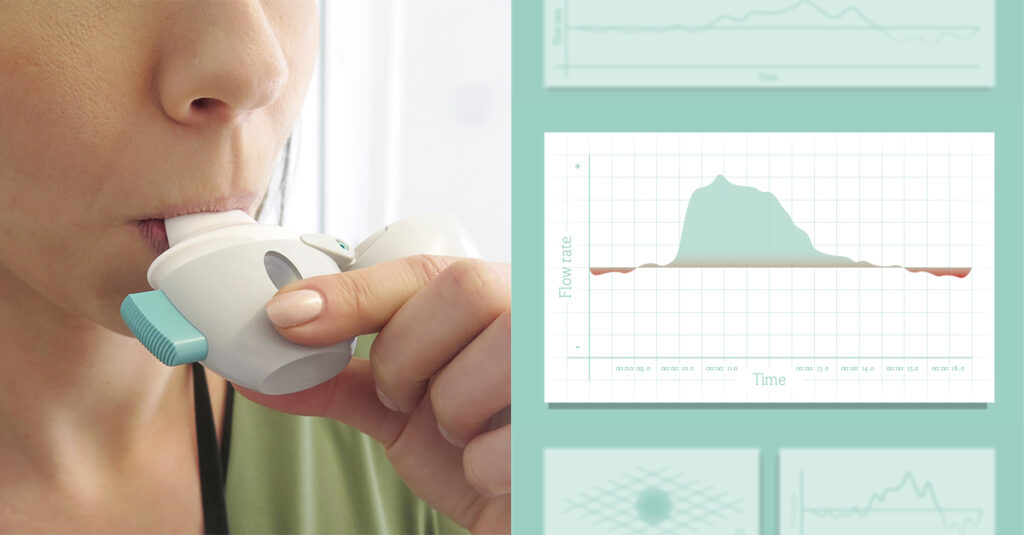
Elegantly simple, yet extremely effective, the quantii™ system attaches to a standard, unmodified Plastiape inhaler and records or relays a wealth of information every time the inhaler is used. This essential data is delivered via Bluetooth to an app, explains David Harris: “Information gathered in this way includes accurate measurement of the inspiratory flowrate profile, which can reveal whether the user was inhaling strongly enough, together with other useful parameters, such as ramp-up rate and total inhaled volume.

“The quantii™ module also detects the spin rate of the capsule and can determine if and when the capsule has emitted the drug, as an empty capsule spins at a different rate to a full or half-full one.”

Such data is gold dust to clinical studies, as David explains: “Phase III respiratory clinical studies often involve thousands of patients administering drugs via inhaler, without any supervision. It is little surprise that such tests throw up so many outliers that the data becomes questionable – and lacking in statistical power. For proven Plastiape device there has been, until now, no way of effectively quantifying whether this is due to errors in the inhaler use.”

The quantii™ system also supplies data on the duration and time of use, and the orientation during use. “It all adds up to an effective way of making a Plastiape inhaler much more reliable for clinical studies,” says Bastiaan de Leeuw, CDP’s head of business development for drug delivery.

It is fair to say that some industry outsiders might wonder why the Plastiape inhaler is used at all for clinical studies, given its error-prone reputation. This is because it is currently the only freely available delivery platform, says David Harris. “The Monohaler, which is essentially what the latest Plastiape device is, was first devised around 40 years ago. It is robust, affordable, uses standardised primary packaging – and has sold hundreds of millions of units worldwide. For clinical studies, the Plastiape RS01 is a mature and well-proven solution that has passed all the necessary regulatory tests and is ready to go.”

Bastiaan de Leeuw foresees that the combination of the Plastiape inhaler and the new quantii™ system could become a game-changer in clinical studies with powder formulations, as “the quantii system attaches to the Plastiape inhaler in a non-invasive way, so you need minimal validation before starting your clinical study. It’s a simple and swift way of dealing with the problem and obtaining reliable data.”

Indeed, as Bastiaan says, the addition of the quantii™ system takes the guesswork out of clinical studies, maximising the chance of success. “Billions of dollars are invested every year in clinical studies for new respiratory therapies and much of this cost is wasted due to poor and inconclusive data.

“Unfortunately, many potentially life-saving new products never make it into the hands of patients. They fail in the clinic due to user error and non-adherence – and there is usually no evidence available to remove these spurious outlying data.”

Even in monitored studies, without a quantii™ system only a qualitative assessment of correct inhaler technique has been possible. In Phase III studies, which are often unsupervised, the only chance to explain outlying data has been to rely on entries in the Case Report Forms.

“The quantii™ research service really is a solution whose time has come,” says David Harris. “We are very proud of it and look forward to seeing its launch and roll out over the coming months.”

The quantii system will be showcased on stand 214 at the Drug Delivery to the Lungs conference at the Edinburgh International Conference Centre 2018 on December 12-14

The fast track to drug delivery device development

The fast track to drug delivery device development

How fast is fast? I’ve always been told that when it comes to drug delivery devices, ‘fast’ development is usually measured in years rather than months – with additional years for industrialisation and transfer to manufacturing. In fact, there are drug delivery devices which have been in development for more than 20 years. This makes it all the more demoralising if an issue which requires a change is identified after approval, as this development process may have to start all over again.

What if I told you there was another way?

We have recently helped a large pharmaceutical company with such a conundrum. The subject was an established drug delivery device out in the field which had experienced failures under specific environmental conditions. Changing the device itself was not considered a feasible option due to the nature of the issue and the timescales involved, so another route had to be found. The innovative solution involved the rapid design, development and manufacture of a specialised storage container that was supplied to the market within a year of its conception.

How did we do it? We engaged the client in an agreed vision of what a solution looked like and what the key motivators were – which markets were involved and what the regulatory framework looked like. Early on, the solution was identified and a clear set of requirements helped to pave the way through the process. In our experience, setting out clear, tangible and testable requirements can reap huge dividends in time and cost saved during the testing and verification stages of a project. This particular project was multifaceted and often, in projects like this, communication between departments can add unnecessary delays to reviews and decision making – particularly when cross-functional groups are involved. By integrating key functions such as quality and manufacturing in the core project group, reviews and decision making were streamlined – saving months’ worth of time.

Consider, as an example, the part approval of an injection-moulded component. A typical process would involve sending parts from the moulder to the metrology house and to the customer for feedback, this then takes time to assess and agree – and can take weeks or months, depending on the number of iterations. With our moulding expert and quality engineer on site at the moulding company, and a local metrology house engaged, the project progressed to part approval in less than a fortnight.

Rapid delivery of projects like this is not easy – they require focused and diligent planning, and a knowledgeable team which is able to respond quickly to resolve issues that are inevitable in any product development. It makes me proud that I’m part of such a team at CDP, where we’re able to make the improbable happen.

The next step in innovative medicines manufacturing

This month’s Manufacturing Medicines Industry Partnership (MMIP) conference – Propelling growth: taking the next step in innovative medicines manufacturing – took place at an exciting time for the pharma industry. Advanced therapies (ATs) – such as cell therapies in which patients are treated with living cells – have been under development for the last 20 years as we apply our ever-increasing understanding of the genome. But the field has been catalysed by the recent regulatory approval of several very promising products such as Novartis’s Kymriah and GSK’s Strimvelis.

These flagship products put the pharma industry at an inflection point and present an opportunity to move medicine from palliative care to an entirely new paradigm where cures and personalised medicine are fast becoming reality. These new therapies are, however, very complex – and manufacturing needs are significantly different from existing therapies (e.g. small molecule and traditional biotherapeutics). This complexity presents both challenges and opportunities.

Themes and challenges

Roger Connor from GSK kicked off the conference with an introduction on how moving to a new medical paradigm will not be straightforward and what this future will mean for medicines development and manufacturing – and the implications for the wider supply chain and, of course, therapy delivery.

The complexity of these therapies means collaboration at all stages of the lifecycle will be vital. This is especially relevant at the research and development (R&D) stage. Manufacturing these complex therapies is a significant challenge – Andy Evans from AstraZeneca highlighted the need for very early discussion between R&D and manufacturing to build manufacturing strategies around lead therapy candidates.

Once manufacturing processes have been proposed, then robust quality control methods will also need to be established. Cell and gene therapies have a lower R&D attrition rate due to their high specificity. But the enhanced specificity puts more emphasis on manufacturing, as small process fluctuations can have a large effect on the final product and thus therapy specificity.

Currently ATs with regulatory clearance are for rare disease conditions with very small patient populations and low manufacturing volumes. Discussion at the conference highlighted that new therapies under development will move to larger patient numbers. James Miskin from Oxford BioMedica highlighted a gene therapy under development for Parkinson’s disease as an example. It was also said that a medium to long-term challenge will be the development of strategies, tools and technologies that enable manufacture of such ATs in larger volumes.

The delicate nature of the biological materials used in ATs also presents challenges to the wider supply chain – with therapy packaging and delivery now just as important as manufacturing. Challenges here relate to the implications of handling and shipping for product quality and ensuring the integrity of cryogenic conditions to prevent degradation of the delicate biological material affecting therapy quality.

Cost is also a major consideration – commercially available ATs are currently extremely expensive, with each treatment costing hundreds of thousands of pounds. Implementing solutions to the above challenges will have to occur within a cost-sensitive framework to ensure any new therapies are as affordable as possible.

In addition, the complexity of the genome is likely to result in many different therapies, each with their own different manufacturing and lifecycle challenges. It will not be a case of developing one solution for each technical challenge – platform technologies and configurable solutions will be required to provide solutions for multiple therapies.

Innovations

Despite recent success, ATs are still relatively immature. Whilst it is clear these therapies will require new tools and technologies to reduce cost and mitigate manufacturing complexity, it is not clear to the pharma industry exactly what solutions are required – and requirements will continue to evolve as the field matures. This presents opportunities for potential solutions to be adopted early and influence how the AT field matures.

Different speakers at the conference presented on future enabling technologies. These included Mike Houghton from Siemens presenting on digital technologies and Lionel Clarke from the Synthetic Biology Leadership Council discussing synthetic biology. Digital solutions are particularly attractive as development and manufacture of ATs is an inherently data-rich activity. Collection, aggregation and analysis of data at all stages of the AT lifecycle – from R&D and manufacturing to supply chain and therapy administration – offers significant value.

Supply chain challenges were also discussed – including opportunities to implement strategies from other logistic-intensive industries. Just-in-time (JIT) supply chain approaches – as used by the automotive industry – were cited by Anette Doherty from GSK. JIT approaches are particularly relevant given the limited shelf life of biology-derived therapies and could also potentially enable exciting possibilities in decentralised production closer to the point of care.

It is clear there are significant challenges to overcome in the industrialisation of ATs and there is a risk of forcing new therapies to fit into existing solutions and infrastructure. There is, however, an opportunity to develop new tools, technologies and solutions – and implement new manufacturing strategies fit for purpose, as Dave Tudor from GSK discussed.

The inherent complexity of ATs will require pharma companies to be bold and embrace innovation – looking to adjacent industries in addition to developing new first-of-a-kind technologies. These innovations will require a holistic perspective encompassing the entire AT lifecycle, and apply to manufacturing strategies and the wider supply chain, not just R&D.

Despite the challenges, ATs have huge potential – the market for cancer immunotherapies alone is predicted to be worth more than $100bn by 2021. The players – and indeed countries – that are first to understand the challenges across R&D, manufacturing and supply will win the opportunities and become the market leaders of tomorrow.

LinkedIn

Breathing new life into clinical outcomes

The rise of connected devices and the variety of information they can generate is set to drive an increase in patient adherence to therapies. Our trials have shown that remote and hidden sensing of actual user behaviour can uncover unexpected and significant opportunities to improve the patient experience.

So how can connected technology help in the development stages of a new product, especially in a clinical environment? A recent study – Non-adherence: a direct influence on clinical trial duration and cost – by Moe Alsumidaie highlights the significant costs of non-adherence during pharmaceutical development. The study reported a 40% increase in patient enrolment to allow for non-adherence – adding an estimated $12m to the cost of a Phase 3 study.

We are also starting to see many medical device approvals in the connected space. MobileHealth reported 51 approvals in 2017 alone – the focus being on app-based patient management of disease, especially in the cardiac and diabetes sectors. There were only two respiratory-based systems reported – namely the connected spirometer GoSpiro and a new inhaler monitoring device for AstraZeneca’s Symbicort aerosol inhaler, dubbed the SmartTouch.

These solutions are enabling remarkable new capabilities for patients – and also for payers as we move towards outcomes-based healthcare. But are there steps that can be taken earlier in medical device development that can disrupt the whole process for the benefit of everyone?

What if we took a little bit of time to insert technology into products in either the clinical stage of drug development or early device design phases to understand how patients interact with the device and dosing regime? Two of the main methods to understand what has happened in a clinical investigation is to get patients to fill in a diary during their study and, on return, count the number of doses taken from the inhaler or capsule pack. Not quite 21st century.

Maybe, in the near future, clinical plans will include more advanced technology to enable a more accurate understanding of the efficacy of a new drug in development – was that poor resultant FEV1 clinical endpoint really due to the drug or was it because the patient simply forgot to prime the device and inhaled nothing but fresh air? Being able to unpick the actual usage data, so that these distinctions can be accurately made, could potentially help all stakeholders to better understand what the patient actually did and hence clarify where the subsequent opportunity to improve patient outcome actually lies – be it drug, device or training/education. In essence, it’s about using technology to guide design and development so that the appropriate solution is selected.

Here at CDP we wanted to go further and challenge ourselves to capture some very specific usage data for inhalation, whilst avoiding the Hawthorne effect and without changing the external form factor, thereby minimising any influence on user behaviour. It is common knowledge that all inhalers have associated use errors, so we took a commercially available one that has documented use errors and inserted miniature sensors that would enable both real-time indication and post-usage remote assessment of those use errors – namely priming action, orientation of use and inhalation/exhalation profile. We enabled the data to be time stamped and communicated to an appropriate output, in this case on-screen graphical readouts.

Behind this is the need to understand the volume of specific use data that gets logged and learn how to translate and classify the events represented as peaks and troughs on a graph. At CDP we have a wealth of experience of doing this across several sectors including sports and packaging systems.

If you’re looking for a breath of fresh air in your next respiratory drug delivery development, get in touch via hello@cambridge-design.co.uk or visit us at the RDD 2018 event in Arizona, 22-26 April on exhibit table 6.

How drug delivery is getting smarter

As Europe’s dedicated pharmaceutical packaging and drug delivery event, Pharmapack is the industry’s go-to place to kick off the year. At least that’s what the event website says and, after my visit, I’m inclined to agree.  With 411 companies exhibiting their services in everything from primary, secondary and tertiary packaging to drug delivery devices or anti-counterfeiting systems, there was certainly plenty to see.

Thinking about the trends and where the industry may be going, a few things became apparent as I walked the floor:

  • As my colleague Jez Clements also noted at the recent consumer tech show CES in Las Vegas, the ‘Internet of Things’ (IoT) is most definitely here. The ability to track and log the amount of medication being taken by a patient, as well as the time of day (and sometimes GPS location…) – and uploading this data to an app or the cloud in real time – was offered in everything from eye droppers to blister packs. The claimed advantages of this additional functionality were most often the ability to either increase the efficacy of clinical trials or provide extra features to improve the user experience.
  • Many companies have clearly been putting the user front and centre in their design process. The innovations that stood out were those where human factors was obviously considered throughout the design process, resulting in user-friendly products which were able to hide complex functionality behind pleasingly simple features.
  • It was interesting to see how developments in the industry are enabling more and more drugs to go from requiring administration by a healthcare professional in a controlled environment to being able to be administered by the patient in the comfort of their own home. For example, a wearable injector – able to accurately administer large volumes of viscous drug, automatically, over extended time periods – is undoubtedly an extremely convenient and deskilled platform that has the potential for a wide array of uses.

I found the claim that smart packaging and connected devices can be used to dramatically reduce the pain of a clinical trial particularly interesting. Average costs of getting a drug through all phases of clinical trials are upwards of $1bn – so anything that can be done to reduce costs, increase results accuracy, remove unnecessary time sinks and/or gain crucial user insights in clinical trials has huge potential to benefit patients in the long term. Yet how do smart packages and connected devices claim to be able to do any of these things?

Mostly it is down to enabling cheap and accurate tracking of patient compliance, with some solutions offering the added bonus of encouraging better patient adherence behaviour, too. Compliance is a notoriously difficult thing to monitor and poor compliance can add a huge additional cost to trials, with larger populations being required than ideally necessary to achieve accurate results. Traditional compliance monitoring methods are either very costly, using pharmacological markers which also add extra complexity and time to a study, or unreliable – checking prescription records does not indicate drugs have been taken and patients often overestimate their compliance when interviewed.

Smart packaging enables the number of pills removed from the package, time of day, and sometimes even the GPS location of the patient, to be stored in a database and wirelessly transmitted to a smartphone in real time. Connected devices can go even further. As these devices are integral to administering the drug, they can state with confidence that a specific dose was delivered and automatically transfer data on where the drug was administered, how much and how ‘correctly’ too. If you factor in that the included smartphone apps can teach patients correct administration – using feedback from the sensors in the connected devices to offer personalised tips – then you can see how the time and effort in managing clinical trial patients drops off whilst adherence improves.

One of Schreiner’s smart packaging solutions at Pharmapack was a blister pack which has a printed electronic circuit integrated into the package. Removing a pill breaks an electrical connection and triggers the pill number and time to be stored in a database before being transmitted to a smartphone via Bluetooth or NFC. Similarly, Baswen’s IoT bottle cap uses an infrared sensor to monitor effectively the same thing but from a pill bottle. It has, however, added ‘adherence-improving’ functionality to its device by including a timer alert, linked to the user’s smartphone which reminds the user when their next prescribed dose should be taken. Simple, yet undoubtedly effective.

Ypsomed had a great example of a connected device. An add-on shell that attaches to any of Ypsomed’s auto-injectors, the SmartPilot platform has a multitude of sensors in the device which can detect that skin is present throughout the injection and if the injection procedure was undertaken correctly, partially correctly or very much incorrectly. Very useful information which is difficult to check – patients generally will assume they have injected correctly!

Meanwhile, Nemera’s offering of e-Novelia – a connected eye-dropper device – had some great, simple features that solve some of the main pain points when trying to drop liquid into your own eye. An ergonomically designed eye-piece ensures the device is held consistently in the right place on the face and a tilt sensor indicates to the user, via LED, when the device is vertical and ready to dose. It also had a plethora of extra features such as location tracking, drop detection and a connected app (of course!) but it was the simple, yet effective, human factors features that grabbed my attention.

But even with all this technology on show, it was clear to me that the crucial ingredient required to come up with the best solutions is putting the patient at the centre of the drug delivery development process.

Conor Devine LinkedIn Profile

A crucial ingredient for successful drug delivery device development

Coming back from the Christmas and New Year break, I realised how blessed I am. I’m in good health, I’ve been able to spend enjoyable time with my family and I’ve now returned to my exciting job surrounded by a team of enthusiastic and very smart people.

For many people, the Christmas period means longstanding traditions, bringing different generations of people together and including extensive travel to reconnect with friends and family –disrupting daily routines. That’s fine for those of us who are fit and healthy. But it can be difficult for some people to cope with – those affected by a long-term illness, for example.

Travel and the breaking of routines can cause problems for people who suffer from the so-called diseases of ageing – such as cancer, diabetes and heart disease – or younger people burdened with chronic conditions like rheumatoid arthritis and multiple sclerosis. It can affect the management of their disease and require changes to their therapy regimen. They may need to adjust their drug intake to different time zones, for example, or make special arrangements for the transport and storage of their drugs at a certain temperature, as well as carrying around delivery systems such as injection devices and inhalers.

All this is on top of the normal day-to-day management of a long-term illness – which can often be complicated enough for the patient. Even the simplest routine – such as swallowing a tablet at the right time – can prove difficult for some patients. Memory problems, for example, might make it difficult for an elderly patient to reliably take their medication at the right time – and leave them at risk of accidentally overdosing or not getting enough of the drugs.

That’s why user insights are crucial to successful drug delivery device development. We use our unique diialog™ service – a combination of miniature sensing technology and sophisticated algorithms – to unlock the secrets of a truly patient-centric device. Trial users of a new product often tell you what they think you want to hear. With the help of diialog, we can discover what really happens – whether the device is used correctly and the drug is stored at the correct temperature, for example, or whether an elderly patient struggles to remove the cap. These valuable insights can then feed back into a new generation of drug delivery technology to help patients cope with their therapy regimen – both at home and when out and about.

Which brings me neatly back to the subject of travel – I’ll be travelling extensively with my drug delivery colleagues in the coming weeks to showcase the diialog service and highlight the crucial role of user insights. We’ll be at the Drug Delivery Partnerships event in Florida next week, where my colleague Uri Baruch will be speaking about the future of drug delivery and the crucial role of user insights. And at Pharmapack in Paris in February, we will be presenting our vision of smart devices and their integration with a new generation of packaging.

At the Global Drug Delivery & Formulation Summit in Berlin in March, my colleague Tom Lawrie-Fussey will be talking about how we use diialog to enable informed design development decisions. Meanwhile, I will be moderating an industry panel at the summit, discussing how user insights can help with the selection and development of appropriate drug delivery systems.

So a busy time for us in the drug delivery team. But with one clear focus – putting the patient at the heart of every drug delivery device development.

injection device event (PDA)

The top five themes at a recent injection device event

On returning from Vienna and PDA’s excellent Universe of Pre-filled Syringes and Injection Devices event, I wanted to share my thoughts on some of the themes I saw emerging from the conference:

1. Hearing the voice of the patient direct – during the pre-conference workshop, Markus Bauss from SHL presented two talks by actual patients with long-term conditions. Dominic Voglmaier was able to attend in person to talk about his challenges with type 1 diabetes and his desire to not let it affect his marathon and endurance training. It was both powerful and reaffirming to hear the real user stories directly and without filter – but left no room for doubt that all the available solutions can get better.

2. Maturing approach to connectivity – my colleagues and I have received many approaches from people who are looking to add connectivity into their devices but, like all features in a product, it has to deliver tangible benefits to justify costs. The PDA event marked a welcome change in emphasis within the drug delivery sector, with many of our client conversations focused on the patient, and how such technology could enhance the user experience. Indeed, this migration from tech-led approach to one where the patient is central is something we see from our work in other markets, where the value of the experience is increasingly migrating from the product to the service it enables. Our work in medical therapy has led to us advising dialysis equipment manufacturers on future-proofed system architectures that will enable interconnectivity of their machines, potentially leading to seamless decision support. In turn, this also enables them to better safeguard their client relationships and protect their brand equity. Clearly connectivity is key to all this but such developments must be pursued whilst maintaining a clear vision of all stakeholder benefits.

3. Normalisation of healthcare solutions – more and more devices available on the market include insights and features more commonly seen in the consumer world. The devices no longer predominantly look like something to keep hidden – they have a feel and quality that patients may even wish to show off like a new phone. We demonstrated our new Klarus auto-injector hub in Vienna, which got significant attention on our stand, where the simplicity of use (think the Nespresso of auto-injectors) highlighted just how far a patient-centric approach could be taken. This move towards offering a personalised patient experience is very much consistent with consumer products, where devices such as powered toothbrushes now offer feedback and training (a 3D mouth map) via an interactive smartphone app.

4. Rapid innovation cycles (RICs) – the pharma world has been accused for a long time of being slow to innovate and risk averse. Justin Wright for Lilly gave an excellent talk on the power of RIC cycles that push engineers and technologists to develop concepts through to demonstrators in a matter of weeks. This approach highlights the immense learning that is achieved by rapidly creating a device in a physical form to find the weaknesses that maybe couldn’t be expected or quantified theoretically.

5. A more collaborative approach by companies – I was very proud to co-present our diialog work with Markus Bauss of SHL, and also very interested in the presentation by Brian Lynch of West Pharma on its work with Matchstick, Noble and HealthPrize, comparing the benefits of various connected solutions. I firmly believe that it is rarely the case that one company can truly produce and deliver to market a device that really has the potential to meet all user and stakeholder needs.

Of course, it was also great to meet old colleagues, collaborators and friends at the infamous PDA party!

New building (18)

New phase of growth in drug delivery

Technology and product design firm Cambridge Design Partnership (CDP) has announced the appointment of drug delivery industry veteran Bastiaan de Leeuw as it embarks on a new phase of growth in the sector. As head of drug delivery business development, he will be driving CDP’s expansion into new markets around the world.

Bastiaan will be working alongside CDP partner and head of drug delivery Uri Baruch, who has overseen huge growth in the sector over the past five years. Uri’s drug delivery team has delivered a variety of projects – ranging from an award-winning needle safety device and an emergency auto-injector to pen injector packaging designs for drug delivery devices and inhalation products – including successful regulatory submissions in both the US and Europe.

“I am delighted to welcome Bastiaan to our growing world-class team,” said Uri. “He has a wealth of knowledge and experience of the industry that will be invaluable as we continue our record-breaking growth.”

In his long and diverse career, Bastiaan has held a string of senior posts in organisations such as Cambridge device design and development company Oval Medical Technologies and medical device development and manufacturing firm Bespak. He has particular expertise in combination products – but has also spent five years working in diagnostics as CEO of molecular diagnostic research and service company NovioGendix, now part of multinational healthcare company MDxHealth. He has a degree in biopharmaceutical sciences from Leiden University in the Netherlands.

“I am excited to be joining the CDP team at such an interesting time, as the drug delivery group continues its phenomenal growth,” said Bastiaan. “I am looking forward to bringing together the varied strands of my healthcare career to help clients around the world translate opportunities and challenges into real-life drug delivery devices for the benefit of patients.”