Unique diialog service to unlock patient-friendly drug delivery devices

Unique dialog service to unlock patient-friendly drug delivery devices

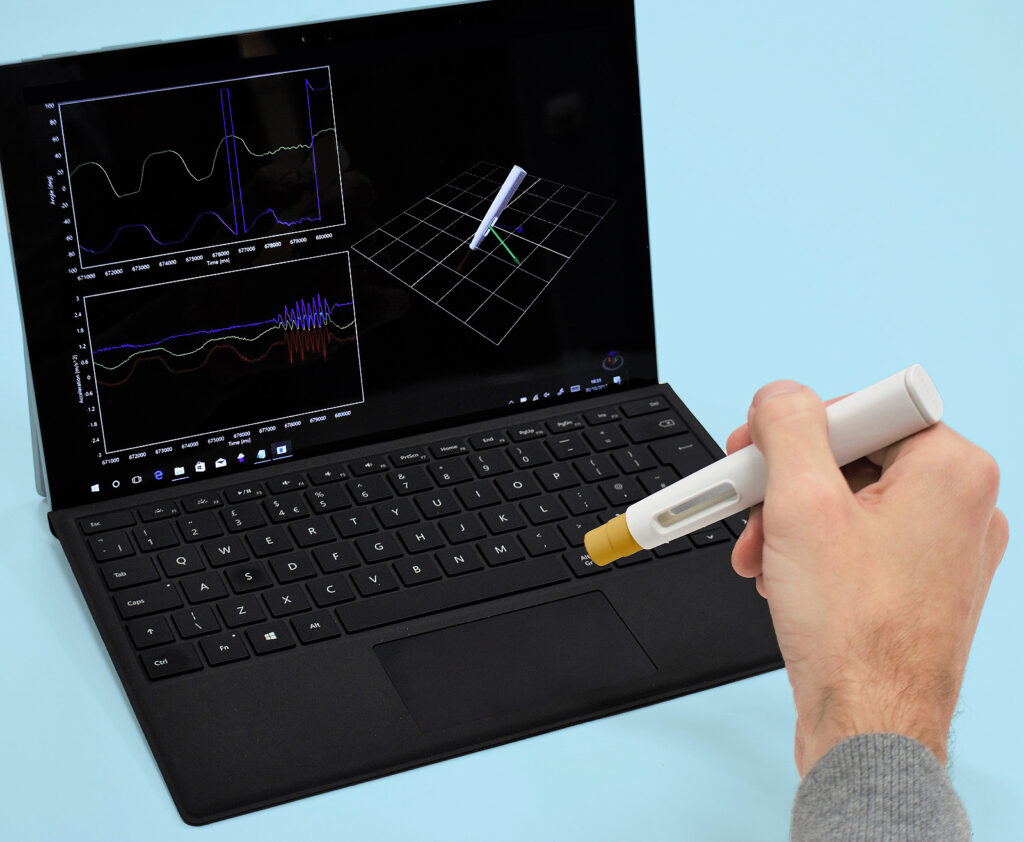
6 November 2017 – A new approach to drug delivery device development is set to transform the experience of patients who face the challenge of regularly injecting themselves as part of their treatment for chronic diseases such as rheumatoid arthritis (RA). Technology and product design firm Cambridge Design Partnership (CDP) has applied its unique user insight service diialog™ to an auto-injector to unlock the secrets of creating a truly patient-friendly drug delivery device.

The diialog service throws a spotlight on two measures that suggest how easy or difficult a patient finds using their auto-injector. The first of these is ‘dwell time’ – how long a patient hesitates before actually injecting themselves once they’ve prepared the device. The second measure is ‘cap removal force’, which in the worst-case scenario can lead to a patient accidentally stabbing themselves with the needle during their preparations for injection.

“Our aim is to put the patient at the centre of drug delivery device development,” said Tom Lawrie-Fussey, healthcare digital strategist at CDP. “But to do that you need detailed, reliable information about how a patient uses their auto-injector in the privacy of their own home. A patient might tell their doctor they never miss a dose of their medication – but in reality they might skip some of their injections because they are too awkward to administer.

“Drug delivery device developers are required to meet regulatory human factors requirements. But accurate information about usability and the whole patient experience is also crucial if a great idea is to go beyond those requirements and translate into a successful product that is patient friendly and delivers improved health outcomes. Yet trial users of a new device often tell you what they think you want to hear. With the help of diialog, you can discover what really happens – whether the device is used correctly and the drug is stored at the correct temperature, for example, or whether an elderly patient struggles to remove the cap.”

The miniature sensing technology used by diialog is small enough to fit inside an existing clinical trial injector and can monitor a range of key factors such as orientation, preparation sequence and injection technique. Another crucial element is the sophisticated algorithms that analyse the data and translate it into an accurate picture of how a device is being used in the real world. The technology is even programmed to ignore ‘false positives’, such as movements due to patients carrying their device around in their bag.

“With diialog we can translate a stream of data into valuable information for our clients to enable them to make more informed investment decisions,” said Tom. “It complements their existing research techniques and can help minimise the risks, especially for pharma companies facing the challenge of migrating to device development. As well as auto-injectors, diialog could be used in the development of any other drug delivery devices as well as over-the-counter diagnostic products such as pregnancy tests – and it has already been successfully deployed in the cosmetics and sports industries.

“Another benefit of diialog is that it can provide a practical stepping stone for companies that are new to connected device development. Our clients are able to quickly assess the return on investment for their own specific product requirements – and hence de-risk their connected device development pathway. A diialog user trial enables them to select the sensors, on-board processing and data connectivity features that generate the most value – and avoid investing in technology options that ultimately won’t give them sufficient patient adoption.”

The CDP team will be demonstrating its diialog technology – and showcasing its novel Klarus drug delivery system – at PDA’s Universe of Pre-filled Syringes and Injection Devices event, 7-8 November, at the Austria Center Vienna, stand X92. CDP partner Jez Clements will also be presenting the diialog story and its latest results alongside Markus Bauss, managing director of SHL Connect, during the pre-conference workshop on Connected Health & Drug Delivery on 6 November. They will be exploring how the technology can enable even deeper understanding of human factors in design.

Notes for editors
Cambridge Design Partnership is a technology and product design partner focused on helping clients grow their businesses. Some of the world’s largest companies trust CDP to develop their most important innovations. Located in both Cambridge (UK) and in Palo Alto, California (US), CDP specialises in the consumer products, healthcare, energy and industrial equipment markets. Its multidisciplinary staff have the expert knowledge to identify opportunities and tackle the challenges its clients face. For more information, visit: www.cambridge-design.co.uk

For further information, contact the marketing team:
+44 (0)1223 264428
marketing@cambridge-design.co.uk

MDD render 2

DELIVERING PEACE OF MIND A novel approach to drug delivery from CDP is set to transform the patient experience

18 October 2017 – Help is on the horizon for patients juggling complicated treatment regimens for chronic diseases such as rheumatoid arthritis (RA). A novel approach to drug delivery from technology and product design firm Cambridge Design Partnership (CDP) is paving the way for a new generation of treatment that is easier for patients and cost effective for healthcare providers.

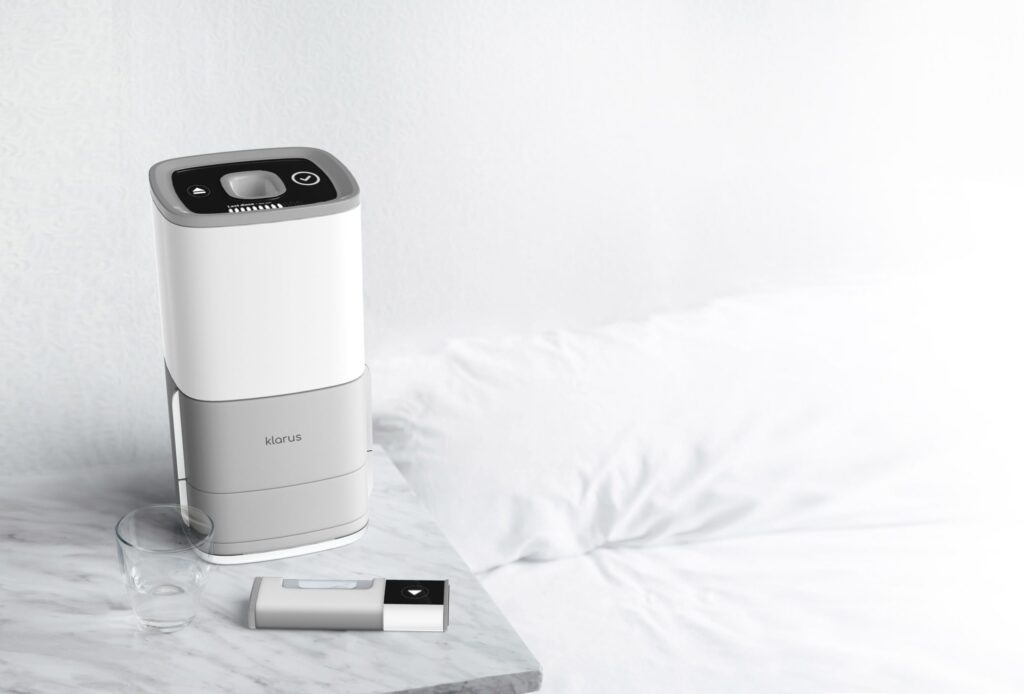
Klarus is set to transform the world of auto-injectors – doing away with the need for RA patients to worry about storing their drugs in the fridge, warming them up to the correct temperature for injection, preparing their auto-injector for use and disposing of the device safely. Klarus does everything for them – they simply have to pick up the reusable auto-injector from its base station when prompted to do so, inject themselves and then return the device to its cradle.

“It’s the Nespresso of auto-injectors,” said Uri Baruch, head of drug delivery at CDP. “Klarus will store drugs at the correct temperature and warm them up when required – minimising the pain of injecting cold medication. It will then prepare the auto-injector with the correct needle and medication cartridge, and prompt the patient to take their drug.

“After injection, Klarus will collect the needle and cartridge ready for safe disposal – alerting the patient when supplies are running low, and reordering if required. The base station technology could be adapted to cope with multiple users and different medications – either in the home or at a small clinic, for example. It uses fingerprint recognition technology to identify the correct user each time and a childproof lock to prevent accidental use.”

As well as RA, Klarus could be used to treat diseases such as multiple sclerosis or to administer vaccines. It could also enable some cancer patients to be treated at home using drugs that are currently only allowed to be given in hospital. And it opens the door to the emerging world of companion diagnostics and truly personalised medication, where treatment is tailored to each individual patient using genetic information.

“All too often, patients with a chronic disease face the additional burden of struggling with a complex treatment regimen at home,” said Uri. “Learning how to use a new drug delivery device and remembering multiple treatment steps can be challenging – particularly for the elderly or those with dexterity issues. That’s one of the reasons why adherence rates are often low – many patients just give up or fail to take their medication correctly.

“Our Klarus system alleviates that burden for the patient and helps ensure they get the full benefit from their treatment. It automates many of the use steps commonly missed or not carried out by patients – such as checking the use-by date or remembering to inject when following an irregular therapy schedule. We’ve used state-of-the-art technology and applied our user experience and human factors expertise – together with our knowledge of medical device regulation and our skills in electronics, mechanical engineering, software and connectivity – to create a radically new approach to drug delivery.”

The Klarus system could be offered to patients as a subscription-based service. It is expected to cost healthcare providers less than $1,000 per system, and the cartridges would be around $2 each. So Klarus would pay for itself in the space of just one year if, for example, a patient was having weekly injections for RA at a typical cost of $10 per single-use auto-injector. As well as helping to improve patient outcomes, it would also be more environmentally friendly – saving on packaging and involving the disposal of only a small cartridge each time, rather than an entire auto-injector.

Uri will be talking about the Klarus system in track B of the drug delivery technology presentations on 19 October at the Partnerships in Drug Delivery event in Boston, US. The CDP team will also be showcasing Klarus at PDA’s Universe of Pre-filled Syringes and Injection Devices event, 7-8 November, at the Austria Center Vienna, stand X92.

Notes for editors

Cambridge Design Partnership is a technology and product design partner focused on helping clients grow their businesses. Some of the world’s largest companies trust CDP to develop their most important innovations. Located in both Cambridge (UK) and in Palo Alto, California (US), CDP specialises in the consumer products, healthcare, energy and industrial equipment markets. Its multidisciplinary staff have the expert knowledge to identify opportunities and tackle the challenges its clients face. For more information, visit: www.cambridge-design.co.uk

For further information, contact the marketing team:
+44 (0)1223 264428
marketing@cambridge-design.co.uk

It’s time to better understand the patient please

Recently, a major drug distributor announced that it would offer refunds to any patient that suffered a heart attack whilst being prescribed their latest cholesterol-lowering drug; this is essentially the refund based business model that has previously been conceptualised and debated in the healthcare industry.

There are many considerations to operating this way within the healthcare industry; from the patients perspective there is clearly a benefit if the drug works as claimed and the patient outcome improves, and from the payers perspective the prescription becomes more financially viable which could lead to more patients receiving the benefits with reduced risk. However, is it the patients that get monetary compensation if their health doesn’t improve sufficiently from this treatment?  Unlikely. In the UK with paid for prescriptions and those with medical insurance in the US, the patient is not paying out of their pocket, so the refund is directed at the drug purchasers such as the NHS.

Furthermore, it could be argued that it is counter intuitive to expect any party to gain anything if the patient continues to suffer complications. Indeed, if there was a benefit financially from such events, it might even drive negative behaviours. Worryingly then, this refund model isn’t perhaps focused entirely on the patient.

One of the most challenging problems facing the healthcare industry that urgently needs addressing is adherence. As many as 50% of patients taking cholesterol-lowering medication stop within the first year and this continues to fall with time 1.  With the refund approach, what isn’t mentioned is how the patient will be incentivised to take their medication which is surely the most crucial part of the equation. Drug adherence will be won by finding innovative ways to convince the patient to take, and continue to take, their medication.

As reimbursement models dictate that more is known about actual patient usage, the need to get the patient experience right becomes ever more urgent. Without the patient being fully committed, any new financial models, particularly the attention-grabbing ones, are still unlikely to get the best patient outcome.

The insurance companies in the US, coupled with imminent regulatory drivers, are helping to incentivise towards an outcome-driven reimbursement model approach. They want to see evidence of successful outcomes, and the pharma companies want to further differentiate their latest drug offerings.  The impact on drug distributors for the likely few patients who will suffer a heart attack during treatment seems insignificant when compared to the overall prescription costs.

If you’d like to better understand how to engage and interact with the patient, we have a team of user-experience experts who specialise in uncovering exactly those opportunities.  Our approach helps to inform our clients of these crucial development decisions and ultimately leads to happier patients, and better outcomes for us all. Contact us at hello@cambridge-design.co.uk.

1 – NCBI

|

RDD 2017 – Connectivity and medication adherence

Last month I had the opportunity to spend the week in the South of France. But instead of catching up on some much needed Vitamin D, I joined other industry experts in the world of Respiratory Drug Delivery (RDD) at the 2017 conference in Nice.

One of the main themes running throughout this year’s event, and generally within the drug/device combination products industry, was connectivity. Connectivity means many things to many people, however, in the world of RDD right now the core issue is ‘adherence’. But how do we define ‘adherence’? There were several perspectives presented including the regulators, payers, pharma companies, healthcare professionals and the patients themselves.

Dr Federico Lavorini of the Careggi University Hospital, Florence, references a paper published by the WHO, which showed that adherence in long term therapies was an issue in 2004 and estimating that the ‘cost’ of non-adherence may run into billions of dollars of wasted medication and hospital admissions. But if I look at the design of devices available on the market I don’t see much change over the last decade. Whilst two generic versions of GSK’s Advair Diskus have recently received Complete Response Letters from the FDA, Dr Lavorini’s presentation highlighted that the Diskus DPI device has several significant observed use errors, including dose dumping. Although pMDIs have been around for over 50 years and are being repurposed in the administration of biologics, pMDIs also have well-documented use errors. Studies have shown that the observed natural operation of a pMDI is to inhale sharply due to the aerosol generated being ballistic – even though the instructions for use state to do so slowly. This was brilliantly depicted by Dr Lavorini in the form of ‘Le Chiffre’ from the ‘James Bond-Casino Royale’ film having really poor inhaler technique. How unusual for Hollywood to get it wrong.

So can connectivity help us? There were a number of new designs and products on show that try in one form or another. From apps that can remind us when to take our medication, to integrated device sensors that give the patient feedback on correct use. It raises some questions – will this give us adequate insight into how patients/users truly interact with their devices? Will this information be beneficial in providing evidence of the value proposition for the product? And, will the healthcare professional have to log onto yet another website? An idea that caused a small uproar at the conference.

As I see it, the status of this movement towards connectivity and adherence is one of lots of good ideas and energy, however, there is a need to collectively figure out how to bring it all together for the good of all involved. Improved patient treatment, reduced burden on healthcare providers and true value based healthcare.

At CDP we like to think that the way forward is to start with understanding stakeholder behaviour to inform design decisions, leading to quantified use interaction during the clinical investigation and appropriately selected product connectivity in the commercial space.

To read more on just one solution we are working on please click here to read about our new user insight service that helps gain a deeper understanding of consumer behaviour.

And as for the Vitamin D, I will be back in France this August with the family to catch-up on it!

L

Meet Caroline: Drug delivery devices expert

Meet the team at Cambridge Design Partnership – a brief profile of the experts, engineers and interesting people that work here. This month we’re talking to Caroline Zakrzewski, a drug delivery devices expert.

1. Why did you join Cambridge Design Partnership?
I’ve been very lucky in my career to have worked on drug delivery devices from concept stage right up to commercialisation. Recently my roles have been focused on the later stages of manufacturing scale up and preparation for commercial launch which I’ve enjoyed, but I missed the excitement of the research and front end innovation stages. CDP have a strong front end innovation capability, unlike many other consultancies, and my knowledge and big pharma experience means I can really contribute to those projects.

2. What background do you come from and how do you apply this knowledge to your current role?
I gained my MChem degree from Durham University after which I started out in analytical chemistry in support of drug delivery devices. I quickly got distracted by the mechanical elements of the devices and how to make them perform more effectively and reliably. This lead naturally into quality and the way devices are designed and manufactured, whether it be specifying and testing devices to meet certain ISO standards or working to GMP (Good Manufacturing Practice). Along the way I gained my MSc degree in Pharmaceutical Manufacturing from the University of Manchester. It seemed a natural progression to bring this range of experience to the quality group at CDP.

3. What interesting projects are you working on at the moment?
The range of projects that I’m involved with is amazing, drawing on a wide range of my knowledge and experience. CDP take client confidentiality very seriously so I can’t say much but I am enjoying being involved in the quality initiative creating CDP’s new ISO 13485 approved small scale manufacturing capability.

4. What do you see as the hot trends in your area at the moment and what is coming up in the future?
One of the hot trends in drug delivery devices that is generating a lot of discussion is connectivity. What exactly this means is also open to interpretation; is it about a better user interface to encourage patient compliance, will it involve collecting and trending patient data, or is there a disruptive technology that we’re not aware of yet. At CDP we believe the degree of connectivity needs to have a real benefit for the patient as well as the manufacturer and that there may need to be degrees of connectivity within a product range to suit different demographics.

5. Do you have any hobbies outside work?
I love to be active outside work and when I’m not pottering around on my allotment or in my garden I can often be found running around Cambridge, occasionally getting a medal in the process. I only started running a couple of years ago, primarily to keep up with my son, and am gradually improving – as with lots of things it takes practice and patience. Running’s given me so much more than just fitness and I now volunteer as one of the Run Directors at Cambridge junior parkrun. Watching the children get so much pleasure from running and such a sense of achievement when they complete the 2km course always brings a smile to my face on a Sunday morning.

CDP is heading to Paris for Pharmapack 2017

C’est le temps déjà? It certainly is. Pharmapack Europe’s premier pharmaceutical and drug delivery event is at Paris Expo, Porte de Versailles from 1st – 2nd February. Pharmapack is the European conference for the latest trends, developments and regulations impacting the pharma industry and this year will be no exception.

Our booth is number is B89, near the catering area. More details on how to find us.

Three of our healthcare experts will be available to explain how CDP can help you meet your innovation goals and answer your questions.  We’ll also be running live demonstrations of two of our connected innovations – the Red Dot winning, First Response Monitor personal vital signs monitor and our newest tool diialog™, that allows designers and human factors engineers to understand how patients actually use medical devices in the field.

Uri Baruch, Head of Drug Delivery and newest CDP partner

Uri has extensive knowledge of drug delivery device development and technology, including innovation strategy and the latest industry trends. He is your gateway to access the in depth development capabilities at CDP.

Stergios Bitisios, Packaging Leader

Stergios is a senior design strategist and research consultant, whose specialises in the  in-depth analysis of the patient-device interface.   He helps healthcare businesses find ways of placing the patient and healthcare professional at the heart of the innovation process.

Tom Lawrie-Fussey, Technology Business Development Leader

Tom specialises in developing innovative connected devices, including the technology and business models needed to create value from this rapidly developing field. He will be demonstrating two examples and will be happy to discuss your requirements.

If you’d like to arrange a meeting with Uri, Stergios or  Tom, get in touch.

Nous serions ravis de vous y rencontrer!

Uri Baruch CDP HR

Uri Baruch appointed Partner at Cambridge Design Partnership

Press Release Issued 17/1/2017: Cambridge UK, Head of Drug Delivery, Uri Baruch has been appointed as a partner at the Cambridge-based product design and innovation consultancy.

Uri is a senior mechanical engineer and expert in drug delivery devices. For more than four years, he has led the Drug Delivery sector at Cambridge Design Partnership (CDP), delivering a wide range of design projects including an award-winning needle safety device, an emergency auto-injector and pen injector packaging designs for delivery devices and inhalation products. These led to successful submissions to both FDA and EMA in several submission categories.

Uri has a Master’s degree in Engineering from the IIT where he specialised in MEMS (Microelectromechanical systems) design and materials engineering. He’s worked across a number of industries including aerospace and defence, medical devices, automotive and Inkjet. He has extensive knowledge in design for manufacturing and process design and was involved in setting up and transferring several production lines around the world.

Uri commenting on his appointment,

“My appointment to partner shows the importance of Drug Delivery to CDP and the global healthcare marketplace. The healthcare landscape is changing in all of the world’s key geographies due to a combination of rapidly ageing populations, increased patient load on healthcare infrastructures and financial pressures on providers.
CDP is already innovating in this space with a number of the world’s leading manufacturers who are seeking to address these challenges. Among areas we can discuss, we’re looking at the managing high viscosity formulations in drug products, how device connectivity can support dosage adherence and continuing to increase usability and compliance across all new device developments.

I look forward to spearheading the further expansion of our Drug Delivery capability and team here [in the UK] and in our US office in Palo Alto to support this work.”

CDP partner and founder, Mike Cane on Uri’s appointment to partner — “He [Uri] will lead the expansion of the important Drug Delivery Device sector at CDP. He’ll be building on the success that our dedicated team has enjoyed so far, with a series of initiatives to enhance the services that we provide to our global customers. We are pleased to announce his appointment.”