
Femography and Cambridge Design Partnership
Share:
Find the authors
on LinkedIn:

Collaborating to improve lives through innovation

Over the last few years, Cambridge Design Partnership (CDP) has developed a strategic partnership with MAS Holdings, South Asia’s largest apparel tech company.

Our most recent collaboration has been with Femography, the FemTech division of MAS Holdings, which started out as a small team with diverse expertise, and has evolved into the FemTech arm of the Company. Femography leverages 35 years of apparel tech expertise and works with some of the world’s biggest brands to create innovative apparel solutions that focus on addressing the unseen and unmet needs of women. These innovative solutions are breaking taboos through their textile technology and mission-led practices. The partnership between CDP and Femography combines ingenuity and cross-disciplinary approaches to rapidly create and expand access to impactful women’s health solutions.

Our partnership with Femography was focused on the identification of white space opportunities within menstruation. This leveraged our combined passion and commitment to innovation within the women’s health space. The outcome resulted in a creative solution pipeline which has extended and elevated Femography’s product pipeline.

In this article, Abby Scheer, an Industrial Designer and FemTech Lead at CDP, reflects on the importance of strategic partnerships with Femography’s Tehani Renganathan and Ginnymarie Mendis, and shares exciting key learnings for successful innovation across the FemTech space.

The role of strategic partnerships in successful FemTech innovation

Strategic partnerships provide multi-faceted value, especially in driving innovation that helps transform lives. The partnership between CDP and Femography includes a shared vision that challenges taboos and pre-existing social norms surrounding the female body and increases the discovery and development of impactful solutions.

“We partnered with companies and consultants who really shared that vision, they were vested in this journey with us – and it is that success that we see the fruit of today.” – Tehani Renganathan, Chief of Strategy, Marketing and New Ventures, Femography

Backed by science and approved by women, Femography designs everyday lifestyle solutions across all phases of the feminine journey – from menarche to menopause and everything in-between. Femography’s solutions are created to help women live confidently in their bodies, but many taboos continue surrounding feminine health and well-being.

“Our efforts aren’t focused on creating just a regular clothing/apparel solution, but to also look at solving unmet and undermet needs of our consumers. We have understood the many pain points they journey through, and we are continuously working towards giving them a passive or active solution that can restore normalcy for them.” — Ginnymarie Mendis, Chief of Consumer and Product Innovation, Femography.

Strategic collaborations with insightful partners increase the breadth and depth of discovery and development of impactful solutions – this is especially important in the FemTech space where research and funding is often lacking. Femography approached CDP for expertise in the consumer health and technology space, and together we met this menstrual health challenge head-on.

Building a successful strategic partnership

Drawing on her firsthand experience, Ginny shared how a successful partnership should have “…mutual trust, respect, and a shared vision and commitment to the journey”. When it comes to innovation, it is also important to have a creative partner who can help bring early ideas and concepts to life as fast as possible. CDP’s innovation, efficiency, and approach were a foundational aspect of the partnership formed between CDP and Femography.

“We wanted to bridge our strengths with your [CDP’s] strengths and come up with even greater solutions and innovations that could really have an incremental impact on our planet” – Ginnymarie Mendis.

Femography also recognizes that strategic partnerships are key to successfully expanding its existing portfolio into everyday periodwear and even period swimwear in a meaningful way. When looking to expand into new customer markets across, for example, US, EU, Australia, and Asia, fine-tuning product categories is key.

The FemTech knowledge, cross-cutting sector expertise, and user-centered design approaches which CDP brings to their strategic partnerships has helped to unlock how existing solutions can meet users’ needs and support the rapid discovery of transformative solutions for growing women’s health issues.

New innovation opportunities in FemTech apparel

Reflecting on our recent collaboration, Tehani highlighted the exciting and anticipated new opportunities which can be created and unlocked due to our partnership.

“The CDP and Femography partnership will help create and unlock access to non-medical alternatives to help women better manage their health. An important objective includes exploring a broad product landscape, creating a pipeline of global solutions mapped to symptoms and other pain points women struggle with.” -Tehani Renganathan.

Equally, Tehani reflected on a fantastic launch that the Femography team is exceptionally proud of. Become, the consumer-facing menopause brand of Femography that was launched in the UK almost 7 years ago, was transformational in helping to get the menopause conversation started. Become frequently partners with other brands and organizations to lead change, providing another great example of the importance of innovation collaborations. This year Femography has expanded the Become footprint to the US market to leverage American women’s vocal conversations on menopause, increase awareness of the topic, and provide a solution to women who need it.

What next?

Much more work is still needed to address the health needs of women in the UK and US, and even more so in many developing and underprivileged communities. The collaboration between CDP and Femography continues to help innovate and expand the reach of unique solutions in women’s health across each sub-sector market. Together, CDP and Femography will strive to collaboratively innovate meaningful products, to help bring greater health, dignity, and confidence to all feminine bodies.

||
Share:
Find the authors
on LinkedIn:

Emotion by design

WEBINAR

Emotion by design: Creative leadership lessons from a life at Nike

With Martha Hodgson
23 JUN 2021

As part of GIF 2022 Virtual edition, Martha Hodgson (senior insight and strategy innovation consultant) spoke to Greg Hoffman (author and ex-CMO at Nike) about the moment of inspiration that led him to Nike, how the mantra of ‘dream bigger’ has influenced him, and the art and science of innovation.

Complete the form below to watch the webinar

FemTech : #2 Experience-led design
Share:
Find the authors
on LinkedIn:

The three pillars of FemTech success: #2 Experience-led design

In the first of a series of articles covering the three pillars of our FemTech philosophy, we discussed inclusivity. Here, we move on to experience-led design, before ending with the smart use of technology.

Product innovation is shifting focus – from making things to designing seamless experiences. An experience-led design process leads to simple, intuitive, and enjoyable solutions, increasing customer satisfaction and retention.

How a user feels when using a product or service is becoming as important (if not more so) than the solution itself. More than ever, themes such as brand ethical position, purpose, and sustainability credentials are influencing where consumers place their cash and their loyalties. To address this, FemTech innovators must do three things:

  • Understand external influences
  • Focus on the end-to-end user experience
  • Leverage multi-disciplinary perspectives

Understand external influences

Understanding what drives change in the consumer and healthcare space is vital. The challenge for FemTech innovators is to understand how these factors will affect user expectations and behavior.

Take environmental factors: ‘flushability’ has long been a selling point for hygiene products, such as wipes and sanitaryware. However, some manufacturers have drawn historical criticism for stretching the technical definition of flushable to what may be sent on its way with the press of a lever. ‘Solubility’ is a more meaningful definition in the context of the environment and related consumer aspirations. These criteria are determined by industry standards such as Water Industry Specification (WIS) 4-02-06, ‘Fine to Flush’, and other standards with similar objectives across different international legislative jurisdictions.

Sanitary disposal bag firm Fab Little Bags is banking on consumer sentiment changing amid increasing awareness of water pollution. By providing a way to dispose of a tampon in a way that aligns with changing environmental beliefs – binning is better than flushing – it removes eco-guilt and improves the end-user experience.

Regulation is another factor that could affect user experience. If users know that a product, such as a fertility monitor, has been medically approved, they may feel more confident when entrusting it with a potentially life-changing task.

Focus on the end-to-end user experience

User experience isn’t limited to using a product or service but encompasses the whole consumer journey, including product research, purchase, delivery, unboxing, and after-life.

Consumers have ‘Moments of Truth’ during this journey – key points when they form an impression of a brand – and emotional and social drivers can have equal, if not overriding influence, over functional ones. The Zero Moment of Truth occurs during pre-purchase research. The intimate wellbeing e-commerce platform, Bloomi, which screens every product against a checklist of banned ingredients to ensure they meet its clean standards, recognizes the importance of this stage. The attention to the customer experience is continued with the promise of delivery in discreet packaging. Bloomi has designed a customer experience free of anxiety about harmful ingredients and privacy by considering elements of the user journey beyond use.

Leverage multi-disciplinary perspectives

User experience isn’t the remit of front-end innovation alone. Harnessing a multi-disciplinary team allows for a wealth of experience, perceptions, and viewpoints to be incorporated into the end-to-end design process. For example, our designers and engineers accompanied our research team to hear first-hand the frustrations women have when undertaking a breast cancer biopsy. This ensured that we could design an accurate medical tool and an empathetic user experience.

Certain environments, such as innovation sprint programs and start-up incubators, foster multi-disciplinary design. FemTech Labs, the first FemTech accelerator in Europe, is one example. It brings together experts, investors, and business coaches to kickstart FemTech businesses. The FemTech Lab accelerator program is short and intense, supplying opportunities for participants to grow quickly and sustainably by drawing on the expertise of its comprehensive interdisciplinary network.

As we’ve seen from the above examples, many FemTech companies are already prioritizing experience-led design as part of their development process. One of the mentioned case studies, Fab Little Bags, doesn’t ostensibly have any tech in it, which brings us to our upcoming article: the smart use of technology.

References
  • FLB’s Mission [Internet]. FabLittleBag HQ. [cited 14 February 2022]. Available from: https://fablittlebag.com/pages/about
  • Banned List [Internet]. Bloomi. [cited 14 February 2022]. Available from: https://thebloomi.com/pages/the-banned-list
  • FemTechLab – European FemTech Accelerator [Internet]. FemTechLab. [cited 14 February 2022]. Available from: https://femtechlab.com/

Connect with CDP

For more on how to design inclusive, experience-led FemTech products that meet the real needs of women, contact Cambridge Design Partnership.

||
Share:
Find the authors
on LinkedIn:

The three pillars of FemTech success: #1 Inclusivity

Welcome to the first in a series of articles outlining the three pillars of our FemTech philosophy: inclusion, experience-led design, and the smart integration of technology. Here, we start with inclusion, a crucial topic for success in innovation.

While there are initiatives to ensure gender diversity in the boardroom, there’s rarely the same in product development. This need for equilibrium has historically often been overlooked in market research and product testing, resulting in design that misses a proportion of end-users. For example, it wasn’t until 2011 that female crash test dummies were introduced in the US.

There are three steps to achieving inclusivity in end-to-end innovation:

  • Understand the problem
  • Understand the context
  • Understand the ecosystem

Understand the problem

We use an Insights for Innovation approach underpinned by the ‘jobs to be done’ perspective. This focuses on understanding a task or ‘job’ independently of any existing solutions used to achieve it. This means we start with the problem rather than the solution. For example, our starting question is: ‘What needs might a couple have when trying for a baby?’ (the jobs), rather than ‘How can we design a biometrics tracker to gauge fertility?’ (a solution).

This solution-agnostic approach involves defining a ‘job’ in terms of the user’s functional, emotional, and social needs, for example:

  • The functional need to ‘know when I’m ovulating’
  • The emotional need to ‘feel like conception is a natural process’

An excellent example of a solution that has fulfilled these needs is Inne. This fertility monitoring system uses saliva to detect ovulation. Saliva analysis can help women increase the chance of falling pregnant (functional need) by identifying the fertile window each month. It offers clear feedback to reduce anxiety around the results (emotional need) and comes in a discreet format, allowing women to keep their fertility journey private, if they wish to.

Understand the context

FemTech teams must take research beyond quantitative surveys to truly have a clear idea of a woman’s needs. This requires in-depth qualitative interviews to understand women as part of a contextual system. This recognizes that women don’t buy a product because of who they are; no two women are the same; the same person can have different needs in different contexts.

We believe the team behind the breastmilk expresser Elvie Pump took this approach by considering the context of when it would be used, for example, while running after a child or in the workplace. This revealed needs far beyond extracting milk.

Historically, breast pumps have been cumbersome and noisy, with long tubes that significantly restrict movement. On the other hand, Elvie Pump’s design is hands-free, silent, cordless, and easy to clean. By addressing context, the design became a market leader in the US and UK.

Understand the ecosystem

Understanding the ‘job to be done’ as part of an ecosystem helps multi-disciplinary teams consider the experience of other key stakeholders.

Take the example of contraception; a heterosexual couple might have the same emotional need to ‘feel like contraception is natural’. However, to one, it could mean hormone-free cream; to the other, it might mean no physical intervention at all (for example, relying on a fertility monitor). Addressing the need from different perspectives ensures the solution is meaningful, intuitive, and enjoyable for everyone it impacts.

The Maven Clinic is a telehealth platform that offers fertility, pregnancy, postpartum, and family care services. It caters to what would largely be considered female needs. However, 30% of its members are men. Founder Kate Ryder is careful not to exclude them when she talks about the platform. Rather than referring to Maven Clinic as FemTech, she defines her mission in terms of “people” to ensure that all members feel included.

As these examples show, inclusivity is an essential ingredient of FemTech success. The following articles in our series will cover why experience-led design and the smart integration of technology are equally important.

References
  • Criado Perez C. The deadly truth about a world built for men – from stab vests to car crashes [Internet]. The Guardian. 2019 [cited 10 January 2022]. Available from: https://www.theguardian.com/lifeandstyle/2019/feb/23/truth-world-built-for-men-car-crashes
  • Science [Internet]. Inne.io. 2022 [cited 10 January 2022]. Available from: https://www.inne.io/en/science
  • Elvie Pump: from idea to execution [Internet]. Elvie. 2019 [cited 10 January 2022]. Available from: https://www.elvie.com/en-gb/blog/elvie-pump-from-idea-to-execution
  • Srivastava A. British femtech Elvie lands £58M funding for its smart breast pumps and more – UKTN | UK Tech News | [Internet]. UKTN | UK Tech News |. 2021 [cited 10 January 2022]. Available from: https://www.uktech.news/news/british-femtech-elvie-funding-20210727
  • Maven – The next generation of care for women and families [Internet]. Mavenclinic.com. 2022 [cited 10 January 2022]. Available from: https://www.mavenclinic.com/
  • Pallarito K. ‘Femtech’ Is Busting Taboos Around Women’s Health and Wellness—But What Is It Exactly? [Internet]. Health.com. 2020 [cited 10 January 2022]. Available from: https://www.health.com/mind-body/femtech-womens-health

Connect with CDP

For more on how to design inclusive, experience-led FemTech products that meet the real needs of women, contact Cambridge Design Partnership.

COVID-19 quarantine - How we are keeping our innovation projects moving
Share:
Find the authors
on LinkedIn:

COVID-19 quarantine – How we are keeping our innovation projects moving

Mitigating infection means more and more people are working away from the office. At Cambridge Design Partnership we have geared up to work remotely, both internally with our project teams and externally with our customers. In this special blog, Jez shares some of the communication approaches we are using.

Here at Cambridge Design Partnership, we have a wealth of experience in remote working and conferencing. Our move to create the best possible virtual comms was initially sparked by our clients all over the world, with whom we seek to work closely in a collaborative and creative atmosphere from our HQ in Cambridge, UK and our East Coast engineering hub in Raleigh, North Carolina in the US.

We were mindful of the findings of Professor Albert Mehrabian, who back in the 1970s first mooted the concept of non-verbal communication. He found that in a test where people were asked to convey their feelings, 7% of communication was conveyed by the speaker’s words, 38% by their tone of voice and 55% by their body language.

In a vibrant meeting atmosphere like a brainstorm or creative discussion we naturally prefer the face to face experience, we find we talk a lot with our hands, technical props or mocks ups. So the trusty teleconference is lacking. Low cost video conferencing has been around for a while, but we have found that with a careful choice of hardware, software and etiquette, it’s a game changing tool.

The basics

We need teams to feel as though multiple locations have merged together, with everyone feeling relaxed and engaged so that they can fully contribute to the discussion. It’s crucial that everyone can see and hear each another, as well as look at what’s being presented or created, such as sketches, models, prototypes, videos and other simulations.

Choose the right platform

We use the Zoom videoconference platform; it integrates with Office and is easy to use. We simply email a link to join a meeting and with one click, the participant is in. Having said that we can easily add a password if needed.

But the software is only part of the equation, the camera and audio on many laptops leave much to be desired, and there are lots of relatively low cost add-ons that make all the difference.

Get plenty of cameras

You need high-definition video so participants can clearly see each other’s facial expressions and body language. This is surprisingly important – remember Professor Mehrabian’s findings! We use the Logitech range of high definition video conferencing cameras. We use ‘Connect’ for personal use and ‘Meet Up’ in larger conference rooms, they plug into your laptop and are transformational. They can be placed in your room to give a feeling of space, so the camera is not looking up your nose like many laptops do and the images are much more lifelike and expressive.

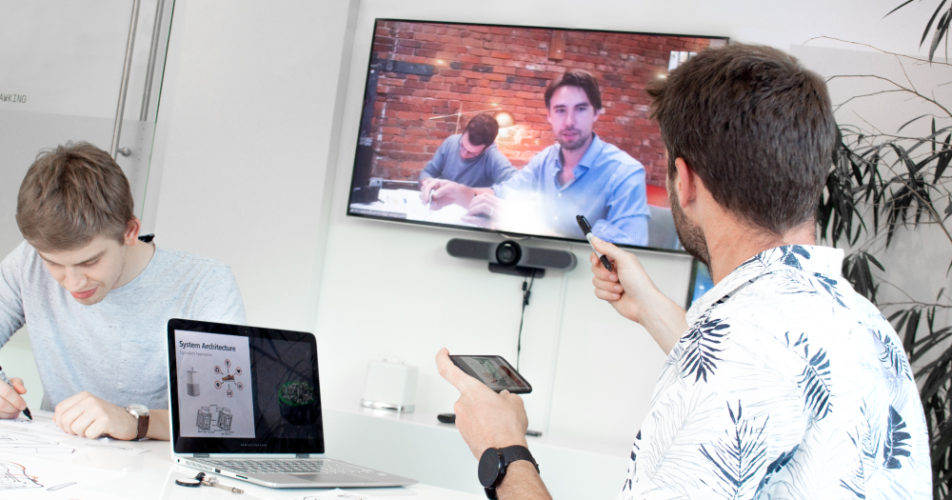
For groups you need enough cameras and screens for all team members to see and be seen. This makes everyone feel connected, rather than just having one camera focused on a whiteboard or a ‘talking head’. We link these cameras and screens into the meeting using the Zoom platform.

Clear audio

Having clear audio is essential, especially in larger rooms when people move about. Meet up offers great audio, but those who have to use laptops on their own need headsets or a Jabra table-top speaker/microphone, they are omni-directional and work really well with groups in larger rooms. It’s so important not to have to strain to make out what is being said, it makes the meeting much more relaxed and natural.

The role of the smart phone

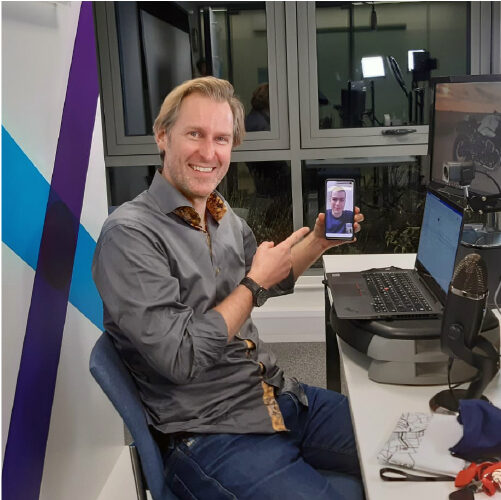
Another key tool is the humble smartphone. This provides the flexibility for individual members to communicate very quickly. For instance, if there is a sketch or prototype someone wants to show, they can grab their smartphone, activate the Zoom app (use the joining code) and immediately share their camera. Of course, people can also join the meeting just with a smartphone.

Preparation is key

We always set up our meeting rooms in advance. No matter how good your kit is, there is often a technology ‘moment’ that needs resolution. You don’t want to lose that creative vibe as your team waits for IT issues. Also, don’t forget the conventional best practices for meetings apply as normal. Make sure you have a facilitator who issues briefing documents well ahead of the meeting and takes charge of the session with a clear plan.

Reap the benefits

With many virtual meetings and brainstorming sessions now under our belt, we’ve found that the remote working technology can actually enhance the communication experience. For instance, instead of all huddling around the same whiteboard or drawing, our use of smartphone cameras means that a drawing or virtual model can immediately be shared with everyone, regardless of their location. We have also found that a virtual meeting is usually much easier and quicker to organize, with more chance of all key players being able to attend and less time wasted while we wait for everyone to be available. It’s also hugely helpful that sessions can be easily recorded. This can be useful in unpicking exactly what was said and decided during a session.

Also, it’s remarkable to see how we are able to screen-share in our virtual meetings and work on complex Computer Aided Design (CAD), zooming in and highlighting areas, with the whole meeting able to follow and contribute.

In conclusion…

Now that we are used to virtual meetings, here at CDP we feel comfortable and confident with the technologies involved. It’s remarkable how people who are hundreds or even thousands of miles apart can work together really effectively, if the technology infrastructure is set up correctly.

The current outbreak of corona virus is worrying on every level, to which there are not many easy answers. However, there is a lot that we can do to ensure our economic activity is not hit too hard by the situation. We are happy to advise our clients how to make our virtual communication as effective as possible, and keep our innovation projects moving.

2020: Decade of the drones|
Share:
Find the authors
on LinkedIn:

2020: Decade of the drones

Unmanned aerial vehicles (UAVs) or drones are increasingly part of our everyday lives. Here, Adam Turner, Consultant Mechanical Engineer and drone expert at Cambridge Design Partnership, considers the future potential of this remarkable technology.

Here at CDP, we love innovation and disruptive technologies. It’s what we do. So, needless to say, I find myself hugely intrigued by the uses offered by drone technology. Where will drones go from here?

The drive to design an unmanned aircraft initially came from the military, for airborne missions that were too risky for humans. In recent times, however, drones have found peaceful uses in everything from wedding photography to rounding up sheep. As designers, here at CDP we’re pretty sure this is just the beginning.

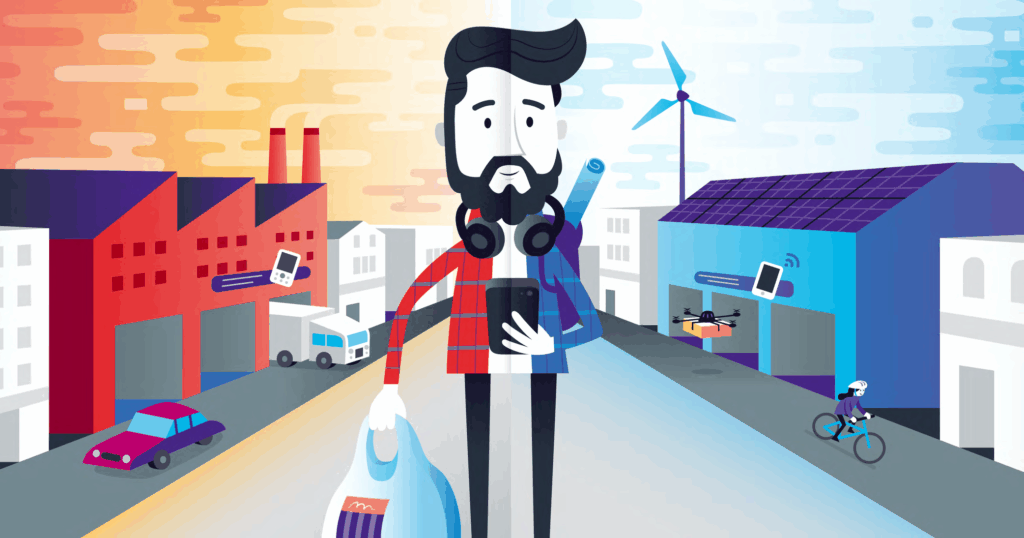
Automated so they are easy to control, powered by (potentially) clean electricity with battery and motor technology progressing quickly, and with the opportunity to include artificial intelligence to allow fully autonomous operation, the scope for drones is enormous. Here are some applications we are excited about.

Drone taxis. There are plenty of big names like Boeing, and start-ups like Volocopter, working in this sector. For example, global taxi firm Uber is also creating a small, vertically launched drone like aircraft to offer transport within and between cities. For how long will there be a pilot on board? With the benefit of an app, you could order a drone to take you to work or out for dinner. Drone taxis potentially avoid city congestion and the noise and disruption of conventional helicopters. It’s simply a case of up, up and away…

Drone agriculture. Already, farmers use drones to check crops and livestock. In the future, I’m sure crops spraying drones, such as John Deer’s recent development will enter use.  Food productivity will surely rise, drones programmed to take a series of photos using different light spectrums will enable a farmer to track crop growth and spot any issues, leading to better yields and less agri-chemical usage.

Drone environmentalism. Already, an initiative by British firm Biocarbon Engineering to fight deforestation in mangrove forests using drones is proving much more efficient than human labour. The drone surveys and tests the soil, then drops pods containing tree seeds and vital nutrients. Beyond this, the environmental potential of drone technology is enormous. From preventing poaching of rare animals, tracking populations to tracking glacial ice, a drone can play a crucial role.

Drone cranes. The construction industry has already trialled drones to lift bricks and roof tiles into place on a building site.  Going further, drones that can lift hundreds of kgs are in development. If drones become ever larger, which we at CDP anticipate, could they then one day replace cranes as the go-to method of lifting building materials?

Drone inspection. Inspecting high rise buildings, industrial plant and infrastructure like electricity pylons and bridges, is already a cost-effective drone application. Be it using cameras or more specialist sensors.  We expect this to develop further as drone automation, and AI to detect faults, makes this even more attractive.

Drone shipping. Containers revolutionised the shipping industry in the 1960’s. Will drones be the next big thing in the transportation world? While they will always be significantly less energy efficient compared to ships and trucks, giant drones could deliver high value imports quickly from ports to distribution hubs, especially in areas where other transport infrastructure does not exist. Then at a micro level, drones might bring our packages to the door and solve that tricky ‘last mile’ delivery conundrum for companies like Amazon and UPS, who are developing systems at present. As well as the multi-rotor quadcopter, we are already seeing hybrid fixed-wing drones with longer flight-times and higher energy efficiency. Some are solar-powered, to partially re-charge as they fly, or powered from renewable fuels like hydrogen.

Drone fireworks. Human beings love a light show in times of celebration, whether it’s Guy Fawkes night in the UK or an awe-inspiring Olympic opening ceremony. For an eco-friendly, reusable alternative to fireworks, hundreds (or even thousands) of light-emitting drones can perform truly astonishing displays. US tech firm Intel has already put on some truly stunning drone displays at the Superbowl and at the Winter Olympics.

Drone rescue. On a more serious note, drones can literally save lives. In search-and-rescue situations, we already see crews using drones to spot survivors. Taking this even further, a drone could drop life jackets and rafts to people at sea, or food and medicine to inaccessible disaster sites. Rescue crews in Alabama used heat-seeking drones to search for survivors after a tornado in March 2019. Ambulance drones could deliver, say, defibrillators or EpiPen’s in cases where every second counts towards a patient’s survival.  Researchers are also looking at creating swarms of micro, autonomous drones whose group behaviour is designed to automatically search inaccessible spaces like burning buildings.

Drone crime. Anyone who has seen footage of drones delivering drugs into prisons knows that this technology has its dark side. Already, there have been reports of drones surveying neighbourhoods before a burglary. In terms of terrorism, disruption and smuggling goods or even people, drone tech presents the justice system with a serious headache. Just consider the disruption to Gatwick Airport in the UK by drones in December 2018 – the runway was closed for 30 hours, 1,000 flights were cancelled and 140,000 passengers stranded.

More recently, environmental protest group Extinction Rebellion tried to use drones to close Heathrow Airport but were foiled by signal-jamming technology. Terrorist or rogue state attacks using drones as weapons is another threat. I foresee that anti-drone technology will be an important field in the coming years and that the regulation of drones will become ever more important. In the UK, the Civil Aviation Authority have brought in compulsory drone registration for drones over 250g in weight. Will drones, like cars today, have number plates, insurance and MOT tests in the future?

Drone police.  As an antidote to drone crime, law enforcement use drone surveillance in place of expensive helicopters, where their ability to search large areas quickly can be vital to ensure public safety and to catch criminals.

Drone shopping. Need a loaf of bread? New shoes? A Venti Double-Iced Toffee Almond Nut Latte with extra cream? We may one day soon team up our internet shopping habit with sending our own personal drone to fetch our purchases from the retailer. Your supermarket shopping could be dropped off on your doorstep or in a code-secured locker outside your house. Forget a drive-in Macdonald’s, could there be a drone-in Macdonald’s?

Drone communications. Bringing comms networks to regions which lack the infrastructure for internet and cellular services could well be a next step for drone technology. The Zephyr programme from Airbus is already exploring this possibility, with a solar-powered high-altitude pseudo satellite (HAPS). Zephyr, a fixed-wing drone, can stay in flight in the stratosphere without refuelling for months at a time. Among its many possible applications is the capacity to bring connectivity to the remote communities worldwide. Let’s not forget that 4 billion people on the planet are still without the internet.

Drone sports. Already drone-racing leagues are springing up. Competitors wear headsets, so they feel as though they are sitting on the nose of a drone. It’s exhilarating stuff when the drone is flying at 80mph through tight, LED lit, 3D courses. The footage can be streamed too, in HD, making this a spectator sport. In another development, drone fans have been meeting up for air battles, adding paintball guns, lasers and even a flame thrower to their drones. Even in the most traditional sports drones are proving to be disruptive. In fishing for example, a drone is used to position the bait in locations previously impossible to access from dry land. What’s next? The sky really is the limit.

Drone exploration. A popular activity is to use HD camera equipped drones to expand your experience when exploring the great outdoors.  They provide a new perspective on famous landmarks, some amazing selfies and allow the user to go to places and explore where it is otherwise impossible.

Drone photography. It has become difficult to find a TV program with an outdoor theme that does not include a drone shot to set the scene or provide fantastic images of landscapes or wildlife.  Fast paced action and sci-fi scenes are filmed by drones to allow the viewer to get close to the action.  Drone photography categories in photographic competitions are testament to the opportunities this technology provides for seeing the world in new and creative ways.

Conclusion. It’s easy to fear that drones could shape a dystopian future.  This blog has steered away from drone applications that include weapons. The shocking, dramatized viral video created in 2017 by the Future of Life Institute made this point strongly, and generated a debate about the risks of combining drone technology with AI.  But here at CDP, we are optimistic and see drones as a powerful potential force for good. It is up to humanity to ensure that this is used wisely, and that is a question we all need to consider in the coming years. How things will turn out, of course, only time will tell.

In packaged products
Share:
Find the authors
on LinkedIn:

In packaged products, context is king

Chris Houghton leads Brand Innovation & Packaging at Cambridge Design Partnership, he has worked on an array of successful insight, design and strategic innovation projects with top consumer goods names including Arla, Carlsberg, Coca-Cola, Diageo, Nestle, PepsiCo, Procter & Gamble and Unilever.

Following his ‘Context is King’ keynote speeches at PACE in Amsterdam and AIPIA in New Jersey, he summarises five key questions brands need to answer when building an innovation pipeline.

Bill Gates famously wrote, Content is King back in 1996. His forecast…“Content is where I expect much of the real money will be made on the Internet”…

How right he was as we’ve seen the digital revolution establish over the past decade. On demand streaming services have overtaken traditional audio and video formats with gaming next on the horizon. Coupled with new business models, the likes of Uber and Airbnb have tapped into consumer demands making brands sit up and think what should we do to take advantage of this fertile digital landscape?

Context #1. Who?

Who are you designing for? Do you understand their cultural sensitivities, their customs and established rituals? Do you know their values? Their gender or generation? Their mental and physical abilities? Are they tech-savvy – do they need to be? The better you understand specific population cohorts the better your chance of successfully meeting their expectations.

Each culture and country has its own technology trajectory and utilisation levels. The worldwide average for time spent on the internet is now 6hrs 42mins which is just above USA’s average but some way short of chart toppers the Philippines clocking in at over 10hrs per day (source Digital 2019, wearesocial.com users aged 16-64).

Some categories like beauty and cosmetics are ahead of the curve with high digital engagement. L’Oreal was one of the first brands to realise this with their Makeup Genius app which allows users to compare before/after make-up and hair effects on-screen. This pre-purchase, augmented reality tool enables fast navigation of product choices to help consumers decide what to buy – within two years L’Oreal said it had 20 million users worldwide.

For decades, beauty brands have been heavily reliant on celebrity endorsements or experts in lab coats to target and assure consumers but today that paradigm is changing. Millennials increasingly seek individuals that they can relate to, building seemingly intimate relationships with those they follow on Instagram and YouTube channels, who ultimately steer their lifestyle decisions. This mix of opinions, edited evidence, facts and ‘fake news’ can confuse many consumers, so building trust is more important than ever.

Context #2. What?

What category does your brand belong? Beverages, confectionery, personal care? The answer to this is obvious, of course and you’ll invest great effort closely tracking the activities of your competitors. But that is just the start. Innovations don’t always come from your direct competitors. Instead, brands are often blindsided from an unassuming left field competitor, arriving at speed with disruptive and transformational innovations. For instance toothpaste brands didn’t expect their category to be impacted by confectionary companies making chewing gum with teeth whitening claims.

We look at the ‘what’ in a solution agnostic way using the ‘jobs-to-be-done’ methodology. In a nutshell this approach states that when consumers become aware of a job they need to get done, they look around for a product or service that they can hire to do so.

Procter & Gamble’s Tide is a good example of a brand that have extended their portfolio to cater for changing contexts. The core range is unsurprisingly traditional powder, liquid and convenient pod packaging, but more recently Eco-Box was introduced to address e-commerce shipment and improved sustainability stats. The brand has even stretched beyond products solutions with the test market launch of Tide Cleaners. A direct to consumer, digitally enabled, subscription service that targets ‘generation rent’ to simply drop/collect dirty/clean laundry. This cleverly allows the brand to reach new consumers whilst experimenting with new business models, partnerships and logistical infrastructures in a low risk way.

Context #3. Where?

Where is your product used? At home, at work or on the go? Each location may present a different hierarchy of jobs. In fragrance, for example perfumes have clearly defined packaging conventions. Consumers expect a thick-walled glass bottle, an elegant closure with a precise dispensing atomiser. This objet d’art is entirely appropriate to adorn a home dressing table. However, if on the go,  this format no longer seems so practical for a handbag.

In 2017 British parfumier Jo Malone launched Fragrance Paintbrush under the brand Jo Loves. A compact perfume gel applicator that is crucially handbag friendly. This delivers an entirely different application ritual, delicately brushing quick drying fragrance onto the skin rather than the traditional perfume spritz.

In a digital, augmented world understanding the ‘where’ is crucial to enable or enhance the experience, especially when leveraging the surrounding environment. Whilst outside the packaged goods world, I find EuroStar Odyssey an insightful and charming experience to entertain children during a long train journey. Instead of uninspiring views inside a concrete tunnel beneath the English Channel, the carriage is virtually transformed into an underwater viewing gallery with dolphins and whales swimming besides you to help families kick start their vacation.

Context #4. When?

When is your product used? This can have a crucial bearing on consumer engagement levels especially regarding available time and tolerance levels. For example, a parent making up baby formula has very different functional, emotional and social ‘jobs’ depending on the time of day. Sterilizing equipment, measuring and mixing powder at 3pm is very different to 12 hours later for the 3am feed in the dark whilst you’re still half asleep, was that 4 scoops or 5?

When is a crucial dimension for digital interaction too. Many successful smart packaging examples have come from high engagement categories like alcoholic beverages and beauty where consumers make extra time for interaction and brand owners see sufficient ‘value’ to deploy cost sensitive technologies and/or content.

Context #5. Why?

Why should we choose your brand? What motivates us? What jobs are we trying to achieve? ‘Why’ ties together all of the other contextual considerations and forms the heart of any value proposition and reason to believe.

Take PepsiCo’s Gatorade brand for instance with their emotive message of #WinFromWithin. They understand people are motivated to ‘win’ especially in a sporting context. This reinforces how the brand was created in 1965 by scientists to provide athletes competitive advantage through superior hydration. Fast forward 50 years and the brand found themselves losing share with an influx of competitors big and small. To reverse this trend they identified contextual consumer jobs to cater for their needs more comprehensively. This prompted the launch of G Series, primarily a ‘When’ based product range to help athletes before (Prime), during (Perform) and after (Recover) sporting efforts. This triggered their portfolio to grow beyond solely sports drinks into food to create an ecosystem of sports fuels, from chews, bars, powders, drinks etc. More recently we’ve seen the launch of the Gx Bottle, a smart hydration system that helps individuals to customise their own products, with connected sweat tracking and variable carbs and electrolyte pods, the Nike ID of the hydration world.

So ask yourself, is your brand prepared for this revolution? Do you cater for those consumers that don’t accept one-size-fits all? Whilst Content may be King in the purely virtual, service-based world, Context is King for physical, packaged offerings where content can augment and enhance the physical experience rather than be able to entirely replace it.

How much does sleep cost|
Share:
Find the authors
on LinkedIn:

How much does sleep cost?

Margaret Thatcher famously said ‘sleep is for wimps’. Sadly, that’s not good advice, but also, it seems, it is exceedingly bad for the economy. Even though we spend around a third of our lives asleep, society it seems, has been mis-sold the value of a full night’s sleep.

RAND Europe, a Cambridge based not-for-profit policy research organisation undertook a study into the impact of sleep on the world’s economies. Marco Hafner, a senior economist says: “Our study shows that the effects from a lack of sleep are massive. Sleep deprivation not only influences an individual’s health and wellbeing but has a significant impact on a nation’s economy, with lower productivity levels and higher mortality risk among workers.” RAND found that employees who sleep less than 6 hours per night report on average about a 2.4% productivity loss due to not being at work or employees being at work but working at a sub-optimal level, compared to workers sleeping between seven to nine hours per day. (RAND, 2016). Scale that up to the UK’s workforce and it equates to a cost of $50bn each year.

Evidence also shows sleep suppression is a predictor of ‘all-cause’ mortality, including fatal car accidents, cardiovascular disease, strokes and even cancer. A recent study by the Foundation for Traffic Safety reported that, compared to drivers who had slept for at least 7 hours in the past 24 hours, drivers who reported they had slept less than 4 hours had 11.5 times the crash rate.

Based on empirical evidence, the number of individuals receiving less than the recommended 8 hours of sleep is increasing. This is due to several lifestyle influences connected with a modern 24/7 society, such as psychosocial stress, unbalanced diet, lack of physical activity and phone, tablet, and computer use, among others.  (Roenneberg, 2013)

So how can we address this challenge?

According to sleep scientists there are simple measures we can take, the most important thing you can do is to self-impose a rigid sleep and wake up time each day, even at weekends. It seems there is no such thing as catching up on sleep, in fact, it only serves to aggravate the problem. Having a lie-in cranks your natural body clock (circadian rhythm) forward in time so when Monday rolls around and you must wake up early, it’s like having 3 hours or so of jet lag. Not the best way to start the week!

Two things to avoid in the evenings are caffeine and alcohol. Caffeine has a half-life of about 6 hours, so a post-lunchtime coffee would be equivalent to drinking a 1/3 of a cup of coffee right before bed. Conversely, alcohol can be a powerful sedative but is also one of the most influential suppressors of REM sleep, arguably the most important stage of sleep.
Health education often does not teach the importance of sleep. Every parent knows from experience that sleep is of fundamental importance to their child’s development and can dramatically affect the child’s ability to learn new skills.

It is also important for employers to recognise the importance of sleep and tiredness. Creating brighter workspaces, having outside eating areas and encouraging staff to take lunchtime walks all help to promote the natural melatonin hormones which regulate the sleep/wake cycles.

One such company that has embraced a positive sleep culture is Google. Google has implemented a flexible working arrangement with employees so they can match their hours to their circadian rhythm and have installed ‘sleep pods’ in their facilities to encourage naps, thereby germinating creativity and productivity, and reducing health problems and sick leave. It is also reported that the insurance giant Aetna pays a $300 a year bonus to staff that get at least seven hours of sleep per night recorded and verified using a sleep tracker such as a FitBit.

A big challenge is shift work. Many industries that have to provide essential 24/7 services need this capability and worryingly the World Health Organisation has listed night shift work as a ‘probable carcinogen’. Clearly more work is needed to develop strategies to protect those who have to work at night.

In a second blog, coming out next month we will be looking at how the emerging sleep tech industry, estimated to be worth over $30bn a year in the US, is addressing these challenges. Do they fulfil our unmet needs or are they creating more unnecessary gadgets?

It’s all about the UX
Share:

It’s all about the UX

There is no doubt that User Experience (UX) is a hot topic throughout today’s design world. But how is the personal approach to product development affecting the field of healthcare? Lucy Sheldon, people-centered designer, and Andres Barrera, user experience designer, went along to the first ever User Centred Design (UXD) Healthcare conference to find out…

Lucy and Andres write: Here at Cambridge Design Partnership, one of our specialisms is designing healthcare devices, from asthma inhalers to blood sugar monitors, that are used by patients rather than health professionals. In such situations, the experience of the user/patient is key to the success of the product. Do they like using the design or will they give up on it?
Because of this, we were intrigued by a new conference devoted entirely to User Experience (UX) within the world of healthcare.  So we headed off to the User Centred Design (UXD) Healthcare conference in London this spring to find out more and report back:

Who was there?

Attendees ranged from new start-ups to digital health specialists employed by global pharmaceutical companies. This was a chance for us to check out what’s happening right across the board in healthcare UXD.

What was the focus?

Many of the presentations were about the ways in which digital technologies can deliver a cost-effective and successful preventative healthcare model. Loud and clear came the message: a people-centered healthcare approach requires great UX at its heart. Healthcare solutions that the patient uses in their own home have to be problem-free and a joy to use. Otherwise compliance becomes a real problem.

Which innovations stood out?

We liked the look of the myCOPD app, an app which offers patient education for people with Chronic Obstructive Pulmonary Disease. This app delivers advice from world experts and is, in effect, a complete online pulmonary rehabilitation class. Another interesting project is the Babylon Health start-up, which offers online GP consultations. This company is already working with the NHS, allowing patients the option of signing up with Babylon Health rather than a traditional GP surgery.

Why is UX so much at the forefront of healthcare these days?

The rising incidence of long-term health conditions such as diabetes, heart disease and asthma is driving investment with a shift in emphasis. Now the focus is on helping patients to cope with their chronic illness, in terms of both reducing symptoms and improving outcomes. There is also much more investment in preventing lifestyle-related illnesses occurring in the first place.

What is the aim of UX in healthcare today?

Several of the speakers referenced the term healthspan (quality of life), which is now considered alongside lifespan as a measure of healthcare success. The question is no longer just: how long will you live? What matters is now how long you will live in good health.

What else is new?

Presentations which outlined how augmented reality in digital tech could be used in healthcare. Gaming-based digital tech allows users to overcome phobias in virtual reality. One idea we heard being discussed was a digital game in which the user overcomes their fear of heights by travelling up escalators, going onto balconies, etc. This is proving genuinely effective in helping people overcome debilitating phobias.

Did AI feature?

Absolutely. We were struck by a presentation which outlined the ways in which Artificial Intelligence (AI) – or perhaps more specifically machine learning – frees up healthcare professionals to do their high-level work more effectively. Algorithms can analyse patient data such as heart-rate, flagging up noteworthy results and saving hours of human time poring over charts to spot anomalies.

The appetite for digital therapeutic treatments is certainly growing and, for conditions such as depression there are, we discovered, several therapies that the patient uses themselves that have already been clinically validated. This impressed us a lot.

Did you come back to Cambridge Design Partnership feeling inspired?

Definitely. Here at CDP we work on a wide range of healthcare projects that have UX at their heart and we know just how crucial it is. For example, we designed the First Response Monitor as a way of helping first responders such as paramedics triage patients. The monitor helps assess which patients need help soonest via nose clips which record oxygen levels and display results using AI on a smartphone dashboard. In such a high-pressure situation as. Say, a serious road accident, kit needs to be reliable and simple to use. Our UX design, both for the physical product (the nose clip) and the digital tech (the smartphone dashboard) was key to its success.

How can CDP offer the best UXD to its clients?

We offer global companies the opportunity to create healthcare products – be they digital or physical – that not only fulfil the brief but truly delight the user. Our Potential Realised product design process, which links research, design, technology, engineering and manufacturing into a single integrated process allows us to meet and exceed customer expectations for UX.

Finally, how is the future looking for UXD in healthcare?

There is an exponential growth of health-tech start-ups right now and design in healthcare is evolving towards a more holistic and democratic approach. Patients no longer simply expect a prescription or a pill to solve their problems. Instead, they are taking ownership of their treatment and their health, often using digital technology. Where this is supported by machine learning, we are convinced that UX has the potential significantly to enhance healthcare delivery.

Share:
Find the authors
on LinkedIn:

Is ‘Design Thinking’ how successful innovators think?

So where does Design Thinking come from? Design is a creative problem solving skill that has evolved over centuries. It was the Modernist movement that in the early 20th century helped set the scene for today’s practical and aesthetic design solutions that can be manufactured at low cost. The ideas behind Design Thinking started life in creativity research in the 50’s and 60’s and more recently crystallised at Stanford University before being popularised for the wider business community by David Kelly, founder of IDEO.

As a designer at the start of my career in the ‘80s I was struck by the radically different approaches to design taken by the engineering and industrial design professions. You could say engineering design was based on the scientific method (collect data, analysis and conjecture, hypothesis, experiment and review) with plenty of mathematical analysis and optimisation based on first principles. In contrast, industrial design placed personal creativity, taste and empathy with consumers as the most important skills, validated by stories of the design heroes of the past with their seminal work displayed in museums and galleries.

In business, academic research has shown companies tend to adopt one of three generic models of innovation; technology lead, market lead and ‘fast following’. It’s a generalisation, but you can see how those from the engineering design camp might resonate with the technology lead strategy, believing that innovation flows from a technology breakthrough. Those from the industrial design camp naturally align with a market lead approach, looking to new trends and needs in society to create opportunities. Finally, those who are most interested in the short-term bottom line may adopt the ‘fast follower’ model as the most pragmatic strategy.

If you look at the hot innovation sectors today, take Digital as an example, success depends on integrating both the technology and market lead strategies. Creating completely new business models by better meeting customers’ needs using the most effective technology. This needs a truly holistic innovation approach and exemplars are simply today’s most valuable companies, so this logic is undeniable.

So is Design Thinking a joined up approach that integrates traditional engineering and industrial design processes? It is certainly associated with the well-known Venn diagram linking what customers want with what is technically possible and commercially viable.

But is it the way that successful innovators think today? OK, this is an unfair challenge. Design Thinking is a simplified model that resonates with a wide audience and succeeds in encouraging some important behaviours. It makes the customer the primary reference point for innovation, something that is surprisingly easy to forget when technology becomes too exciting or daunting. It encourages questioning assumptions and the group working that is often absent in siloed organisations, essential when agile disrupters are snapping at your company’s heels. It also champions creativity that is a skill often driven out of companies in their search for operational efficiency. It finally encourages a learning approach using experimental iteration and minimum viable products, to improve ideas based on customer feedback, avoiding the confirmation bias that can sometimes fool teams into inadvertently launching a product that won’t succeed in the market.

However, on the other side of the coin I believe Design Thinking can introduce fatal flaws for the unwary innovator and this is why we have created our own proprietary approach to innovation at Cambridge Design Partnership, called Potential Realised. Like Design Thinking, our approach is people centric, creative and based on learning, but it’s a more demanding, professional framework that requires an expert delivery team with a broad range of specialist skills, particularly because it is compatible with the ISO13485 and FDA standards for medical device development.

There are three major differences between Design Thinking and Potential Realised. While keeping the consumer at the heart of the program, Potential Realised fully integrates the key role that technology plays in innovation and the specialist capabilities needed. There is a focus on the fundamental principles of the scientific method, placing learning and evidence center stage. This is essential to deliver technically complex products efficiently and to minimise the cognitive biases that can adversely influence outcomes. A good example is the emphasis Potential Realised places on gathering objective evidence at the front end of innovation when it can be difficult to obtain, rather relying on ‘empathy’ with the target market. Evidence is vital at this stage because the right decisions have a profound effect on the final commercial outcomes and project costs. Built into Potential Realised are the stages needed to obtain these vital facts.

It also recognises that iteration, while an efficient approach when costs are low at the front end, becomes an expensive mistake as investment rises and as the innovation gets closer to market. When implementation costs are in seven or eight figures your process has to include a high level of integrity.

Finally, Potential Realised is firmly based on the holistic nature of innovation, recognising a successful product launch is only as good as its weakest link and making sure all the design, technical, and business activities have their place and integrate together throughout the project to avoid pitfalls and most importantly, to allow the innovation process to be optimised financially.

While Design Thinking is certainly a part of how successful innovator thinks, Potential Realised’s scope is much bigger; it is scalable to even the largest projects and it actively optimises the return on your investment in innovation. It achieves this with building blocks that uncover the best possible commercial opportunity and create an efficient technical implementation and manufacturing capability.

If you would like to learn more about how Potential Realised can do this for your business, please get in touch.