First principles of biomedical engineering – they’re closer than you think

It’s important to realise that beyond the realm of classical engineering principles lays the softer, squishier world of biology and medicine. By being intimately familiar with human anatomy, biomedical engineers are able to more rapidly question whether their concepts are truly viable prior to embarking on further development, using an often-neglected set of first principles – the fundamentals of human body design.

Using a scalpel, I slowly cut the failed tricuspid valve out of the heart of the cadaver. We had been told that our donor body had died of heart failure but nothing prepared me for the sensory impact of the hard, black necrotic tissue surrounding the three leaflet structure – it appropriately reflected what “dead” should look like physically. That was about half a decade ago and not a day goes by where I don’t reflect on my time spent wrist deep in a cadaver, and how it shaped how I approach my work as a biomedical engineer.

When you start designing medical devices, it’s tempting to seek out simplifying assumptions in order to get 80% of the solution in 20% of the time. We can model the circulatory system with pipes, we can model the lungs with foam, and we can model the bones with metal. Reasoning by analogy is often the first step to taking a first principles approach, utilising equations that govern the fundamental processes of our world. And there’s nothing inherently wrong with this approach until you discover that by simplifying the problem definition you’ve missed out on a wealth of potentially more appropriate and lucrative solutions as well.

Let’s take, for example, the case of my former cadaveric colleague’s heart – he had had an aortic valve replacement at one point in his life. Simplifying the complex procedure of heart valve replacement, we could think of the problem like fixing a broken piece of plumbing: restrict the flow of fluid, remove the defective valve, put the new valve in, and let the fluid flow resume hoping that everything worked the first time. And for valve replacement, that’s been more or less the gold standard since advancements made to cardiopulmonary bypass (artificial heart and lung) machines enabled the heart (blood flow) to be stopped during surgery. Using the plumbing mentality, it’s difficult to imagine how you could improve on this procedure which is why it’s important to question and occasionally reject the simplifying models we use for medical device design. Finding the optimal level of detail at which to examine the problem is critical to the success of the endeavour.

In reality, heart valve replacement has started heading towards the plumbing equivalent of replacing leaky valves from your neighbours couch by snaking tools through their plumbing, into the main pipes, back into your flat to the leaky valve and there, instead of taking the old valve out, you just put the new valve in on top of it. This procedure, known as Transcatheter Aortic Valve Replacement (TAVR), in which a new valve is implanted into the heart by navigating through an artery in your leg, is expected to worth $5.5B USD by 2020. If we remained focused solely on the heart valve in absence of the larger circulatory system and body-scale system as a whole, the ability to utilise a less-invasive approach would have been lost before the first ideation session even began.

Ultrasound Elastography is another example where conventional analogies fall short of an optimal solution. Frequently surgeons will probe or palpate tissue with their fingers to try and differentiate boundaries of different structures, like a tumour amongst healthy tissue. This physical sensation can aid with the detection of diseases in certain organs, particularly when the tumour doesn’t show on certain imaging modalities but relies on subjective tactile feedback and cannot be used in regions that can’t be palpated. Obviously then we need to improve the ability of existing imaging systems to “see” the tissue but there’s something significantly cleverer available.

Researchers realised that “seeing” a tumour depended on the type of information being made available. Traditional x-ray imaging relies on the absorption of ionizing radiation by anatomical structures and maps this absorption onto a display, whereas palpation creates a tactile sensation map in the physician’s head. So instead of thinking, “we need a more sensitive imaging system to detect the differences in radiation absorption in the tissue”, they realised that they could blast the target tissue with ultrasound waves, mimicking a palpation then measuring the resulting mechanical properties by observing the response to this “push”. What was created is a novel imaging system that provides a tactile map of tissue stiffness, enabling doctors to more clearly see the tissue they’re interested in without requiring physical access to it.

As efficiency and cost reductions pressure healthcare systems globally, the demand from next generation medical devices requires successful inventions to not only improve outcomes but reduce costs compared to the existing gold standard. By recognising that your medical device needs to be designed with respect to not only the classical mechanical and electrical first principles but the anatomical first principles as well, you can get that much closer to a safer and more effective device.

To speak to Jeremy further or to find out more about our medical device and drug delivery capabilities contact hello@cambridge-design.co.uk or phone +44 (0) 1223 264 428.

CDP at MD&M West 2017 in Anaheim

Cambridge Design Partnership is exhibiting at Medical Device and Manufacturing West (MD&M West) in Anaheim, California from 7th – 9th February this year.

Our booth is number is 1425 in the Electronics West zone. Details on how to find us.

MD&M West is the world’s largest medical design and manufacturing event, with leading medical design experts attending to network and showcase latest innovations in medical device design and manufacturing.

Exhibiting for the fifth year running, Cambridge Design Partnership will have live demonstrations on its booth of two connected devices, the multi-award-winning – First Response Monitor and diialog™.

A number of our sector experts will attending MD&M West 2017 including:

Alan Cucknell, Front End Innovation Leader
Alan is a seasoned innovation professional. His systematic, evidence based approach builds on his formal engineering education and nearly fifteen years’ experience tackling strategic business and technology challenges. Alan will be happy to discuss your innovation challenges and suggest new approaches to help you achieve success.

James Baker, Senior Electrical Engineer and CDP Partner
James is a chartered engineer with a Master’s Degree in electronic engineering. He leads the connectivity and electronics capabilities at CDP, applying his experience to projects covering all forms of sensing, communications and wearable technologies. James can advise you on developing healthcare products that feature complex embedded functionality and are simple to use.

Dr Jez Clements, Senior Mechanical Engineer and CDP Partner
Jez is a professional engineer with a PhD in orthopaedic implants. He has led several major medical device development programs across diagnostics and drug delivery. Jez helps clients overcome tough engineering challenges and will be happy to discuss how CDPs capabilities can help accelerate your development portfolio.

Dr Dom Freeman, US Business Leader
Dom has over 30 years’ experience in the medical device design, with deep knowledge of the blood glucose monitoring market and magnetic resonance imaging. She is also an expert in IP strategy. Dom will be available to discuss how outsourcing product innovation and engineering development can benefit your business and overcome key challenges to growth.

To arrange a meeting during MD&M West, please get in touch.

We hope to see you in Anaheim.

CDP is heading to Paris for Pharmapack 2017

C’est le temps déjà? It certainly is. Pharmapack Europe’s premier pharmaceutical and drug delivery event is at Paris Expo, Porte de Versailles from 1st – 2nd February. Pharmapack is the European conference for the latest trends, developments and regulations impacting the pharma industry and this year will be no exception.

Our booth is number is B89, near the catering area. More details on how to find us.

Three of our healthcare experts will be available to explain how CDP can help you meet your innovation goals and answer your questions.  We’ll also be running live demonstrations of two of our connected innovations – the Red Dot winning, First Response Monitor personal vital signs monitor and our newest tool diialog™, that allows designers and human factors engineers to understand how patients actually use medical devices in the field.

Uri Baruch, Head of Drug Delivery and newest CDP partner

Uri has extensive knowledge of drug delivery device development and technology, including innovation strategy and the latest industry trends. He is your gateway to access the in depth development capabilities at CDP.

Stergios Bitisios, Packaging Leader

Stergios is a senior design strategist and research consultant, whose specialises in the  in-depth analysis of the patient-device interface.   He helps healthcare businesses find ways of placing the patient and healthcare professional at the heart of the innovation process.

Tom Lawrie-Fussey, Technology Business Development Leader

Tom specialises in developing innovative connected devices, including the technology and business models needed to create value from this rapidly developing field. He will be demonstrating two examples and will be happy to discuss your requirements.

If you’d like to arrange a meeting with Uri, Stergios or  Tom, get in touch.

Nous serions ravis de vous y rencontrer!

Uri Baruch CDP HR

Uri Baruch appointed Partner at Cambridge Design Partnership

Press Release Issued 17/1/2017: Cambridge UK, Head of Drug Delivery, Uri Baruch has been appointed as a partner at the Cambridge-based product design and innovation consultancy.

Uri is a senior mechanical engineer and expert in drug delivery devices. For more than four years, he has led the Drug Delivery sector at Cambridge Design Partnership (CDP), delivering a wide range of design projects including an award-winning needle safety device, an emergency auto-injector and pen injector packaging designs for delivery devices and inhalation products. These led to successful submissions to both FDA and EMA in several submission categories.

Uri has a Master’s degree in Engineering from the IIT where he specialised in MEMS (Microelectromechanical systems) design and materials engineering. He’s worked across a number of industries including aerospace and defence, medical devices, automotive and Inkjet. He has extensive knowledge in design for manufacturing and process design and was involved in setting up and transferring several production lines around the world.

Uri commenting on his appointment,

“My appointment to partner shows the importance of Drug Delivery to CDP and the global healthcare marketplace. The healthcare landscape is changing in all of the world’s key geographies due to a combination of rapidly ageing populations, increased patient load on healthcare infrastructures and financial pressures on providers.
CDP is already innovating in this space with a number of the world’s leading manufacturers who are seeking to address these challenges. Among areas we can discuss, we’re looking at the managing high viscosity formulations in drug products, how device connectivity can support dosage adherence and continuing to increase usability and compliance across all new device developments.

I look forward to spearheading the further expansion of our Drug Delivery capability and team here [in the UK] and in our US office in Palo Alto to support this work.”

CDP partner and founder, Mike Cane on Uri’s appointment to partner — “He [Uri] will lead the expansion of the important Drug Delivery Device sector at CDP. He’ll be building on the success that our dedicated team has enjoyed so far, with a series of initiatives to enhance the services that we provide to our global customers. We are pleased to announce his appointment.”

IMPLEMENTING MEDICAL DEVICE CYBERSECURITY James Baker is guest columnist on Med Device Online

Connectivity is ubiquitous – it’s moved beyond an overhyped buzzword and become part of life. Offering ever-advancing levels of access, control, and convenience, widespread connectivity also increases the risk of unauthorised interference in our everyday lives.

In what many experts believe was a world first, manufacturer Johnson & Johnson recently issued a warning to patients on a cyber-vulnerability in one of its medical devices. The company announced that an insulin pump it supplies had a potential connectivity vulnerability. The wireless communication link the device used contained a potential exploit that could have been used by an unauthorised third party to alter the insulin dosage delivered to the patient.

It’s not hard to imagine the devastating impact to both consumers and the company if the reported vulnerability had been exploited. However, risks such as security will not prevent evolution of connected devices – demand for ever-increasing levels of convenience and access are driving the continued evolution and adoption of these products and services.

Cyber-security considerations shouldn’t be viewed as stumbling blocks for the connected device concept. Rather, it’s another of the many product requirements which, if considered and specified correctly at the design stage, can be implemented robustly. Above all, cybersecurity can be validated as part of a wider-reaching regulated device development process. It can’t be considered an isolated element to be bolted on, since it inherently helps to define the system architecture of what is developed.

Read full article.

ablation-catheter-technology-cardiology

CDP and Kings College London develop innovative steerable catheter to treat cardiac arrhythmia

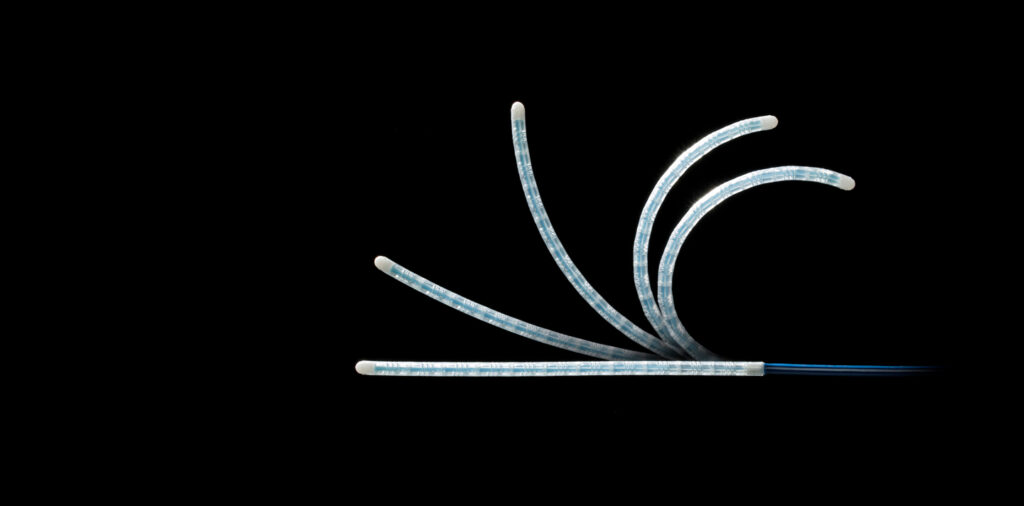
Innovative design and technology consultancy Cambridge Design Partnership has worked with King’s College London to develop a novel steerable catheter which King’s researchers had designed.  The catheter is designed to improve the treatment of cardiac arrhythmia – a range of conditions which can lead to stroke or heart failure that affects 2 million people a year1 in the UK alone.

The new steerable, micro moulded catheter enables targeted delivery of radio frequency energy to specific points in the heart tissue for corrective treatment. Compared with traditional catheters, the new device has been designed to be quicker and easier to manoeuvre into the correct position, improving the accuracy of positioning and minimising damage to healthy tissue, which should improve success rates of the treatment.

Cambridge Design Partnership won a four-way competitive bid to further develop the device created by King’s College London, involving helix-shaped interlocking tubes that would allow improved steerability and greater compatibility for robotic control over other catheters on the market. The team at Cambridge Design Partnership successfully refined the initial design, enabling the device to meet key regulatory and biocompatibility requirements, whilst ensuring suitability for commercial manufacture. Through CDP’s experience of developing highly technical medical devices, the team was able to miniaturise the design to allow improved space for the delivery of ablation energy and irrigation. The new catheter design is also assembled from micro injection moulded sections, incorporating features that enable the device to be built on an automated assembly line at reduced manufacturing cost.

Matt Brady, head of Medical Therapy, Cambridge Design Partnership, said: “The steerable catheter is an extraordinary product, with innovative features that enable corrective treatment to be delivered to very specific areas of the heart. By enabling greater accuracy and quicker treatment time, we believe it is possible to preserve more healthy heart tissue, and increase the success of the treatment. It’s been hugely exciting to be involved in this joint project with King’s College London and use our expertise to bring such an innovative product one step closer to commercial use.”

Professor Kawal Rhode, Professor of Biomedical Engineering at King’s College; London, commented: “We have been delighted with the results of Cambridge Design Partnership’s work on this project. The team was chosen for the strength of their existing experience in developing catheters across both start-ups and global corporations.  We were very pleased with the engineering approach and practical improvements that they managed to incorporate. They delivered fully moulded parts, and specified other components and the assembly route which fully met our aspirations for the project.”

King’s College London is now undertaking extensive lab testing of the catheter device, with clinical trials expected to be take place in two to three years.

1 Arrhythmia

For further information on this project, please email: hello@cambridge-design.co.uk

For Enquiries to King’s College London:
Please contact Dr. Rob Glen, King’s Commercialisation Institute
Robert.glen@kcl.ac.uk 020 7188 6209
Kings Commercialisation Institute

AAMI human factors for medical devices course returns to Europe

Innovative technology and design consultancy Cambridge Design Partnership today announced that due to the huge success of Europe’s first AAMI Human Factors for Medical Devices course they will be sponsoring more courses in 2015.

Cambridge Design Partnership worked with the US based Association for the Advancement of Medical Instrumentation (AAMI) and Pure Insight to bring the course to Europe for the first time in April 2014 and the course was hugely oversubscribed. In response to demand from medical device development companies, which deem the course content as a ‘must have’ piece of knowledge for their medical device development teams, a course has been scheduled for January 2015.

Cambridge Design Partnership have recognised the importance of Usability Engineering in medical device development programmes for many years and are keen to share this enthusiasm with the wider development community by teaming up with AAMI and Pure Insight to bring this definitive course to Europe.

This course delivers practical Usability Engineering techniques that can be implemented in any medical device development programme and gives insights into creating usability submissions for both the USA and the EU regulatory regimes.  With new guidelines proposed in the US, medical device companies worldwide need to be vigilant in understanding how to navigate these changing regulatory landscapes. The AAMI course not only addresses Usability Engineering itself, it also looks at the growing harmonisation between global standards, streamlining device submissions.

The course leaders are the highly regarded Dr. Ed Israelski who is the convener of international HF medical standards with IEC and ISO and Dr. Robert North, who is a co-author of the FDA human factors standards. This course is exclusively the only event held in Europe where companies can talk directly to an FDA representative who hosts a question and answer session and gives delegates the benefit of the latest insight into streamlining submissions as well as common submission errors and deficiencies.

“At CDP our experience developing novel medical devices shows us that effective Usability Engineering is crucial to commercial success, not only to meet regulatory requirements but to enable new products to succeed in a competitive marketplace. When developing fast moving consumer products companies naturally place the user at the centre of the design process,  but when it comes to safety critical medical devices sometimes the complex technical and clinical requirements overshadow basic patient needs. This course explains the processes you can use to ensure your devices are easy and safe for patients to use.  Medical device manufacturing companies must demonstrate this to the regulators and this course explains how this is achieved.” Comments Mike Cane, Founder, Cambridge Design Partnership.

Cambridge Design Partnership is a leading technology and product design partner focused on helping its client’s businesses grow. Some of the world’s largest companies trust CDP to develop their most important innovations.

Cambridge Design Partnership specialises in the healthcare, consumer, energy and industrial equipment markets and its multidisciplinary staff have the expert knowledge to identify opportunities and solve the challenges its clients face.

www.cambridge-design.co.uk/
hello@cambridge-design.co.uk

Contact Abbie Meliniotis or Laura Cavaliere at CDP for more information:
lc1@cambridge-design.co.uk / avm@cambridge-design.co.uk /+44 (0) 1223 264428

Media contacts: Andrea Berghäll, EML Wildfire Technology PR
cdp@emlwildfire.com / +44 (0) 208 408 8000