DC to DC converter design
Share:
Find the authors
on LinkedIn:

DC to DC converter design – Don’t blow your fuse (and other lessons)

With a vast range of off-the-shelf and feature-rich control ICs available, the selection and design of DC to DC converters is a superficially simple process.

But even with these highly integrated parts and design resources there are still many common pitfalls that can lead to Electromagnetic Compatibility (EMC) or thermal nightmares, blowing budgets, timescales, and the occasional fuse in the process.

I’ll share a few of the most common “gotchas” that electronics engineers will contend with early in their careers. We’ll dodge the complex calculations here, but there are excellent resources such as “The Art of Electronics” that can provide a deeper mathematical explanation of the issues at hand.

Medical device or arc furnace? Context is key

You wouldn’t use a trailer truck to commute to work, nor would you use the family car to ship potatoes to a supermarket. Both are vehicles but, clearly, they operate in different contexts so have different strengths and weaknesses.

The same logic applies to switch-mode converters and controllers. A quick glance at the cover page of any switcher datasheet will often reveal potential use cases. This is not just marketing: if a switcher is intended for industrial machinery or large server farms, it is quite likely that its EMC performance faces different limits to those marketed at consumer or healthcare devices. For example, while higher noise limits in industrial settings liberate chip designers to focus more on power efficiency by maximizing switching speed and slew rate, this can also increase emissions.

Excessive switcher noise can lead to poor performance of analogue circuitry, and in severe cases can interfere with the function of nearby devices. So, while those efficiency figures might be tempting, using the switcher in a compact medical device could lead to months of work to achieve compliance in EMC test chambers.

Lesson: Use parts in the context for which they are designed. Parts targeted at industrial applications may lead to issues if used in consumer or medical devices.

The heat must go somewhere

So, you’ve found a very neat five-amp switcher with a 3x3mm footprint that is 90% efficient? Sounds perfect for your space-constrained, high-power design. Except you’ve just plugged it in, and it cuts out after ten seconds at load. This is less than ideal. The problem is that, even at 90% efficiency, the switching losses at 5A are enough to make a 3×3 chip quite toasty – so much so that the thermal cut-out is operating. You might have been fine if you had a large copper flood to take the heat away, but this is a space constrained design so of course you don’t.

Lesson: Always consider the thermal design of a high-power system. Even if a small switcher is electrically capable of high currents, it may require substantial heatsinking that wipes out any size or efficiency benefits.

Evaluation modules are there to help

Datasheets are an important resource for correctly integrating a switcher design into a larger electronic system, but they are also a company’s marketing collateral, and can mask certain “gotchas” in product performance.

They do not guarantee that your design or use-case will play nicely with the chosen parts. Evaluation modules (EVMs) provide a less theoretical way of confirming that a part is fit for purpose, and further provide a “best case” performance benchmark given exactly the right implementation.

Taking an EVM along when performing pre-compliance EMC tests is a quick way to confirm that the chosen part is not going to be an emissions nightmare in the final design, and similarly if the EVM overheats, your design probably will as well.

Lesson: Buy in an EVM for your chosen switcher part and perform a set of tests that represent the final use case. If you have problems at this stage, it’s fair to say you should pick a different part or modify your design to mitigate the issues.

Saturation current is not standardized

If your switcher’s primary inductor becomes saturated, the efficiency of the system will rapidly plummet, and it will likely lose regulation or overheat. Most switcher manufacturers helpfully include the necessary inductor current calculations to enable you to make the correct part choice; however, the inductor datasheets can themselves be misleading.

Saturation current is universally defined as the current at which inductance decreases by a certain percentage, but different manufacturers use different percentages. Wurth often take a 20% inductance drop to mean saturation, but other manufacturers may use a 50% or even 80% drop.

Careful consideration must be given to peak inductor current, not just expected output current. High efficiency switcher designs typically look to minimize switching time and thereby losses, but this inherently drives up peak inductor current (and also EMC emissions!)

Lesson: When specifying an inductor, check what inductance drop the saturation current parameter refers to. If 80%, then you need to design more current headroom into your system to maintain correct regulation. Pay attention to peak currents!

Switchers aren’t always best

Switchers are more efficient than linear regulators, so does that mean they should be used wherever possible? Not quite.

Look at the efficiency curves on the datasheet. See that bit where the efficiency curve falls off a cliff at low loads? If your mobile widget, for example, needs a 3V0 rail derived from a 3V7 LiPo, and spends most of its time in a micro-power sleep mode, your switcher will likely burn more power than an LDO in those periods when the load is not drawing much current. If you then add in inductor switching losses and quiescent current, you could end up throwing a lot more power away through trying to use an “efficient” switcher than by using an “inefficient” linear regulator.

Lesson: When designing power supplies for very low power devices, consider if a switcher is honestly the best option. Even low power optimized designs (such as Analog Devices Micropower ICs) may still yield worse results overall than a carefully specified LDO in a low power application, so a system level power budget analysis is a must.

Keep it (the high current path) simple

Switchers create circulating paths of rapidly switching high currents as part of normal operation. If you don’t carefully implement these paths, then the system is likely to radiate or couple excess noise to other parts of the system, causing yet more EMC issues.

If possible, design the converter on a single layer to avoid layer transitions by vias, and with short, low impedance paths between the diode, inductor, and capacitors on the output side, with similarly low impedance paths between the input capacitors and switch FET. The ground path between all these components should also be robust and low impedance. If using a four-layer board, placing a ground plane under the switcher can suppress coupling to other parts of the circuit, but make sure to follow layout guidelines for the particular part, as coupling between traces and ground can be relevant to operation and performance!

Lesson: Keep the entire switcher design compact, and keep the ground return path short and on the same layer if possible. Ground planes and careful splits can be useful for reducing coupling of the circulating currents into other parts of the system.


This is far from an exhaustive list of all possible design considerations for DC to DC converters, but hopefully it gives you some useful guidelines on what to look out for when embarking on a new power supply design, particularly for those at the start of their engineering career.

Here at CDP we employ a talented range of engineers across all disciplines who solve problems like these on a daily basis. If you are interested in joining our team, check out our vacancies in Cambridge, UK or Raleigh, N.C. USA.

If on the other hand you are experiencing these sorts of issues at your company, please do reach out to CDP to see how our business can help yours.

The design of a surgical torque wrench - Cambridge Design Partnership
Share:
Find the authors
on LinkedIn:

Crankl: from the bike shed to the operating theater, how CDP created a novel surgical tool

It is important to start each innovation journey with the broadest possible mindset because this opens the door to all sorts of different solutions that might exist outside one team’s experiences. A great example of this philosophy in action was the design of a surgical torque wrench that we developed recently.

The story starts with one of our engineers who was a cycling enthusiast. He saw an unmet need amongst cyclists who owned ‘high end’ carbon fiber bikes for a simple torque wrench to stop them over tightening screws and damaging their bike frame. So, in his spare time, he came up with a simple, plastic, single piece wrench design that indicates the right torque every time. He publicized his idea on a trends website, but unexpectedly he received messages from surgeons who were also bike enthusiasts.

It turned out that orthopedic surgeons were frustrated by the tools they had to make sure that screws used to fix fractures and implants were not over tightened. Plates are commonly used to support fractured bones and over tightening the screws can break the screw, damage the bone or make the screws difficult to remove, under tightening can allow the fixation to become loose.

A torque wrench is a tool that indicates or limits the torque applied to a screw. They are used across all engineering sectors and surgeons have similar devices adapted for the operating theater. However, the inherent cost and complexity of these tools mean that they must be reused, which in turn creates additional processing complexity and cost for the hospital. Before each procedure, they must be thoroughly sterilized and tested, which is time consuming and open to error.

Single use medical devices have seen increasing adoption since their early introduction in the 1960s, initially for their ability to displace durable devices with their requirement for costly reprocessing, calibration, adjustment etc. Over time their potential to deliver when sterility and performance are paramount has become increasingly prominent, as they can be manufactured to tight quality standards and tested, packed and sterilized in controlled factory conditions where economies of scale make this cost-effective. Following pressures towards sustainability and ever-reducing costs the trend is swinging back again – with devices leveraging the benefits of single-use style designs, but with more robust materials and designs to allow a limited number of reprocessing and re-use cycles (multiple-use devices).

What was needed here was a single or multi-use wrench, that was accurate, easy to use and did not require maintenance.

The plastic construction of the bike wrench showed us that a single, low cost, plastic molding could be used as the active element in a basic torque wrench. However, the surgical version would need to be more accurate & repeatable, have different settings for different screws, and be more usable in the surgical environment – with a form factor that allows single handed use, and haptic feedback indicating when the correct torque is reached.

The design team reviewed the original bike torque wrench design and analyzed where it could be improved and adapted for surgery. The original bike wrench had a beam that buckled when the right torque was achieved but this phenomenon was influenced by several parameters that could result in lower accuracy.  Together with a more compact form factor that better suited surgery, a new design was envisaged that only relied on bending, so should be more repeatable. It also provided better haptic feedback to the surgeon.

The design was modelled in 3D CAD and underwent FEA simulation to better understand how it would perform. This allowed the first round of optimization to get as close as possible to the desired performance. To allow the ergonomics and ‘feel’ to be evaluated, a first model was made using 3D printing. The Crankl surgical torque wrench was born.

When the wrench was assembled, the team were pleased that they had got close to a design that would meet the surgeon’s requirements. But 3D printed materials perform differently to the injection molded plastic that would be used in the final design, so another step was needed to verify the system would work. The team needed to have real injection molded parts in the correct material to test.

Moving to ‘production intent’ manufactured parts is a big step in all medical device developments. Medical devices have to meet strict standards to be placed on the market and CDP’s experienced device development and quality engineering teams ensure that this happens, in line with our ISO13485 certified quality system and device development process. This means that at the end of development all the correct processes and documentation will have been completed to support a submission under the EU Medical Devices Regulations and / or to the FDA, as appropriate to market need.

Obtaining molded parts is usually an expensive and time-consuming step because mold tools have to be designed and manufactured. These are complex and take time to make, and errors can occur that can affect performance and the validity of the test results – requiring a further iteration. For this reason, CDP has developed a “rapid digital molding” approach which uses 3D printing to very quickly make mold tools into which target polymers can be injected – rapidly creating production-intent parts.

Read more about the process.

So critical-to-function parts were made using digital tooling and molded plastic components tested. This resulted in the design being refined for a third time and new tools and components manufactured, a process completed in a few days using digital tooling, where it would have taken weeks and months using conventional processes.

This allowed the final prototype of the surgical torque wrench to emerge from the design and testing process, demonstrating that a single or multi-use design is achievable at a fraction of the cost of reusable alternatives. Based on this feasibility work we’re now in discussions with device manufacturers about taking Crankl into a full device development. This project demonstrates that even in mature markets like orthopedic surgery, where the same basic tools and techniques have been tried and tested over decades, there is still an opportunity to innovate by understanding unmet user needs and taking a different perspective on how to meet them. We believe this is best achieved by a multidisciplinary team with experience from widely differing sectors because often similar problems have found solutions and technologies that only exist in their specific markets. Even if these cannot be directly applied, they always inspire new thinking and new problem-solving approaches that can lead to better, faster and more cost-effective innovation.

pen-injector technology
Share:
Find the authors
on LinkedIn:

CDP collaboration on pen-injector technology with the Stevanato Group

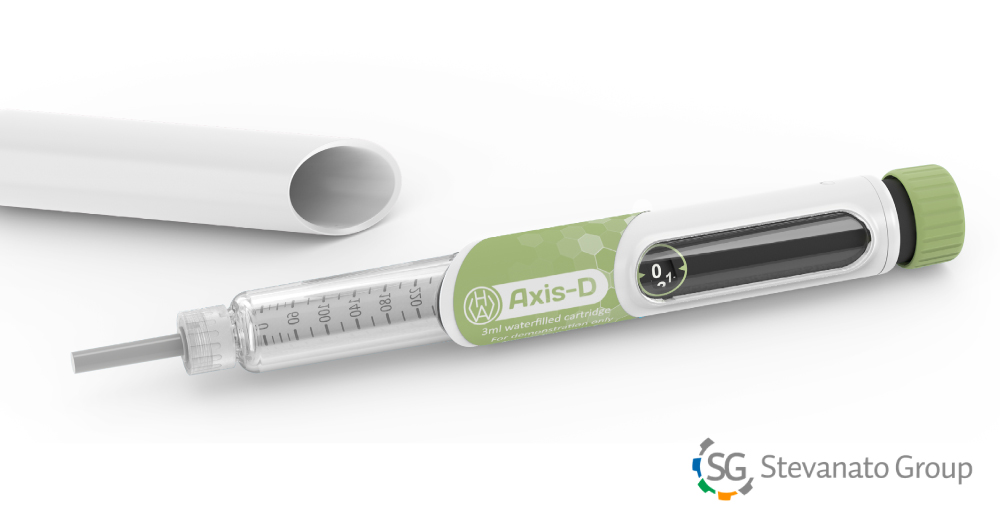
Cambridge Design Partnership (CDP), a UK and US based leading technology and product design partner, and the Stevanato Group, a leading producer of glass primary packaging and provider of integrated capabilities for combination products, today announced a collaboration agreement for the development of a new pen-injector based on the Axis-D technology and intellectual property (IP) licensed exclusively from Haselmeier in 2019.

The collaboration between CDP and the Stevanato Group strongly supports the expansion of the Stevanato group’s portfolio of devices for patients suffering from diabetes.

The agreement leverages the mutual strengths: on one side, CDP’s leading design and development expertise in drug delivery and on the other, the Stevanato Group’s extensive experience in glass containers, tooling, injection moulding, device assembly, and its global commercial network.

CDP and the Stevanato Group will be able to offer innovative drug delivery solutions to pharmaceutical customers working together from the first concept right through design development, scale-up, regulatory submission, and commercial-scale production in all global markets.

“We are delighted to be announcing this partnership,” says Uri Baruch, CDP’s Head of Drug Delivery. “The Stevanato Group is well established in the device field as a leading supplier of cartridges and assembly equipment for pen-injectors. It is a pleasure to extend our existing working relationship with them for their pen-injector and to address the needs of patients.”

“Our R&D team – with the active support of CDP, an established player in the design and development of drug delivery devices – will offer a competitive pen-injector platform and some customization options,” comments Paolo Patri, Chief Technology Officer at the Stevanato Group. “With the resources and experience of both companies, we will provide diabetic patients with a product that is easy-to-use, aesthetically appealing, and cost-effective.”

This new collaboration is one of the programmes behind the recent, substantial growth of CDP’s team of healthcare-focused designers and engineers in both Cambridge (UK) and Raleigh, NC (USA) facilities. “This is another strong vote of confidence in CDP. We look forward to this being the first of many end-to-end projects that we can collaborate on in this new partnership”, says Uri Baruch.


About Cambridge Design Partnership: Cambridge Design Partnership is an employee-owned technology and product design partner, located in Cambridge (UK) and Raleigh, North Carolina (US), focused on helping clients grow their business. Over more than 20 years, some of the world’s largest and most innovative companies have trusted CDP with their most important product development programs. CDP provide an integrated and holistic product development capability through a highly qualified team, well equipped development labs and ISO 13485/9001 approved methods. This encompasses research and strategy, design, technology and digital innovation, product development and regulatory and manufacturing support. CDP experts are able to take combination products through a full design cycle and submission, enabling customers to launch products that are user-centric and commercially effective. For more information, please visit our site.

For further information and media enquiries, please contact: media@cambridge-design.com or call 01223 264428

About the Stevanato Group: Established in 1949, the Stevanato Group is the world’s largest, privately-owned designer and producer of glass primary packaging for the pharmaceutical industry. From its outset, the Group has developed its own glass converting technology to ensure the highest standards of quality. The Group comprises a wide set of capabilities dedicated to serving the biopharmaceutical and diagnostic industries: from glass containers with its historical brand Ompi, to high-precision plastic diagnostic and medical components, to contract manufacturing for drug delivery devices, to vision inspection systems, assembly, and packaging equipment. The Group also provides analytical and testing services to study container closure integrity and integration into drug delivery devices, streamlining the drug development process. Thanks to its unique approach as a one-stop-shop, the Stevanato Group can offer an unprecedented set of solutions to biopharma companies for a faster time to market and a reduced total cost of ownership. For more information, please visit Stevanato Group.

For all enquiries, please contact Steven Kaufman

|||
Share:
Find the authors
on LinkedIn:

COVID-19 Modelling

Models are everywhere – anyone who has played a computer game has encountered a model, but in a pandemic, mathematical models are vital for understanding the dynamics of transmission, disease progression, healthcare needs and the overall outcome on the population.

Recent real world events have shown that critical decisions are being taken based on model data. Many people are still uncertain of how models work which can lead to them being met either with undue suspicion or absolute faith. In reality models are incredibly powerful, as you can test different courses of action quickly so an optimised response can be formulated, but their limitations need to be understood.

What is modelling?

Here we try and explain the basic principles of models, how mathematical models can help and what their limitations are.

Mathematical modelling involves making a mathematical representation of a system where the expected outcome of changing various parameters can be calculated. This means you can examine the outcomes of many scenarios using the same model. For example, the models reported on recently look at the spread of Covid-19 with different levels of social distancing and other interventions such as school closures. A model of a complex system is usually a collection of many separate models, each a breakdown of a different part of the system. For example, the first thing to consider when modelling the spread of disease is infection. You need to know certain things such as;

  • how likely is the infection to spread person to person with each contact?
  • how often do people come into contact with each other?

These values are called parameters and can be changed depending on the situation. The equations behind epidemiological models for the spread of infection are well established, but the parameters will vary between countries depending on things like the breakdown of age and population density. Crucially, epidemiological models rely on data. Sourcing these parameters is all part of modelling and assumptions have to be made.

For recent UK modelling this data came from a number of diverse sources. Census data could give a good indication of the age and distribution of households, data on social connections broken down by type (work, school, home) and age came from a BBC citizen science project. Even knowing this, data on class sizes, commute distance and company size were then needed to create a virtual population to simulate the spread of the disease.

Models can also show where collected data may be inaccurate. Recent models monitoring the situation in Spain found that the number of COVID-19 deaths reported appears to be significantly underestimated, given existing data on the expected seasonal number of deaths in a normal year and data on the total number of deaths recorded in the past few weeks (by any cause).

Simple demo of infection model.

This is a very simple model purely looking at infection.  When ‘infected’ balls come into contact with others susceptible to the disease there is a probability that the other balls will become infected. There is no death rate, everybody recovers and is then immune.  The speed of the balls represents the number of social contacts. The probability of infection, the proximity for infection, the length of the infection all need to be set.  Even in this toy model many assumptions have been made.

What changed with the recent modelling?

Having modelled infection and the population, the outcome needs to be considered. What proportion will recover and develop immunity? What proportion of people will become hospitalised? Of them, crucially, how many will need intensive care and specialist equipment like ventilators. All these parameters depend on the disease itself. Unfortunately, Covid-19 is practically unknown, researchers have had only a few months to study it. That means there has been a degree of uncertainty with the parameters fed into the models.

One widely reported model that looked at the impact on the UK population was led by Imperial College London. Having updated their models with better information from Italy on the proportion of patients requiring  intensive care beds, it found that the UK’s National Health Service would not be able to cope without further action, which led to the recent dramatic change in government policy.

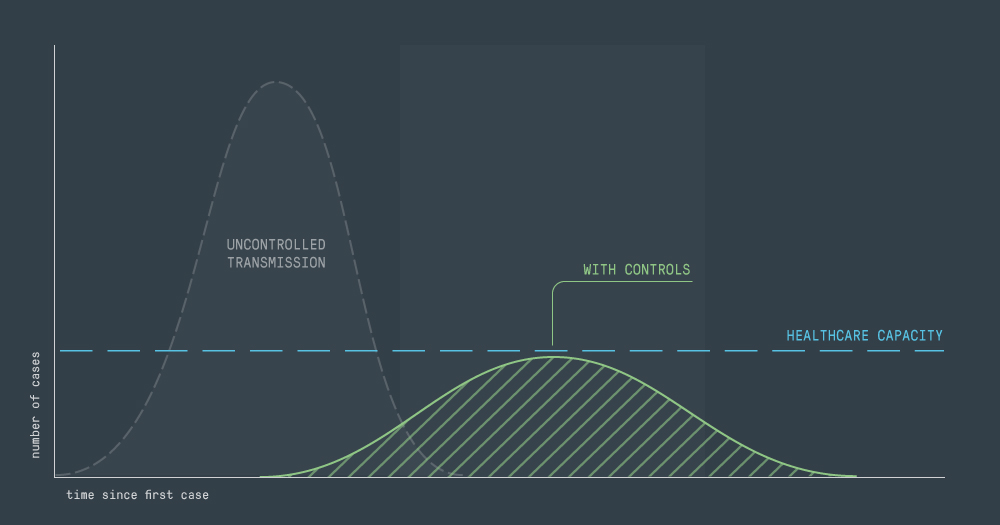
In the report, the team presents a pandemic curve for different degrees of potential government intervention. The different measures that they considered the impacts of were: no intervention, household isolation, social distancing, and school closures. With no intervention, the model predicted a need for hospitalisation thirty times what the current UK healthcare system can manage. Only by combining all of the measures would the healthcare system not be overwhelmed.

This is one of the graphs from the Imperial paper [1]. The vertical axis shows the number of critical care beds needed through time in each scenario. The blue region shows the time period on the horizontal axis where various social distancing is applied. The horizontal red lines show the maximum number of NHS critical care beds available. The various lines, explained in the key, show the difference between doing nothing,  applying some social distancing and with full school and university closures. This graph shows that without all measures being taken the number of available beds would be exceeded.

What happens next? What about the large peak when the measures are withdrawn?

We need time. Time to get better testing, time to find new treatments and more ventilators. The current model suggests the current restrictions should keep the number of cases at a manageable level for the next few months.

The Imperial model makes important assumptions. Firstly, it assumes that measures put in place to control the spread of the virus are all lifted at the same time, which is neither realistic nor advisable. Secondly, it assumes that recurrences of the outbreak after the initial lift of restrictions continue for an indefinite period. In reality, this may not happen due to people acquiring immunity or the availability of a vaccine. Finally, it doesn’t account for infected cases that have gone undetected or for tools such as contact tracing, which can help break the chain of transmission.  All of this will affect the number of people who become infected once the measures are lifted.

competing model by Oxford University followed the publication of Imperial’s model. This model stated that under-detection of cases could be high, indicating that a significant part of the UK population could have already contracted the virus. This caused a big media response, however, given the data available it seems an unexpected conclusion to draw, as epidemiologist Adam Kucharski pointed out.

The Imperial model has since been refined and other competing models have been published, but the consensus remains.

It’s important to remember that the model is only based on what we know now. Models are continuously updated. Research teams are now focusing on measuring the impact and preparedness of healthcare systems by predicting the number of hospital beds, ventilators and testing kits needed based on what the models are telling us. They are also looking at the big question of the length of time needed before lifting restrictions and how to prevent a second wave of the outbreak, and models will help us to understand this better.

So in a few months the situation will have changed, the model will be updated with more information and the curve may look very different. Data should start to emerge to confirm level of immunity gained from recovering from the disease. More hospitals are currently being built and there is a national effort to produce more ventilators. Doctors have already identified the response that causes some patients to develop severe symptoms while most have a mild version, which may make it possible to screen people to detect who is most vulnerable or identify better treatments.

Given the rate of learning in the last 3 months the picture may be very different when more accurate assumptions  are fed into the models.

Once a vaccine has been developed, we may  require modelling for rolling it out to best effect, as well as monitoring changes in the virus. This will feed into the ongoing body of research for this pandemic and will help us prepare for future pandemics.

While models are not always accurate, they help build a consensus of understanding that informs policy and helps save lives. Taking the right measures at the right time is key in the fight against Covid-19 and through modelling we can make the best-informed decisions possible from the data available.


References

[1] https://www.imperial.ac.uk/media/imperial-college/medicine/sph/ide/gida-fellowships/Imperial-College-COVID19-NPI-modelling-16-03-2020.pdf
[2] https://www.gov.uk/government/groups/scientific-advisory-group-for-emergencies-sage-coronavirus-covid-19-response 

Surgical robotics
Share:

Where’s the value in surgical robotics?

The first robot-assisted surgical procedure was performed in 1985. In the 35 years since, the field of surgical robotics has exploded, with both surgeons and patients demanding access to the technology. This boom has brought with it plenty of vocal advocates, and just as many critics, debating the risks and rewards of robotic technology over traditional open and laparoscopic techniques.

The main criticism of robot-assisted surgery comes down to the fact that, despite the lofty initial and recurring costs associated with robotic equipment, patient outcomes of robotic-assisted procedures seem to be no better than conventional laparoscopic procedures. Some may see this as evidence that investing in surgical robotics is nonsensical, but it is worth considering the future potential of the technologies. For while the tools and techniques used in conventional laparoscopy may see slow incremental improvements over coming decades, each new generation of surgical robots will likely continue to bring radical step-change improvements in procedural precision, patient safety and surgeon control and comfort.

Current benefits of robot-assisted surgery

The current generation of surgical robots offer a few significant advantages over traditional laparoscopy.

  • Ergonomics & surgeon comfort: the ergonomics of laparoscopy are not ideal and can take a toll on a surgeon’s body. During robot-assisted procedures, the surgeon sits at a workstation and controls his surgical tools using ergonomic master controllers. If the surgeon needs to take a break at any point in time, they can let go of the controllers, and the robotic instruments will maintain their current positions.
  • Precision: a robotic system translates the inputs from the surgeon’s controllers to output motion of the surgical instruments. This allows for motion scaling (for example, 3mm of movement by the surgeon results in only 1mm of movement of the surgical tool), providing unprecedented surgical precision.
  • Stability: while providing some haptic feedback to the surgeon is desirable, a robotic system can handle all the stresses and loads associated with a procedure without translating them all back to the surgeon’s hands. Along with surgeon comfort, this allows for improved stability.
  • Better visibility: the steerable robotic endoscopes provide a high-definition 3D visibility of the surgical site, allowing the surgeon to better see what they are doing, compared to 2D endoscopes used in laparoscopy.

More hands: while we humans are tragically limited to typically having only two hands, robots are not subject to such limitations. The da Vinci Xi, for example, has four robotic arms. The surgeon toggles back and forth between controlling different combinations of these arms using foot petals.
Fast learning curve: learning how to safely and effectively perform robot-assisted procedures tends to be faster than training to perform laparoscopic procedures.

Current limitations of robot-assisted surgery

Advocates of surgical robotic technologies tend to focus on the various benefits without mentioning some noteworthy risks and challenges:

  • Setup time: nurses and surgical assistants often complain about the long time it takes to prepare a robotic system for a procedure, including wipe-downs, draping and loading of surgical tools.
  • Lack of haptic feedback: current robotic systems provide very limited feedback of applied forces to the surgeon. Instead the surgeon is required to use the visual feedback from the 3D endoscope to judge what amount of force he is applying to patient tissue. Some studies suggest that surgeons apply significantly higher forces and stresses to tissue using robotic systems than using laparoscopic tools, potentially resulting in more damage to the tissue.
  • High cost: a daVinci Xi system costs about $2M USD. Each da Vinci surgery may cost $3,000 USD more to the patient / insurance company than a traditional laparoscopic operation.

The future

Many of the criticisms above are valid and must be taken seriously. Effectiveness and safety of robotic technologies must continue to be proven, and limitations should be assessed and accounted for. However, these should be seen as criticisms of current robotic systems on the market today, not as criticisms of robotic surgery in general. If anything, these criticisms hint at where surgical robotics is headed next. While Intuitive Surgical continue to innovate, the field of players is also getting wider, with companies like Johnson & Johnson, Medtronic and Stryker investing billions into research and development. Future generations of robotic systems will bring a range of short-term and long-term improvements and will redefine what is possible in surgery.

Increased haptic feedback is expected to be a key feature in some future systems. This will allow the surgeon to truly feel the motions and gestures they are executing with the robotic instruments.

The cost of robotic systems and tools is expected to decrease as the volume of robotic systems and tools sold continues to grow and with increased competition, as new companies bring their robotic systems to market in the coming years.

There may be potential benefits in surgeons being able to carry out procedures remotely. Already today, the surgeon workstation does not necessarily have to be in the same room as the patient. Taking this to the next level, future systems may allow an expert cardiovascular surgeon to perform specialist surgeries all around the world from the comfort of his own office.

The Big Question

All of these features still depend on a human being (the surgeon) having control of every movement of the robot. The big question is: at what point will we be comfortable giving up some of this control to a robot? Crossing this line will increase the productivity of the scarcest of resources, highly trained surgeons, and start to significantly improve the cost-benefit equation for these systems.

Leveraging image recognition and artificial intelligence, it is fathomable that, in the quite near future, we could have a robotic system capable of making decisions and performing certain tasks independently. Especially with repetitive tasks like suturing, a robot could be trained to become increasingly efficient and effective.

However, as we’ve seen with self-driving cars, we humans have very little tolerance for injury and death caused by robotic systems. Despite worryingly high death tolls caused by inebriated and distracted drivers, it is not enough for new technology to reduce injury and death. Even a single death caused by a self-driving car convinces some that the technology is not ready. This may be the same psychological and regulatory hurdle that surgical robotics must overcome to realise its potential.

Connect with CDP

For more on how to accelerate innovation in surgical robotics, from device design to clinical value, contact Cambridge Design Partnership.

|
Share:

CDP opens new building at their Cambridge HQ

Cambridge Design Partnership recycles ten old shipping containers to create a new upcycled office building.

As you’d expect from a business specialising in innovation, when it came to extending their company HQ at rapid pace, they came up with a rather clever plan.

CDP have just opened a remarkable new building at their Cambridge HQ, created from ten shipping containers and a tensile fabric atrium. The innovative design provides a new canteen and refreshment area, as well as six meeting rooms and six video conference booths.

“The challenge was how to create a temporary building that would provide the spaces the business needed. Our current offices are built around a large courtyard car park, so we thought that it would provide an ideal location for a new structure,” says Mike Cane partner at CDP.

“We wanted a new working space that would be both inspirational and have a life after we finished with it. Basing the design on recycled shipping containers provided fast construction and several options for reuse”.

In the past six years, CDP has expanded from a team of 30 to 150 engineers, scientists and designers. Even with the establishment of a second engineering facility in Raleigh, North Carolina, CDP’s forward planning anticipated the need for more space at their Cambridge office.

“We had already added a new building to our site in 2014, but our continued growth meant we were becoming short of space again,” explains Mike. “Planning limitations meant we could not add a third building here, so in the medium term a move to a new larger site was inevitable. But we needed to bridge the gap. So as designers ourselves, we were inspired by other shipping container buildings we saw and decided to design our own interpretation. 20ft containers lend themselves to small, self-contained meeting and video conference booths, and their structural integrity means they need minimal foundations, so the building can be easily removed and the original car park reinstated for the next tenants. Tensile fabric roofs are translucent and make great, light and airy spaces for informal meetings and eating lunch.”

CDP was founded 20 years ago and now works globally on a wide range of technology and product design projects, focusing on the Healthcare and Consumer sectors. The company is employee-owned and won the Employer of the Year award in the 2019 Cambridge News Business Excellence Awards. CDP also recently attained a prestigious Red Dot award, deeming it to be the third best design studio in the whole of Europe and the Americas.

The shipping containers came over to the UK from China with cargo in them and have been re-purposed by Ipswich based company Adaptainer, with insulated linings, windows, electricity and IT infrastructure. The structural fabric atrium was supplied by Streetspace, with the high tech fabric manufactured in New Zealand.

“The building was constructed in just 3 months and is designed to last 3 years on our site. It’s bolted steel construction allows it to be dismantled, loaded onto trucks and moved to a new site, providing it with a second life.” says Mike. “But for now this building has helped us to stay in Toft longer, and allows us to continue to offer great service to our clients in a pleasant, relaxed atmosphere for our team.”

Lovelace Instrument
Share:
Find the authors
on LinkedIn:

CDP engineer creates a remarkable musical instrument

Jonathan Morris, Mechanical engineer, explains how he came to design and build a most unusual musical instrument at CDP

Q. CDP doesn’t usually make musical instruments, does it?
Jonathan: No! This is definitely one of our more unexpected projects here at Cambridge Design Partnership. But when composer Robert Laidlow approached us with a project celebrating computing and Artificial Intelligence, it was clear that engineering and design could help him create an entirely new musical instrument.

Q. Sounds intriguing, tell us more…
Jonathan: We have built ‘The Lovelace Engine’, a mechanical musical instrument inspired by the work of Ada Lovelace, who studied the earliest computers back in the 1830s and 40s. Lovelace was a pioneering computer scientist, and one of the first to realise the potential of computing to perform ever more complex tasks.

Q. The machine looks stunning – how does it work?
Jonathan: Essentially it is a mechanical engine that can make a variety of percussion rhythms, controlled by a single shaft turned by a crank handle. It was constructed here at CDP using our rapid prototyping capabilities, with many parts being 3D printed.

Q. What sort of music will be played on The Lovelace Engine?
Jonathan: It’s a major new work and part of a concert that is a tribute to Ada Lovelace at the Barbican in London this autumn, led by Professor Emily Howard, director of PRiSM at the Royal Northern College of Music. The engine will be played during an exciting new piece commissioned for the performance called Alter. The music will performed by musicians from the Britten Sinfonia with text written entirely by Artificial Intelligence.

Q. So is this instrument a replica of the first computers that Lovelace worked on?
Jonathan: It’s very much inspired by them and draws inspiration from the mechanical technology available to Lovelace in the 1800s – there’s no electricity or circuit boards involved. But this is a musical instrument, not a computer, so it is a tribute to Lovelace rather than a copy of the computers she worked with.

Q. Was it difficult to make?
Jonathan:  It has been a unique challenge as we wanted the engine to be configurable, as Lovelace envisaged, so that it can change rhythm mid-performance. It’s been really interesting as a mechanical engineer to work on such an artistic, creative project.

Q. Not your everyday work at CDP then?
Jonathan: I’m in my first graduate job here at CDP and the variety of what we get up to here is fantastic. I am mostly working on medical devices and consumer products as well as designing experiments and test rigs. No two days are the same but, yes, a musical instrument is probably a one-off for us right now! I can’t wait to see it being played on stage.

The Lovelace Engine will be played at the Barbican on November 2 as part of “Ada Lovelace: Imagining the Analytical Engine”.

For more details, visit the site

Website-Graphics_mobile-hero_reddot
Share:

CDP ranked in the top three international design firms

Cambridge Design Partnership is recognised as one of the top three agencies in Europe and the Americas for design innovation, according to the Red Dot awards programme.

Red Dot has become established internationally as one of the most sought-after seals of quality for good design. They organise annual competitions looking to applaud the best in product design, globally.

This year Cambridge Design Partnership (CDP) came third in the ranking for design firms that continuously and progressively, produce cutting edge and forward-thinking product concepts.

“We are absolutely delighted with the news,” says Mike Cane, founding partner of CDP. “To have this sort of accolade on a global stage is really gratifying. It’s a testament to the hard work and creativity of our whole team.”

In presenting the award, Ken Koo, President of the Red Dot Award in Asia congratulated CDP and stated that the ranking recognised CDP’s continued investment in design and was a “vigorous reflection of real and sustainable design innovation capability”.

CDP was founded 23 years ago and has grown rapidly offering customer focussed technology and design innovation. Capabilities start with front end research, strategy and design, and include mechanical, electronics and software engineering as well as manufacturing and quality management. They work for market leading companies in healthcare, consumer technology and energy in Europe and US.

CDP innovations which have won coveted Red Dot Awards in recent years include the First Response Monitor, a wearable connected device which measures and broadcasts patients’ vital signs for instant analysis by medics in emergencies. Another is Klarus, a drug delivery system aimed at patients with conditions such as rheumatoid arthritis, which necessitates regular self-injection with medication.

Learn more about Red Dot Design Ranking

||
Share:

Can sleep tech become ubiquitous?

A good night’s sleep is increasingly considered to be just as important for our health and well-being as eating healthy food and exercising regularly. Unfortunately, today’s 24/7 high-stimulus, digital world is renowned for disrupting our natural sleep patterns. The average 21st century human is now sleeping significantly less than in the past. In 2017, McKinsey reported that more than one in three Americans does not get enough sleep – roughly the same number who are obese.

What is more, our sleep quality – as well as quantity – has decreased as well.

This emerging need has created an ecosystem of manufacturers, retailers and health service providers as well as pharmaceutical companies that has formed around sleep health. The McKinsey study reported the US sleep-health industry is currently worth between $30 billion to $40 billion and has historically grown by more than 8 percent per year, with few signs of slowing down.

In addition to the traditional categories of clinics, pharmaceuticals and bedroom furniture and bedding, a new wave of sleep gadgets has emerged.  Crowd funding sites are full of novel sleep devices from masks to robots. Many are connected, continuing the trend of measuring and connecting our lives.  Some even aim to stimulate the brain to create therapeutic effects.

Certainly sleep is becoming better understood, but scientific knowledge is still at a relatively early stage and this equates to a general lack of understanding through the population, government and mainstream industry.

“It’s an exciting time for the emerging sleep-ware industry”, says Clare Beddoes of Cambridge Design Partnership: “Here at CDP, we believe that sleep-tech is an exciting area that is evolving rapidly, following closely on the heels of the developments in the fitness and wellness sphere, which has seen an explosion of innovation in recent years”.

“We’re already working with companies assisting them in defining opportunities to innovate and we expect many interesting and successful advances in the area of sleep technology in the near future.”

With this in mind, here are five basic questions we think you need to ask if you are planning to bring a new sleep-tech product to market. If you have the answers to these then, with any luck, you won’t be losing sleep over your product development!

1. Can you show that your customers actually need your proposed product?

It’s great to have an idea for a product that you think might be the answer to an insomniac’s prayers. But are you sure it’s what the market really wants, needs and will pay for? Our approach is to start with the user and to identify the unmet needs where solutions will be really valued. This makes sure you’re heading in the right direction before you spend a lot of time and money pursuing a new idea.

2. What is the existing competitive landscape for similar products?

We’re fascinated by the plethora of sleep devices on the market and although it is increasingly crowded, we believe that the market is in an early phase and there are most definitely spaces for products that address the needs of broad market groups. So take the time to find out what the competition is and where the spaces are for innovation for the majority of mainstream consumers.

3. Where do market unmet needs align with technical solutions that can improve sleep?

The aim must be to create the must-have sleep-tech product. Just recently, here at CDP we worked on a technology to monitor REM sleep. We discovered that not only did users want to know how much REM sleep they had every night, they wanted to know whether it was enough and, then, crucially, they wanted to know what to do if it wasn’t. Successful products need to close this loop and not leave customers stranded.

4. What is the best revenue model for your concept?

This is crucial in the digital world. Will your product work if sold for a one-off payment or would it be a better proposition as the start of a relationship with your customer? Will customers pay for every night they sleep better, or will they not notice the difference?  In the AI enabled world consumers are beginning to expect customised solutions, continuous updates and evidence- based feedback.

5. Who are the most impactful sleep professionals for you to work with?

To develop and launch your product successfully, you’re going to need clinical and scientific back-up. So, do you need to work with doctors, psychologists, clinical researchers or YouTube sleep experts? Should you be turning to the peer consumer community, personal trainers or artificial intelligence? It’s all about finding the best development support route and final endorsement.

That way, your innovation journey will stand the best chance of seeing those sweet dreams of success become a reality.

In packaged products
Share:
Find the authors
on LinkedIn:

In packaged products, context is king

Chris Houghton leads Brand Innovation & Packaging at Cambridge Design Partnership, he has worked on an array of successful insight, design and strategic innovation projects with top consumer goods names including Arla, Carlsberg, Coca-Cola, Diageo, Nestle, PepsiCo, Procter & Gamble and Unilever.

Following his ‘Context is King’ keynote speeches at PACE in Amsterdam and AIPIA in New Jersey, he summarises five key questions brands need to answer when building an innovation pipeline.

Bill Gates famously wrote, Content is King back in 1996. His forecast…“Content is where I expect much of the real money will be made on the Internet”…

How right he was as we’ve seen the digital revolution establish over the past decade. On demand streaming services have overtaken traditional audio and video formats with gaming next on the horizon. Coupled with new business models, the likes of Uber and Airbnb have tapped into consumer demands making brands sit up and think what should we do to take advantage of this fertile digital landscape?

Context #1. Who?

Who are you designing for? Do you understand their cultural sensitivities, their customs and established rituals? Do you know their values? Their gender or generation? Their mental and physical abilities? Are they tech-savvy – do they need to be? The better you understand specific population cohorts the better your chance of successfully meeting their expectations.

Each culture and country has its own technology trajectory and utilisation levels. The worldwide average for time spent on the internet is now 6hrs 42mins which is just above USA’s average but some way short of chart toppers the Philippines clocking in at over 10hrs per day (source Digital 2019, wearesocial.com users aged 16-64).

Some categories like beauty and cosmetics are ahead of the curve with high digital engagement. L’Oreal was one of the first brands to realise this with their Makeup Genius app which allows users to compare before/after make-up and hair effects on-screen. This pre-purchase, augmented reality tool enables fast navigation of product choices to help consumers decide what to buy – within two years L’Oreal said it had 20 million users worldwide.

For decades, beauty brands have been heavily reliant on celebrity endorsements or experts in lab coats to target and assure consumers but today that paradigm is changing. Millennials increasingly seek individuals that they can relate to, building seemingly intimate relationships with those they follow on Instagram and YouTube channels, who ultimately steer their lifestyle decisions. This mix of opinions, edited evidence, facts and ‘fake news’ can confuse many consumers, so building trust is more important than ever.

Context #2. What?

What category does your brand belong? Beverages, confectionery, personal care? The answer to this is obvious, of course and you’ll invest great effort closely tracking the activities of your competitors. But that is just the start. Innovations don’t always come from your direct competitors. Instead, brands are often blindsided from an unassuming left field competitor, arriving at speed with disruptive and transformational innovations. For instance toothpaste brands didn’t expect their category to be impacted by confectionary companies making chewing gum with teeth whitening claims.

We look at the ‘what’ in a solution agnostic way using the ‘jobs-to-be-done’ methodology. In a nutshell this approach states that when consumers become aware of a job they need to get done, they look around for a product or service that they can hire to do so.

Procter & Gamble’s Tide is a good example of a brand that have extended their portfolio to cater for changing contexts. The core range is unsurprisingly traditional powder, liquid and convenient pod packaging, but more recently Eco-Box was introduced to address e-commerce shipment and improved sustainability stats. The brand has even stretched beyond products solutions with the test market launch of Tide Cleaners. A direct to consumer, digitally enabled, subscription service that targets ‘generation rent’ to simply drop/collect dirty/clean laundry. This cleverly allows the brand to reach new consumers whilst experimenting with new business models, partnerships and logistical infrastructures in a low risk way.

Context #3. Where?

Where is your product used? At home, at work or on the go? Each location may present a different hierarchy of jobs. In fragrance, for example perfumes have clearly defined packaging conventions. Consumers expect a thick-walled glass bottle, an elegant closure with a precise dispensing atomiser. This objet d’art is entirely appropriate to adorn a home dressing table. However, if on the go,  this format no longer seems so practical for a handbag.

In 2017 British parfumier Jo Malone launched Fragrance Paintbrush under the brand Jo Loves. A compact perfume gel applicator that is crucially handbag friendly. This delivers an entirely different application ritual, delicately brushing quick drying fragrance onto the skin rather than the traditional perfume spritz.

In a digital, augmented world understanding the ‘where’ is crucial to enable or enhance the experience, especially when leveraging the surrounding environment. Whilst outside the packaged goods world, I find EuroStar Odyssey an insightful and charming experience to entertain children during a long train journey. Instead of uninspiring views inside a concrete tunnel beneath the English Channel, the carriage is virtually transformed into an underwater viewing gallery with dolphins and whales swimming besides you to help families kick start their vacation.

Context #4. When?

When is your product used? This can have a crucial bearing on consumer engagement levels especially regarding available time and tolerance levels. For example, a parent making up baby formula has very different functional, emotional and social ‘jobs’ depending on the time of day. Sterilizing equipment, measuring and mixing powder at 3pm is very different to 12 hours later for the 3am feed in the dark whilst you’re still half asleep, was that 4 scoops or 5?

When is a crucial dimension for digital interaction too. Many successful smart packaging examples have come from high engagement categories like alcoholic beverages and beauty where consumers make extra time for interaction and brand owners see sufficient ‘value’ to deploy cost sensitive technologies and/or content.

Context #5. Why?

Why should we choose your brand? What motivates us? What jobs are we trying to achieve? ‘Why’ ties together all of the other contextual considerations and forms the heart of any value proposition and reason to believe.

Take PepsiCo’s Gatorade brand for instance with their emotive message of #WinFromWithin. They understand people are motivated to ‘win’ especially in a sporting context. This reinforces how the brand was created in 1965 by scientists to provide athletes competitive advantage through superior hydration. Fast forward 50 years and the brand found themselves losing share with an influx of competitors big and small. To reverse this trend they identified contextual consumer jobs to cater for their needs more comprehensively. This prompted the launch of G Series, primarily a ‘When’ based product range to help athletes before (Prime), during (Perform) and after (Recover) sporting efforts. This triggered their portfolio to grow beyond solely sports drinks into food to create an ecosystem of sports fuels, from chews, bars, powders, drinks etc. More recently we’ve seen the launch of the Gx Bottle, a smart hydration system that helps individuals to customise their own products, with connected sweat tracking and variable carbs and electrolyte pods, the Nike ID of the hydration world.

So ask yourself, is your brand prepared for this revolution? Do you cater for those consumers that don’t accept one-size-fits all? Whilst Content may be King in the purely virtual, service-based world, Context is King for physical, packaged offerings where content can augment and enhance the physical experience rather than be able to entirely replace it.