
||||||||||||||||
Share:
Find the authors
on LinkedIn:

Reducing the carbon footprint and plastic waste of LFTs: Evidence-based opportunities

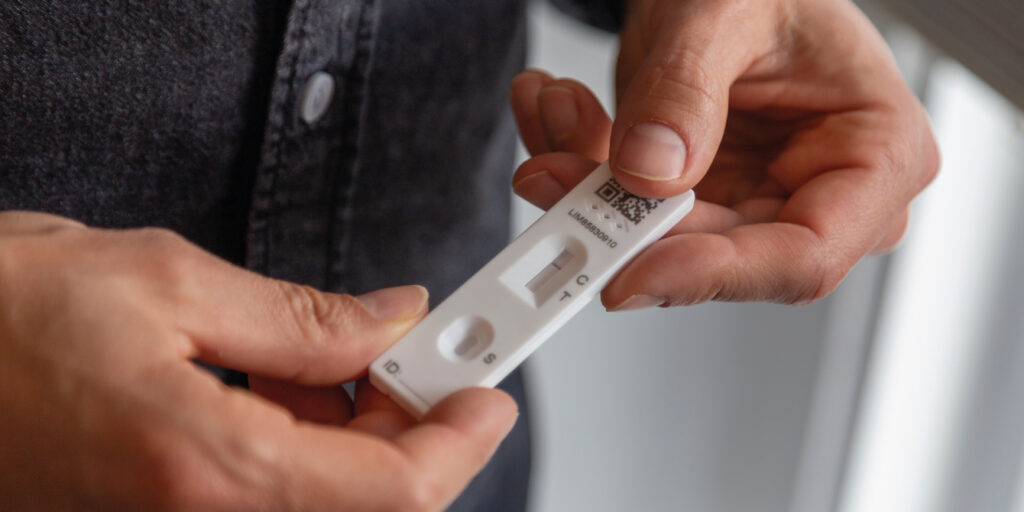
Billions of lateral flow tests have been used worldwide during the COVID-19 pandemic – over two billion have been provided in the UK alone. Debate has raged on social media about why the tests need to use so much single-use plastic and how they could be made more ‘sustainable’. The test strip caseworks is a particular source of dismay – why so much plastic to house such a tiny test strip?

With the UK government ending the free distribution of lateral flow tests for the general public – citing a transition from emergency response to longer-term management of the pandemic – now is the ideal time to look more closely at the sustainability of these lateral flow tests, and to seek the data to demystify some of the emotional assumptions being made.

Familiarity with lateral flow testing has certainly increased, as has confidence in their clinical performance. It’s expected that lateral flow devices will be more present in our daily lives post-pandemic – not just for COVID-19 and pregnancy testing but to diagnose diseases such as seasonal influenza and sexually transmitted infections – all from the comfort of the home.

We’ve carried out a high-level assessment to quantify the approximate environmental impact of lateral flow tests and identify evidence-based suggestions for improving their environmental sustainability.

Why do COVID-19 lateral flow tests contain lots of single-use plastic in the first place?

The emergence of COVID-19 was a global emergency, and vast quantities of lateral flow tests were needed urgently. Once developers could produce the right immunoassay chemistry to detect the virus (SARS-CoV-2), it required implementation in a low-cost, low-risk device, that has a mature supply chain – with proven, readily available materials that wouldn’t compromise analytical or clinical performance.

This meant using existing plastic casework designs to retain and protect the nitrocellulose test strip. Plastic is robust, low cost, lightweight, easy to transport, and easily printed for QR codes and LOT numbers. Critically, it’s a consistent material proven for the highest volume manufacturing and won’t interfere with the immunoassay chemistry.

From a performance, cost, and manufacturing perspective, redesigning the product with new materials would have been high risk. Material changes may also have needed significant R&D costs, new capital equipment as well as additional cost and effort needed to demonstrate equivalence and achieve regulatory approval – risking the ability to provide sufficient numbers of high-quality tests, at speed during the pandemic.

Our results: The sustainability of lateral flow tests

But how serious an environmental impact do these tests have? To find out, we broke down a test into its constituent components and weighed them to calculate the approximate environmental impact, using standard emissions factors to calculate the carbon footprint of a single test.

web_body_lateral-flow-test-kit-1

We focused on carbon footprint (the carbon dioxide and other greenhouse gases emitted during manufacture, transport, and disposal of the tests) and plastic waste (waste that would persist indefinitely if released into the environment) – the two issues that have attracted the most attention around lateral flow tests. A more comprehensive study should consider a broader range of environmental impacts, for example, the use of scarce resources and emission of other pollutants to avoid unintended consequences of any product changes.

Our results reveal:

  • The components needed to conduct the test account for around half of the carbon footprint and around two-thirds of the plastic waste. Packaging makes up most of the rest – as is often the case, a surprisingly high proportion of the total environmental impact
  • The test strip caseworks, which attracts the most comment online, is responsible for around 30% of the carbon footprint and 40% of the plastic waste. While it’s the most significant single contributor to the environmental impacts we evaluated, the large number of other small parts is also significant. Focusing on the caseworks therefore might not be the best strategy for improving the sustainability of the tests overall.
web_body_lateral-flow-test-analysis-1a-2
web_body_lateral-flow-test-analysis-1b-3

Lateral flow tests a minor piece of UK healthcare’s environmental impact

To put these numbers into context, we can compare the environmental impact of the two billion COVID-19 lateral flow tests distributed in the UK with the UK healthcare system’s overall environmental impact. We estimate the UK’s lateral flow tests have a carbon footprint equivalent to around 0.5% of the total NHS carbon footprint. This isn’t a trivial amount, but it’s also not the largest single contributor to the impact of the UK health system.

It’s also worth considering the positive environmental impact of a user-administered test on the health system. Conducting a test at home can eliminate the need for an individual to visit a test site, GP’s surgery, or hospital (assuming the clinical performance of the lateral flow test is adequate). Based on estimates from the Sustainable Healthcare Coalition, one lateral flow test has around 5% of the carbon footprint of a single GP appointment and produces a similarly low percentage of non-degradable (plastic) waste.

And that’s before we consider travel. We estimate one lateral flow test has the same carbon footprint as driving 350 metres in an average UK car. So, if you’re driving yourself to a test site or GP surgery some distance away, at-home lateral flow tests compare even more favorably.

If a lateral flow test prevents an individual from transmitting COVID-19 to a vulnerable person, there’s a public health benefit – as well as an environmental benefit – to keeping people out of the hospital. We can all see the discarded waste from home tests, but the less visible impact from energy- and material-intensive medical interventions is often significantly higher.

These approximate figures demonstrate why building an evidence base is vital during product development targeting sustainability objectives – because the results can be unexpected and non-intuitive.

Quick ways to optimize today’s lateral flow tests

Just because waste from lateral flow tests might not be the most urgent sustainability issue for UK healthcare, that doesn’t mean we can’t and shouldn’t do something about it.

We used the ‘avoid/shift/improve’ model to find potential quick wins for lateral flow tests. These reduce the carbon footprint of each test by nearly a third and the plastic waste by almost a quarter – without impacting the fundamentals of how the test works.

They include:

  • Eliminate waste bags. There’s a case for quickly isolating contaminated waste (even given COVID-19 also spreads from infected individuals through the air), but the bags account for around 5% of the carbon footprint of the test. It’s not clear how widely used they are in a domestic setting – there may be a risk-based justification for not including them in the test kit.
  • Package all the test strips in a single foil pouch. Using a single re-sealable pouch to protect the tests from ambient humidity (rather than individually packing each test in a pouch with desiccant) is common in packs of lateral flow tests designed for use by healthcare professionals. However, once opened, the stability lifetime of the remaining tests is affected.
  • Reduce the size of paper instructions. These are important for the effectiveness of the tests and are a regulatory requirement, but account for 5% of the carbon footprint of a test – could they be reduced in size?
  • Eliminate the cardboard sleeve. This packaging isn’t essential to the safe and effective functioning of the test, and it seems likely that the functions it does provide could be achieved with less material.
  • Prefill the extraction tubes with buffer solution. This is already done in some test kits, although manufacturers need to be conscious of moisture loss and the effect on shelf life. However, the separate plastic vial used in the test kit we studied accounts for around 5% of the carbon footprint and plastic waste.
  • Increase the size of the pack from seven to ten tests. This would mean less package waste per individual test. Including ten tests in one pack instead of seven reduces the carbon footprint by around 5% (depending on how many other optimizations are done at the same time). Perhaps a pack of seven tests was originally designed to cover a week of daily testing – but is that how tests are being used in practice?
web_body_lateral-flow-test-analysis-2

Redesign of the test strip caseworks

Looking to the longer-term gets us into product redesign – creating a new generation of the product with sustainability in mind. Doing this can take significant investment since, for medical devices, it’s likely to require new regulatory approval, which is a lengthy and costly process.

A popular idea circulating for lateral flow tests is to minimize the plastic test strip caseworks (without compromising the essential functions of providing a stable platform, and protecting the nitrocellulose test strip). It might be possible to halve the caseworks mass and reduce the overall carbon footprint and plastic waste by 15-20%. This would require significant investment in R&D, production tooling, and regulatory approval hoops to jump through – but could be worthwhile if future demand for tests stays high.

Longer-term options

If we consider that the world may require billions more lateral flow tests over the coming decade, a more comprehensive redesign becomes commercially viable. This could involve stripping the design back to the fundamental requirements for a lateral flow test – flowing a sample through the test strip in a way that is controlled and free from contamination. Current designs take advantage of established components to collect, buffer, and dose the sample – but, at this production volume, it may be worthwhile designing a system from the ground up that is optimized for cost, usability, performance, and sustainability.

Sustainability as a brand differentiator

It’s clear there’s scope to optimize lateral flow tests to reduce their environmental impact – and a systematic analysis reveals options beyond those that might jump out to someone when they use the tests. But it’s essential to put the impact of lateral flow tests in the context of the wider healthcare system, to focus resources where they can have the most environmental impact – and to recognize that, sometimes, the plastic waste people can see helps to avoid more serious, but less visible consequences.

On the other hand, while visible plastic waste from lateral flow tests may not be the most pressing environmental issue facing the healthcare industry, it highlights the growing influence consumer opinion is likely to have as diagnosis and treatment shift from hospitals to homes. And as lateral flow tests become (in the UK, at least) a product people buy with their own money, choosing from a range of options, there may be a competitive advantage for businesses that take note and optimize their products for sustainability.

References
  • Prime Minister sets out plan for living with COVID [Internet]. GOV.UK. 2022 [cited 1 April 2022]. Available from: https://www.gov.uk/government/news/prime-minister-sets-out-plan-for-living-with-covid
  • The Sustainable Healthcare Coalition. Care Pathways Calculator. [Internet]. Sustainable Healthcare Coalition. 2022 [cited 1 April 2022]. Available from: https://shcoalition.org/

Connect with CDP

For more information on reducing the environmental impact of lateral flow tests without compromising performance, contact Cambridge Design Partnership.

Mastering fluid flow to enhance user experience|
Share:

Mastering fluid flow to enhance user experience

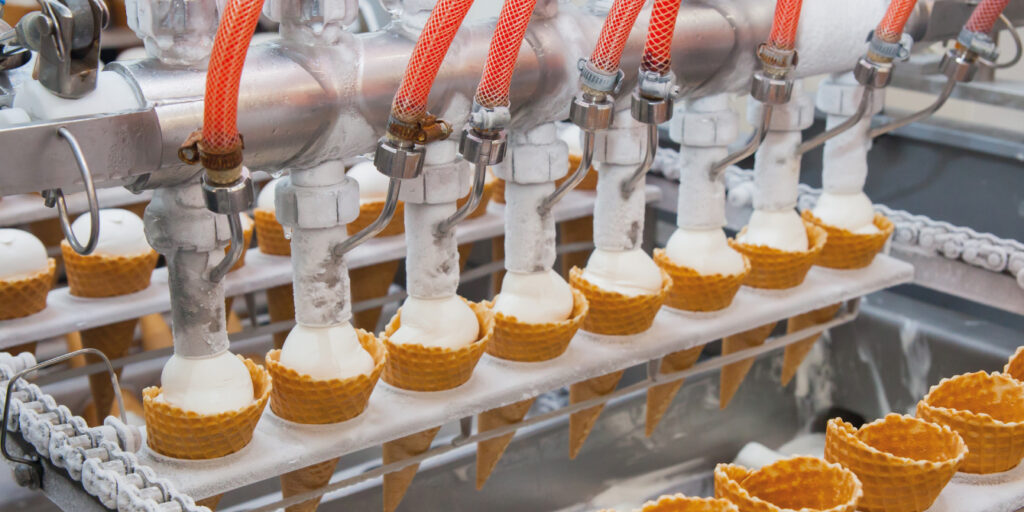
Ice cream and blood are two things you probably don’t want to think about simultaneously. But both are full of organic proteins and fats and behave differently from a fluid like water when they’re pumped through tubes. Innovators sometimes think about these similarities when creating, for example, a novel ice cream dispenser or device that filters out platelets from donor blood .

How a substance flows is a vitally important consideration for many products, from foods to skincare to medical devices to household paints. Development teams need to keep in mind a wide range of flow behaviors (for example, flow through nozzles, non-Newtonian flow, and foaming) to hit the sweet spot: a positive user experience that makes a product stand out in a crowded market. This means thinking about the science of how liquids and gases behave (fluid dynamics), as well as how the product responds to user interaction.

Look at how the squeezable plastic ketchup bottle differs from the glass bottles that were standard before 1983. The new design completely changed the user experience – no more digging down into the bottle with a knife to get the ketchup flowing again. Things became even easier for ketchup lovers with the debut of the upside-down squeezable bottle – no more awkwardly storing ‘regular’ bottles upside down in the fridge.

Or think about how the experience of washing your hands changed after the arrival of the liquid soap dispenser. Instead of having to share the same bar of soap with others, people can now wash “without the soapy mess”, as Robert R Taylor, who introduced SoftSoap liquid soap, put it, and can take only as much soap as they need.

While the flow of some liquids is analogous to water, whose behavior is well understood, other substances behave in much more complicated ways, requiring in-depth analysis work to understand when designing new products. For example, the air bubbles in ice cream make it behave as a liquid foam. Ice cream’s flow will change depending on how you’re dispensing it: Push it at high pressure through a narrow channel or nozzle, and the air bubbles will be compressed, allowing more ice cream to flow through the nozzle at once. When the ice cream is returned to normal pressure, the air bubbles re-expand, and the ice cream returns to its original size. Because of this complex and variable behavior, designing a product to dispense ice cream relies on hands-on experiments… which can mean going through gallons of ice cream before you can create a design that works as intended. Only by conducting these experiments to understand ice cream’s behavior can you build the mathematical model required to effectively develop a high-performance machine.

While it’s a shame to use gallons of ice cream in the quest for a better product, it’s not an environmental disaster. But shipping water-based products around the world does contribute to fossil fuel consumption and climate change. Removing water from laundry detergent helps cut shipping emissions by reducing bulk and making shipping more efficient. But it also dramatically changes how detergent flows and gets used by consumers. For example, measuring out 10 ml more detergent than recommended likely wouldn’t have an impact if you’re using a product that’s mostly water. But being off by 10 ml when detergent is concentrated could make a big difference for your laundry. So, it’s vital to ensure that dispensing is accurate, which requires an understanding of flow.

There are so many flow behaviors that can affect a product’s design. For example, should a container for insecticide include a mechanism to avoid skin contact and spillage? How could a medical device for freezing tumors be redesigned to eliminate vapor locks without the use of heavy and bulky high-pressure gas cylinders? Is there a way to dispense foaming hand soap in a decorative pattern for a premium experience?

Getting the design right for a flowing substance can differentiate between a product that fails and one that creates an experience that shifts category norms and delivers breakthrough consumer delight.


References

DC to DC converter design
Share:
Find the authors
on LinkedIn:

DC to DC converter design – Don’t blow your fuse (and other lessons)

With a vast range of off-the-shelf and feature-rich control ICs available, the selection and design of DC to DC converters is a superficially simple process.

But even with these highly integrated parts and design resources there are still many common pitfalls that can lead to Electromagnetic Compatibility (EMC) or thermal nightmares, blowing budgets, timescales, and the occasional fuse in the process.

I’ll share a few of the most common “gotchas” that electronics engineers will contend with early in their careers. We’ll dodge the complex calculations here, but there are excellent resources such as “The Art of Electronics” that can provide a deeper mathematical explanation of the issues at hand.

Medical device or arc furnace? Context is key

You wouldn’t use a trailer truck to commute to work, nor would you use the family car to ship potatoes to a supermarket. Both are vehicles but, clearly, they operate in different contexts so have different strengths and weaknesses.

The same logic applies to switch-mode converters and controllers. A quick glance at the cover page of any switcher datasheet will often reveal potential use cases. This is not just marketing: if a switcher is intended for industrial machinery or large server farms, it is quite likely that its EMC performance faces different limits to those marketed at consumer or healthcare devices. For example, while higher noise limits in industrial settings liberate chip designers to focus more on power efficiency by maximizing switching speed and slew rate, this can also increase emissions.

Excessive switcher noise can lead to poor performance of analogue circuitry, and in severe cases can interfere with the function of nearby devices. So, while those efficiency figures might be tempting, using the switcher in a compact medical device could lead to months of work to achieve compliance in EMC test chambers.

Lesson: Use parts in the context for which they are designed. Parts targeted at industrial applications may lead to issues if used in consumer or medical devices.

The heat must go somewhere

So, you’ve found a very neat five-amp switcher with a 3x3mm footprint that is 90% efficient? Sounds perfect for your space-constrained, high-power design. Except you’ve just plugged it in, and it cuts out after ten seconds at load. This is less than ideal. The problem is that, even at 90% efficiency, the switching losses at 5A are enough to make a 3×3 chip quite toasty – so much so that the thermal cut-out is operating. You might have been fine if you had a large copper flood to take the heat away, but this is a space constrained design so of course you don’t.

Lesson: Always consider the thermal design of a high-power system. Even if a small switcher is electrically capable of high currents, it may require substantial heatsinking that wipes out any size or efficiency benefits.

Evaluation modules are there to help

Datasheets are an important resource for correctly integrating a switcher design into a larger electronic system, but they are also a company’s marketing collateral, and can mask certain “gotchas” in product performance.

They do not guarantee that your design or use-case will play nicely with the chosen parts. Evaluation modules (EVMs) provide a less theoretical way of confirming that a part is fit for purpose, and further provide a “best case” performance benchmark given exactly the right implementation.

Taking an EVM along when performing pre-compliance EMC tests is a quick way to confirm that the chosen part is not going to be an emissions nightmare in the final design, and similarly if the EVM overheats, your design probably will as well.

Lesson: Buy in an EVM for your chosen switcher part and perform a set of tests that represent the final use case. If you have problems at this stage, it’s fair to say you should pick a different part or modify your design to mitigate the issues.

Saturation current is not standardized

If your switcher’s primary inductor becomes saturated, the efficiency of the system will rapidly plummet, and it will likely lose regulation or overheat. Most switcher manufacturers helpfully include the necessary inductor current calculations to enable you to make the correct part choice; however, the inductor datasheets can themselves be misleading.

Saturation current is universally defined as the current at which inductance decreases by a certain percentage, but different manufacturers use different percentages. Wurth often take a 20% inductance drop to mean saturation, but other manufacturers may use a 50% or even 80% drop.

Careful consideration must be given to peak inductor current, not just expected output current. High efficiency switcher designs typically look to minimize switching time and thereby losses, but this inherently drives up peak inductor current (and also EMC emissions!)

Lesson: When specifying an inductor, check what inductance drop the saturation current parameter refers to. If 80%, then you need to design more current headroom into your system to maintain correct regulation. Pay attention to peak currents!

Switchers aren’t always best

Switchers are more efficient than linear regulators, so does that mean they should be used wherever possible? Not quite.

Look at the efficiency curves on the datasheet. See that bit where the efficiency curve falls off a cliff at low loads? If your mobile widget, for example, needs a 3V0 rail derived from a 3V7 LiPo, and spends most of its time in a micro-power sleep mode, your switcher will likely burn more power than an LDO in those periods when the load is not drawing much current. If you then add in inductor switching losses and quiescent current, you could end up throwing a lot more power away through trying to use an “efficient” switcher than by using an “inefficient” linear regulator.

Lesson: When designing power supplies for very low power devices, consider if a switcher is honestly the best option. Even low power optimized designs (such as Analog Devices Micropower ICs) may still yield worse results overall than a carefully specified LDO in a low power application, so a system level power budget analysis is a must.

Keep it (the high current path) simple

Switchers create circulating paths of rapidly switching high currents as part of normal operation. If you don’t carefully implement these paths, then the system is likely to radiate or couple excess noise to other parts of the system, causing yet more EMC issues.

If possible, design the converter on a single layer to avoid layer transitions by vias, and with short, low impedance paths between the diode, inductor, and capacitors on the output side, with similarly low impedance paths between the input capacitors and switch FET. The ground path between all these components should also be robust and low impedance. If using a four-layer board, placing a ground plane under the switcher can suppress coupling to other parts of the circuit, but make sure to follow layout guidelines for the particular part, as coupling between traces and ground can be relevant to operation and performance!

Lesson: Keep the entire switcher design compact, and keep the ground return path short and on the same layer if possible. Ground planes and careful splits can be useful for reducing coupling of the circulating currents into other parts of the system.


This is far from an exhaustive list of all possible design considerations for DC to DC converters, but hopefully it gives you some useful guidelines on what to look out for when embarking on a new power supply design, particularly for those at the start of their engineering career.

Here at CDP we employ a talented range of engineers across all disciplines who solve problems like these on a daily basis. If you are interested in joining our team, check out our vacancies in Cambridge, UK or Raleigh, N.C. USA.

If on the other hand you are experiencing these sorts of issues at your company, please do reach out to CDP to see how our business can help yours.

ISO 11608 applies to needle-based injection systems||
Share:
Find the authors
on LinkedIn:

ISO 11608: All change for injector standards

Anyone who works with injection devices will be familiar with the ISO 11608 series of standards. The standards cover requirements, test methods, and design guidance for needle-based injection systems, and they are currently nearing the end of the most comprehensive review and update since 2012.

This review of ISO 11608 aims to better align the various parts of the standard and define a new class of device coming to the market, on-body delivery systems (OBDS), which the current revision of the standards doesn’t adequately describe. CDP develops and verifies many needle-based injection systems on behalf of our clients. Our manufacturing capability also gives us insight into the challenge of moving from building a handful of devices to building thousands of products. The Final Draft International Standard will be published soon, and I’d like to share some of the proposed changes.

It’s important to note that the current status of these standard parts is “draft”. The details of these documents may well change before publication, assuming that the various international bodies approve the publication of these standards. That said, let’s get into some detail.

ISO 11608 – update history in brief

Since the publication of ISO 11608-1: Pen Injectors for Medical Use – Requirements and Test Methods in 2000, the standard has expanded to cover many aspects of needle-based injection systems (NIS). The various parts of the published standards now cover:

  • General Requirements (11608-1 since 2012)
  • Needles (11608-2)
  • Finished Containers (11608-3)
  • Electronic and Electromechanical Injectors (11608-4)
  • Automated Functions (11608-5)

These standards were then joined by 11608-7 (Accessibility for persons with visual impairment) in 2016, which covers design guidance for improving accessibility to NIS for visually impaired users. These parts of the standard come under the remit of ISO Technical Committee 84 (ISO TC84), a committee focused on defining the requirements and test methods to ensure safe and effective devices are made available to the widest number of people.

I’ve had the privilege of being one of the UK’s representatives to this committee since 2013, so I’ve had a front-row seat for many of these discussions. So, what changes should device manufacturers and designers anticipate?

ISO 11608-1 – Needle-based Injection Systems

In this revision of the 11608 family, TC84 has worked to align the various parts, ensuring every potential NIS is addressed in the collection of parts, that they integrate well, and topics aren’t duplicated. ISO 11608-1 is the ‘parent’ part – the fundamental section of the standard that establishes the requirements and test methods for all NIS devices covered by the whole standard.

The revision to part one includes the introduction of OBDS (more fully described in ISO 11608-6) and several new concepts. These concepts include primary function, the functions of the device that allow it to be used safely and effectively. Functional stability, which expands testing regimens to simulate whole-life testing for reusable devices, is also introduced in this revision. In addition, the design specification for the NIS must consider the impact and requirements of the medicinal product, and the guidance on risk-based design approaches has been expanded.

There are also several smaller modifications to ISO 11608, including moving all requirements for electronics and EMC testing to ISO 11608-4, the addition of a choking hazard warning for small components, and the associated test fixture. A section has also been added to the document giving guidance on design verification with reference to ISO 13485.

ISO 11608-2 – Double-ended Pen Needles

The changes to ISO 11608-2 (Double-Ended Pen Needles) are more subtle. The determination of flow rate has been expanded to include suggested flow ranges and the sample sizes have been brought in line with the requirements in ISO 11608-1. The testing requirements to confirm compatibility between a needle and a specific NIS have been revised to include dose delivery and needle hub removal force. In addition, the samples required for functional compatibility have been reduced and guidance has been added regarding the requirements for the inner needle shield.

ISO 11608-3 – Containers and Integrated Fluid Paths

The scope of ISO11608-3 has now been expanded beyond defining cartridge geometry and performance to cover NIS Containers and Integrated Fluid Paths. Again, this change has been prompted by the development of OBDS. The requirement for resealing the cartridge has been reduced from 1.5x the intended use to a minimum of 1.0x the intended life. At the same time, the particle size for coring characterization has increased from 50um to 150um or larger. General requirements for soft cannulas and fluid line connections have also been added – another feature of the standard that can be traced back to introducing the OBDS class of device. Cartridge geometry definition has also been moved to an informative annex, meaning it’s no longer mandatory.

ISO 11608-4 – Needle-based Injection Systems Containing Electronics

I’ve had no direct visibility of the updates to ISO 11608-4. However, colleagues from the dedicated work group have summarized the two high-level changes as:

an expansion of the scope to include all electronics on a NIS (not just those concerned with the delivery of the drug product)
medicinal product delivery while connected to mains power (for recharging the battery) will be permitted

The challenge for part 4 has been to reference the parts of IEC 60601 which are appropriate for NIS. Part 4 references IEC 60601 explicitly, adopting the general requirements, means of patient protection, and power input requirements from the relevant components of the standard. The minimum ingress protection has been increased from IP22 to IP52, allowable temperatures for skin contact are defined, failure obvious to the user after free fall preconditioning is permitted, and the use of NIS in oxygen-rich environments has been defined.

ISO 11608-5 – Automated Functions

The revised text for ISO 11608-5 now explicitly directs the reader to ISO 11608-1 for general requirements and focuses on automated needle insertion and dose delivery. Requirements for fenestrated needles (needles with holes in the side) have been defined and the implications of non-perpendicular needle and cannula insertion are explored. The dose accuracy test has been modified for needles with automated insertion, and defining and measuring automated dose delivery time is now a requirement.

ISO 11608-6 – On-body Delivery Systems

This review includes the introduction of ISO 11608-6 defining the requirements for OBDS. This part of the standard initially expanded quickly as new terms and definitions were added but many of the new concepts have been adopted into the following component documents: 11608-1 (General Requirements), 11608-3 (Container and Integrated Fluid Paths), and 11608-5 (Automated Functions).

The crucial difference between an OBDS and an infusion pump is that the OBDS’s performance is defined by dose accuracy for a fixed volume; an infusion pump is defined by the rate at which the medicinal product is delivered. OBDS are also distinct from other NIS types in that they are attached to the body, whereas traditional NIS are held by the user for the duration of the delivery. The requirements and design guidance reflect this difference in use and the concept of a delivery profile (as a characterization tool, not a performance requirement) has been included to help device builders better understand their products.

This summary only scratches the surface of the comprehensive review of ISO 11608, and on the current timeline, these changes will not be published until late 2022, but if your development program extends beyond that date, I hope you found this summary helpful. The draft standards can be purchased from the ISO web store if you’d like to better understand the scope of the changes and the implications for your device development and verification program. If you’re a device developer and struggling with device performance, CDP has expert teams to help overcome these problems.

I’d like to thank my colleagues from ISO for their assistance in drafting this summary. In particular, Robert Nesbitt, Director of Portfolio Strategy at Abbvie and project leader for the ISO 11608-1 review, and Bibi Nellemose and Lars Brogaard from Danish Standards, whose tireless efforts as TC84’s secretariat keep the whole process running smoothly.

Connect with CDP

For more on how to navigate ISO 11608 changes and develop injection devices that meet evolving standards, contact Cambridge Design Partnership.
The design of a surgical torque wrench - Cambridge Design Partnership
Share:
Find the authors
on LinkedIn:

Crankl: from the bike shed to the operating theater, how CDP created a novel surgical tool

It is important to start each innovation journey with the broadest possible mindset because this opens the door to all sorts of different solutions that might exist outside one team’s experiences. A great example of this philosophy in action was the design of a surgical torque wrench that we developed recently.

The story starts with one of our engineers who was a cycling enthusiast. He saw an unmet need amongst cyclists who owned ‘high end’ carbon fiber bikes for a simple torque wrench to stop them over tightening screws and damaging their bike frame. So, in his spare time, he came up with a simple, plastic, single piece wrench design that indicates the right torque every time. He publicized his idea on a trends website, but unexpectedly he received messages from surgeons who were also bike enthusiasts.

It turned out that orthopedic surgeons were frustrated by the tools they had to make sure that screws used to fix fractures and implants were not over tightened. Plates are commonly used to support fractured bones and over tightening the screws can break the screw, damage the bone or make the screws difficult to remove, under tightening can allow the fixation to become loose.

A torque wrench is a tool that indicates or limits the torque applied to a screw. They are used across all engineering sectors and surgeons have similar devices adapted for the operating theater. However, the inherent cost and complexity of these tools mean that they must be reused, which in turn creates additional processing complexity and cost for the hospital. Before each procedure, they must be thoroughly sterilized and tested, which is time consuming and open to error.

Single use medical devices have seen increasing adoption since their early introduction in the 1960s, initially for their ability to displace durable devices with their requirement for costly reprocessing, calibration, adjustment etc. Over time their potential to deliver when sterility and performance are paramount has become increasingly prominent, as they can be manufactured to tight quality standards and tested, packed and sterilized in controlled factory conditions where economies of scale make this cost-effective. Following pressures towards sustainability and ever-reducing costs the trend is swinging back again – with devices leveraging the benefits of single-use style designs, but with more robust materials and designs to allow a limited number of reprocessing and re-use cycles (multiple-use devices).

What was needed here was a single or multi-use wrench, that was accurate, easy to use and did not require maintenance.

The plastic construction of the bike wrench showed us that a single, low cost, plastic molding could be used as the active element in a basic torque wrench. However, the surgical version would need to be more accurate & repeatable, have different settings for different screws, and be more usable in the surgical environment – with a form factor that allows single handed use, and haptic feedback indicating when the correct torque is reached.

The design team reviewed the original bike torque wrench design and analyzed where it could be improved and adapted for surgery. The original bike wrench had a beam that buckled when the right torque was achieved but this phenomenon was influenced by several parameters that could result in lower accuracy.  Together with a more compact form factor that better suited surgery, a new design was envisaged that only relied on bending, so should be more repeatable. It also provided better haptic feedback to the surgeon.

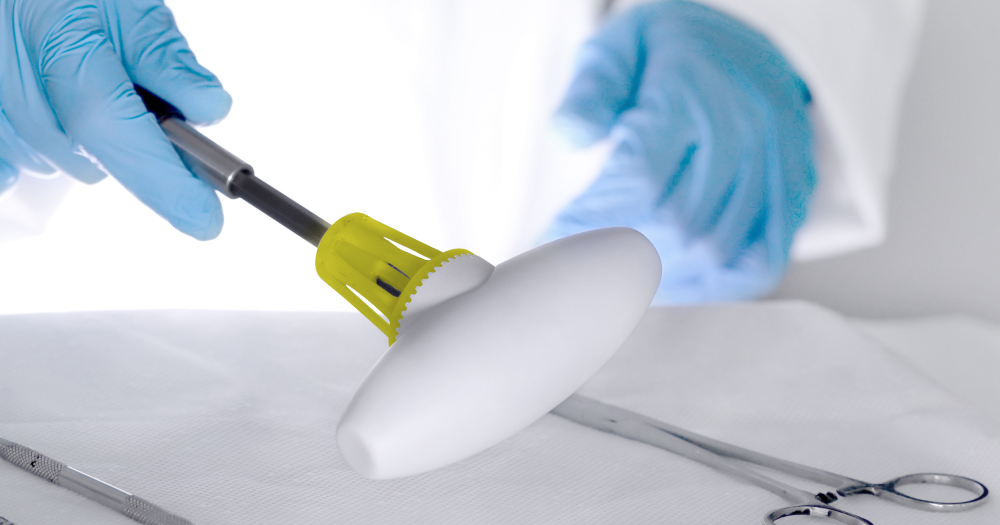
The design was modelled in 3D CAD and underwent FEA simulation to better understand how it would perform. This allowed the first round of optimization to get as close as possible to the desired performance. To allow the ergonomics and ‘feel’ to be evaluated, a first model was made using 3D printing. The Crankl surgical torque wrench was born.

When the wrench was assembled, the team were pleased that they had got close to a design that would meet the surgeon’s requirements. But 3D printed materials perform differently to the injection molded plastic that would be used in the final design, so another step was needed to verify the system would work. The team needed to have real injection molded parts in the correct material to test.

Moving to ‘production intent’ manufactured parts is a big step in all medical device developments. Medical devices have to meet strict standards to be placed on the market and CDP’s experienced device development and quality engineering teams ensure that this happens, in line with our ISO13485 certified quality system and device development process. This means that at the end of development all the correct processes and documentation will have been completed to support a submission under the EU Medical Devices Regulations and / or to the FDA, as appropriate to market need.

Obtaining molded parts is usually an expensive and time-consuming step because mold tools have to be designed and manufactured. These are complex and take time to make, and errors can occur that can affect performance and the validity of the test results – requiring a further iteration. For this reason, CDP has developed a “rapid digital molding” approach which uses 3D printing to very quickly make mold tools into which target polymers can be injected – rapidly creating production-intent parts.

Read more about the process.

So critical-to-function parts were made using digital tooling and molded plastic components tested. This resulted in the design being refined for a third time and new tools and components manufactured, a process completed in a few days using digital tooling, where it would have taken weeks and months using conventional processes.

This allowed the final prototype of the surgical torque wrench to emerge from the design and testing process, demonstrating that a single or multi-use design is achievable at a fraction of the cost of reusable alternatives. Based on this feasibility work we’re now in discussions with device manufacturers about taking Crankl into a full device development. This project demonstrates that even in mature markets like orthopedic surgery, where the same basic tools and techniques have been tried and tested over decades, there is still an opportunity to innovate by understanding unmet user needs and taking a different perspective on how to meet them. We believe this is best achieved by a multidisciplinary team with experience from widely differing sectors because often similar problems have found solutions and technologies that only exist in their specific markets. Even if these cannot be directly applied, they always inspire new thinking and new problem-solving approaches that can lead to better, faster and more cost-effective innovation.

pen-injector technology
Share:
Find the authors
on LinkedIn:

CDP collaboration on pen-injector technology with the Stevanato Group

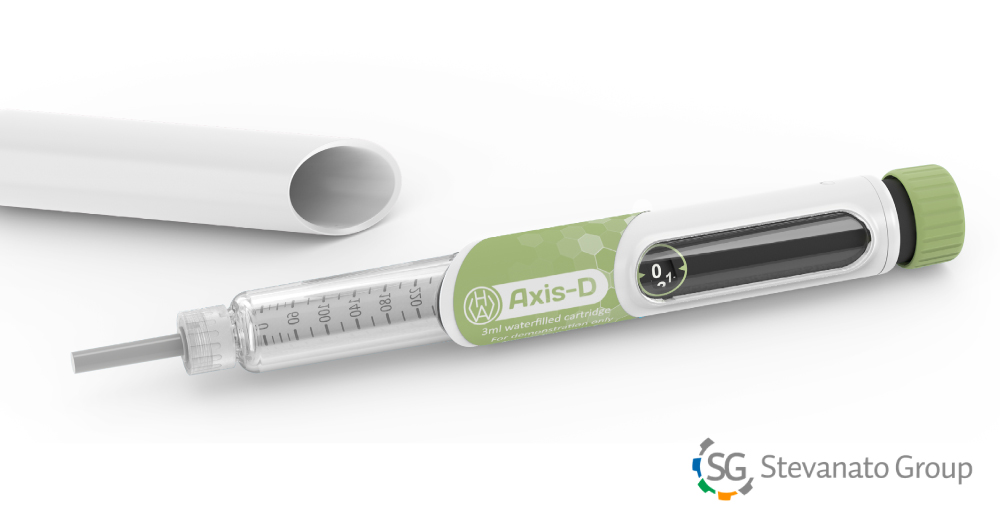
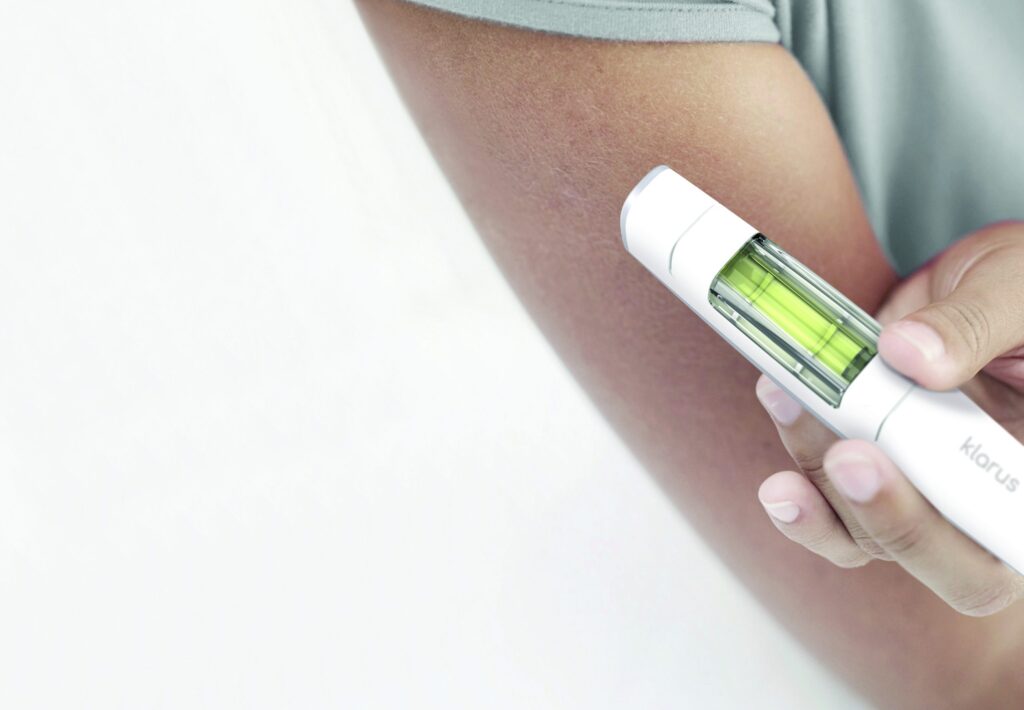
Cambridge Design Partnership (CDP), a UK and US based leading technology and product design partner, and the Stevanato Group, a leading producer of glass primary packaging and provider of integrated capabilities for combination products, today announced a collaboration agreement for the development of a new pen-injector based on the Axis-D technology and intellectual property (IP) licensed exclusively from Haselmeier in 2019.

The collaboration between CDP and the Stevanato Group strongly supports the expansion of the Stevanato group’s portfolio of devices for patients suffering from diabetes.

The agreement leverages the mutual strengths: on one side, CDP’s leading design and development expertise in drug delivery and on the other, the Stevanato Group’s extensive experience in glass containers, tooling, injection moulding, device assembly, and its global commercial network.

CDP and the Stevanato Group will be able to offer innovative drug delivery solutions to pharmaceutical customers working together from the first concept right through design development, scale-up, regulatory submission, and commercial-scale production in all global markets.

“We are delighted to be announcing this partnership,” says Uri Baruch, CDP’s Head of Drug Delivery. “The Stevanato Group is well established in the device field as a leading supplier of cartridges and assembly equipment for pen-injectors. It is a pleasure to extend our existing working relationship with them for their pen-injector and to address the needs of patients.”

“Our R&D team – with the active support of CDP, an established player in the design and development of drug delivery devices – will offer a competitive pen-injector platform and some customization options,” comments Paolo Patri, Chief Technology Officer at the Stevanato Group. “With the resources and experience of both companies, we will provide diabetic patients with a product that is easy-to-use, aesthetically appealing, and cost-effective.”

This new collaboration is one of the programmes behind the recent, substantial growth of CDP’s team of healthcare-focused designers and engineers in both Cambridge (UK) and Raleigh, NC (USA) facilities. “This is another strong vote of confidence in CDP. We look forward to this being the first of many end-to-end projects that we can collaborate on in this new partnership”, says Uri Baruch.


About Cambridge Design Partnership: Cambridge Design Partnership is an employee-owned technology and product design partner, located in Cambridge (UK) and Raleigh, North Carolina (US), focused on helping clients grow their business. Over more than 20 years, some of the world’s largest and most innovative companies have trusted CDP with their most important product development programs. CDP provide an integrated and holistic product development capability through a highly qualified team, well equipped development labs and ISO 13485/9001 approved methods. This encompasses research and strategy, design, technology and digital innovation, product development and regulatory and manufacturing support. CDP experts are able to take combination products through a full design cycle and submission, enabling customers to launch products that are user-centric and commercially effective. For more information, please visit our site.

For further information and media enquiries, please contact: media@cambridge-design.com or call 01223 264428

About the Stevanato Group: Established in 1949, the Stevanato Group is the world’s largest, privately-owned designer and producer of glass primary packaging for the pharmaceutical industry. From its outset, the Group has developed its own glass converting technology to ensure the highest standards of quality. The Group comprises a wide set of capabilities dedicated to serving the biopharmaceutical and diagnostic industries: from glass containers with its historical brand Ompi, to high-precision plastic diagnostic and medical components, to contract manufacturing for drug delivery devices, to vision inspection systems, assembly, and packaging equipment. The Group also provides analytical and testing services to study container closure integrity and integration into drug delivery devices, streamlining the drug development process. Thanks to its unique approach as a one-stop-shop, the Stevanato Group can offer an unprecedented set of solutions to biopharma companies for a faster time to market and a reduced total cost of ownership. For more information, please visit Stevanato Group.

For all enquiries, please contact Steven Kaufman

Surgical robotics
Share:

Where’s the value in surgical robotics?

The first robot-assisted surgical procedure was performed in 1985. In the 35 years since, the field of surgical robotics has exploded, with both surgeons and patients demanding access to the technology. This boom has brought with it plenty of vocal advocates, and just as many critics, debating the risks and rewards of robotic technology over traditional open and laparoscopic techniques.

The main criticism of robot-assisted surgery comes down to the fact that, despite the lofty initial and recurring costs associated with robotic equipment, patient outcomes of robotic-assisted procedures seem to be no better than conventional laparoscopic procedures. Some may see this as evidence that investing in surgical robotics is nonsensical, but it is worth considering the future potential of the technologies. For while the tools and techniques used in conventional laparoscopy may see slow incremental improvements over coming decades, each new generation of surgical robots will likely continue to bring radical step-change improvements in procedural precision, patient safety and surgeon control and comfort.

Current benefits of robot-assisted surgery

The current generation of surgical robots offer a few significant advantages over traditional laparoscopy.

  • Ergonomics & surgeon comfort: the ergonomics of laparoscopy are not ideal and can take a toll on a surgeon’s body. During robot-assisted procedures, the surgeon sits at a workstation and controls his surgical tools using ergonomic master controllers. If the surgeon needs to take a break at any point in time, they can let go of the controllers, and the robotic instruments will maintain their current positions.
  • Precision: a robotic system translates the inputs from the surgeon’s controllers to output motion of the surgical instruments. This allows for motion scaling (for example, 3mm of movement by the surgeon results in only 1mm of movement of the surgical tool), providing unprecedented surgical precision.
  • Stability: while providing some haptic feedback to the surgeon is desirable, a robotic system can handle all the stresses and loads associated with a procedure without translating them all back to the surgeon’s hands. Along with surgeon comfort, this allows for improved stability.
  • Better visibility: the steerable robotic endoscopes provide a high-definition 3D visibility of the surgical site, allowing the surgeon to better see what they are doing, compared to 2D endoscopes used in laparoscopy.

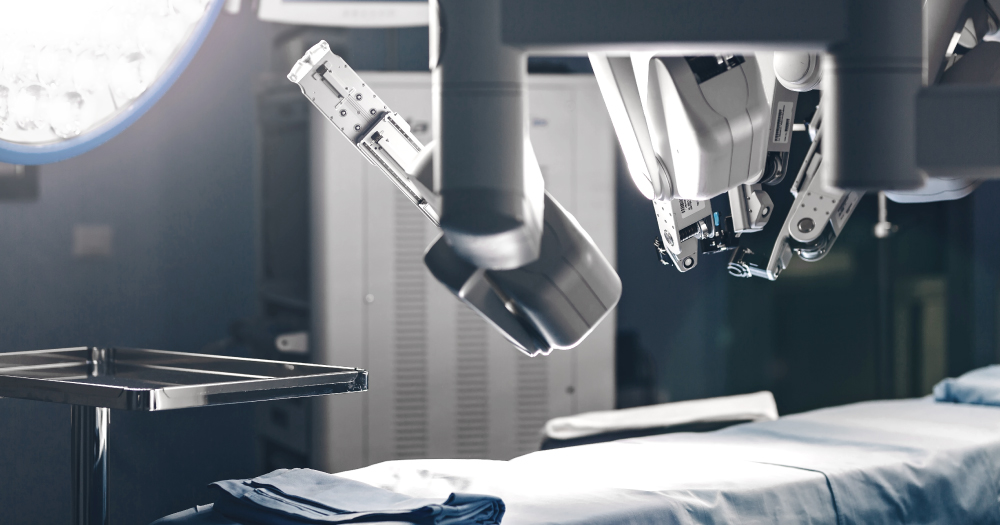
More hands: while we humans are tragically limited to typically having only two hands, robots are not subject to such limitations. The da Vinci Xi, for example, has four robotic arms. The surgeon toggles back and forth between controlling different combinations of these arms using foot petals.
Fast learning curve: learning how to safely and effectively perform robot-assisted procedures tends to be faster than training to perform laparoscopic procedures.

Current limitations of robot-assisted surgery

Advocates of surgical robotic technologies tend to focus on the various benefits without mentioning some noteworthy risks and challenges:

  • Setup time: nurses and surgical assistants often complain about the long time it takes to prepare a robotic system for a procedure, including wipe-downs, draping and loading of surgical tools.
  • Lack of haptic feedback: current robotic systems provide very limited feedback of applied forces to the surgeon. Instead the surgeon is required to use the visual feedback from the 3D endoscope to judge what amount of force he is applying to patient tissue. Some studies suggest that surgeons apply significantly higher forces and stresses to tissue using robotic systems than using laparoscopic tools, potentially resulting in more damage to the tissue.
  • High cost: a daVinci Xi system costs about $2M USD. Each da Vinci surgery may cost $3,000 USD more to the patient / insurance company than a traditional laparoscopic operation.

The future

Many of the criticisms above are valid and must be taken seriously. Effectiveness and safety of robotic technologies must continue to be proven, and limitations should be assessed and accounted for. However, these should be seen as criticisms of current robotic systems on the market today, not as criticisms of robotic surgery in general. If anything, these criticisms hint at where surgical robotics is headed next. While Intuitive Surgical continue to innovate, the field of players is also getting wider, with companies like Johnson & Johnson, Medtronic and Stryker investing billions into research and development. Future generations of robotic systems will bring a range of short-term and long-term improvements and will redefine what is possible in surgery.

Increased haptic feedback is expected to be a key feature in some future systems. This will allow the surgeon to truly feel the motions and gestures they are executing with the robotic instruments.

The cost of robotic systems and tools is expected to decrease as the volume of robotic systems and tools sold continues to grow and with increased competition, as new companies bring their robotic systems to market in the coming years.

There may be potential benefits in surgeons being able to carry out procedures remotely. Already today, the surgeon workstation does not necessarily have to be in the same room as the patient. Taking this to the next level, future systems may allow an expert cardiovascular surgeon to perform specialist surgeries all around the world from the comfort of his own office.

The Big Question

All of these features still depend on a human being (the surgeon) having control of every movement of the robot. The big question is: at what point will we be comfortable giving up some of this control to a robot? Crossing this line will increase the productivity of the scarcest of resources, highly trained surgeons, and start to significantly improve the cost-benefit equation for these systems.

Leveraging image recognition and artificial intelligence, it is fathomable that, in the quite near future, we could have a robotic system capable of making decisions and performing certain tasks independently. Especially with repetitive tasks like suturing, a robot could be trained to become increasingly efficient and effective.

However, as we’ve seen with self-driving cars, we humans have very little tolerance for injury and death caused by robotic systems. Despite worryingly high death tolls caused by inebriated and distracted drivers, it is not enough for new technology to reduce injury and death. Even a single death caused by a self-driving car convinces some that the technology is not ready. This may be the same psychological and regulatory hurdle that surgical robotics must overcome to realise its potential.

Connect with CDP

For more on how to accelerate innovation in surgical robotics, from device design to clinical value, contact Cambridge Design Partnership.

COVID-19 quarantine - How we are keeping our innovation projects moving
Share:
Find the authors
on LinkedIn:

COVID-19 quarantine – How we are keeping our innovation projects moving

Mitigating infection means more and more people are working away from the office. At Cambridge Design Partnership we have geared up to work remotely, both internally with our project teams and externally with our customers. In this special blog, Jez shares some of the communication approaches we are using.

Here at Cambridge Design Partnership, we have a wealth of experience in remote working and conferencing. Our move to create the best possible virtual comms was initially sparked by our clients all over the world, with whom we seek to work closely in a collaborative and creative atmosphere from our HQ in Cambridge, UK and our East Coast engineering hub in Raleigh, North Carolina in the US.

We were mindful of the findings of Professor Albert Mehrabian, who back in the 1970s first mooted the concept of non-verbal communication. He found that in a test where people were asked to convey their feelings, 7% of communication was conveyed by the speaker’s words, 38% by their tone of voice and 55% by their body language.

In a vibrant meeting atmosphere like a brainstorm or creative discussion we naturally prefer the face to face experience, we find we talk a lot with our hands, technical props or mocks ups. So the trusty teleconference is lacking. Low cost video conferencing has been around for a while, but we have found that with a careful choice of hardware, software and etiquette, it’s a game changing tool.

The basics

We need teams to feel as though multiple locations have merged together, with everyone feeling relaxed and engaged so that they can fully contribute to the discussion. It’s crucial that everyone can see and hear each another, as well as look at what’s being presented or created, such as sketches, models, prototypes, videos and other simulations.

Choose the right platform

We use the Zoom videoconference platform; it integrates with Office and is easy to use. We simply email a link to join a meeting and with one click, the participant is in. Having said that we can easily add a password if needed.

But the software is only part of the equation, the camera and audio on many laptops leave much to be desired, and there are lots of relatively low cost add-ons that make all the difference.

Get plenty of cameras

You need high-definition video so participants can clearly see each other’s facial expressions and body language. This is surprisingly important – remember Professor Mehrabian’s findings! We use the Logitech range of high definition video conferencing cameras. We use ‘Connect’ for personal use and ‘Meet Up’ in larger conference rooms, they plug into your laptop and are transformational. They can be placed in your room to give a feeling of space, so the camera is not looking up your nose like many laptops do and the images are much more lifelike and expressive.

For groups you need enough cameras and screens for all team members to see and be seen. This makes everyone feel connected, rather than just having one camera focused on a whiteboard or a ‘talking head’. We link these cameras and screens into the meeting using the Zoom platform.

Clear audio

Having clear audio is essential, especially in larger rooms when people move about. Meet up offers great audio, but those who have to use laptops on their own need headsets or a Jabra table-top speaker/microphone, they are omni-directional and work really well with groups in larger rooms. It’s so important not to have to strain to make out what is being said, it makes the meeting much more relaxed and natural.

The role of the smart phone

Another key tool is the humble smartphone. This provides the flexibility for individual members to communicate very quickly. For instance, if there is a sketch or prototype someone wants to show, they can grab their smartphone, activate the Zoom app (use the joining code) and immediately share their camera. Of course, people can also join the meeting just with a smartphone.

Preparation is key

We always set up our meeting rooms in advance. No matter how good your kit is, there is often a technology ‘moment’ that needs resolution. You don’t want to lose that creative vibe as your team waits for IT issues. Also, don’t forget the conventional best practices for meetings apply as normal. Make sure you have a facilitator who issues briefing documents well ahead of the meeting and takes charge of the session with a clear plan.

Reap the benefits

With many virtual meetings and brainstorming sessions now under our belt, we’ve found that the remote working technology can actually enhance the communication experience. For instance, instead of all huddling around the same whiteboard or drawing, our use of smartphone cameras means that a drawing or virtual model can immediately be shared with everyone, regardless of their location. We have also found that a virtual meeting is usually much easier and quicker to organize, with more chance of all key players being able to attend and less time wasted while we wait for everyone to be available. It’s also hugely helpful that sessions can be easily recorded. This can be useful in unpicking exactly what was said and decided during a session.

Also, it’s remarkable to see how we are able to screen-share in our virtual meetings and work on complex Computer Aided Design (CAD), zooming in and highlighting areas, with the whole meeting able to follow and contribute.

In conclusion…

Now that we are used to virtual meetings, here at CDP we feel comfortable and confident with the technologies involved. It’s remarkable how people who are hundreds or even thousands of miles apart can work together really effectively, if the technology infrastructure is set up correctly.

The current outbreak of corona virus is worrying on every level, to which there are not many easy answers. However, there is a lot that we can do to ensure our economic activity is not hit too hard by the situation. We are happy to advise our clients how to make our virtual communication as effective as possible, and keep our innovation projects moving.

2020: Decade of the drones|
Share:
Find the authors
on LinkedIn:

2020: Decade of the drones

Unmanned aerial vehicles (UAVs) or drones are increasingly part of our everyday lives. Here, Adam Turner, Consultant Mechanical Engineer and drone expert at Cambridge Design Partnership, considers the future potential of this remarkable technology.

Here at CDP, we love innovation and disruptive technologies. It’s what we do. So, needless to say, I find myself hugely intrigued by the uses offered by drone technology. Where will drones go from here?

The drive to design an unmanned aircraft initially came from the military, for airborne missions that were too risky for humans. In recent times, however, drones have found peaceful uses in everything from wedding photography to rounding up sheep. As designers, here at CDP we’re pretty sure this is just the beginning.

Automated so they are easy to control, powered by (potentially) clean electricity with battery and motor technology progressing quickly, and with the opportunity to include artificial intelligence to allow fully autonomous operation, the scope for drones is enormous. Here are some applications we are excited about.

Drone taxis. There are plenty of big names like Boeing, and start-ups like Volocopter, working in this sector. For example, global taxi firm Uber is also creating a small, vertically launched drone like aircraft to offer transport within and between cities. For how long will there be a pilot on board? With the benefit of an app, you could order a drone to take you to work or out for dinner. Drone taxis potentially avoid city congestion and the noise and disruption of conventional helicopters. It’s simply a case of up, up and away…

Drone agriculture. Already, farmers use drones to check crops and livestock. In the future, I’m sure crops spraying drones, such as John Deer’s recent development will enter use.  Food productivity will surely rise, drones programmed to take a series of photos using different light spectrums will enable a farmer to track crop growth and spot any issues, leading to better yields and less agri-chemical usage.

Drone environmentalism. Already, an initiative by British firm Biocarbon Engineering to fight deforestation in mangrove forests using drones is proving much more efficient than human labour. The drone surveys and tests the soil, then drops pods containing tree seeds and vital nutrients. Beyond this, the environmental potential of drone technology is enormous. From preventing poaching of rare animals, tracking populations to tracking glacial ice, a drone can play a crucial role.

Drone cranes. The construction industry has already trialled drones to lift bricks and roof tiles into place on a building site.  Going further, drones that can lift hundreds of kgs are in development. If drones become ever larger, which we at CDP anticipate, could they then one day replace cranes as the go-to method of lifting building materials?

Drone inspection. Inspecting high rise buildings, industrial plant and infrastructure like electricity pylons and bridges, is already a cost-effective drone application. Be it using cameras or more specialist sensors.  We expect this to develop further as drone automation, and AI to detect faults, makes this even more attractive.

Drone shipping. Containers revolutionised the shipping industry in the 1960’s. Will drones be the next big thing in the transportation world? While they will always be significantly less energy efficient compared to ships and trucks, giant drones could deliver high value imports quickly from ports to distribution hubs, especially in areas where other transport infrastructure does not exist. Then at a micro level, drones might bring our packages to the door and solve that tricky ‘last mile’ delivery conundrum for companies like Amazon and UPS, who are developing systems at present. As well as the multi-rotor quadcopter, we are already seeing hybrid fixed-wing drones with longer flight-times and higher energy efficiency. Some are solar-powered, to partially re-charge as they fly, or powered from renewable fuels like hydrogen.

Drone fireworks. Human beings love a light show in times of celebration, whether it’s Guy Fawkes night in the UK or an awe-inspiring Olympic opening ceremony. For an eco-friendly, reusable alternative to fireworks, hundreds (or even thousands) of light-emitting drones can perform truly astonishing displays. US tech firm Intel has already put on some truly stunning drone displays at the Superbowl and at the Winter Olympics.

Drone rescue. On a more serious note, drones can literally save lives. In search-and-rescue situations, we already see crews using drones to spot survivors. Taking this even further, a drone could drop life jackets and rafts to people at sea, or food and medicine to inaccessible disaster sites. Rescue crews in Alabama used heat-seeking drones to search for survivors after a tornado in March 2019. Ambulance drones could deliver, say, defibrillators or EpiPen’s in cases where every second counts towards a patient’s survival.  Researchers are also looking at creating swarms of micro, autonomous drones whose group behaviour is designed to automatically search inaccessible spaces like burning buildings.

Drone crime. Anyone who has seen footage of drones delivering drugs into prisons knows that this technology has its dark side. Already, there have been reports of drones surveying neighbourhoods before a burglary. In terms of terrorism, disruption and smuggling goods or even people, drone tech presents the justice system with a serious headache. Just consider the disruption to Gatwick Airport in the UK by drones in December 2018 – the runway was closed for 30 hours, 1,000 flights were cancelled and 140,000 passengers stranded.

More recently, environmental protest group Extinction Rebellion tried to use drones to close Heathrow Airport but were foiled by signal-jamming technology. Terrorist or rogue state attacks using drones as weapons is another threat. I foresee that anti-drone technology will be an important field in the coming years and that the regulation of drones will become ever more important. In the UK, the Civil Aviation Authority have brought in compulsory drone registration for drones over 250g in weight. Will drones, like cars today, have number plates, insurance and MOT tests in the future?

Drone police.  As an antidote to drone crime, law enforcement use drone surveillance in place of expensive helicopters, where their ability to search large areas quickly can be vital to ensure public safety and to catch criminals.

Drone shopping. Need a loaf of bread? New shoes? A Venti Double-Iced Toffee Almond Nut Latte with extra cream? We may one day soon team up our internet shopping habit with sending our own personal drone to fetch our purchases from the retailer. Your supermarket shopping could be dropped off on your doorstep or in a code-secured locker outside your house. Forget a drive-in Macdonald’s, could there be a drone-in Macdonald’s?

Drone communications. Bringing comms networks to regions which lack the infrastructure for internet and cellular services could well be a next step for drone technology. The Zephyr programme from Airbus is already exploring this possibility, with a solar-powered high-altitude pseudo satellite (HAPS). Zephyr, a fixed-wing drone, can stay in flight in the stratosphere without refuelling for months at a time. Among its many possible applications is the capacity to bring connectivity to the remote communities worldwide. Let’s not forget that 4 billion people on the planet are still without the internet.

Drone sports. Already drone-racing leagues are springing up. Competitors wear headsets, so they feel as though they are sitting on the nose of a drone. It’s exhilarating stuff when the drone is flying at 80mph through tight, LED lit, 3D courses. The footage can be streamed too, in HD, making this a spectator sport. In another development, drone fans have been meeting up for air battles, adding paintball guns, lasers and even a flame thrower to their drones. Even in the most traditional sports drones are proving to be disruptive. In fishing for example, a drone is used to position the bait in locations previously impossible to access from dry land. What’s next? The sky really is the limit.

Drone exploration. A popular activity is to use HD camera equipped drones to expand your experience when exploring the great outdoors.  They provide a new perspective on famous landmarks, some amazing selfies and allow the user to go to places and explore where it is otherwise impossible.

Drone photography. It has become difficult to find a TV program with an outdoor theme that does not include a drone shot to set the scene or provide fantastic images of landscapes or wildlife.  Fast paced action and sci-fi scenes are filmed by drones to allow the viewer to get close to the action.  Drone photography categories in photographic competitions are testament to the opportunities this technology provides for seeing the world in new and creative ways.

Conclusion. It’s easy to fear that drones could shape a dystopian future.  This blog has steered away from drone applications that include weapons. The shocking, dramatized viral video created in 2017 by the Future of Life Institute made this point strongly, and generated a debate about the risks of combining drone technology with AI.  But here at CDP, we are optimistic and see drones as a powerful potential force for good. It is up to humanity to ensure that this is used wisely, and that is a question we all need to consider in the coming years. How things will turn out, of course, only time will tell.

Lovelace Instrument
Share:
Find the authors
on LinkedIn:

CDP engineer creates a remarkable musical instrument

Jonathan Morris, Mechanical engineer, explains how he came to design and build a most unusual musical instrument at CDP

Q. CDP doesn’t usually make musical instruments, does it?
Jonathan: No! This is definitely one of our more unexpected projects here at Cambridge Design Partnership. But when composer Robert Laidlow approached us with a project celebrating computing and Artificial Intelligence, it was clear that engineering and design could help him create an entirely new musical instrument.

Q. Sounds intriguing, tell us more…
Jonathan: We have built ‘The Lovelace Engine’, a mechanical musical instrument inspired by the work of Ada Lovelace, who studied the earliest computers back in the 1830s and 40s. Lovelace was a pioneering computer scientist, and one of the first to realise the potential of computing to perform ever more complex tasks.

Q. The machine looks stunning – how does it work?
Jonathan: Essentially it is a mechanical engine that can make a variety of percussion rhythms, controlled by a single shaft turned by a crank handle. It was constructed here at CDP using our rapid prototyping capabilities, with many parts being 3D printed.

Q. What sort of music will be played on The Lovelace Engine?
Jonathan: It’s a major new work and part of a concert that is a tribute to Ada Lovelace at the Barbican in London this autumn, led by Professor Emily Howard, director of PRiSM at the Royal Northern College of Music. The engine will be played during an exciting new piece commissioned for the performance called Alter. The music will performed by musicians from the Britten Sinfonia with text written entirely by Artificial Intelligence.

Q. So is this instrument a replica of the first computers that Lovelace worked on?
Jonathan: It’s very much inspired by them and draws inspiration from the mechanical technology available to Lovelace in the 1800s – there’s no electricity or circuit boards involved. But this is a musical instrument, not a computer, so it is a tribute to Lovelace rather than a copy of the computers she worked with.

Q. Was it difficult to make?
Jonathan:  It has been a unique challenge as we wanted the engine to be configurable, as Lovelace envisaged, so that it can change rhythm mid-performance. It’s been really interesting as a mechanical engineer to work on such an artistic, creative project.

Q. Not your everyday work at CDP then?
Jonathan: I’m in my first graduate job here at CDP and the variety of what we get up to here is fantastic. I am mostly working on medical devices and consumer products as well as designing experiments and test rigs. No two days are the same but, yes, a musical instrument is probably a one-off for us right now! I can’t wait to see it being played on stage.

The Lovelace Engine will be played at the Barbican on November 2 as part of “Ada Lovelace: Imagining the Analytical Engine”.

For more details, visit the site