CDP and ECCO - Step Forward

A unique step forward – wearable sensor breakthrough from CDP and ECCO heralds a new era of customisation

14 March 2018 – Technology and product design firm Cambridge Design Partnership (CDP) has worked with leading shoe brand ECCO on a breakthrough in data-driven customised footwear. It opens the door to a new generation of customised footwear for the mass market – heralding an evolution in engineered comfort. Consumers will get a full digital analysis of their foot structure and the way they move in just a few minutes – and shoes will be tailored to their specific requirements in just a few hours.

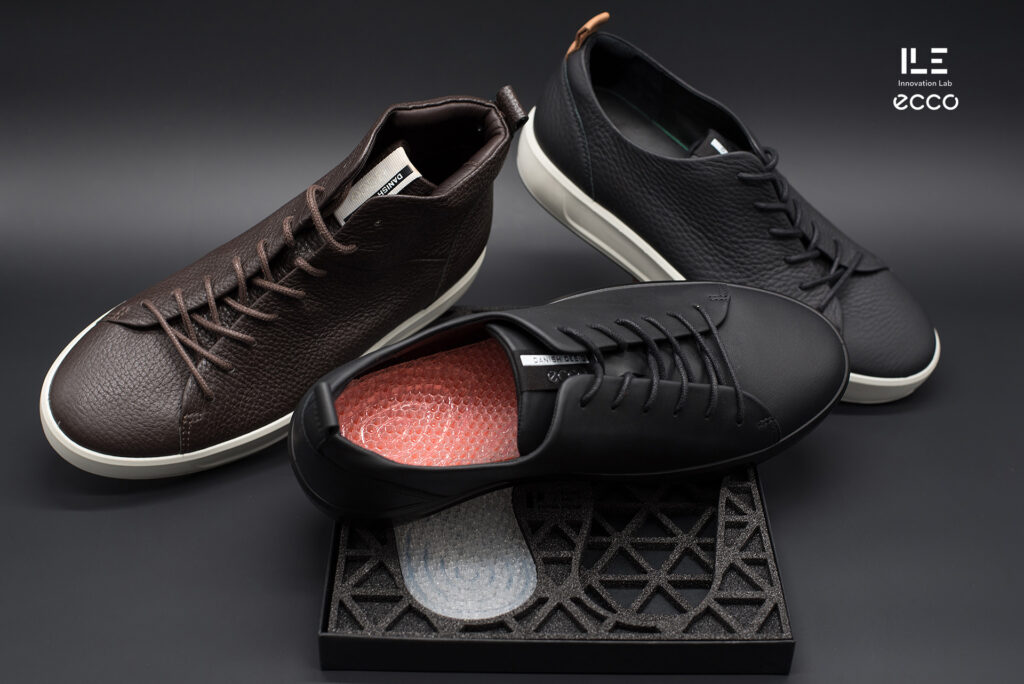
The QUANT-U (‘quantified you’) project will have an initial public release at W-21 Amsterdam –  ECCO’s concept shoe store – in April. A key element is the wearable sensor embedded in the soles of the test shoes. It collects a multitude of data using gyroscopes, pressure sensors and accelerometers – as well as the temperature and humidity inside each shoe – to create a unique digital footprint. This data is autonomously translated into geometries for in-store 3D printing of shoes based on each individual’s biomechanical and orthotic parameters.

“The biggest challenge was the fact that the sensors are very close to the ground, hidden inside shoes and covered by a human body – yet they need to send data from both shoes simultaneously to a connected device such as a mobile phone,” said Roberto Basile, a software engineer at CDP. “We needed to maintain reliable communication – using Bluetooth Low Energy – despite the human body acting as an obstacle to the wireless signals. The mechanical system inside the sensor had to be robust enough for people to walk on it, while the battery had to be small and last at least three days without being recharged.”

The first prototype of the wearable sensor was created by CDP and ECCO in less than four months. The inbuilt algorithm filters the raw biomechanical data from the sensor into functional information. This data creates the input parameters for a 3D-printed customised midsole for individual customers in approximately two hours. For the QUANT-U pilot, the customised midsole will be paired with ECCO’s iconic Flexure shoe.

“Throughout my experience in footwear design and engineering, the concept of perfect fit, perfect dynamics and ultimate performance has long been an obsession,” said Patrizio Carlucci, head of ILE (Innovation Lab ECCO). “With QUANT-U we are now combining future technologies in order to augment footwear functionality without interfering with its aesthetics.”

ENDS

Notes for editors

Cambridge Design Partnership is a technology and product design partner focused on helping clients grow their businesses. Some of the world’s largest companies trust CDP to develop their most important innovations. Located in both Cambridge (UK) and in Palo Alto, California (US), CDP specialises in the consumer products, healthcare, energy and industrial equipment markets. Its multidisciplinary staff have the expert knowledge to identify opportunities and tackle the challenges its clients face. For more information, visit: www.cambridge-design.co.uk

Founded by shoemaker Karl Toosbuy in Denmark in 1963, ECCO footwear has since grown into a global brand with factories and retailers across the world. ECCO manages the entire manufacturing process from start to finish – ECCO designers develop the collections, ECCO-owned tanneries produce the leather and ECCO-owned factories make the shoes sold across the world. ECCO, from the very beginning, has fused together premium raw materials with dynamic comfort platforms to produce an unparalleled wearing experience for its consumer. For more information, visit: www.ecco.com

ILE is ECCO’s independent cross-disciplinary design studio. ILE explores, creates and delivers projects embracing alternative production methods, advanced materials, new technologies and experiential solutions in footwear. Results of the work can be found via limited edition collections at the experimental shoe store W-21 Amsterdam.

For further information, contact:

Cambridge Design Partnership
Marketing Team
+44 (0)1223 264428
marketing@cambridge-design.co.uk

ECCO
Teo Pazanin
Research and Communication at ILE
+31 6 38 68 55 67
tepa@ecco.com

Jessica Paulus
Strategist and Communication at ILE
+49 1 51 68 12 04 81
jepa@ecco.com

General inquiries
info@Quant-u.com
Satmap Active 20 Collaboration

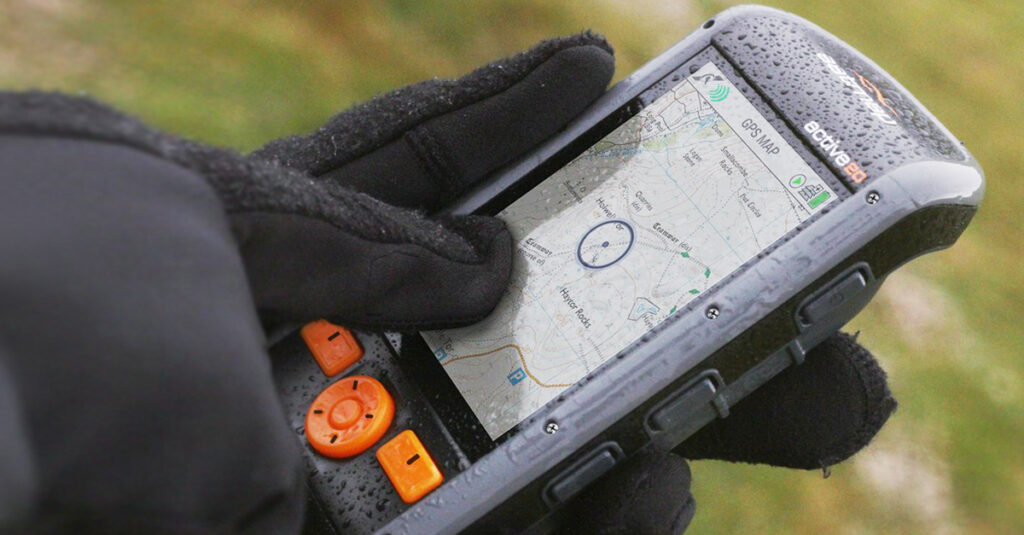
Satmap Active 20 Collaboration with Satmap Systems to create the ultimate rugged, high-performance sports GPS device

The Challenge

Following the success of its Active 10 and Active 12 GPS devices, Satmap Systems decided to create the next generation of Active devices – with improved screen toughness, button functionality and waterproofing. It also wanted to incorporate new features such as a touchscreen, Wi-Fi connectivity, improved GPS and a unique dual-battery system.

APPLIED EXPERTISE

  • Research & strategy
  • Human factors
  • Industrial design
  • Packaging
  • Technology development
  • Mechanical engineering
  • Electronic engineering
  • Software engineering
  • Wireless & connected
  • Short run manufacturing
  • Manufacturing processes
  • Supply chain management

The Solution

Our first step was to gain human factors insights and gather customer feedback from previous models to feed into the design process. Our industrial design team then worked to maintain and enhance the brand, while our engineers integrated the new functionality and developed the mechanical design to meet the extreme requirements of Satmap customers.

Proof-of-concept tests ensured that the custom Gorilla Glass touchscreen within the ultra-rugged case design exceeded IK7 grading in impact tests and achieved IP68 rating for water submersion.

Benefit to Client

The new Active 20 was a sell-out success within days of its launch.

“We’re really pleased with the Active 20 – we’ve integrated all the exciting new technologies we were hoping to, while maintaining our customers’ favourite features. We are confident the Satmap experience will be better than ever.”

Howard Dyson, managing director and founder, Satmap Systems

ablation-catheter-technology-cardiology

CDP and Kings College London develop innovative steerable catheter to treat cardiac arrhythmia

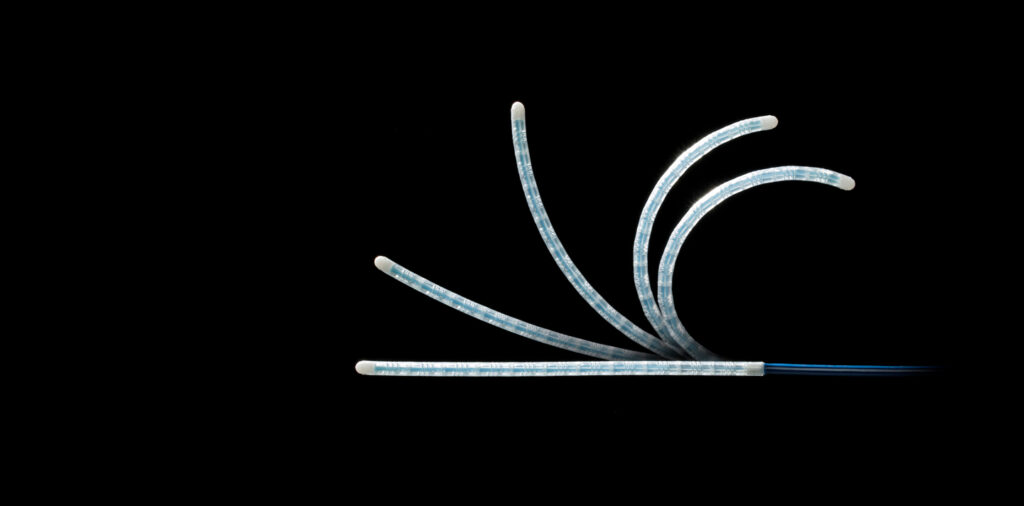
Innovative design and technology consultancy Cambridge Design Partnership has worked with King’s College London to develop a novel steerable catheter which King’s researchers had designed.  The catheter is designed to improve the treatment of cardiac arrhythmia – a range of conditions which can lead to stroke or heart failure that affects 2 million people a year1 in the UK alone.

The new steerable, micro moulded catheter enables targeted delivery of radio frequency energy to specific points in the heart tissue for corrective treatment. Compared with traditional catheters, the new device has been designed to be quicker and easier to manoeuvre into the correct position, improving the accuracy of positioning and minimising damage to healthy tissue, which should improve success rates of the treatment.

Cambridge Design Partnership won a four-way competitive bid to further develop the device created by King’s College London, involving helix-shaped interlocking tubes that would allow improved steerability and greater compatibility for robotic control over other catheters on the market. The team at Cambridge Design Partnership successfully refined the initial design, enabling the device to meet key regulatory and biocompatibility requirements, whilst ensuring suitability for commercial manufacture. Through CDP’s experience of developing highly technical medical devices, the team was able to miniaturise the design to allow improved space for the delivery of ablation energy and irrigation. The new catheter design is also assembled from micro injection moulded sections, incorporating features that enable the device to be built on an automated assembly line at reduced manufacturing cost.

Matt Brady, head of Medical Therapy, Cambridge Design Partnership, said: “The steerable catheter is an extraordinary product, with innovative features that enable corrective treatment to be delivered to very specific areas of the heart. By enabling greater accuracy and quicker treatment time, we believe it is possible to preserve more healthy heart tissue, and increase the success of the treatment. It’s been hugely exciting to be involved in this joint project with King’s College London and use our expertise to bring such an innovative product one step closer to commercial use.”

Professor Kawal Rhode, Professor of Biomedical Engineering at King’s College; London, commented: “We have been delighted with the results of Cambridge Design Partnership’s work on this project. The team was chosen for the strength of their existing experience in developing catheters across both start-ups and global corporations.  We were very pleased with the engineering approach and practical improvements that they managed to incorporate. They delivered fully moulded parts, and specified other components and the assembly route which fully met our aspirations for the project.”

King’s College London is now undertaking extensive lab testing of the catheter device, with clinical trials expected to be take place in two to three years.

1 Arrhythmia

For further information on this project, please email: hello@cambridge-design.co.uk

For Enquiries to King’s College London:
Please contact Dr. Rob Glen, King’s Commercialisation Institute
Robert.glen@kcl.ac.uk 020 7188 6209
Kings Commercialisation Institute

New connected wearable device helps medics save lives in disasters and on the battlefield

Innovative technology and design consultancy Cambridge Design Partnership today announces that it has developed the world’s first wearable device designed to measure and monitor the vital signs of multiple trauma patients for emergency response in disasters and battlefield situations.

The First Response Monitor is designed to help medics monitor both heart rate and respiratory rate. Respiratory rate is often neglected by automated monitoring systems and has been described as the ‘forgotten bio-sign’, as many existing wearable monitors focus on heart rate alone and those that do measure respiratory rate have low accuracy or are difficult to use in an emergency situation. However, the benefits of accurately monitoring respiratory rate are clear, and when combined with other parameters – such as heart rate and body temperature – can indicate life-threatening conditions such as sepsis.

When designing the new compact device, Cambridge Design Partnership interviewed a range of army medics about their needs and challenges in multiple casualty emergency situations. An unmet need was identified for a low-cost device to bridge the gap between manual methods of vital signs measurement – which can be laborious and challenging amidst the noise and stress of a disaster or on the front line – and more expensive patient monitoring systems.

The lightweight, robust and low-cost wearable biometric device not only monitors patients but collects and transmits data in real-time, enabling the medic to care for a greater number of casualties, providing more effective casualty triage to deliver improved patient outcomes.

The small device clips onto a patient’s nose and monitors breathing rate and heart rate, giving ‘at a glance’ indication of both parameters, and this data is added to a trends graph showing how these measurements have changed over time. This enables the medic to focus their efforts on providing care rather than taking measurements but also enables the care giver to understand how the patient’s condition has changed over time. The data can then transmitted using Bluetooth low energy to a smartphone app or tablet, enabling other data analyses such as multiple patient triage or situational awareness across the group.

Although the device has been primarily designed with first response medics in mass casualty incidents in mind, it has applications in many other fields – such as civilian medicine where additional monitoring of conditions has demonstrable benefit in patient outcomes, wellness monitoring and within sports for training and performance monitoring. The technology can also be developed to provide a low-cost solution for low resource healthcare settings.

Speaking about the new development James Baker, Partner, Cambridge Design Partnership said: “At Cambridge Design Partnership we’re always looking for ways to find a solution to a clear, unmet need. With the First Response Monitor we’ve combined our expertise in wearable connected devices with our extensive medical experience to develop a technology for effectively measuring breathing and heart rate. The monitor can help save lives in a variety of environments and we’re really keen to speak to partners about developing the potential applications further.

Balancing design and engineering – New Design Magazine interview Ben Strutt

Cambridge Design Partnership was established in 1996 by three engineers (all of whom are still involved in the running of the business to this day). One of the founding partners, Mike Cane completed his Engineering degree at the University of Cambridge before studying Industrial Design at the Royal College of Art; it was his vision to create a company that balanced technological expertise and user-centred design in helping clients to innovate and make better products.

Ben Strutt, the company’s head of design, joined Cambridge Design Partnership in 2010 and the five years since have seen design become an increasingly important aspect of the business. “My vision was to drive the combined industrial design, consumer research and technical R&D offer,” he says. “These disciplines have now become fully integrated within the business.”

The consultancy works predominantly across four sectors: consumer (which includes subcategories such as consumer electronics and packaging); healthcare (medical devices, drug delivery systems, and surgical devices); energy (domestic heating technologies, control systems, and in-home monitoring systems); and industrial (process line equipment, safety systems and so forth).

2014 proved an exciting year for Cambridge Design Partnership in terms of growth. The company took on 18 new staff and in March opened a bespoke multi-million pound R&D centre. The new centre includes laboratories, consumer research facilities, a rapid prototyping suite, and workshop and modelling provision. Strutt adds: “The centre is integral to our ability to work and iterate quickly and support client confidentiality by keeping as much activity inhouse as possible.”

The year started with the exciting news that the consultancy had been successful in obtaining a grant from the Bill and Melinda Gates Foundation to help tackle the global HIV epidemic by developing a next-generation condom. “We felt it was a very user-centred problem: it wouldn’t just be about developing a new material or a new chemistry, it would be about focussing on the challenges that are experienced by users,” explains Strutt. “Many of the problems – social, emotional, cultural, accessibility, and so on – are unique to sub-Saharan Africa and other low resource settings.”

Through 2014 Cambridge Design Partnership worked on the first stage of the project, making links with health workers in Lesotho (where around a quarter of the population is HIV positive) and developing concepts to early prototype level.
In 2015 a Phase Two application will be made to the Foundation to support further development of certain concepts. Also in healthcare, the consultancy worked with Raumedic AG, a German medical device company, on a needle safety device that fits to their existing syringes in order to prevent needlestick injuries.

In response to new directives (in the US and Europe) introduced to reduce the number of such injuries, companies are attempting to create completely new products. However, one of the problems of starting from scratch is the product will need to go through a long and expensive validation process. “Raumedic AG recognised the opportunity for a needle safety device that could be retro-fitted to existing primary packs (the part that holds the drug),” says Strutt. “We created a spring-mounted telescopic sleeve which, once the syringe has been plunged and the drug delivered, springs out to surround and cover up the needle automatically. Modifying the existing vial avoided the long process of revalidation and helped the client get to market as quickly as possible.”

Also in 2014 Cambridge Design Partnership worked with Bloodhound SSC, the British land speed record team. The consultancy helped to design the steering wheel for the car, which it is hoped will be capable of speeds in excess of 1,000 miles per hour.

The project prioritized usability and ergonomics with the wheel designed specifically for the hands of driver Andy Green and carefully formed to take lines of sight into consideration. The wheel has been printed using an additive titanium technology making it incredibly strong as there is no need to remove a mould tool.

2014 was a particularly strong year in the industrial sector. To look at one example, Cambridge Design Partnership developed an industrial printer for Domino. “This is not your typical home printer,” comments Strutt. “These printers sit in factories labelling anything from sweets and eggs to mass-produced packaging.

Some of those environments are quite challenging, the products need to be very rugged and washed down regularly.” The main challenge for the designers was around ingress protection to ensure the printer met IP66 rating. There was an apparent fundamental conflict between keeping the electronics cool and a rugged enclosure. The design team did extensive work with thermal modelling and CFD to develop a solution in addition to industrial design work to enhance the user experience.

Having carried out qualitative consumer research in the US, Latin America, China and Europe last year, the company plans to extend and expand its front end process in 2015 to ensure primary insights are translated most effectively into concepts and products that people want and need. Furthermore, the team will continue to grow both at the consultancy’s Cambridge site and at its US office in Palo Alto, California.

See the article.

www.newdesignmagazine.co.uk

New Design Magazine 2015 Year book. Issue 114. February 2015

AAMI human factors for medical devices course returns to Europe

Innovative technology and design consultancy Cambridge Design Partnership today announced that due to the huge success of Europe’s first AAMI Human Factors for Medical Devices course they will be sponsoring more courses in 2015.

Cambridge Design Partnership worked with the US based Association for the Advancement of Medical Instrumentation (AAMI) and Pure Insight to bring the course to Europe for the first time in April 2014 and the course was hugely oversubscribed. In response to demand from medical device development companies, which deem the course content as a ‘must have’ piece of knowledge for their medical device development teams, a course has been scheduled for January 2015.

Cambridge Design Partnership have recognised the importance of Usability Engineering in medical device development programmes for many years and are keen to share this enthusiasm with the wider development community by teaming up with AAMI and Pure Insight to bring this definitive course to Europe.

This course delivers practical Usability Engineering techniques that can be implemented in any medical device development programme and gives insights into creating usability submissions for both the USA and the EU regulatory regimes.  With new guidelines proposed in the US, medical device companies worldwide need to be vigilant in understanding how to navigate these changing regulatory landscapes. The AAMI course not only addresses Usability Engineering itself, it also looks at the growing harmonisation between global standards, streamlining device submissions.

The course leaders are the highly regarded Dr. Ed Israelski who is the convener of international HF medical standards with IEC and ISO and Dr. Robert North, who is a co-author of the FDA human factors standards. This course is exclusively the only event held in Europe where companies can talk directly to an FDA representative who hosts a question and answer session and gives delegates the benefit of the latest insight into streamlining submissions as well as common submission errors and deficiencies.

“At CDP our experience developing novel medical devices shows us that effective Usability Engineering is crucial to commercial success, not only to meet regulatory requirements but to enable new products to succeed in a competitive marketplace. When developing fast moving consumer products companies naturally place the user at the centre of the design process,  but when it comes to safety critical medical devices sometimes the complex technical and clinical requirements overshadow basic patient needs. This course explains the processes you can use to ensure your devices are easy and safe for patients to use.  Medical device manufacturing companies must demonstrate this to the regulators and this course explains how this is achieved.” Comments Mike Cane, Founder, Cambridge Design Partnership.

Cambridge Design Partnership is a leading technology and product design partner focused on helping its client’s businesses grow. Some of the world’s largest companies trust CDP to develop their most important innovations.

Cambridge Design Partnership specialises in the healthcare, consumer, energy and industrial equipment markets and its multidisciplinary staff have the expert knowledge to identify opportunities and solve the challenges its clients face.

www.cambridge-design.co.uk/
hello@cambridge-design.co.uk

Contact Abbie Meliniotis or Laura Cavaliere at CDP for more information:
lc1@cambridge-design.co.uk / avm@cambridge-design.co.uk /+44 (0) 1223 264428

Media contacts: Andrea Berghäll, EML Wildfire Technology PR
cdp@emlwildfire.com / +44 (0) 208 408 8000