TOP DESIGN HONOUR

TOP DESIGN HONOUR – CDP wins a prestigious Good Design award for innovative product design

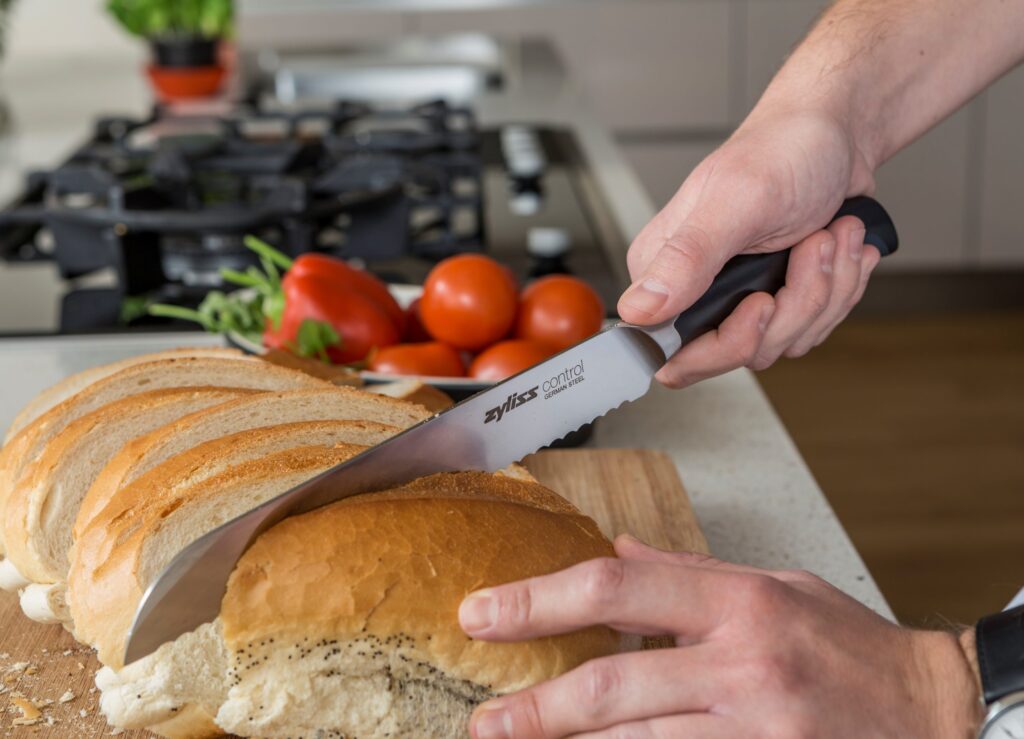
12 February 2018 – Technology and product design firm Cambridge Design Partnership (CDP) has been awarded one of the top honours in the design world. It has won a Good Design award for its work with DKB Household on the Zyliss Control knife range – a breakthrough in knife design that improves the user experience and reduces the spread of bacteria.

The prestigious Good Design awards aim to recognise the most innovative and cutting-edge industrial, product and graphic designs produced around the world. They are run by The Chicago Athenaeum Museum of Architecture and Design, in co-operation with the European Centre for Architecture, Art, Design and Urban Studies. The organisers say the emphasis is on quality design of the highest form, function and aesthetics – a standard beyond ordinary consumer products and graphics.

“Since 1950, Good Design has become an internationally acknowledged benchmark and symbol of outstanding design that serves as a beacon for design-interested audiences in our global economies,” said Christian Narkiewicz-Laine, museum president at The Chicago Athenaeum.

Challenging convention, the Zyliss Control knives were designed to meet the needs of the consumer – not just the professional chef. They were the result of extensive consumer-focused research into how people actually use kitchen knives in their home, as well as their concerns and aspirations. The research was conducted by a multidisciplinary CDP team, using the powerful ‘jobs-to-be-done’ innovation perspective to provide a solid evidence base for inclusion of a range of functional knife and storage attributes.

The knives support many different grip styles comfortably and have a unique indentation on top of the blade to give more confidence and control for detailed preparation work. They are manufactured from high-grade German stainless steel and feature antibacterial agents in the handle which kill 99.9% of all germs. They are also dishwasher safe – and the range includes two sizes of wood storage blocks, both featuring antibacterial removable sheaths that are also dishwasher safe.

“This Good Design award is a fantastic endorsement of the unique skills of our world-class team,” said Andrew Wynne, senior design consultant at CDP. “We know our clients appreciate those skills – as three-quarters of our new clients last year came from recommendations. But it is an honour to also have this prestigious independent recognition of our design expertise. Our approach combines front-end consumer research with the very latest technology. In the case of the Zyliss Control knives, this enabled us to prioritise user needs in the product’s design – completely differentiating the Zyliss brand from others in the marketplace.”

Notes for editors
Cambridge Design Partnership is a technology and product design partner focused on helping clients grow their businesses. Some of the world’s largest companies trust CDP to develop their most important innovations. Located in both Cambridge (UK) and in Palo Alto, California (US), CDP specialises in the consumer products, healthcare, energy and industrial equipment markets. Its multidisciplinary staff have the expert knowledge to identify opportunities and tackle the challenges its clients face. For more information, visit: www.cambridge-design.co.uk

For further information, contact the marketing team:
+44 (0)1223 264428
marketing@cambridge-design.co.uk

The luxury of designing for one

The luxury of designing for one

It weighs 7.5 tonnes and is powered by both a jet engine and a rocket, which together will produce over 135,000 bhp – more than six times the power of all the Formula 1 cars on a starting grid put together. It has temperatures inside the rocket that reach 3,000°C – twice as hot as the inside of a volcano. And it’s all designed to power the supersonic Bloodhound car to over 1,000 mph.

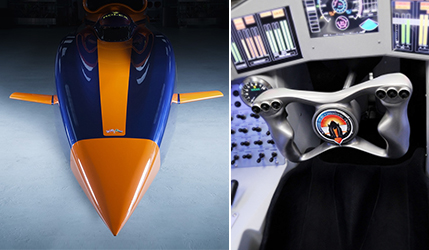
But when it’s screaming down the South African desert, the car will be controlled from just one component – our steering wheel – designed for just one brave driver, Andy Green (see video here).

The Bloodhound project has faced many extreme challenges and is an awesome engineering adventure. However, as we became more and more involved in the design of the steering wheel component, I couldn’t help but notice the contrast with the design challenges we normally work on that end up in mass production. So I thoroughly enjoyed the specificity of the Bloodhound brief – which led me to ponder on how manufacturing volumes influence our design approach. I think this can be summed up in three areas:

1. User needs – we normally design products to be used by millions of people in multiple markets. This means that, although they differ hugely in age, physical size, strength and cognitive ability, they must all receive a safe, consistent and excellent experience to meet their specific needs. To understand these diverse customer groups, we employ techniques like ethnographic research, human factors studies and statistical analysis. We then test design features, through prototyping, with representative user groups to validate our vision.

With the Bloodhound steering wheel, on the other hand, when a feature needed to be confirmed or adjusted, we simply had to print a model and ask Andy to hold it. Luckily for us, Andy has an extraordinary clarity when it comes to what he likes and dislikes – and this process quickly led to an optimised design, with adjustments to the button locations, the handle geometry and the clearance for his legs until everything was right! In terms of mechanical strength, we could proof test the actual wheel to make sure it met the technical specification. Although we calculated the strength using finite element analysis, it was verified by a tensiometer machine when we had the first sample wheel manufactured. We were later reassured to hear that the Bloodhound team couldn’t actually break it in what was intended to be a destructive test.

2. Manufacturing volume – when we create new products for our clients, we must consider how to mechanise manufacture to make millions of replicas at high quality and low cost. As engineers, we need to maintain the function of a new device despite the natural variation of materials and manufacturing processes, and the degradation of the product during its life. We use strategies like ‘failure modes and effect analysis’ and ‘tolerance analysis’ to help predict how the design will react to manufacturing variances – and how this might lead to failures or poor outcomes for the user. We identify critical design and manufacturing features – and check that they can be easily reproduced by the materials processes we are using to ensure a high production yield and high product reliability, all within acceptable costs, of course. Because we never see the product before it is shipped to the customer, we have to rely on statistical analysis to prove that every copy of our design will work as intended until it comes to the end of its service life.

The Bloodhound steering wheel, in contrast, was manufactured in a very low quantity (just a handful – the actual wheel and a few back-ups). This allowed a very slow (days/hours rather than seconds) and very high-performance manufacturing process to engineer a large margin of safety to make sure nothing would go wrong. So the wheel is 3D printed in titanium and costs around £15,000 to make – a manufacturing cost per part that would make our regular clients faint!

3. Environment – in product development, the environment of use can be hard to predict. During transportation, a product can be taken from extremes of cold to hot or wet to dry – consider a medical device trucked across a desert in the Middle East that then has to perform a critical diagnostic test. We engineer products for these extremes, which often leads to significant design challenges. The product can also sit in contact with nasty chemicals on a shelf for years before the customer receives it – which could slowly degrade many plastic components.

The difference with the Bloodhound project is that the environment is relatively well known. We know where in the world the steering wheel will be used – and that it will be used under the strict supervision of many project engineers. However, no car has ever travelled at the speeds expected – and when you extend that thinking beyond our component to the whole car’s aerodynamics, power and stability, then only the engineers intimately involved in the project really understand the scale of the challenge.

However, they are overcoming this challenge using the same principle that we use to create reliable mass-produced products. It’s based on careful specification of the challenge, breaking this down into systems and subsystems, and then designing each carefully to that specification. The design is systematically tested – first at component level, then system level and finally at car level. Then the Bloodhound team will run the car gradually faster and faster, all the time monitoring performance through a network of sensors and data loggers installed around the vehicle. If the calculations work out to be correct, this process will continue until the 1,000 mph target is exceeded.

So, in conclusion, do I really think that designing for the ‘one-off’ Bloodhound was a ‘luxury’ project? As a potentially iconic design for such a high-visibility engineering project, then it truly is an honour to be involved. Certainly, with the steering wheel, many of the complications involved in design for high-volume manufacture just went away.

But, at the end of the day, it was not detailed aspects of process or approach that I remember most. What I have really taken from the experience is the value of having a team with such a clear and inspiring vision of success for the project – to travel at 1,000 mph and inspire a generation of new engineers. This vision meant all the people we worked with were totally focused on finding ways to succeed. Perhaps this is because we can all visualise the 1,000 mph run in our mind’s eye – whereas a million different customers using a product, each in a slightly different way, in their daily lives is much more divergent.

So what I will take back from the Bloodhound experience to our ‘designing for the many’ projects is that when you can build a ‘clarity of vision’ across the team as to what success looks like, then this will pay dividends many times over in the outcome of the innovation.

Satmap Active 20 Collaboration

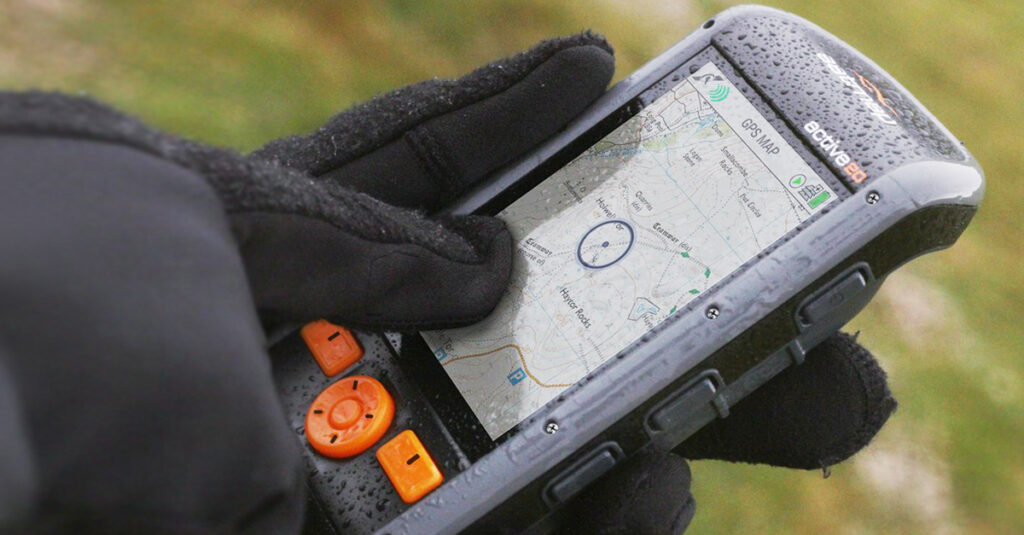
Satmap Active 20 Collaboration with Satmap Systems to create the ultimate rugged, high-performance sports GPS device

The Challenge

Following the success of its Active 10 and Active 12 GPS devices, Satmap Systems decided to create the next generation of Active devices – with improved screen toughness, button functionality and waterproofing. It also wanted to incorporate new features such as a touchscreen, Wi-Fi connectivity, improved GPS and a unique dual-battery system.

APPLIED EXPERTISE

  • Research & strategy
  • Human factors
  • Industrial design
  • Packaging
  • Technology development
  • Mechanical engineering
  • Electronic engineering
  • Software engineering
  • Wireless & connected
  • Short run manufacturing
  • Manufacturing processes
  • Supply chain management

The Solution

Our first step was to gain human factors insights and gather customer feedback from previous models to feed into the design process. Our industrial design team then worked to maintain and enhance the brand, while our engineers integrated the new functionality and developed the mechanical design to meet the extreme requirements of Satmap customers.

Proof-of-concept tests ensured that the custom Gorilla Glass touchscreen within the ultra-rugged case design exceeded IK7 grading in impact tests and achieved IP68 rating for water submersion.

Benefit to Client

The new Active 20 was a sell-out success within days of its launch.

“We’re really pleased with the Active 20 – we’ve integrated all the exciting new technologies we were hoping to, while maintaining our customers’ favourite features. We are confident the Satmap experience will be better than ever.”

Howard Dyson, managing director and founder, Satmap Systems

CDP at MD&M West 2017 in Anaheim

Cambridge Design Partnership is exhibiting at Medical Device and Manufacturing West (MD&M West) in Anaheim, California from 7th – 9th February this year.

Our booth is number is 1425 in the Electronics West zone. Details on how to find us.

MD&M West is the world’s largest medical design and manufacturing event, with leading medical design experts attending to network and showcase latest innovations in medical device design and manufacturing.

Exhibiting for the fifth year running, Cambridge Design Partnership will have live demonstrations on its booth of two connected devices, the multi-award-winning – First Response Monitor and diialog™.

A number of our sector experts will attending MD&M West 2017 including:

Alan Cucknell, Front End Innovation Leader
Alan is a seasoned innovation professional. His systematic, evidence based approach builds on his formal engineering education and nearly fifteen years’ experience tackling strategic business and technology challenges. Alan will be happy to discuss your innovation challenges and suggest new approaches to help you achieve success.

James Baker, Senior Electrical Engineer and CDP Partner
James is a chartered engineer with a Master’s Degree in electronic engineering. He leads the connectivity and electronics capabilities at CDP, applying his experience to projects covering all forms of sensing, communications and wearable technologies. James can advise you on developing healthcare products that feature complex embedded functionality and are simple to use.

Dr Jez Clements, Senior Mechanical Engineer and CDP Partner
Jez is a professional engineer with a PhD in orthopaedic implants. He has led several major medical device development programs across diagnostics and drug delivery. Jez helps clients overcome tough engineering challenges and will be happy to discuss how CDPs capabilities can help accelerate your development portfolio.

Dr Dom Freeman, US Business Leader
Dom has over 30 years’ experience in the medical device design, with deep knowledge of the blood glucose monitoring market and magnetic resonance imaging. She is also an expert in IP strategy. Dom will be available to discuss how outsourcing product innovation and engineering development can benefit your business and overcome key challenges to growth.

To arrange a meeting during MD&M West, please get in touch.

We hope to see you in Anaheim.

Brompton bikes at Cambridge Design Partnership

How 3D printing technology can revolutionise sporting performance & equipment

After a record-breaking year for GB at Rio 2016, it was inspiring to see elite athletes achieve their dreams after years of intense training and pushing themselves beyond their limits. However, what really interests us at Cambridge Design Partnership, is how technology can help to squeeze out every last bit of performance.

With the developments in additive manufacturing (3D printing), it’s exciting to see new technology being implemented in the form of sports apparel that fit the athlete and meet their needs more precisely. Using the latest techniques to accurately scan an object and manipulate the data into a CAD system we are able to produce prototypes using 3D printing technology, which  has been particularly evident in the Paralympics. Prosthetics have been optimised and custom racing wheelchairs have been designed based on 3D scans of the athletes enabling enhanced usability that cater for an individual’s exact requirements.

The latest 3D printed prosthetic leg was showcased at Rio 2016 through collaboration with Autodesk, a US-based design software company and German para-cycling champion, Denise Schindler. The new polycarbonate prosthesis delivers improved power output and was manufactured in less time and for less money than traditional means thereby increasing the accessibility of sports prostheses.

Additive manufacturing allows us to optimise the design in a number of ways, the most significant being able to create structures and geometries which are not feasibly possible with traditional manufacturing techniques. This allows us to concentrate a material or lattice structure in areas where we require more strength and at the same time reduce wasted material in areas it is not required. Combining this with good design, leads to an optimised product for the athlete or end-user and could be applied across a broad range of uses. For instance, golf clubs could be designed with an organic internal structure, allowing for better weight and balance control as well as better impact and release characteristics from the club face.

So what might we expect to see in Tokyo 2020? No doubt a wider use of 3D printing and perhaps this may be evolved further (subject to International Olympic Committee regulation) and incorporate tracking and connected devices technology. We may see sensors integrated into sportswear to allow us to track movements and forces of the athlete as they perform. By analysing this data, it could enable us to tweak the design of apparel to improve the characteristics in certain areas to squeeze out that additional performance.

The ability to track movements and forces also lends itself well to designing better sports protection equipment. There have been incidents where the protection for athletes hasn’t been up to the job and this has led to injury. The problem is finding the correct balance between giving enough protection and not inhibiting the athlete from performing at their best.

If you are interested in our additive manufacturing capabilities, connected and tracking technologies, please contact Andrew Wynne or Andrew Stockdale at hello@cambridge-design.co.uk.

ablation-catheter-technology-cardiology

CDP and Kings College London develop innovative steerable catheter to treat cardiac arrhythmia

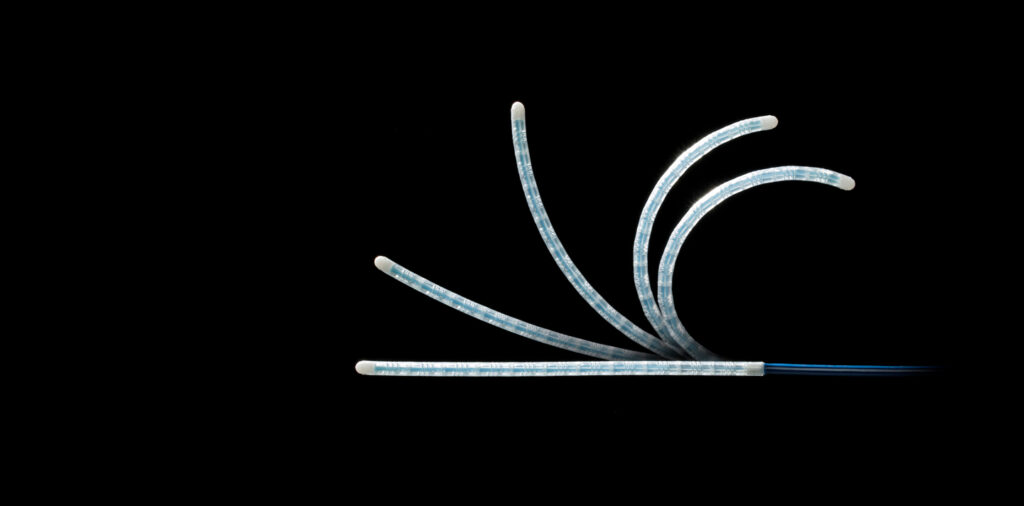
Innovative design and technology consultancy Cambridge Design Partnership has worked with King’s College London to develop a novel steerable catheter which King’s researchers had designed.  The catheter is designed to improve the treatment of cardiac arrhythmia – a range of conditions which can lead to stroke or heart failure that affects 2 million people a year1 in the UK alone.

The new steerable, micro moulded catheter enables targeted delivery of radio frequency energy to specific points in the heart tissue for corrective treatment. Compared with traditional catheters, the new device has been designed to be quicker and easier to manoeuvre into the correct position, improving the accuracy of positioning and minimising damage to healthy tissue, which should improve success rates of the treatment.

Cambridge Design Partnership won a four-way competitive bid to further develop the device created by King’s College London, involving helix-shaped interlocking tubes that would allow improved steerability and greater compatibility for robotic control over other catheters on the market. The team at Cambridge Design Partnership successfully refined the initial design, enabling the device to meet key regulatory and biocompatibility requirements, whilst ensuring suitability for commercial manufacture. Through CDP’s experience of developing highly technical medical devices, the team was able to miniaturise the design to allow improved space for the delivery of ablation energy and irrigation. The new catheter design is also assembled from micro injection moulded sections, incorporating features that enable the device to be built on an automated assembly line at reduced manufacturing cost.

Matt Brady, head of Medical Therapy, Cambridge Design Partnership, said: “The steerable catheter is an extraordinary product, with innovative features that enable corrective treatment to be delivered to very specific areas of the heart. By enabling greater accuracy and quicker treatment time, we believe it is possible to preserve more healthy heart tissue, and increase the success of the treatment. It’s been hugely exciting to be involved in this joint project with King’s College London and use our expertise to bring such an innovative product one step closer to commercial use.”

Professor Kawal Rhode, Professor of Biomedical Engineering at King’s College; London, commented: “We have been delighted with the results of Cambridge Design Partnership’s work on this project. The team was chosen for the strength of their existing experience in developing catheters across both start-ups and global corporations.  We were very pleased with the engineering approach and practical improvements that they managed to incorporate. They delivered fully moulded parts, and specified other components and the assembly route which fully met our aspirations for the project.”

King’s College London is now undertaking extensive lab testing of the catheter device, with clinical trials expected to be take place in two to three years.

1 Arrhythmia

For further information on this project, please email: hello@cambridge-design.co.uk

For Enquiries to King’s College London:
Please contact Dr. Rob Glen, King’s Commercialisation Institute
Robert.glen@kcl.ac.uk 020 7188 6209
Kings Commercialisation Institute