Pilot manufacture for drug delivery devices||

Prepare the way: Pilot manufacture for drug delivery devices

Bringing a drug delivery device to a clinical trial is a complex endeavor. You need to keep a handle on multiple moving parts, for example, the active pharmaceutical ingredient (API) development, the regulatory pathway, establishing the supply chain, and labeling. Developing a novel drug delivery device takes things to another level.

Many manufacturers shy away from the challenge, relying instead on proven technologies, so patients and clinicians don’t benefit from the most advanced user-centered design, and pharma companies can’t leverage the competitive advantage new technology delivers.

Here, I share some of the obstacles encountered conducting pilot builds in-house to help our clients bring devices to market – and give four pointers for ideal pilot manufacturing for clinical trials.

Develop your manufacturing process and architecture in tandem

3D CAD makes it all too easy to lose touch with reality and forget that the model on the screen is only an idealized representation. Zoom in 4,000%, and everything lines up beautifully. There’s no gravity, and parts have infinite stiffness, no tolerance, and perfect alignment. But, when you get natural variation in the manufacturing process, results can be disastrous. Components may not even fit together.

Once a design is frozen, making changes is expensive. After it’s passed to a high-volume manufacturer, costs become exponentially higher. Understanding manufacturing processes – and how changes can impact a project’s timeline – is critical for successful delivery. You need to prepare for the supply-chain ‘whiplash effect’: a tiny change at the top of the chain can mean seismic shifts at the end of it. That knock-on is the reason your product development strategy should incorporate pilot manufacture. Pilot manufacture keeps this effect in check by minimizing the volumes involved.

It’s vital to consider the whole supply chain, not just the component manufacturer, but the process equipment partners, filling, packaging, sterilization, and logistics. Each step has requirements to be understood and communicated to relevant parties. By developing manufacturing and assembly processes in tandem with device design, we can be flexible to insights arriving from either direction.

Pick the right partners for success

One of my first jobs was for a major automotive company. In their heyday, they ran the foundries that made the ball bearings for their vehicles. Today, they wouldn’t dream of it. No company does everything anymore. Few organizations would claim to be experts in all areas of drug delivery. Even those that manufacture and fill their own devices rely on external partners to produce the plastic resin and packaging materials and often outsource activities such as sterilization.

Partnering with experts to contribute specific knowledge is a time-efficient way to overcome obstacles in the development pathway. It also unlocks access to cutting-edge equipment and facilities that are expensive to maintain. While developing a breath-actuated inhaler, we engaged an external test house to conduct bio-compatibility evaluations on the device. We may have the skills in-house to perform this testing but maintaining accreditation for an activity that isn’t core to our business doesn’t make financial sense.

Know the limits

When developing a device, it’s essential to explore sources of potential variation. The same goes for the manufacturing process. You can use various tools to do this, but we frequently return to the humble ‘process failure modes and effects analysis’ (pFMEA). The pFMEA is a structured way to consider all the process steps – and how they could go awry. Developing a robust pFMEA ensures the team focuses on the highest risk areas and starts thinking about implementing mitigations.

A key checkbox for each manufacturing process step is if the results can be verified or validated. The US Food & Drug Administration Code of Federal Regulations Title 21 defines verification as “confirmation by examination and provision of objective evidence that specified requirements have been fulfilled.” Many processes can be verified using in-process measurement systems. But several can’t, for example, the joining of two plastic parts by ultrasonic welding. You can’t determine the strength of this weld without destructive testing. The ultrasonic welding process needs to go through process validation to determine the limits within which the process should be operated.

When communicating with stakeholders, it’s crucial to know the volume limits and have a realistic plan for producing parts representative of the final production process. For example, how many parts can the mold tools make? There’s a trade-off between tool production speed, tool cost, and tool life. Low-cost soft aluminum tools might be ready in two weeks but only suitable for 2,000 shots, whereas a more expensive hardened steel version might take 16 weeks (without validation) but last for over 100,000 shots.

Validating injection mold tools can be a lengthy process. Exploring the process window needs planning and performing multiple molding and measurement runs and subsequent analysis. Companies only want to bear this cost once, so experienced development teams need to hold firm when encountering adverse test results. I know of an auto-injector that showed promise early on, albeit with an infrequent failure observed in testing during development, that was allowed to pass into design freeze. More thorough testing during design verification revealed results that triggered the regulatory application to be rejected. Cue months of tooling validation needing to be reassessed.

Combination products require the delivery devices to be filled or co-packaged with primary containers of the API. Clinical trials complicate this because they need devices filled with the API or safe and sterile placebo. The filling process can be complex, especially when the API is highly viscous or uses technologies such as microspheres to sustain the release of active components over time. You need to factor in time to explore the filling and develop the process settings. Thought needs to be given to the amount of API and placebo available and the lead times for new batches as this can limit the amount of filled and finished devices.

Whitepaper-Breaking-the-mould-CDP-pdf
WHITE PAPER

Digital tooling to reduce time to market

Not documented? You’re not done.

Understanding the controls needed to manage risk is essential for a manufacturer delivering high-quality, safe, and reliable products. ISO 14971 sets out a best practice framework for managing risk in the context of medical devices. We advise creating a quality control plan that summarizes the production risk mitigation controls identified through risk assessment in a clear, concise format. This control plan also blueprints the actions needed if a specific limit or check is breached.

Anyone who has experienced an audit by a notified body or regulatory agency will recognize their love of records. The mature management systems used by large manufacturers often aren’t available for the short-run low volumes involved at the scale-up stage. Building a bespoke database compliant with 21 CFR part 11 to handle records can be a lengthy activity, particularly when compared with the pace of setting up paper-based systems.

Managing paper records generated by the manufacturing process can be challenging, putting storage and recall burdens on a manufacturer. Companies scan these documents soon after completion to reduce this burden. But the destruction of originals is risky, and the recall and integrity of e-records must be checked before destruction.

Pilot manufacturing helps optimize the journey of a drug delivery device to clinical trial. It’s not without its own challenges, but synchronizing manufacturing process and device design development, partnering with experts, having a plan for producing components that’s representative of the final production process, and keeping a handle on records puts you in a position to maximize pilot manufacturing’s potential.

References

Connect with CDP

For more on how to navigate pilot manufacture and bring drug delivery devices to clinical trial with confidence, contact Cambridge Design Partnership.

|||||

CDP completes pilot manufacture of Point of Care diagnostic readers for rapid COVID-19 testing

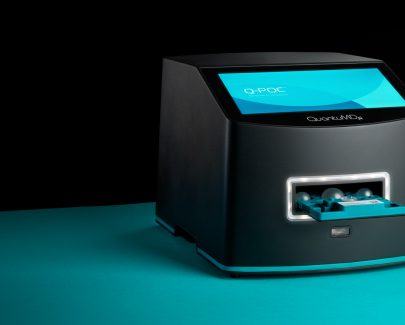
A team at UK product and innovation company Cambridge Design Partnership (CDP) has produced highly deployable devices for COVID-19 testing. CDP has been collaborating with diagnostics tech firm QuantuMDx to refine their Q-POC™ device and produce the first batch of readers to detect COVID-19 within approximately 30 minutes. QuantuMDx is now investing over £11 million to scale up production and introduce this rapid diagnostic solution to benefit patients and frontline health workers across the globe.

QuantuMDx is developing molecular diagnostic devices for a range of diseases and has developed and launched a highly accurate lab-based SARS-CoV-2 assay. Prior to the COVID-19 outbreak, the firm had commissioned CDP to produce prototype devices for CE marking. CDP worked through the first UK lockdown to improve the design of the reader and the first units are deployed at UK hospitals for COVID-19 testing studies.

“After beginning our partnership with QuantuMDx during 2019, we were delighted to be asked to collaborate with this innovative company once again, at a critical time. The team has been highly motivated by this crucial project and proud to contribute to the national effort,” says Dan Haworth, CDP’s Head of Diagnostics.

Colin Toombs, VP Research & Development at QuantuMDx, said: “We’ve worked in partnership with CDP since April last year, to undertake accelerated pilot manufacture of our Q-POC™ device, which is a portable DNA/RNA analyser offering rapid, sample-to-answer, molecular diagnostic testing at the point of care. The QuantuMDx and CDP teams have worked in close partnership to optimise our product development and manufacture devices to deliver testing for COVID-19. They are being released initially for research use, but we are rapidly moving towards CE-IVD of Q-POC™ for SARS-CoV-2 detection. Working together with CDP, we’ve established an ongoing partnership for the future.”

The device works by processing a swab sample, amplifying the target sequence specific to SARS-CoV-2, which causes COVID-19, and then detecting whether the virus is present. This all happens within a sealed cartridge that is controlled by the reader with minimal user involvement.

“Within approximately 30 minutes from sample collection, the device will give an accurate answer to whether the patient has COVID-19” says Dan.

These first new readers have been designed and built at CDP’s HQ in Cambridgeshire, where the company has short-run manufacture capability alongside its R&D facilities.

CDP’s team working to develop the QuantuMDx device includes mechanical and electronics engineers, software engineers, regulatory experts and manufacturing engineers.

“We worked at speed to design, build and test these important devices as quickly as possible. We are all thrilled to play our part in beating COVID-19 and we congratulate QuantuMDx on moving to mass manufacture,” added Dan.


For further information and media enquiries, please contact: media@cambridge-design.com or call 01223 264428

web_hero_six-secrets-to-expansion-success

Six strategies that accelerated innovation in 2020

In so many ways, 2020 has not been the easiest of years in which to do business. But nonetheless, design technology company Cambridge Design Partnership is taking on more staff, opening new offices and gaining blue chip clients. Here, founding partner Mike Cane reveals six strategies the firm is employing to accelerate their innovation programs in this most challenging of times.

1. Finding ways to work faster

Although the COVID-19 pandemic has thrown up many unforeseen challenges, it has also provided a pressing need to hone our innovation approach this year, writes Cambridge Design Partnership founding partner Mike Cane. Our specialist knowledge of medical tech and diagnostics has seen us taking on large-scale, fast track projects to help tackle the pandemic, both in diagnostics and treatment for the disease. We are also delighted to have undertaken a significant amount of pro-bono work during the crisis, working on everything from PPE to ventilators, to help support the NHS and defeat the virus. All of these projects had urgent timescales not normally associated with complex healthcare programs, which has meant we have had to organise ourselves differently.

This huge demand to accelerate development timescales, without compromising performance and safety, has led us to refine our procedures and approaches to allow us to deliver these projects on time.

2. Market knowledge

We plan to celebrate CDP’s 25th anniversary in 2021 by hiring our 250th employee owner. This consistent organic growth has been the result of our focus on three key industry markets where innovation is particularly important to our clients’ success. This has driven us to develop in-depth knowledge and expertise in our customers’ industries, which creates a more fertile environment in which to develop the very best possible products for them.

3. A holistic approach

Here at CDP we purposely take a holistic approach to our work, with the aim of providing an end-to-end service from a clean sheet to product launch and post-market support. While our clients often come to us when they are already at some point along the new product development journey, this perspective allows us to be aware of how the task at hand contributes to the overall success of their venture. This allows us to plan projects more effectively and to add value beyond our immediate role.

Some clients do come to us for the very first strategic discussions and market research. We can then take their ideas through design and testing right up to launch and manufacture. This seamless approach enables them to avoid the pitfalls that result from changing teams at key stages in the development process.

4. Building expertise

Over the years, we have built up a wide range of technical expertise and as a result we increasingly have teams with in-depth technical specialists, such as medical robotics engineers. As the scale of our business grows, we can offer our colleagues exciting opportunities to work at the cutting edge of technology with some of the world’s largest companies. At the core of what we do is science and engineering, so we are always keen to hear from mechanical engineers, electronic engineers and software engineers, particularly those with experience of working in the regulated medical sector. We also have opportunities for people with manufacturing expertise, as we now offer our clients short-run manufacture in our own labs, as well as the know-how to take new products right up to the point of market launch and transfer to high-volume manufacture.

5. Combining local with remote

Today, our largest geographic market is the US, with assignments carried out by both our team in Raleigh, North Carolina and also at our HQ in Cambridge. Making sure we have team members close by our clients helps make sure we work closely in partnership. Also, given the shortage of engineering talent in the UK, especially in software engineering, it’s useful to be able to recruit from two pools of talent. All this means that our American operation is more important to us than ever and, as a result, we’ve recently invested in a new and larger R&D facility in Raleigh.

6. Facilities, people and performance

As well as our new office in the US, we are also investing in a state-of-the-art new facility in the UK that will be ready next year. This will significantly expand and upgrade our laboratories and workshops, as well as providing specialist facilities such as state of the art market research infrastructure, multi-technology 3D printing, optics, power electronics and manufacturing process development labs.

Among the many reasons for CDP’s consistent innovation performance is, I believe, our strong Employee Ownership culture and our innovation focused management team. We are now coming up to three years into full employee ownership, meaning that every staff member, or Employee Owners as we call them, has a real voice and stake in CDP’s approach and success. Our senior management team is 12 partners, each working in a different sector of the business, all focused on optimising our innovation projects. Even as we have grown, we have maintained our belief in a flat hierarchy, with Employee Owners fully empowered to create great new products

In conclusion…

Here at CDP, by far the most important thing we do is to put the success of our clients’ innovation projects at the centre of our business development planning. This means as well as developing new products, we are also developing our organisation, facilities and processes to provide the best possible support to our customers throughout the whole innovation process, helping them to launch the most competitive new products. As 2020 draws to a close, we’re optimistically looking to the future.

COVID-19 quarantine - How we are keeping our innovation projects moving

COVID-19 quarantine – How we are keeping our innovation projects moving

Mitigating infection means more and more people are working away from the office. At Cambridge Design Partnership we have geared up to work remotely, both internally with our project teams and externally with our customers. In this special blog, Jez shares some of the communication approaches we are using.

Here at Cambridge Design Partnership, we have a wealth of experience in remote working and conferencing. Our move to create the best possible virtual comms was initially sparked by our clients all over the world, with whom we seek to work closely in a collaborative and creative atmosphere from our HQ in Cambridge, UK and our East Coast engineering hub in Raleigh, North Carolina in the US.

We were mindful of the findings of Professor Albert Mehrabian, who back in the 1970s first mooted the concept of non-verbal communication. He found that in a test where people were asked to convey their feelings, 7% of communication was conveyed by the speaker’s words, 38% by their tone of voice and 55% by their body language.

In a vibrant meeting atmosphere like a brainstorm or creative discussion we naturally prefer the face to face experience, we find we talk a lot with our hands, technical props or mocks ups. So the trusty teleconference is lacking. Low cost video conferencing has been around for a while, but we have found that with a careful choice of hardware, software and etiquette, it’s a game changing tool.

The basics

We need teams to feel as though multiple locations have merged together, with everyone feeling relaxed and engaged so that they can fully contribute to the discussion. It’s crucial that everyone can see and hear each another, as well as look at what’s being presented or created, such as sketches, models, prototypes, videos and other simulations.

Choose the right platform

We use the Zoom videoconference platform; it integrates with Office and is easy to use. We simply email a link to join a meeting and with one click, the participant is in. Having said that we can easily add a password if needed.

But the software is only part of the equation, the camera and audio on many laptops leave much to be desired, and there are lots of relatively low cost add-ons that make all the difference.

Get plenty of cameras

You need high-definition video so participants can clearly see each other’s facial expressions and body language. This is surprisingly important – remember Professor Mehrabian’s findings! We use the Logitech range of high definition video conferencing cameras. We use ‘Connect’ for personal use and ‘Meet Up’ in larger conference rooms, they plug into your laptop and are transformational. They can be placed in your room to give a feeling of space, so the camera is not looking up your nose like many laptops do and the images are much more lifelike and expressive.

For groups you need enough cameras and screens for all team members to see and be seen. This makes everyone feel connected, rather than just having one camera focused on a whiteboard or a ‘talking head’. We link these cameras and screens into the meeting using the Zoom platform.

Clear audio

Having clear audio is essential, especially in larger rooms when people move about. Meet up offers great audio, but those who have to use laptops on their own need headsets or a Jabra table-top speaker/microphone, they are omni-directional and work really well with groups in larger rooms. It’s so important not to have to strain to make out what is being said, it makes the meeting much more relaxed and natural.

The role of the smart phone

Another key tool is the humble smartphone. This provides the flexibility for individual members to communicate very quickly. For instance, if there is a sketch or prototype someone wants to show, they can grab their smartphone, activate the Zoom app (use the joining code) and immediately share their camera. Of course, people can also join the meeting just with a smartphone.

Preparation is key

We always set up our meeting rooms in advance. No matter how good your kit is, there is often a technology ‘moment’ that needs resolution. You don’t want to lose that creative vibe as your team waits for IT issues. Also, don’t forget the conventional best practices for meetings apply as normal. Make sure you have a facilitator who issues briefing documents well ahead of the meeting and takes charge of the session with a clear plan.

Reap the benefits

With many virtual meetings and brainstorming sessions now under our belt, we’ve found that the remote working technology can actually enhance the communication experience. For instance, instead of all huddling around the same whiteboard or drawing, our use of smartphone cameras means that a drawing or virtual model can immediately be shared with everyone, regardless of their location. We have also found that a virtual meeting is usually much easier and quicker to organize, with more chance of all key players being able to attend and less time wasted while we wait for everyone to be available. It’s also hugely helpful that sessions can be easily recorded. This can be useful in unpicking exactly what was said and decided during a session.

Also, it’s remarkable to see how we are able to screen-share in our virtual meetings and work on complex Computer Aided Design (CAD), zooming in and highlighting areas, with the whole meeting able to follow and contribute.

In conclusion…

Now that we are used to virtual meetings, here at CDP we feel comfortable and confident with the technologies involved. It’s remarkable how people who are hundreds or even thousands of miles apart can work together really effectively, if the technology infrastructure is set up correctly.

The current outbreak of corona virus is worrying on every level, to which there are not many easy answers. However, there is a lot that we can do to ensure our economic activity is not hit too hard by the situation. We are happy to advise our clients how to make our virtual communication as effective as possible, and keep our innovation projects moving.

Optimising material in design innovation

Optimising material in design innovation

The interplay between choice of materials and product design provides unique opportunities for innovation. The criteria for selecting materials for an application are constantly evolving. A holistic approach where materials, process and form are all part of the design provides the best route to maximise potential.

A key question repeatedly encountered in product design is ‘what materials will work in this application?’ A good starting point is to consider the purpose. How is function created by the interplay between the shape and composition of the product? Is it important what it looks like? Should it let the light in or keep it out? What about electrical properties? Does it need to insulate to protect the user from mains voltage inside, or conduct electricity to prevent build-up of charge? Should it be very strong, or break in a controlled way in extreme conditions to fail safely? If it gets very hot or wet, do we expect it to continue to function in the same way, or should it undergo a recognisable change to indicate that it is no longer safe to use?

First Impressions

In many markets, first impressions of a new product design are very important and different materials can convey distinct messages. Does it feel cold or warm, grippy or slippery, rigid or flexible? Does the surface texture give an impression of a quality product that will last? Should it be a particular colour to stand out or blend in?

Is It Safe?

We want our products to be safe, but choice of appropriate materials will depend on the application. Medical devices and products used by children or in contact with food need to be tested to the appropriate standards to check that no harmful ingredients might leach out during use. But inside a nuclear power station, the ability to continue to operate unaffected by radiation will be crucial.

Will It Last?

For many materials, properties will change with time, and this may affect the period of usability of a product. Predicting lifetime will depend on the temperature range over which articles are used. Accelerated ageing at a range of elevated temperatures can be carried out to model the expected life of products at room temperature. If use at low temperatures is envisaged, it is also important to check that materials which are flexible at room temperature do not become brittle when very cold.

For repeated or extended use, materials need to be chosen which retain their properties over time. Ease and comfort of handling may be very important, for example fit and grip, or the ability to stay clean and free of microbes. Items subject to repeated deformation may tend to change shape. For high voltage applications, the ability to retain safe insulating properties is important.

What About Costs?

We often focus on the opportunity for cost reduction by material substitution, but in many applications the cost of the materials is only a small fraction of the end price of a product. There may also be some scope to include small amounts of expensive materials in the formulation to provide additional functions. For example, ‘smart’ materials may be included to modify optical, magnetic, thermal or electrical properties.

Material substitution can often reduce overall costs by providing a route to reduction in process time or temperature. Choosing a more expensive material that can be handled in a simpler type of fabrication process is another option. Manufacturing methods are continually evolving; hence the choice of process needs to be regularly reviewed. When rapid delivery of prototypes is crucial, additive manufacturing may offer a route to fulfil this need. However, when moving to a different process for larger volume production, it is important to verify that the material will perform in the same way.

One Material or Many?

In the area of composite materials, thermoset systems have proved difficult to recycle, but the recent increased use of high temperature engineering thermoplastics in composites provides more possibilities.

Many material problems can be solved by understanding the interface between different items e.g. how implants interact with the human skeleton in the long term or careful process control of co-moulded plastic and rubber parts to ensure good adhesion between them. Often the simplest solution is to store newly manufactured parts under controlled conditions for a set time before exposing them to customer use.

Planning for the Future

The availability, price and customer acceptability of many materials continues to change, and consumers and manufacturers are increasingly looking to choose more sustainable alternatives. Be this through materials that facilitate recycling or repair, use of sustainable raw materials such as a move from oil based to plant based raw materials, or through a reduction in the energy embodied in the material manufacture, processing and recycling at the end of life.

New information about the safety of existing materials may also emerge. For example animal fur and asbestos insulation are no longer available and plastics are now often called resins. Which materials will become unpopular or unavailable next?

How Does Material Choice Integrate into the Overall Design?

The CDP team has very broad knowledge in a variety of areas of consumer, industrial and medical applications from materials for printed electronics through adhesives and hydrogels to pesticides for rodent control. We have not just a materials expertise but an expert interface with engineering and manufacturing disciplines to offer a range of product design solutions.

We have specialist experience in materials for energy generation and storage, from batteries to supercapacitors and fuel cells, enabling us to identify opportunities to generate intellectual property in both materials and applications.

In particular, the CDP skillset includes a detailed understanding of materials in healthcare applications. This is of particular importance for drug delivery devices, where this capability provides a vital insight into the possible chemical interactions between a medical device and the drug being delivered. Manufacturing processes such as sterilisation methods, coupled with formulation characteristics including viscosity, surface tension or particle size will all have an impact on the selection of materials.

In a Nutshell

When we consider materials, product form and manufacturing process separately, we can go a long way towards achieving a good design. But it is only when we look at the choice of appropriate materials as part of the overall design and manufacturing process that we can achieve so much more.

We use so many different products in our everyday lives and they all need to be made from the most appropriate materials so that they will continue to perform well for many years.

Solving design transfer challenges

Solving design transfer challenges

Crossing the chasm from design to manufacture can create an acute case of innovation vertigo. Carl Pullen, senior consultant mechanical engineer and Wade Tipton, partner responsible for quality and manufacturing at Cambridge Design Partnership discuss the benefits of using short-run manufacturing to solve the challenges of design transfer in medical device development and commercialisation.

The challenges of design transfer are well known in the medical device industry. The innovation process starts by designing and getting the few prototypes of a new device working, but if your approach has not anticipated the challenges of volume production then the struggle really starts when you send that product to a manufacturing partner, often in another country, and ask for it to be made in scale.

There are many complexities beyond the device design itself to consider when designing high performance medical devices, such as component cost, performance, assembly and inspection at the high speeds required for serial production. Product designers who develop new products from a clean sheet have many issues to consider and often they rely on a manufacturing engineer to sort out production issues later on.

Unfortunately, “sorting it out” can be a tortuous process because each design change can have many unintended knock-on effects. When the practicalities of making a design work on a production line delays the launch of a product, then the direct costs and financial damage can be significant. In the field of medical devices, the window of opportunity in which to sell a product while it is still under patent is likely to be curtailed significantly, causing unforeseen harm to a company’s potential income. In these situations, the pressure is on.

In many cases when a design is handed over to a contract manufacturer there are challenges with the production processes and equipment the manufacturer uses and is familiar with. To address this, some contract manufacturers offer their own design service so new products are created with the final manufacturing process in mind.

Click here to read the full article…

manufacturing – we bridge the chasm

Bridging the design transfer chasm

The challenges of bridging the ‘design transfer chasm’ are well known in the medical device industry. If your approach to design and innovation has not fully anticipated the intricacies of volume production in a regulated environment, then difficulties will arise when it is sent to your manufacturing partner to be made at scale.

Developing high volume medical devices is a complex challenge, there are many issues beyond the design itself to consider such as usability, component cost, part variability and suitability for high-speed assembly and inspection.  Product designers creating new products from a clean sheet often rely on manufacturing engineers to rectify issues later down the line.

Unfortunately, rectification can be a tortuous process as each design change can have many unintended knock-on effects. When manufacturing delays impact the launch of a product, the direct costs and financial damage can be significant. The window of opportunity in which to sell a new product while it is still under a patent is limited, causing unforeseen harm to income potential.

Some contract manufacturers address this concern by offering a design and manufacture package, however this strategy can leave the manufacturer’s intellectual property and know-how embedded in the product. This ties in the manufacturer and restricts your ability to control supply chain profit margins in the long term by competitive second sourcing, adding risk in the future.

To address these challenges, Cambridge Design Partnership has created a product innovation model called Potential Realised. We find it offers a better solution by developing the new product within an environment where a holistic team of product development and manufacturing engineers work in parallel. The benefit of having the design and manufacturing teams working closely together is that production problems are foreseen, and issues fixed quickly, by either design or manufacturing changes.

The key step that leads to the success of this approach is a robust phase of short-run manufacturing organised by an extended design team towards the end of product development. The manufacturing team develops a comprehensive pilot manufacturing process which includes tooling and process qualification. This run provides both regulated product for clinical trials and verifies the capability of the design and manufacturing process.

The result is a detailed and tested package of manufacturing documentation alongside the completed technical file and clinical trial data. The designs are handed over with a quality control plan, standard operating procedures, jigs, and validated test methods. This means that all the intellectual property including the know-how relating to both the design and manufacturing process is transferred, enabling a competitive tender process to identify the most cost-effective volume manufacturing partner.

A key advantage of Potential Realised is revealed when conducting clinical trials. Trials normally start between design and full manufacture, so there is a danger that if design transfer requires alterations to the product, elements of the controlled clinical trial may need to be repeated. There are countless examples of pharmaceutical companies needing to repeat or extend clinical trials due to delivery device design changes during design transfer, or to take extra time to perform bridging studies to demonstrate to regulators that changes have not impacted clinical performance.  Instead, with the Potential Realised approach, a short manufacturing run for clinical trials is integrated into the development process and is conducted in a manner representative of how the product will be made once it goes into volume manufacture, thus significantly reducing these risks.

In the field of medical device innovation, Potential Realised integrates short-run manufacture into product development bringing a raft of advantages, not only saving both time and money in commercialisation but bringing forward product launch and vital product revenues.


To find out more, explore Transfer to Manufacturing.

A toast to manufacturing

A toast to manufacturing

We are all manufacturers. Without appreciating it we manufacture products ourselves every day. Think back to breakfast this morning – did you make toast?

Most mornings my son has toast for breakfast. The process of making his toast mimics the work I do every day at CDP in the development and commercialisation of manufacturing processes for medical and drug delivery devices, and which my colleagues undertake for consumer products. At all levels – medical, commercial, domestic – the principles are the same, it’s the depth to which each stage is undertaken that differs and knowing how deep to go.

Creating breakfast starts by selecting the bread, the critical raw material of the toast making process. It’s important to have bread available – a rather simple stock management exercise that fails more often than I’m prepared to admit. The nicest bread comes from a local shop and this shop sits at the top of our approved suppliers list, although we often dual source from other local shops. An additional consideration is the type of bread (the raw material specification). White is preferred over brown, fresh preferred over sliced. This specification also helps to determine whether the bread is likely to go stale or mouldy before it’s used. Shelf life and storage conditions play a huge part in this, as they do for many consumable goods and drug combination products.

The manufacturing equipment we use for conversion of bread into toast is a toaster. An open grill or fire would do the job but are more prone to process variation resulting in a burnt or underdone offering. I consider these options to be more akin to manual, proof of concept processes and the more advanced, semi-automated toaster frees up the operator to do other tasks, like packing a school bag or making a cup of tea. Getting a new toaster is fraught with uncertainty! Once out of the box it’s plugged in to check that it works (installation qualification) and then a series of trials is embarked upon to find the right setting for a perfectly done slice of toast (operational qualification). It then remains on this setting for a while to prove that it works consistently several mornings in a row (performance qualification). The toaster is now “validated”, and everything is fine until the settings are changed because someone wants a teacake and you need to try and remember your previous settings (change control). Luckily, we can reduce the stress and uncertainty of new process equipment by thinking about and documenting these risks and challenges up front and developing specifications and designs that fulfil your needs – you’ll have had specifications for your toaster too, even if this was only an undocumented request that it matches the kettle.

After emerging from the toaster, the toast undergoes a visual inspection (quality control) to confirm that it’s suitable (within specification). If it’s burnt it becomes a reject and goes in the bin, if it’s underdone then rework is appropriate as it can go back in the toaster although more attention is required for this phase.

The final stage is toppings; usually butter and honey, and presentation. This is the area which has historically generated the most complaints and it mirrors the drug delivery market where most complaints are generated due to labelling and packaging errors.

As we sit eating our breakfast I can reflect on the current low level of complaints and how it’s taken us years to develop an effective morning routine. The same is true at CDP where years of experience enable me to help clients navigate through the development of complex manufacturing processes and their accompanying regulations.

My top tip for not getting burnt would be to talk to all the key stakeholders and understand the following;

  1. The final product – what needs to be produced and in what quantity; the difference between making toast for two and making toast in a busy café.
  2. The scope of the manufacturing process – it is just toast, or will you also need it for bagels, crumpets and teacakes?
  3. The expectations of the consumer/patient and the regulatory environment – do you need the toast to be gluten free? or made in a certifiably hygienic environment?

And remember, in the end we are all manufacturers – even if the scale and complexity of our products are worlds apart.

The next step in innovative medicines manufacturing

This month’s Manufacturing Medicines Industry Partnership (MMIP) conference – Propelling growth: taking the next step in innovative medicines manufacturing – took place at an exciting time for the pharma industry. Advanced therapies (ATs) – such as cell therapies in which patients are treated with living cells – have been under development for the last 20 years as we apply our ever-increasing understanding of the genome. But the field has been catalysed by the recent regulatory approval of several very promising products such as Novartis’s Kymriah and GSK’s Strimvelis.

These flagship products put the pharma industry at an inflection point and present an opportunity to move medicine from palliative care to an entirely new paradigm where cures and personalised medicine are fast becoming reality. These new therapies are, however, very complex – and manufacturing needs are significantly different from existing therapies (e.g. small molecule and traditional biotherapeutics). This complexity presents both challenges and opportunities.

Themes and challenges

Roger Connor from GSK kicked off the conference with an introduction on how moving to a new medical paradigm will not be straightforward and what this future will mean for medicines development and manufacturing – and the implications for the wider supply chain and, of course, therapy delivery.

The complexity of these therapies means collaboration at all stages of the lifecycle will be vital. This is especially relevant at the research and development (R&D) stage. Manufacturing these complex therapies is a significant challenge – Andy Evans from AstraZeneca highlighted the need for very early discussion between R&D and manufacturing to build manufacturing strategies around lead therapy candidates.

Once manufacturing processes have been proposed, then robust quality control methods will also need to be established. Cell and gene therapies have a lower R&D attrition rate due to their high specificity. But the enhanced specificity puts more emphasis on manufacturing, as small process fluctuations can have a large effect on the final product and thus therapy specificity.

Currently ATs with regulatory clearance are for rare disease conditions with very small patient populations and low manufacturing volumes. Discussion at the conference highlighted that new therapies under development will move to larger patient numbers. James Miskin from Oxford BioMedica highlighted a gene therapy under development for Parkinson’s disease as an example. It was also said that a medium to long-term challenge will be the development of strategies, tools and technologies that enable manufacture of such ATs in larger volumes.

The delicate nature of the biological materials used in ATs also presents challenges to the wider supply chain – with therapy packaging and delivery now just as important as manufacturing. Challenges here relate to the implications of handling and shipping for product quality and ensuring the integrity of cryogenic conditions to prevent degradation of the delicate biological material affecting therapy quality.

Cost is also a major consideration – commercially available ATs are currently extremely expensive, with each treatment costing hundreds of thousands of pounds. Implementing solutions to the above challenges will have to occur within a cost-sensitive framework to ensure any new therapies are as affordable as possible.

In addition, the complexity of the genome is likely to result in many different therapies, each with their own different manufacturing and lifecycle challenges. It will not be a case of developing one solution for each technical challenge – platform technologies and configurable solutions will be required to provide solutions for multiple therapies.

Innovations

Despite recent success, ATs are still relatively immature. Whilst it is clear these therapies will require new tools and technologies to reduce cost and mitigate manufacturing complexity, it is not clear to the pharma industry exactly what solutions are required – and requirements will continue to evolve as the field matures. This presents opportunities for potential solutions to be adopted early and influence how the AT field matures.

Different speakers at the conference presented on future enabling technologies. These included Mike Houghton from Siemens presenting on digital technologies and Lionel Clarke from the Synthetic Biology Leadership Council discussing synthetic biology. Digital solutions are particularly attractive as development and manufacture of ATs is an inherently data-rich activity. Collection, aggregation and analysis of data at all stages of the AT lifecycle – from R&D and manufacturing to supply chain and therapy administration – offers significant value.

Supply chain challenges were also discussed – including opportunities to implement strategies from other logistic-intensive industries. Just-in-time (JIT) supply chain approaches – as used by the automotive industry – were cited by Anette Doherty from GSK. JIT approaches are particularly relevant given the limited shelf life of biology-derived therapies and could also potentially enable exciting possibilities in decentralised production closer to the point of care.

It is clear there are significant challenges to overcome in the industrialisation of ATs and there is a risk of forcing new therapies to fit into existing solutions and infrastructure. There is, however, an opportunity to develop new tools, technologies and solutions – and implement new manufacturing strategies fit for purpose, as Dave Tudor from GSK discussed.

The inherent complexity of ATs will require pharma companies to be bold and embrace innovation – looking to adjacent industries in addition to developing new first-of-a-kind technologies. These innovations will require a holistic perspective encompassing the entire AT lifecycle, and apply to manufacturing strategies and the wider supply chain, not just R&D.

Despite the challenges, ATs have huge potential – the market for cancer immunotherapies alone is predicted to be worth more than $100bn by 2021. The players – and indeed countries – that are first to understand the challenges across R&D, manufacturing and supply will win the opportunities and become the market leaders of tomorrow.

Defining a strategy for design history file remediation

When pharmaceutical companies launch a new product, often it is a combination of a new drug in an existing, proven delivery device. Because all new pharma products have full regulatory scrutiny, it is important to make sure the medical device design history file (DHF) is up to date and meets the latest standards. This is particularly critical when considering design history file remediation to ensure ongoing compliance.

DHFs can become surprisingly complex documents because they may have been through long-running development programmes incorporating many changes or they may have been acquired from other companies and contain significant legacy elements. Sometimes the passage of time has meant a DHF is no longer of the standard needed to pass FDA audit so it presents a business risk.

In any of these cases, factors such as new standards and regulations or changes in intended use, risk profiles or manufacturing processes make it important to defining an appropriate strategy for design history file remediation at the outset.

There are several aspects central to defining an effective strategy – such as building a detailed narrative, using a suitable quality management system (QMS) framework and effective planning. In fact, design history file remediation can be an intricate process that requires careful consideration of all these elements.

A design file history remediation story

Central to the concept of generating a robust DHF is the aspect that should frame the mindset of both development and remediation projects – to create a narrative, or history, of the development journey. The goal should ideally be not to create a clean set of ‘Revision A’ documents but to use and develop the tools of an efficient quality system to create a narrative of the complete development process. This is, most importantly, about creating visibility of all the technical decisions, learnings and changes along the way but can include broader aspects such as changes of ownership, changes to major standards or evolution of the supporting quality systems. Creating a narrative can be more challenging in remediation projects but employing the right philosophy can create opportunities to simplify a complex challenge.

Fit for purpose

The two key elements of the DHF generation are the specific technical content and the quality system framework used to collate and describe the format of the file.

It’s critical to define early on what success looks like for the revised DHF and understand the strategic decisions that need to be made to facilitate creating a robust file.

Remediation projects are usually not an ideal time to implement a comprehensive change to QMS processes in parallel, however appealing that may seem, so a best-practice approach leveraging existing processes is usually a sound strategy.

It is, of course, vital to check that the resulting DHF complies with the current guidance of key standards such as ISO13485 and FDA 21 CFR Part 820. In cases where a comprehensive QMS framework is not available, it is important to use other tools – such as a fully detailed quality or development plan – to describe approaches and adaptations to be employed to create a robust DHF. Therefore, proper planning during design history file remediation is essential to achieve regulatory requirements.

Planning

With these two key aspects in mind, the planning activities can then be focused on establishing the framework and resources required to move forward.

A fully detailed project plan will describe all the tasks to be delivered but is also vital to ensure any relevant experts and stakeholders are in place and available when required. The early planning of workshops and stage-gate reviews is very important to ensure smooth progress.

An effective and fully detailed quality plan with scope, objectives and a clear set of deliverables will greatly help to get alignment on the specific goals with all relevant stakeholders and help to assess the skills and resources needed.

Employing an effective stage-gate process is a great way to monitor progress and assess the status as the project progresses. Communication and stakeholder engagement are vital to progressing effectively so using stage-gate meetings to record open actions, assess risks and assign tasks gives visibility of issues and allows detailed planning.

A successful remediation project depends on many elements – but a robust strategy, expert resources and effective communication are vital aspects that will certainly reward additional investment. In summary, design history file remediation not only mitigates business risk but also ensures products remain compliant and fit for market.