||||||||||||||||
Find the authors
on LinkedIn:

Reducing the carbon footprint and plastic waste of LFTs: Evidence-based opportunities

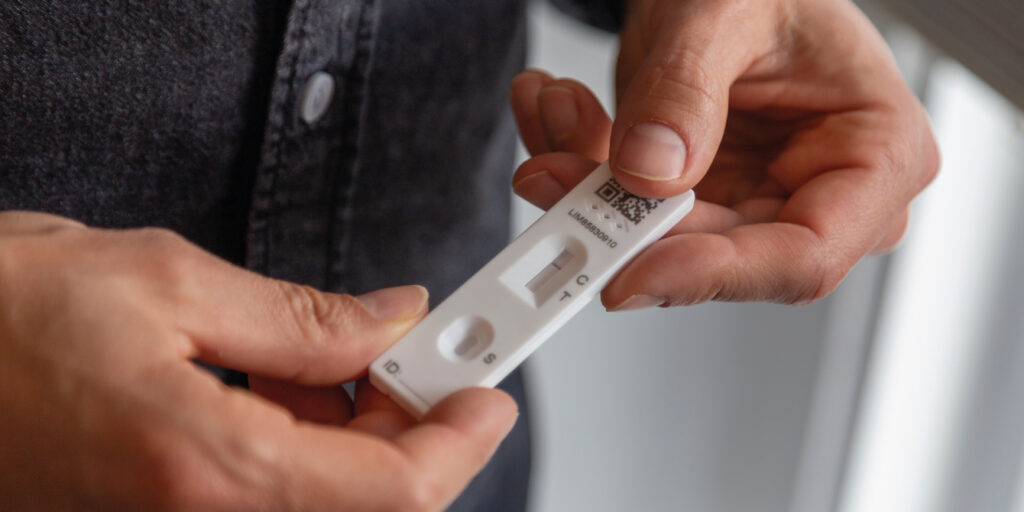
Billions of lateral flow tests have been used worldwide during the COVID-19 pandemic – over two billion have been provided in the UK alone. Debate has raged on social media about why the tests need to use so much single-use plastic and how they could be made more ‘sustainable’. The test strip caseworks is a particular source of dismay – why so much plastic to house such a tiny test strip?

With the UK government ending the free distribution of lateral flow tests for the general public – citing a transition from emergency response to longer-term management of the pandemic – now is the ideal time to look more closely at the sustainability of these lateral flow tests, and to seek the data to demystify some of the emotional assumptions being made.

Familiarity with lateral flow testing has certainly increased, as has confidence in their clinical performance. It’s expected that lateral flow devices will be more present in our daily lives post-pandemic – not just for COVID-19 and pregnancy testing but to diagnose diseases such as seasonal influenza and sexually transmitted infections – all from the comfort of the home.

We’ve carried out a high-level assessment to quantify the approximate environmental impact of lateral flow tests and identify evidence-based suggestions for improving their environmental sustainability.

Why do COVID-19 lateral flow tests contain lots of single-use plastic in the first place?

The emergence of COVID-19 was a global emergency, and vast quantities of lateral flow tests were needed urgently. Once developers could produce the right immunoassay chemistry to detect the virus (SARS-CoV-2), it required implementation in a low-cost, low-risk device, that has a mature supply chain – with proven, readily available materials that wouldn’t compromise analytical or clinical performance.

This meant using existing plastic casework designs to retain and protect the nitrocellulose test strip. Plastic is robust, low cost, lightweight, easy to transport, and easily printed for QR codes and LOT numbers. Critically, it’s a consistent material proven for the highest volume manufacturing and won’t interfere with the immunoassay chemistry.

From a performance, cost, and manufacturing perspective, redesigning the product with new materials would have been high risk. Material changes may also have needed significant R&D costs, new capital equipment as well as additional cost and effort needed to demonstrate equivalence and achieve regulatory approval – risking the ability to provide sufficient numbers of high-quality tests, at speed during the pandemic.

Our results: The sustainability of lateral flow tests

But how serious an environmental impact do these tests have? To find out, we broke down a test into its constituent components and weighed them to calculate the approximate environmental impact, using standard emissions factors to calculate the carbon footprint of a single test.

web_body_lateral-flow-test-kit-1

We focused on carbon footprint (the carbon dioxide and other greenhouse gases emitted during manufacture, transport, and disposal of the tests) and plastic waste (waste that would persist indefinitely if released into the environment) – the two issues that have attracted the most attention around lateral flow tests. A more comprehensive study should consider a broader range of environmental impacts, for example, the use of scarce resources and emission of other pollutants to avoid unintended consequences of any product changes.

Our results reveal:

  • The components needed to conduct the test account for around half of the carbon footprint and around two-thirds of the plastic waste. Packaging makes up most of the rest – as is often the case, a surprisingly high proportion of the total environmental impact
  • The test strip caseworks, which attracts the most comment online, is responsible for around 30% of the carbon footprint and 40% of the plastic waste. While it’s the most significant single contributor to the environmental impacts we evaluated, the large number of other small parts is also significant. Focusing on the caseworks therefore might not be the best strategy for improving the sustainability of the tests overall.
web_body_lateral-flow-test-analysis-1a-2
web_body_lateral-flow-test-analysis-1b-3

Lateral flow tests a minor piece of UK healthcare’s environmental impact

To put these numbers into context, we can compare the environmental impact of the two billion COVID-19 lateral flow tests distributed in the UK with the UK healthcare system’s overall environmental impact. We estimate the UK’s lateral flow tests have a carbon footprint equivalent to around 0.5% of the total NHS carbon footprint. This isn’t a trivial amount, but it’s also not the largest single contributor to the impact of the UK health system.

It’s also worth considering the positive environmental impact of a user-administered test on the health system. Conducting a test at home can eliminate the need for an individual to visit a test site, GP’s surgery, or hospital (assuming the clinical performance of the lateral flow test is adequate). Based on estimates from the Sustainable Healthcare Coalition, one lateral flow test has around 5% of the carbon footprint of a single GP appointment and produces a similarly low percentage of non-degradable (plastic) waste.

And that’s before we consider travel. We estimate one lateral flow test has the same carbon footprint as driving 350 metres in an average UK car. So, if you’re driving yourself to a test site or GP surgery some distance away, at-home lateral flow tests compare even more favorably.

If a lateral flow test prevents an individual from transmitting COVID-19 to a vulnerable person, there’s a public health benefit – as well as an environmental benefit – to keeping people out of the hospital. We can all see the discarded waste from home tests, but the less visible impact from energy- and material-intensive medical interventions is often significantly higher.

These approximate figures demonstrate why building an evidence base is vital during product development targeting sustainability objectives – because the results can be unexpected and non-intuitive.

Quick ways to optimize today’s lateral flow tests

Just because waste from lateral flow tests might not be the most urgent sustainability issue for UK healthcare, that doesn’t mean we can’t and shouldn’t do something about it.

We used the ‘avoid/shift/improve’ model to find potential quick wins for lateral flow tests. These reduce the carbon footprint of each test by nearly a third and the plastic waste by almost a quarter – without impacting the fundamentals of how the test works.

They include:

  • Eliminate waste bags. There’s a case for quickly isolating contaminated waste (even given COVID-19 also spreads from infected individuals through the air), but the bags account for around 5% of the carbon footprint of the test. It’s not clear how widely used they are in a domestic setting – there may be a risk-based justification for not including them in the test kit.
  • Package all the test strips in a single foil pouch. Using a single re-sealable pouch to protect the tests from ambient humidity (rather than individually packing each test in a pouch with desiccant) is common in packs of lateral flow tests designed for use by healthcare professionals. However, once opened, the stability lifetime of the remaining tests is affected.
  • Reduce the size of paper instructions. These are important for the effectiveness of the tests and are a regulatory requirement, but account for 5% of the carbon footprint of a test – could they be reduced in size?
  • Eliminate the cardboard sleeve. This packaging isn’t essential to the safe and effective functioning of the test, and it seems likely that the functions it does provide could be achieved with less material.
  • Prefill the extraction tubes with buffer solution. This is already done in some test kits, although manufacturers need to be conscious of moisture loss and the effect on shelf life. However, the separate plastic vial used in the test kit we studied accounts for around 5% of the carbon footprint and plastic waste.
  • Increase the size of the pack from seven to ten tests. This would mean less package waste per individual test. Including ten tests in one pack instead of seven reduces the carbon footprint by around 5% (depending on how many other optimizations are done at the same time). Perhaps a pack of seven tests was originally designed to cover a week of daily testing – but is that how tests are being used in practice?
web_body_lateral-flow-test-analysis-2

Redesign of the test strip caseworks

Looking to the longer-term gets us into product redesign – creating a new generation of the product with sustainability in mind. Doing this can take significant investment since, for medical devices, it’s likely to require new regulatory approval, which is a lengthy and costly process.

A popular idea circulating for lateral flow tests is to minimize the plastic test strip caseworks (without compromising the essential functions of providing a stable platform, and protecting the nitrocellulose test strip). It might be possible to halve the caseworks mass and reduce the overall carbon footprint and plastic waste by 15-20%. This would require significant investment in R&D, production tooling, and regulatory approval hoops to jump through – but could be worthwhile if future demand for tests stays high.

Longer-term options

If we consider that the world may require billions more lateral flow tests over the coming decade, a more comprehensive redesign becomes commercially viable. This could involve stripping the design back to the fundamental requirements for a lateral flow test – flowing a sample through the test strip in a way that is controlled and free from contamination. Current designs take advantage of established components to collect, buffer, and dose the sample – but, at this production volume, it may be worthwhile designing a system from the ground up that is optimized for cost, usability, performance, and sustainability.

Sustainability as a brand differentiator

It’s clear there’s scope to optimize lateral flow tests to reduce their environmental impact – and a systematic analysis reveals options beyond those that might jump out to someone when they use the tests. But it’s essential to put the impact of lateral flow tests in the context of the wider healthcare system, to focus resources where they can have the most environmental impact – and to recognize that, sometimes, the plastic waste people can see helps to avoid more serious, but less visible consequences.

On the other hand, while visible plastic waste from lateral flow tests may not be the most pressing environmental issue facing the healthcare industry, it highlights the growing influence consumer opinion is likely to have as diagnosis and treatment shift from hospitals to homes. And as lateral flow tests become (in the UK, at least) a product people buy with their own money, choosing from a range of options, there may be a competitive advantage for businesses that take note and optimize their products for sustainability.

References
  • Prime Minister sets out plan for living with COVID [Internet]. GOV.UK. 2022 [cited 1 April 2022]. Available from: https://www.gov.uk/government/news/prime-minister-sets-out-plan-for-living-with-covid
  • The Sustainable Healthcare Coalition. Care Pathways Calculator. [Internet]. Sustainable Healthcare Coalition. 2022 [cited 1 April 2022]. Available from: https://shcoalition.org/

Connect with CDP

For more information on reducing the environmental impact of lateral flow tests without compromising performance, contact Cambridge Design Partnership.
A FemTech innovator's guide to regulation|
By Cambridge Design Partnership

A FemTech innovator’s guide to regulation

WHITE PAPER

A FemTech innovator’s guide to regulation

BY JESSICA PLATT, HEATHER CARE-SKINNER, STUART CURTIS, BEN STRUTT AND MARTHA HODGSON

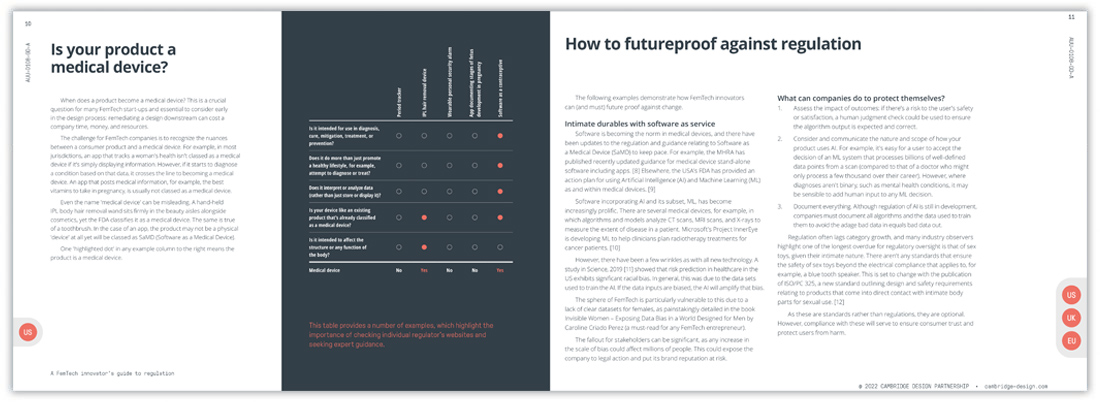
Searching for a ‘period tracker’ on the Google Play store returns almost two hundred results. Hair removal devices come with companion apps to personalize treatment. Everyday items, such as tampons, may soon save lives by diagnosing disease.

Amid this wave of innovation an essential part of the design process can be overlooked: regulation.

FemTech has three attributes that make it a particular target for regulatory attention: solutions often cross the divide between the consumer and medical markets, they increasingly deal with sensitive data, and FemTech is dominated by start-ups.

Using a range of case studies in this white paper, we highlight some of the key considerations around regulation – and show FemTech innovators how to robustly build it into the design life-cycle.

Download the whitepaper


Pilot manufacture for drug delivery devices||
Find the authors
on LinkedIn:

Prepare the way: Pilot manufacture for drug delivery devices

Bringing a drug delivery device to a clinical trial is a complex endeavor. You need to keep a handle on multiple moving parts, for example, the active pharmaceutical ingredient (API) development, the regulatory pathway, establishing the supply chain, and labeling. Developing a novel drug delivery device takes things to another level.

Many manufacturers shy away from the challenge, relying instead on proven technologies, so patients and clinicians don’t benefit from the most advanced user-centered design, and pharma companies can’t leverage the competitive advantage new technology delivers.

Here, I share some of the obstacles encountered conducting pilot builds in-house to help our clients bring devices to market – and give four pointers for ideal pilot manufacturing for clinical trials.

Develop your manufacturing process and architecture in tandem

3D CAD makes it all too easy to lose touch with reality and forget that the model on the screen is only an idealized representation. Zoom in 4,000%, and everything lines up beautifully. There’s no gravity, and parts have infinite stiffness, no tolerance, and perfect alignment. But, when you get natural variation in the manufacturing process, results can be disastrous. Components may not even fit together.

Once a design is frozen, making changes is expensive. After it’s passed to a high-volume manufacturer, costs become exponentially higher. Understanding manufacturing processes – and how changes can impact a project’s timeline – is critical for successful delivery. You need to prepare for the supply-chain ‘whiplash effect’: a tiny change at the top of the chain can mean seismic shifts at the end of it. That knock-on is the reason your product development strategy should incorporate pilot manufacture. Pilot manufacture keeps this effect in check by minimizing the volumes involved.

It’s vital to consider the whole supply chain, not just the component manufacturer, but the process equipment partners, filling, packaging, sterilization, and logistics. Each step has requirements to be understood and communicated to relevant parties. By developing manufacturing and assembly processes in tandem with device design, we can be flexible to insights arriving from either direction.

Pick the right partners for success

One of my first jobs was for a major automotive company. In their heyday, they ran the foundries that made the ball bearings for their vehicles. Today, they wouldn’t dream of it. No company does everything anymore. Few organizations would claim to be experts in all areas of drug delivery. Even those that manufacture and fill their own devices rely on external partners to produce the plastic resin and packaging materials and often outsource activities such as sterilization.

Partnering with experts to contribute specific knowledge is a time-efficient way to overcome obstacles in the development pathway. It also unlocks access to cutting-edge equipment and facilities that are expensive to maintain. While developing a breath-actuated inhaler, we engaged an external test house to conduct bio-compatibility evaluations on the device. We may have the skills in-house to perform this testing but maintaining accreditation for an activity that isn’t core to our business doesn’t make financial sense.

Know the limits

When developing a device, it’s essential to explore sources of potential variation. The same goes for the manufacturing process. You can use various tools to do this, but we frequently return to the humble ‘process failure modes and effects analysis’ (pFMEA). The pFMEA is a structured way to consider all the process steps – and how they could go awry. Developing a robust pFMEA ensures the team focuses on the highest risk areas and starts thinking about implementing mitigations.

A key checkbox for each manufacturing process step is if the results can be verified or validated. The US Food & Drug Administration Code of Federal Regulations Title 21 defines verification as “confirmation by examination and provision of objective evidence that specified requirements have been fulfilled.” Many processes can be verified using in-process measurement systems. But several can’t, for example, the joining of two plastic parts by ultrasonic welding. You can’t determine the strength of this weld without destructive testing. The ultrasonic welding process needs to go through process validation to determine the limits within which the process should be operated.

When communicating with stakeholders, it’s crucial to know the volume limits and have a realistic plan for producing parts representative of the final production process. For example, how many parts can the mold tools make? There’s a trade-off between tool production speed, tool cost, and tool life. Low-cost soft aluminum tools might be ready in two weeks but only suitable for 2,000 shots, whereas a more expensive hardened steel version might take 16 weeks (without validation) but last for over 100,000 shots.

Validating injection mold tools can be a lengthy process. Exploring the process window needs planning and performing multiple molding and measurement runs and subsequent analysis. Companies only want to bear this cost once, so experienced development teams need to hold firm when encountering adverse test results. I know of an auto-injector that showed promise early on, albeit with an infrequent failure observed in testing during development, that was allowed to pass into design freeze. More thorough testing during design verification revealed results that triggered the regulatory application to be rejected. Cue months of tooling validation needing to be reassessed.

Combination products require the delivery devices to be filled or co-packaged with primary containers of the API. Clinical trials complicate this because they need devices filled with the API or safe and sterile placebo. The filling process can be complex, especially when the API is highly viscous or uses technologies such as microspheres to sustain the release of active components over time. You need to factor in time to explore the filling and develop the process settings. Thought needs to be given to the amount of API and placebo available and the lead times for new batches as this can limit the amount of filled and finished devices.

Whitepaper-Breaking-the-mould-CDP-pdf
WHITE PAPER

Digital tooling to reduce time to market

Not documented? You’re not done.

Understanding the controls needed to manage risk is essential for a manufacturer delivering high-quality, safe, and reliable products. ISO 14971 sets out a best practice framework for managing risk in the context of medical devices. We advise creating a quality control plan that summarizes the production risk mitigation controls identified through risk assessment in a clear, concise format. This control plan also blueprints the actions needed if a specific limit or check is breached.

Anyone who has experienced an audit by a notified body or regulatory agency will recognize their love of records. The mature management systems used by large manufacturers often aren’t available for the short-run low volumes involved at the scale-up stage. Building a bespoke database compliant with 21 CFR part 11 to handle records can be a lengthy activity, particularly when compared with the pace of setting up paper-based systems.

Managing paper records generated by the manufacturing process can be challenging, putting storage and recall burdens on a manufacturer. Companies scan these documents soon after completion to reduce this burden. But the destruction of originals is risky, and the recall and integrity of e-records must be checked before destruction.

Pilot manufacturing helps optimize the journey of a drug delivery device to clinical trial. It’s not without its own challenges, but synchronizing manufacturing process and device design development, partnering with experts, having a plan for producing components that’s representative of the final production process, and keeping a handle on records puts you in a position to maximize pilot manufacturing’s potential.

References

Connect with CDP

For more on how to navigate pilot manufacture and bring drug delivery devices to clinical trial with confidence, contact Cambridge Design Partnership.
|
By Cambridge Design Partnership

Impediments to tobacco harm reduction in LMICs

WHITE PAPER

Impediments to tobacco harm reduction in LMICs:

The ENDS adoption journey

BY NICKI SUTTON, BEN KELSEY & GEORGE BOSTOCK

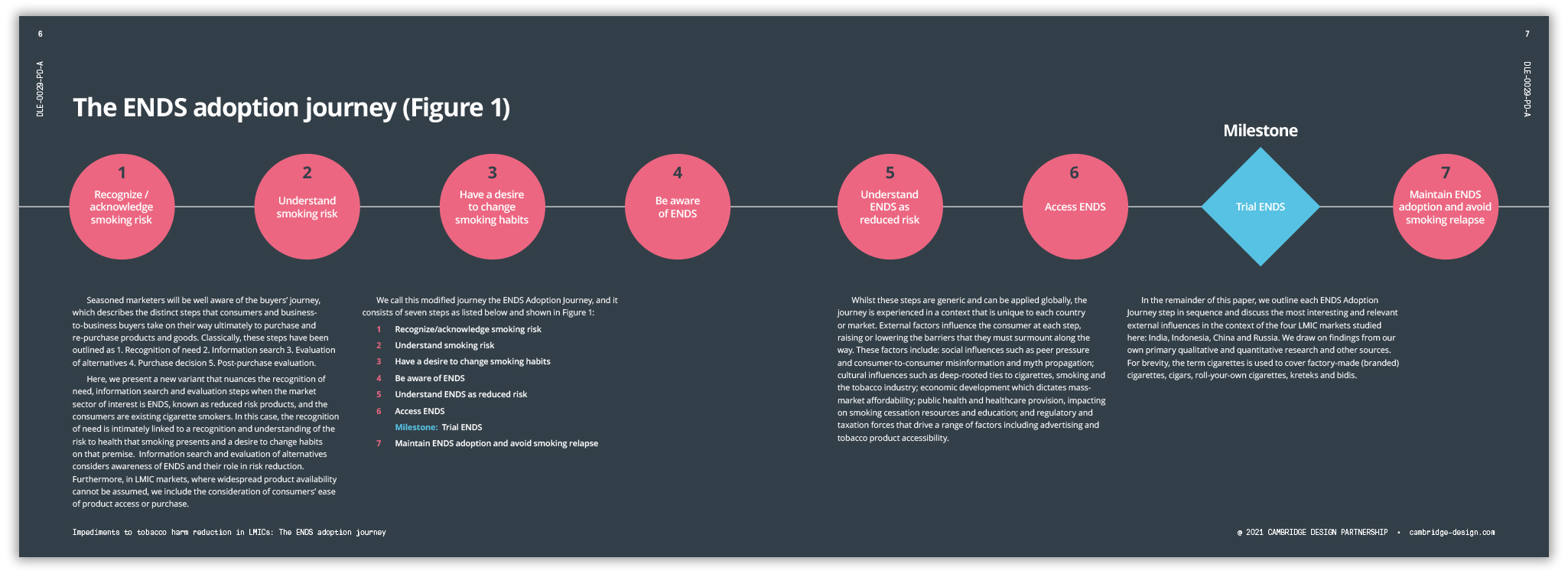
Tobacco consumption has, for decades, represented a global pandemic. Over 1.3 billion people, or 16% of the world’s population, use tobacco in one of its many forms, grouped into combustible or smokeless types. 80% of these users reside in low and middle-income countries (LMICs) where tobacco use contributes to increased morbidity and mortality directly and indirectly, via poverty.

The Foundation for a Smoke-Free World (FSFW) has a goal to advance progress in smoking cessation and tobacco harm reduction (THR) with a particular focus on LMICs. To better understand some of the challenges faced in these markets, FSFW commissioned us to identify the barriers or impediments to adoption of electronic nicotine delivery systems (ENDS) in LMIC countries.

Download our whitepaper to discover the seven steps a smoker must take to substitute combustible tobacco products with ENDS.


Matt Schumann
Find the authors
on LinkedIn:

The company that defined innovation – celebrating 25 years of CDP

“We constructed a medical prototype from a borrowed high-resolution tank gunsight, of all things. It looked like some form of Frankenstein’s monster, but it worked,” says Matt Schumann of one of CDP’s early projects.

Alongside his fellow co-founders, Mike Beadman and Mike Cane, he’s celebrating our 25th anniversary with a look back at CDP’s challenges and triumphs.

The experimental creation Schumann describes developed into a first-of-its-kind skin cancer diagnostic device. The non-invasive technology has transformed thousands of lives thanks to its unique technology combined with people-centered design.

This is exactly what Cane and Beadman set out to do when they created CDP in 1996, with Schumann joining two years later.

From child’s play to a new design approach

The trio met at a Cambridge technology company, where the two Mikes worked on the world’s first children’s digital camera for Fisher-Price (it took and printed Polaroid-style pictures at a thrifty ¢1 a copy). Influenced by Cane’s engineering and industrial design background, they developed a reputation for taking a different approach from their competitors.

“We weren’t focused on developing a technology and making use of it, but on finding a market need and creating a solution,” Beadman says.

Their employer had other ideas and rejected their suggestion to set up a user-first product design team. A trip to the pub later (and to the initial shock of their young families), they had both resigned. CDP was born.

“It has always seemed obvious to us to start innovation by finding out what customers actually need to solve the challenges that they face,” explained Cane, “and only then start to develop the technology to make this possible.”

The early years

Working from Cane’s living room, they scribbled down three goals for their new company.

The first was to target both consumer products and medical devices. Both industries have specific technical needs and CDP could help remove this barrier to entry for their clients; the second was to spend half of their time consulting, and the remainder licensing their own inventions; the third was a recruitment policy that remains firmly in place today:

“From day one, we took the view that anyone we took on should be more talented than we were. It means you’re always pushing yourself and creates a much more exciting place to work,” says Beadman.

Schumann passed this test in 1998, bringing with him experience in power tools and medical devices (both of which, he points out, require elegant mechanical designs).

A successful spin-off

By then, CDP had moved to a converted stables, which also housed its first spin-off company, Astron Clinica, to develop their cancer diagnostic tool. The project gave the team a valuable insight into the challenges its consulting clients face, as well as some important lessons in business finance.

“Medical device development can take up to ten years to get a return and a small single product company like Astron struggled to build a market fast enough,” says Schumann, “but we also learned that we were pretty good at rapid medical device development and the value of getting into clinical trials as fast as possible.”

The clinical success of the device enabled CDP to sell Astron Clinica in 2001. Buyers were also keen to invest in CDP itself but it was a firm ‘no’ from the co-founders.

“Venture capitalists made long arguments as to why they should invest in the core company, but we believed it would limit our ability to implement long-term plans if we had to answer to people with different goals. It became a turning point in our approach, and we’ve never sought outside investment,” says Beadman.

A turning point

The Astron Clinica development helped CDP gain a reputation in the Cambridge cluster just when a new US medical device company, Pelikan Technologies, was looking for help to design a next-generation blood glucose monitor.

Competing against large established consultancies, the small team worked frantically to complete a series of novel design concepts. As a final touch, they delivered them in person to the Pelikan team’s hotel in Cambridge. Their creativity, collaboration and dedication impressed, and it was on to Phase Two.

The challenge was to design a handheld blood lancing device that would offer users low pain and store 50 lancets. The team worked 20 hours a day in shifts to meet the Christmas deadline for the first working prototype. As Beadman assembled the device for presentation in the client’s California office, Cane and Schumann were still working on design improvements and new components in the UK, to be flown in at the last minute.

“We’ve probably never worked so hard in our lives. There was no alternative if we were going to take this opportunity to move CDP to the next level,” says Beadman.

Pelikan became a major client until it was acquired in 2009, in the process granting CDP the security to expand its workforce and grow a diversified client base, working on projects from DIY tools to industrial printers and new treatments for breast cancer.

From stables to international business

By 2002, CDP had outgrown the stables and moved to a small business center in Toft, Cambridge, eventually occupying all the other units on the same site.

It also set its sights on international markets, setting up a North American sales office in California in 2011 to serve the growing number of startups in the Palo Alto area. By 2019, the US accounted for 25% of CDP’s sales, prompting a move to a new state-of-the-art innovation center in North Carolina. The R&D facility is growing fast and now employs 17 engineers, giving CDP a firm foothold in the state’s famous Research Triangle.

Potential Realized

As it expanded, CDP developed new tools and processes to offer its clients an end-to-end service, from identifying the innovation opportunity to manufacturing. In 2016, this was formalized into a trademarked process called ‘Potential Realized.’  This model helps its clients plan their product development process to make it as commercially successful as possible.

“Over decades of product development experience and thousands of innovation projects, we found the same issues coming up again and again. These programs are major investments for our clients, so it is vital that together we plan them to maximize their return on investment. Potential Realized is a logical framework that we adapt for each project to do this,” says Cane.

Collaboration

The key to making Potential Realized work is cross-functional collaboration, an ethic the co-founders model with their easy-going relationship as joint managing directors (they shrug their shoulders when asked who’s the task-master of the three).

“It’s very well balanced actually,” says Schumann, “CDP doesn’t feel like work. It’s another fun thing that you do when you’re not at home.” Their leisure time, however, sounds pretty fun, too: the trio’s shared passion for aviation led them to build an airplane and buy a second for staff to learn to fly.

A company-wide ethos of collaboration also proved effective in more serious circumstances. In 2020, a large multidisciplinary team came together amid strict UK lockdown and distancing conditions to help deliver an RT-PCR device that can detect COVID-19 within 30 minutes.

Designing the future

As the company continued to expand exponentially, the keen investor interest that CDP attracted from its early days never went away.

“When people want to buy a company, they ask you to name the assets. There’s only really one asset in our business and that’s a highly skilled, flexible and well-organized team of people with a common vision,” says Beadman.

Concluding that a sale to private equity or a big manufacturer would risk the ethos of the company, they decided to sell it to people they could trust. In 2018, CDP became employee owned.

“If we’d ended up in the hands of a much bigger company, it was likely the whole culture that has made us successful would have gone out of the window. Through a diligent process of organic growth and sticking to our principles, we now have a company that provides a stable future for over 250 people. How good is that!” says Beadman.

New owners, new home: next year (2022), CDP will move into an 83,000 sq ft purpose-built headquarters in Bourn, Cambridge. The new facility will have labs, workshops, a healthcare manufacturing facility, user observation suites and a 200-seat conference facility.

While they hope there will still be a few Frankenstein-esque prototypes produced in this new facility, CDP’s design approach is generally more sophisticated nowadays. The founding vision, however, remains: a team of world-class experts collaborating to create the best possible results. It’s this, agree the co-founders, that will set CDP up for another 25 years of innovation success.

Connect with CDP

For further information and media enquiries, please contact: marketing@cambridge-design.com or call 01223 264428

Cambridge Design Partnership take on new state-of-the-art headquarters
By Cambridge Design Partnership

CDP takes on new premises as it doubles in size

Exciting times for local innovation company as it announces major expansion and move to new state-of-the-art headquarters in Cambridgeshire

Cambridge Design Partnership (CDP) is expanding to new premises, capping years of growth with a doubling of turnover over the last 12 months. The company, which creates breakthrough products and technologies for leading companies and brands, is moving from its base in Toft, Cambridgeshire to a state-of-the-art, purpose-built facility in nearby Bourn. The move will be completed in 2022.

“This is a great marker of our success and especially pleasing as 2021 is CDP’s 25th anniversary year,” said CDP’s founding partner Mike Beadman. “In just the last 12 months, we’ve served more clients than ever before and grown our headcount by over 50%. Our new headquarters will be more than twice the size of our current base, with a range of product and technology development facilities to compare with any in the world,” he added.

The new CDP headquarters will have 7,500 square metres of space, including labs, workshops, a manufacturing facility and 200-seat auditorium. It will be sited at Bourn Quarter, part of a 25-acre site previously occupied by Thyssen Krupp. Planning permission to start the net-zero-carbon-ready industrial development was secured from South Cambridgeshire District Council by Savills Investment Management. Developed by Aitchison Developments, construction of the new facility began in May 2021. CDP will be the anchor tenant within this prestigious redevelopment which is set to bring the region’s dynamic research and technology cluster to the brownfield site. The move confirms the company’s commitment to the Cambridge area, where it’s able to access the best talent at every level.

Founded in 1996, CDP is an end-to-end innovation partner, delivering market-defining technologies and extraordinary commercial returns for clients in the consumer, healthcare and industrial markets. In 2018, CDP joined a small number of pioneering companies that are 100% owned by their employees. This ensures that CDP’s growing workforce of employee owners is fully committed to client success and to the long-term vision of improving lives through innovation. Alongside strong growth in the UK, CDP recently announced the opening of its new US headquarters, a state-of-the-art R&D centre in Raleigh, North Carolina, and an ambitious recruitment programme in North America.

Among the new facilities will be a world-class consumer research facility for consumer and healthcare insights research and innovation workshops. This will be equipped with observation suites and one-way mirrors for physical focus groups and consumer trials and networked to enable global client participation. CDP is also ramping up its short-run manufacture capability with a large manufacturing facility on site at the new headquarters.

Working in close collaboration with clients has been a core value from the earliest days of CDP. The new building will be unique in being designed to maximize creative collaboration while maintaining the highest standards of client confidentiality. This will be a fundamentally interactive workspace, allowing scientific labs and workshops to be connected to desk areas. There will be a spacious central atrium with a fully-catered kitchen serving breakfast and lunch, as well as a breakout space where staff and clients can meet informally and for meetings. A 200-seat auditorium will be used for company events, conferences, and creative workshops.

“We’re committed to integrating CDP into the wider Cambridge cluster and welcoming clients and peers into our new headquarters. The space will ensure we give our clients excellent service in the very best, cutting-edge facilities and will also offer our employee owners an environment in which they can thrive. Among the many reasons for CDP’s impressive expansion is the fact that the team is closely involved in the company’s future. The collaborative and creative possibilities of our new headquarters make this an excellent time to be an employee owner at CDP,” said Mike Beadman. April 2021 saw CDP kickstart its bid to secure the region’s brightest talent, launching the biggest recruitment drive in the company’s history.

Connect with CDP

For further information and media enquiries, please contact: marketing@cambridge-design.com or call 01223 264428

|
By Cambridge Design Partnership

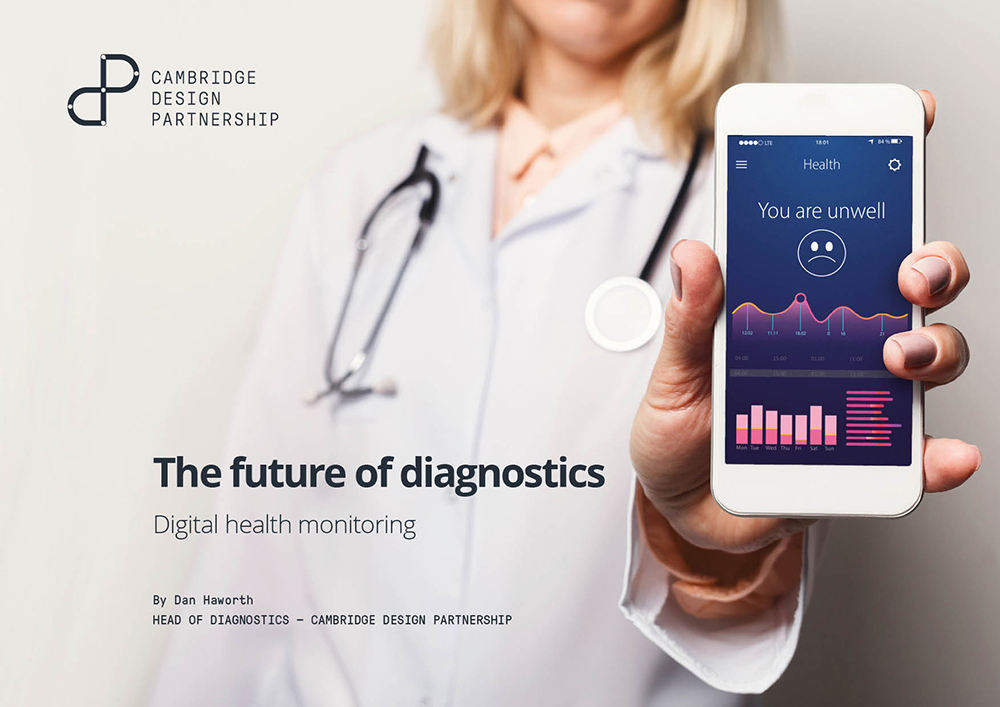
The future of diagnostics

WHITE PAPER

The future of diagnostics:

Digital health monitoring

BY DAN HAWORTH

The amount of personal data being collected via apps, genetic sequencing and innovative cloud-based devices is vast and constantly growing. Meanwhile, healthcare diagnostics is rapidly evolving into a highly-personalized, patient-focused service, which prompts important questions… How will healthcare professionals be affected when devices and data analytics potentially offer earlier and more accurate diagnoses? Does this empower the patient, or leave them at risk of unexpected consequences?

Download our whitepaper to join Dan Haworth (Head of Diagnostics) as he explores this highly topical and complex subject.


||||||
By Cambridge Design Partnership

Seven design insights

WHITE PAPER

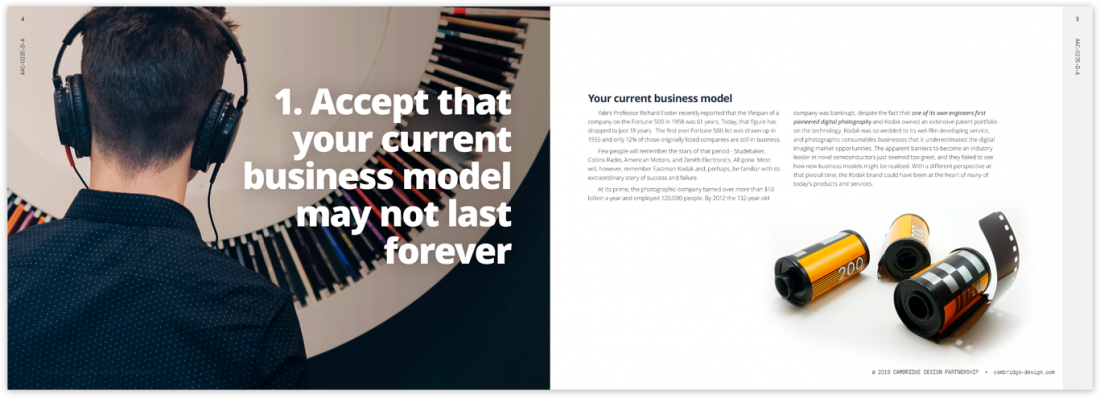
Seven design insights to manage innovation risk

BY BEN STRUTT

Contrary to what some believe, consumers do not have a mindless allegiance to certain brands. Instead, when they become aware of something they need, consumers will choose (often from a myriad of options) the product or service that best meets that need.

Of course, being human, this decision-making process is a complex one, involving sometimes competing functional, emotional and social considerations. So, how do brands overcome this challenging conundrum?

In this whitepaper, Ben Strutt reveals how successful brands deliver new product and service innovation.

||
By Cambridge Design Partnership

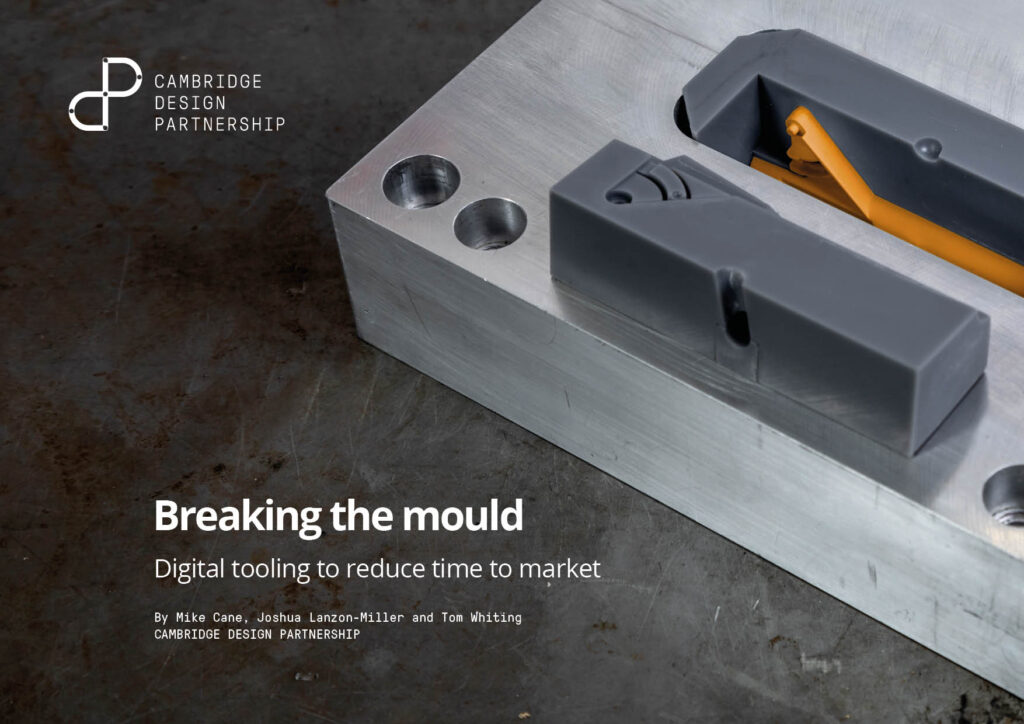
Breaking the mould

WHITE PAPER

Breaking the mould:

Digital tooling to reduce time to market

BY MIKE CANE, JOSHUA LANZON-MILLER & TOM WHITTING

As we make countless prototypes for our clients, we’re constantly searching for new ways to create new products more quickly and efficiently. This is particularly challenging where component design is highly optimized, such as developing complex medical consumables.

This whitepaper reveals how we’re significantly reducing prototyping lead times and cost, to ultimately minimize time-to-market and optimize finished product quality.