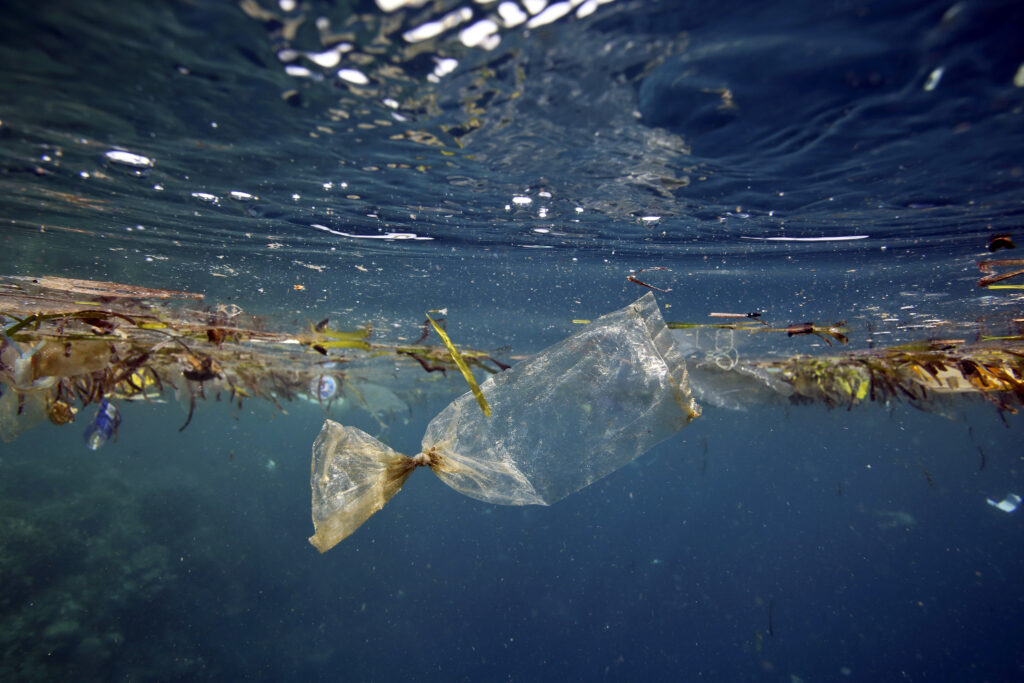
Plastics: the great sustainability challenge|

Plastics: the great sustainability challenge

When Sir David Attenborough highlighted the extent of plastic pollution, public opinion fundamentally shifted. The concern crossed over to become a mainstream issue.

This mind shift caused a significant packaging revolution with plastic being phased out, but has this come at a cost? Are we making more environmentally safe products, or are we just creating a different environmental crisis? Well, as in many situations the answers to those questions are more complex than they first appear.

It appears that the industry’s answer is to replace plastic with paper; as paper is instinctively more sustainable. However, this warrants some further thought. The most common way to make paper comes from using wood pulp, which (unless using recycled content) involves chopping down trees, thereby removing them as a natural store of carbon. This in itself might not be an issue; forestry operations can be sustainable, and many are. Established forests will tend to absorb as much CO2 as they release, so in principle it is possible to maintain a carbon neutral position if the forests are well managed with any removed tress subsequently replaced. But unfortunately not all forests are sustainably managed, and a rapid rise in the demand for pulp will likely result in poor forestry practice. Stark contrasts in forest management can be made between areas of Europe (where the forested area has increased by an area the size of Portugal since 1990), and Russia, Brazil or Indonesia where there have been vast loses in forested areas for agriculture, mining, or conversion (to pulp or palm-oil plantations); all of which highlights the critical importance of supplier accreditation.

Join us to address some of the greatest environmental challenges of our era

We’re currently recruiting for a Sustainable Design Consultant, Life Cycle Assessment Engineer and a Head of Sustainability.

Nevertheless, even when sustainably sourced, the processing of raw wood into pulp consumes a range of chemicals such as sodium dithionite, ozone, chlorine dioxide and hydrogen peroxide, as well as plastics such as polyethyleneimine and polyacrylamide. All these chemicals can get caught in the runoff from the paper making process. To remove and dispose of these effectively, large volumes of water are used; the subsequent treatment of which is an energy consuming process. To make a single sheet of A4 paper, up to 20 litres of water can be required 1. It should also be noted that in some nations 10% of all the freshwater goes into the pulping industry. There is potential for this water to be returned to the system, but only after the energy intensive treatment. A further key limitation of paper is that it is not waterproof. This can be addressed through the use of a coating, but this again raises further issues. Is this coating good for the environment? Are you adding another material that makes recycling more challenging?

An alternative approach to the reduction of plastic pollution within the industry is to make the plastic materials themselves biodegradable (i.e. make the plastic behave more like paper). But there are of course challenges here as well. Virgin plastics produced from oil by definition aren’t sustainable, so biomass derived plastics are often considered here instead. The raw ingredients for these tend to be crops such as cane sugar; so we must factor in that this removes land from other crops required for food production, and potentially removes the very forests that are needed to store CO2. Though, perhaps given the current trends to reduce sugar-content in foods, there is an opportunity to transition any excess sugar cane production towards these biodegradable bio-plastic solutions.

Over the last few years, research into biodegradability of plastics has continued to deliver a wide range of products. When considering these, the completeness of degradation, the conditions required for degradation, and the typical speed of degradation are all important factors. Given this, it is crucial for product designers to better understand the end-of-life pathways for such materials. Many products are looking to claim that their products are compostable, but this may only be possible if consumers compost their waste in the right way! Furthermore, getting this wrong can also potentially be the difference between aerobic and anaerobic degradation; the latter producing methane rather than CO2, which has 25 times the global warming potential.

In a final twist, as newly introduced bioplastics intend to mimic current plastics, it can be hard to tell them apart from other plastic waste streams. In many cases this may not present an issue, but specific risks may arise, such as the possibility for PLA to contaminate PET recycling streams as they are challenging to separate from one another.

So, the challenges are multifaceted, and all too often in tension with one another. But these are issues that we have to address if we are to protect the planet we live on. At CDP we are helping our clients navigate this complexity to make their products more sustainable, more cost effective, and more attractive to their customers.
References

[1] https://paperontherocks.com/2019/03/22/water-waste-paper-industry-what-makes-pulp-paper-production-thirsty-business/

Innovation predications at CDP

The 2020s decade and the changing climate in innovation

It’s the start of both a new year and new decade. At this time, it’s traditional to try to predict the emerging challenges, innovation opportunities and technologies that will shape our work at CDP for the next ten years.

As I was thinking about writing this blog over the holiday break, I could not avoid remembering last year’s mass climate protests and in particular, Greta Thunberg’s extraordinary speech to UN leaders last September. Over just the last week we have watched the reports of extreme forest fires in Australia caused by unusually warm sea conditions, Norway reporting its hottest ever temperature in January and Moscow importing artificial snow for New Year celebrations. In the UK, the Met Office published an analysis of our weather over the last century that shows the last decade had the highest winter and summer temperatures ever recorded.

I am sure the implications of climate change will impact every family and business significantly in the ’20s but it’s such an incredibly big and multifaceted subject it’s hard to comprehend; so I wondered what the day to day impact might be on an average family.

Reducing the CO2 emissions from our energy consumption will be one of the main targets for the ‘20s. For most of us, it is spread between domestic uses, food, transport and the energy needed to manufacture and supply the consumer products we buy, use and throw away.

As an individual consumer it’s very difficult to find out how big an environmental impact we make, what to do first and where the biggest opportunities for savings lie. This information is available, but it’s fragmented and difficult to interpret. There are many competing rationales for change that are all too often in tension with one another. Should consumers be rejecting plastic food packaging that extends shelf life? Should local councils be looking to bury rather than incinerate low-grade plastics with no recycling value at end-of-life? These choices only get more complex when groups, governments and ultimately consumers (albeit indirectly) try to consider all the UN’s 17 sustainability development goals globally.

Assuming we can work through this complexity, any major change in society faces resistance, it’s simply human instinct to be wary. The Ross-Kubler model describes the emotional responses to major changes in our lives, the initial shock and denial we experience before curiosity, enthusiasm and commitment to a new solution kick in. So reliable, understandable information on the implications of our choices is the key to get us all to commit to change the way we live.

Reducing energy use in our homes will be a major challenge. In the UK our electricity supply from renewables exceeded that from fossil fuels for the first time in the third quarter of 2019, but gas and oil remain the largest domestic energy sources. It is clear in the next decade we will become more focused on insulation, exploiting local renewable energy sources and smart energy management. The technology we have today can create carbon neutral homes, but at a cost that is not always worthwhile on a personal level with today’s economics, principally because energy is relatively cheap. So, we will need a switch from the short-term economic logic to seeking benefits over longer time horizons, perhaps those measured in human generations.

As is common in the UK, most household’s transport needs are dominated by car usage. At CDP the number of electric vehicles in our car park is rising because these can be fuelled from renewable electricity, if available. However, the embodied energy in electric vehicles is higher than you might expect, and their longevity is yet to become the important issue it should be to maximise their effectiveness. Manufacturers make their profit when they sell a new car, but if they were responsible for the total energy used in manufacture, operation and recycling they might follow a different design strategy and business model. A move from selling products to providing integrated services is an approach that could facilitate a more logical strategy for emissions reduction across many markets.

In any case we are destined to travel less in the next decade, by necessity living closer to our work and relying more on low power technologies to communicate. One of my colleagues recently wrote a blog on how we are doing this at CDP; A practical approach to multinational innovation.

Finally, in the ‘20s we need to leave behind our unconstrained consumption of food and new things. The embodied energy, and natural resources in the products we buy is the hidden part of the iceberg. For example, the energy needed to manufacture a smart phone is many times the energy it will ever use during its life. This change means products that are designed to be upgraded and avoid technology obsolescence will become more highly valued. I think functional simplicity, reliability and effectiveness will become increasingly important, we will ask ourselves what we really need, and choose products that just meet that with elegance and style.

However, it’s an obvious statement that the biggest barrier to more sustainable energy use and reducing CO2 emissions will be the cost of doing so. Ironically, consuming less will cost more because of the investment needed in new infrastructure and business structures, so we are likely as a society to resist this change. While the wealthiest will be able to afford this challenge, the poorest will experience the highest impact and this will have a severe political impact on western democracies. Groups will say it’s not fair that I should change before others do. You can see this happening now at local, national and international levels already. Perhaps that is why Greta has had such a cultural impact at the UN in this debate, because children have the least invested in our institutions and the status quo, but the most to lose from the likely effects of global warming.

At CDP we have brought together a team of experts to help our clients navigate the challenges of creating sustainable strategies, new products and services in the next decade. If you would like to discuss the opportunities for innovation in this area, please call Matt Morris or George Bostock.

Sustainable music festivals

Why are music festivals leading the sustainability agenda?

In 2019 the music festival industry experienced a sea change in their attitude to single-use plastic, with many large live events making the decision to ban it altogether. As the festival season draws to a close, CDP’s Matt Morris, mechanical engineer, sustainability expert and live music fan, looks at what product designers can learn from festival greening in 2019.

Matt says: The big change in the world of festivals this year was the move away from single-use plastics, all part of a general shift towards sustainability and better environmental practices at live music events.

In February 2019 the UK’s biggest festival, Glastonbury, announced it was banning single-use plastic bottles – saving the production of a million plastic bottles. Then many others followed, pledging to stop single use plastics by 2021.

Here at Cambridge Design Partnership, our aim is always to design out unnecessary waste so our clients are as sustainable as possible. So having attended several festivals myself this summer, and having seen the changes taking place first-hand, I am struck by what we can learn from these temporary communities as they strive to go plastic-free.

Join us to address some of the greatest environmental challenges of our era

We’re currently recruiting for a Sustainable Design Consultant, Life Cycle Assessment Engineer and a Head of Sustainability.

Starting with a closed system

Cutting out single-use plastic and greening your market is easier in a small enclosed community where the same organisation controls both the input of products and output of waste. This is, of course, the case at a music festival, where the sale, distribution and disposal of plastic is all within the remit of the same festival organisers.

It is far more straightforward, for example, for Emily Eavis to announce that Glastonbury is banning plastic bottles given that all the drink sales points and backstage hospitality facilities are licensed by Glastonbury Festival itself. The festival also organises the collection and recycling of waste after use, which means they are heavily invested in getting the recycling and disposal right.

However, in the wider world, communities and nations are faced with a far more challenging and fragmented proposition. Traditionally supply chains are one way, from manufacturers to consumers, and are motivated by maximising sales and minimising costs. Consumers are not encouraged by manufacturers to see any value in packaging, they often believe it is somehow free so don’t value the materials and energy encapsulated within it. In addition, waste systems are there to collect and dispose of packaging in isolation of its use and production. This means there is little incentive to coordinate the cycle of production, use and recycling. Although some forward thinking communities are now aiming to change this, for example via the plastic-free towns movement.

Here at CDP, we have been working with food service providers to create plastic-free packaging for closed environments such as transport systems, schools and hospitals. This allows those in charge of these institutions the choice to remove single-use plastic, and can act as a test bed for new solutions prior to more widespread adoption.

Considering the alternatives

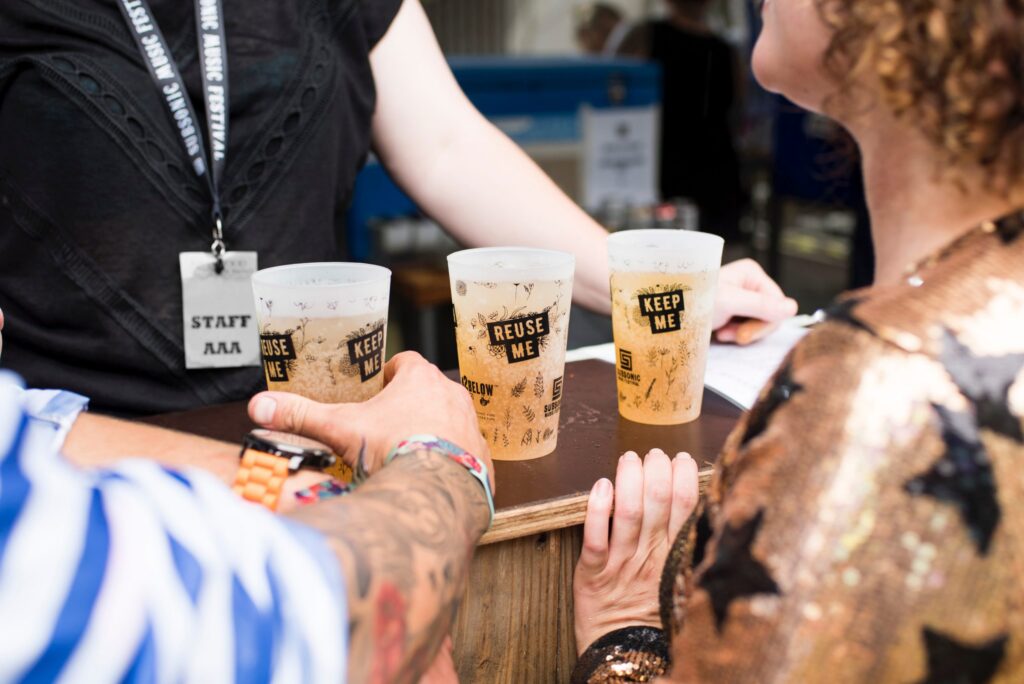
Many festivals in 2019 chose to replace disposable plastic cups with sturdier ones that could be reused at any bar within the grounds. However, I was intrigued to see that plastic pint glasses were replaced at Glastonbury this year by stainless steel tumblers. These cost £5 each to buy and festivalgoers could either keep them or return them for a full refund on departure. It seems that the backlash against plastic has extended beyond just single-use plastics, prompting designers to consider materials that would not have been on the table just a few years ago.

However, material selection needs careful consideration. In terms of its impact on the planet, a steel cup may need to be reused many more times than a re-useable plastic one to offer a net benefit. Good design can help with this conundrum, by creating things that are a joy to use again and again. Judging by the fact that the Glastonbury 2019 stainless steel cups are now selling for £12 on eBay, leveraging the Glasto brand seems to have worked in this case!

It helps to engage with cultural influencers

Changing consumer habits takes significant effort. But at Glastonbury this year, I lost count of the performers who lent their approval to the plastic-free initiative. From rappers to rockers, many of the artists (who could only drink canned water on stage) spoke out during their sets in favour of the plastics ban, helping it to gain traction with a captive and approving audience.

What’s more, within the festival setting, there are dozens of ways to keep the initiative in the crucial ‘top of mind’ spot for peak consumer awareness. With kiosks everywhere offering free water and selling reusable cups, a festival is a great place to pioneer sustainable practices and encourage early adopters.

To replicate this in the wider economy is less immediate but not impossible. Frequent positive reinforcement through influencers, marketing and advertising does eventually have an impact.

Taking a holistic view

One of the ways in which CDP designs genuinely more sustainable products is by analysing the impact of the product through its entire life cycle. At festivals, it can be all too easy to take the feelgood option while the real environmental implications are more complex.

For example, the widespread switch at festivals this year to disposable cardboard or wood food packaging instead of plastic may create that positive vibe – but does it have less conspicuous drawbacks? It certainly reduces plastic waste, which is a very visible problem, but equally crushing a tree down into small fibres, mixing the wood pulp into a slurry and then passing it through huge rollers takes lots of energy and water. By contrast, plastic is light, durable and its manufacture is generally not particularly energy intensive. So we may be trading a plastic waste problem for an energy and water problem.

And if we rolled out this transition globally, could our forests (which, frankly, are in need of some TLC right now) support the demand for wood and pulp? It’s important to factor this into your environmental calculations before making a knee-jerk decision to switch materials or abandon plastic packaging. As designers, we have an obligation to weigh up these impacts, because it’s not fair to expect every consumer to have the necessary expertise.

At CDP we work with major beauty product manufacturers to develop packaging and products. Often, it’s important to look at the way the product is used, as well as its constituent parts, before making changes. For example, there can be as much benefit to the planet from encouraging consumers to switch off a running tap when brushing their teeth (wasting potable water and its processing and distribution energy) as there would be from asking them to switch to a bamboo toothbrush. At CDP we look at the entire lifecycle of a product, and the context in which it is used, to get a clear view of all the impacts on the planet.

This holistic view is also the key to creating genuinely innovative sustainable products and services. As consumers grow ever more discerning and the environmental movement becomes the mainstream, this approach will be critical to successful and sustainable product innovation.

A future for food||

A future for food; the need for innovation in agriculture

Currently agriculture is facing challenges from many directions. Modern hyper-intensive farming (demanding the highest crop yield from monocultured crops with less regard for long-term fertility or ecosystem metrics) is interrelated with the great environmental threats; destabilising climate change, biodiversity, oceanic dead zones and poor global soil health. In turn these issues are impacting agriculture.

Often it is trends in our society that influence business strategy and investment. CDP has an in-house team dedicated to tracking them and based on the mega-trends we see today, we think that agriculture is heading for a revolution.

CDP’s Year in Industry Students Charles Griffith and Isaac Blanc, give us a Gen Z view of the future.

The Big Picture

Agriculture has undergone three great revolutions. The first was ten thousand years ago, which saw humans first begin to cultivate seed crops and domesticate animals. The second was three centuries ago during the Industrial Revolution, which saw human and animal muscle power replaced by machinery. The third came about in the last half of the 20th century, which saw the start of modern intensive food production, and has supported an ongoing boom in the human population. This revolution was characterised by increased agrichemical use and highly specialised and lately GMO crops.

Perhaps today we are starting to see signs of a new agricultural revolution, with the emergence of a new technology called Controlled Environment Agriculture (CEA). As the name suggests, this involves producing crops for food or pharmaceutical products, using technology to control many or all growth parameters. Whilst typically referring to controlled indoor environments for plants, it also extends to animal agriculture. Here, factors like animal autonomy, reproduction and hormonal balance, as well as environmental conditions, may be controlled to maximise feed conversion ratios. Taking control of traditionally “natural” factors in this way is allowing CEA to offer significant gains in productivity, reliability and quality of produce. Currently, commercial CEA is chiefly producing leafy greens, while more complex crops like nuts, coffee or avocados are trickier and require the technology and market to mature further.

However, we can see four mega-trends that we think together will stimulate the innovation needed to create a fourth revolution in agriculture.

Health and Wellness

Consumers are increasingly becoming aware of how the food they eat can further their health and wellbeing. As an example, we’ve all heard that leafy greens are good for us (they are rich in many micronutrients) and so it’s resulted in an increased demand for them. However, leafy greens are highly perishable and, due to the logistical challenges in supplying these foods year-round with traditional farming methods, their prices are high for what is essentially just a leaf.

It makes sense that in its early days, most current commercial CEA crops are leafy produce as no pollination is required, the plants have a small form factor and offer fast ROI as their lifecycle is short. Consumers concerned with chemicals and pollutants in their food can seek solace in the bio-secure origins of controlled agriculture produce. Additionally, leafy greens from vertical farming or controlled greenhouse operations (like BrightFarms, which was born in New York) can boast higher mineral profiles compared to outdoor crops.

Premiumisation and Traceability

Mega-trends of ‘premiumisation’ and ‘traceability’ are also catered for by CEA. In terms of premiumisation, with affluent consumers becoming ever more interested in the quality and production of their food, some CEA warehouse operations market their produce as being more local, grown with minimal or no insecticides, herbicides or fungicides, and offering superior quality compared to outdoor plants, both in perceived freshness but also nutritionally.

In terms of traceability, there has been an increasing desire amongst consumers to buy locally, which has emerged from several factors including supporting the local economy, eating fresher food and reducing carbon emissions and pollution caused by transport. However, with an increasing proportion of the global population now living in urban areas the question is: how can you buy locally grown food when you live in a huge city?

CEA start-ups have a unique opportunity to capitalise on this dilemma, as the technology is ideal for urban agriculture. For instance, Gotham Greens, which run three high-tech greenhouses in NYC and one in Chicago, boast that their produce is “hyper-local” and even grow a type of rocket they call ‘Chicago Crisp’. Business seems strong for companies like this; BrightFarms have grown about 10x in crop capacity between 2015 and 2019.

Sustainability

Perhaps the trend with the widest impact is sustainability. The Earth has finite resources and it’s critical that we use these in a more efficient and circular manner. Taking water as an example, the global freshwater supply is under increasing strain and water prices are rising. Outdoor agriculture can consume an enormous amount of water whereas when using techniques like hydroponics, aeroponics, deep water culture or the nutrient film technique (NFT), CEA warehouse projects are able to make saving upwards of 90% when compared to similar crops grown outdoors.

There is also a huge strain on arable land. Industrial agriculture has led to degradation of much topsoil while deforestation and heavy tilling have rendered land unabsorbant and vulnerable to extreme weather (of course, more likely with progressing climate change). Heavy agrichemical use can decimate the soil microorganisms that play a crucial role in decomposing and upcycling nutrients (therefore more fertilisers are needed for the same growth, and the cycle continues). The reduction in agricultural capacity contrasts with the growing human population, not to mention the need to rewild and reforest in order to capture carbon and foster the recovery of our biodiversity.

Clearly, innovation is needed here and while single-story controlled agriculture can significantly boost productivity and reduce land use, there is another somewhat more hyped branch of CEA – ‘Vertical Farming’. This practice of producing food in vertically stacked layers increases the yield per square metre. However, the construction cost is high, and so is better suited to urban environments where the land use savings will counteract this. Artificial lighting, most often provided by LED lights, consumes power which may not come entirely from renewable energy sources. There is a great need for increased efficiency in vertical farming, in both building and running the systems.

Changing the demand side

Of course, while we all want to eat more greens, we can’t discuss food sustainability without mentioning the impact of animal agriculture. The most comprehensive study on agriculture to date, found meat and dairy provides 18% of global calories and 37% of protein, yet requires 83% of currently used farmland and produces 60% of agricultural greenhouse gas emissions, when all production factors are included. The UN has urged, for the sake of sustainable resource management, for humans to shift away from meat and dairy. The impact of animal agriculture is not bound to land either; for example, the fishing industry is responsible for a significant amount of plastic found in the ‘great pacific garbage patch’. Meanwhile, other studies have shown that such a shift would be better for public health too.

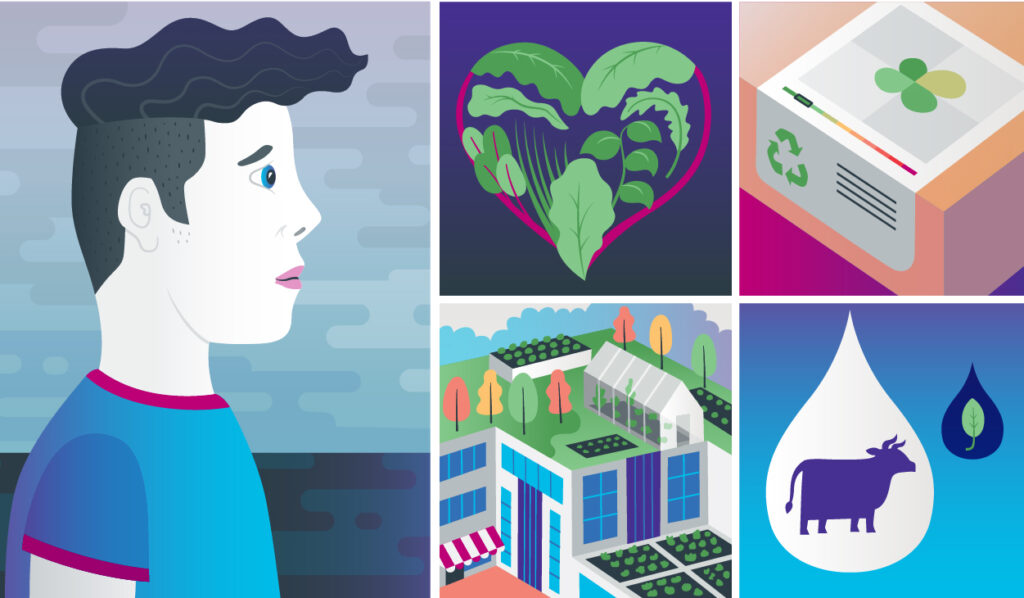
This has all led to our final mega-trend: the rise of flexi’s, veggies and vegans. Changing what we eat has the most potential of all to reduce the environmental impact of our food. Consumers would benefit from help to do so, one way to do this would be the introduction of environmental labelling on food. We have labelled household appliances in this way for years, and they have improved so much in response that we have had to create new energy efficiency categories. The top right image in this article’s illustration is an example of such a label, inspired by a proposal from Joseph Poore at the University of Oxford. Additionally, rapid advances in alternative meats mean this transition is looking increasingly attractive to those consumers who don’t want to change their diet.

Conclusion

Innovation in agriculture is not only being driven from evolving consumer preference, but also from the needs of our planet. We are living in an age of widespread intensive agriculture, for all its achievements, it has also brought about environmental challenges. Without wide reaching, transformational innovation to change our food system, there may not be enough capacity in the future to feed us all.

Fortunately, innovation is emerging, for example advances in CEA are facilitating new food systems that offer benefits on many fronts from increased freshness, locality and nutritional profiles to reduced environmental impact. However, many challenges remain to increase efficacy, reduce costs and upscale. Solving these will require inspirational engineering, new digital approaches, robotics, AI as well as biology and commercial innovation.

As young engineers at the start of our career, we are looking forward to addressing these challenges!

The risks and opportunities of the circular economy

The risks and opportunities of the circular economy

Is 2018 the year of the plastic revolution? It’s certainly starting to feel that way. The ‘Blue Planet II effect’ – what happens when the devastating impact of our plastic lifestyle is laid out in exquisitely shot detail to more than 10 million viewers – seems to have set in motion a chain of events in the UK. Plastic waste is being talked about, and the organisations responsible for producing it are seeing a lot of publicity – good and bad. Would the recent announcement from frozen food retailer Iceland – that it will end the use of plastic packaging within five years – have made the front page of the Daily Mail (the UK’s second biggest newspaper) a year ago? On the flip side, in the Philippines some of the world’s biggest fast-moving consumer goods (FMCG) companies received some rather less-welcome publicity when it was revealed they topped the producer leaderboard in an audit of plastic waste removed from a critical coastal wetland habitat. Market research is showing that millennials – a big target of these companies – care about the environment enough to make buying decisions based on sustainability. Fixing the plastic problem has moved from the head of sustainability’s wish list to a central part of any marketing strategy.

So what to do about it? The most compelling solution is to create a plastics ‘circular economy’. This approach is based on preserving the value invested in products and the materials that go into them by reusing or recycling them in ‘circular’ loops for as long as possible, instead of the more conventional ‘linear’ take-make-dispose model. Any waste that is generated is no longer unwanted – it stops being waste at all, instead becoming a resource for the next generation of products.

Already 2018 is shaping up to be a big year for the circular economy, with some significant announcements. At last month’s World Economic Forum, the Ellen Macarthur Foundation announced a list of 11 global brands – including household names like Coca Cola, PepsiCo, Unilever and Walmart – targeting 100% reusable, recyclable or compostable packaging by 2025 or earlier. Perhaps more significantly, many of these companies have also committed to substantially increasing the recycled content in their plastic products over the same period, which equates to a serious scaling up of this particular embodiment of the ‘circular’ model. The Chinese and Indonesian governments – global heavyweights in both the production and consumption of plastic products – also announced plans to step up their involvement in bringing about a circular economy, and the European Union recently released its own ‘circular’ plastics strategy.

The intent is there, then. So what do designers and innovators, particularly in FMCG, need to keep in mind for 2018? I think there are risks and opportunities in equal measure:

1. Poor design for end-of-life has become a reputational risk. Take Lucozade, for example – public outrage over its plastic bottles, which were perfectly recyclable but wrapped in a label that confused waste sorting equipment into thinking otherwise, led to a fast-tracked announcement to change the design. Having a design that is compatible with end-of-life processing is no longer a ‘nice to have’, it is mandatory and urgent. How much longer before all packaging made from virgin material is under similar scrutiny?

2. Choose your circular strategy. At the same time, big opportunities are opening up for products that take advantage of the changing landscape. Consumers, informed by mainstream media, are becoming increasingly savvy about the impact of their buying decisions and are looking for better solutions. Two types of circular innovation are emerging:

a. Scaling up a circular approach within the paradigm of existing plastic packaging – global FMCG firms seem to mainly be going down the route of designing packaging, made from recycled material, that is itself recyclable. I think of this as a ‘big circle’ approach – using existing recycling systems and markets to reuse raw materials. It sounds like a simple change from the status quo but, because of the huge scale of the plastic packaging ecosystem, it is going to take a lot of work!

b. Redesigning the business around a circular approach – small start-ups are emerging with more radical circular economy business models; offering the consumer solutions where packaging is reused or even designed out altogether. As an alternative to disposable coffee cups, London start-up Cup Club offers a pick-up and drop-off system for reusable cups to take the hassle out of bringing your own cup to a coffee shop (developing a model seen in Germany over the past year). I would describe this as a ‘little circle’ approach – the overall consumption and movement of resources is minimised. These new ideas are riskier because they usually require consumers to change how they use a product or service – but a well-designed offering at the right time can really take off.

3. There’s no ‘I’ in ‘circle’. OK… there is. But I can’t think of a really great circular economy solution that is achieved by one organisation acting alone. Whether it’s packaging companies working with waste-sorting and recycling facilities or companies asking their customers to do things just a little bit differently (and rewarding them when they do), the circular economy requires more communication and collaboration throughout the whole value chain.

With three billion people worldwide expected to join the middle class by 2025, the World Bank has described the upcoming surge in consumer demand as a “potential time bomb” that will lead to inevitable resource constraints. The recent public engagement in plastic waste, and the circular economy, is an opportunity that designers and innovators need to grab with both hands. People are asking to see a vision for a better, more sustainable way to access the products they love. It’s our job to show them.

Is technology the recipe for cutting food waste?

Globally, about a third of all the food produced for human consumption every year is wasted – roughly 1.3 billion tonnes – according to the Food and Agriculture Organization of the United Nations. Consumers in richer countries waste almost as much food (222 million tonnes) each year as the entire net food production of sub-Saharan Africa (230 million tonnes). This equates to around 100kg per person, per year, wasted by consumers in Europe and North America.

The percentage of food directly wasted by consumers, as opposed to earlier in the production process, also increases in line with a country’s wealth – with North American consumers accounting for roughly 40% of the total wastage. This is particularly shocking, considering the wider environmental and socio-economic costs – with the increased financial cost to the consumer being the tip of the slowly melting iceberg.

This all makes for depressing reading. But when the numbers are this large, even incremental improvements have the potential to make a huge positive impact. For example, it is estimated that confusion arising from food labelling costs families up to $29 billion annually in the US. It is not surprising, therefore, that there are ongoing efforts by the Consumer Goods Forum, supported by global fast-moving consumer goods (FMCG) brands, to drive improvements in standardising food labelling to make use-by dates simpler for consumers to understand by 2020. This feels like a good place to start – but how do we take better control and management of our own food? Can technology save us from ourselves?

There are many available technologies to help address this problem and provide benefits to consumers, retailers and producers. But selecting the right technology is one of the key challenges. One potential solution is to provide a greater level of information on the status of food on the shelf and in the home through the use of smart, connected devices. Samsung has invested in this vision of the future of stock control with its camera-enabled Family Hub fridge – capturing information on its contents and uploading it to the cloud. It’s an expensive purchase for consumers right now –  but expect prices to drop over the next few years as competitors catch up. However, although a connected fridge is an interesting concept and a step towards a connected future, the embodiment is missing the link to the food producers, the ordering process and the grocery stores themselves.

In time, the tiny Amazon Dash button may be seen as an early data point on the revolution in shopping practices. But it is really just the beginning when it comes to convenient, frictionless reordering. Hopefully the future is far more expansive than a button that allows a family pack of toilet rolls to be ordered and arrive the following day. Technologies which can combine the reordering with the monitoring of in-home stock levels and usage profiles have the potential to provide a new dimension to convenience and time saving. This information can be employed in-store to improve shelf replenishment or help with warehouse restocking, and a combined system would be able to suggest when food appears to be selling too slowly – to allow a supermarket to dynamically price food and avoid wastage.

Perhaps another approach is to focus more on the broader requirement to monitor products not only in the home but also in-store. Consider a future where inventory management solutions extend beyond the visual, instead incorporating low-cost sensors that allow tracking of individual products as they are picked or restocked. In the home, with product awareness a future kitchen could suggest interesting new recipe ideas, based on its knowledge of the quantity (and best-before dates) of food on the shelves and in the fridge. This also opens up further opportunities in the connected health space – allowing meals to be tailored to dietary requirements and lifestyle.

Here at Cambridge Design Partnership we have a wealth of expertise in developing system architectures and smart packaging in the connected space. Coupled with our user insights and FMCG brand innovation teams, we’re able to help clients navigate the often complex journey that leads to being better connected with consumers.

If you’d like us to help unpack your inventory management challenges, get in touch via hello@cambridge-design.co.uk. Or talk to our user insights and inventory management experts at the Global Innovation Forum in London on 1-2 November. They will also be doing a keynote presentation with one of our global cosmetics clients at the Active and Intelligent Packaging Industry Association (AIPIA) Congress in Amsterdam on 2-3 November.

Smart meters and home automation – should we believe the hype

The UK Government has an ambitious target for reducing greenhouse gas emissions by 80% by 20501. Most consumers will be well aware of the need to reduce household energy consumption – either from rising energy household energy bills or the high-profile advertising campaigns around heating control technologies. One step to help tackle energy use and increase individual environmental responsibility is going to be the roll-out of smart meters. The plan is that by 2020 every UK home will have a smart meter2 that monitors energy usage and communicates with suppliers.

A smart meter is an electronic device that records the consumption of energy in your home or business and communicates that information back to the utility company. It gives you real-time information about how much energy you’re using and what you are using it for, to encourage more informed choices and ultimately make you use less. The home automation market, expected to be worth £29bn by 2020, takes this one step further, through connected products that enable you to turn devices on or off remotely, or even by turning them off for you.

Additionally, there are smart or ‘learning’ thermostats, which provide better methods to control the delivery of heat, either by connectivity to enable a range of controls when away from home, or through learning methods which allow the thermostat to automatically tailor heating cycles and temperatures to the real requirements of the occupants.

One of the biggest players in the market is Nest, a home automation company that launched its first product, the Nest Learning Thermostat, in 2011. When Nest launched in the UK three years later it was entering a rather crowded arena. Similar systems were available, including British Gas’ Hive device, which was already installed in 50,000 homes. But Nest had a significant advantage up its sleeve; its owner Google. Earlier that same year the technology giant had acquired California based Nest Labs for a cool £2 billion.

Nest now sells 50,000 devices a month, which reportedly have together saved over 2bn kilowatt-hours of energy to date3. Put into context that’s enough to power the entire US for half an hour. Yet despite its success Nest has a new competitor to contend with.

Just last month Apple threw its hat into the ring with the launch of its first home automation tool, the Apple HomeKit. HomeKit is an app that allows you to control any smart device in your home such as locks, lights, thermostats or plugs, using a common language that devices from any manufacturer can understand and support. And promisingly, the HomeKit could easily implement a learning thermostat system by interfacing to thermostats and boilers. Of course all of this relies on you owning these smart devices in the first place, but with manufacturers such as Haier, Withings, Philips, iDevices, Belkin, Honeywell, and Kwikset all set to launch such products, their prevalence in our homes looks set to increase.

Yet should we believe the hype? A recent article in the Huffington Post tackled this topic and suggested that simply knowing how much energy you’re using won’t in itself increase efficiency or save money. Energy efficiency can be dependent on many other factors, aside from simply deciding to use less, such as the insulation in your home. If all the heat escapes through your windows, monitoring it won’t make a difference. There is also the ‘rebound effect’ where consumers who have upgraded the thermal efficiency of their properties have chosen to enjoy increased comfort instead of using the new efficiency to reduce the energy they use.

Currently energy consumption reduction is dependent on people actively changing their habits. It is hoped that the technology will eventually lead to initiatives such as personalised tariffs based on individual usage and the opportunity for consumers to sell electricity back to the grid, which would deliver more tangible benefits to end-users.

The launch of every smart meter, connected fridge and smart kettle is another step towards a connected home – and this is where we could start to see clear benefits for both the consumer and the supplier. Demand side management – where an energy supplier can cut or reduce power to non-critical household appliances at peak times, to offset short duration demand increases (such as the ‘EastEnders effect’: a surge in synchronized kettle boiling at the end of popular TV programmes) – could lead to an overall reduction in operational costs due to less reliance on fast-start, low efficiency electricity generation. Benefits to the supplier could be shared with the consumer by means of reduced premiums, and while this currently is a grand vision – it could be around the corner.

While the technology supporting these devices may be on the way to being realized, home automation is bringing countless new products into our lives, which means design aesthetic and user experience will surely become increasingly important. Perhaps one of the driving forces behind Nest’s success, in addition to its advanced technology, is the sleek and minimalist design of its products.

Traditional boiler control products have fallen into the ‘uninspiring white box’ design aesthetic with a user experience which was dictated by the information the boiler needed, rather than what the consumer wanted. In addition to Nest products being attractive to buy, the interface is centered around the user communicating how they feel (hot or cold) so the experience is designed for the user, not the boiler. This has allowed the ‘ceiling price’ for thermostats to be well and truly broken, in effect creating a new market for desirable control technologies.

Maybe then, this could be a less obvious ingredient to home automation’s success. Technology, and timesaving benefits to the homeowner are not necessarily the deciding factor in a purchase decision. Design and desirability often feature highly in the consumers thought process with attractive products giving a perception of higher value. In any market, especially one that has been traditionally dominated by unattractive household items, design, appearance and user experience can be compelling factors in a successful and profitable product. Understanding all the factors that influence the purchase decision is key to a successful product conceptualization and development.

Climate Change Act 2008, http://www.legislation.gov.uk/ukpga/2008/27/contents
2https://www.gov.uk/government/publications/2010-to-2015-government-policy-household-energy/2010-to-2015-government-policy-household-energy#appendix-7-smart-meters
3http://www.theguardian.com/artanddesign/2014/jun/27/-sp-the-nest-google-technology-future-homes