

environmental sustainability||||||||||
By Cambridge Design Partnership

Are we there yet? An honest progress report on our environmental sustainability

“We’re all on a mission to achieve sustainability, working together to build a better business for people and planet”. While it may be true, statements like this don’t offer much insight into what we’re actually doing about our environmental impact. Instead, we’d like to provide an honest assessment of where we are now, what actions we’ve taken so far, and where we’re focusing our efforts in the future.

Sustainability communications are often full of cliché. In their excellent research report ‘Words that work’, creative communications consultancy Radley Yeldar analyzed the websites of 50 of the Forbes 100 most valuable brands and found the same words and phrases repeatedly cropping up. One of the most popular was the notion of a ‘sustainability journey’.

We can see how this happens – in fact, in the first draft of this article, we followed this same path. We want to talk about the progress we’ve made, which we’re proud of, but we know we’ve got a long way to go. We’ve got plans that we want to share – how do we communicate this process while it’s happening? There’s an obvious metaphor!

Part of the reason brands lapse into cliché, says Radley Yeldar, is fear of criticism if they’re brutally honest. So, we’ll try to take their advice, and be brave. Here goes.

An honest assessment

CDP is an Employee-Owned company. A little over a year ago, a group of employee-owners, supported by the management team, started an initiative to measure our performance against the B Impact Assessment, a widely used framework for all-round sustainability impact. Overall, we were very happy with how we measured up – many of the policies, actions and outcomes the assessment checks for were already established.

However, one of the reasons to go through this process was to identify any gaps in our performance. There was one area we decided to focus on, because frankly it was a little behind many other parts of the assessment – our work to improve our environmental sustainability.

What makes us want to improve?

Beyond a desire to have the most positive impact we can, there were three compelling reasons for us to take action:

  1. We’re delighted that more and more of the global brands we work with are committing to ambitious environmental sustainability targets – we want to help them achieve these goals and give them the confidence that we are just as committed to having a positive environmental impact.
  2. We work hard to reflect the needs and priorities of our employee-owners – our only shareholder and biggest asset. Surveys and engagement events have made clear that environmental sustainability is important to them.
  3. We have recently transitioned to a ‘large’ company under UK law, which entails new reporting requirements – the perfect time, therefore, to embed new measurement and reporting systems across the company.

Making a change through our client work

There are two ways that we can have an impact on the environment – through our business operations, and through the innovation, design, and development work we do on behalf of our clients.

Whilst we feel it’s important to minimize the environmental impact of our own operations, helping our clients to ‘improve lives through innovation’ (our purpose) allows us to contribute to environmental and social benefits at a scale well beyond that which we can achieve alone. As an example, a quick calculation showed that the annual production of a particular dry powder inhaler – a typical project we might deliver for a client – was responsible for more than 50 times our annual carbon footprint. Or, put another way, if we helped a client to reduce the carbon impact of that product by just 2%, we would save the equivalent of CDP’s annual carbon footprint.

Recognizing this, we’ve invested in growing our capability in sustainability and cleantech, helping our clients reduce their environmental impact and develop new technologies, including:

  • Developing packaging design and sustainability guidelines for one of the world’s largest consumer packaged goods companies
  • Helping multiple blue chip clients transition from fossil-fuel-derived plastic packaging to alternatives such as paper. Highlights include a patented, first-of-its-kind, single-mold paper bottle for Pulpex
  • Performing a life cycle assessment to benchmark the environmental impacts of a connected autoinjector, and using this to drive design changes that minimize these impacts
  • Designing and developing a pop-up solar car park and electric vehicle charging hub for 3ti Energy Hubs, which won Best New Product at The Electric Vehicle Innovation & Excellence Awards (EVIEs)
  • Winning a hackathon run by Cambridge Institute for Sustainability Leadership (CISL) and British Antarctic Survey (BAS) to help BAS achieve net zero at their Rothera research station in Antarctica

Changes in our own operations

In the last year, we’ve also made significant progress on how our business operations impact the environment; much of this was enabled through moving to a new purpose-built facility, which involved over three years of rigorous planning and attention to detail:

Net zero HQ

Our new UK headquarters at Bourn Quarter is built to be net zero over its lifetime. It doesn’t rely on fossil fuels for heating and is designed to high standards of energy efficiency. On-site power generation includes 1,500m2 of rooftop solar panels across our Innovation Centre and Pilot Production Centre buildings – that’s an area larger than five tennis courts!

Supply network with shared values

Recognizing that much of our impact occurs through our suppliers, we’re starting to factor environmental impact into our supplier selection. In the last year, we’ve brought in Wilson Vale as our catering partner – their central operations are certified carbon neutral, and at Bourn Quarter they serve seasonal food and take steps to minimize food waste. They calculate how many people are typically on-site on certain days and incorporate any leftovers into the following day’s meals – for example, as an option in the salad bar.

Measuring what matters

Our science and engineering teams know that accurate data is crucial to optimizing any process. So, we’ve set up systems to monitor our energy use, carbon emissions, and waste – the areas of greatest impact from our operations. Electricity consumption data from our first few months in Bourn Quarter will allow us to optimize our heating and lighting usage. We’re also collecting data on our recycling, food and general waste streams, to generate insights that will support future improvements.

Awareness and engagement

We’ve worked hard to bring our entire organization with us, so that everyone feels ready and empowered to help identify and solve problems. This type of unified effort reflects the culture of our company, rather than a passion project for a small group of champions working in isolation.

We’re achieving this through regular all-company ‘town hall’, updates, interactive ‘lunch and learns’, and immersive Climate Fresk sessions – three- to four-hour workshops which explore the fundamental science behind climate change.

Are we there yet?

Whilst we’re proud of what we’ve achieved so far, it’s just the start of an ongoing process to manage and improve our environmental impact, and we’ve got a lot more work to do! As Peter Drucker famously put it, “you can’t improve what you don’t measure” – quantifying our carbon, waste and water impact is the foundation for both transparent reporting and further progress. We’re looking forward to using the measurement and analysis systems we’ve established to benchmark our performance and assess the effect of improvements we make. We plan to publish our first impact report later this year – and we’ll be aiming for openness, honesty, and a minimum of sustainability cliché!

If you have similar ambitions and would like to discuss this in more detail – particularly if you’re close to Cambridge (UK) or Raleigh, North Carolina (USA) – please get in contact.

Designing more sustainable electronics|||
By Cambridge Design Partnership

Designing more sustainable electronics

From phones to laptops, home devices to watches, electronic devices – particularly smart devices – have become part of people’s lives, enabling better communication and access to information and making their day-to-day easier.

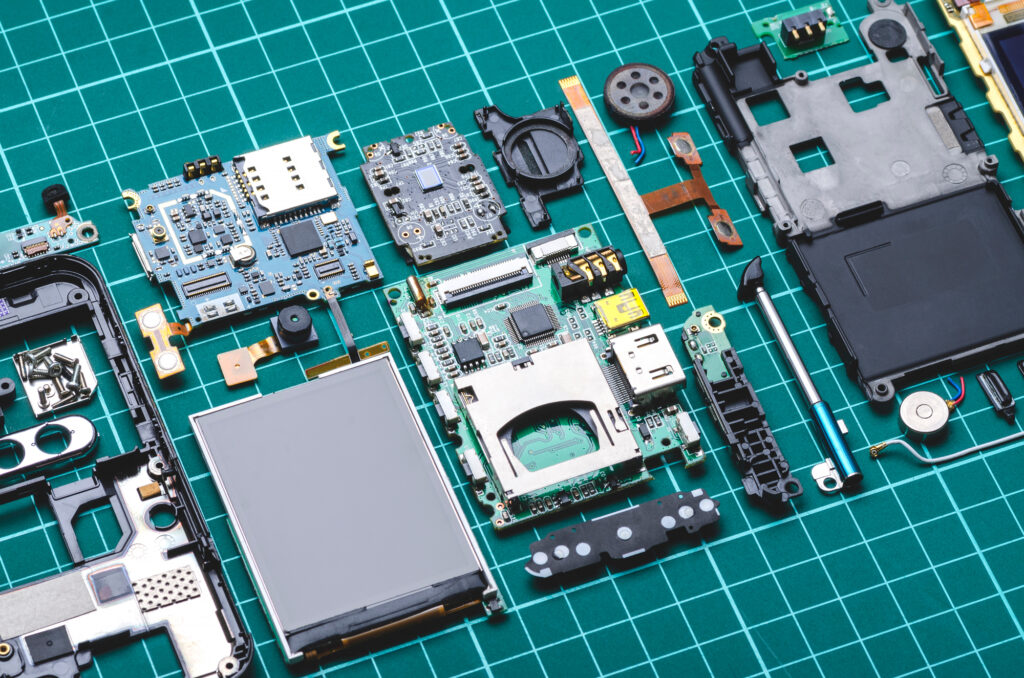
But the increasing adoption of technology comes at an environmental cost. Electronic devices often have a significant carbon footprint because of the energy-intensive processes needed to produce printed circuit boards (PCBs) and integrated circuits.

Electronics production relies on mining and extracting dozens of different materials, including critical raw materials (economically important materials at high risk of supply shortage, such as lithium or titanium). Extracting these materials has a range of sustainability impacts, including the leakage of toxic chemicals such as cyanide into the environment, high levels of water use, and human rights abuses in the case of ‘conflict minerals’ such as gold and tantalum.

Waste electronic products, or e-waste, is the fastest-growing waste stream in the world, with over 53 million tonnes of e-waste produced in 2019. Most e-waste is disposed of incorrectly, ending up at waste dumps in developing countries. Hazardous chemicals, such as lead or mercury, that may be present in electronic components can leak into the environment, harming local ecosystems and damaging the health of people who live and work in the dumps.

Product sustainability has focused on the circular economy, particularly recycling. But there are fundamental limits to the impact recycling can have on electronics. Only 17% of e-waste is collected for recycling and, even if it’s collected, recovering materials from e-waste is particularly challenging.

Electronics contain trace amounts of rare metals, which are complex and expensive to separate. Only the most abundant materials, such as copper and gold, can be economically retrieved during e-waste recycling, and even if all e-waste was recycled in this way, the material recovered still wouldn’t be enough to meet the growing demands of the industry.

One way to tackle the environmental challenges presented by electronics is to remove the need for them in the first place, for example by detecting a temperature change using a color-changing chemical rather than a sensor. But, in some instances, electronics are necessary, so how can designers reduce the impact of the products they create?

Our sustainability team assessed a range of technologies and design techniques to determine their potential for reducing the environmental impact of electronic products and how difficult they are to implement. This article outlines a few approaches we’ve used in recent projects at CDP.

Reducing complexity through connectivity

One of the best ways to reduce an electronic device’s environmental impact is by minimizing the electronics’ complexity, thereby reducing the number of integrated circuits needed as well as the surrounding passive components (resistors, capacitors and so on), connecting tracks, and PCB area. 

An easy, effective way to do this is by pairing a product with a user’s existing device to provide the smart capability. Methods range from a simple QR code or NFC chip to a Bluetooth connection for transferring more complex data. 

As well as reducing the electronics in the product, this allows for a degree of futureproofing, as software updates can be used to keep the product up to date. This idea isn’t new but is starting to be used more in applications from smart packaging to medical devices. 

Important to note: Behind many of these software solutions are large data centers that need powering and should be considered in the product’s environmental impact.

Informed decision-making: Life Cycle Assessment (LCA)

Designers can optimize component choices and circuit designs during detailed design to reduce the overall impact of a product.

We recently used LCA to estimate the additional carbon footprint of adding an electronic module to a medical device. This step allowed our team to identify where to focus on reducing the impact of the design, such as replacing integrated circuits with a solution based on lower-impact passive components and optimizing the layout to minimize the total area of PCB required.

We identified several solutions that together had the potential to reduce the total carbon footprint of the product by up to 25% without compromising functionality. In many cases, this optimization also generates cost savings.

Optimizing electronics through additive manufacturing

Over the past two decades, additive manufacturing (such as 3D printing) has seen a surge in use in mechanical prototyping and manufacture, and its applications in the electronics sector are now starting to grow. In the context of PCBs, additive manufacturing refers to selectively adding conductive material to the areas required, as opposed to a more traditional approach which starts with a layer of copper and selectively etches away the areas where it isn’t needed.

These technologies can improve a product’s carbon footprint through reduced material usage and less energy-intensive manufacturing processes. A report published by the ECOtronics project found, “Changing from subtractive manufacturing (etching) to additive manufacturing (printing) has the potential to reduce environmental impacts by more than 50% across all impact categories.” 

One additive manufacturing method is laser direct structuring (LDS), which allows you to construct circuits on the surface of device components. With this approach, you can remove the PCB entirely, dramatically cutting down on the material required. 

These technologies present opportunities to fit electronics into new form factors, print onto a wide array of rigid or flexible substrates (the non-conductive part of the circuit board the metal circuit is added to) and increase the customizability of the design, all while reducing the product’s environmental impact.

As we’ve highlighted before, sustainability initiatives should always consider context, which is vital for electronics. In the absence of cost-effective recycling processes, designers must prioritize approaches that reduce the materials and energy required to produce electronics. As electronics continue to play a leading role in our lives, future designs should reduce our reliance on critical raw materials and consider how circular approaches to design can extend product lifetimes and prevent harm to people and the environment.

References

||||||||||||||||
By Cambridge Design Partnership

Reducing the carbon footprint and plastic waste of LFTs: Evidence-based opportunities

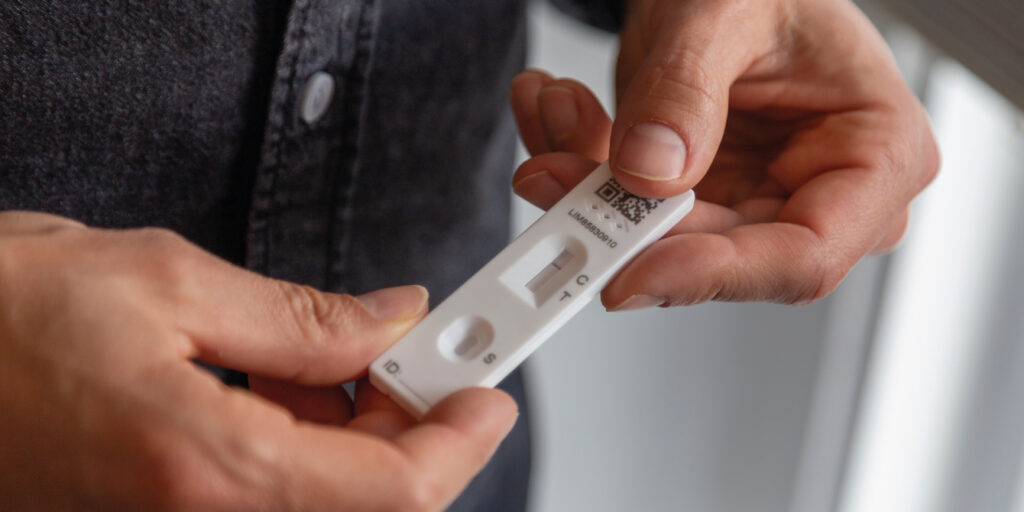
Billions of lateral flow tests have been used worldwide during the COVID-19 pandemic – over two billion have been provided in the UK alone. Debate has raged on social media about why the tests need to use so much single-use plastic and how they could be made more ‘sustainable’. The test strip caseworks is a particular source of dismay – why so much plastic to house such a tiny test strip?

With the UK government ending the free distribution of lateral flow tests for the general public – citing a transition from emergency response to longer-term management of the pandemic – now is the ideal time to look more closely at the sustainability of these lateral flow tests, and to seek the data to demystify some of the emotional assumptions being made. 

Familiarity with lateral flow testing has certainly increased, as has confidence in their clinical performance. It’s expected that lateral flow devices will be more present in our daily lives post-pandemic – not just for COVID-19 and pregnancy testing but to diagnose diseases such as seasonal influenza and sexually transmitted infections – all from the comfort of the home. 

We’ve carried out a high-level assessment to quantify the approximate environmental impact of lateral flow tests and identify evidence-based suggestions for improving their environmental sustainability

Why do COVID-19 lateral flow tests contain lots of single-use plastic in the first place? 

The emergence of COVID-19 was a global emergency, and vast quantities of lateral flow tests were needed urgently. Once developers could produce the right immunoassay chemistry to detect the virus (SARS-CoV-2), it required implementation in a low-cost, low-risk device, that has a mature supply chain – with proven, readily available materials that wouldn’t compromise analytical or clinical performance.     

This meant using existing plastic casework designs to retain and protect the nitrocellulose test strip. Plastic is robust, low cost, lightweight, easy to transport, and easily printed for QR codes and LOT numbers. Critically, it’s a consistent material proven for the highest volume manufacturing and won’t interfere with the immunoassay chemistry. 

From a performance, cost, and manufacturing perspective, redesigning the product with new materials would have been high risk. Material changes may also have needed significant R&D costs, new capital equipment as well as additional cost and effort needed to demonstrate equivalence and achieve regulatory approval – risking the ability to provide sufficient numbers of high-quality tests, at speed during the pandemic.  

Our results: The sustainability of lateral flow tests 

But how serious an environmental impact do these tests have? To find out, we broke down a test into its constituent components and weighed them to calculate the approximate environmental impact, using standard emissions factors to calculate the carbon footprint of a single test.

We focused on carbon footprint (the carbon dioxide and other greenhouse gases emitted during manufacture, transport, and disposal of the tests) and plastic waste (waste that would persist indefinitely if released into the environment) – the two issues that have attracted the most attention around lateral flow tests. A more comprehensive study should consider a broader range of environmental impacts, for example, the use of scarce resources and emission of other pollutants to avoid unintended consequences of any product changes. 

Our results reveal: 

  • The components needed to conduct the test account for around half of the carbon footprint and around two-thirds of the plastic waste. Packaging makes up most of the rest – as is often the case, a surprisingly high proportion of the total environmental impact. 
  • The test strip caseworks, which attracts the most comment online, is responsible for around 30% of the carbon footprint and 40% of the plastic waste. While it’s the most significant single contributor to the environmental impacts we evaluated, the large number of other small parts is also significant. Focusing on the caseworks therefore might not be the best strategy for improving the sustainability of the tests overall. 

Lateral flow tests a minor piece of UK healthcare’s environmental impact 

To put these numbers into context, we can compare the environmental impact of the two billion COVID-19 lateral flow tests distributed in the UK with the UK healthcare system’s overall environmental impact. We estimate the UK’s lateral flow tests have a carbon footprint equivalent to around 0.5% of the total NHS carbon footprint. This isn’t a trivial amount, but it’s also not the largest single contributor to the impact of the UK health system.

It’s also worth considering the positive environmental impact of a user-administered test on the health system. Conducting a test at home can eliminate the need for an individual to visit a test site, GP’s surgery, or hospital (assuming the clinical performance of the lateral flow test is adequate). Based on estimates from the Sustainable Healthcare Coalition, one lateral flow test has around 5% of the carbon footprint of a single GP appointment and produces a similarly low percentage of non-degradable (plastic) waste. 

And that’s before we consider travel. We estimate one lateral flow test has the same carbon footprint as driving 350 metres in an average UK car. So, if you’re driving yourself to a test site or GP surgery some distance away, at-home lateral flow tests compare even more favorably.

If a lateral flow test prevents an individual from transmitting COVID-19 to a vulnerable person, there’s a public health benefit – as well as an environmental benefit – to keeping people out of the hospital. We can all see the discarded waste from home tests, but the less visible impact from energy- and material-intensive medical interventions is often significantly higher. 

These approximate figures demonstrate why building an evidence base is vital during product development targeting sustainability objectives – because the results can be unexpected and non-intuitive.  

Quick ways to optimize today’s lateral flow tests  

Just because waste from lateral flow tests might not be the most urgent sustainability issue for UK healthcare, that doesn’t mean we can’t and shouldn’t do something about it.  

We used the ‘avoid/shift/improve’ model to find potential quick wins for lateral flow tests. These reduce the carbon footprint of each test by nearly a third and the plastic waste by almost a quarter – without impacting the fundamentals of how the test works. 

They include: 

  • Eliminate waste bags. There’s a case for quickly isolating contaminated waste (even given COVID-19 also spreads from infected individuals through the air), but the bags account for around 5% of the carbon footprint of the test. It’s not clear how widely used they are in a domestic setting – there may be a risk-based justification for not including them in the test kit. 
  • Package all the test strips in a single foil pouch. Using a single re-sealable pouch to protect the tests from ambient humidity (rather than individually packing each test in a pouch with desiccant) is common in packs of lateral flow tests designed for use by healthcare professionals. However, once opened, the stability lifetime of the remaining tests is affected. 
  • Reduce the size of paper instructions. These are important for the effectiveness of the tests and are a regulatory requirement, but account for 5% of the carbon footprint of a test – could they be reduced in size? 
  • Eliminate the cardboard sleeve. This packaging isn’t essential to the safe and effective functioning of the test, and it seems likely that the functions it does provide could be achieved with less material.
  • Prefill the extraction tubes with buffer solution. This is already done in some test kits, although manufacturers need to be conscious of moisture loss and the effect on shelf life. However, the separate plastic vial used in the test kit we studied accounts for around 5% of the carbon footprint and plastic waste.
  • Increase the size of the pack from seven to ten tests. This would mean less package waste per individual test. Including ten tests in one pack instead of seven reduces the carbon footprint by around 5% (depending on how many other optimizations are done at the same time). Perhaps a pack of seven tests was originally designed to cover a week of daily testing – but is that how tests are being used in practice? 

Redesign of the test strip caseworks 

Looking to the longer-term gets us into product redesign – creating a new generation of the product with sustainability in mind. Doing this can take significant investment since, for medical devices, it’s likely to require new regulatory approval, which is a lengthy and costly process.  

A popular idea circulating for lateral flow tests is to minimize the plastic test strip caseworks (without compromising the essential functions of providing a stable platform, and protecting the nitrocellulose test strip). It might be possible to halve the caseworks mass and reduce the overall carbon footprint and plastic waste by 15-20%. This would require significant investment in R&D, production tooling, and regulatory approval hoops to jump through – but could be worthwhile if future demand for tests stays high.

Longer-term options 

If we consider that the world may require billions more lateral flow tests over the coming decade, a more comprehensive redesign becomes commercially viable. This could involve stripping the design back to the fundamental requirements for a lateral flow test – flowing a sample through the test strip in a way that is controlled and free from contamination. Current designs take advantage of established components to collect, buffer, and dose the sample – but, at this production volume, it may be worthwhile designing a system from the ground up that is optimized for cost, usability, performance, and sustainability. 

Sustainability as a brand differentiator  

It’s clear there’s scope to optimize lateral flow tests to reduce their environmental impact – and a systematic analysis reveals options beyond those that might jump out to someone when they use the tests. But it’s essential to put the impact of lateral flow tests in the context of the wider healthcare system, to focus resources where they can have the most environmental impact – and to recognize that, sometimes, the plastic waste people can see helps to avoid more serious, but less visible consequences.  

On the other hand, while visible plastic waste from lateral flow tests may not be the most pressing environmental issue facing the healthcare industry, it highlights the growing influence consumer opinion is likely to have as diagnosis and treatment shift from hospitals to homes. And as lateral flow tests become (in the UK, at least) a product people buy with their own money, choosing from a range of options, there may be a competitive advantage for businesses that take note and optimize their products for sustainability. 

Featuring analysis conducted by Katie Williams, Mechanical Engineer


References

  • Prime Minister sets out plan for living with COVID [Internet]. GOV.UK. 2022 [cited 1 April 2022]. Available from: https://www.gov.uk/government/news/prime-minister-sets-out-plan-for-living-with-covid
  • The Sustainable Healthcare Coalition. Care Pathways Calculator. [Internet]. Sustainable Healthcare Coalition. 2022 [cited 1 April 2022]. Available from: https://shcoalition.org/
Ten ways to reduce E-waste in product development
By Cambridge Design Partnership

Ten ways to reduce E-waste in product development

We all have that drawer – the graveyard for discarded electronics. What’s in yours? A cracked phone, an obsolete activity tracker, maybe an original iPod? You hang onto them, because it seems wrong to throw them away.

You’re right. Globally, 53.6 million metric tons of electronic waste, or E-waste, were generated in 2019 but only around one-fifth of this was recycled. Roughly half this pile comes from personal devices, which can be hard to round up from consumers.

Any product that includes some form of circuitry or electrical components is classed as electronic equipment. Once this product has been discarded without the intent to reuse, it falls under the category of E-waste.

The problem is not just environmental; in some cases it’s pragmatic. Many minerals in the products we throw away are difficult to obtain. The long-term consequences are serious. For example, a shortage of lithium or cobalt, both critical materials in electric vehicle batteries, could slam the brakes on our migration to greener transport.

As with most environmental issues, the solution to E-waste lies with government, industry, and the consumer. This article focuses on how product developers can play their part in helping to reduce e-waste.


Join us to address some of the greatest environmental challenges of our era

We’re currently recruiting for a Sustainable Design Consultant, Life Cycle Assessment Engineer and a Head of Sustainability.


Ten ways to reduce E-waste


1. Think modular

If devices become more modular, it becomes easier for the consumer or an engineer to perform repairs. It also makes it easier to break up devices at the end of their lives, a growing incentive if more industries become responsible for waste disposal.  

Small product changes can make a significant impact, for example identifying which components tend to break first. Is there a way to make the component easily removable and replaceable? And if not, could it be designed to be more resilient?


2. Anticipate legislation

E-waste is a growing area of concern for governments, leading to a marked increase in the regulatory restrictions on disposal. This is noticeable in the electric car industry, where the EU and China have made manufacturers responsible for collecting and disposing of car batteries.

Both regulation and taxation are likely to increase. There is an opportunity for product developers to anticipate these factors when designing new products.


3. Respect the Right to Repair

A generation ago, mending your own possessions was a standard solution. Commonplace electrical repairs involved a loose wire or blown fuse. Today, electronic goods are much harder to fix, not helped by moving from screws to adhesive in assembly. You can no longer replace the battery in your phone and must go to a specialized repair shop for a damaged screen – think back to that drawer of retired electronics.  

Product reviews now include ratings for ease of repair. France has introduced a law requiring an index of repairability which has encouraged manufacturers to offer online fixing guides. Other EU countries are rolling this out, including a requirement for manufacturers to ensure that spares are available for up to a decade. Sweden is also reducing the VAT rate on repairs and spare parts.

The ‘Right to Repair’ is a growing consumer rights issue. Designers can reduce E-waste by making it easy to mend common faults.


4. Use recyclable materials

As materials and processing research have progressed, the range of options for easily recyclable electronics has increased. These vary from paper RFID tags and biodegradable PCB substrates to chemical methods for breaking down coatings which have traditionally complicated the recycling process. These are all options to keep in mind when starting a design.


5. Design for E-waste recycling early on

The E-waste recycling process has the potential to be very expensive, so designing with this in mind early on is vital. There is also the challenge of encouraging consumers to return their devices in the first place. It’s much more challenging to recycle post-consumer waste than materials still under the manufacturers’ control.

Material resources for electronic devices are becoming increasingly difficult to source and therefore more expensive. This highlights the benefits of setting up a ‘reverse supply chain’ in which waste products are returned to their suppliers for recycling, allowing manufacturers to extract reusable materials.

The electronics in many home appliances often only make up a tiny proportion of the product. If a more modular design is selected, it becomes far easier to separate the E-waste from the product for recycling.

 
6. Top the ratings

Concerns over “fast fashion” in the retail industry could easily translate into customers rejecting low-cost, short-lifetime electronic products.

A public rating system for electronics that includes ease of recycling and repair as two separate metrics would prompt brands to question their design choices. Are there other less toxic or less scarce materials that could be used instead? Are there different versions of the product with lower E-waste potential?

Eupedia, an online guide to the EU, recently combined four indices covering a range of sustainability factors to rank brands, including ratings for recycling and repair.


7. Question whether electronics are necessary

Recently, electronics with ever-increasing features have been incorporated into previously ‘dumb’ products. In many cases, this enables functionality that was previously unachievable. However, sometimes we can obtain the same advantages without electronics, leading to a lower-cost and more straightforward solution.

Designers should carefully consider the range of solutions available and weigh up the relative user benefits, costs, and environmental impacts to find the most appropriate one for their product. For a simple maximum temperature monitor, do electronics provide a unique additional benefit, or can a different type of innovation such as a chemically triggered color change give the same information to the user?


8. Partner with smart devices

The obvious way to reduce E-waste is to produce less in the first place, but is this realistic? One route is to design electronics-free devices made smart through combination with a phone app. This often allows for the same functionality with no extra electronic components. For example, in diagnostic healthcare, agriculture and food safety testing, a phone camera can read and analyze colored test strips.


9. Consider a more sustainable business model

Some companies, such as Rolls Royce jet engines, have pioneered a service business model, in which customers hire products and return them to the supplier after use. This allows the manufacturer to perform necessary repairs or replacements between hire periods. Under this model, the burden of recycling shifts back to the supplier, further encouraging them to design products with minimal E-waste.


10. Reduce material usage

Mobile phones have shrunk in size from a brick to a calculator. This has been made possible by the miniaturization of electronic components, printed circuits, and connectors. The amount of material contained within each device has reduced considerably, even though complexity has increased.

Moving from milling and other subtractive manufacturing technologies to molding and 3D printing has reduced waste. There are opportunities to mirror these changes in electronics. Instead of making a flat sheet of copper and then dissolving most of it to produce a printed circuit board, additive techniques such as printed electronics can lay down patterns of conductors and insulators only where they are needed.

Putting E-waste in context

Our customers want smaller, lighter, longer-lasting devices that are easy to recycle. We can take all these factors into account every time we create a new design.

As we mentioned in a previous article, solutions to E-waste must be looked at in the unique context of a product’s market and usage.

If we follow rules such as the above, we will make the optimum use of our planet’s limited material resources, and lay the electronics graveyard drawer to rest.

Which improvements will you design into your next electronic product?