New frontiers in implantable neuromodulation therapies||Medical Therapy article|New frontiers in implantable neuromodulation therapies|||
Share:

New frontiers in implantable neuromodulation therapies

Neuromodulation, where electrical signals in a patient’s nervous system are modified or stimulated to deliver a therapeutic effect, continues to be an exciting and evolving space within the healthcare sector.

There are many drivers contributing to its advancement. Ongoing clinical neuroscience research fueling new possibilities in neuromodulation therapies, the invention of new technologies, and the development of new product formats to meet unmet needs, are all notable factors.

Additionally, there has been increased acceptance and presence of established therapies for implantable devices – such as deep brain stimulation for Parkinson’s disease, spinal cord stimulation for chronic back and leg pain, and vagus nerve stimulation for epilepsy and depression – with Medtronic, Boston Scientific, Abbott, Nevro and others leading the industry.

In all, these factors have made the electrical-based neuromodulation space to become one of the fastest-growing medical device markets, with market size expected to rise from $6.09 billion in 2021 to $14 billion by 20301.

The diversity of solutions is evident, with Figure 1 illustrating the current landscape of established and emerging implantable neuromodulation therapies.

web_inline_Neuromodulation-article-4
Fig 1. Selection of established and emerging electrical neuromodulation technologies and their indication

In this first article of a two-part series, we look at a few notable emerging therapies to illustrate how the implantable neuromodulation space is rapidly developing.

Bladder control: beyond sacral nerve stimulation

Addressing continence issues is a growing area in the healthcare sector, where neuromodulation is seeking to play a significant role in specific therapies.

Implant-based stimulation of the sacral nerve has relatively recently established itself as a way of addressing incontinence with the presence of Medtronic’s Interstim and Axonics’ product range. Alongside the sacral nerve, other nerves are being considered for implantable stimulation to address similar conditions and to respond to specific unmet clinical and patient needs.

One alternative is tibial nerve stimulation, which has a history of effectiveness for certain cases in its non-implantable form: percutaneous tibial nerve stimulation (PTNS). The implant-based approach seeks to address a patient and clinician inconvenience of PTNS, i.e., the need for repeated stimulation sessions and user steps2.

An example of such is the BlueWind Revi, which is part implantable (the electrode is placed near the tibial nerve) and, for minimizing invasive procedures, part wearable (a through-body power source). The device stimulates the tibial nerve which is connected to the sacral nerve plexus, containing the efferent and afferent nerve fibers that control the bladder and are responsible for bladder function. Here, the electrical impulses aim to modify the compromised activity of the detrusor muscle in patients with overactive bladder3. The company has recently achieved clinical results on their pivotal trial evaluating safety and efficacy (still under review by the FDA)4.

Similarly, Medtronic is seeking to develop an implantable tibial nerve stimulation system for incontinence which is currently undergoing clinical trials5.

Another nerve for addressing incontinence is the pudendal nerve. Amber Therapeutics is currently developing an implantable closed-loop therapy, Amber-UI, for urge and mixed urinary incontinence. The therapy involves implanting electrodes that can sense, interpret, adapt and respond to individual patient signals, such as muscle contraction, in an attempt to restore normal bladder function. By accessing the pudendal nerve, it aims to treat both urge and stress incontinence episodes for the first time, not possible with existing neuromodulation devices, thereby expanding the overall addressable market. First-in-human clinical studies are expected to conclude by the end of 2023.

Emerging Vagus Nerve Stimulation (VNS) therapies

Along with established therapies for epilepsy and depression, VNS is also being explored for conditions such as Rheumatoid Arthritis (RA) to displace injectable and oral medication.

SetPoint Medical is currently evaluating a novel VNS treatment that activates the ‘inflammatory reflex’ pathway (neurophysiological mechanism by which the central nervous system regulates the immune system) that may decrease the type of excess inflammation that is the underlying cause of RA. Its multivitamin pill-sized MicroRegulator platform is currently an investigational device.

SetPoint Medical is progressing clinical trials not only for RA, but also for Crohn’s disease, and furthermore exploring the therapeutic effect, in animal models, to treat multiple sclerosis with VNS therapy.

Implantable VNS therapy is also being explored for other conditions such as sepsis, lung injury, stroke, traumatic brain injury (TBI), obesity, diabetes, pain management and cardiovascular conditions7. One example of cardio-based therapies include low stimulation of the vagus nerve to liberate the body’s own neurochemicals to improve heart function.

New pain indications

Neuromodulation has worked well in establishing itself to address specific intractable pain of the trunk and/or limbs and for diabetic nerve damage – both conditions treated by implanting electrodes in the epidural space using spinal cord stimulation. In light of this success and available product types, pain specialists are continually seeking solutions from neuromodulation to address different causes for different parts of the body.

This impetus was clearly illustrated in panel sessions and discussions with clinicians attending the American Society of Pain and Neuroscience 2023 conference in Miami. We heard testimonials of how specialists, using available stimulators, succeeded in treating a variety of new pain sources and anatomical locations in the wrist, joints, abdominal region and in one case, at the neck to relieve a patient’s sensation of being choked.

This dynamic led to some clinicians proposing that the future of neuromodulation should also consider the treatment of pain associated with oncology treatments, given the improved extended lives seen in cancer patients. This exploration and success could pave the way for the creation of more established therapies – which would be welcome given the prevalence of chronic pain in the general population and the initiative to deliver non-opioid alternatives.

Novel developments for spinal cord injuries

Along with surgical, drug and stem cell therapies, neuromodulation has also entered the frame for addressing spinal cord injuries.

ONWARD has seen success with its partial and fully implantable versions of its ARC Therapy™ product range, where electrodes are implanted in the epidural space to stimulate the lower portion of the spinal cord affected by the injury that fails to (properly) communicate with the brain. By stimulating these lower nerves, the system aims to help restore and optimize their functioning in connection with the brain. ONWARD indicated that for their ARCIM product, one study demonstrated the ability for long-paralyzed people to stand and walk again with little or no assistance using this therapy.

ONWARD’s products have been granted Breakthrough Device Designation status for a range of indications such as improving upper and lower limb function; bladder control and blood pressure regulation; and alleviation of spasticity in patients with such injuries8.

Also in ONWARD’s pipeline is a plan to integrate an implanted Brain Computer Interface (BCI) which senses the patient’s brain signals relating to the intent of leg/joint movement. In turn, these signals are wirelessly sent to its spinal cord stimulator which can activate nerves which are poorly connected to the brain due to injury. This aims to create a “digital bridge” between the brain and poorly connected nerves to enable and improve the patient’s walking ability. Much research and iteration is anticipated; however, this ambition is indicative of how neuromodulation can be innovative and transformational to people’s lives.

The road ahead for neuromodulation

The above examples only skim the surface of emerging therapies; neurostimulation, neuro-adaptive therapies and BCI technologies are attracting significant research and investment to create new therapies by leveraging the body’s physiological pathways.

We foresee continued progress in materials science, engineering, device design and biomedical research into neuro-physiological understanding of the human body to fuel the foundations for new, highly functional and patient-centered neuromodulation platforms.

We also foresee exciting developments in how targeting different nerves can potentially tackle similar medical conditions while the same nerve can be used to address various indications.

In our next article, we will explore the varied technology drivers and their considerations that are leading to the creation of new, innovative neuromodulation implants.

References
  1. Strategic Market Research website https://www.strategicmarketresearch.com/market-report/neuromodulation-devices-market visited on 12/07/2023
  2. DOI: 10.1186/1471-2490-13-61
  3. DOI: 10.2147/RRU.S231954
  4. Clinical Study Results of the BlueWind System for Patients with Overactive Bladder Featured at the 2023 AUA Annual Meeting. https://www.prnewswire.com/news-releases/clinical-study-results-of-the-bluewind-system-for-patients-with-overactive-bladder-featured-at-the-2023-aua-annual-meeting-301811486.html
  5. Evaluation of Implantable Tibial Neuromodulation Pivotal Study https://classic.clinicaltrials.gov/ct2/show/NCT05226286
  6. DOI: 10.1016/j.xjtc.2022.03.007
  7. DOI: 10.2147/JIR.S163248
  8. Website Onwards https://www.onwd.com/ visited 12/07/2023

Connect with CDP

For more on how to accelerate meaningful innovation in implantable neuromodulation, from device design to clinical translatio, contact Cambridge Design Partnership.
How data and AI are changing bioprocessing
Share:

How data and AI are changing bioprocessing – and why it’s needed

After numerous insightful talks and engaging conversations with industry leaders at this year’s BioProcess International, the key theme was clear: data, data and more data.

Data has always been important, but now it is being collected to model current processes, understand how they work, and improve them. This is a trend that is only likely to accelerate in the future as AI becomes part of everyday life – both in and outside of work.

Using data-based modeling to optimize well-established industrial processes

There are many traditional processes that are used in the manufacture of antibodies, mRNA vaccines and cellular therapies. Companies are now collecting extensive data from these processes and using modeling to create their ‘digital twin’.

The processes modeled range from relatively simple tasks such as optimization of freezing/thawing product intermediates, freeze-drying and automated buffer preparation, to more complex procedures such as bioreactor scale-up. Although these used to be manual ‘craft’ processes run by a combination of experience and pre-existing data, there is now a trend for them to be tested and optimized using in silico methods.

Using modeling to improve purification methods

Bioprocessing is used to create many therapeutic products, from molecules such as protein, DNA and RNA to much larger entities such as viruses and eukaryotic cells. Their production has many different steps that often require extensive purification before the next step can proceed. Common purification methods include clarification, chromatography, ultrafiltration/diafiltration and sterile filtration.

These methods were typically used in an empirical way based on experience with similar products. Now however, use of modeling has led to a much more detailed understanding of how these separation/purification methods work. It allows the prediction of when column/membrane capacity is reached, and when “breakthrough” of contaminants is likely to occur. It has also led to the development of alternatives to standard resin-based column chromatography such as the incorporation of new reactive chemical groups on membrane filters that can then act like traditional resin-based columns.

Benefits of Process Analytical Technology (PAT)

PAT refers to on-line/at-line measurement of critical product quality and performance attributes so that real-time direct data collection can be used to control and optimize manufacturing processes.

PAT is being augmented by a much wider range of analytical techniques than before and now includes many different types of spectroscopy including variable path length, Fourier-transform infrared, Raman and Dynamic Light Scattering, as well as Nuclear Magnetic Resonance. The use of PAT for direct data collection that links to immediate process control is only likely to accelerate.

Inexorable rise of disposable closed cell processing systems

In addition to the data theme, it was clear to see that the number of automated closed cell handling and processing systems – from cell selection to expansion and harvesting – is rapidly increasing. Companies aim to offer end-to-end solutions to traditionally manual processes, either by offering modular components or a single complete system.

The options for choosing automated disposable bioreactors/cell expansion systems are also increasing, with many players recently entering the market. It is clear why this option is advantageous; traditional stainless-steel bioreactors are complex, expensive, and laborious to clean and maintain.

Just how large these systems can grow is shown by ThermoFisher’s 5000L disposable Dynadrive bioreactor, which is offered as a fast-to-install option compared to stainless-steel alternatives. However, the environmental impact of the disposable route is a long-term concern and is expected to be a point of contentious discussion over the coming years.

Bioprocessing technology is developing (but not fast enough for demand)

The technological developments described above are certainly needed as advances in eukaryotic culturing methods are allowing higher and higher cell densities to be realized, which makes purification more challenging. Furthermore, the pipeline for products that use these technologies is growing at a dizzying rate with over 1,500 cell and gene therapy and 700 mRNA trials listed on the US Clinical Trials site. New higher throughput processing techniques will need to be developed to accommodate this demand.

The industry clearly recognizes this and companies were very open in sharing their results at BioProcess International – both good and bad! They are also keen to work with the process equipment manufacturers to optimize performance. Overall, improvements have been made, but there is a long way to go.

Performance can be improved by a virtuous circle of data generation, data modeling and innovative design and engineering – something we at CDP are already doing to help our clients succeed.

Connect with CDP

For more on how data modeling and automation can increase bioprocessing throughput and optimize manufacturing performance, contact Cambridge Design Partnership.

Neurodegenerative conditions|||||
Share:
Find the authors
on LinkedIn:

Neurodegenerative conditions: turning a corner to better treatment?

Pace is accelerating for tackling neurodegenerative diseases. Can we unlock better treatment? Can we reach a cure?

Ageing populations face neurodegenerative conditions, such as Alzheimer’s Disease, Parkinson’s Disease, Motor Neurone Disease, Multiple Sclerosis, and others. These impact an estimated 60 million people worldwide, equivalent to the current UK population.

Whilst each condition has different mechanisms of neurodegeneration, they all have something in common: prognosis is bleak, treatment is limited, and there is no cure.

However, after decades of research, there has been a series of breakthroughs. Here, we focus on two areas of progress: how treatments have moved on and hope for the future.

The rise of RNA-based therapeutics 

The effective development of RNA-based vaccines during the COVID-19 outbreak catapulted RNA-based therapeutics into the spotlight. Whilst theoretical knowledge of RNA therapy has existed for over 30 years, the bulk of associated FDA approval for treatments involving the nervous system has occurred in the last decade(1).

A major advantage of RNA-based therapy over conventional small molecule and protein-based approaches is its high specificity and precision, resulting in a more targeted approach to treating disease with specific gene mutations or overexpression.

However, to devise effective RNA-based therapeutics, the genetic hallmarks of the neurodegenerative disease of interest must be known.

Motor Neurone Disease (MND) is one such condition where specific mutations in the SOD1 gene have been identified and in this case, in two per cent of diagnosed cases.

A recent breakthrough in phase three clinical trials targeted this gene using the drug Tofersen. Tofersen, developed by Biogen, directly interferes with the faulty overproduction of SOD1. After six months, patients had a reduction in SOD1 levels, and after 12 months the same patients reported better mobility and lung function(2,3). Although patients with SOD1 mutations only represent two per cent of those living with MND, these trials provide ‘proof of concept’ that similar gene therapy-based approaches may help other forms of the disease.

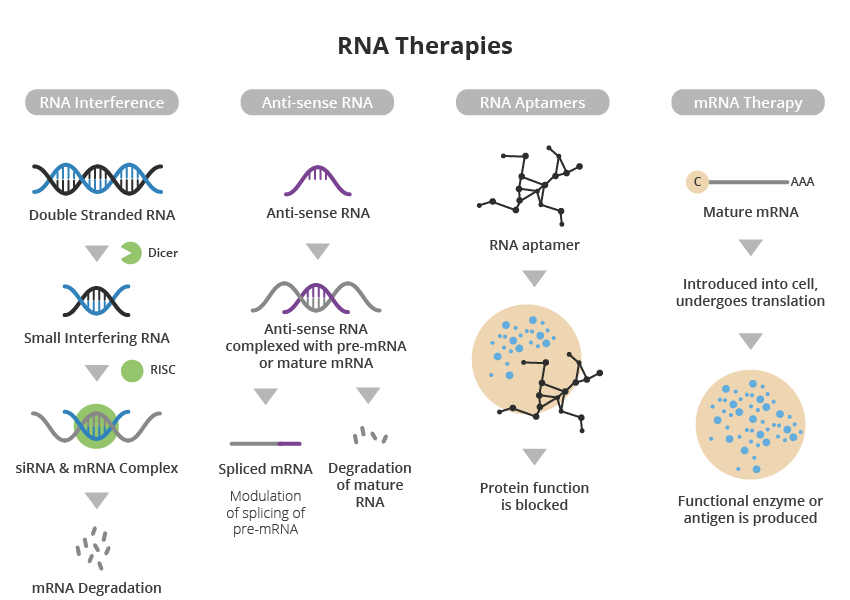
Another pioneering strategy, developed by Atalanta Therapeutics and Genentech, focuses on a technology called branched siRNA (small interference RNA). This is a type of molecule that helps regulate gene expression by binding to a complementary messenger RNA, which in turn can encode the gene of interest.

Branched siRNA uses novel RNA interference nucleotide technology to suppress the activity of genes that function abnormally, such as mutations. This slows the progression of the disease or stops it altogether.

It is hoped this approach can be applied across multiple neurodegenerative diseases, including Parkinson’s Disease, Huntington’s Disease and Alzheimer’s Disease.

Although testing is still in the pre-clinical stage, the branched siRNA platform aims to enable RNA interference to be deployed as a therapeutic approach throughout the brain and spinal cord. This overcomes the long-standing challenge of achieving adequate distribution within the central nervous system (CNS) to ensure the therapeutic agent reaches the nervous tissue(4,5).

Progress in non-RNA therapeutics 

Non-RNA therapeutics for neurodegenerative conditions also continue to progress. Examples include the monoclonal antibody Donanemab, developed by Eli Lilly. Phase three clinical trials showed it to slow clinical decline by 35% in patients with Alzheimer’s Disease, compared to a placebo(6).

Effective delivery remains a major challenge  

One of the main challenges in developing RNA therapeutics, and therapeutics for the brain in general, remains the efficiency of its delivery to the target tissue.

To treat neurodegenerative conditions, the therapeutic agent aims to reach the CNS. The presence of the blood-brain barrier (BBB), a cell-formed wall separating the bloodstream and the CNS, makes it difficult to deliver drugs. The BBB’s almost impermeable characteristics allow very few molecules to cross and make systemic drug delivery less efficacious.

There are two common approaches to overcome this: re-engineering the therapeutic agent to make it compatible with BBB permeability or bypassing the BBB altogether.

Re-engineering the therapeutic agent

This typically involves chemical modification of the drug (e.g., from water-soluble to lipid-soluble molecules) to enable passive diffusion through the BBB. Another approach is to design drug carriers that mimic the structure of endogenous molecules (e.g., monosaccharides, hormones) to activate carrier-mediated transport or nanocarriers(7,8). Both approaches add complexity to manufacturing.

Another cross-BBB approach is Focused Ultrasound (FUS), where high-intensity sound waves temporarily disrupt the BBB to enable drug-loaded microbubbles to enter the CNS9.

Bypassing the blood-brain barrier 

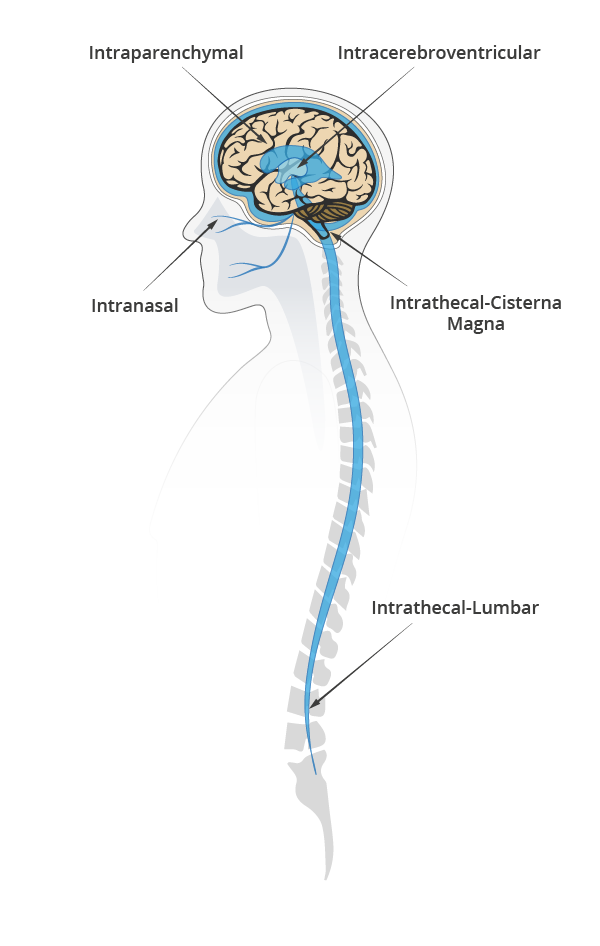
Bypassing the BBB can save time and effort in formulation by using a range of therapeutic agents not constricted by size or BBB compatibility. Of its three most common types of delivery: intraparenchymal, intranasal, and cerebrospinal fluid (CSF) delivery; the latter is often the favored approach, due to lower clinical complexity10.


Evaluating CSF delivery routes 

CSF delivery most commonly include intrathecal (IT) or intraventricular (ICV) routes.

IT involves an injection either on the lumbar or a cisterna magna region to deliver the drug and let CSF pulsatile flow support the distribution of the therapeutic agent in the brain and spinal cord.

ICV is more invasive. It involves two surgical interventions, one to place a catheter connecting the cerebral ventricles to the injection port at the top of the skull and one to remove the catheter.

To date, ICV has two approved drugs (Rituxan for CNS Lymphoma, and Brineura for Neuronal Ceroid Lipofuscinoses type two). IT lumbar injection has one (Spiranza for Spinal Muscular Atrophy) and plenty more in clinical and pre-clinical stages across a spectrum of neurodegenerative and neurological diseases(11). Irrespective of the approach, the trend is clear: less invasive, lower dosage, and targeted delivery is the way to go.

In the race to show safety and efficacy with either invasive or non-invasive approaches, all solutions will have to be patient-centered.

A new dawn for the treatment of neurodegenerative diseases  

The complexities of neurodegeneration have long frustrated scientists and clinicians alike, despite decades dedicated to studying its diseases, aetiologies, and treatments. However, we are making more rapid and more significant progress.

We have some way to go, but we mustn’t overlook the magnitude of these milestones. New therapeutics and delivery techniques are paving the way to more effective and efficient treatment.

By increasing our understanding of genetic hallmarks of the diseases, and using tools such as AI in drug discovery, we can unlock faster pathways to RNA-based treatments. Similarly, by finding innovative ways of demonstrating the safety and efficacy of delivery methods, such as modeling, we can edge closer to less invasive procedures and lower dosages to minimize potential side effects.

We need more research, more awareness, earlier diagnosis, and a better understanding of risk factors to enable prevention and earlier intervention.

But we are now getting closer to better treatment and one day finding a cure.


References 
  1. http://nectar.northampton.ac.uk/16015/1/Anthony_Karen_RNAB_2022_RNA_based_therapeutics_for_neurological_diseases.pdf
  2. https://www.sheffield.ac.uk/neuroscience-institute/news/promising-mnd-drug-helps-slow-disease-progression-and-benefits-patients-physically
  3. https://www.nejm.org/doi/full/10.1056/NEJMoa2204705
  4. https://www.gene.com/stories/pioneering-novel-therapeutics-in-neuroscience
  5. https://www.nature.com/articles/s41587-019-0205-0
  6. https://clinicaltrials.gov/ct2/show/NCT04437511?term=TRAILBLAZER-ALZ&cond=Alzheimer+Disease&draw=2&rank=3
  7. https://www.ncbi.nlm.nih.gov/pmc/articles/PMC8905930/
  8. https://ijponline.biomedcentral.com/articles/10.1186/s13052-018-0563-0#:~:text=Modification%20of%20the%20drug%20to,capable%20of%20crossing%20the%20BBB.
  9. https://clinicaltrials.gov/ct2/show/NCT03321487
  10. https://www.frontiersin.org/articles/10.3389/fnagi.2019.00373/full
  11. https://www.ncbi.nlm.nih.gov/pmc/articles/PMC9305158/


Connect with CDP

For more on how to advance RNA therapeutics and targeted CNS drug delivery for neurodegenerative diseases, contact Cambridge Design Partnership.
Could oligonucleotide manufacturing advances redefine therapy
Share:
Find the authors
on LinkedIn:

Could oligonucleotide manufacturing advances redefine therapy? 

Oligonucleotides have the potential to address some of the most devastating diseases that remain stubbornly resistant to treatment. These include neurodegenerative, vascular, respiratory, and oncological illnesses. As exciting as this branch of science is, the oligo industry is still in its commercial infancy. Large-scale oligonucleotide manufacturing is not straightforward, and various challenges need addressing.

To understand these, Alejandra and Carla, two Consultant biomedical engineers at Cambridge Design Partnership (CDP), were invited to take part in the Innovation in Oligonucleotide Manufacturing Symposium hosted by CPI at their new facilities in Glasgow. After an intensive day of discussion between key stakeholders from industry, academia, government, and the regulatory sector, we present the main takeaways. For this to make sense, let’s start from the beginning.

How do oligonucleotides work?

Oligonucleotides are short DNA or RNA molecules, typically around 20  nucleotides (basic building blocks of nucleic acids) in length. They can modulate gene expression, the process by which information included in a gene informs the assembly of a protein molecule. They do this by binding to pre-mRNA and mRNA, the carriers of genetic information before the mature mRNA is translated into proteins. Because mRNAs carry code for all cellular proteins, oligonucleotides could be effective for targets and diseases not treatable by current drugs1.

What is their importance as therapeutic agents?

Oligonucleotide therapeutics prevent or modulate the expression of almost any gene as part of highly targeted treatment. They aim to target the genetic basis of the disease rather than the symptoms. Compared to conventional therapies, oligonucleotides have a higher specificity with reduced side effects. They can target specific molecules that are currently difficult to target, such as RNA. Several oligonucleotide therapeutics are already on the market, with Novartis Pharmaceutical’s Vitravene, for treating cytomegalovirus retinitis in immunocompromised patients, being the first to be approved by the FDA in 1998.

The list of diseases that oligonucleotides can target is ever-growing, with the market valued at USD 5.19 billion in 2020 and expected to rise to USD 26.09 billion by 20302.

How are oligonucleotides manufactured?

Oligonucleotides are synthesized chemically, where nucleotides are added stepwise, resulting in a growing chain. Each nucleotide is subjected to a series of chemical reactions to create a stable component allowing the chain to grow.

The two different types of oligonucleotide manufacturing are solid-phase and liquid-phase synthesis. Solid-phase oligonucleotide synthesis is carried out on a solid insoluble object, such as polystyrene beads, placed in columns that enable all reagents and solvents to pass through freely.

In liquid-phase synthesis, the oligonucleotides are grown on soluble polymeric support within a homogeneous media; the polymer-bound product is commonly recovered from the reaction mixture by precipitation, thus allowing the rapid elimination of excess reagent and soluble by-products.

Solid phase allows high throughput synthesis and purification, with liquid phase taking longer to synthesize the oligonucleotides. However, liquid-phase has the advantage of being performed on a larger scale and typically being less expensive than solid-phase synthesis. Once the desired oligonucleotide has been synthesized, the material can be passed to the next processing steps, including purification, concentration and, commonly, lyophilization.

What are the main challenges in the process?

Oligonucleotide manufacturing is a complex process with many limitations, especially in scalability. The major problems researchers face are currently due to high expenses regarding the raw materials for oligonucleotide synthesis, a lack of funding for oligonucleotide therapies, and a shortage of skilled resources in the oligonucleotide synthesis field. These problems create substantial bottlenecks in the research required for therapeutic oligonucleotides and, ultimately, the clinical use of these therapies.

Key takeaways on the manufacturing of oligonucleotides 

  • Moving towards liquid-phase oligonucleotide synthesis. Solid-phase oligonucleotide synthesis is a great tool for rapidly making lots of oligos in the lab. However, it has drawbacks when manufacturing hundreds of kg or even multi-ton quantities per year, which might be the case for emergent nucleotide products targeting more common diseases3.

    The major problems include:

    • As the oligo grows, the space for the fresh nucleotides to diffuse and react gets tight, leading to incomplete couplings. This results in an altered sequence of monomers and incorrect genetic information in the final product, which must be removed by extensive and expensive processes.
    • It is hard to scale up the solid beds (insoluble particles to which the oligonucleotide is bound during synthesis).
    • The synthesis and purification steps generate large amounts of organic and aqueous waste.


  • Liquid-phase synthesis stands as a promising approach to increase the yield of the overall process while allowing the production of large amounts of oligonucleotides in, potentially, a more sustainable manner4.


  • New alternatives to current purification methods are under investigation. Promising approaches to simplifying the purification steps show good results in the investigational phase5. Examples are membrane-sieving technology and biocatalytic processes used for phase separation. In the biocatalytic process, oligonucleotides are synthesized in a single operation, with fewer impurities and by-product production, and in aqueous media. All these are promising features that target the current limitations of existing synthesis methods3.


  • New approaches come with new challenges: The development of novel and alternative technologies offers opportunities to address some of the limitations of solid-phase synthesis while also creating new challenges. For instance, using nanofiltration membranes to support the synthesis of oligonucleotides in liquid phase can present issues such as membrane stability and fouling. Another concern regarding the enzymatic approach is the availability of raw material with the right purity.
    If we consider the bigger picture, another novel approach in the pharmaceutical industry is the adoption of digital manufacturing technologies. However, this up-and-coming tool may come with its own challenges due to lack of pharmaceutical manufacturing expertise and the high cost of initial funds.


  • Raw materials suppliers are already working towards reducing the gap. Strategies to reduce the prices of chemicals and deliver sustainable solutions are already underway. For instance, Honeywell US, a major supplier of the raw material required for oligonucleotide production, recycles solvents and assigns dedicated chemical drums to individual businesses to avoid cross-contamination.

Big wins for early pioneers

At CDP, we see every challenge as an opportunity, and we are pleased to know that governments and large industries have already recognized these problems.  Major efforts to accelerate research in the UK have been launched, not only as funding from governmental innovation agencies but also from pharmaceutical companies. In addition, the 18 oligonucleotide therapies already approved by the US Food and Drug Administration (FDA) for clinical use are leading the way6.

There is a need for rapid adoption of next-generation processes that reduce risk, cut costs and save time while enabling on-demand therapies for every patient. However, regulatory-wise, standards in this industry are yet to be established. The risk around safety and efficacy remains a significant concern: How do we ensure we have the right sequence in each molecule? How do these molecules behave for a specific treatment? And what is the risk for the patient? These are just a few questions that still need to be addressed.

The event at CPI highlighted the importance of bringing experts together to shape the path and accelerate innovation. Understanding the challenges in the oligonucleotide space and planning around them will allow us to drive successful manufacturing at scale. The moment to build the future is now!


References
  1. Kole R, Krainer AR, Altman S. Nat Rev Drug Discov. 2012 Jan 20;11(2):125-40. doi: 10.1038/nrd3625.
  2. Allied Market Research, Oligonucleotide Synthesis Market report, Code A08356, July 2021
  3. Sarah Lovelock, “Biocatalytic approaches to therapeutic oligonucleotide manufacture” in “Enzyme Engineering XXVI”, Andy Bommarius, Georgia Institute of Technology, USA; Vesna Mitchell, Codexis, USA; Doug Fuerst, GSK, USA Eds, ECI Symposium Series, (2022). https://dc.engconfintl.org/enzyme_xxvi/37. Abstract: https://dc.engconfintl.org/cgi/viewcontent.cgi?filename=0&article=1034&context=enzyme_xxvi&type=additional
  4. J. Org. Chem. 2021, 86, 1, 49–61 Publication Date: November 30, 2020 https://doi.org/10.1021/acs.joc.0c02291
  5. Dousis A, Ravichandran K, Hobert EM, Moore MJ, Rabideau AE. Nat Biotechnol. 2023 Apr;41(4):560-568. doi: 10.1038/s41587-022-01525-6.
  6. Martin Egli, Muthiah Manoharan, Nucleic Acids Research, Volume 51, Issue 6, 11 April 2023, Pages 2529–2573.