Lateral flow testing at CDP
Share:
Find the authors
on LinkedIn:

Lateral flow testing at CDP: A surprising result

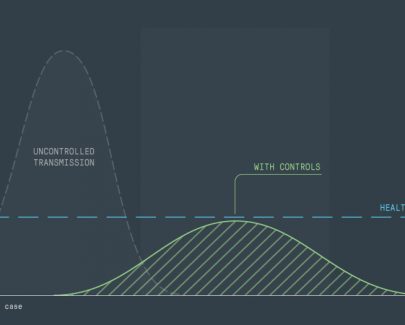
When we modelled the use of lateral flow testing at CDP we discovered something surprising: there was a high chance we could test everyone every day without preventing a single transmission of COVID-19. This application of mathematical modelling and bioscience gave us powerful evidence on which to base our response, allowing us to direct our efforts where they will have maximum impact: improved ventilation and new air filtration installations in our offices, labs, and workshops.

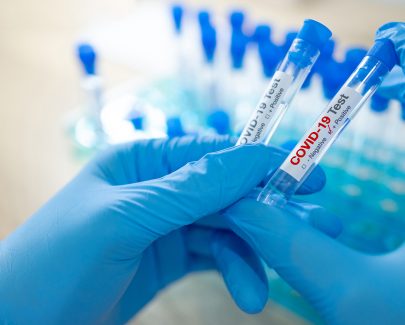
In common with all businesses, CDP has been closely watching developments in practises, and technology to keep our people and community safe from COVID-19 infections, while maintaining business operations. In the UK, lateral flow tests (LFTs) have been rolled out in a variety of settings over the last few months. These tests have major benefits in that they are low cost, give a result in half an hour, and require no medical expertise to administer. When the use of these LFTs became a possibility here at CDP, our COVID-19 team began drawing up plans for the roll out.

The two key questions were “who to test” and “how often to test”

As a multidisciplinary business with diverse capabilities and specialisms, our people work in a variety of locations and patterns. Most of these working patterns and risk profiles don’t match those of the early adopters of these tests, such as those in clinical and educational settings. As a result, we built a team to analyze the available data and tailor our use of the tests for maximum impact in our particular case. The team was led by myself, a simulation scientist, and my colleague Richard Owen, our Senior Consultant Bioscientist. The team identified the latest bioscience data available on the parameters of COVID-19 and the LFTs, then developed a bespoke Monte Carlo model – used to predict the probability of different outcomes – to model potential infections across the business. We used the popular Anaconda python platform for scientific computing.

What are the key inputs?

COVID-19 infection timeline

A viral infection typically progresses through several stages: when a person first catches the infection, the virus multiplies until they become infectious and often continues to multiply causing symptoms before the immune system is able to fight back and eliminate the virus. LFTs can provide an “early warning” when virus levels start to increase, but before symptoms start.

‘Effective R’ within CDP

We’ve changed our working environment in a variety of ways to reduce transmission potential. If this was 100% effective then LFTs wouldn’t offer any benefit, but we all understand that the measures are instead designed to reduce the risk to the lowest reasonable level. While we have no evidence for transmission on-site, we’re aware of some cases, unfortunately, brought in from the outside community and so we applied a “reasonable worst case” estimate of transmission.

Background population case rate

Clearly more cases of COVID-19 circulating outside CDP would result in more infected people coming onto our site and identification of each one could potentially prevent further infection. We recognized that this value has changed rapidly so we investigated the benefit of LFTs in a variety of scenarios.

Sensitivity: if a person with COVID-19 takes an LFT, what is the chance that it will give an accurate, positive result?

This property of the LFTs on the market is very important. While they can be more than 90% sensitive for symptomatic people, those people should already have isolated and obtained a “gold-standard” PCR (lab) test. When used in asymptomatic populations with well-functioning immune systems, the sensitivity can be as low as 3%. Considering the population demographic in this study compared to our own, our model took a less pessimistic view of LFT performance and erred on the side of higher sensitivity.

Specificity: if a person without COVID-19 takes a lateral flow test, what is the chance that it will give an accurate, negative result?

The LFTs on the market are thought to have a specificity of around 99.5%. While 0.5% might sound low, current estimates are that only 0.1% of the population has COVID-19; therefore the 0.5% false positives actually make up significantly more people than the number that are really infected. This is the source of some controversy as it can cause unnecessary isolation when the case rate is low; however, this risk was not considered a significant problem for us at CDP as we took a “better safe than sorry” approach.

What did we learn from the model?

There are multiple measures for the success of a testing program. In our analysis we simply looked at the number of people becoming infected, and how much this could be reduced by a variety of regimes. We ran the model many times with differing input values to evaluate the impact of testing regimes and understand the sensitivity of our results to the various inputs, which are either uncertain estimates or subject to change over time. In a result that surprised us all, we discovered that in our specific situation the benefit of LFTs is actually very small. Of course, the keywords here are “our specific situation” – by tailoring our model to CDP we gained maximum value for our own decision. However, this model is inherently not a generalized result and is not a valid evidence base for decisions in other contexts. There was a high chance that we could test everyone, every day (totaling thousands of tests) without preventing a single transmission of COVID-19.

What was the outcome?

We both verified that each small “cog in the machine” was behaving as expected and validated that the results of the whole model matched reality (we already had a historic dataset for what COVID-19 transmission looked like without lateral flow testing). We also further explored uncertainty in the driving factors, to assure ourselves that the remaining uncertainly in the inputs would not substantially change the outputs. Following this process, the non-intuitive result allowed us to confidently redeploy our efforts onto alternative COVID-fighting initiatives. Following the evolving scientific knowledge, we’ve improved the ventilation of our offices, labs and workshops and installed air filtration to reduce the potential for airborne viruses to move between people.

We inevitably enter investigations with preconceptions, but by applying science to the big decisions we’re able to confidently manage our choices and prioritize our resources to keep ourselves and others safe in this weird world. By combining our expertise in both mathematical modelling and bioscience, we created a team that is more powerful than the sum of its parts, demonstrating the power of mathematical modelling in making decisions.

|||||
Share:

CDP completes pilot manufacture of Point of Care diagnostic readers for rapid COVID-19 testing

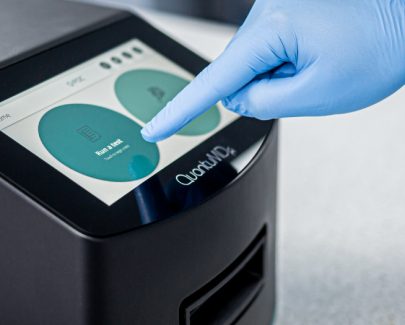
A team at UK product and innovation company Cambridge Design Partnership (CDP) has produced highly deployable devices for COVID-19 testing. CDP has been collaborating with diagnostics tech firm QuantuMDx to refine their Q-POC™ device and produce the first batch of readers to detect COVID-19 within approximately 30 minutes. QuantuMDx is now investing over £11 million to scale up production and introduce this rapid diagnostic solution to benefit patients and frontline health workers across the globe.

QuantuMDx is developing molecular diagnostic devices for a range of diseases and has developed and launched a highly accurate lab-based SARS-CoV-2 assay. Prior to the COVID-19 outbreak, the firm had commissioned CDP to produce prototype devices for CE marking. CDP worked through the first UK lockdown to improve the design of the reader and the first units are deployed at UK hospitals for COVID-19 testing studies.

“After beginning our partnership with QuantuMDx during 2019, we were delighted to be asked to collaborate with this innovative company once again, at a critical time. The team has been highly motivated by this crucial project and proud to contribute to the national effort,” says Dan Haworth, CDP’s Head of Diagnostics.

Colin Toombs, VP Research & Development at QuantuMDx, said: “We’ve worked in partnership with CDP since April last year, to undertake accelerated pilot manufacture of our Q-POC™ device, which is a portable DNA/RNA analyser offering rapid, sample-to-answer, molecular diagnostic testing at the point of care. The QuantuMDx and CDP teams have worked in close partnership to optimise our product development and manufacture devices to deliver testing for COVID-19. They are being released initially for research use, but we are rapidly moving towards CE-IVD of Q-POC™ for SARS-CoV-2 detection. Working together with CDP, we’ve established an ongoing partnership for the future.”

The device works by processing a swab sample, amplifying the target sequence specific to SARS-CoV-2, which causes COVID-19, and then detecting whether the virus is present. This all happens within a sealed cartridge that is controlled by the reader with minimal user involvement.

“Within approximately 30 minutes from sample collection, the device will give an accurate answer to whether the patient has COVID-19” says Dan.

These first new readers have been designed and built at CDP’s HQ in Cambridgeshire, where the company has short-run manufacture capability alongside its R&D facilities.

CDP’s team working to develop the QuantuMDx device includes mechanical and electronics engineers, software engineers, regulatory experts and manufacturing engineers.

“We worked at speed to design, build and test these important devices as quickly as possible. We are all thrilled to play our part in beating COVID-19 and we congratulate QuantuMDx on moving to mass manufacture,” added Dan.


For further information and media enquiries, please contact: media@cambridge-design.com or call 01223 264428

Dreaming big during COVID-19
Share:
Find the authors
on LinkedIn:

Dreaming big during COVID-19

Product designer Laura Sierra is working with Cambridge Design Partnership as part of the marketing team. Here, she reflects on what she learnt during an international design competition, the Dream Big Challenge.

Laura says: I’m an industrial product designer from Colombia, now specialising in marketing and communications for the design world. I’ve studied for a Masters degree in Science and Marketing at Anglia Ruskin University. This led to me working on a project here at CDP, communicating all the amazing and innovative work the company does to the wider world.

In 2015, I had a wonderful opportunity to join a team competing in the Dream Big Challenge. It’s an international design competition for youth teams and to my surprise and delight, our team won. The whole experience was life-changing. Usually, the challenge takes place in a vast hall in Barcelona, where teams have just three hours to come up with disruptive and exciting solutions to design challenges.

This year, I was scheduled to get involved again. But, of course, Covid-19 meant that the plan for hundreds of young international designers getting together was never going to happen. The contest is sponsored by the likes of Santander and Nike. Cancellation would have been a major disappointment to all concerned.

But instead of giving up on the competition altogether, the organisers moved it online. So we competed anyway, using communications technology such as Zoom, working against the clock. This year’s online event attracted 900 competitors from all over the world. More than 350 projects were submitted, making this last-minute switch online a huge success.

My team chose to focus on the field of Education, as several of us had a keen interest in this area. In our home country of Colombia, a substantial percentage of children are not able to go to school and are also unable to reach the internet. So they miss out on education entirely. Could we think of a way to reach them?

To our delight, our project, called Ekko, scooped the third prize in the Education category. Our project was based on the idea of reaching children in remote areas via SMS messaging and radio. We aimed the project at pupils from 12-18 upwards, who could follow a class on the radio and interact with teachers via SMS. Many families have access to phones and radios in Colombia but do not have computers or access to the internet. And, of course, this model has potential in so many countries around the world. In Colombia, 47.7% of the population (23 million people) do not have internet access in their homes.

I learned a lot from the hectic three-hour webinar in which our team designed this education programme. Much of what I learned is proving very useful in my other online collaborative work during the Covid-19 crisis. Here is what I discovered about teamwork when you’re all working remotely under lots of pressure:

1. Have the right tools

I soon realised that it is important to have the tools which allow you to migrate between online and offline with ease.  Make sure you have digital tools, creative materials and can do (and share) fast sketching so that you can share ideas as seamlessly as possible. In the competition, colleagues were connected from other places, even in different time zones.  Working remotely using tools like Zoom, Google Meetings and WhatsApp was possible but also very intense. There is no doubt that online events change human interaction and experience. It is essential to have the proper tools to hand, allowing creatives and entrepreneurs to develop their projects remotely in a flexible and stress-free way.

2. Find your common purpose

A common aim really helps an online project. If you have a clear reason why you’re undertaking the work, things will be much easier. In our competition there was a choice of five different sectors: Health, Sport, Education, Work and Sustainability. I worked with university professors Andres Rubiano and John Higuera. All of us are passionate about social innovation and wanted to change education, making it fun, free and interactive. This really helped our motivation when things didn’t go smoothly.

3. Creativity is key

Using your imagination in challenging times is more important than ever. An open mindset allows us to manage challenges. I truly think that each day is an opportunity to learn and design a better world. The key is to let our imagination fly, allowing it to create and to not panic about failing. This competition taught me that, even during a lockdown, working remotely, it was possible to connect online, study other projects, explore new ideas and connect with new people.

In conclusion: I’m delighted to say that our project, Ekko, is now in the throes of becoming a reality in Colombia. It looks as though those tumultuous three hours of intense activity could end up changing the lives of thousands of children for years ahead. That really is a good result, isn’t it?

|||
Share:
Find the authors
on LinkedIn:

COVID-19 Modelling

Models are everywhere – anyone who has played a computer game has encountered a model, but in a pandemic, mathematical models are vital for understanding the dynamics of transmission, disease progression, healthcare needs and the overall outcome on the population.

Recent real world events have shown that critical decisions are being taken based on model data. Many people are still uncertain of how models work which can lead to them being met either with undue suspicion or absolute faith. In reality models are incredibly powerful, as you can test different courses of action quickly so an optimised response can be formulated, but their limitations need to be understood.

What is modelling?

Here we try and explain the basic principles of models, how mathematical models can help and what their limitations are.

Mathematical modelling involves making a mathematical representation of a system where the expected outcome of changing various parameters can be calculated. This means you can examine the outcomes of many scenarios using the same model. For example, the models reported on recently look at the spread of Covid-19 with different levels of social distancing and other interventions such as school closures. A model of a complex system is usually a collection of many separate models, each a breakdown of a different part of the system. For example, the first thing to consider when modelling the spread of disease is infection. You need to know certain things such as;

  • how likely is the infection to spread person to person with each contact?
  • how often do people come into contact with each other?

These values are called parameters and can be changed depending on the situation. The equations behind epidemiological models for the spread of infection are well established, but the parameters will vary between countries depending on things like the breakdown of age and population density. Crucially, epidemiological models rely on data. Sourcing these parameters is all part of modelling and assumptions have to be made.

For recent UK modelling this data came from a number of diverse sources. Census data could give a good indication of the age and distribution of households, data on social connections broken down by type (work, school, home) and age came from a BBC citizen science project. Even knowing this, data on class sizes, commute distance and company size were then needed to create a virtual population to simulate the spread of the disease.

Models can also show where collected data may be inaccurate. Recent models monitoring the situation in Spain found that the number of COVID-19 deaths reported appears to be significantly underestimated, given existing data on the expected seasonal number of deaths in a normal year and data on the total number of deaths recorded in the past few weeks (by any cause).

Simple demo of infection model.

This is a very simple model purely looking at infection.  When ‘infected’ balls come into contact with others susceptible to the disease there is a probability that the other balls will become infected. There is no death rate, everybody recovers and is then immune.  The speed of the balls represents the number of social contacts. The probability of infection, the proximity for infection, the length of the infection all need to be set.  Even in this toy model many assumptions have been made.

What changed with the recent modelling?

Having modelled infection and the population, the outcome needs to be considered. What proportion will recover and develop immunity? What proportion of people will become hospitalised? Of them, crucially, how many will need intensive care and specialist equipment like ventilators. All these parameters depend on the disease itself. Unfortunately, Covid-19 is practically unknown, researchers have had only a few months to study it. That means there has been a degree of uncertainty with the parameters fed into the models.

One widely reported model that looked at the impact on the UK population was led by Imperial College London. Having updated their models with better information from Italy on the proportion of patients requiring  intensive care beds, it found that the UK’s National Health Service would not be able to cope without further action, which led to the recent dramatic change in government policy.

In the report, the team presents a pandemic curve for different degrees of potential government intervention. The different measures that they considered the impacts of were: no intervention, household isolation, social distancing, and school closures. With no intervention, the model predicted a need for hospitalisation thirty times what the current UK healthcare system can manage. Only by combining all of the measures would the healthcare system not be overwhelmed.

This is one of the graphs from the Imperial paper [1]. The vertical axis shows the number of critical care beds needed through time in each scenario. The blue region shows the time period on the horizontal axis where various social distancing is applied. The horizontal red lines show the maximum number of NHS critical care beds available. The various lines, explained in the key, show the difference between doing nothing,  applying some social distancing and with full school and university closures. This graph shows that without all measures being taken the number of available beds would be exceeded.

What happens next? What about the large peak when the measures are withdrawn?

We need time. Time to get better testing, time to find new treatments and more ventilators. The current model suggests the current restrictions should keep the number of cases at a manageable level for the next few months.

The Imperial model makes important assumptions. Firstly, it assumes that measures put in place to control the spread of the virus are all lifted at the same time, which is neither realistic nor advisable. Secondly, it assumes that recurrences of the outbreak after the initial lift of restrictions continue for an indefinite period. In reality, this may not happen due to people acquiring immunity or the availability of a vaccine. Finally, it doesn’t account for infected cases that have gone undetected or for tools such as contact tracing, which can help break the chain of transmission.  All of this will affect the number of people who become infected once the measures are lifted.

competing model by Oxford University followed the publication of Imperial’s model. This model stated that under-detection of cases could be high, indicating that a significant part of the UK population could have already contracted the virus. This caused a big media response, however, given the data available it seems an unexpected conclusion to draw, as epidemiologist Adam Kucharski pointed out.

The Imperial model has since been refined and other competing models have been published, but the consensus remains.

It’s important to remember that the model is only based on what we know now. Models are continuously updated. Research teams are now focusing on measuring the impact and preparedness of healthcare systems by predicting the number of hospital beds, ventilators and testing kits needed based on what the models are telling us. They are also looking at the big question of the length of time needed before lifting restrictions and how to prevent a second wave of the outbreak, and models will help us to understand this better.

So in a few months the situation will have changed, the model will be updated with more information and the curve may look very different. Data should start to emerge to confirm level of immunity gained from recovering from the disease. More hospitals are currently being built and there is a national effort to produce more ventilators. Doctors have already identified the response that causes some patients to develop severe symptoms while most have a mild version, which may make it possible to screen people to detect who is most vulnerable or identify better treatments.

Given the rate of learning in the last 3 months the picture may be very different when more accurate assumptions  are fed into the models.

Once a vaccine has been developed, we may  require modelling for rolling it out to best effect, as well as monitoring changes in the virus. This will feed into the ongoing body of research for this pandemic and will help us prepare for future pandemics.

While models are not always accurate, they help build a consensus of understanding that informs policy and helps save lives. Taking the right measures at the right time is key in the fight against Covid-19 and through modelling we can make the best-informed decisions possible from the data available.


References

[1] https://www.imperial.ac.uk/media/imperial-college/medicine/sph/ide/gida-fellowships/Imperial-College-COVID19-NPI-modelling-16-03-2020.pdf
[2] https://www.gov.uk/government/groups/scientific-advisory-group-for-emergencies-sage-coronavirus-covid-19-response