||||
Share:
Find the authors
on LinkedIn:

Empowering innovation through collaboration

WEBINAR

Empowering innovation through collaboration

With Ben Strutt
23 JUN 2021

As part of GIF 2022 Virtual edition, Ben Strutt spoke to Sharon Chan (Head of JLABS Asia Pacific at J&J) and Andre de Fusco (Co-Founder & CEO of Hawkeye Bio) about the value of collaboration to help achieve innovation objectives.
Complete the form below to watch the webinar

||
Share:
Find the authors
on LinkedIn:

Emotion by design

WEBINAR

Emotion by design: Creative leadership lessons from a life at Nike

With Martha Hodgson
23 JUN 2021

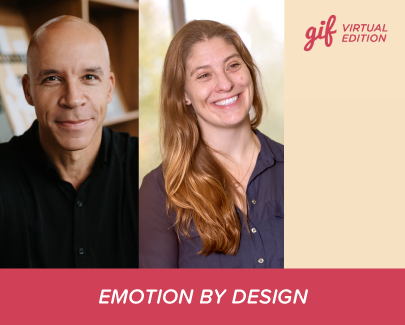
As part of GIF 2022 Virtual edition, Martha Hodgson (senior insight and strategy innovation consultant) spoke to Greg Hoffman (author and ex-CMO at Nike) about the moment of inspiration that led him to Nike, how the mantra of ‘dream bigger’ has influenced him, and the art and science of innovation.

Complete the form below to watch the webinar

|Jessica Platt & Martha Hodgson discussing FemTech|||Clare Beddoes|
Share:

Improving drug delivery systems for self-administration

WEBINAR

Improving drug delivery systems for self-administration

With Bastiaan deLeeuw, Uri Baruch, Clare Beddoes and Chris Houghton
8 JUN 2020

As self-administration in the home setting grows in importance, our panel of experts discuss the continuous drive to design and improve drug delivery systems for self-administration and home-use.

Enjoy the full debate where Bastiaan deLeeuw chairs the panel, gathering insights from Uri Baruch (Head of drug delivery), Clare Beddoes (Medical innovation and research consultant) and Chris Houghton (Head of FMCG).


Connect with the speakers

Bastiaan deLeeuw

FemTech Lead and Associate Insights Researcher

Uri Baruch

Senior Insights & Strategy Consultant

Clare Beddoes

FemTech Lead and Associate Insights Researcher

Chris Houghton

Chris Houghton

Senior Insights & Strategy Consultant

How to unlock the potential of digital
Share:

How to unlock the potential of digital, to design products for the benefit of all stakeholders

WEBINAR

How to unlock the potential of digital, to design products for the benefit of all stakeholders

With Clare Beddoes
8 APR 2020

Done well, digital can enhance the development of healthcare devices and help provide benefit to all stakeholders. But before applying digital as a tool to your device development, Clare Beddoes (Senior Medical Innovation & Research Consultant) highlights some key questions:

Why do you want a digital solution? How will you implement it? What do you want to achieve? And who will benefit?

Join Clare as she shares her valuable insights.

Connect with the speaker

Clare Beddoes

Clare Beddoes

Senior Medical Innovation & Research Consultant

|HandiHaler
Share:

Human factors in your hands: Usability for more than just regulatory compliance

WEBINAR
With Louise Place and Lucy Sheldon
25 FEB 2020

The world of medical devices has been combining user experience and the understanding of patient capability since the advent of IEC 62366, and the US Food and Drug Administration (FDA) ‘Draft guidance on applying Human Factors and Usability Engineering to optimize Medical Device design’. These have moved development on from purely solving the engineering problem towards resolving use errors and designing with the end user in mind.


Recently both the FDA and the European Medicines Agency (EMA) released guidance that promoted a more user-centred approach to pharmaceutical development. The FDA ‘Draft guideline on patient-focused drug development’ and the EMA ‘Reflection on pharmaceutical development of medicines for use in the older population’ suggest that regulatory bodies see the next step in drug delivery as considering the patient from the early stages of formulating new medicinal products.

For most patients the simplest way to take a medicine is an oral tablet. However, there is an increasing trend away from small molecules towards large molecule peptides and proteins with an overall move towards the delivery of Biologics. Their sensitivity to the ‘first-pass effect’ of the human liver limits delivery routes, with parenteral (injection-based) administration taking the bulk of the market share. Couple this with a preference for self or caregiver administration away from a hospital environment and an increased drive towards patient-related outcomes. It then becomes clear that a product that can reach the intended site of action with the correct dose at the right frequency cannot be achieved without serious consideration of the intended user and recipient.

In the devices’ world the process around determining if the user can operate the device safely and effectively is well established. Firstly, consideration is given to their capabilities, such as their manual dexterity and grip strength. For example, whether a Rheumatoid Arthritis patient has the finger or hand dexterity to press a button to deliver their medicine with an auto-injector. This is documented within the Use Specification for the device. Then usability studies conducted throughout a device’s development (i.e. Formative evaluations) where real people simulate use, allow knowledge of how people approach a device to be fed into the design process so it can be as intuitive as possible. Lastly usability validation or summative studies test the device with a representative population of users to confirm that the final version and its labelling can be used safely and effectively.

Historically, pharmaceutical products that don’t have a device element have not needed to consider the end user to the same extent, and the focus has been on developing a stable formulation. As an example, an older patient suffering from dysphagia (difficulty or discomfort in swallowing), where solid tablets may stick in the throat or may just be too big, may have several options. These may include water dissolvable tablets or powders, capsules that can be opened to allow sprinkling of contents over food or tablets that can be broken in half for easier distribution. At first glance, these provide different solutions for dealing with the difficulties. However, different formulations may result in an increased cost to the patient (cf. the cost of solid tablet paracetamol vs dispersible paracetamol in the UK) or even need a different way of administration of a tablet that, on the surface seems identical. (for example comparing a water dissolvable tablet with one that dissolves on the tongue). Patient information leaflets and instructions are not always read or understood, especially with repeat prescriptions of what may seem to be the same medicine. This may result in the patient taking their medicine in the wrong way with the potential for varying results. So the best option for the user may in fact be a completely different presentation that makes differences obvious.

Underlying this is the evolution of drug delivery technologies with new capabilities such as 3D printed medicines and custom-made solutions for individual user needs. Patients are becoming more informed about their treatment and these resources can also play a part in the reduction of user error and improving patient outcomes.

Whilst every problem is not necessarily solvable through the patient-centred-design of the formulation, factoring it into the development process at an early stage should allow for potential shortfalls to be addressed with an appropriate management strategy.

To learn more about how human factors usability engineering can benefit healthcare product development, watch our webinar with Louise Place (Head of Regulatory Affairs) and Lucy Sheldon (Human-Centred Design Consultant).

Dr Pari Datta|||Dr Pari Datta
Share:

6 steps to build winning biosimilar defence strategies through user and technology mapping

WEBINAR
With Pari Datta
14 MAY 2019

The market for biosimilars is growing rapidly at over 30% per annum, as increasingly more biological drugs are going off-patent and the rate of regulatory approvals increases. The major high-value mono-clonal antibodies are considered as the big opportunities by companies in the bio-similar space, including for example the TNF-alpha inhibitors. Although bio-similar development and regulatory hurdles have been more challenging than expected, developing a robust biosimilar defence strategy is still a vital and difficult process. Solutions within a strategy can range from relatively simple, such as powerful new counter-biosimilar messaging to more complex, value-added propositions which include novel delivery devices, diagnostics and even digital elements. Questions range from how to discover new underlying opportunities from which to build a defence strategy and how to deliver technology-enabled propositions which can make them really possible.

In this webinar, Dr Pari Datta (Senior Innovation & Research Consultant) demonstrates how simple user experience mapping methods can reveal truly-original opportunities throughout the journeys of the patient, HCP and even the product during the process of treatment. From these opportunities, technology mapping will be used to show how the latest technologies, from digital to formulation, can be identified or even conceived to create innovative value-added propositions. The key elements which need further development within each proposition will be considered – from satisfying multiple stakeholders, business model development to building the evidence required to generate confidence in its future commercial success.

Latest Prototyping Methods That Unlock Digital Innovation
Share:

How the latest prototyping methods unlock digital innovation

WEBINAR

How the latest prototyping methods unlock digital innovation

Wtih Tom Lawrie-Fussey
1 MAR 2019

Digital is a term that has become a way to describe how our products, and our interactions with them, mature from simple, local mechanical interfaces, to complex, distributed, connected eco-systems. A key driver for this is the desire of people and companies alike to better close the loop of product and experience, and digital services enable this ‘value’ to be extracted and monetised.

In this session, Tom Lawrie-Fussey (Digital Services Specialist), introduces the need for a pragmatic route to digital, and how Cambridge Design Partnership have created a number of toolkits to help our clients to prototype digital services. These services range from better capturing quantifiable evidence of real in-home consumer usage, through to creating a semi-simulated user experience, where technology propositions can be evaluated with consumers, long before the technology itself is actually implemented.