Six steps to build successful biodefence strategies

Biosimilars are taking on the multi-billion-dollar blockbuster drugs of today, with some sources suggesting that the market will be worth greater than $20 billion per annum within the next couple of years. The growth is being driven by factors such as healthcare systems looking to reduce costs and the growing prevalence of chronic diseases like diabetes and cancer.

Oncology and auto-immune disease therapeutic areas, where there are many significant molecules are a focus for biosimilars – with many of the hero drugs going off-patent. Last year, erlotinib (Erbitux) went off-patent. It is being followed by trastuzumab (Herceptin) and bevacizumab (Avastin ) this year. And by 2025, ipilimumab (Yervoy) and densoumab (Xgeva) will join them. Defence strategies against biosimilars have included formulation changes which enable a change in mode of administration, from infusion to subcutaneous injection. Others have included improved molecules in the same drug class or even exploiting a completely new drug class!

Herceptin is a good example as Roche reformulated it for subcutaneous use in 2014. The result was extended patent protection and a commercially-successful defence against the chasing pack of biosimilars. Other strategic moves by Roche have included the launch of Kadcyla, an antibody-drug conjugate which delivers a chemotherapy using the HER2-receptor targeting mechanism of Herceptin.

These successful strategies all share one thing: they are based on innovations that answer user needs through technology. At Cambridge Design Partnership, we work on the ethos that innovation arises by answering user needs through the right technology – no matter which market, application or industry. This is particularly effective in those difficult situations where a market is stagnant or declining, when a deeper understanding of user needs becomes essential.

As an example, in the smartphone market sales are declining. Users need a smartphone which is large when being used, but small when being stored and transported, so foldable smartphones may arrest this decline. Novel screen technology is being developed to answer this “unmet need” in the market: the iPhone that becomes an iPad when you are using it for watching movies. In a similar way, the switch from intravenous infusions to subcutaneous injections really answered user needs, from both the patient and healthcare perspectives, by removing the time required for a patient in a hospital to receive an intravenous infusion.

At CDP we use our in-house user and technology mapping techniques to discover and build the connections that lead to such novel and inventive solutions. There are six basic steps to making these connections:

1. Plot the overall care pathway around the drug.  For Herceptin, there may be opportunities to innovate at other parts of the care pathway than the administering drug, such as the initial companion diagnostic tests or even managing potential complications after treatment.

2. Map the user steps within interesting parts of the pathway. The initial problem of how to innovate around Herceptin is broad and overwhelming! By breaking it into its parts, we can identify simpler problems to solve and target those in which we have a greater chance of success. One approach is to break down the process of administering Herceptin into each single step executed by every person from its manufacture to delivery. This can be achieved through interviewing users, following national guidelines, reading blogs watching videos – with the information being analysed and interpreted in a systematic manner by a skilled interviewer/ analyst. Those steps in which improvements in time, costs, performance and experience can be made should be highlighted, eg. the injection of the drug slowly over 2 to 5 minutes.

3. Identifying the issues and their causes. For each of these steps, there are a number of issues which need to be solved in order to make these improvements. If we can identify the causes of these issues, we can work out how to solve them. For instance, a key issue in injecting Herceptin over 2 to 5 minutes is that it is difficult to keep the injection stable over 5 minutes as caused by the user’s hands beginning to shake. Another issue is that the injection device has to be held in place for up to 5 minutes, caused by the subcutaneous space under the skin only having a finite volume to receive the drug.

4. Formulate simple strategies to counteract these causes. Now that we know the issues and their causes, we can devise simple strategies to overcome them. So the user’s hands are shaking during delivery – can we remove the need to use hands during delivery? The subcellular space is too small – our strategy is to make it bigger.

5. Discover the solutions through the strategies. By expressing the strategy in simple language, the problem can be accessed by people from different background and assumptions are broken. Can we really remove hands from the process of administration? Can we really expand the sub-cellular space? Experts from many domains will come up with solutions through the strategies which align with their knowledge. Solutions which will enable improvements in injection range from large volume on-body injectors to enzymes which can break down the barriers in the sub-cellular space to increase its actual size!

6. Complete the map using multidisciplinary experts and other sources. It is important now to complete the map. Every improvable user step must be mapped, identifying the underlying issues and causes to formulate simple strategies to counteract them. This will give confidence that all potential areas have been explored, and the best possible solutions are being taken forward. Often repeated issues, causes and strategies occurring across the map can lead to the highest-impact innovations being identified.

These structured mapping techniques enable creative solutions; they are comprehensive in their approach to identifying the right defence strategies. They are competitive by helping to find technology spaces in the market and getting there before the competition. And most of all, they are user-centred, more likely to lead to market success by deeply interpreting stakeholder needs. They lead to innovative markets, technologies, propositions and partnerships from which powerful all-encompassing biosimilar defence strategies can be built.

You can hear me speak more on this topic at Pharmapack, taking place on 6 & 7 February in Paris. I’ll be talking in session 4: New in Biologicals and Biosimilar Drug Delivery Devices, 7 February at 11am. Cambridge Design Partnership will also be exhibiting on stand C78 where you can meet our drug delivery and innovation experts.

Is medical device regulation failing to ensure patient safety?

For the last decade I have been part of the medical devices industry, most recently as part of a design consultancy firm specialising in medical device innovation. In the last few years our world has been shaken with reports of the failure of medical device implants and the insinuation of industry wide misconduct.  The headline statistics are certainly shocking, in the investigation recently published by the ICIJ, their research suggests that in 2017 nearly 300,000 patients were harmed by medical devices in the US alone. Clearly something is wrong.

However, personally I have never come across anyone in the industry who wishes to cause harm to a patient, in fact it’s completely the opposite. Where I work, it is our company’s primary policy to improve lives through innovation and the stories that have hit the headlines do not to make it clear that most people in the industry are diligently working towards making sure all new devices are safe.

I spend my life around medical devices. These include items as varied as a surgeon’s scalpel, an insulin injection pen or a portable oxygen delivery system. They also include implantable meshes and spinal support systems and complex hospital equipment designed to keep extremely sick people alive.

Each device I work with is the product of many years of design and testing before it is allowed near a patient. During that time, it undergoes substantial testing to ensure that it works according to the design intent, for the conditions it is expected to experience and the intended life both on the shelf and in use. Biocompatibility testing is carried out to ensure that anyone encountering contact with materials does not suffer an adverse reaction and a robust risk management process, including medical professional opinion, underpins all this to attempt to account for foreseeable harms from the use of the product. At every stage in this development process the concern is for the patient and one of the most common questions asked is whether you would be happy for a close relative to use the final product.

If a device does reach a human being for clinical evaluation, and not all do, the use in that person is strictly controlled. The safety profile, as far as possible, needs to be determined and the risks of the use of the device, as well as the benefits, need to be established and controlled as far as possible. In the United Kingdom, this assessment is carried out by the Medicines Healthcare Regulatory Authority (MHRA) and it takes several months for agreement, during which this information is assessed. It is also usual for an independent Research Ethics Committee to confirm the well-being of trial participants and agree to the trial. Once agreement is obtained recruitment may begin and appropriate volunteers may start a trial once they have signed an informed consent form which details the potential risks and benefits of the study. All trial participants may withdraw from a trial at any time without needing to give a reason.

Prior to a device being launched on the open market in Europe and depending on risk classification (the lowest risk devices can be launched after the creation of appropriate technical document with limited oversight), the summary of all the development documentation detailed above, and more is assessed by a Notified Body. These organisations, whilst not part of governmental structure, are designated by their national competent authority (e.g. MHRA) as having passed a strict assessment which confirms that they have the relevant in-house knowledge to question and approve a device for use. Post market surveillance also takes place to ensure that as more information becomes available through use, appropriate changes are made to the design and even withdrawal of product if it is deemed necessary because of a safety risk.

Europe is currently poised to welcome an update to the Directives and Regulations governing the development and assessment of Medical Devices to the market. This is the culmination of nearly a decade of discussions from the European Commission downwards to ensure the safe development of medical devices. The new Medical Device Regulations (MDR) place stricter requirements on the in-patient testing of devices, the post market follow-up (especially with regard to implantable devices) and the re-classification of some devices into higher risk categories. All medical devices, both yet to be conceived and those on the market already, must meet these regulations as manufacturers will no longer be permitted to rely on historical approval.

I am not claiming my world is perfect and the statistics show this. But carefully implemented medical device regulation maintains and promotes high standards of safety and efficacy. I’m proud to say that here at Cambridge Design Partnership the focus is always on the welfare of the patient. I wouldn’t have it any other way.

The new medical device regulation & the applicability of article 117 to medicinal products

This article was first published on Drug Development and Delivery.

“Those who expect moments of change to be comfortable and free of conflict have not learned their history.” For many involved in the medical and pharmaceutical industries within the last few years, this quote – attributed to American historian Joan Wallach Scott – has never been more true. From the impending switch to the Clinical Trials Regulation to the implementation of the Falsified Medicines Directive, and the evolution of the Medical Devices Regulation (MDR) or the current uncertainty around ‘Brexit’ in Europe, change is everywhere. With so many new developments in progress, it is almost impossible to keep track of all the required updates to procedures – with a very real risk of missing something critical.

Article 117 of the new MDR1, has the potential to be one such pitfall. Buried deep within the final chapter of the document, just before the annexes, is the somewhat innocuously titled ‘Amendment to Directive 2001/83/EC’. For many medical device manufacturers, this article is likely to be mostly disregarded, as Directive 2001/83/EC2 – also known as the Medicinal Product Directive (MPD) – has historically not been an essential part of placing a device on the market. For companies whose focus is primarily on the MPD – like many pharmaceutical and biotech companies – this update may pass completely unnoticed.

This article is primarily focused with the impact of Article 117 in Europe on the combination of a drug and a device, where the primary mode of action is performed by the drug and the two products are combined in a single, integral product which is exclusively for use in the given combination and not reusable. Some examples of products that would be categorised in this combination include a single-use, disposable auto-injector or a disposable pre-filled metered dose inhaler.

Differences between US and Europe

The US and EU have very different systems for determining assessment routes for drug (or biologic) and device combinations.

The US refers to these products as combination products and selects a lead division with primary jurisdiction based on the primary mode of action. The other division is also consulted for the relevant aspect of the product.

In Europe the process is slightly different since the term ‘combination product’ is not officially recognised – albeit more frequently used, even in the absence of an official “status”. Whilst products are still assessed based on the primary mode of action, this determines one of two primary assessment formats; either medicinal product or medical device.

The Existing System

The MPD requires evidence of CE marking when it is applicable but does not detail requirements for non-CE marked devices.

Under Article 1 sub-part 3 of the Medical Device Directive (MDD)3, devices in which ‘the device and medicinal product form a single integral product which is intended exclusively for use in the given combination and which is not reusable’ were governed by the MPD with the additional applicability of the essential requirements of Annex I to the MDD with regard to safety and performance-related device features.

Devices which do not meet this clear definition were governed by the MDD, unless they were in vitro diagnostic devices or active implantable devices governed by Directive 98/79/EC4 and Directive 90/385/EEC5 respectively.

What’s changed?

Article 117 of the MDR legally amends Annex I, Section 3.2 point 12 of the MPD as follows:

‘(12) Where, in accordance with the second subparagraph of Article 1 (8) or the second subparagraph of Article 1 (9) of Regulation (EU) 2017/745 of the European Parliament and of the Council (*), a product is governed by this Directive, the marketing authorisation dossier shall include, where available, the results of the assessment of the conformity of the device part with the relevant general safety and performance requirements set out in Annex I to that Regulation contained in the manufacturer’s EU declaration of conformity or the relevant certificate issued by a Notified Body allowing the manufacturer to affix a CE marking to the medical device.

If the dossier does not include the results of the conformity assessment referred to in the first subparagraph and where for the conformity assessment of the device, if used separately, the involvement of a Notified Body is required in accordance with Regulation (EU) 2017/745, the authority shall require the applicant to provide an opinion on the conformity of the device part with the relevant general safety and performance requirements set out in Annex I to that Regulation issued by a Notified Body designated in accordance with that Regulation for the type of device in question.’

For many medicinal products this amendment will not introduce an onerous change as a device that is non-integral to the medicinal product will still need a CE mark with the appropriate conformity contained within the declaration of conformity.

The key element of this change applies to integrated, non-reusable products where the drug element has the primary mode of action. In essence, the device element of a medicinal product – when integral, non-reusable and intended exclusively for use in the given combination – needs to conform to the Annex I (MDR) general safety and performance requirements without the requirement to be regulated as a CE-medical device. As part of demonstrating this, a Notified Body opinion must be incorporated into the marketing authorisation application for the medicinal product.

What does it mean?

With an increasing shift away from small molecule drugs towards biologics and an increased desire for patient self-administration to reduce the burden on healthcare systems, the option to combine a drug formulation with an integrated delivery device seems increasingly likely. There are some key implications of the Article 117 requirement that will require careful thought and implementation, not least that, as of the date of writing, no decision has been made as to how a Notified Body would issue an opinion on the device element of a medicinal product.

The overall implication of the MDR is that the device element of the medicinal product would not be treated as a fully CE-marked device but the Annex I requirements would still need to be met – as indeed was the case with the MDD. It should be noted however, that Annex I of the MDR has been expanded significantly and as such, it is likely that application for a medicinal product device element would not be dissimilar to that for application of the CE-mark; with the declaration of conformity being the significant omission. This also allows for continuing to handle the product development under the MPD and pharmaceutical practices.

It is assumed that a Notified Body would not issue a CE-mark certificate and it is probable that a Notified Body would issue some form of report to the manufacturer, detailing an opinion of the conformity of the device. This report could be included either as part of the marketing authorisation application or as a separate communication to the competent authority.

The question then arises as to the format of any submission to a Notified Body and the information that would be assessed as part of that submission. For a CE mark applied to a medical device, this information would typically be presented as part of the summary technical documentation (STED) rather than in the appropriate section of the Marketing Authorisation Application (MAA) as for the device element of a medicinal product. It is possible that section 3.2.R of the MAA, containing the device elements could be submitted to the Notified Body however, it is likely that there will need to be some revision of this section to ensure it captures all of the required information. Alternatively, a new section could be created in the application to assess the Annex I requirements separately.

Clarification is also needed as to how a Notified Body would form an opinion on the device element of a medicinal product. Currently, medical devices are assessed on a risk-based principle, with the device classification determining assessment routes and additional requirements. Device elements of medicinal products are likely to automatically increase the risk classification due to the presence of the drug product. It should also be considered that even a device element that would be classed as a class I medical device – and thus subject to self-certification – would still need a Notified Body review and opinion.

Within the submission itself, it is worth considering that the system should not be simply split down the middle between the device element and drug. Whilst it is true that certain elements lend themselves to one route or the other – for example formulation versus material selection – many cannot be assessed in isolation. Certain attributes have relevance to both the drug and device elements. For example, the siliconization level in a pre-filled syringe may be impacted by the drug formulation but is also key when considering the mechanical forces required to operate an auto-injector, especially over a claimed shelf life. Therefore, it is important that assessment of any individual element also accounts for the interface and interaction of that element with other parts of the system. This is a critical element where the MAA and Notified Body evaluation may differ in their overall assessment of risk.

After Approval?

Post-market surveillance (PMS) is one of the most significant updates captured in the MDR. There is an increased requirement for manufacturers to take a more proactive approach to PMS and actively assess performance of medical devices once they are launched on the market, rather than purely relying on user feedback. Medicinal products are subject to their own PMS requirements but, it is likely that the device elements of medicinal products would have an increased requirement for PMS in line with the MDR.

Post-approval changes to a medicinal product with an integrated device element would likely need to be captured via the medicinal product variation procedures and would be assessed by the competent authority. It is not clear at which point a Notified Body assessment would be required, although it is likely that significant changes to the device element would require Notified Body involvement. The question arises as to when changes to one element of the product cease to impact on the other element(s) and thus when the requirement for Notified Body opinion would be triggered.

Existing marketed products pose an interesting question under Article 117. The MDR has been very clear that ‘grandfathering’ of existing products is no longer permitted and new certificates need to be issued for all medical devices in class 2 or higher. The case is not so clear cut for medicinal products and their integrated device elements, as such products fall under the medicinal products system. It is possible that implementation of the MDR would not apply to products previously assessed by a competent authority as part of a MAA. If this were not the case and Article 117 changes were applicable, significant remediation activities would be needed across industry. As with much of the regulatory situation at the moment, the position is currently unclear and may not become so until it is too late to change without significant resource and cost expenditure.

What next?

One of the obvious major impacts of the introduction of Article 117 is the need for pharmaceutical companies to involve a Notified Body. This has implications given the other changes in the medical device world in Europe. With the implementation of the MDR and the potential loss of UK notified bodies due to ‘Brexit’, notified bodies are currently limited on resource and may not be taking on new clients for the foreseeable future.

Selection of a suitable Notified Body also involves the capability of that Notified Body to assess a specific product type with an increased requirement for that Notified Body to demonstrate the relevant expertise in a product type. The additional complication is that currently, designation of notified bodies under the MDR has not been completed, so it is unclear as to which product codes notified bodies may assess against, which a Notified Body has chosen not to apply to assess, or which are relevant for medicinal products with integrated device elements.

Conclusion

In the regulatory arena, regulations and guidelines are always open to interpretation and many regulatory professionals have been known to utter the words ‘it depends’ when called upon to clarify. This seems unlikely to change with the implementation of the Medical Device Regulation, especially with regard to Article 117. What is clear however, is that with so much detail currently undefined and likely to remain so until the date of application in May 2020, impact assessments need to be performed and companies need to have open discussions with notified bodies, if not already started, to ensure that appropriate support is available when needed. The time, effort and skills required to implement the coming changes should not be underestimated and, as ever, the clock is ticking.

References:
1. Medical Device Regulation. Council Regulation (EU) 2017/745
2. Medicinal Product Directive. Directive 2001/83/EC
3. Medical Device Directive. Directive 93/42/EEC
4. In Vitro Diagnostic Directive. Directive 98/79/EC
5. Active Implantable Device Directive. Directive 90/385/EEC

Medical Devices Regulation

Medical Devices Regulation (EU 2017/245) – Are you ready for 2020?

More than a year has passed since 25th May 2017 and the start of the three-year transition period from the Medical Devices Directive (93/42/EEC) and Directive 90/385/EEC on active implantable medical devices (AIMDD) to the Medical Devices Regulation (EU 2017/745).

But what does this mean for businesses with products currently on the market or a pipeline of new innovative medical devices? The answer every project manager likes to hear…it depends!

For most devices currently certified to the MDD the rules of device classification will not dramatically change, however transition planning should start now to allow enough time to assess if devices conform to the MDR and ensure they are not removed from the market.

How long do you have?

The first step to planning your transition to the MDR is to determine what key dates in the implementation of the MDR apply to your device or business.

What class is the device?

Device classification is also a key consideration when planning and budgeting for implementation of the new regulations. Although device classification has not drastically changed and still follows classification levels 1, 2a, 2b and 3 – some devices will be affected by re-classification or if currently not regulated as a medical device may now fall under the scope of AnnexXV1 of the MDR.

The greatest impact can be seen in the following device types:

• Class 1 devices containing software e.g. medical apps
• Class 1 devices that are currently self-certified, that have been reclassified to a higher classification
• Aesthetic or implantable devices without an intended medical purpose e.g. non-corrective contact lenses or equipment for liposuction
• Devices manufactured utilising non-viable human tissues or cells
• Class II implants if they come into contact with the spinal column
• Substance based medical devices

A change in device class can lead to new submission requirements including addition of essential requirements, update to Technical Files and Declaration of Conformity, and generation of clinical evidence, with all of these adding significant time and cost burden to a project. Therefore, it is essential that the classification of the device is established as early as possible to allow time for any unexpected activities.

Is your notified body designated?

Not only does the update to regulation extend the requirements of manufacturers, the notified bodies will also see significant changes to their responsibilities. And with the new classification rules the number of devices falling under the control of these notified bodies is significantly increased.

Re-designation of notified bodies is currently in progress to ensure there are enough notified bodies available by 2020 when regulations start to apply. At this point in time, in September 2018, no notified bodies are designated, although some have been assessed and are awaiting formal designation; therefore it is essential to check the status of your notified body and ensure they are able to support your device launch strategy.

With these key questions considered it may be time to put a plan in place or review existing project timelines.
To find out how CDP can help with your MDR transition, please get in touch.

A breath of fresh air – How interactive technology could transform the patient experience in intensive care

24 September 2018 – A doctor’s experience of dealing with acute trauma on the battlefield is being used to help improve the lives of critically ill civilian patients in intensive care units (ICUs). Dr Charlotte Small and the critical care research team at the Queen Elizabeth Hospital Birmingham (QEHB) in the UK are working with technology and product design firm Cambridge Design Partnership (CDP) on a novel approach to the complex task of weaning recovering patients off ventilators.

Millions of people are admitted to ICUs around the world each year – with the majority recovering and eventually returning home. But discharge from the ICU is often not the end of the story – many patients experience significant and persistent physical, psychological or social problems. One key contributor to these issues can be the process of weaning patients off ventilator support after an extended period of chronic critical illness.

The weaning process involves various regimens of progressive reduction in mechanical support – analogous to athletic or resistance training. But, unlike athletic training, the ICU process is out of the control of patients – who may also be disorientated, confused and suffering short-term memory loss. As a result, they can be prone to distress or panic when breathing support is partially or temporarily withdrawn. As well as contributing to psychological trauma, this can lead to extended ICU stays and poorer long-term outcomes.

Now Dr Small and CDP are harnessing interactive technology in a bid to make the process more patient friendly. With funding from the National Institute for Health Research (NIHR), they are creating a ‘digital liberation from ventilation’ (DELVE) system to give patients easy-to-understand information on a screen about their breathing performance – both real time and historical – and so engage them in the weaning process. The dashboard will also enable clinicians to see at a glance a patient’s breathing performance and improve their understanding of an individual’s progress – mechanical ventilator devices currently provide no easy way of viewing historical patient data, so doctors usually piece together data from multiple sources such as vital signs monitors and clinician notes.

Loss of muscle mass whilst on mechanical ventilation is another significant challenge to patient recovery. Patients typically undergo physiotherapy sessions to rebuild body strength as soon as they are medically stable enough on the ICU. The dashboard could include a gamification element to make breathing exercises more interesting and enable patients to do them on their own – speeding up the process of building up their diaphragm muscles and relearning how to breathe for themselves.

“This novel approach has the potential to improve the patient experience – and patient outcomes – whilst preserving precious healthcare resources,” said Matt Brady, partner and head of medical therapy systems at CDP. “It’s a fantastic example of what can be achieved when human factors, design and user experience expertise are combined with electronic and software skills in a cost-effective way for the benefit of the patient and the healthcare system.”

Dr Small works in anaesthesia and pain medicine at the QEHB. Her previous role as an anaesthetic trainee in the Royal Air Force led her to undertake research and quality improvement work into the management of acute trauma-related pain. She is the chief investigator for a programme of work at the NIHR Surgical Reconstruction and Microbiology Research Centre investigating how interactive technology could benefit the experience and performance of patients during early rehabilitation in ICUs – which includes a feasibility study of the DELVE system.

“This exciting programme of work has huge potential for patients and their loved ones,” said Dr Small. “By improving understanding of the process of recovery from critical illness – and combining that with the knowledge gained from our research – we aim to enhance clinician decision making and prediction of recovery pathways. Working with the CDP development team – with its understanding of the technical aspects, as well as patient and clinician perspectives – has been crucial to bringing our ideas to life.”

The NIHR Surgical Reconstruction and Microbiology Research Centre funding the project is a partnership between the NIHR, the Ministry of Defence, University Hospitals Birmingham NHS Foundation Trust (which runs the QEHB) and the University of Birmingham. The initiative brings both military and civilian trauma surgeons and scientists together to share advanced clinical practice on the battlefield and innovation in medical research to benefit all trauma patients in the NHS at an early stage of injury.

Notes for editors
Cambridge Design Partnership is a technology and product design partner focused on helping clients grow their businesses. Some of the world’s largest companies trust CDP to develop their most important innovations. Located in both Cambridge (UK) and in Palo Alto, California (US), CDP specialises in the consumer products, healthcare, energy and industrial equipment markets. Its multidisciplinary staff have the expert knowledge to identify opportunities and tackle the challenges its clients face. For more information, visit: cambridgededev.wpenginepowered.com.

The National Institute for Health Research: improving the health and wealth of the nation through research. Established by the Department of Health and Social Care, the NIHR funds high-quality research to improve health; trains and supports health researchers; provides world-class research facilities; works with the life-sciences industry and charities to benefit all; involves patients and the public at every step. For more information, visit: www.nihr.ac.uk

The NIHR Surgical Reconstruction and Microbiology Research Centre is a national centre for trauma research, transferring innovation used in the treatment of injured military personnel to improve outcomes for all patients. It brings together the pioneering advances in surgery and infection control made by military and civilian scientists and medics working together. Launched in January 2011, the national trauma research centre will share its discoveries with the wider NHS to support delivery of excellence in a complex area of acute care. Based at the Queen Elizabeth Hospital Birmingham (QEHB), the centre harnesses expertise from the Ministry of Defence, the University of Birmingham and the QEHB and has been funded over five years with a total investment of £15 million investment. For more information, visit: www.srmrc.nihr.ac.uk

For further information, contact the marketing team:
+44 (0)1223 264428
marketing@cambridge-design.co.uk

The next step in innovative medicines manufacturing

This month’s Manufacturing Medicines Industry Partnership (MMIP) conference – Propelling growth: taking the next step in innovative medicines manufacturing – took place at an exciting time for the pharma industry. Advanced therapies (ATs) – such as cell therapies in which patients are treated with living cells – have been under development for the last 20 years as we apply our ever-increasing understanding of the genome. But the field has been catalysed by the recent regulatory approval of several very promising products such as Novartis’s Kymriah and GSK’s Strimvelis.

These flagship products put the pharma industry at an inflection point and present an opportunity to move medicine from palliative care to an entirely new paradigm where cures and personalised medicine are fast becoming reality. These new therapies are, however, very complex – and manufacturing needs are significantly different from existing therapies (e.g. small molecule and traditional biotherapeutics). This complexity presents both challenges and opportunities.

Themes and challenges

Roger Connor from GSK kicked off the conference with an introduction on how moving to a new medical paradigm will not be straightforward and what this future will mean for medicines development and manufacturing – and the implications for the wider supply chain and, of course, therapy delivery.

The complexity of these therapies means collaboration at all stages of the lifecycle will be vital. This is especially relevant at the research and development (R&D) stage. Manufacturing these complex therapies is a significant challenge – Andy Evans from AstraZeneca highlighted the need for very early discussion between R&D and manufacturing to build manufacturing strategies around lead therapy candidates.

Once manufacturing processes have been proposed, then robust quality control methods will also need to be established. Cell and gene therapies have a lower R&D attrition rate due to their high specificity. But the enhanced specificity puts more emphasis on manufacturing, as small process fluctuations can have a large effect on the final product and thus therapy specificity.

Currently ATs with regulatory clearance are for rare disease conditions with very small patient populations and low manufacturing volumes. Discussion at the conference highlighted that new therapies under development will move to larger patient numbers. James Miskin from Oxford BioMedica highlighted a gene therapy under development for Parkinson’s disease as an example. It was also said that a medium to long-term challenge will be the development of strategies, tools and technologies that enable manufacture of such ATs in larger volumes.

The delicate nature of the biological materials used in ATs also presents challenges to the wider supply chain – with therapy packaging and delivery now just as important as manufacturing. Challenges here relate to the implications of handling and shipping for product quality and ensuring the integrity of cryogenic conditions to prevent degradation of the delicate biological material affecting therapy quality.

Cost is also a major consideration – commercially available ATs are currently extremely expensive, with each treatment costing hundreds of thousands of pounds. Implementing solutions to the above challenges will have to occur within a cost-sensitive framework to ensure any new therapies are as affordable as possible.

In addition, the complexity of the genome is likely to result in many different therapies, each with their own different manufacturing and lifecycle challenges. It will not be a case of developing one solution for each technical challenge – platform technologies and configurable solutions will be required to provide solutions for multiple therapies.

Innovations

Despite recent success, ATs are still relatively immature. Whilst it is clear these therapies will require new tools and technologies to reduce cost and mitigate manufacturing complexity, it is not clear to the pharma industry exactly what solutions are required – and requirements will continue to evolve as the field matures. This presents opportunities for potential solutions to be adopted early and influence how the AT field matures.

Different speakers at the conference presented on future enabling technologies. These included Mike Houghton from Siemens presenting on digital technologies and Lionel Clarke from the Synthetic Biology Leadership Council discussing synthetic biology. Digital solutions are particularly attractive as development and manufacture of ATs is an inherently data-rich activity. Collection, aggregation and analysis of data at all stages of the AT lifecycle – from R&D and manufacturing to supply chain and therapy administration – offers significant value.

Supply chain challenges were also discussed – including opportunities to implement strategies from other logistic-intensive industries. Just-in-time (JIT) supply chain approaches – as used by the automotive industry – were cited by Anette Doherty from GSK. JIT approaches are particularly relevant given the limited shelf life of biology-derived therapies and could also potentially enable exciting possibilities in decentralised production closer to the point of care.

It is clear there are significant challenges to overcome in the industrialisation of ATs and there is a risk of forcing new therapies to fit into existing solutions and infrastructure. There is, however, an opportunity to develop new tools, technologies and solutions – and implement new manufacturing strategies fit for purpose, as Dave Tudor from GSK discussed.

The inherent complexity of ATs will require pharma companies to be bold and embrace innovation – looking to adjacent industries in addition to developing new first-of-a-kind technologies. These innovations will require a holistic perspective encompassing the entire AT lifecycle, and apply to manufacturing strategies and the wider supply chain, not just R&D.

Despite the challenges, ATs have huge potential – the market for cancer immunotherapies alone is predicted to be worth more than $100bn by 2021. The players – and indeed countries – that are first to understand the challenges across R&D, manufacturing and supply will win the opportunities and become the market leaders of tomorrow.

Defining a strategy for design history file remediation

When pharmaceutical companies launch a new product, often it is a combination of a new drug in an existing, proven delivery device. Because all new pharma products have full regulatory scrutiny, it is important to make sure the medical device design history file (DHF) is up to date and meets the latest standards. This is particularly critical when considering design history file remediation to ensure ongoing compliance.

DHFs can become surprisingly complex documents because they may have been through long-running development programmes incorporating many changes or they may have been acquired from other companies and contain significant legacy elements. Sometimes the passage of time has meant a DHF is no longer of the standard needed to pass FDA audit so it presents a business risk.

In any of these cases, factors such as new standards and regulations or changes in intended use, risk profiles or manufacturing processes make it important to defining an appropriate strategy for design history file remediation at the outset.

There are several aspects central to defining an effective strategy – such as building a detailed narrative, using a suitable quality management system (QMS) framework and effective planning. In fact, design history file remediation can be an intricate process that requires careful consideration of all these elements.

A design file history remediation story

Central to the concept of generating a robust DHF is the aspect that should frame the mindset of both development and remediation projects – to create a narrative, or history, of the development journey. The goal should ideally be not to create a clean set of ‘Revision A’ documents but to use and develop the tools of an efficient quality system to create a narrative of the complete development process. This is, most importantly, about creating visibility of all the technical decisions, learnings and changes along the way but can include broader aspects such as changes of ownership, changes to major standards or evolution of the supporting quality systems. Creating a narrative can be more challenging in remediation projects but employing the right philosophy can create opportunities to simplify a complex challenge.

Fit for purpose

The two key elements of the DHF generation are the specific technical content and the quality system framework used to collate and describe the format of the file.

It’s critical to define early on what success looks like for the revised DHF and understand the strategic decisions that need to be made to facilitate creating a robust file.

Remediation projects are usually not an ideal time to implement a comprehensive change to QMS processes in parallel, however appealing that may seem, so a best-practice approach leveraging existing processes is usually a sound strategy.

It is, of course, vital to check that the resulting DHF complies with the current guidance of key standards such as ISO13485 and FDA 21 CFR Part 820. In cases where a comprehensive QMS framework is not available, it is important to use other tools – such as a fully detailed quality or development plan – to describe approaches and adaptations to be employed to create a robust DHF. Therefore, proper planning during design history file remediation is essential to achieve regulatory requirements.

Planning

With these two key aspects in mind, the planning activities can then be focused on establishing the framework and resources required to move forward.

A fully detailed project plan will describe all the tasks to be delivered but is also vital to ensure any relevant experts and stakeholders are in place and available when required. The early planning of workshops and stage-gate reviews is very important to ensure smooth progress.

An effective and fully detailed quality plan with scope, objectives and a clear set of deliverables will greatly help to get alignment on the specific goals with all relevant stakeholders and help to assess the skills and resources needed.

Employing an effective stage-gate process is a great way to monitor progress and assess the status as the project progresses. Communication and stakeholder engagement are vital to progressing effectively so using stage-gate meetings to record open actions, assess risks and assign tasks gives visibility of issues and allows detailed planning.

A successful remediation project depends on many elements – but a robust strategy, expert resources and effective communication are vital aspects that will certainly reward additional investment. In summary, design history file remediation not only mitigates business risk but also ensures products remain compliant and fit for market.

Shining a light on photomedicine

Light has become a powerful medical tool. Continuing advances in the understanding of biological interactions with light, and newly developing light technologies, have given rise to a wide range of light-based therapies. As a physicist, I use light to study and modify the properties of materials down to the nanoscale. My strong interest in biophysics and medical technologies has now inspired me to explore the world of photomedicine. There are many varied interactions between biological processes and light, hugely dependent on wavelength and intensity. Medical treatments and choice of light sources are dictated by the desired treatment outcome.

Photothermal

A beam of light transfers energy. The more photons there are, the higher the light intensity and the more energy is transferred. The invention of the laser in 1960 introduced a light source capable of supplying high-intensity light with surgical precision. A laser can be used in place of a scalpel as a surgical instrument. The intense light tool can seal blood vessels and nerves as it makes an incision – reducing bleeding, pain and inflammation. High-intensity laser light is also used to destroy and remove cells and tissues through a process called photoablation. The absorption of laser light can raise the temperature of a cell so high and so rapidly that it is vaporised while leaving other tissue nearby unharmed. Laser ablation can be used to treat superficial and early stage cancers including some forms of skin cancer.

Large tumours which are causing blockages – e.g. in the throat – can be partially removed using an endoscope combined with a laser. Light can even be applied inside tissues and tumours in places which are hard to reach with traditional surgical techniques – for example, brain tumours. Live magnetic resonance imaging (MRI) can be used to guide a catheter containing a fibre-optic cable to a tumour. Once correctly situated, laser emission is engaged to heat the tumour, causing cell death by hyperthermia. An even greater degree of treatment localisation is becoming possible using nanoparticles, guided to cancerous cells by conjugation with specific antibodies. Designed to interact strongly with light for efficient conversion of light energy into heat, the nanoparticles allow for treatment with lower intensity light and with increased precision.

Photochemistry

Photochemical processes are those which are triggered by the absorption of light. Perhaps the most famous photochemical process is photosynthesis, by which all plants generate chemical energy from sunlight. Human skin also demonstrates some photochemical interactions on the absorption of short-wavelength ultraviolet (UV) light – some negative and some positive. Famously, UV absorption in the skin enables the generation of vitamin D which is important for maintaining the health of bone, teeth and muscles. Sunburn is caused by direct photochemical damage to DNA in skin cells by UVB (280-315 nm) light absorption. UVA (315-400 nm) absorption can also be harmful indirectly by increasing the generation reactive oxygen species. Both damage mechanisms can increase the risk of developing skin cancer. Balancing the positive and negative impacts of UV exposure can be key to designing an effective treatment. UV light is often used to treat skin conditions including psoriasis by slowing the production of skin cells and suppressing the immune system. UV exposure is also used for repigmentation of skin in conditions which cause skin cells to lose their natural colour. UV illumination may also be used to stimulate wound healing and as an antibacterial agent – the latter is particularly relevant at time when resistance to antibiotic drugs is increasing.

Cancer therapy is also a large area in photochemical photomedicine. In a treatment called photodynamic therapy (PDT), photosensitive cancer drugs can be administered which are activated only when exposed to light. Limiting light exposure to the target treatment regions reduces side effects in healthy tissue. In late 2016, a trial of a prostate cancer treatment using a drug which is only activated when exposed to laser light was reported with very encouraging improvements in cure rates compared with traditional treatments. PDT may also be used to treat blood cancers by exposing blood treated with a photosensitising agent to light outside of the body.

Photoperiodism

Controlling exposure to light, particularly blue light, can be used to treat some sleep disorders and circadian rhythm (‘body clock’) disruption. Eyes contain photoreceptors which communicate time-of-day information to the brain’s central timekeeping zone. Increased artificial blue light exposure from device screens, for example, is suspected of causing disruption, and most laptops and smartphones now feature a ‘blue light’ mode to reduce blue light intensity according to the time of day. Products to increase ‘natural’ light exposure are also available – which claim to improve sleep patterns and treat seasonal affective disorder.

Conclusion

Developments in our understanding of the interaction of the human body with light, and advances in light sources and light guiding technologies, have generated the enormous field of photomedicine. Surgical procedures and cancer therapies look set to continue to make use of laser light to improve precision and to extend treatments beyond traditional techniques. Advances in technology and continued innovation should lower the barriers to use, including the requirement of specialist training, access to equipment and cost. The market for natural light exposure management may mature as evidence of links between biological processes and artificial light exposure increases.

For light in medicine, the future is bright.

LinkedIn

Breathing new life into clinical outcomes

The rise of connected devices and the variety of information they can generate is set to drive an increase in patient adherence to therapies. Our trials have shown that remote and hidden sensing of actual user behaviour can uncover unexpected and significant opportunities to improve the patient experience.

So how can connected technology help in the development stages of a new product, especially in a clinical environment? A recent study – Non-adherence: a direct influence on clinical trial duration and cost – by Moe Alsumidaie highlights the significant costs of non-adherence during pharmaceutical development. The study reported a 40% increase in patient enrolment to allow for non-adherence – adding an estimated $12m to the cost of a Phase 3 study.

We are also starting to see many medical device approvals in the connected space. MobileHealth reported 51 approvals in 2017 alone – the focus being on app-based patient management of disease, especially in the cardiac and diabetes sectors. There were only two respiratory-based systems reported – namely the connected spirometer GoSpiro and a new inhaler monitoring device for AstraZeneca’s Symbicort aerosol inhaler, dubbed the SmartTouch.

These solutions are enabling remarkable new capabilities for patients – and also for payers as we move towards outcomes-based healthcare. But are there steps that can be taken earlier in medical device development that can disrupt the whole process for the benefit of everyone?

What if we took a little bit of time to insert technology into products in either the clinical stage of drug development or early device design phases to understand how patients interact with the device and dosing regime? Two of the main methods to understand what has happened in a clinical investigation is to get patients to fill in a diary during their study and, on return, count the number of doses taken from the inhaler or capsule pack. Not quite 21st century.

Maybe, in the near future, clinical plans will include more advanced technology to enable a more accurate understanding of the efficacy of a new drug in development – was that poor resultant FEV1 clinical endpoint really due to the drug or was it because the patient simply forgot to prime the device and inhaled nothing but fresh air? Being able to unpick the actual usage data, so that these distinctions can be accurately made, could potentially help all stakeholders to better understand what the patient actually did and hence clarify where the subsequent opportunity to improve patient outcome actually lies – be it drug, device or training/education. In essence, it’s about using technology to guide design and development so that the appropriate solution is selected.

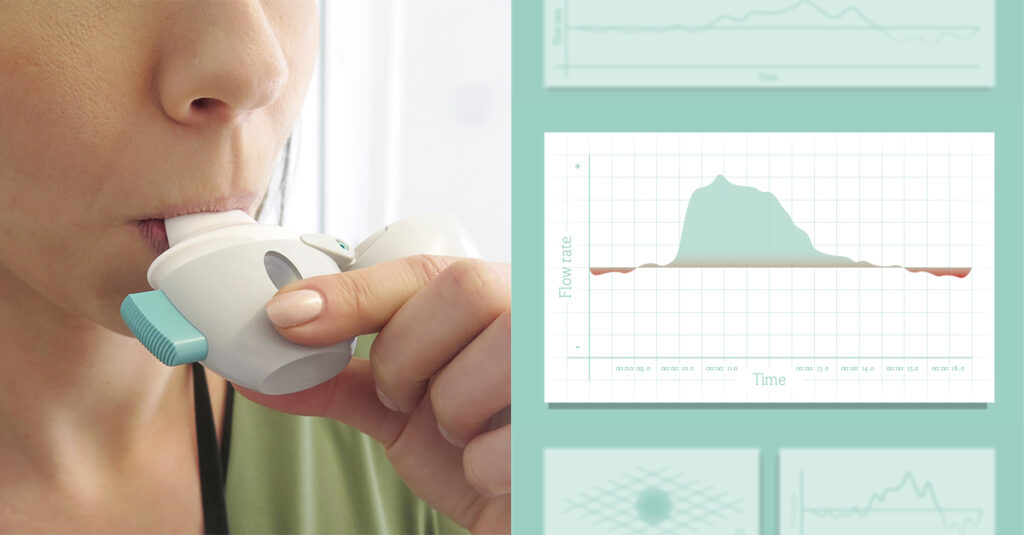
Here at CDP we wanted to go further and challenge ourselves to capture some very specific usage data for inhalation, whilst avoiding the Hawthorne effect and without changing the external form factor, thereby minimising any influence on user behaviour. It is common knowledge that all inhalers have associated use errors, so we took a commercially available one that has documented use errors and inserted miniature sensors that would enable both real-time indication and post-usage remote assessment of those use errors – namely priming action, orientation of use and inhalation/exhalation profile. We enabled the data to be time stamped and communicated to an appropriate output, in this case on-screen graphical readouts.

Behind this is the need to understand the volume of specific use data that gets logged and learn how to translate and classify the events represented as peaks and troughs on a graph. At CDP we have a wealth of experience of doing this across several sectors including sports and packaging systems.

If you’re looking for a breath of fresh air in your next respiratory drug delivery development, get in touch via hello@cambridge-design.co.uk or visit us at the RDD 2018 event in Arizona, 22-26 April on exhibit table 6.

Clinical Trials Scaled

Why do we need clinical trials for medical devices?

As part of our review of the new European Medical Devices Regulation (MDR) earlier this year, one of the topics that caught our eye was the expansion and clarification of the rules regarding clinical data for medical devices.

The difference between a clinical investigation and a clinical evaluation

Many people colloquially refer to “clinical trials” as the source for clinical data for efficacy of treatments, where the trial is the activity of testing a medical device with patients to confirm that it provides clinical benefits. In reality, this is what is defined as a clinical investigation within the regulations. The regulations also define a clinical evaluation as a wider scope activity, taking into account all scientific data as well as the data from a clinical investigation as a subset activity.

Where have we come from versus where we are headed

Previously, the European Union (EU) Medical Device Directive (MDD) acknowledged that clinical data is required to show that a device will comply with the essential requirements. It briefly outlined (in only nine paragraphs) the expectations of clinical investigations.

The new MDR expands on this and takes up a whole chapter on the subject. Both the MDD and the MDR dedicate an annex to how clinical trials should be run but, again, the MDD only provided minimal guidance. Under the MDD, many people chose to look to the EU Clinical Trials Directive (and subsequent regulation) and the associated Good Clinical Practice guidelines from the International Council for Harmonisation of Technical Requirements for Pharmaceuticals for Human Use. Although intended for medicinal products, these gave a greater indication of the expectations for clinical investigations.

Here at Cambridge Design Partnership we were pleased to see that clinical investigation of medical devices has been recognised as an activity in its own right, and that equivalent instruction is now provided in the MDR. In particular, the MDR appears to have been well aligned with the Clinical Trials Regulation with the intention of using the same electronic systems to help with centralised processing of applications. This factor is particularly relevant when considering drug delivery devices or combination devices where both aspects (medicinal product and medical device) need to be considered.

Who needs to do what?

One particular aspect of the expansion and clarification of the requirements for clinical data which has been central to many discussions between us in the quality team are the articles and clauses pertaining to whether a clinical investigation is required.

The MDR is very clear that all products require a clinical evaluation, which comprises a review of relevant scientific literature relating to the safety, performance, design characteristics and intended purposes of the device; a review of all available clinical investigations data (i.e. not just your own but any published data); and a consideration of any currently available alternative treatment options for that purpose.

The MDR then goes on to lay out the rules to determine which classes of devices also require clinical investigations to be carried out. When you analyse the list of requirements, this results in quite a small subset of products starting from Class III and Class IIb (implantables only) and then narrowing down after that with various modifiers.

Compared with the MDD’s requirements – which covered long-term invasive devices as well as implantables, and Class IIa devices as well as Class IIb – we initially considered the MDR’s requirements a simplification. In addition, the MDD requirements were quite vague and didn’t actually specify which devices had to have a clinical investigation – and the listed devices had to wait 60 days before starting their investigation to allow for the competent authorities to have their say, which infers that they were required to have clinical investigation.

However, when we started to apply this to our projects and give guidance to our clients, we noticed something interesting. Although most of the products involved were not required to have a clinical investigation due to their classification, the reality was that as they were usually novel devices, there was not sufficient pre-existing clinical investigation data or scientific literature which the client was aware of to allow for a clinical evaluation to be carried out without a clinical investigation.

This is something that should be considered early in the project when developing the regulatory strategy to plan how this supporting information can be gathered and allow time for this activity.

It will be interesting to see what impact this has on an industry which is already predisposed to look to predicate technologies to allow 510k applications in the US rather than the expanded effort required for premarket approval (PMA) and how this will be resolved for products brought to the market in the EU.