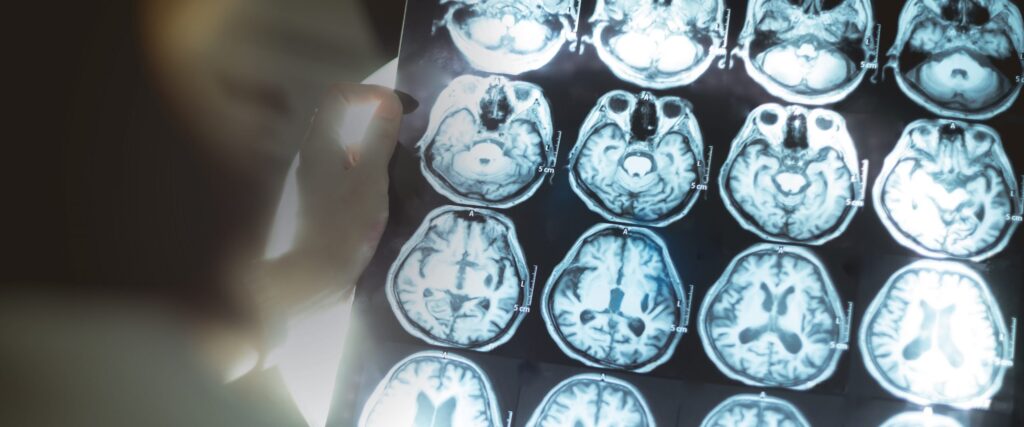

We are witnessing important advances in the treatment of the most common cause of dementia, Alzheimer’s disease, most noticeably by the emergence of disease-modifying therapeutics. And this trend is only set to continue, with new innovations and technologies promising to help slow the progression of this devastating disease.
However, patients who do not yet have access to these treatments or are in a more advanced stage of the disease will continue to require significant care support. The caregiving sector is already under significant pressure due to the increasing demand for long-term care within aging populations [1]. As the disease progresses, family members, including elderly spouses, are often the main caregiver – but they may be left poorly equipped to do this without the right support.
With the cost of dementia care running to £32,250 per person per annum [2] technology innovators are finding new ways to make resources go further and give dementia patients independence for longer – providing reassurance to the caregiver and peace of mind to family members.
The challenge lies in making these solutions accessible to caregivers and usable for patients. In this article, we take a deep dive into the technologies available to support dementia care and explore emerging trends that are transforming the landscape by using the right technology at the right time.
Alzheimer’s disease is a progressive and irreversible neurodegenerative condition that primarily affects the cognitive functions of the brain, particularly memory, thinking and behavior. It is the most common cause of dementia, a broader term for a set of symptoms that impact a person’s ability to live independently.
In the UK, it is estimated that more than 900,000 people live with dementia, and this is projected to double by 2040 [3]. Of the people diagnosed, up to a third live alone [4]. With the aging population outpacing the rate of training and recruiting caregivers, the already significant caregiver shortage is set to increase [5].
Meanwhile, family members are taking on caregiver responsibilities, often with unsustainable and distressing consequences. This is in part because every patient journey is different and the rate of their disease progression can vary widely. Some patients may require discreet support at the early stages of the disease, while others may require constant care. Knowing when and how to intervene to provide the care support needed is crucial.
The care sector is increasingly looking to technology to maximize the impact of the professional and informal caregiver workforce. There is an increasing recognition that caregivers require ongoing support to make their role more manageable, especially following the pandemic.
Assistive technologies rarely exist in isolation. In fact, it is often the combination of these technologies that yields the best results. Here are some of the technologies available to support independent living and managing disease progression.
Personal alarms and safety tracking
Alarms and tracking technologies allow people to call for help if they need it – wherever they are – as well as providing peace of mind for caregivers and family members when they are not there. They are simple to use and can help patients stay independent for longer.
Location. GPS trackers such as Mindme, Ubeequee, and Angelsense consist of battery powered or rechargeable wearables that connect to a 24/7 monitoring support center to alert family members and emergency services if a vulnerable adult is outside designated safe zones. Direct-to-consumer devices, such as Medpage, work similarly, but the information links directly to family members and may not have predefined safety zones or raise an alarm. Connectivity is based on broadband and subject to subscription charges.
Alarms and calls. Technologies such as Tunstall’s MyAmie, Oysta, and Saga’s SOS allow patients to raise an alarm for relatives, caregivers or emergency services with the use of a single button. These technologies often come in the form of a pendant worn around the house and are connected to a hub via a radio signal. The patient can also use the hub to raise an alarm. The pendant must be within reach of the hub for it to work. Other technologies, however, work similarly to the GPS tracker and can rely on broadband for wider network reach. These technologies often also incorporate fall detection and GPS.
Fall detection. Wearables such as Buddi, Telecare, and Careline are designed specifically for dementia care. These use inertia measurement units, gyroscopes, and pressure sensors to detect falls and automatically send messages to caregivers, family members, and first-aid responders. These devices are often accompanied by an alarm button for the user and GPS tracking. Many of these technologies can also be connected to a 24/7 monitoring support team.
Reminders and medication adherence. There are a variety of technologies in this category which allow caregivers to set reminders for patients to take medication, drink water, eat, or remember appointments or social events. Memory aid kits available include the MemRabel care alarm clock with a large screen, connected to a Pivotell Vibratime rechargeable wrist watch that vibrates for reminders. These can be in photo, video or audio format.
The challenge many of these technologies face is that they depend on a caregiver to ensure the patient remembers to engage with and wear the device, charge it when necessary, and crucially, press the button if in distress. In the case of some technologies, they must also be within reach of a hub.
These technologies are good for the early stages of the disease, but as cognitive decline continues, patients will rely more on caregivers to support them, thus limiting their advantages.
In other words, the longevity of these technologies can become incompatible with the patient’s journey, and this is one of the key hurdles to consider when designing and adopting technology in dementia care.
Remote monitoring
This is a fast-growing area for dementia care. Remote monitoring technologies share information on the patient’s daily living patterns with caregivers and family members. The purpose is to provide peace of mind to family members and enable caregivers to make informed care decisions in the short and long term.
Common functions include:
- Movement monitoring. Generally delivered by several passive infrared (PIR) sensors installed around the house, and pressure mats in beds and sofas, connected to a hub.
- House occupancy. Sensors on external doors to monitor whether an individual has left the house.
- Appliance usage. Monitored by connected sensors placed between the mains inlet and the device plug.
- Fall detection. Cameras or mmWave radar sensors to detect when an individual has had a fall, without the need for a wearable.
Many of these functions can be delivered by single systems, e.g. Taking Care Home Alert, with the more sophisticated fall detection systems generally targeted at professional care provider users, e.g. Hikvision and Vayyar Care.
It is also common for families to create their own solutions, especially when they feel no existing single solution works for them. This includes the use of consumer tech, such as smartphones, video doorbells, smart home speakers, and cameras around the house. Video doorbells, for example, can be valuable in preventing scams, while smart home speakers can set reminders, automate house functions, or call a relative. However, the use of cameras around the house does pose privacy concerns which need to be considered.
Although the overall objective is to monitor daily independent living, the information often requires interpretation by the caregiver. This can often be facilitated through a dashboard, although the information can be disjointed, and assessment of patterns may not be clear-cut.
Innovator Matt Ash from Supersense Technologies, however, believes we can do more to obtain valuable insights and monitor disease progression efficiently and noninvasively.
“There is a real need for technologies that support caregivers in their role and provide them with the confidence to take a break, knowing their loved one is safe. Though there are some credible assistive technologies out there, the unique needs of families living with dementia are not well served. Projects like the Longitude Prize on Dementia are investing in radical thinking to generate solutions with families living with dementia.”
Talking about some of the latest advancements being tested, Ash continues:
“Everyone’s journey with dementia is different. Right now, we are working on leveraging recent consumer developments in sensor technology, machine learning, and user experience to create personalized assistive systems that can evolve with the needs of an individual with dementia and their caregivers. It’s an incredible opportunity to provide the community with supporting technologies that serve their needs.”
If we want to empower those with dementia to live independently, maximize the impact of caregivers, and provide peace of mind to family members, we must enable the right type of intervention at the right time. Someone with early Alzheimer’s disease may feel overwhelmed or suspicious of new technology, while a person in later stages may be too vulnerable to learn how to use it.
The future of dementia care will center around collecting the right data and extracting the right insights from it to enable better care choices. By allowing technology to provide information on the progression rate of the disease for a particular patient, we can start building a profile of care by recognizing changes in patterns to a baseline. Emerging technologies such as remote monitoring platforms can support this and guide the longevity of other technological interventions to ensure that they align with the individual patient’s journey. At the heart of these technologies, privacy must be a top priority, which may include the use of AI and other methods to allow for patterns to be recognized quickly and with minimal need of human intervention.
We are entering a new era of therapeutics for Alzheimer’s disease, but there is still much to do, particularly in care. Although the use of technology can ultimately support patients, caregivers and family members, it is often incompatible with the individual’s stage of the disease, or inaccessible to caregivers. But as new technologies emerge, data and AI can unlock new insights to support a personalized care plan that scopes each patient to their individual needs – allowing caregivers and families to provide the best care at the right time.
References
- E. adult social care insight. The size and structure of the adult social care sector and workforce in England. Technical report, Skills for Care, Workforce Intelligence, 2023.
- Alzheimer’s Society, How much does dementia care cost? https://www.alzheimers.org.uk/blog/how-much-does-dementia-care-cost
- L. B.-A. A. R. Raphael Wittenberg, Bo Hu. Projections of older people with dementia and costs of dementia care in the United Kingdom, 2019–2040. Technical report, Care Policy and Evaluation Centre, London School of Economics and Political Science, 2019.
- B. W. Claudia Miranda-Castillo and M. Orrell. People with dementia living alone: what are their needs and what kind of support are they receiving? International Psychogeriatrics, 2010.
- E. adult social care insight. The size and structure of the adult social care sector and workforce in England. Technical report, Skills for Care, Workforce Intelligence, 2023.
Connect with CDP
For more on how to accelerate patient-centred innovation in dementia care technology and device design, contact Cambridge Design Partnership.