Digital PCR||||||
Share:
Find the authors
on LinkedIn:

Digital PCR – a technology set to transform clinical testing?

Pregnancy screening, cancer treatment, organ transplant – digital PCR testing has the power to enhance clinical decision-making. But what is needed to take it mainstream?

Polymerase Chain Reaction (PCR) testing has reached unlikely levels of fame due to the COVID-19 pandemic. However, its latest evolution, digital PCR, could be a real game-changer for commercial diagnostics.

The power of digital PCR

When people talk about PCR testing, they often refer to quantitative PCR. This technology is fantastic at delivering binary answers, for example, whether a disease is present or not. It can also determine to some extent how much of a disease is present in a sample (though the process is inaccurate). Quantitative PCR’s quantification can be improved by calibrators, but this is complex, expensive, and time-consuming for a lab to perform.

Digital PCR advances this technology to deliver precise quantification and improves detection of low-frequency DNA targets.

The potential to transform clinical decision-making

The key benefit of digital PCR can be summed up in two words: better data. It has the power to transform clinical decision-making, for example, in the following areas:

Pregnancy screening

Highly accurate testing for chromosomal trisomies, such as Down’s syndrome, by detecting traces of foetal DNA in maternal blood. Next-generation sequencing (NGS) is an existing alternative but has extremely complex protocols, including DNA purification, DNA library preparation, sequencing, data alignment, and analysis.

Cancer treatment

Pinpointing disease progression by detecting tumor DNA in liquid biopsies.

Organ transplants

Detecting DNA sequences leaking from a donor organ (a sign that the host immune system is rejecting it).

Virus detection

Increasing accuracy in treatment of HIV, hepatitis C, herpes, cytomegalovirus, and other infections.

Disease diagnostics

Quantification of bacterial species in stools due to digital PCR’s lower sensitivity to inhibitors.

Digital PCR could also deliver accurate quantification of levels of other infectious diseases such as respiratory viruses and sexually transmitted infections. This precision isn’t currently available but could be useful for clinicians to differentiate between different stages of infection.

How does digital PCR differ from quantitative PCR?

Digital PCR is a development of ‘standard’ PCR, using the same concept of exponential amplification of template DNA with DNA primers and a polymerase enzyme. It has two crucial differences: compartmentalization and end-point data collection.

Compartmentalization

Instead of performing a reaction on a whole sample, digital PCR splits the sample across a large number of separate compartments. ‘Compartment’ could mean a microfluidics chip, or a droplet suspended in an emulsion.

Each reaction is capable of detecting a single molecule of DNA. A larger number of amplification cycles are generally run, typically 60 versus 40 for standard PCR. Just one DNA molecule in a compartment is enough to initiate a PCR amplification reaction.

End-point data collection

Unlike quantitative PCR which reads after every amplification cycle, digital PCR just needs to read once when all the amplification cycles are complete. This is an important saving, as otherwise, all the thousands of individual compartments would need to be read every cycle, which would be a significant challenge.

Digital PCR overview

What’s stopping the mass adoption of digital PCR?

Though digital PCR has been around for 20 years and is mentioned in thousands of patents, only a handful of commercial products use the technology. The primary challenge innovators need to crack for it to go mainstream is optimal compartmentalization.

Cracking compartmentalization

Compartmentalization affects key performance parameters, such as the assay’s dynamic range, linearity, accuracy and ease of use; its cost; whether it’s run as a batch or on-demand; and how many samples can be run at once. The number of compartments in the assay must be high, relative to the concentration of input DNA molecules in the sample. But if the assay uses too few compartments, the accuracy of quantification will be too low, and the assay must be repeated using a diluted sample.

Why does compartment design matter?

Digital PCR’s randomly apportioned target molecules across a large number of compartments mean there will be some compartments with no targets, some with one, and a few with two or more. As it’s not known how many target molecules are in each positive compartment, the Poisson distribution is used to determine the most likely proportions of compartments with one, two, three, or more DNA targets. Using the Poisson distribution allows accurate quantification, but relies on two important factors:

  1. The input template being randomly spread throughout all the reaction chambers
  2. All compartments being the same size

These are critical parameters, and there are two main ways to achieve them. The first is passing the sample over a microfluidic flow cell containing microwells commonly filled using capillary action. The second is encapsulating the nucleic acid in a huge number of water droplets in an emulsion of oil, with each droplet containing a separate reaction.

Microfluidic droplet generator developed at CDP

The ideal compartmentalization system would retain the ease of use of current quantitative PCR systems and have a similar lab-bench footprint and costs. However, current approaches (typically involving microfluidics or droplets), require multiple complex disposables and sophisticated optics. If a new approach was developed with lower costs, clinicians and test centers may well convert to digital PCR for all their applications. The company that manages to crack this challenge has the potential to dominate the PCR market and provide huge advances to clinical decision making.

To talk to us about our current innovation in the field of digital PCR, get in touch.

How to boil your egg perfectly every time
Share:

How to boil your egg perfectly every time – according to simulation

Search ‘how to boil an egg’ on Google, and you get over three billion results, some telling you to put the egg in cold water after boiling to preserve the runny yolk. Intrigued, we decided to investigate the science behind this advice.
Rather than heading straight to our lab for experimentation, we used computer simulation to calculate and model the movement of heat and temperature through the egg and surrounding fluid. Simulation lets us predict data at times that would be impractical or expensive in actual experiments.

Modeling the heat flow in a boiling egg could be a surprisingly tricky problem. An egg consists of a solid shell holding the white and yolk, initially in a liquid state but solidifying as the cooking continues. Being natural products, the exact properties and sizes of eggs vary.

To simplify the problem, we found technical publications that describe the average dimensions and thermal properties of the shell, white, and yolk for a typical egg. We decided to define these properties at a temperature of 60°C, which is around the point the yolk starts to solidify. Using computer-aided-design software, we created the geometry of the egg, and defined a body of fluid to surround it. This fluid body represents the boiling water in a saucepan during the first cooking stage. Afterward, the fluid body can be used to mimic cool-down in air or a bowl of 10°C cold water. We decided that the eggs would start the process from room temperature in all cases.

We ran the simulation using powerful software, Ansys Fluent. The software was initially developed for understanding problems such as the flow of air over planes or heat in a chemical plant, but it can be applied to domestic problems such as the humble boiled egg. To allow the simulation to run quickly on an ordinary computer, we took advantage of the fact an egg shape is a body-of-revolution and looks the same however it’s rotated around its axis. This lets us model it as an axisymmetric body that the computer considers two-dimensional. This reduces the number of calculations and gives us the answer quicker and more cheaply than simulating the real-life, three-dimensional shape.

As an example of the simulation results, Figure 1 shows the temperature distribution on a slice along the egg’s axis after cooking in boiling water for six minutes. The material towards the outside has heated up close to the temperature of the water. However, the central region corresponding to the yolk is still around 50°C, corresponding to a runny egg.

Figure 1: Temperature distribution on a slice across the egg after six minutes of immersion in boiling water.

Figure 2 shows a side-by-side comparison of subsequently cooling the egg in air or 10°C water for five minutes (five minutes being our estimate of the time it takes to finish eating our first dippy egg and move on to the second). When cooled in air, the central region of the egg continues to increase to 70°C, removing the prospect of a runny egg, even though the outer region and shell have decreased in temperature. In contrast, after cooling in water, the central region stays unchanged at 50°C while the shell has decreased close to 10°C. Leaving your perfect dippy egg in air risks ruining the runny yolk – but cooling it in water may save it.

Egg-article-in-line-image-fig-2-A
Egg-article-in-line-image-fig-2-B

Figure 2: Temperature distribution on a slice through the egg following cooking
and five minutes of cooling in (a) air and (b) water.

As well as modeling the overall temperature in the egg, we extracted the data for two specific points – at the center and the edge of the egg – and plotted them on a graph (Figure 3) to see how they differed. The data showed that the yolk’s temperature lags that at the shell. This is because the thermal diffusivity of the white and yolk are relatively low. Thermal diffusivity is a measure of how quickly heat can move through a material. So, it takes a while for the yolk to heat up, but once it does, it keeps cooking, absorbing heat from the rest of the egg material. It’s slow to respond to changes in the surrounding water (or air). The temperature just inside the shell responds much more quickly to changes, though, since the path the heat needs to travel from the surrounding fluid is considerably shorter, and the thermal diffusivity of the shell markedly higher.

How to boil your egg perfectly every time|||||||
Figure 3: Temperature profiles with time at the center point of the yolk (circles) and adjacent to the shell (crosses)

With the aid of some considered simplifications, we think this simulation analysis has proven the cookery expert right: cooling eggs down in cold water really does preserve the runny yolk. However, whenever you analyze a problem for the first time, it’s important to compare results against an experimental benchmark, so you can confirm the realism of the assumptions and simplifications in a computer simulation. We took three eggs and boiled each for six minutes in a lab beaker. One was opened straight away, and the other two after cooling in cold water or in air for five minutes. As predicted by our computer simulation, the yolks ranged from runny to fully cooked. And the best thing about this experiment? Everyone got an egg cooked precisely to their liking at the end.


Connect with CDP

Contact us to find out more about our capabilities and how we use science to understand and improve everyday products.

||||||||||||||||
Share:
Find the authors
on LinkedIn:

Reducing the carbon footprint and plastic waste of LFTs: Evidence-based opportunities

Billions of lateral flow tests have been used worldwide during the COVID-19 pandemic – over two billion have been provided in the UK alone. Debate has raged on social media about why the tests need to use so much single-use plastic and how they could be made more ‘sustainable’. The test strip caseworks is a particular source of dismay – why so much plastic to house such a tiny test strip?

With the UK government ending the free distribution of lateral flow tests for the general public – citing a transition from emergency response to longer-term management of the pandemic – now is the ideal time to look more closely at the sustainability of these lateral flow tests, and to seek the data to demystify some of the emotional assumptions being made.

Familiarity with lateral flow testing has certainly increased, as has confidence in their clinical performance. It’s expected that lateral flow devices will be more present in our daily lives post-pandemic – not just for COVID-19 and pregnancy testing but to diagnose diseases such as seasonal influenza and sexually transmitted infections – all from the comfort of the home.

We’ve carried out a high-level assessment to quantify the approximate environmental impact of lateral flow tests and identify evidence-based suggestions for improving their environmental sustainability.

Why do COVID-19 lateral flow tests contain lots of single-use plastic in the first place?

The emergence of COVID-19 was a global emergency, and vast quantities of lateral flow tests were needed urgently. Once developers could produce the right immunoassay chemistry to detect the virus (SARS-CoV-2), it required implementation in a low-cost, low-risk device, that has a mature supply chain – with proven, readily available materials that wouldn’t compromise analytical or clinical performance.

This meant using existing plastic casework designs to retain and protect the nitrocellulose test strip. Plastic is robust, low cost, lightweight, easy to transport, and easily printed for QR codes and LOT numbers. Critically, it’s a consistent material proven for the highest volume manufacturing and won’t interfere with the immunoassay chemistry.

From a performance, cost, and manufacturing perspective, redesigning the product with new materials would have been high risk. Material changes may also have needed significant R&D costs, new capital equipment as well as additional cost and effort needed to demonstrate equivalence and achieve regulatory approval – risking the ability to provide sufficient numbers of high-quality tests, at speed during the pandemic.

Our results: The sustainability of lateral flow tests

But how serious an environmental impact do these tests have? To find out, we broke down a test into its constituent components and weighed them to calculate the approximate environmental impact, using standard emissions factors to calculate the carbon footprint of a single test.

web_body_lateral-flow-test-kit-1

We focused on carbon footprint (the carbon dioxide and other greenhouse gases emitted during manufacture, transport, and disposal of the tests) and plastic waste (waste that would persist indefinitely if released into the environment) – the two issues that have attracted the most attention around lateral flow tests. A more comprehensive study should consider a broader range of environmental impacts, for example, the use of scarce resources and emission of other pollutants to avoid unintended consequences of any product changes.

Our results reveal:

  • The components needed to conduct the test account for around half of the carbon footprint and around two-thirds of the plastic waste. Packaging makes up most of the rest – as is often the case, a surprisingly high proportion of the total environmental impact
  • The test strip caseworks, which attracts the most comment online, is responsible for around 30% of the carbon footprint and 40% of the plastic waste. While it’s the most significant single contributor to the environmental impacts we evaluated, the large number of other small parts is also significant. Focusing on the caseworks therefore might not be the best strategy for improving the sustainability of the tests overall.
web_body_lateral-flow-test-analysis-1a-2
web_body_lateral-flow-test-analysis-1b-3

Lateral flow tests a minor piece of UK healthcare’s environmental impact

To put these numbers into context, we can compare the environmental impact of the two billion COVID-19 lateral flow tests distributed in the UK with the UK healthcare system’s overall environmental impact. We estimate the UK’s lateral flow tests have a carbon footprint equivalent to around 0.5% of the total NHS carbon footprint. This isn’t a trivial amount, but it’s also not the largest single contributor to the impact of the UK health system.

It’s also worth considering the positive environmental impact of a user-administered test on the health system. Conducting a test at home can eliminate the need for an individual to visit a test site, GP’s surgery, or hospital (assuming the clinical performance of the lateral flow test is adequate). Based on estimates from the Sustainable Healthcare Coalition, one lateral flow test has around 5% of the carbon footprint of a single GP appointment and produces a similarly low percentage of non-degradable (plastic) waste.

And that’s before we consider travel. We estimate one lateral flow test has the same carbon footprint as driving 350 metres in an average UK car. So, if you’re driving yourself to a test site or GP surgery some distance away, at-home lateral flow tests compare even more favorably.

If a lateral flow test prevents an individual from transmitting COVID-19 to a vulnerable person, there’s a public health benefit – as well as an environmental benefit – to keeping people out of the hospital. We can all see the discarded waste from home tests, but the less visible impact from energy- and material-intensive medical interventions is often significantly higher.

These approximate figures demonstrate why building an evidence base is vital during product development targeting sustainability objectives – because the results can be unexpected and non-intuitive.

Quick ways to optimize today’s lateral flow tests

Just because waste from lateral flow tests might not be the most urgent sustainability issue for UK healthcare, that doesn’t mean we can’t and shouldn’t do something about it.

We used the ‘avoid/shift/improve’ model to find potential quick wins for lateral flow tests. These reduce the carbon footprint of each test by nearly a third and the plastic waste by almost a quarter – without impacting the fundamentals of how the test works.

They include:

  • Eliminate waste bags. There’s a case for quickly isolating contaminated waste (even given COVID-19 also spreads from infected individuals through the air), but the bags account for around 5% of the carbon footprint of the test. It’s not clear how widely used they are in a domestic setting – there may be a risk-based justification for not including them in the test kit.
  • Package all the test strips in a single foil pouch. Using a single re-sealable pouch to protect the tests from ambient humidity (rather than individually packing each test in a pouch with desiccant) is common in packs of lateral flow tests designed for use by healthcare professionals. However, once opened, the stability lifetime of the remaining tests is affected.
  • Reduce the size of paper instructions. These are important for the effectiveness of the tests and are a regulatory requirement, but account for 5% of the carbon footprint of a test – could they be reduced in size?
  • Eliminate the cardboard sleeve. This packaging isn’t essential to the safe and effective functioning of the test, and it seems likely that the functions it does provide could be achieved with less material.
  • Prefill the extraction tubes with buffer solution. This is already done in some test kits, although manufacturers need to be conscious of moisture loss and the effect on shelf life. However, the separate plastic vial used in the test kit we studied accounts for around 5% of the carbon footprint and plastic waste.
  • Increase the size of the pack from seven to ten tests. This would mean less package waste per individual test. Including ten tests in one pack instead of seven reduces the carbon footprint by around 5% (depending on how many other optimizations are done at the same time). Perhaps a pack of seven tests was originally designed to cover a week of daily testing – but is that how tests are being used in practice?
web_body_lateral-flow-test-analysis-2

Redesign of the test strip caseworks

Looking to the longer-term gets us into product redesign – creating a new generation of the product with sustainability in mind. Doing this can take significant investment since, for medical devices, it’s likely to require new regulatory approval, which is a lengthy and costly process.

A popular idea circulating for lateral flow tests is to minimize the plastic test strip caseworks (without compromising the essential functions of providing a stable platform, and protecting the nitrocellulose test strip). It might be possible to halve the caseworks mass and reduce the overall carbon footprint and plastic waste by 15-20%. This would require significant investment in R&D, production tooling, and regulatory approval hoops to jump through – but could be worthwhile if future demand for tests stays high.

Longer-term options

If we consider that the world may require billions more lateral flow tests over the coming decade, a more comprehensive redesign becomes commercially viable. This could involve stripping the design back to the fundamental requirements for a lateral flow test – flowing a sample through the test strip in a way that is controlled and free from contamination. Current designs take advantage of established components to collect, buffer, and dose the sample – but, at this production volume, it may be worthwhile designing a system from the ground up that is optimized for cost, usability, performance, and sustainability.

Sustainability as a brand differentiator

It’s clear there’s scope to optimize lateral flow tests to reduce their environmental impact – and a systematic analysis reveals options beyond those that might jump out to someone when they use the tests. But it’s essential to put the impact of lateral flow tests in the context of the wider healthcare system, to focus resources where they can have the most environmental impact – and to recognize that, sometimes, the plastic waste people can see helps to avoid more serious, but less visible consequences.

On the other hand, while visible plastic waste from lateral flow tests may not be the most pressing environmental issue facing the healthcare industry, it highlights the growing influence consumer opinion is likely to have as diagnosis and treatment shift from hospitals to homes. And as lateral flow tests become (in the UK, at least) a product people buy with their own money, choosing from a range of options, there may be a competitive advantage for businesses that take note and optimize their products for sustainability.

References
  • Prime Minister sets out plan for living with COVID [Internet]. GOV.UK. 2022 [cited 1 April 2022]. Available from: https://www.gov.uk/government/news/prime-minister-sets-out-plan-for-living-with-covid
  • The Sustainable Healthcare Coalition. Care Pathways Calculator. [Internet]. Sustainable Healthcare Coalition. 2022 [cited 1 April 2022]. Available from: https://shcoalition.org/

Connect with CDP

For more information on reducing the environmental impact of lateral flow tests without compromising performance, contact Cambridge Design Partnership.

Mastering fluid flow to enhance user experience|
Share:

Mastering fluid flow to enhance user experience

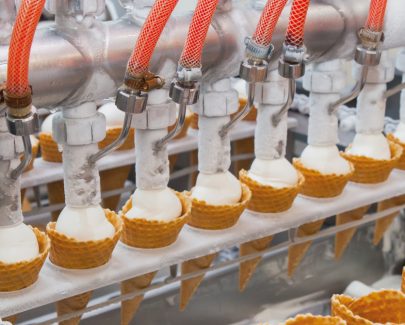
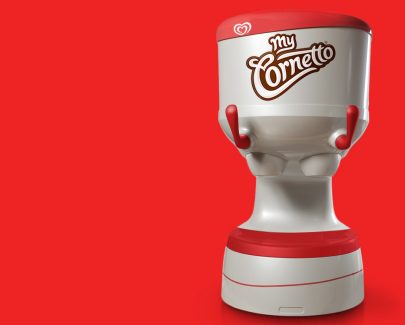
Ice cream and blood are two things you probably don’t want to think about simultaneously. But both are full of organic proteins and fats and behave differently from a fluid like water when they’re pumped through tubes. Innovators sometimes think about these similarities when creating, for example, a novel ice cream dispenser or device that filters out platelets from donor blood .

How a substance flows is a vitally important consideration for many products, from foods to skincare to medical devices to household paints. Development teams need to keep in mind a wide range of flow behaviors (for example, flow through nozzles, non-Newtonian flow, and foaming) to hit the sweet spot: a positive user experience that makes a product stand out in a crowded market. This means thinking about the science of how liquids and gases behave (fluid dynamics), as well as how the product responds to user interaction.

Look at how the squeezable plastic ketchup bottle differs from the glass bottles that were standard before 1983. The new design completely changed the user experience – no more digging down into the bottle with a knife to get the ketchup flowing again. Things became even easier for ketchup lovers with the debut of the upside-down squeezable bottle – no more awkwardly storing ‘regular’ bottles upside down in the fridge.

Or think about how the experience of washing your hands changed after the arrival of the liquid soap dispenser. Instead of having to share the same bar of soap with others, people can now wash “without the soapy mess”, as Robert R Taylor, who introduced SoftSoap liquid soap, put it, and can take only as much soap as they need.

While the flow of some liquids is analogous to water, whose behavior is well understood, other substances behave in much more complicated ways, requiring in-depth analysis work to understand when designing new products. For example, the air bubbles in ice cream make it behave as a liquid foam. Ice cream’s flow will change depending on how you’re dispensing it: Push it at high pressure through a narrow channel or nozzle, and the air bubbles will be compressed, allowing more ice cream to flow through the nozzle at once. When the ice cream is returned to normal pressure, the air bubbles re-expand, and the ice cream returns to its original size. Because of this complex and variable behavior, designing a product to dispense ice cream relies on hands-on experiments… which can mean going through gallons of ice cream before you can create a design that works as intended. Only by conducting these experiments to understand ice cream’s behavior can you build the mathematical model required to effectively develop a high-performance machine.

While it’s a shame to use gallons of ice cream in the quest for a better product, it’s not an environmental disaster. But shipping water-based products around the world does contribute to fossil fuel consumption and climate change. Removing water from laundry detergent helps cut shipping emissions by reducing bulk and making shipping more efficient. But it also dramatically changes how detergent flows and gets used by consumers. For example, measuring out 10 ml more detergent than recommended likely wouldn’t have an impact if you’re using a product that’s mostly water. But being off by 10 ml when detergent is concentrated could make a big difference for your laundry. So, it’s vital to ensure that dispensing is accurate, which requires an understanding of flow.

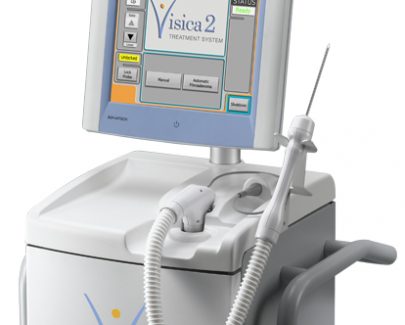
There are so many flow behaviors that can affect a product’s design. For example, should a container for insecticide include a mechanism to avoid skin contact and spillage? How could a medical device for freezing tumors be redesigned to eliminate vapor locks without the use of heavy and bulky high-pressure gas cylinders? Is there a way to dispense foaming hand soap in a decorative pattern for a premium experience?

Getting the design right for a flowing substance can differentiate between a product that fails and one that creates an experience that shifts category norms and delivers breakthrough consumer delight.


References

Dreaming big during COVID-19
Share:
Find the authors
on LinkedIn:

Dreaming big during COVID-19

Product designer Laura Sierra is working with Cambridge Design Partnership as part of the marketing team. Here, she reflects on what she learnt during an international design competition, the Dream Big Challenge.

Laura says: I’m an industrial product designer from Colombia, now specialising in marketing and communications for the design world. I’ve studied for a Masters degree in Science and Marketing at Anglia Ruskin University. This led to me working on a project here at CDP, communicating all the amazing and innovative work the company does to the wider world.

In 2015, I had a wonderful opportunity to join a team competing in the Dream Big Challenge. It’s an international design competition for youth teams and to my surprise and delight, our team won. The whole experience was life-changing. Usually, the challenge takes place in a vast hall in Barcelona, where teams have just three hours to come up with disruptive and exciting solutions to design challenges.

This year, I was scheduled to get involved again. But, of course, Covid-19 meant that the plan for hundreds of young international designers getting together was never going to happen. The contest is sponsored by the likes of Santander and Nike. Cancellation would have been a major disappointment to all concerned.

But instead of giving up on the competition altogether, the organisers moved it online. So we competed anyway, using communications technology such as Zoom, working against the clock. This year’s online event attracted 900 competitors from all over the world. More than 350 projects were submitted, making this last-minute switch online a huge success.

My team chose to focus on the field of Education, as several of us had a keen interest in this area. In our home country of Colombia, a substantial percentage of children are not able to go to school and are also unable to reach the internet. So they miss out on education entirely. Could we think of a way to reach them?

To our delight, our project, called Ekko, scooped the third prize in the Education category. Our project was based on the idea of reaching children in remote areas via SMS messaging and radio. We aimed the project at pupils from 12-18 upwards, who could follow a class on the radio and interact with teachers via SMS. Many families have access to phones and radios in Colombia but do not have computers or access to the internet. And, of course, this model has potential in so many countries around the world. In Colombia, 47.7% of the population (23 million people) do not have internet access in their homes.

I learned a lot from the hectic three-hour webinar in which our team designed this education programme. Much of what I learned is proving very useful in my other online collaborative work during the Covid-19 crisis. Here is what I discovered about teamwork when you’re all working remotely under lots of pressure:

1. Have the right tools

I soon realised that it is important to have the tools which allow you to migrate between online and offline with ease.  Make sure you have digital tools, creative materials and can do (and share) fast sketching so that you can share ideas as seamlessly as possible. In the competition, colleagues were connected from other places, even in different time zones.  Working remotely using tools like Zoom, Google Meetings and WhatsApp was possible but also very intense. There is no doubt that online events change human interaction and experience. It is essential to have the proper tools to hand, allowing creatives and entrepreneurs to develop their projects remotely in a flexible and stress-free way.

2. Find your common purpose

A common aim really helps an online project. If you have a clear reason why you’re undertaking the work, things will be much easier. In our competition there was a choice of five different sectors: Health, Sport, Education, Work and Sustainability. I worked with university professors Andres Rubiano and John Higuera. All of us are passionate about social innovation and wanted to change education, making it fun, free and interactive. This really helped our motivation when things didn’t go smoothly.

3. Creativity is key

Using your imagination in challenging times is more important than ever. An open mindset allows us to manage challenges. I truly think that each day is an opportunity to learn and design a better world. The key is to let our imagination fly, allowing it to create and to not panic about failing. This competition taught me that, even during a lockdown, working remotely, it was possible to connect online, study other projects, explore new ideas and connect with new people.

In conclusion: I’m delighted to say that our project, Ekko, is now in the throes of becoming a reality in Colombia. It looks as though those tumultuous three hours of intense activity could end up changing the lives of thousands of children for years ahead. That really is a good result, isn’t it?