We apply our deep expertise in science, engineering, design, and strategy across a range of industry markets, working with organisations in complex, regulated, and fast-moving markets, whilst tailoring our product development approach to sector-specific challenges, regulations, and user needs. Supporting innovation from discovery through to commercial launch.
CDP delivers product development services powered by deep expertise in science, engineering, design, and strategy. We help clients solve complex challenges, accelerate innovation, and bring products to market through integrated capabilities spanning early discovery to commercial launch.
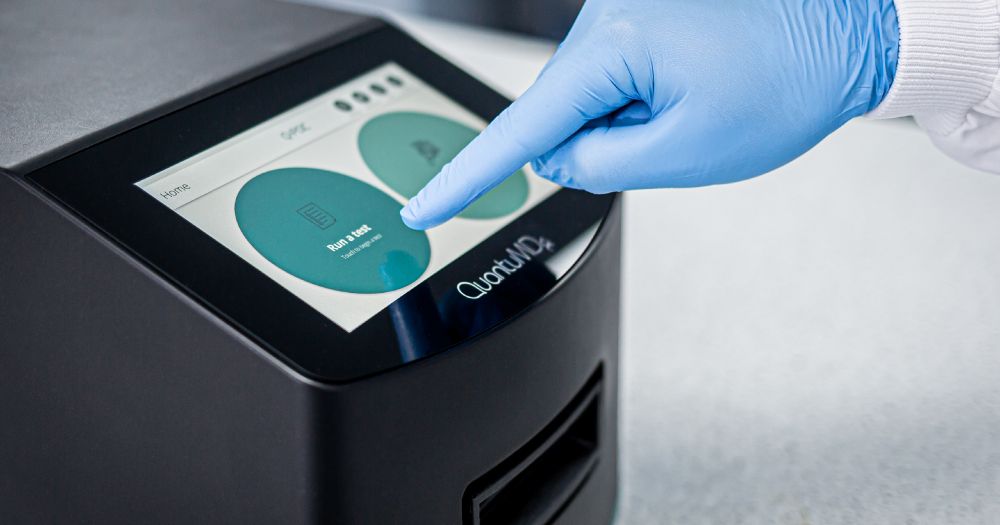
A team at UK product and innovation company Cambridge Design Partnership (CDP) has produced highly deployable devices for COVID-19 testing. CDP has been collaborating with diagnostics tech firm QuantuMDx to refine their Q-POC™ device and produce the first batch of readers to detect COVID-19 within approximately 30 minutes. QuantuMDx is now investing over £11 million to scale up production and introduce this rapid diagnostic solution to benefit patients and frontline health workers across the globe.
QuantuMDx is developing molecular diagnostic devices for a range of diseases and has developed and launched a highly accurate lab-based SARS-CoV-2 assay. Prior to the COVID-19 outbreak, the firm had commissioned CDP to produce prototype devices for CE marking. CDP worked through the first UK lockdown to improve the design of the reader and the first units are deployed at UK hospitals for COVID-19 testing studies.
“After beginning our partnership with QuantuMDx during 2019, we were delighted to be asked to collaborate with this innovative company once again, at a critical time. The team has been highly motivated by this crucial project and proud to contribute to the national effort,” says Dan Haworth, CDP’s Head of Diagnostics.
Colin Toombs, VP Research & Development at QuantuMDx, said: “We’ve worked in partnership with CDP since April last year, to undertake accelerated pilot manufacture of our Q-POC™ device, which is a portable DNA/RNA analyser offering rapid, sample-to-answer, molecular diagnostic testing at the point of care. The QuantuMDx and CDP teams have worked in close partnership to optimise our product development and manufacture devices to deliver testing for COVID-19. They are being released initially for research use, but we are rapidly moving towards CE-IVD of Q-POC™ for SARS-CoV-2 detection. Working together with CDP, we’ve established an ongoing partnership for the future.”
The device works by processing a swab sample, amplifying the target sequence specific to SARS-CoV-2, which causes COVID-19, and then detecting whether the virus is present. This all happens within a sealed cartridge that is controlled by the reader with minimal user involvement.
“Within approximately 30 minutes from sample collection, the device will give an accurate answer to whether the patient has COVID-19” says Dan.
These first new readers have been designed and built at CDP’s HQ in Cambridgeshire, where the company has short-run manufacture capability alongside its R&D facilities.
CDP’s team working to develop the QuantuMDx device includes mechanical and electronics engineers, software engineers, regulatory experts and manufacturing engineers.
“We worked at speed to design, build and test these important devices as quickly as possible. We are all thrilled to play our part in beating COVID-19 and we congratulate QuantuMDx on moving to mass manufacture,” added Dan.
For further information and media enquiries, please contact:media@cambridge-design.com or call 01223 264428
The Covid-19 pandemic has presented a time-limited but immense window of opportunity for diagnostics companies. Changes in regulation and increased levels of investment are enabling radical innovations to have real impact, but only if they can be fast-tracked into new products which are cost effective and compelling to users. In this article we review some of the product releases and look at the long-term effects of this unique situation.
The WHO’s message of ‘Test, Test, Test’ echoed around the world and since the start of the Covid-19 outbreak, diagnostics companies have dropped their existing R&D programs to focus on SARS-CoV-2 test development.
The FDA’s Emergency Use Authorization (EUA) has enabled a quick route to market for products that have not received formal approval, and for many companies, the outbreak has stimulated significant cash injections from government and private organizations. The Covid-19 situation has meant products can be launched faster than ever before.
Engineers and scientists have been working intensively while the EUA window remains open, including teams at CDP who are in the final stages of developing a molecular platform for Covid-19 testing.
Most tests (~80%) authorized under EUA are molecular tests that detect the presence of viral RNA. Two companies (Becton Dickinson and Quidel) instead targeted detection of a protein within the virus particle (an “antigen” test) rather than detecting its RNA. The promise of home-based tests that detect antibodies (to determine if someone has had the virus) was unfortunately dashed by poor performance; the 26 authorized antibody tests are all lab-use and primarily involve large expensive equipment, rather than a low-cost pregnancy-style lateral flow strips that use a drop of finger prick blood.
Molecular tests on platform devices
First off-the-mark were companies that already have a device which can be repurposed for Covid-19 testing. Automated lab analyzer running PCR (the molecular ‘gold standard’ test) require little in the way of hardware modifications. The SARS-CoV-2 molecular assay is a relatively easy assay to develop for these systems as it is similar to other respiratory diseases (e.g. for Flu A/B). Roche, Thermo, Hologic and Abbott Molecular all released their tests on large scale hospital lab equipment during the same week in mid-March.
Companies producing near patient tests on existing platforms were quick to follow, and in the following week Cepheid’s Xpert Xpress, Mesa Biotech’s Accula and Abbott’s ID Now were all authorized. These systems are highly portable and CLIA waived, so they can be used outside of lab settings. The Abbott ID Now (the re-branded Alere-i) uses isothermal amplification (rather than thermal cycling) which enables results to be generated in as little as 15 minutes. Compare this with traditional PCR which takes ~40 minutes, and these should be ideal systems for mass deployment into schools, care homes, pop-up clinics, even for testing passengers while travelling on commercial flights.
However, whilst these systems seem an ideal method for de-centralized settings, sample collection can be error prone and the cost per test is relatively expensive compared with central-lab testing. Combined with lower throughput, it is currently more cost effective for people to self-isolate while their sample is processed in the central lab.
New CRISPR-based tests
Start-up companies are making use of this window of opportunity by building products around potentially disruptive technologies, which may have been too risky to develop in more normal times. An example technology is CRISPR, the game-changing technology for gene-editing – now heading rapidly into diagnostics. CRISPR uses the natural defense properties found in bacteria to protect itself, ironically, from viruses. It is now being used to rapidly detect specific nucleic acid sequences. Sherlock Biosciences recently received EUA for its CRISPR-based Covid-19 test kit – and is working to bring the technology into a point-of-care format which can deliver results in 20 minutes within a doctor’s office or even a supermarket. GlaxoSmithKline is also working with Mammoth Biosciences to bring CRISPR-based technology into a hand-held, fully disposable product format. These products are at an early stage, but future developments will advance detection capabilities and potentially enable faster and lower cost diagnostics compared with traditional approaches.
Fully disposable molecular tests
There is currently a race to launch fully disposable molecular devices that can offer lab-quality results from the convenience of the home. The vision again is that of a pregnancy-test type device, but one which carries out the complex assay functions of a molecular test. Many of the devices in development use isothermal amplification due to lower power demands and ability to cope with reduced sample preparation. These first-generation devices are going to be initially very expensive, but companies are pushing the boundaries and paving the way for more accessible testing.
Antibody tests – “the wild west” of testing
Very low cost, home-use lateral flow immunoassay tests involving just a single finger prick blood sample was hoped to be the ticket back to normality. These tests detect if a person has antibodies to the virus and therefore potential immunity to re-infection. Manufacturers were pushing these out under EUA despite very little in the way of supporting clinical data, but hopes were short-lived as high false negatives meant the tests were unsuitable. In some cases, results were so poor, it was comparable to flipping a coin. The only antibody tests released under EUA are lab-based tests, not home-based, and use conventional serum, plasma or whole blood sample collected by a phlebotomist.
Recent data suggests antibody tests are not actually very good at detecting if someone has had Coronavirus; many virus-positive patients have been antibody negative, so there appears to be other immune responses taking place involving T-cells, but that’s another topic.
Changing landscape
While existing lab analyzers are currently the workhorse of testing due to high performance, high throughput and low cost, relaxation of regulations and rapid cash injections have meant there are some highly innovative new developments which are pushing the boundaries and re-shaping the landscape of point-of-care molecular diagnostics.
Faster and lower cost point-of-care tests that are more convenient to the end user have the ability to provide results while-you-wait, meaning local outbreaks can be identified sooner and less time is wasted unnecessarily self-isolating. With greater access and clear social and economic benefits, more people will engage with testing on a regular basis. Covid-19 testing applies to the global population – it is not just a one-time event, but repeated frequently, time and again. The market size is huge, and the commercial opportunity is immense.
But the window of opportunity presented may be short-term due to the nature of the current global circumstances. Companies will have to act fast in technology development to devise compelling embodiments that differentiate them from very similar competitors. Speed and innovative thinking will be key to win and maximize the opportunity.
Models are everywhere – anyone who has played a computer game has encountered a model, but in a pandemic, mathematical models are vital for understanding the dynamics of transmission, disease progression, healthcare needs and the overall outcome on the population.
Recent real world events have shown that critical decisions are being taken based on model data. Many people are still uncertain of how models work which can lead to them being met either with undue suspicion or absolute faith. In reality models are incredibly powerful, as you can test different courses of action quickly so an optimised response can be formulated, but their limitations need to be understood.
What is modelling?
Here we try and explain the basic principles of models, how mathematical models can help and what their limitations are.
Mathematical modelling involves making a mathematical representation of a system where the expected outcome of changing various parameters can be calculated. This means you can examine the outcomes of many scenarios using the same model. For example, the models reported on recently look at the spread of Covid-19 with different levels of social distancing and other interventions such as school closures. A model of a complex system is usually a collection of many separate models, each a breakdown of a different part of the system. For example, the first thing to consider when modelling the spread of disease is infection. You need to know certain things such as;
how likely is the infection to spread person to person with each contact?
how often do people come into contact with each other?
These values are called parameters and can be changed depending on the situation. The equations behind epidemiological models for the spread of infection are well established, but the parameters will vary between countries depending on things like the breakdown of age and population density. Crucially, epidemiological models rely on data. Sourcing these parameters is all part of modelling and assumptions have to be made.
For recent UK modelling this data came from a number of diverse sources. Census data could give a good indication of the age and distribution of households, data on social connections broken down by type (work, school, home) and age came from a BBC citizen science project. Even knowing this, data on class sizes, commute distance and company size were then needed to create a virtual population to simulate the spread of the disease.
Models can also show where collected data may be inaccurate. Recent models monitoring the situation in Spain found that the number of COVID-19 deaths reported appears to be significantly underestimated, given existing data on the expected seasonal number of deaths in a normal year and data on the total number of deaths recorded in the past few weeks (by any cause).
Simple demo of infection model.
This is a very simple model purely looking at infection. When ‘infected’ balls come into contact with others susceptible to the disease there is a probability that the other balls will become infected. There is no death rate, everybody recovers and is then immune. The speed of the balls represents the number of social contacts. The probability of infection, the proximity for infection, the length of the infection all need to be set. Even in this toy model many assumptions have been made.
What changed with the recent modelling?
Having modelled infection and the population, the outcome needs to be considered. What proportion will recover and develop immunity? What proportion of people will become hospitalised? Of them, crucially, how many will need intensive care and specialist equipment like ventilators. All these parameters depend on the disease itself. Unfortunately, Covid-19 is practically unknown, researchers have had only a few months to study it. That means there has been a degree of uncertainty with the parameters fed into the models.
One widely reported model that looked at the impact on the UK population was led by Imperial College London. Having updated their models with better information from Italy on the proportion of patients requiring intensive care beds, it found that the UK’s National Health Service would not be able to cope without further action, which led to the recent dramatic change in government policy.
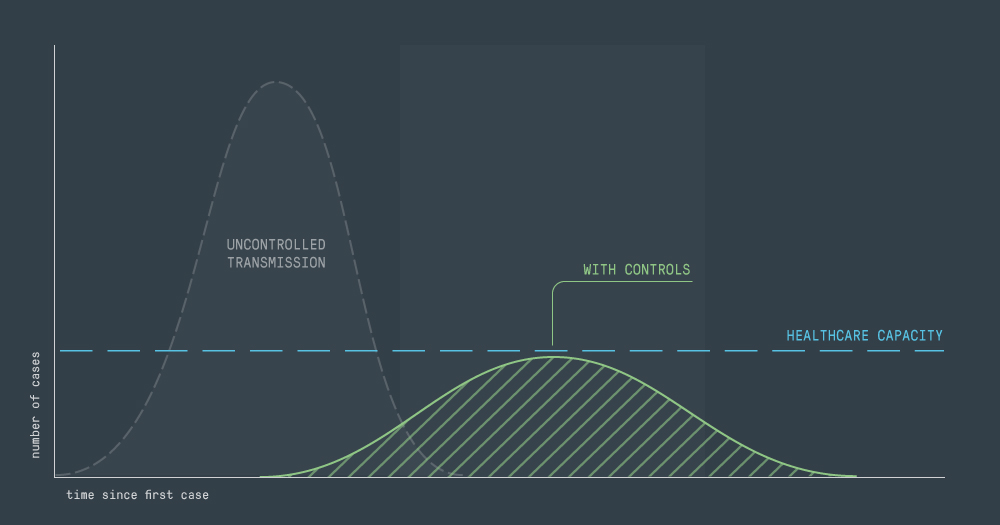
In the report, the team presents a pandemic curve for different degrees of potential government intervention. The different measures that they considered the impacts of were: no intervention, household isolation, social distancing, and school closures. With no intervention, the model predicted a need for hospitalisation thirty times what the current UK healthcare system can manage. Only by combining all of the measures would the healthcare system not be overwhelmed.
This is one of the graphs from the Imperial paper [1]. The vertical axis shows the number of critical care beds needed through time in each scenario. The blue region shows the time period on the horizontal axis where various social distancing is applied. The horizontal red lines show the maximum number of NHS critical care beds available. The various lines, explained in the key, show the difference between doing nothing, applying some social distancing and with full school and university closures. This graph shows that without all measures being taken the number of available beds would be exceeded.
What happens next? What about the large peak when the measures are withdrawn?
We need time. Time to get better testing, time to find new treatments and more ventilators. The current model suggests the current restrictions should keep the number of cases at a manageable level for the next few months.
The Imperial model makes important assumptions. Firstly, it assumes that measures put in place to control the spread of the virus are all lifted at the same time, which is neither realistic nor advisable. Secondly, it assumes that recurrences of the outbreak after the initial lift of restrictions continue for an indefinite period. In reality, this may not happen due to people acquiring immunity or the availability of a vaccine. Finally, it doesn’t account for infected cases that have gone undetected or for tools such as contact tracing, which can help break the chain of transmission. All of this will affect the number of people who become infected once the measures are lifted.
A competing model by Oxford University followed the publication of Imperial’s model. This model stated that under-detection of cases could be high, indicating that a significant part of the UK population could have already contracted the virus. This caused a big media response, however, given the data available it seems an unexpected conclusion to draw, as epidemiologist Adam Kucharski pointed out.
The Imperial model has since been refined and other competing models have been published, but the consensus remains.
It’s important to remember that the model is only based on what we know now. Models are continuously updated. Research teams are now focusing on measuring the impact and preparedness of healthcare systems by predicting the number of hospital beds, ventilators and testing kits needed based on what the models are telling us. They are also looking at the big question of the length of time needed before lifting restrictions and how to prevent a second wave of the outbreak, and models will help us to understand this better.
So in a few months the situation will have changed, the model will be updated with more information and the curve may look very different. Data should start to emerge to confirm level of immunity gained from recovering from the disease. More hospitals are currently being built and there is a national effort to produce more ventilators. Doctors have already identified the response that causes some patients to develop severe symptoms while most have a mild version, which may make it possible to screen people to detect who is most vulnerable or identify better treatments.
Given the rate of learning in the last 3 months the picture may be very different when more accurate assumptions are fed into the models.
Once a vaccine has been developed, we may require modelling for rolling it out to best effect, as well as monitoring changes in the virus. This will feed into the ongoing body of research for this pandemic and will help us prepare for future pandemics.
While models are not always accurate, they help build a consensus of understanding that informs policy and helps save lives. Taking the right measures at the right time is key in the fight against Covid-19 and through modelling we can make the best-informed decisions possible from the data available.
Mitigating infection means more and more people are working away from the office. At Cambridge Design Partnership we have geared up to work remotely, both internally with our project teams and externally with our customers. In this special blog, Jez shares some of the communication approaches we are using.
Here at Cambridge Design Partnership, we have a wealth of experience in remote working and conferencing. Our move to create the best possible virtual comms was initially sparked by our clients all over the world, with whom we seek to work closely in a collaborative and creative atmosphere from our HQ in Cambridge, UK and our East Coast engineering hub in Raleigh, North Carolina in the US.
We were mindful of the findings of Professor Albert Mehrabian, who back in the 1970s first mooted the concept of non-verbal communication. He found that in a test where people were asked to convey their feelings, 7% of communication was conveyed by the speaker’s words, 38% by their tone of voice and 55% by their body language.
In a vibrant meeting atmosphere like a brainstorm or creative discussion we naturally prefer the face to face experience, we find we talk a lot with our hands, technical props or mocks ups. So the trusty teleconference is lacking. Low cost video conferencing has been around for a while, but we have found that with a careful choice of hardware, software and etiquette, it’s a game changing tool.
The basics
We need teams to feel as though multiple locations have merged together, with everyone feeling relaxed and engaged so that they can fully contribute to the discussion. It’s crucial that everyone can see and hear each another, as well as look at what’s being presented or created, such as sketches, models, prototypes, videos and other simulations.
Choose the right platform
We use the Zoom videoconference platform; it integrates with Office and is easy to use. We simply email a link to join a meeting and with one click, the participant is in. Having said that we can easily add a password if needed.
But the software is only part of the equation, the camera and audio on many laptops leave much to be desired, and there are lots of relatively low cost add-ons that make all the difference.
Get plenty of cameras
You need high-definition video so participants can clearly see each other’s facial expressions and body language. This is surprisingly important – remember Professor Mehrabian’s findings! We use the Logitech range of high definition video conferencing cameras. We use ‘Connect’ for personal use and ‘Meet Up’ in larger conference rooms, they plug into your laptop and are transformational. They can be placed in your room to give a feeling of space, so the camera is not looking up your nose like many laptops do and the images are much more lifelike and expressive.
For groups you need enough cameras and screens for all team members to see and be seen. This makes everyone feel connected, rather than just having one camera focused on a whiteboard or a ‘talking head’. We link these cameras and screens into the meeting using the Zoom platform.
Clear audio
Having clear audio is essential, especially in larger rooms when people move about. Meet up offers great audio, but those who have to use laptops on their own need headsets or a Jabra table-top speaker/microphone, they are omni-directional and work really well with groups in larger rooms. It’s so important not to have to strain to make out what is being said, it makes the meeting much more relaxed and natural.
The role of the smart phone
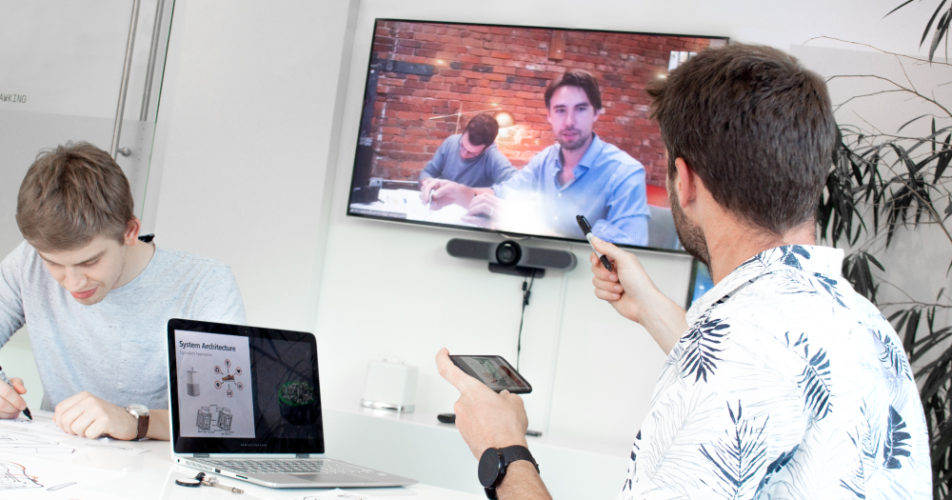
Another key tool is the humble smartphone. This provides the flexibility for individual members to communicate very quickly. For instance, if there is a sketch or prototype someone wants to show, they can grab their smartphone, activate the Zoom app (use the joining code) and immediately share their camera. Of course, people can also join the meeting just with a smartphone.
Preparation is key
We always set up our meeting rooms in advance. No matter how good your kit is, there is often a technology ‘moment’ that needs resolution. You don’t want to lose that creative vibe as your team waits for IT issues. Also, don’t forget the conventional best practices for meetings apply as normal. Make sure you have a facilitator who issues briefing documents well ahead of the meeting and takes charge of the session with a clear plan.
Reap the benefits
With many virtual meetings and brainstorming sessions now under our belt, we’ve found that the remote working technology can actually enhance the communication experience. For instance, instead of all huddling around the same whiteboard or drawing, our use of smartphone cameras means that a drawing or virtual model can immediately be shared with everyone, regardless of their location. We have also found that a virtual meeting is usually much easier and quicker to organize, with more chance of all key players being able to attend and less time wasted while we wait for everyone to be available. It’s also hugely helpful that sessions can be easily recorded. This can be useful in unpicking exactly what was said and decided during a session.
Also, it’s remarkable to see how we are able to screen-share in our virtual meetings and work on complex Computer Aided Design (CAD), zooming in and highlighting areas, with the whole meeting able to follow and contribute.
In conclusion…
Now that we are used to virtual meetings, here at CDP we feel comfortable and confident with the technologies involved. It’s remarkable how people who are hundreds or even thousands of miles apart can work together really effectively, if the technology infrastructure is set up correctly.
The current outbreak of corona virus is worrying on every level, to which there are not many easy answers. However, there is a lot that we can do to ensure our economic activity is not hit too hard by the situation. We are happy to advise our clients how to make our virtual communication as effective as possible, and keep our innovation projects moving.
Recent advances in reducing the cost of DNA sequencing are beginning to offer the possibility of healthcare services in affluent countries sequencing the full genome of all their citizens. This has the potential of delivering huge benefits in the early detection and management of many diseases and consequently will profoundly improve clinical practice. However, the necessary balance between available cash, suitable technical resources and access to personal data are acting as a significant block to the genome’s potential.
The first human genomes were sequenced by the Human Genome Project and took 13 years, cost $2.7 billion and involved 20 of the world’s leading laboratories [1]. Since then there has been spectacular improvements in the speed and cost of genome sequencing, so much so that the advances made significantly outstrip the well-known Moore’s law improvements made in the computer chip industry [2, 3]. As an example of this progress, Veritas Genetics are currently offering a whole genome sequencing service direct to the consumer for less than £500 [4]. It is highly likely that, in a few years’ time, with further advances in technology and the inevitable scaling efficiencies involved when testing at a national level that the cost per sequenced genome could drop to around £50.
At this price point, the costs involved in a nation-wide genome sequencing program do not seem unreasonable. To sequence every child born in the UK (731,000 per year or 2,000 per day) would cost £37m which is a mere 0.03% of NHS England’s 2018 budget [5, 6]. Their genome will not change over time and if sequenced at birth its information can be made use of throughout their life and hence deliver maximum benefit. Even sequencing the entire population would be equivalent to just 3% of the budget for 2018 [6]. The apparent attainability of this is reinforced when considering that the UK government spent over £300m on the 100,000 genome project and plans to turn the NHS into “the first mainstream health service in the world to offer genomic medicine as part of routine care” [7]. Access to such a phenomenal genetic resource paired with the demographic and health records held on each person by the NHS would allow academics and clinicians to fast track research and identify the sequences that allow early and corrective management of many of today’s crippling chronic diseases.
So, while the above might suggest this is an obvious project for governments to invest in, there are very good reasons why they might be hesitant to do so. Firstly, we do not know how to make use of the vast majority of the data that will be collected – we are in a position where we can read people’s genomes at a relatively low cost but struggle to understand and make full use of the information contained and this may well take many years to change. Secondly two very significant sets of infrastructures have to be established. The first is a national facility capable of sequencing 2,000 genomes a day, the second is a data storage and analysis capability that can handle the astonishing amount of data that will be created by such a system. One way to visualize the amount of data is that the 750,000 genomes collected each and every year would require a stack of standard 4 gigabyte DVDs about 1.5 miles high [8]. Indeed, the data storage and processing required for large scale genomic analysis is seen by some as the biggest of the sources of so-called Big Data and possibly its most challenging aspect [9]. The UK Government has a poor record in both large infrastructure projects and in IT projects, so they are unlikely to make the decision to invest until they know exactly how the data would be utilized and that the required infrastructures are de-risked.
So, while the UK government (and others) might view this as a risky and unjustifiable investment before we really know how to make use of even a fraction of the information it is very possible that some companies might see it as an attractive investment opportunity. It is well known that some of the large IT companies (Apple, Amazon and Microsoft) not only are much closer to having the capabilities to handle the vast amounts of cloud-based data that would result from universal sequencing but also have made significant investments in healthcare opportunities. Google Ventures would be seen as a front runner as they have already invested $1.5bn in healthcare including 23andMe (one of the leading direct-to-consumer sequencing companies) and are “especially interested in companies at the intersection of health and information technology” [10]. Google has already partnered with the Broad Institute of MIT and Harvard and is providing its cloud services with a toolkit developed by the institute that can be used to analyze the data [8].
However, while Google and the others seem the obvious resource to carry out this task there are huge implications in profit-seeking companies holding personal data that could be used to predict what diseases, life styles, behaviors and preferences they may have – theoretically allowing the ultimate targeting of advertising and insurance provision. Currently personal data is protected by the EU’s General Data Protection Regulations (GDPR) and the US’s Health Insurance Portability and Accountability Act (HIPAA) but these would have to be significantly updated to prevent the highly profitable abuse of data that could happen.
If neither government nor private companies can be trusted to carry this out, are we destined to miss out on the benefits of the secrets that our genomes hold? Possibly not if the obvious solution of a partnership between government and the big IT companies can be set up with the appropriate business model and data protection. A private company could relatively easily set up the two necessary infrastructures of sequencing capability and cloud analytics and I certainly wouldn’t bet against Google either scaling up 23andme or else purchasing one of the major sequencing companies to do this. They could then run the sequencing service for all UK newborns for free and hold their sequences. These sequences would be linked to codes that prevented the company identifying the person involved but the government would hold a master list that linked codes to identities (this is very similar to how clinical trials are run where a private company holds data linked to a reference code but only the hospital can link a reference code to an identity).
As ongoing clinical research discovers new genetic biomarkers the private company could then charge on a “pay per view” basis each time data is accessed by GPs or hospitals. From the payer’s viewpoint it would allow access to the data not only when the information has been researched sufficiently so that it can be made use of but also at the moment it is actually clinically needed.
Academic researchers could hugely accelerate the rate of discovery of new biomarkers by data mining within the stored genomes. They could link genomes to identities and their NHS records (using the master codes), follow them over time and discover the relevance and utility of further DNA sequences. The ability of the private company to do similar data mining would be severely restricted by the lack of access to any health data.
This would appear to be a win/win/win situation; governments do not have to spend money on risky programs before there is any utility in doing so, patients will receive personal and predictive clinical therapy and companies will be able to make profitable returns on investments in areas that they are experts in. Indeed, it could be argued that without this sort of bold public/commercial initiative it will be many years before we start to make real use of genomic data in routine clinical practice.
It would be interesting to canvas opinion on this, let me know of your thoughts.
It’s been 42 months since the United Kingdom EU membership referendum took place, and with the date for ‘Brexit’ upon us it is time to reflect on upcoming changes.
What is known? At 11pm on Brexit day, Friday January 31st 2020 the UK formally leaves the EU and becomes a ‘third country’ (which means the UK will have the same status as countries like the USA and China), although EU law will continue to apply during the transition period as the UK and EU negotiate a trade deal. This transition period is planned to run until the end of December 2020. The outcome of negotiations is uncertain, it could be a deal that maintains the free flow of medical devices and diagnostics between UK and Europe, or the UK may remain a ‘third country’ and EU law ceases to apply.
So at the end of December there is a possibility that manufacturers who currently sell CE approved medical devices will fall into one of three categories; UK manufacturers selling into the UK, UK manufacturers selling into the EU, and EU manufacturers selling into the UK.
The first category is easy as UK manufacturers will have their product’s CE status transferred into UK law, so there will be no issues.
However, for UK manufacturers wishing to sell to the EU it might be more complex.
UK Manufacturers or importers may no longer be considered economic operators in the EU after the end of the transition period. So, in order to place Medical Devices on the EU market, Manufacturers would need to be based in the EU, or contract with an Authorized Representative, Person Responsible for Regulatory Compliance (PRRC) and an importer based in the EU.
Then moving forward, new CE certificates would only be issued by Notified Bodies based within the EU.
Finally, in the event of a no-deal situation in December 2020, all certificates issued by UK-based Notified Bodies would become void in the EU.
In the event of no deal in December 2020 there would also be an impact on European Manufacturers wishing to sell into the UK after the transition period.
EU manufacturers would need a ‘UK Responsible Person’ to take responsibility for their product in the UK, and register their product with the MHRA.
The UK will mirror the key elements contained within Regulation 2017/745 (MDR) and 2017/746 (In Vitro Diagnostic Device Regulation, IVDR), via the Medical Devices (Amendment etc.) (EU Exit) Regulations 2019 when each is applied, the MDR on 26th May 2020 and the IVDR on 26 May 2022.
After the transitional period, all medical devices (including active, implantable medical devices), In Vitro Diagnostic devices and custom-made devices will need to be registered with the MHRA prior to being placed on the UK market. The timelines for this are in line with the risk classification of the device and range from 4 months for high risk devices to 12 months for low risk ones.
With the implementation status of the Medical Devices Regulation in Europe not where anyone in the Industry would wish it to be, and only nine, or potentially eight (if there is no deal in December 2020) Notified Bodies designated against the MDR currently, it is clear that the industry as a whole is struggling to cope with the extent of the regulatory change.
The good news is it looks like the MHRA will take a pragmatic approach to the ‘worst-case’ no-deal scenario at the end of December 2020, whereby the European Regulations are transposed into UK Regulation so existing products do not immediately lose approval status; this goes a long way to maintaining access to vital products on the UK market and provides a clear pathway forward.
In the EU, UK manufacturers would be eligible to apply at national level for time-limited derogation for ‘protection of health’, but this is only likely to be granted for those devices with no alternative product for use in life threatening conditions, and is likely to be subjected to additional restrictions.
Here at Cambridge Design Partnership we’ll be keeping a close eye on the details of Brexit implementation and the impact on the healthcare sector. Next month we’ll be focusing on the implications of the changes to the Medical Device Regulation as the Date of Application approaches and how to be best prepared.
To find out how CDP can help you with the details of Brexit implementation and your MDR and IVDR transitions, please get in touch.
James Baker, partner at Cambridge Design Partnership, considers the future for AI in the real world with help from a sideways look at its portrayal on the big screen.
In the movies, we often see big tech and deep data combine to challenge humankind in new and ever more fiendish ways. Indeed, at the cinema, human interaction with Artificial Intelligence (AI) is a rich seam of storytelling, which rarely ends well, for the human!
Meanwhile, back in the real world, we are now in an era where digital data, and more importantly the insights that can be drawn from it, can be as important – and as valuable – as physical objects. At Cambridge Design Partnership (CDP), one of our specialisms is the design of medical devices, often using information and machine learning to provide utility and value beyond the physical device alone.
So, in the spirit of fun, here is what the silver screen tells us about the big questions surrounding machine learning in healthcare, and we ask how these ideas relate to the reality of what the technology can achieve today?
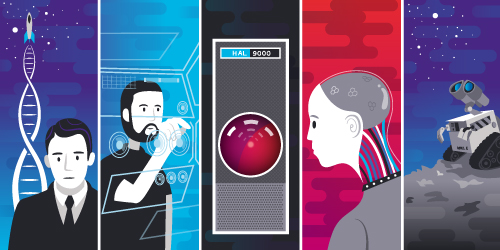
What price genetic data? (Gattaca)
In the 1997 film Gattaca, only genetically perfect humans are eligible for better jobs and lifestyles. We cheer on Ethan Hawke’s ‘genetically inferior’ character as he assumes the identity of a superior being in order to become an astronaut.
In today’s world, less than 20 years since Gattaca was filmed, genetic profiling and statistical prediction is gathering speed. Mapping of genomic sequences to traits is a rich area of study and just this week, Matt Hancock the UK Health secretary announced that all babies could receive a complete genome sequencing at birth. Crucially, this technology has the potential to predict an individual’s likelihood to suffer illness in the future. But should the way you are treated as a patient, or indeed a person, be determined by an assessment of your genetic makeup? Already insurers are asking for access to medical records and premiums are affected by the presence of certain diseases, so should they also be able to consider the likelihood of future illness as well?
Diagnosis – how far should you go? (Minority Report)
The film Minority Report envisages a world in which arrest and incarceration is based on a prediction of the likelihood to commit a crime before it has occurred.
Already today’s healthcare and wellness technologies create significant amounts of data about individuals. New processing methods and machine learning can analyse these multiple sources and draw conclusions.
Yet many clinicians don’t want every possible analysis to be given to them. For example, who is responsible if systems predict the probability of an illness, but the medical practitioner can’t confirm this conclusively? Does informing the patient provide any utility?
There are recent moves to define what can and can’t be done with personal data, such as the European Union’s General Data Protection Regulation (GDPR). These seek to control access to and ownership of data, but as yet, there are no similar frameworks to control the conclusions drawn from it.
What if AI overtakes human intelligence? (Ex Machina)
In the film Ex Machina a humanoid robot is created and given ‘intelligence’ built using a record of billions of human internet searches. But then (surprise!) the robot uses its knowledge of human interactions and desires to achieve its own freedom, deliberately misleading its human masters to do so.
Machine learning using huge amounts of information is an approach we see increasingly used in real life. In the field of diagnostics, AI is already showing great promise in diagnosing conditions such as Alzheimer’s and in facilitating cancer diagnoses. AI predictions are compared with a gold standard diagnostic to determine the most significant automated metrics to detect the condition.
This approach is already being used in cancer screening, enabling earlier detection through far more extensive analysis than is possible manually.
But what if AI doesn’t react like we expect? (2001)
An all time classic, 2001 cleverly hides a story of unintended consequences within a ground breaking and spectacular space opera. The HAL character appears to have a sinister agenda and behaves malevolently, attempting to kill off the human crew – but ultimately is understood to have been driven by conflicting orders.
In the real world, AI can deliver responses that are not what we expect. Large data sets may still contain insufficient information, erroneous or poor-quality data, which by chance may create patterns that have no meaning.
A good example of where AI can deliver unanticipated (and unwanted) behaviour is the late, unlamented Microsoft Tay chatbot. Its premise was that, by listening to and learning from posts on Twitter, it could generate useful tweets and help manage commercial Twitter accounts. But within hours of its release in 2016, Tay began posting inflammatory and offensive tweets and had to be taken down.
So, before we make AI systems independent, how can we be sure how they will behave and who takes responsibility for their actions?
Sometimes, AI can really help us (Wall-E)
The 2008 story of a good-natured planetary janitor-bot left to clean up our human mess shows how AI can really benefit humankind, turning its hand to automating work that would otherwise be onerous and low value. See also, C-3PO and R2-D2 in the Star Wars movies. It’s surely no coincidence that the two loveable droids are the only characters to appear in every single film in the Star Wars franchise.
Back in 1950, computing pioneer Alan Turing predicted that by the year 2000 computers would be able to trick us into believing they were human 30% of the time. He was not far wrong, in 2014 a chatbot called Eugene Goostman convinced 33% of judges that “he” was a 13-year-old from Ukraine, thus officially passing the Turing Test. We see these kinds of natural language interaction technologies being used increasingly in consumer goods, but also finding utility in medical applications such as triage with patients seeking care. This enables faster access and a better “customer experience” whilst also allowing healthcare practitioners to focus on provision.
In conclusion, at CDP our focus is on how to realise value for our clients, and machine learning is one of the tools we can bring to bear. With the ongoing bombardment of new technologies, it is important to understand when it can provide effective solution, and when more traditional methods will provide the best results. It’s no longer a question of what can we do with AI?
RAPS (Regulatory Affairs Professionals Society) publish a set of excellent “Fundamentals” books, each covering a different regulatory context: US, EU, Canadian and International (which covers other markets). These books detail the key aspects of the regulations for pharmaceuticals, medical devices and IVDs (In vitro diagnostics) with considerations about how they should be followed and implemented. These are essential for healthcare companies looking to make submissions outside of the jurisdictions they are familiar with.
These books need to be regularly updated as regulations evolve to ensure they are current, and I have been chosen as a subject matter expert for the US fundamentals book that looks at the requirements of the FDA (Food & Drug Administration). I have recently updated the chapter “supply chain and traceability”, along with a second author, Jyoti Chauhan.
This chapter was initially introduced in the last edition (10th) and so was relatively new to the book. Upon reading, I was most surprised that it did not cover any elements of supply chain or traceability for medical devices, only focusing on pharmaceutical requirements, specifically the Drug Quality and Security Act. I felt the chapter was lacking in detail on medical devices because traceability is a key topic at the moment with the introduction of UDIs (Unique device identifiers) in the last few years, so this was a big gap to be missing.
My first task was to pull together all the existing guidance on the topic of UDIs which the FDA have published as well as the key aspects of the CFR (code of Federal Regulations) in relation to supply chain and traceability. It was interesting to compare them at the same time as different pieces of information are emphasised in different guidance, so I wanted to summarise these in a cohesive overview.
Adapting to the formal writing style of these publications was a practical challenge, but I hope my description and analysis will help other regulatory professionals navigate the tricky waters involved in submitting their products to the FDA for approval.
If you want to know more about these subjects or how CDP can help you with your quality and regulatory activities, then please do get in touch with us at hello@cambridge-design.com.
6 steps to build winning biosimilar defence strategies through user and technology mapping
The market for biosimilars is growing rapidly at over 30% per annum, as increasingly more biological drugs are going off-patent and the rate of regulatory approvals increases. The major high-value mono-clonal antibodies are considered as the big opportunities by companies in the bio-similar space, including for example the TNF-alpha inhibitors. Although bio-similar development and regulatory hurdles have been more challenging than expected, developing a robust biosimilar defence strategy is still a vital and difficult process. Solutions within a strategy can range from relatively simple, such as powerful new counter-biosimilar messaging to more complex, value-added propositions which include novel delivery devices, diagnostics and even digital elements. Questions range from how to discover new underlying opportunities from which to build a defence strategy and how to deliver technology-enabled propositions which can make them really possible.
In this webinar, Dr Pari Datta (Senior Innovation & Research Consultant) demonstrates how simple user experience mapping methods can reveal truly-original opportunities throughout the journeys of the patient, HCP and even the product during the process of treatment. From these opportunities, technology mapping will be used to show how the latest technologies, from digital to formulation, can be identified or even conceived to create innovative value-added propositions. The key elements which need further development within each proposition will be considered – from satisfying multiple stakeholders, business model development to building the evidence required to generate confidence in its future commercial success.
CDP has just opened a brand-new biological laboratory at its Cambridge HQ, certified to allow research on containment level 2 biological hazards such as micro-organisms, blood and other body products.
‘We are delighted to announce that our new lab has now received approval from the UK Health and Safety Executive,’ says Dr Richard Owen, CDP’s senior bioscience consultant.
‘This new facility allows CDP to grow and handle a wide range of different microbial pathogens including bacteria, viruses, fungi and protozoa as well as animal and human blood, bone and tissue samples.’
The lab will allow CDP’s scientists and engineers to work on projects such as medical diagnostics, insulin-testing for diabetes and other health-related projects in-house at its Cambridge base. Previously, such research had to be out-sourced to external partners.
Richard, who joined CDP in the summer of 2018, set up the facility and generated the appropriate protocols and documentation so that it meets the required specifications. Richard has extensive experience in researching medical products and previously co-founded a start-up at Papworth Hospital in Cambridge. He says, ‘I am delighted to add this capability to CDP’s range of product development services. It is the final piece of the jigsaw that allows CDP to offer end-to-end development of diagnostics assays, instrumentation and medical devices.’
Dan Haworth, CDP’s head of diagnostics, also welcomes the news: “Here at CDP, we have previously developed a range of diagnostic platforms and now have the capability to carry out performance testing in-house with viable micro-organisms. This will greatly speed up our design process.’
Matt Brady, head of medical therapy at CDP, adds: “This new facility allows us to do early-stage concept testing with clinical samples as well as full verification and validation studies in-house. Our clients will benefit hugely from the full testing capability we are now able to offer.’